Suffering from centuries of economic and political turmoil, Haiti strives for nationwide stability as gang violence worsens humanitarian crises in the country.
Read MoreThe Slow Rise of Gang Violence in Haiti
Haiti finds itself in a humanitarian crisis, with limited access to resources and police assistance amid widespread gang presence.
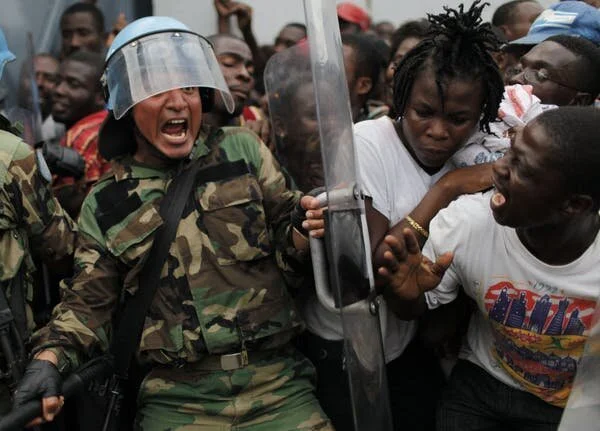
UN officials try to aid the police force in Haiti as violence escalates, CC0 1.0.
Already in a long-term humanitarian crisis stemming from a 7.0 magnitude earthquake in 2010, Haiti has been in a vulnerable position for the last fourteen years. Until recently, the fate of Haiti rested with 10 remaining senators, all of whose terms expired two weeks into 2023. There are currently about 200 gangs in Haiti, half of which are residing in Port-au-Prince, Haiti’s capital. Among these are G9 and GPep; two rival gangs with the largest presence in the capital.
G9 Family and Allies (“G9”) was formerly associated with the dominating Haitian Tet Kale political party, rising via a relationship between Chérizier and the Moïse administration in 2020. The intention of this group was to maintain social order among civilians angry about lack of political assistance to their poor conditions. Over time, it strayed away from its initial goals and took up violence and kidnapping.
The second politically relevant gang present in Port-au-Prince is GPep, less well known but equally dangerous. GPep, a gang alliance led by Gabriel Jean Pierre (“Ti Gabriel”), is the sworn enemy of G9. Associated with Haitian opposition parties, GPep is responsible for high levels of violence, famines and the deaths of innocent civilians in its clashes with G9 for power. In September of 2023, the rivals made a public pact to “viv ansanm” (“live together”) to coordinate against shared political rivals.
In February 2024, various Haitian gangs carried out a series of coordinated attacks throughout Port-au-Prince. Chérizier and the G9 Alliance ultimately claimed responsibility for the spike in violence. The gangs’ intentions were to reduce the power of the police force and prevent the return of the Prime Minister from Kenya, where he had previously been negotiating with the United Nations for protective measures. Since then, gang activity has seen a steady increase in Port-au-Prince, including the storming of two of the country’s largest prisons to free thousands of inmates and an attempted seizure of the national airport. G9 also notably expanded its control and effectively blocked access to the country’s main oil storage facility, worsening the fuel shortage. On March 3, the Prime minister declared a state of emergency and enforced a nightly curfew.
The recent increase in gang presence has also limited citizens’ access to healthcare. As a result of a storm by the gangs in March, the State University of Haiti Hospital (HUEH) was forced to close and has not reopened since. TIME journalist Dánica Coto looks broadly at the impact gang violence has had on the medical system and explains that, “Even if a hospital is open, sometimes there is little or no medical staff because gang violence erupts daily in Port-au-Prince, forcing doctors and nurses to stay at home or turn around if they encounter blocked roads manned by heavily armed men.” The gangs therefore not only harm citizens directly, but medical restrain them by limiting access to cancer, asthma, diabetes and other medical condition treatments.
The rapid increase in gang violence is impacting more than just the capital, the displacement of people also posing a risk for the rest of Haiti. With a large population residing in Port-au-Prince, smaller cities outside the capital are too fragile to support people fleeing en masse. The United Nations International Organization for Migration raised their concerns in early April: “It should be emphasized that [these] provinces do not have sufficient infrastructure and host communities do not have sufficient resources that can enable them to cope with these massive displacement flows coming from the capital.” The insufficient resources of the regions surrounding Port-au-Prince continues to pose a risk for Haitains, their food security, health and safety still insecure even if they escape the capital.
The United Nations is calling for more support for Haiti, with only 8% of the 2024 Humanitarian Needs and Response Plan for Haiti already funded. In a United Nations meeting, the Haiti delegate focuses on the importance of sending aid to the police force and emphasizes that, “We need to ring alarm bells. It is absolutely vital to act quickly to avoid the genocide being implemented in the country." Executive Director of the UN Office on Drugs and Crime Ghada Waly echoes the need for outside intervention; “In the absence of international action to improve Haiti’s security, through the deployment of the multinational security support mission […] alongside a long-term political solution, the circumstances will remain enormously challenging.” Haiti is in desperate need of outside assistance from the United Nations and other countries, its current support system too weak to protect and care for its people.
The Dominican Republic has deployed its own limited resources to stem the flow of arms into Haiti, although its Minister of Foreign Affairs emphasized the need for tougher sanctions and an arms embargo to help build a sustainable peace. United Nations delegates are also pushing for a rigorous implementation of the sanctions regime to hold financiers of the violence accountable, and thus reduce the damage being done to Haiti. In its current state, Haiti’s healthcare and political system are on the verge of collapse. It is only through external intervention and support that the country has a hope of making it through the crisis and starting, once again, on a path to reconstruction.
TO GET INVOLVED:
Save the Children has an ongoing campaign to help children and refugees in Haiti. Check out their website here to learn about the current state of Haiti and steps, both big and small, that can be taken to send humanitarian aid overseas.
Christian humanitarian organization World Vision is working to help end the suffering in Haiti by sponsoring individual childrens’ wellbeing, as well as general crisis response efforts. Click here to learn more.
Aanya Panyadahundi
Aanya is a student at the University of Michigan studying sociology and journalism on a pre-law path. She loves to travel the world whenever she can, always eager to learn more about the different cultures and societies around her. In her free time, she likes to play the violin, ski, and listen to podcasts.
A Cycle of Dependency: How Donations Worsen Income Inequality
Regardless of the good intentions behind donations, the short-term gain experienced by poor communities often leads to the persistence of income inequality and an endless cycle of dependency.
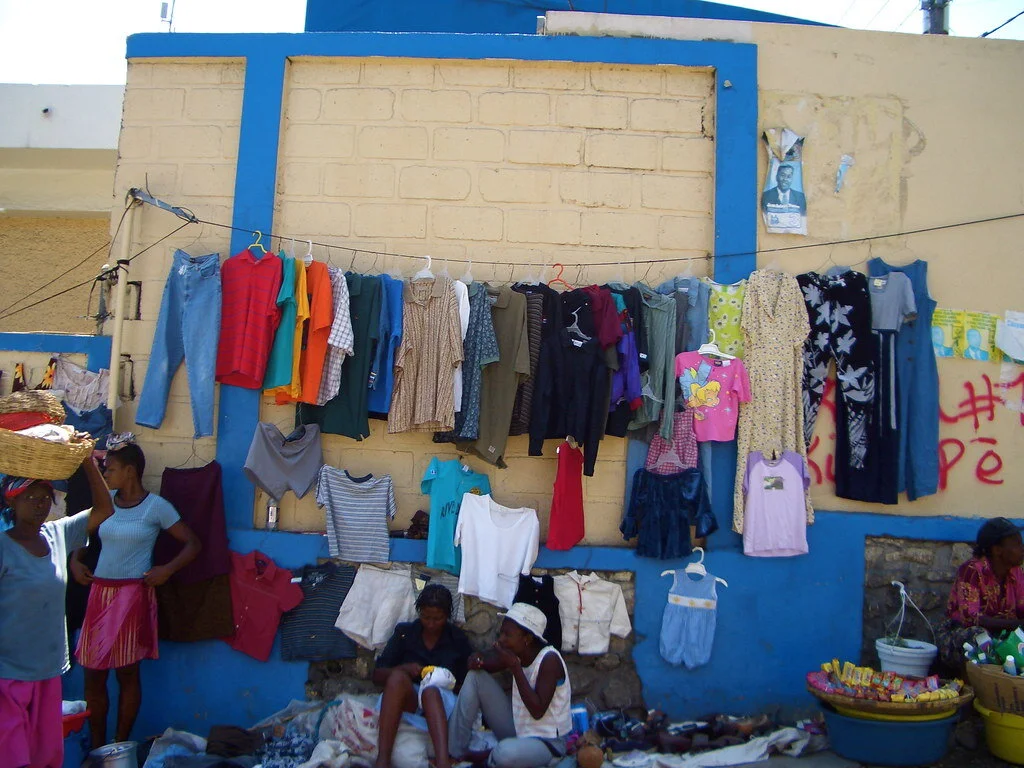
Secondhand clothing in Haiti. Vanberto. CC BY-NC-SA 2.0
Donations are often associated with a positive image of helping destitute populations get the resources they lack. Yet, this short-term aid often results in far-reaching consequences detrimental to a country’s economy, which leads to the persistence of income inequality.
The donation of money that goes toward buying resources for impoverished communities often creates an endless cycle of dependency, especially if such service is repeatedly conducted through organizations or companies. First, the repeated nature of such service creates a false assumption among receivers that there will always be a supply of that resource without work, making them reliant on such aid. Moreover, the organizations themselves are indirectly relying on marginalized areas to promote their businesses’ charitable work. For instance, back in 2006, when TOMS started its “one for one” program, it would donate a pair of shoes for every pair that was purchased. Although the company’s motive seemed to be pure, it relied on underprivileged populations’ need for shoes to increase its business revenue.
84% of unwanted clothing is thrown into landfills
When donations are consistently provided, those living in poverty often learn to become dependent on the donors as they see less reason to get out of their current situation. Local businesses also shut down, as the need to produce items goes away when high-quality donations are provided at a minimal price from external sources. Although that may come as great news for citizens of developing countries, most of the profit in this exchange goes to the exporters. A 2006 report found that, “textile and clothing employment in Ghana declined by 80% from 1975 to 2000; in Zambia it fell from 25,000 workers in the 1980s to below 10,000 in 2002; and in Nigeria the number of workers fell from 200,000 to being insignificant.” Such statistics imply that despite the good nature of external aid, it often comes at the expense of the receiving countries.
Haiti is a common dumping ground for secondhand clothing primarily from the United States, and due to its regular occurrence, locals have given this process the name “Pepe.” The Netflix documentary “The True Cost” elaborates on how Haiti’s textile industry is suffering due to the widespread popularity of Pepe, leading the country’s local clothing industry to disappear. For this reason, some countries have started to refuse the import of secondhand clothing, and more of it ends up in recycling facilities. Yet according to Newsweek, 84% of unwanted clothing is thrown into landfills.
To combat waste, then, the fast-fashion industry needs to start recycling its own goods, minimize seasonal sales, make more durable products and normalize wearing recycled apparel. Additionally, governments need to start promoting the creation of more jobs for impoverished communities, so that all the necessary resources are available in the market at reasonable prices. Finally, donors should remember that regardless of good intentions, deprived communities may suffer long-term consequences due to misunderstood charity work.
Swati Agarwal
Swati Agarwal is a sophomore at University of California, San Diego, where she is studying Environmental Sciences and Theatre. Although born in India, she was raised in Tokyo, which gave her the opportunity to interact with diverse people from distinct cultures. She is passionate about writing, and hopes to inspire others by spreading awareness about social justice issues and highlighting the uniqueness of the world.
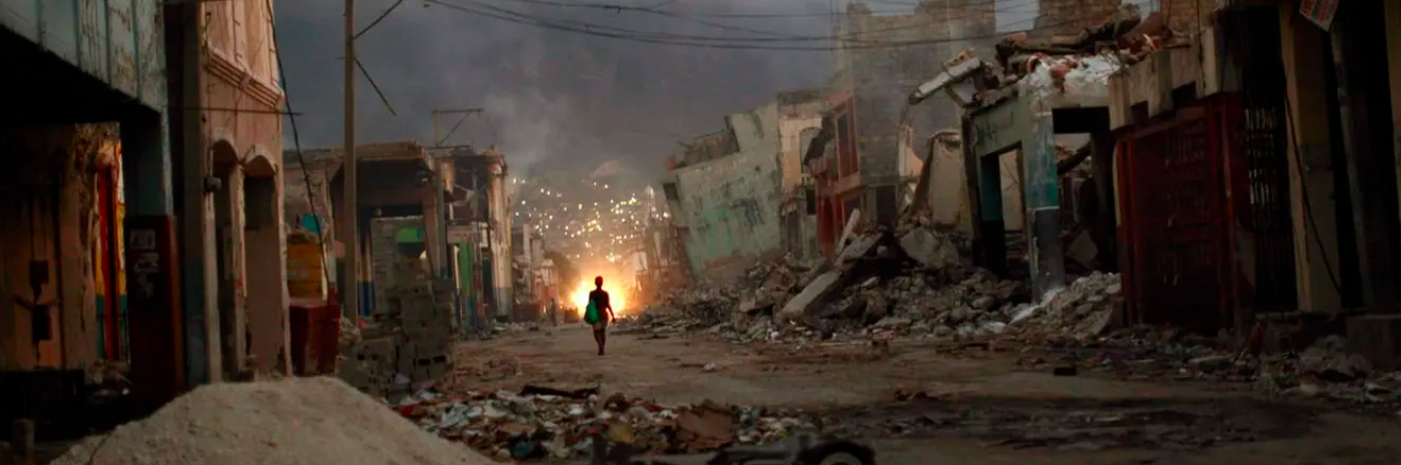
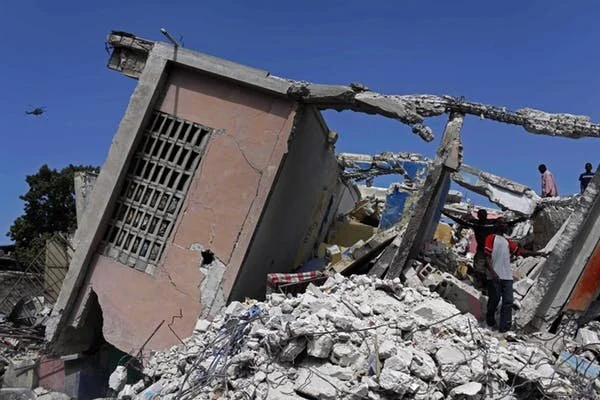
A woman walks through the shattered streets of Port-au-Prince a few weeks after the Jan. 12, 2010 earthquake slammed the country, which has still not recovered despite billions of dollars being spent. Rodrigo Abd/AP Photo, File
A Decade After the Earthquake, Haiti Still Struggles to Recover
More than 300,000 people were killed, several hundred thousand were injured and nearly 1.5 million were left homeless when magnitude 7 earthquake hit Haiti on Jan. 12, 2010.
On that day, the workspace that my colleague Joseph Jr Clorméus, who co-authored this article, usually occupied at the Ministry of National Education completely collapsed. He witnessed an apocalyptic spectacle: colleagues had lost their lives while others were having limbs amputated to escape certain death under the rubble. Outside, corpses littered the streets of the capital while the horrifying spectacle of blood mixed with concrete and dust offered itself to the desolate gaze of a traumatized population.
Ten years later, Haiti hasn’t recovered from this disaster, despite billions of dollars being spent in the country.
Two main factors explain, in our view, the magnitude of this tragedy: the weakness of Haitian public institutions and the disorganization of international aid, particularly from NGOs.
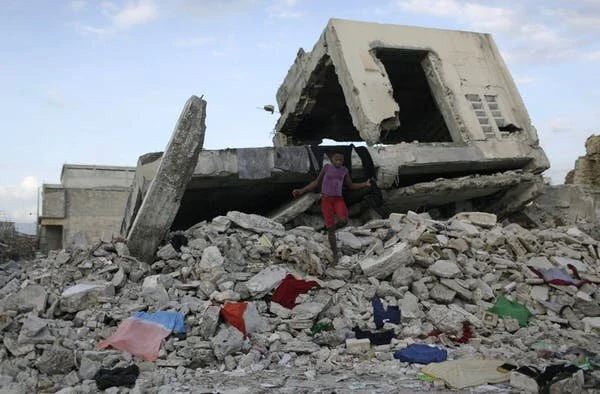
A few months after the earthquake, a girl walks on debris as she uses the structure of a damaged building in Port-au-Prince to air-dry clothes. AP Photo/Ariana Cubillos
The weakness of the Haitian state
Haiti is vulnerable to earthquakes. Historically, they have been managed by the military, which played an important role in both national development and natural disaster management. But the speedy dismantling of the national army under Jean-Bertrand Aristide’s presidency did not allow for the transfer of the army’s natural disaster management skills to other civilian public institutions.
Indeed, a great deal of know-how disappeared. Despite the presence of several government bodies that had tried to develop skills in relation to earthquakes, no reliable operational body was able to manage the institutional vacuum left by the army. Today, Haiti remains very vulnerable to natural disasters on its territory.
The succession of unstable governments over the past four decades hasn’t helped either. These have significantly weakened the central administration, which then had little capacity to manage and control the country’s territory.
For example, Port-au-Prince, a city originally designed for 3,000 people, was home to almost a million. Ten years later, we can only note that nothing has really changed in this respect. The Haitian state has shown itself incapable of decentralizing and developing its rural environment, which is experiencing an exodus year after year.
The capital and its surroundings are overpopulated and there are no real urban planning policies to impose standards and counter the anarchic constructions that proliferate the city. In this context, any major earthquake could only lead to the disastrous consequences that the country has experienced.
Another problem: in 2010, the Haitian public administration, far from having been reformed, was mainly concerned with collecting taxes on property without any real control over the territory.
The combination of overcrowding, chaotic urban development without a regional development policy, a flagrant lack of resources to intervene on its territory and the skills of its staff has meant that the Haitian public administration has never been able to anticipate the impacts of an earthquake.
People stand in the rubble of a collapsed building in Port-au-Prince following the earthquake. AP Photo/Rodrigo And, File
Disorganized international aid
The weakness of the Haiti’s public administration is compounded by the disorganization of international aid. Following a decree adopted in 1989 (which amended Article 13 of the 1982 law governing NGOs), responsibility for the co-ordination and supervision of NGO activities on the territory of the Republic of Haiti was entrusted to the Ministry of Planning and External Co-operation (MPCE).
In the aftermath of the earthquake, many studies reported on the presence of thousands of NGOs in the country. However, on its official list, the MPCE recognized barely 300 of them. It can therefore be concluded that the majority of these NGOs were operating in near obscurity.
Several studies have also shown, and we’ve seen on the ground, that the international community’s assistance deployed immediately after the earthquake failed to meet a humanitarian challenge of such magnitude. There was no co-ordination in the interventions of friendly countries in order to optimize the efforts on behalf of the victims. There was great humanitarian disorganization and even a failure on the part of the international community, which had to improvise ineffectively to co-manage a disaster.
With a presence on the ground as early as 2012, we’ve observed that the majority of NGOs arrived in Haiti not to respond to a need expressed by the Haitian government, but rather to serve their own interests, as Dr. Joanne Liu, former president of Médecins Sans Frontières, reports.
There was no co-ordination between them, nor was there any co-ordination with the government. Furthermore, although UN forces deployed with MINUSTAH were present in Haiti, the forces were fragmented and operated under often incompatible models and values. Aid was inefficient, even harmful. The scandal of the reintroduction of cholera in Haiti underscores this reality.
A Peruvian peacekeeper tries to control a crowd during the distribution of food for earthquake survivors at a warehouse in Port-au-Prince on Jan. 19, 2010. UN aid has been largely ineffective. AP Photo/Ariana Cubillos, File
Post-earthquake
Despite the fact that billions of dollars had been spent in the country, according to international reports, five years after the disaster, debris was still lying in the streets, thousands of people were still living in refugee camps and the majority of public buildings had not been rebuilt.
All of this testifies to the serious difficulties of co-ordination on the ground.
A decade later, the challenges are still immense for Haiti since it must develop construction policies that fit into a certain vision of urban planning. It must also rebuild the archives of public institutions that have been damaged or have disappeared, and it must help post-earthquake generations learn from the past, develop and implement an emergency plan for natural disasters, and design and implement policies and spaces adapted for people with disabilities.
Today, international development practices are seen to be based on a wealth accumulation perspective, giving priority to private sector interests. Canada’s initiatives to direct its aid to the development of the mining sector and free-trade zones in Haiti are evidence of this.
What’s more, Canada’s decision to freeze funding for new projects in Haiti raises several questions: why leave Haiti in such a difficult position? Is the decision intended to make the Haitian state face up to its responsibilities or simply to take the Canadian government off the hook for the failure of international aid in that country? Is this an admission of powerlessness in the face of the profound institutional weaknesses in Haiti?
As we look back at Jan. 12, 2010, we raise a question as troubling as it is fundamental: Has the Haitian government and the international community really learned any lessons from the earthquake?
Jean-François Savard is a professeur agrégé, École nationale d'administration publique (ENAP)
Emmanuel Sael is a doctorant en administration publique, École nationale d'administration publique (ENAP)
Joseph Jr Clormeus is a doctorate candidate in public administration, École nationale d'administration publique (ENAP)
THIS ARTICLE WAS ORIGINALLY PUBLISHED ON THE CONVERSATION
Turning Plastic Trash Into Cash in Haiti
Plastic Bank is a global network of micro-recycling markets that empower the poor to transcend poverty by cleaning the environment. Operating in Haiti, the Philippines, Indonesia and Brazil, it works like this…. Locals collect plastic trash, bring it to recycling centers where it is exchanged for cash.
Read MoreTurning Plastic Trash Into Cash in Haiti
What would our world look like without plastic? From life-saving medical devices to computers to Tupperware, it’s changed the way we live, work and understand the world around us. But the same wonder material that has revolutionized so much is choking our oceans. It’s estimated that, every minute, an entire garbage truck worth of plastic hits our oceans. Otherwise put, 8 million tons of once-useful items find their way to global waters each year. There, over time, they break into tiny pieces called “microplastics,” which end up consumed by marine life.
For David Katz, fighting plastic pollution should start long before a soda bottle hits the tide. What’s more, he believes the very plastic waste that litters our shores and seas is anything but waste. In 2014, David launched the Plastic Bank, “a global network of micro-recycling markets that empower the poor to transcend poverty by cleaning the environment,” according to its website. The organization currently operates in Haiti, the Philippines, Indonesia and Brazil, and works like this: community members collect plastic waste (much of it post-consumer products like milk containers, detergent bottles and plastic bags) and bring it to Plastic Bank centers where it’s weighed and exchanged for cash. In Haiti, for example, more than 2,000 collectors have recovered around 7-million pounds of plastic since the organization arrived in 2015.
What was once considered waste can now be sold to major brands like Marks and Spencer and Henkle, who will use it to package and distribute their products in a more sustainable manner. As David Katz puts it, this “social plastic” is “empowering and precious”—something that bonds collectors in places like the Philippines and Haiti to brands and consumers around the world.
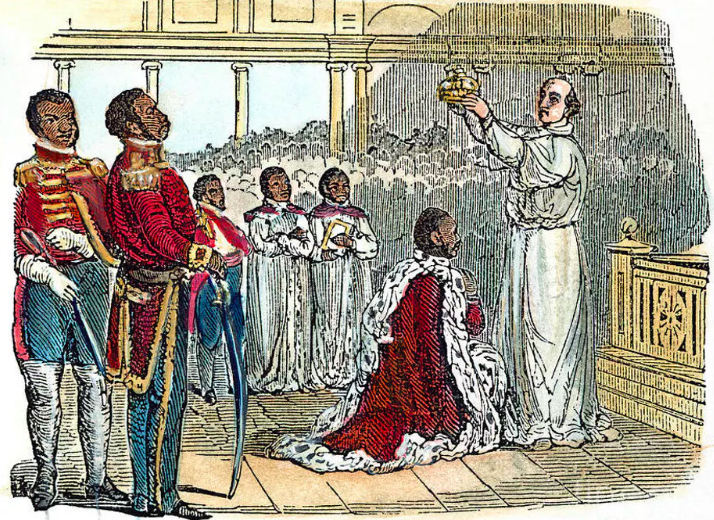
An 1811 wood engraving depicts the coronation of King Henry. Fine Art America
Inside the Kingdom of Hayti, ‘the Wakanda of the Western Hemisphere’
Marvel’s blockbuster “Black Panther,” which recently became the first superhero drama to be nominated for a Best Picture Academy Award, takes place in the secret African Kingdom of Wakanda. The Black Panther, also known as T’Challa, rules over this imaginary empire – a refuge from the colonialists and capitalists who have historically impoverished the real continent of Africa.
Read More