
Julia Kelley
Suffering from centuries of economic and political turmoil, Haiti strives for nationwide stability as gang violence worsens humanitarian crises in the country.
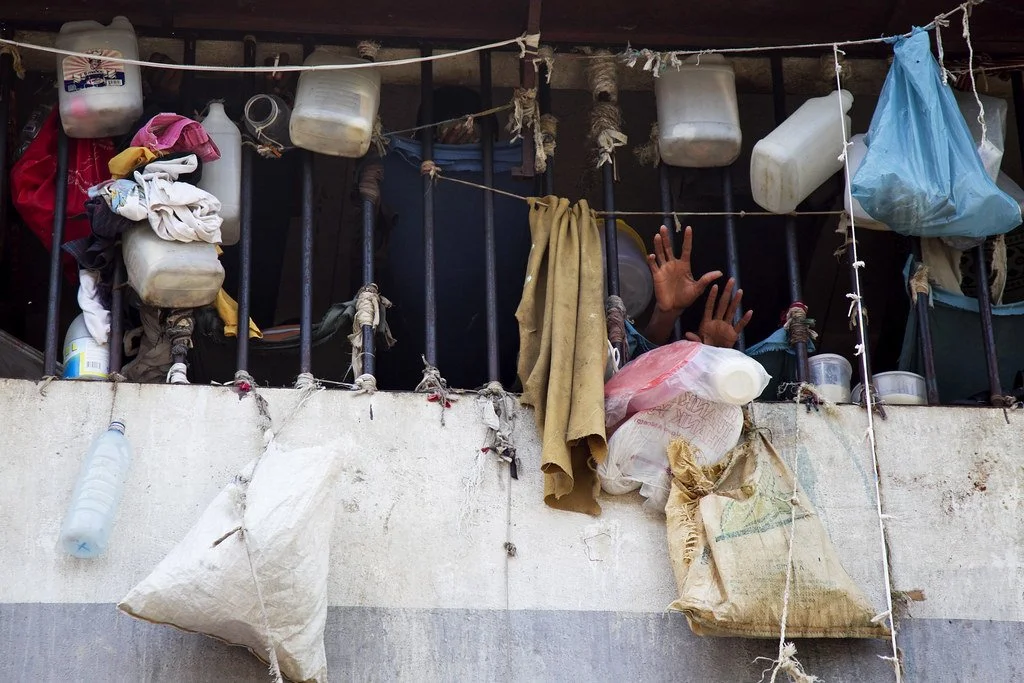
Detention Center in Haiti. United Nations Photo. CC BY-NC-ND 2.0.
One of the poorest countries in the world, Haiti is strained by political instability and humanitarian crises. These challenges stem from centuries of devastating economic loss, rooted in the country’s independence from France in 1804. Haiti’s position as a new nation left the country vulnerable, prompting an order by the French king, Charles X, to pay France 150 million francs as compensation for plantation owners’ “lost property.” This financial retribution sent Haiti into a years-long struggle against debt, which was exacerbated when French banks lent money to Haiti when it was unable to pay. The debt was repaid in 1947, a total roughly equivalent to $560 million today, but it cost Haiti billions of dollars in economic development. In conjunction with lasting economic challenges, political systems have remained underdeveloped and weak due to a string of coups, dictatorial regimes and foreign interventions. The country has continuously attempted to fight national instability with free and fair elections since the 1990s, but corrupt political leadership has facilitated an ongoing security crisis.
Gang violence in Haiti has become especially prevalent over the past 10 years, with gang coalitions rapidly multiplying, expanding territories and entangling themselves in political and economic systems. The 2021 assassination of President Jovenel Moïse marked a critical turning point for Haiti’s turmoil as well, leaving the country in an even more vulnerable position without effective leadership to this day. As of March 2025, about 300 criminal groups are active throughout the country, and approximately 2.7 million Haitians live in areas under gang control, including the capital, Port-au-Prince. Catastrophic daily abuses have worsened since 2024, after two of the largest gang coalitions, G9 and Gpep, formed an alliance called Viv Ansanmn and set off new attacks on civilian infrastructure. Rather than clashes between rival gangs, they have targeted schools, medical facilities and humanitarian organizations with rape, kidnappings and general violence. Children have been especially impacted. Not only have they already been subject to these abuses, but gangs recruit vulnerable children into roles as lookouts, couriers and laborers, threatening them if they don’t comply. Thousands of children have also been displaced as a result of gang violence, without adequate access to food or healthcare.
In addressing this ongoing crisis, the Office of the U.N. High Commissioner for Human Rights has warned that human rights in Haiti require immediate international assistance. While there have been earlier efforts to address this, such as with the deployment of an international security mission to help the Haitian national police in 2023, violence has only increased in subsequent years. For example, there were at least 5,601 murders at the end of 2024, an increase of 1,000 from 2023. In recent months, the leader of Haiti’s transitional presidential council, the country’s temporary governing body, has acknowledged the national security risks and promised new measures to stop them: “We are telling everyone in this government that we are at war,” he declares in his statement. Other countries have made steps to help Haiti as well, including the United States. In May 2025, U.S. senators on the Foreign Relations Committee reintroduced the Haiti Criminal Collusion Transparency Act, a bipartisan bill prioritizing U.S. leadership in addressing ongoing violence in Haiti, including sanctions against armed criminal groups. Senator Jeanne Shaheen describes how the bill was prepared, in part, to ensure the protection of the United States’ “national security interests” while ensuring “stability and security in the region.” Those in the U.S. and abroad hope that steps, such as this bill, will make progress toward fully addressing worsening humanitarian crises in Haiti.
GET INVOLVED:
Those looking to get involved with human rights issues and humanitarian crises in Haiti can check out organizations such as Amnesty International, which has a petition calling on the Haitian government to institute a comprehensive child protection plan against gangs; Save the Children; or the American Red Cross in Haiti; all of which emphasize support for families and children who are affected by gang violence and other civil unrest. Moreover, organizations such as Hope for Haiti, World Vision, CARE Haiti, CORE or Doctors Without Borders focus on additional aid in Haiti, such as education for children, disaster relief, food distribution, community development, medical services and overall community support. In addition to looking into different funds and nonprofits, being vocal toward local and national governments, such as for increased funding or legislation, can help invoke solidarity, as international governments are imperative in providing support.

Julia Kelley
Julia is a recent graduate from UC San Diego majoring in Sociocultural Anthropology with a minor in Art History. She is passionate about cultural studies and social justice, and one day hopes to obtain a postgraduate degree expanding on these subjects. In her free time, she enjoys reading, traveling, and spending time with her friends and family.