
Alex Jung
As Pride Month approaches, 1.5 million Sri Lankans continue to fight against the longstanding criminalisation of homosexuality.
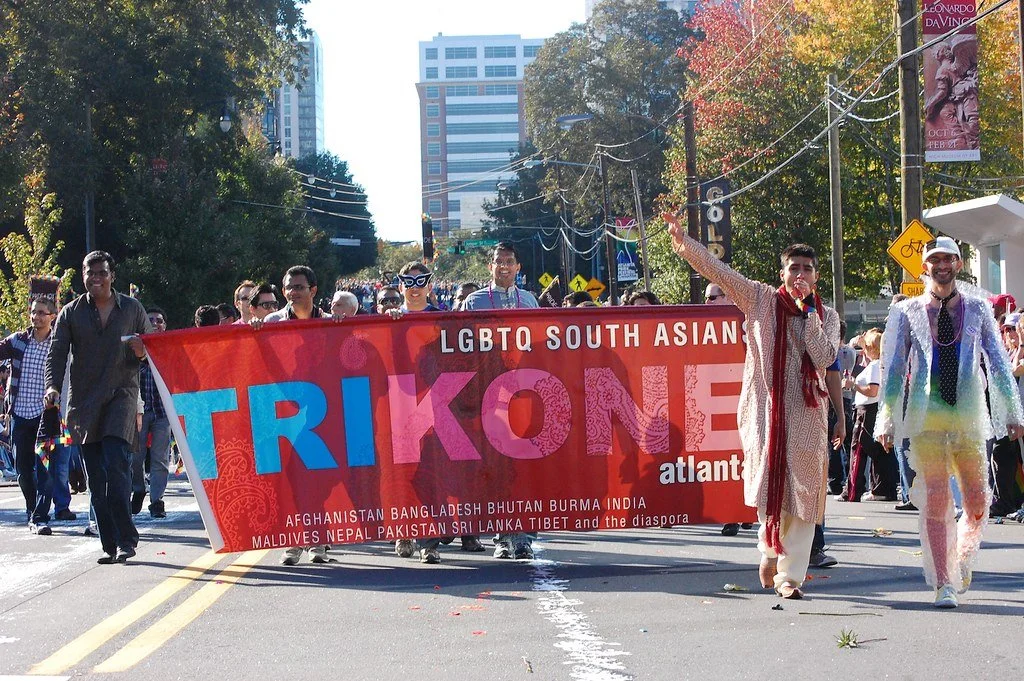
LGBTQ South Asian Parade. Stanley Fong. CC BY-NC 2.0.
Sri Lanka is a nation with laws that have consistently restricted the rights and freedoms of LGBTQ+ communities and individuals. Under Penal Code 1883 and Section 365 of the Penal Code, same-sex sexual activity, gender expression, and marriage are strictly prohibited. Penalties include 10 years’ imprisonment and a fine. This directly impacts at least 1.5 million people, approximately 12% of the Sri Lankan population, who identify as LGBTQ+. Sri Lanka's political freedoms, which would enable public protests, have also been restricted, as seen by the 54/100 score in the 2024 Freedom in the World index. LGBTQ+ individuals in Sri Lanka have been disadvantaged significantly regarding employment, education, housing and healthcare. LGBTQ+ individuals are also frequent targets of cyber abuse and emotional abuse. In 2019, six people were arrested for same-sex activity and were reportedly subjected to physical abuse, including whipping and forced HIV testing.
Despite the upsetting reality and restrictions that LGBTQ+ members in Sri Lanka have been subjected to, there has been active resistance and celebration of LGBTQ+ rights throughout the country. In 2022, Sri Lanka celebrated its first Pride Parade, held in Jaffna and Colombo. Participants of Pride Parades within Sri Lanka have actively called out police harassment towards the LGBTQ+ community and called for a ban on conversion therapies. In June 2023, the Young Activists Collective created a trilingual episode play titled “Closet Cases.” These efforts aim to promote LGBTQ+ rights from a youth perspective. The Colombo PRIDE event will also take place in June 2025.
In May 2023, the Sri Lankan Supreme Court approved a bill that would potentially decriminalize homosexuality. This bill, if in effect, would alter the terms of the restrictive Section 365 of the Penal Code. For this bill to be in effect, a majority vote by the Sri Lankan parliament in favor of the bill must be achieved. As of May 28, 2025, this legislation has not been successfully voted into effect by parliament. This is greatly due to politicians and lawmakers who oppose LGBTQ+ rights; this sentiment was demonstrated in 2024 when a gender equality bill was blocked by lawmakers. Ultimately, despite the approval from the Supreme Court, without support from the parliament, the decriminalization of homosexuality in Sri Lanka remains distant.
Alongside Sri Lanka, LGBTQ+ rights in other nations in South Asia have remained restrictive and discriminatory. Homosexuality is illegal in both Bangladesh and Pakistan. Both of these nations have made no progress at a national level to decriminalize homosexuality. The laws of India, though decriminalizing homosexuality in 2018, have not legalized same-sex marriage. Strong religious agendas of states are a frequent driver of the restrictive LGBTQ+ state policies and laws. As of May 28, 2025, 64 countries around the world, many of which are in Africa, the Middle East and Asia, continue to criminalize homosexuality with religious or political justification. Therefore, the restrictions on freedom in Sri Lanka echo a greater reality of struggle for LGBTQ+ communities and individuals worldwide.
GET INVOLVED:
The criminalization of LGBTQ+ rights in Sri Lanka continues to impact the social welfare and freedoms of many Sri Lankan citizens. For anyone looking to support those affected by the restrictive conditions can do so by checking out EQUAL GROUND, Sri Lanka's first non-profit organization advocating for LGBTQ+ rights. EQUAL GROUND has been actively involved in providing counselling services, publications of educational materials and commemorative campaigns for individuals and communities affected by the restrictive conditions.
Alex Jung
Alex is from New Zealand and South Korea, and is currently a student at the University of Chicago. He is majoring in Political Science and International Relations, and minoring in Middle Eastern Studies. He is passionate about social justice for minorities and indigenous communities. In his free time, he enjoys learning languages (Korean, English, Mandarin, and Persian) and writing novels and short stories.