
Julia Kelley
Stretching across Europe and concluding in Spain, the Camino de Santiago is a historic pilgrimage route that continues to attract visitors worldwide with its religious, cultural, and health experiences.
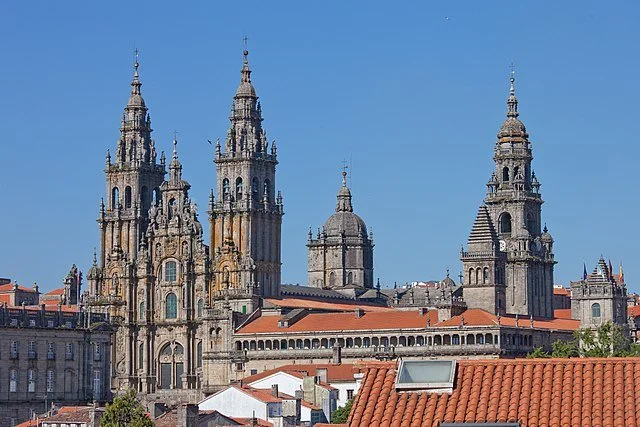
Cathedral of Santiago de Compostela. Luis Miguel Bugallo Sanchez. CC BY-SA 3.0.
Every year, hundreds of thousands of adventurers journey across a vast system of European hiking routes known as the Camino de Santiago. Dating back to the 9th century C.E., dozens of trails have long served as a Christian pilgrimage that ends at the city of Santiago de Compostela in Spain, where the cathedral houses the remains of Saint James. According to legend, Saint James, who was assigned to spread Jesus’ teachings throughout the Iberian Peninsula, was buried in northwest Spain after he was martyred, where the city is now located. The first pilgrimage to this site was done by Alfonso II, King of Asturias, in 815 C.E., when the burial was rediscovered. After building a church on the same spot, it became an increasingly popular pilgrimage among Christians across Europe.
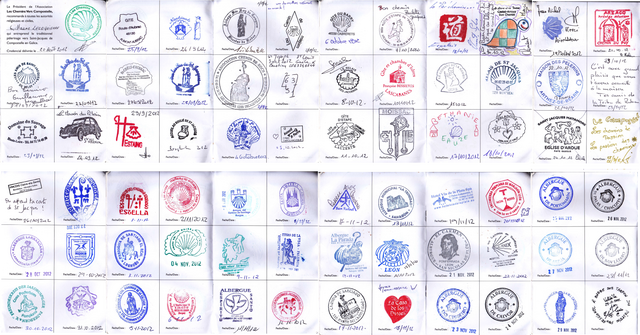
Pilgrim’s Passport. Guillaume Lecoquierre. CC BY-SA 3.0.
Today, the journey continues to be spiritually significant, but its gradual prominence as a tourist destination has attracted a wider range of visitors with its beautiful views, historical and cultural discoveries, fitness challenges, and meditation. There is no official starting point, and, because some roads were established in the home country of visiting Europeans, some are over 600 miles long. However, for those planning to embark on the Camino de Santiago, walking at least 62.2 miles will earn you the Compostela, a certificate declaring that your pilgrimage is completed. In the Middle Ages, this accreditation was necessary for pilgrims to be allowed access in certain places, but today it is a symbol of history. This requires a Credencial, a physical document held by pilgrims, which is to be stamped with the date at the beginning and end of each stage, meaning that a hiker can do the pilgrimage in phases, as long as they pick up from where they left off. Different shops and churches along the Camino routes and other authorized organizations distribute these “pilgrim passports,” which can be returned to the Pilgrim’s Office in Santiago de Compostela for the official document.
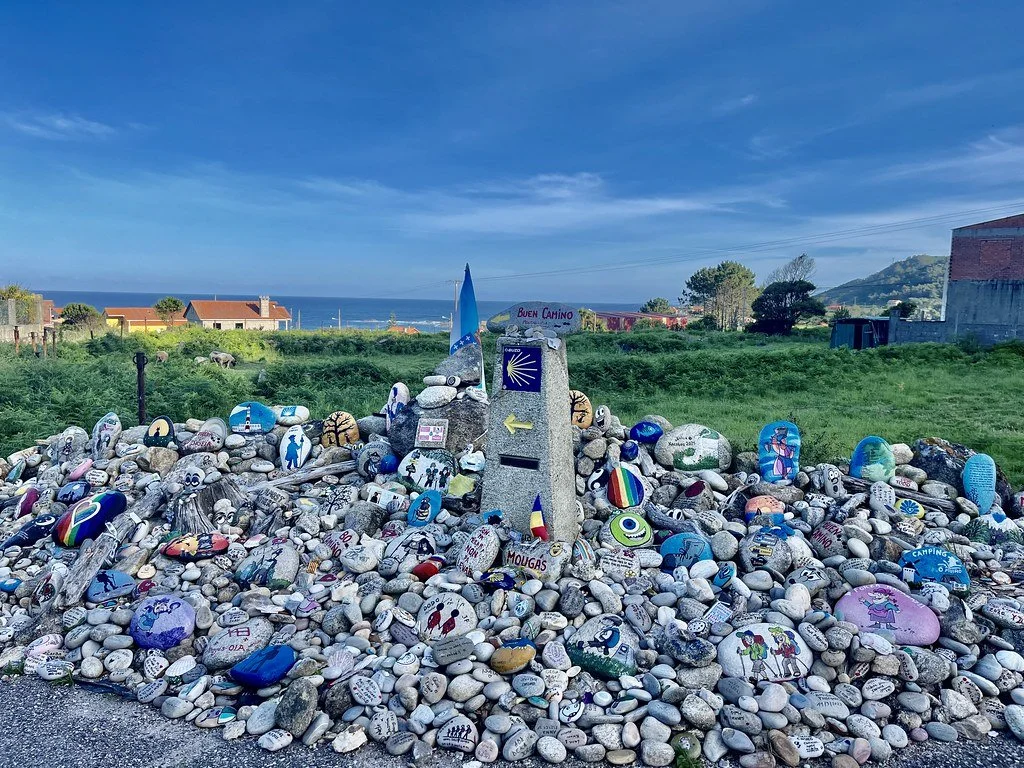
Shell on the Camino Portugues. G Travels. CC BY-NC 2.0.
Because many travelers seek to obtain this accreditation, the most popular Camino trails begin in France, Spain and Portugal. Each route has its own unique history and heritage, and choosing the most suitable one for you depends on the experiences each individual hike offers. The most famous route begins in Saint-Jean-Pied-de-Port in France, known as the Camino Frances. Featured in many popular books and movies, this route is about 500 miles and is also known for many attractions, such as Pamplona, famous for the bull run; Burgos, the site of a tremendous cathedral; or the historic Templar Castle in Ponferrada. The last 63 miles of the route experience the most foot traffic due to their length and popularity among first-time pilgrims, making it very social and friendly. The Camino Portugues is the second most popular route, starting in Porto and following about 400 miles of the coastline, as it is well-known for its ocean views and peaceful coastal experience. Highlights along this trail also include small medieval towns like Santarem or Tomar, as well as delicious seafood and regional wines, perfect for religious history buffs and foodies. A lesser-known route, but just as compelling, is the Camino Ingles, a favorite among pilgrims coming from Scandinavia, Britain and Ireland. This route is much smaller than the previous two, beginning in the Spanish towns of Ferrol, about 74 miles long, or A Coruna, about 47 miles. Despite a much shorter length, it also contains picturesque views of rural landscapes, peaceful woodlands and charming villages of the Spanish northwest. This is also what contributes to fewer crowds and a more personal journey that is highlighted by local hospitality and cuisine. The symbol of a shell can be seen throughout any Camino route, a representation of its culture: the bending lines connecting at the bottom, parallel travelers gathering at the final pilgrimage site.
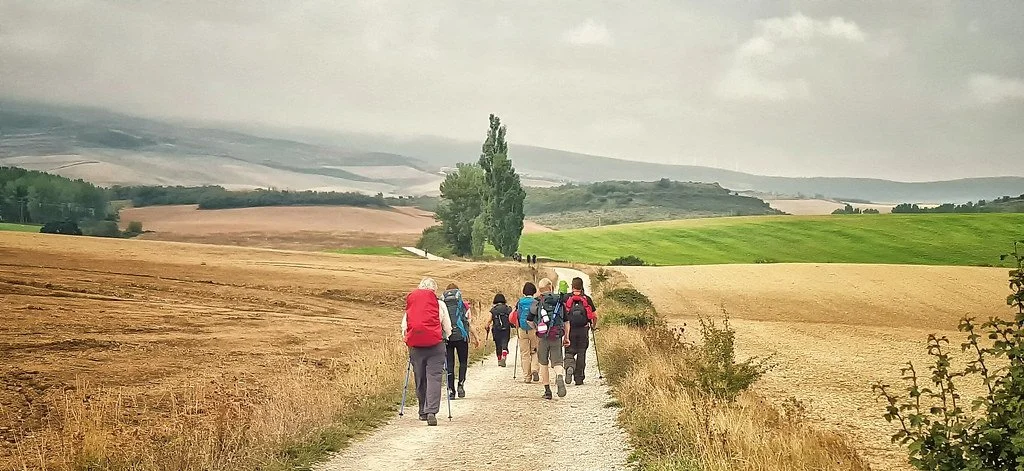
Hikers on the Camino de Santiago. Landscape and Travel. CC BY-NC-SA 2.0.
People of all ages and backgrounds complete the Camino at various times of the year, depending on what works best for individual plans. While the busiest months are July and August, as they align with the holiday season in Spain, some trails are open throughout the year, such as the Camino Frances. Many choose to avoid summer months because of the crowds, opting for lesser-traveled paths; however, some routes are closed during winter months due to weather. Different times of the year can also offer periods of sunny skies and heat, while others are colder and see more rainfall. Nevertheless, there are many different options for routes throughout the continent that will most likely suit one’s personal preferences. Each path will also take a different amount of time to complete. The entirety of the Camino Frances stretches around 35 days, while the Camino Portugues can last about 30 days, and the Camino Ingles can take about a week from Ferrol to Santiago. As such, travelers can achieve the Compostela in about five to six days, walking about 13 miles on average. Various accommodations are also offered on each route, ranging from hostels, known as albergues, to guesthouses and hotels. Albergues are public and offer beds in dorms, served on a first-come, first-serve basis, and are especially popular along the Camino Frances, adding to the social experience. Guesthouses, alternatively, are small family-owned businesses, and hotels can be more luxurious, but both offer private beds and bathrooms. Depending on which route is being taken, smaller villages usually have a more limited selection of options, while bigger towns and cities will have more choices and styles, but all tend to get busier and more booked as the year goes on. To best prepare for the hike, it is also important to pack necessary materials, including a large backpack, valid IDs and passports, a water bottle, toiletries with plenty of sunscreen and soap, a first-aid kit and eating utensils to use for meals in the accommodations. It is also best to wear clothes well-suited for hiking, such as t-shirts, shorts, hiking boots, and layers for warm and cold weather.
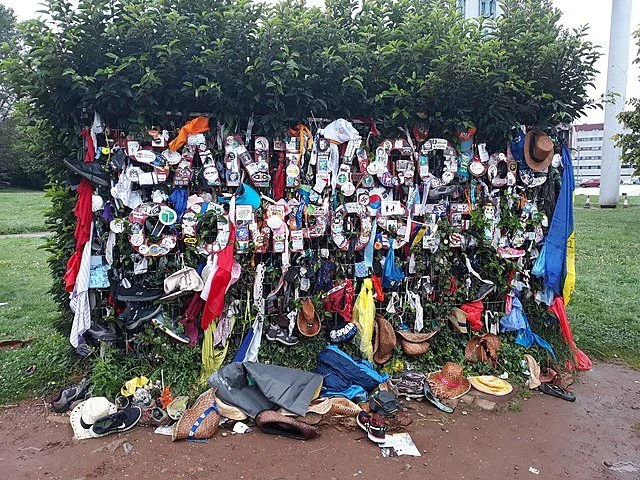
On the Camino Frances. Simon Burchell. CC BY-SA 4.0.
No matter what route you take or the experience you are seeking out, the Camino de Santiago is a beautiful pilgrimage that explores religious history and culture throughout Europe. Anyone endeavoring to embark on this journey can make the most of their experience by planning their trip according to where they want to go, their prefered weather and how long they want to hike. Because of this flexibility, the Camino is a great pilgrimage for anyone desiring a religious expedition or simply an unforgettable adventure.
Julia Kelley
Julia is a recent graduate from UC San Diego majoring in Sociocultural Anthropology with a minor in Art History. She is passionate about cultural studies and social justice, and one day hopes to obtain a postgraduate degree expanding on these subjects. In her free time, she enjoys reading, traveling, and spending time with her friends and family.