
Daud Azfar
With conflicts around the world heating up, the efficacy of diplomacy is put to the test as the threat of nuclear proliferation looms.
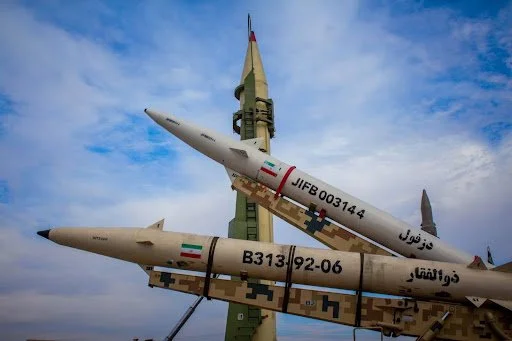
Iran’s ballistic missiles, Moslem Danesh, Jeremy Bishop. Unsplash.
As a precarious ceasefire holds between Tehran and Tel Aviv, the world breathes a sigh of relief that the “12 Day War” didn’t escalate into an elongated regional conflict. In an address shortly after the U.S.’s strikes on Iran, the UN Chief, Antonio Guterres, urged that "diplomacy must prevail.” Just two months ago, a ceasefire was similarly brokered only four days after an intense, direct military conflict broke out between nuclear-armed rivals Pakistan and India. Despite fighting between Russia and Ukraine continuing for years, Russia hasn’t made a “tactical” use of its nukes, contrary to prior warnings from some analysts, like the decorated political scholar John Mearsheimer.
In fact, it’s almost become a common saying that, despite expert warnings, nuclear conflict will never occur simply because the price is too high. In international relations, specifically in contexts where two nuclear-armed nations face each other, this concept is referred to as mutually assured destruction or MAD. This rhetoric goes back to what is sometimes called the “bipolar” world order of the Cold War, when the U.S.-led Western Bloc, which included the nuclear-armed U.K. and France, and the Soviet Bloc were the two major world powers. With a clear power balance, limited uncertainty and the threat of MAD, nuclear weapons acted as a mutual deterrent that kept both sides in check. It was in this period that the U.S. and Soviet Union opened the Nuclear Non-Proliferation Treaty, or NPT, for signature.
The treaty, which has been widely ratified, called for the non-proliferation of nuclear weapons and the safe use of nuclear energy. It legitimized the weapons of the existing nuclear powers, which now included China on top of the U.S., Soviet Union, U.K. and France. Four sovereign states would go on to produce and retain their own nuclear weapons, namely India, Pakistan, North Korea and Israel. Every country with the exception of these four nuclear powers and South Sudan, which is the world’s youngest country, is a signatory to the NPT.
Notably, this treaty kicked off a period of nuclear de-escalation and diplomacy through key international institutions. The NPT was verified by the International Atomic Energy Agency, and several other important treaties and agreements would follow. For instance, as the Soviet Union neared collapse and U.S. dominance seemed inevitable, both countries disarmed their massive stockpiles under the START agreement. As well, South Africa even gave in to international pressure to give up its own armed nuclear program. In the decades that followed, the U.S.’s economic and military hegemony dampened the risk of nuclear armageddon. However, as the economic power of state actors in Europe, East Asia and beyond has grown and India, Pakistan, North Korea, and Israel have enriched uranium to develop their own nuclear weapons, the world is transitioning to a state of “multipolarity.” Simply put, it means that several great powers exert significant influence in world politics. Unlike the bipolar and unipolar world systems of the past, where the power dynamics and steps to resolution were fairly clear, a multipolar system is far more complex and uncertain due to its many actors and interests.
Take the Pakistan-India conflict. China supports Pakistan both militarily and economically, in part to counteract India’s regional strength. The U.S. seeks to support India to counter China’s growing influence, but it also has a strategic partnership with Pakistan relating to counterterrorism efforts and has a vested interest in keeping a historically Russia-aligned India in check. Confusing, right? If we circle back to where we started, the ceasefire between Israel and Iran, we can see that the threat of conflict here is far different from the nuclear proliferation of the past. Some analysts say Iran could recover its lost progress in a matter of months, and if they do happen to develop nuclear weapons, Saudi Arabia, its regional rival, has vowed to follow suit. Israel, on the other hand, continues to deny the presence of its nuclear arsenal, though experts agree it exists, and no real effort toward disarmament has been put on the table for a lasting peace.
Although the U.S. managed to broker a ceasefire in both of these recent conflicts, they are minor pauses in longstanding issues that are intensifying. The emerging multipolar world order makes for a situation in which the ability, or even willingness, of the U.S., U.N. or China to prevent nuclear proliferation among states is put into question. However, it’s hard to say what the future holds in this regard, especially because of the fact that despite increased military spending and conflicts, the world is far more interconnected and interdependent than it was in the past. This is most manifest in the U.S.’s surprising recent deal with Yemen’s Houthi rebels, whose activities were disrupting global trade.
Analysts stress that this threat of nuclear proliferation is real and serious. Although the U.N. Chief urges that “Diplomacy Must Prevail,” we cannot say that it will unless the international community chooses to make it a priority.
In the words of journalist Sydney J. Harris, “Nuclear war is inevitable unless we make it impossible.”
GET INVOLVED:
To learn more about dealing with the nuclear issue, Ploughshare’s podcasts and stories can provide engaging and insightful information, while the Nuclear Threat Initiative and Ground Zero have more traditional, scholarly reports and provide opportunities to attend events, as well as other kinds of positive action.

Daud Azfar
Daud is a second-year student at the University of Virginia, planning on majoring in Politics and Economics. Having grown up in Pakistan, he’s very passionate about the importance of education and social justice. Outside of school, he enjoys spending time with his friends, playing pickleball, and exploring new coffee shops.