
Explaining the decades-long issues that surround Mindanao Island.
Read MoreBrain Stunting: The Invisible Effect of Malnutrition in the Philippines
Brain stunting, a detrimental cognitive effect of early childhood malnutrition, threatens to preserve economic inequality and injustice in the Philippines.
Read MoreIsland Hopping Off The Grid: 5 Filipino Islands You’ve Never Heard Of
From unspoilt beaches and heritage sites to surfing hotspots and sunset views, there is plenty to choose from in the Philippines without running into massive crowds.
Read MoreDaring Divers: The Superhuman Bajau People of Southeast Asia
Mastering the seas has long been a task attempted by many seafaring cultures around the world. The Bajau people, however, seem to command the ocean with an unmatched talent.
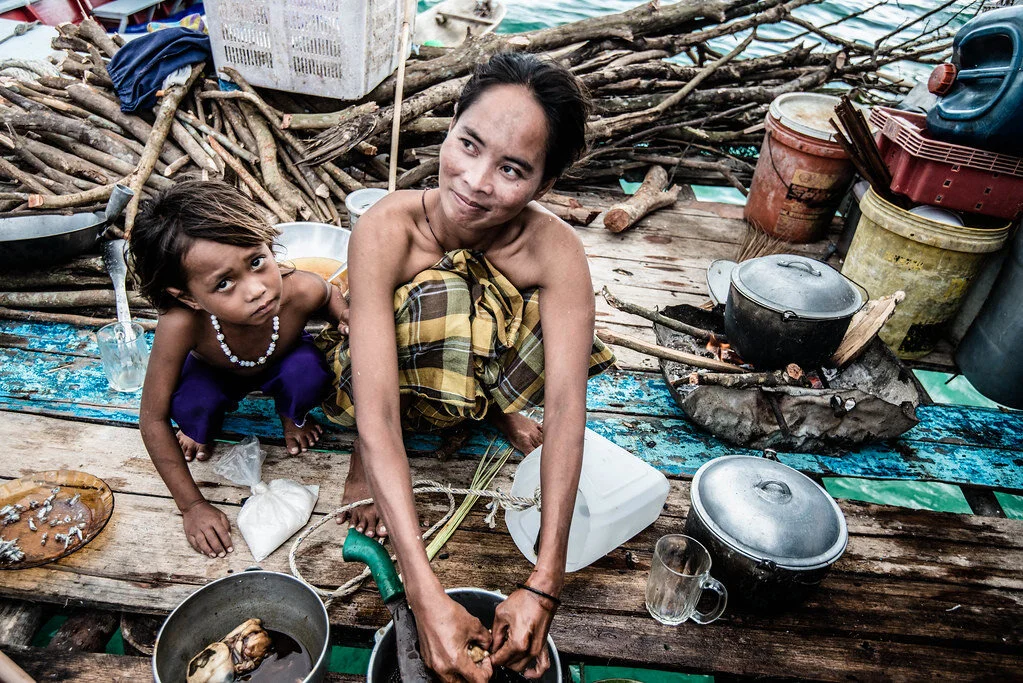
Bajau people. johnjodeery. CC BY 2.0.
Wandering the Sulu Sea off the coast of the Philippines, the Bajau people spent the last 1,000 years accumulating an impressive track record for their seafaring ways. Often referred to as “sea nomads” or “sea gypsies,” the Bajau people live almost entirely on houseboats, and only return to land to bury their dead, trade, construct their houseboats, and wait out sea storms. This ethnic group sails the waters around Indonesia and Malaysia as well, which are highly congested with piracy; the Bajau people usually flee from attack instead of choosing combat. Because they live solely on the waters, the ethnic group does not have any official affiliation with neighboring countries.
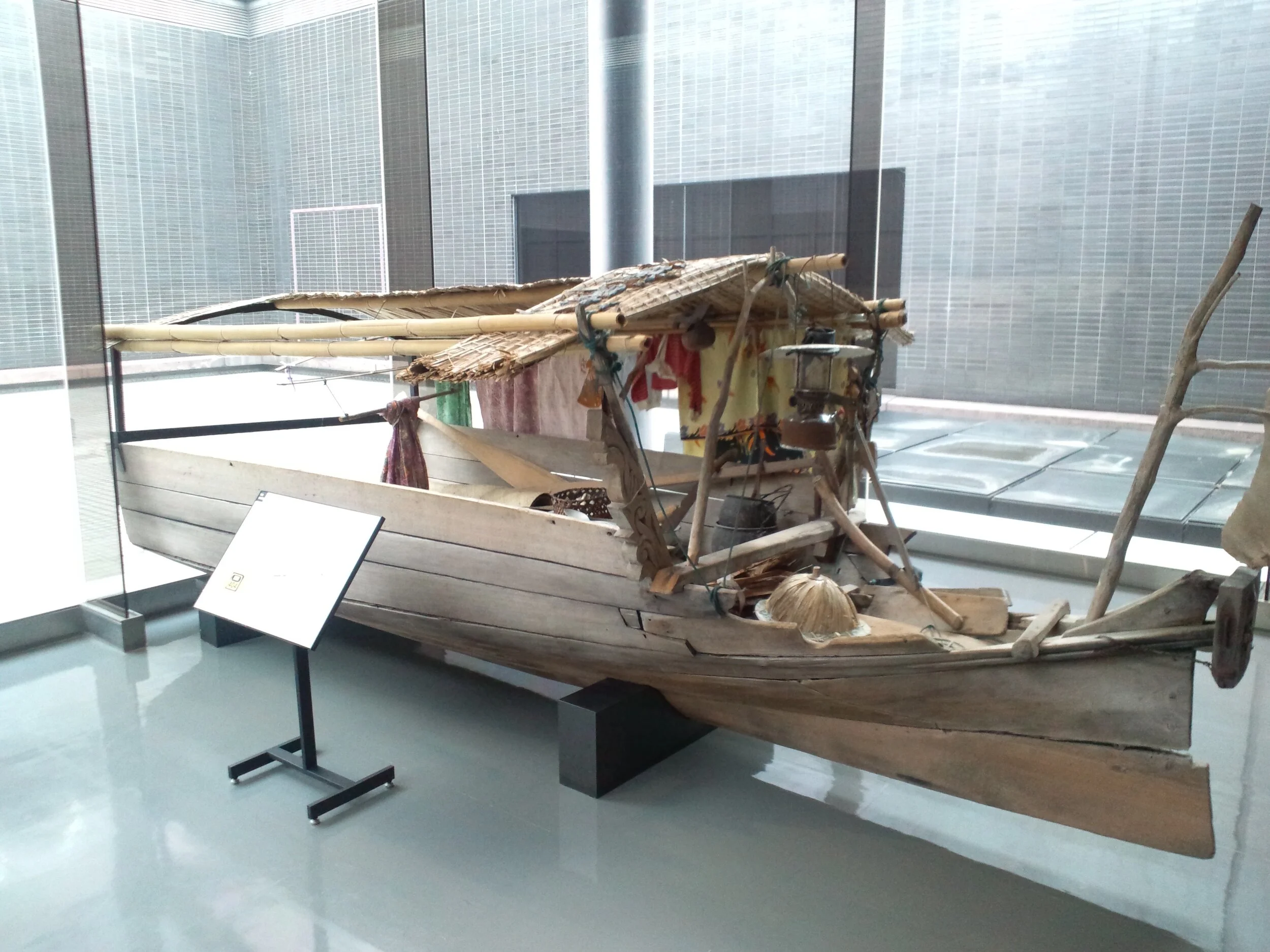
Houseboat of the Bajau people. Yanajin33. CC BY-SA 4.0.
The exact origins of the Bajau people are unknown, but it is presumed that they are of a Malay background. Most of their known background is contained in oral history, with much of it being unraveled through folklore. One story of their origin recounts the tale of a man named Bajau who was known to displace the water in rivers using his body mass. It is told that villagers then followed him to easily collect the fish that were left behind. Envy of his people’s large fish hauls raged among neighboring tribes, but all attempts to kill Bajau were unsuccessful. His people then thrived and became the rulers of the oceans that they are today.
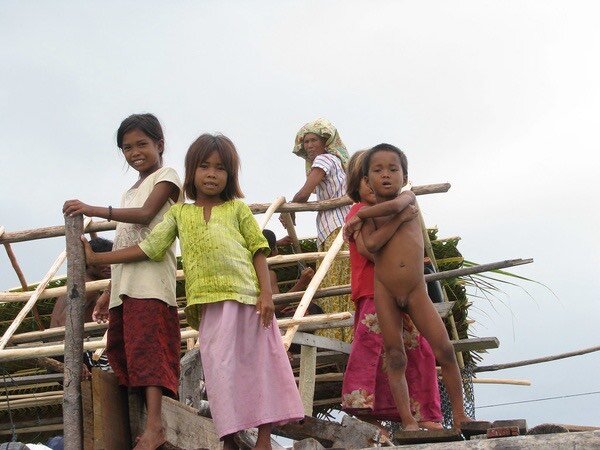
Bajau children. Education Projects for Children in Sabah. CC BY 2.0.
The Bajau people are famous for their incredible fishing expertise, with specific mastery of diving. Researchers have observed Bajau divers reaching depths of over 230 feet and remaining underwater for several minutes at a time. Yet, the most surprising aspect of their expertise is that it is completely unaided; the Bajau people do not use wetsuits or advanced diving technology. They rely solely on wooden goggles and makeshift spears, but display unparalleled precision in spearfishing. Master divers spend about five hours a day underwater and catch almost 20 pounds of fish and other elusive marine life.
Although most of the Bajau people’s skill comes from endless hours of practice, scientists have found that their bodies adapted to their active lifestyle. The Bajau people are found to have spleens larger than the average human, which researchers conclude is due to their long diving hours. The spleen stores red blood cells needed in oxygen retention, so larger spleens correlate positively with intense diving. Other studies have found that they also possess different variants of genes that assist in long dives, such as that of BDKRB2 which is linked to the rate in which oxygen spreads throughout the body.
Little can be traced of the origins of the Bajau people, but they surely hold a steady future in being uncontested overlords of the oceans.

Ella Nguyen
is an undergraduate student at Vassar College pursuing a degree in Hispanic Studies. She wants to assist in the field of immigration law and hopes to utilize Spanish in her future projects. In her free time she enjoys cooking, writing poetry, and learning about cosmetics.
Isang Milyon: Save the Philippine Sea
It's been said the Philippines is worth dying for.
We believe the Philippines is worth diving for.
“As the world's second largest archipelago with over 7,100 islands, Filipinos depend on the sea for livelihood, food, tourism, economy, and ultimately, our lives. Environmental conservation shouldn't be limited to NGO workers and researchers-- it should be accessible, relatable, and part of our lifestyles.” This short film was shot in tandem with the work being done by Save Philippine Seas. “SPS aims to narrow the gap between scientists and the general public, the old and young, and the passionate and indifferent by mobilizing citizen-led initiatives that are empowering Filipinos towards collective action and behavior change.” -Save Philippine Seas
President Duterte Calls to Revive the Death Penalty
The president of the Philippines, Rodrigo Duterte, requested to revive the death penalty a few days ago, solely for drug-related crimes.
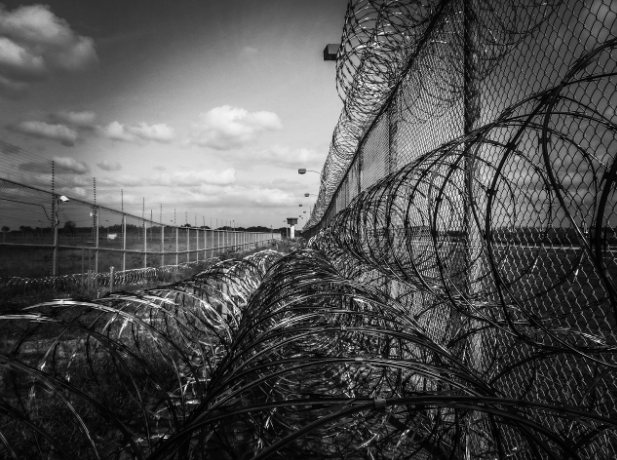
HIgh level drug offenders could go from prison to the death penalty, if Filipino President Rodrigo Duterte’s call to revive it is sucessful. Jody Davis. CC0.
Filipino President Rodrigo Duterte asked Congress to revive the death penalty for drug-related crimes on July 22, during his State of the Nation Address (SONA).
Speaking before a joint session of Congress, he first brought up the revival as the first priority legislative measure in his fourth Address, according to Rappler. His party, PDP-Laban, currently has a supermajority in the House of Representatives. He mentioned the 5-month siege that evolved between the state and extremists after terrorists held onto drugs in Marawi in May 2017, citing it as a prime example as to why further action and harsher actions were and are necessary.
Duterte’s war on drugs has been ongoing since his candidacy in 2016. He has been calling for the reinstatement of the death penalty for the same length of time. He also requested capital punishment in his 2017 SONA.
Senator Ronald dela Rosa, a trusted aide to the president, won his senatorial election in 2019 on a single promise: to bring back the death penalty for drug-related crimes.
Duterte also effectively began a war on corruption in Filipino society. On July 19, three dozen of Duterte’s critics were charged with sedition and cyber libel after a series of anonymous videos that accuse the president and his family of having monetary links to the illegal drug trade, according to Newsweek.
Amnesty International believes the call will only increase the country’s environment of exemption from punishment during the continuous war on drugs.
However, Senate President Vicente Sotto III believes that restricting the reinstatemnt of capital punishment to high-level offenders would be more likely to pass in the Senate. He also mentioned this bill would be among the first to be discussed. Two years ago, the House of Representatives passed a measure for the death penalty for crimes related to drugs.
“The state of our nation is a state of mourning. We should not be burying our children amid deadly and ill-conceived police raids,” said Butch Olano, Section Director for Amnesty International Philippines, according to Amnesty International.
There has been one conviction of police officers, for the killing of a 17-year-old boy. During a police operation in late June 2019, a three-year-old girl and a police officer were killed. The girl’s mother and the government both have different stories about the operation. Overall, so far the Philippine government has noted at least 6,000 killings at the hands of police officers. Amnesty International has found that there are many more unlawful killings, likely done by armed people with ties to the police.
Olano says that, despite being told to file cases before the courts if they feel there has been an unlawful death or that the police have acted illegally, many families are too afraid to speak up. There are also the problems of costs or being unable to secure evidence or the police reports.
The Office of the High Commissioner for Human Rights is meant to deliver a report in June 2020 on the state of human rights in the Philippines. President Duterte’s remarks didn’t commit to assisting with this report, which was requested last month in a resolution by the UN Human Rights Council, particularly since Duterte has been accused of human rights abuses.
Duterte has been battling against drugs since before he was elected in 2016. Requesting the revival of the death penalty for drug-related crimes may be extreme, but it isn’t terribly unexpected from this president. If this request passes, Duterte’s war on society’s corruption will most likely increase, as he will have already have gained one victory. Amnesty International’s prediction also seems likely of coming true. However, if this request isn’t passed, it’ll be a blow to Duterte’s war on drugs. The war itself will continue, but this particular battle won’t. The human rights report will be written throughout this year and next, regardless of what happens with the death penalty. President Duterte is already under investigation, though the Philippines will become an even more dangerous place if the death penalty is passed in any form.
NOEMI ARELLANO-SUMMER is a journalist and writer living in Boston, MA. She is a voracious reader and has a fondness for history and art. She is currently at work on her first novel and wants to eventually take a trip across Europe.

Daydream in the Philippines
Visiting the Philippines has always been on the list of places Pete R. wanted to go to and since he was back in Asia during the whale shark season, he decided to take the opportunity and traveled to the Philippines for 2 weeks. His plan was to spend the first week exploring the volcano part of the Philippines and last week in the islands.