
Hawaii is one of the most well-known destination spots in the world. Some Native Hawaiians are begging us not to come.
Is Ethical Tourism in Hawaii Possible?
How to visit the Hawaiian Islands while minimizing your environmental and cultural impact.
Read MoreAll-Woman Rowing Team Takes On The Great Pacific Race
Four women compete in the Great Pacific Race, rowing from San Francisco to Hawaii.
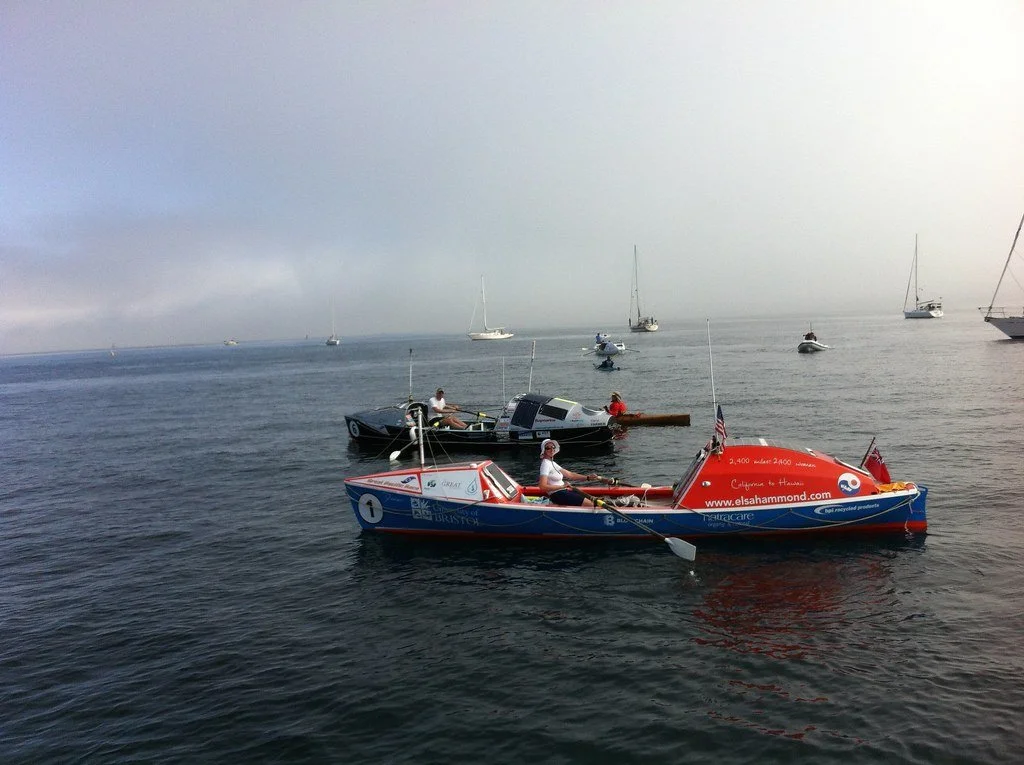
For those who row competitively, completing the Great Pacific Race (GPR) is the pinnacle of a successful career. The race – which is a total of 2,080 miles (3,328 meters) – starts in San Francisco and ends in Hawaii. Teams of 3 or 4 are able to enter and are challenged to make it to Hawaii in as little time as possible. Though completely alone in their rowing efforts, every team is monitored from afar during all hours of the day by GPR crew in the instance of any emergencies.
Latitude 35, an all-female rowing team vetted with years of ocean rowing experience, has decided to challenge themselves in completing the Great Pacific Race. Among them are Adrienne Smith, Libby Castello, Sophia Denison-Johnson and Brooke Downes. They are not the first all-women’s team to compete, but they may be the fastest to ever finish the race if they maintain their pace on the last leg of their journey. The previous record that Latitude 35 wishes to crush is set by the Ocean Sheroes, who took on the challenge in 2021 and completed it in a little over 35 days.
The first Great Pacific Race occured in 2014, and the organizers have held four subsequent “campaigns” since, with a total of 19 teams to ever complete the journey. Usually four or five teams will compete in the same race at a time, traveling from all over the globe to test their strength and willpower. Within the five sets of races that have taken place over the years, itvNews reports only “two four-person all female teams” have finished the race, making Latitude 35’s journey all the more special.
Additionally, competitors are racing against the clock, not necessarily each other. To “win” the race, teams have to complete the journey the fastest, so the women of Latitude 35 are technically competing against teams – specifically the Ocean Sheroes – from a year ago who hold the current time record. Men and women may compete during the same campaign, but the race time records are separated by gender. However, it is important to note that just completing the challenge is a victory in itself; holding the world record for fastest time is just an additional win.
Having left on June 21st, the Latitude 35 women have just about 495 miles (792 kilometers) left in their journey, and have done around 1590 miles (2,544 kilometers) in just over 28 days. They are on track to beat the pre-existing time record.
Besides the competitive nature of the race, it is also an incredible immersive experience with nature. Traveling on the open ocean for days allows participants to become up-close and personal with the ocean and all of its wonders. The Great Pacific Race describes the experience: “You will see shooting stars and the most incredible skies. You will experience nature in a way that few people can even imagine.” Latitude 35 has described their experiences with wildlife, including flying fish that have hopped around and into their boat.
The team has faced a few challenges along the way, including Tropical Estelle and Hurricane Darby, which threatened to hit the women’s route while they were on the open waters. Fortunately, neither the tropical storm nor the hurricane has found its way to the team, and the women are still safely continuing on.
The Great Pacific Race is a challenge of extraordinary athletic and physical strength. Calloused and blistered hands, sunburnt skin, hunger and fatigue all challenge the rowers. It is also a true test of emotional stamina and friendship. There is no reprieve from the rowing and physicality of the sport, just as there is no reprieve from your teammates. Latitude 35 has taken to Instagram to pass the time, and as they speak of their journey and the hardships they face – like rowing at night when all you want to do is sleep – they have gained a large following.
Posting regular updates lets followers know where they are in their journey, as well as how they pass the time. Singing, laughing and making funny videos has helped the women stay motivated to finish their race. Additionally, Latitude 35 has started collecting donations for the Anxiety and Depression Association of America, raising money and awareness of the organization and what it has to offer athletes and those suffering with mental illness.

Ava Mamary
Ava is an undergraduate student at the University of Illinois, double majoring in English and Communications. At school, she Web Writes about music for a student-run radio station. She is also an avid backpacker, which is where her passion for travel and the outdoors comes from. She is very passionate about social justice issues, specifically those involving women’s rights, and is excited to write content about social action across the globe.
‘AILA’AU's Volcano: The Forest Eater
On April 30th, 2018, Hawaii’s Puʻu ʻŌʻō crater collapsed after erupting for 35 years.
Islands of Aloha
There's more to Hawaii than beaches and volcanos. In this video, you'll see waterfalls, stunning mountain ranges, star studded skies and even temples. "Islands of Aloha" captures what makes the most isolated inhabited landmass in the world so special.
Hawaii’s Long Legacy of Lei Making
In Hawaii, there’s no better way to say and share aloha than with a lei. The floral craft, which dates back to traditional times, may seem straightforward to outsiders, but it comes in many forms created across the Islands. Travel to the island of Oahu, where three master artisans want to introduce you to the lei’s vibrant past and thriving present.
The Hawaiian Rain Dancers Who Summon Storms
On the island of Hawaii, the rain dancers of Waimea perform their art for the only audience that matters: their ancestors. When they call for rain and snow, they dance not to entertain, but to feed and nourish their land. Each performance is a physical manifestation of the spiritual world, a chance to connect with the natural land we inhabit. Practicing a centuries-old form of hula rarely seen in public, these dancers carry on generations of tradition with every graceful move and each handmade kapa garment.
More Than a Dance: What It Takes to Be a Hula Champion
Hula is a dance of illusions. Behind the grace and the sway, there is grit, athleticism and a knee-breaking, blister-inducing effort to leave everything you have on the dance floor. Every year, the best compete at the Merrie Monarch Festival, the world’s most prestigious hula competition. Kayli Ka’iulani Carr, who is in her last year of eligibility for the contest, is trying to win the festival’s solo competition, Miss Aloha Hula. Does she have what it takes?