
These cafes reveal Hanoi’s history through the architecture and everyday life that continue to shape the city today.
Read MoreEager for a New Adventure? Try Cloud Hunting in Vietnam
Temperature inversions throughout Vietnam’s mountainous valleys have popularized this unique pastime, as tourists and locals alike venture into the sky in hopes of catching a sea of clouds beneath them.
The Victims of Agent Orange Making a Living Crafting Art
Ryan Yianni
On the outskirts of Ho Chi Minh City, victims of American bombing achieve financial independence through their unique artwork.
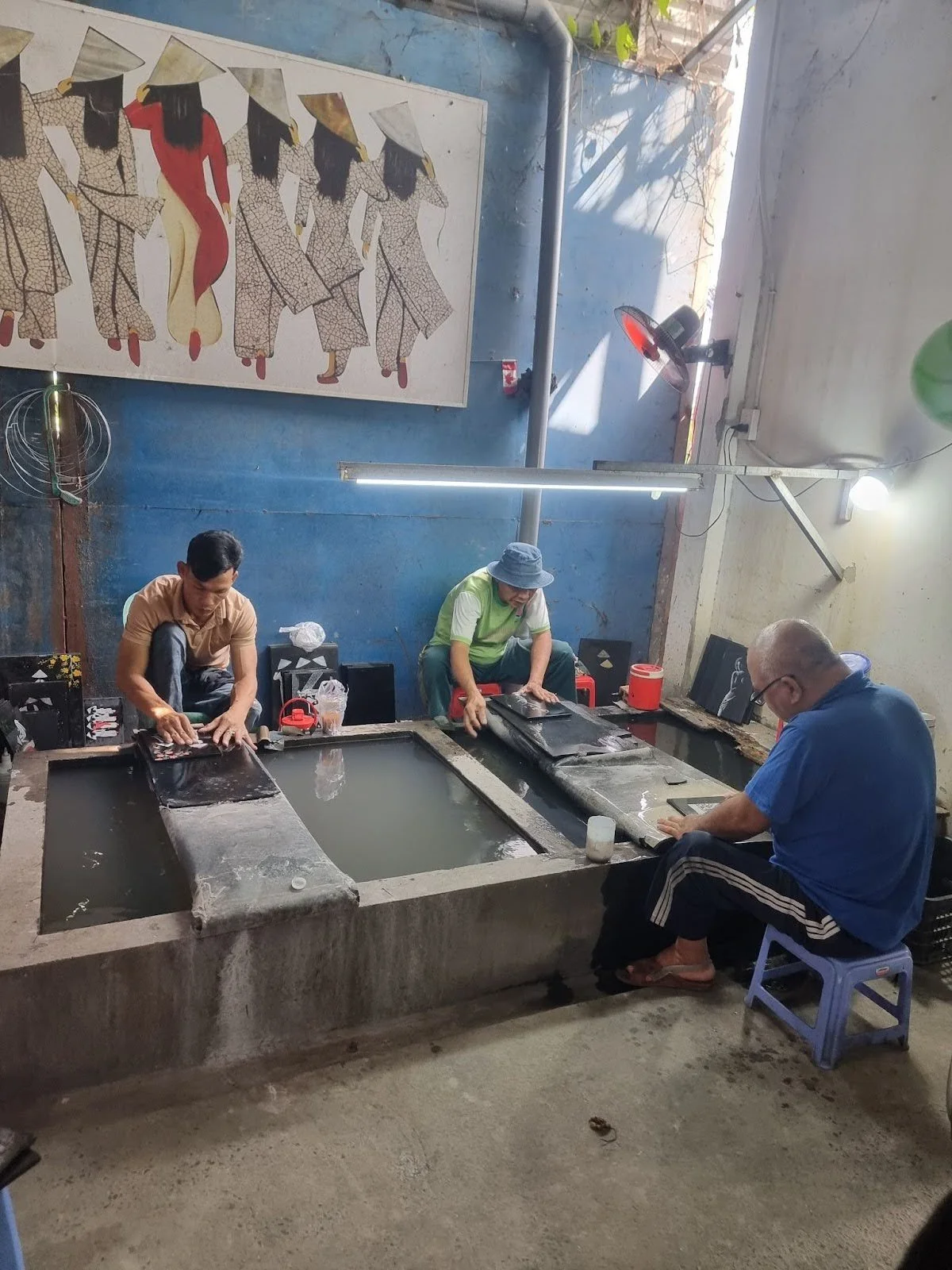
Artists working at Lang Viet Lacquers. Ryan Yianni.
If you ever find yourself in Ho Chi Minh City, it is almost a given that, at some point in your journey, you will travel to the Cu Chi Tunnels. Located just under 30 miles north of the country’s largest city, this famous spot along the Vietnam War-era network of underground tunnels has become a must-see attraction. There are a myriad of tour operators running daily trips to the tunnels, no doubt with some stops along the way. On my tour, our first visit was Lang Viet Lacquers, a small art factory on the outskirts of the city with a unique story.
Lang Viet Lacquers, situated in the city’s northwest, is a government-supported enterprise allowing victims of America’s brutal Agent Orange bombing campaign to achieve financial independence through lacquer painting, an art form that has existed in Vietnam and Southeast Asia for over 2,000 years. The stunning artwork consists of rich, almost reflective colors, with the addition of eggshell and mother-of-pearl to create bright, contrasting sparkles against the background.
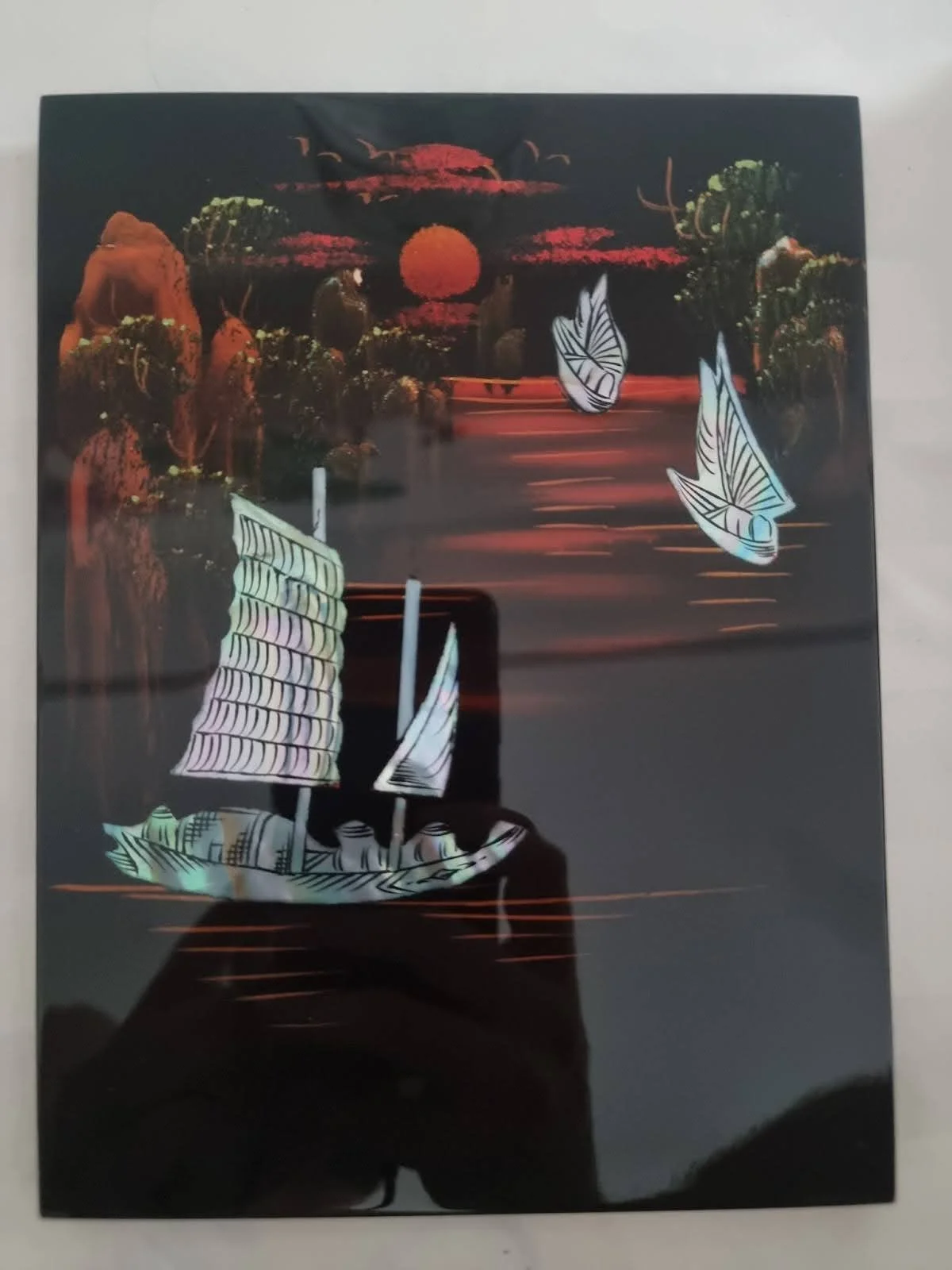
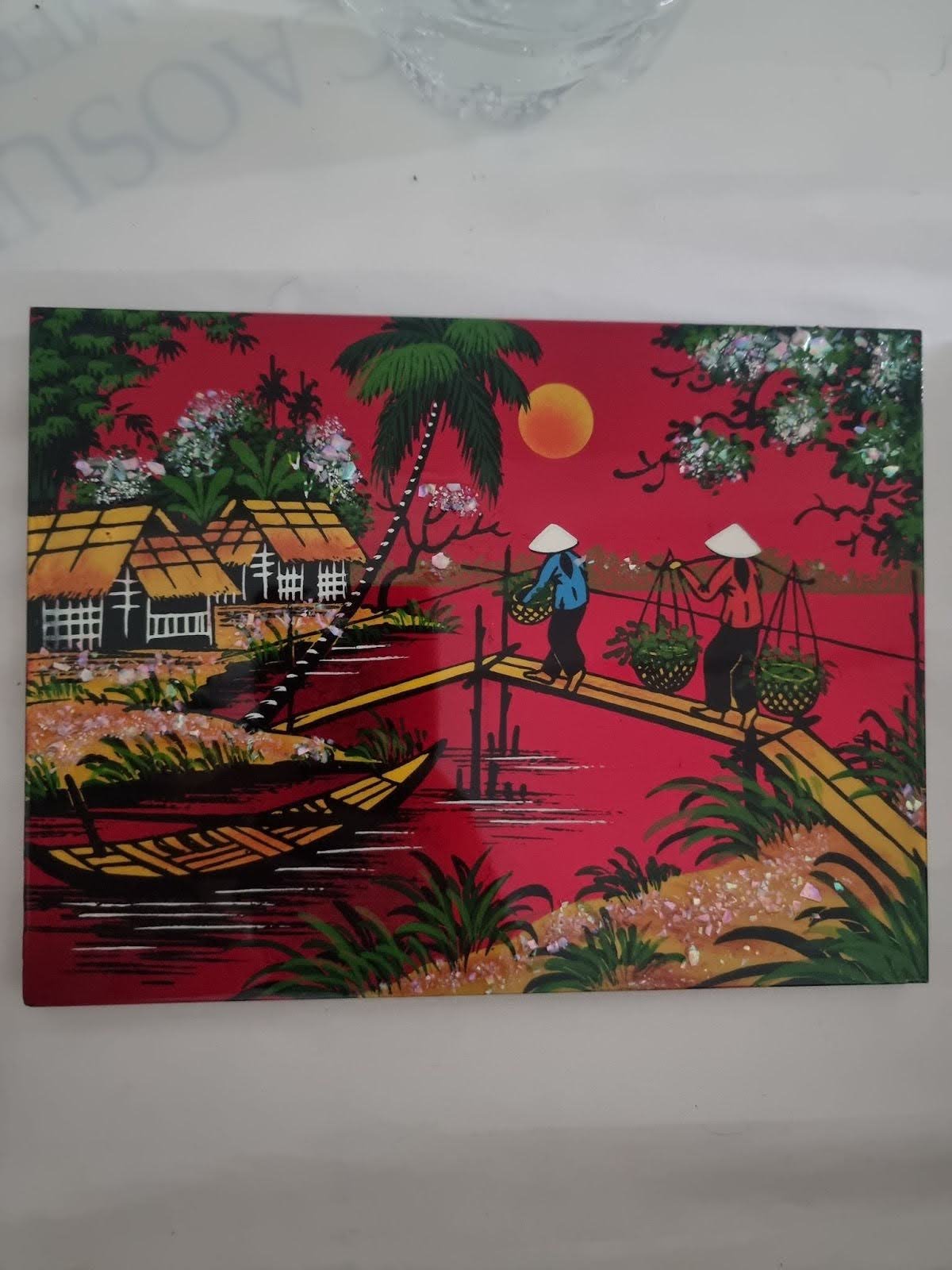
My two purchases from Lang Viet Lacquers. Ryan Yianni.
Arriving in the intense heat of the Vietnamese sun, we stepped off the coach and were ushered into the workshop, where we saw firsthand the artwork being created with painstaking care and detail. We were told how all the artists are victims of Agent Orange, the herbicide sprayed in large quantities over Vietnam by U.S. forces during the Vietnam War. These victims are not just war veterans; the devastating effects of Agent Orange were passed down to descendants of those affected, and the succeeding generations have suffered greatly in turn. For each work of art sold, the proceeds go directly to the artists, helping them achieve financial independence. Many of the injuries and conditions they suffer from mean they cannot work in the traditional sense, predominantly due to mobility or developmental issues, so this outlet allows them to maintain their freedom. In their shop, you are able to purchase a wide variety of items, from small souvenirs to large, wall-hung art, so there is something for everyone’s budget and luggage space.
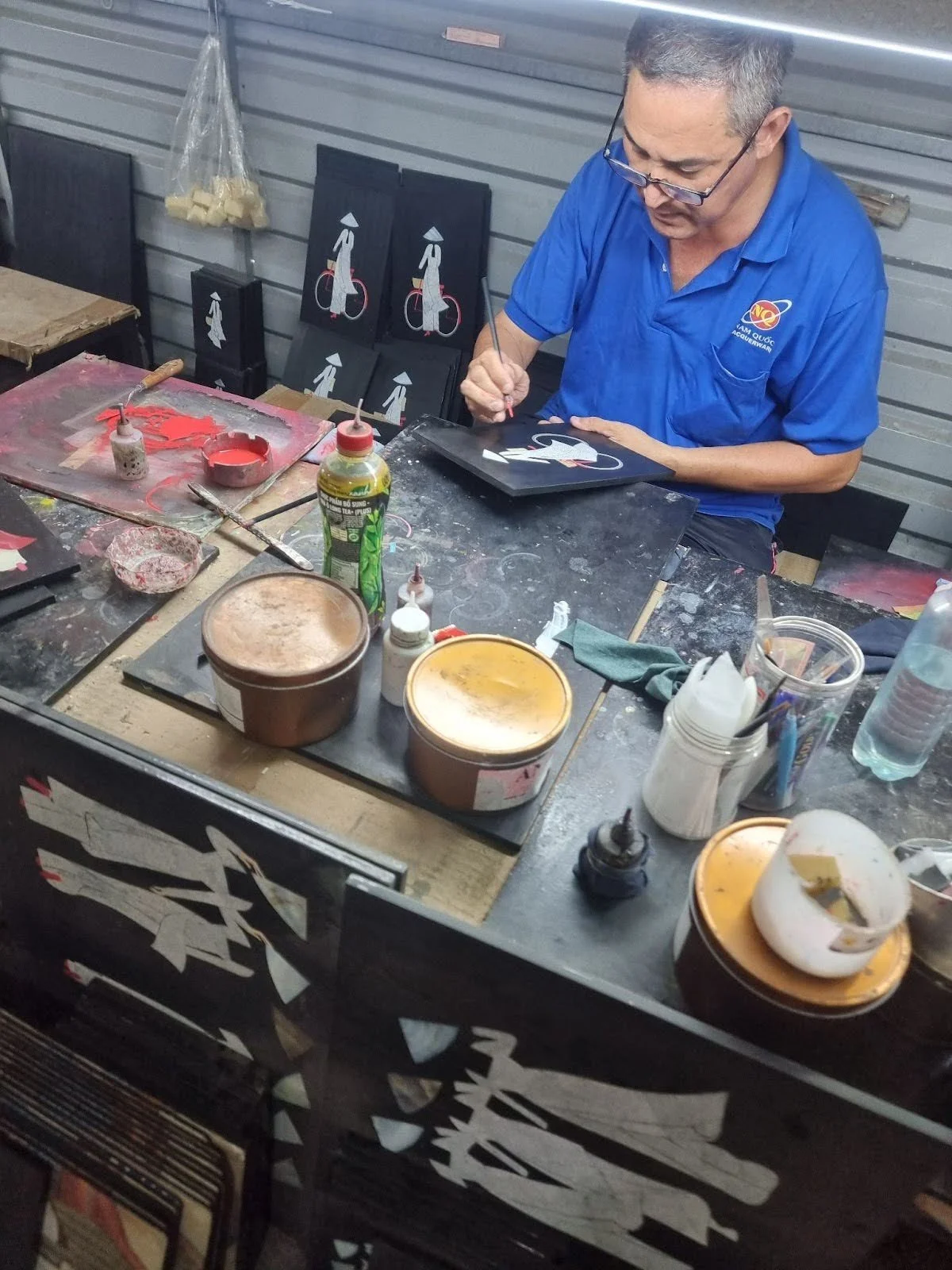
Artist adding finishing touches to painting. Ryan Yianni.
The actors behind Agent Orange initially claimed their intent to destroy the Vietnamese jungle and root out guerrilla forces deep in the overgrown countryside, but the effects were much more serious and long-lasting. Being sprayed across almost 3 million hectares, over 4 million Vietnamese were exposed to the chemical, and while those directly exposed suffered from health issues, such as multiple neurological disorders, increased cancer rates, heart disease and serious skin rashes and scarring, the effects of Agent Orange were also passed onto their children and grandchildren. Later generations of Vietnamese citizens whose parents and grandparents were victims of Agent Orange have suffered from cleft lip, heart defects, birth disorders leading to lack of limbs, increased cancer rates, congenital heart diseases and severe learning disabilities, to name a few. Studies have shown that Vietnamese exposed to Agent Orange also have a higher rate of dioxins in their bodies, which are highly toxic pollutants that can cause issues like chloracne, cancer, immune and reproductive problems, developmental issues and chronic illnesses.
One of the reasons for the continued effects of Agent Orange on the younger generations is the fact that these dioxins are still found in Vietnamese soil, water and food chain. It is consumed through contaminated crops and livestock, breathed in via dust and absorbed through the skin, meaning that Agent Orange has continued to plague Vietnamese civilians for decades after the last of the chemical was dropped on the country. Additionally, dioxins have a half-life of 7 to 11 years, meaning that the strength of the chemicals did not decrease until approximately 1980 and is still present today, although in lower quantities and intensity
Agent Orange also had a strong impact on Vietnamese wildlife: A post-war study found 24 species of birds and 5 species of mammals in an area of forest that had been heavily sprayed, compared to two non-sprayed forest areas that each had over 100 bird species and at least 30 mammal species. Studies have found that the rate of miscarriages and birth defects was significantly higher in women who had been exposed to Agent Orange. Research has also shown that U.S and Australian soldiers who were exposed to Agent Orange have a much higher risk of elevated blood pressure and tumors, among other health issues, while those soldiers exposed to the dioxins had a higher rate of soft-tissue sarcoma, a rare type of cancer found in muscle tissue. A 2021 study also found that American veterans exposed to the herbicide were almost twice as likely to develop dementia.
The United States began to deploy herbicidal agents in Vietnam in January 1962, with the launch of Operation Ranch Hand, although the first major operations did not begin until September, when mangrove forests on the Mekong River were targeted. The majority of Agent Orange usage was between 1966 and 1969, with an estimated 170 kilograms of dioxin dropped on Vietnam and even more sprayed onto the border areas of Laos and Cambodia. By 1971, the evidence of the harmful effects was beginning to be known, and the U.S. government halted all herbicidal spraying operations in Vietnam, with the remaining stock destroyed by 1977.
The use of Agent Orange was incredibly controversial at the time. The Federation of American Scientists urged the U.S. government not to use chemical and biological weapons unless used by the enemy first in 1964, concerned that the government was not discriminating between military and civilian targets. In 1966, a group of scientists led by John Edsall of Harvard University appealed to President Lyndon B. Johnson to ban the use of such weapons. The statement reads, “such tactics are barbarous because they are indiscriminate; they represent an attack on the entire population of the region where the crops are destroyed, combatants and non-combatants alike." Similar protests continued for the remainder of the war.
If you are able to visit Lang Viet Lacquers, it is well worth the trip. Being able to purchase some great souvenirs, along with helping those who have suffered the consequences of America’s brutal war, is a worthy highlight of a trip to Vietnam. I’m a big believer in leaving somewhere better than I found it, embracing local cultures and giving back to the communities I have discovered through my travels, and this is a great way to do all three.
GETTING THERE:
Lang Viet’s is located just nine miles north of the airport. You can book a Grab Bike from the center of Ho Chi Minh City near Ben Thanh Market, Saigon Central Post Office, Independence Palace or the Cathedral for about four dollars. It is also served by buses 13, 24, 74 and 94, which stop just outside the shop.
Ryan Yianni
Ryan is a lover of all things travel. After undertaking his first solo adventure in 2025, he has relocated to Australia from the UK. A history graduate from the University of the West of England, Ryan’s writing focuses on the historical issues faced by the places he has explored, looking at how the hardships of the past have been overcome and remembered.
7 Must-Try Foods in Vietnam
With 3 major regional cuisines, Vietnamese food is characterized by its fresh and fragrant flavors and ingredients.
Read MoreVietnam’s Floating Markets Are Disappearing
Kennedy Kiser
Climate change, migration and tourism are reshaping life on the Mekong Delta’s rivers.
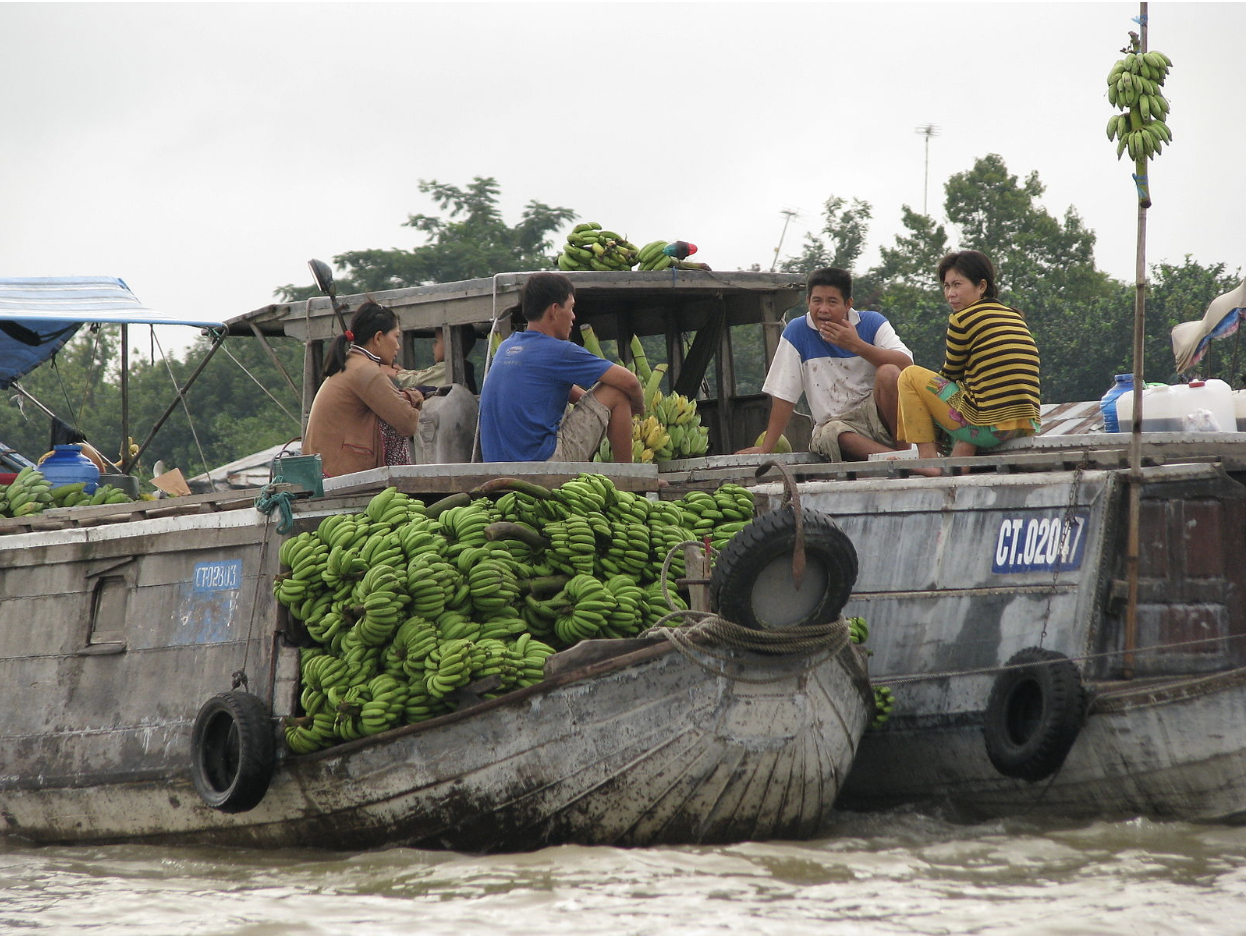
Bananas being traded at the Cai Be floating market in Vietnam. McKay Savage. CC BY 2.0.
In Vietnam’s Mekong Delta, boats once crowded with fruits, vegetables and steaming bowls of noodle soup now drift by in dwindling numbers. The iconic floating markets, such as Cai Rang in Can Tho, are in decline. Rising sea levels and saltwater intrusion have transformed daily life in the delta, threatening these vibrant centers of commerce and culture. These markets have been around for generations, and in the 1990s, were major trade hubs. But today, many of these boats are gone.
The decline is largely environmental. The Mekong Delta, which supplies half of Vietnam’s rice and a third of its GDP, is being overwhelmed by rising sea levels and saltwater intrusion. Climate change has intensified these threats, but human activity plays a role too. According to Environmental Law Alliance Worldwide, the overuse of groundwater, upstream hydropower dams and sand mining have all accelerated the erosion and subsidence of the delta. As saltwater continues to creep further on land, fertile rice paddies turn sterile and make freshwater harder to access. For boat vendors, this means fewer crops to sell, higher transportation costs and increasingly unreliable river routes.
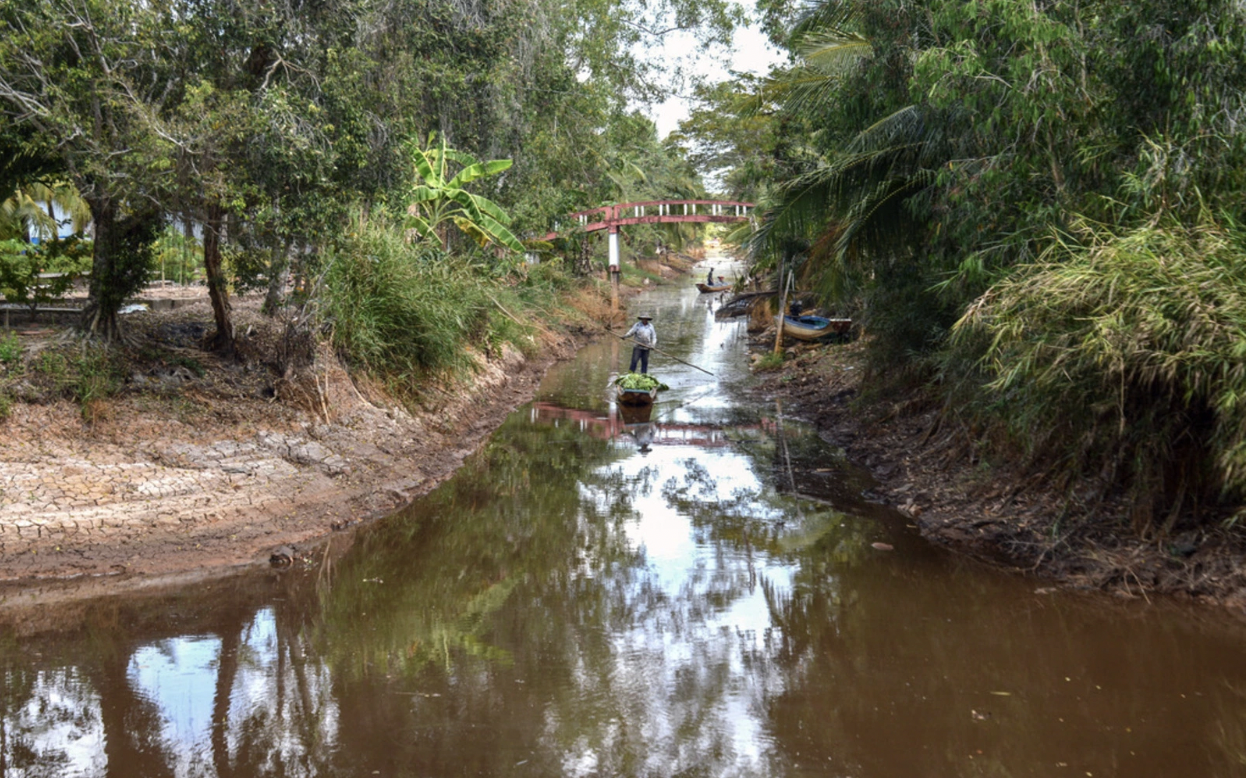
Saltwater intrusion impacts farmland in Vietnam’s Mekong Delta. AFP. CC BY 4.0.
This decline in floating markets severely impacts local families, especially those who depend on the markets. Many vendors face dwindling incomes, leading to increased migration to urban areas in search of better opportunities. For instance, Nguyen Thi Thuy, a former farmer, was forced to leave her home due to saltwater intrusion and now works as a security guard in Ho Chi Minh City. Just a decade or two ago, her income from selling fruit on the water would have been enough to sustain a family.

Aerial view of storm surge over Thi Nai Bay, Quy Nhon, 1969. Bill Gann. CC BY 2.0.
Adding to this shift is an increasing generational divide. Many younger residents no longer see a future in river-based life. Education and tech-based jobs in the cities hold more appeal than selling local produce. In part, local governments are struggling to maintain these markets as an increasing number of vendors’ children choose to leave instead of inheriting the family business. As fewer people choose to stay, the floating communities face cultural erosion.
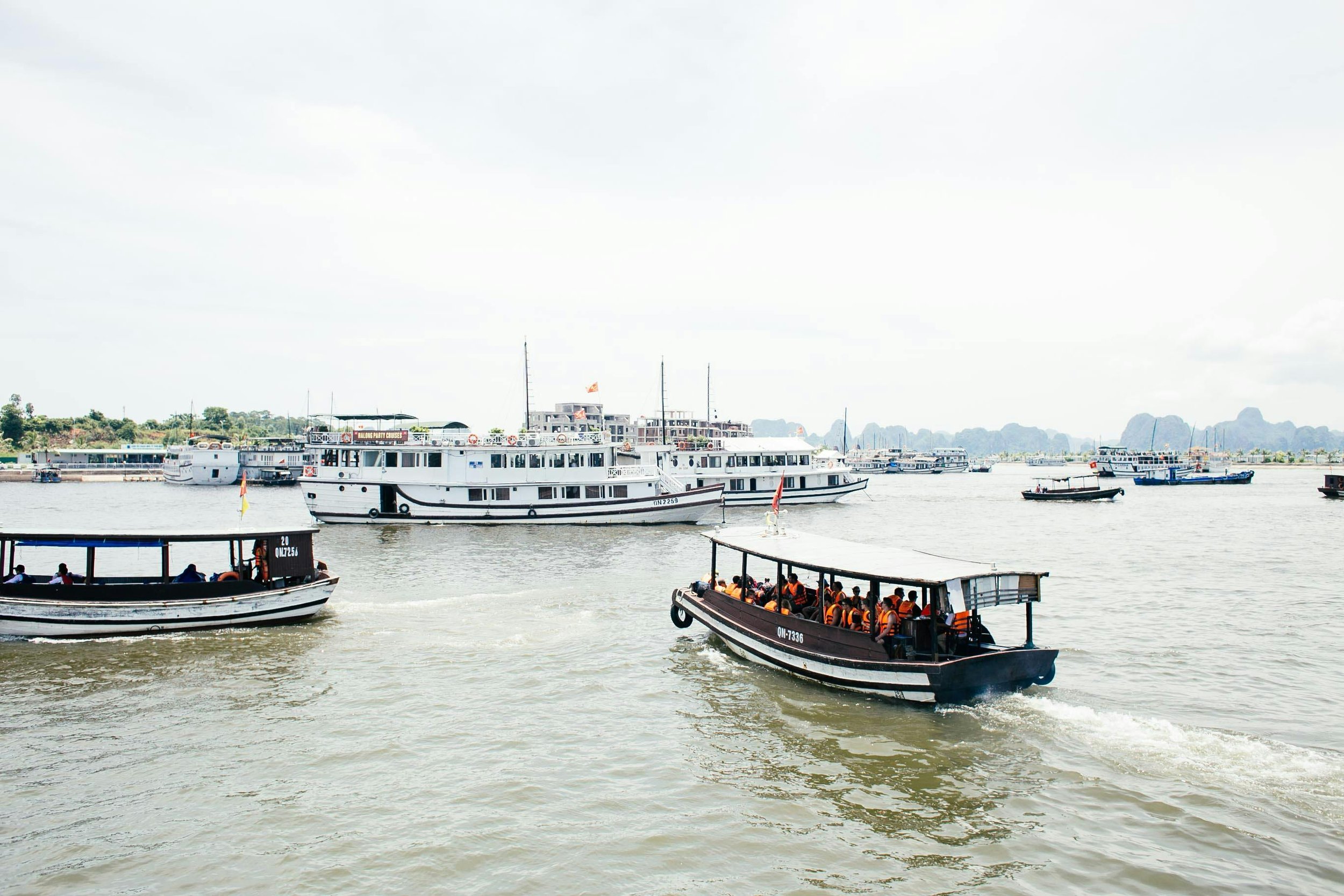
Passenger ferries at a harbor in Vietnam. Rachel Claire. CC0.
Tourism presents both challenges and opportunities for the preservation of floating markets. While increased tourist interest can provide economic benefits, it can also lead to cultural commodification and environmental degradation. Some markets that have become more tourist-oriented have, in turn, seen their authenticity and traditional practices diminish.
However, efforts are underway to balance tourism development with cultural preservation. In 2016, the Can Tho City People’s Committee approved the Preserving and Developing Cai Rang Floating Market project. This project aims to promote tourism and environmental hygiene while transforming Cai Rang into a “hub for the Mekong Delta’s agricultural products.”.
The future of Vietnam’s floating markets hinges on sustainable practices that honor their cultural significance while adapting to environmental realities. Community engagement, responsible tourism and environmental conservatism are key to ensuring the survival and success of these markets. As the Mekong Delta navigates the challenges of climate change, preserving the unique heritage of its floating markets remains crucial.
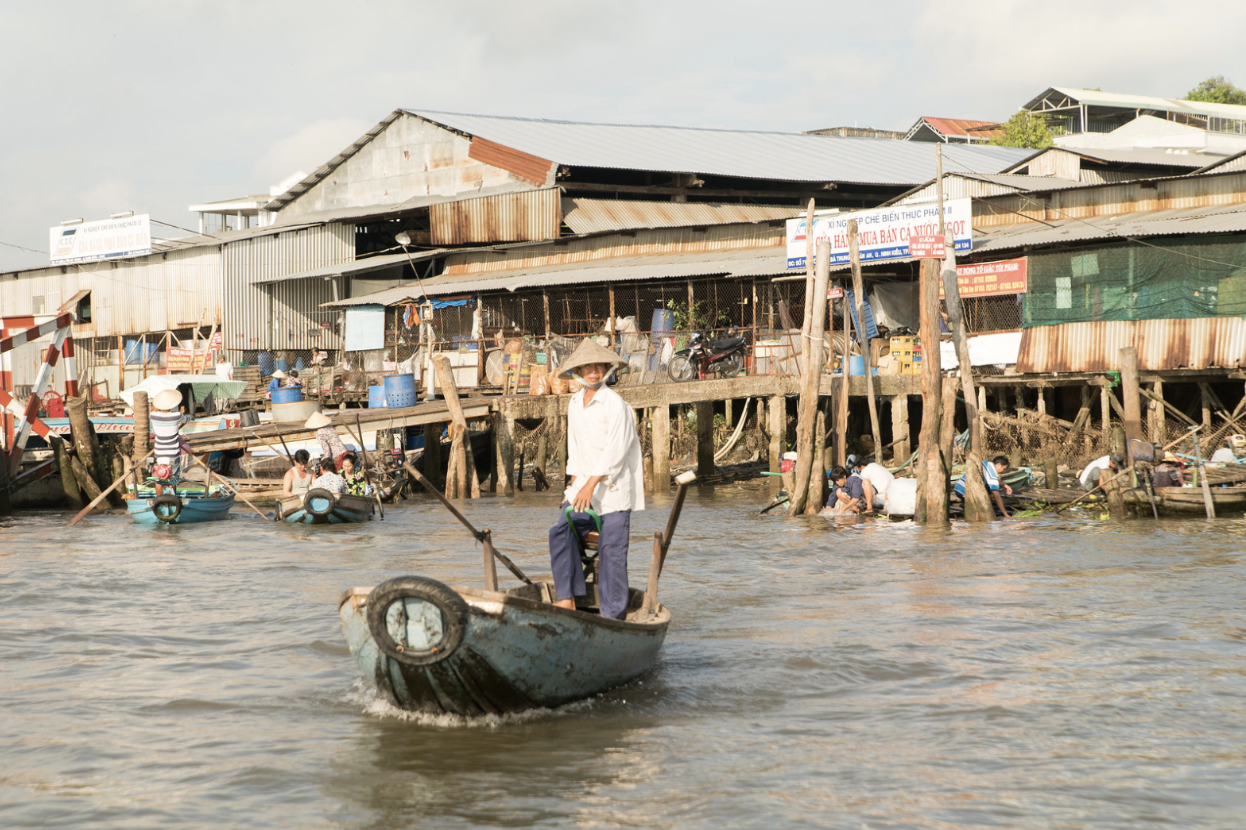
Boats at the Cai Rang floating market in Can Tho, Vietnam. pixiduc. CC BY 2.0.
For travelers hoping to experience the floating markets, visiting with care and intention matters. Cai Rang in Can Tho remains the largest and most accessible market. It is best visited early in the morning when trading is at its peak. Smaller markets like Phong Dien offer a local, less touristy atmosphere and are perfect for travelers seeking a quieter glimpse of daily life. Opt for small, locally operated boat tours and avoid bringing single-use plastics that could end up in the river. Supporting vendors by buying fresh produce or food dishes directly from their boats will not only enhance your experience but also help maintain these communities. By traveling mindfully, visitors can help preserve the spirit of Vietnam’s floating markets for generations to come.
Kennedy Kiser
Kennedy is an English and Comparative Literature major at UNC Chapel Hill. She’s interested in storytelling, digital media, and narrative design. Outside of class, she writes fiction and explores visual culture through film and games. She hopes to pursue a PhD and eventually teach literature! @kennedy_kiser
An Epic Motorbike Journey Through Northeast Vietnam
The Ha Giang Loop offers travelers a unique way to experience the natural beauty of Vietnam.
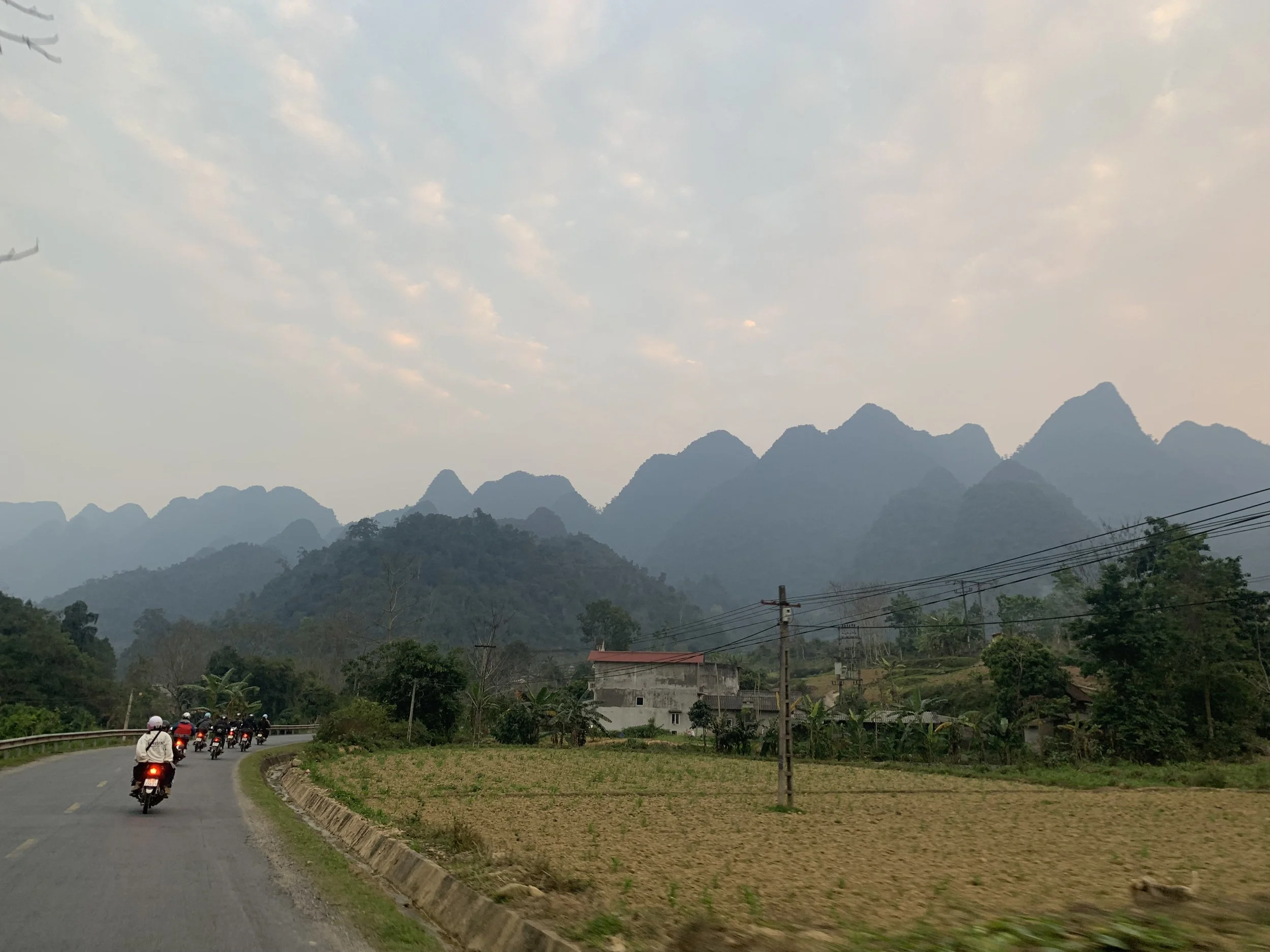
Mountain View on the Ha Giang Loop, Harper Noteboom.
Nestled against the southern Chinese border, the Ha Giang province serves as the great final frontier of Vietnam. The region is characterized by its striking limestone peaks, steep drop-off valleys and quaint roadside villages. Despite its natural beauty, its remoteness, at approximately 300 km outside of Hanoi, makes it less frequented among tourists. When I first embarked on my five-month solo trip through Southeast Asia, I had never heard of Ha Giang or the experiences it offered. But within a few weeks, I began to hear conversations about the region and the once-in-a-lifetime opportunity to be a passenger on or, for the braver travelers, to drive a motorbike for three days through lush valleys full of hairpin turns. Despite these conversations, nothing could have prepared me for the life-changing experience of the Ha Giang Loop.
In the pre-dawn hours, our overcrowded semi-sleeper bus from Hanoi pulled into the city of Ha Giang. By 10 AM the street outside Jasmine Hostel was full of eager backpackers and their motorbikes. Being an inexperienced driver I opted to hire an easier ride, a Ha Giang local who would drive while I sat on the back. I would quickly be reassured that this was the right choice when I saw the injuries that a crash can inflict. We were sectioned off into groups of 15 and hit the road.
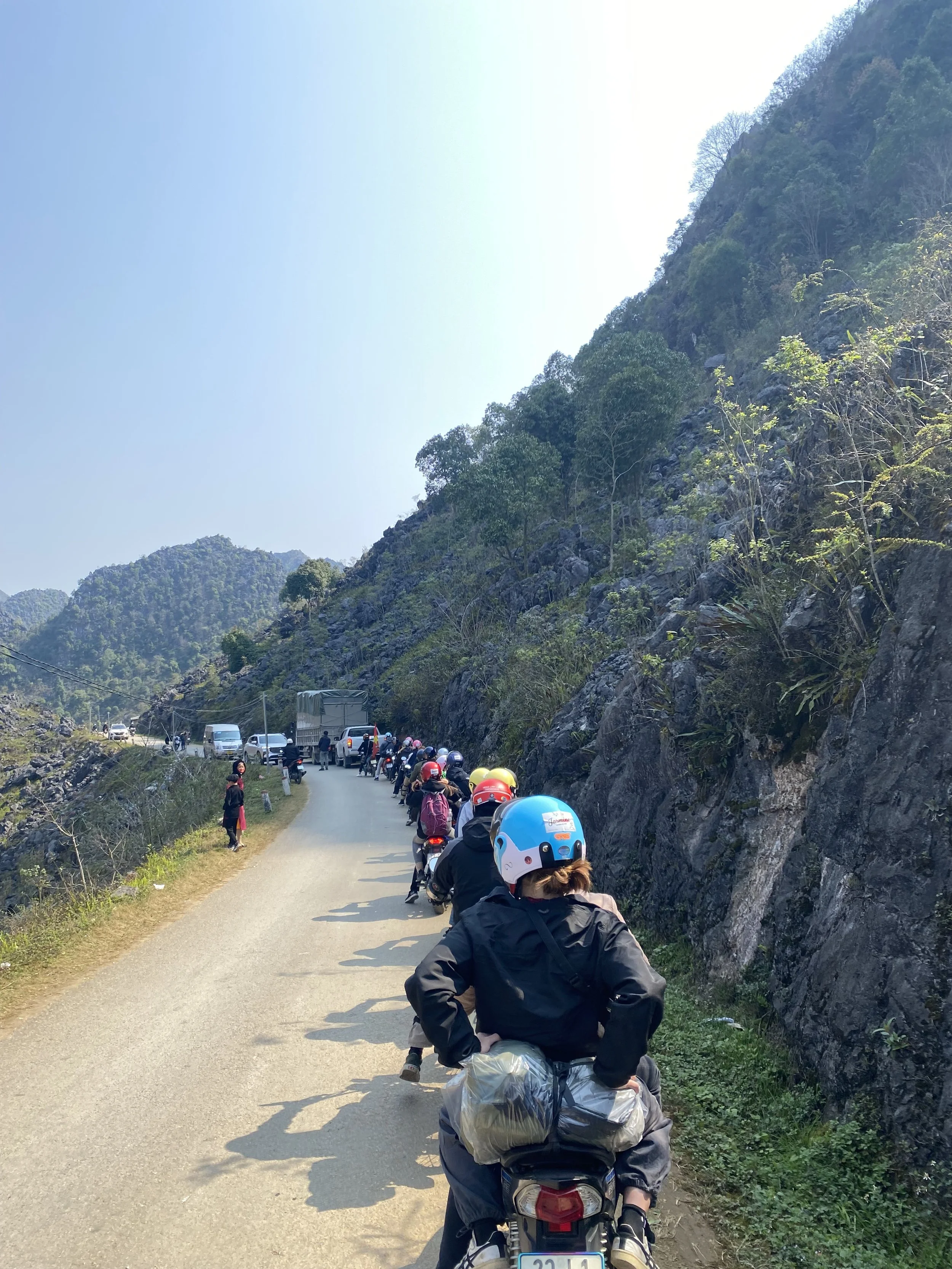
Traffic jam on the Bac Sum Pass. Harper Noteboom
We spent the first few hours of our drive traveling north out of the city of Ha Giang and over the Bac Sum pass. The first of many steep and narrow passes, Bac Sum is a 4.3 mile stretch of sharp zigzag turns at an altitude of 1475 feet. I was immediately encapsulated by the stunning mountain peaks that rose around me and began to understand its common nickname “Heaven Gate;” I truly felt like I was transcending the Earth and moving up into the Heavens.
Throughout the day we made several stops to enjoy the view, take a necessary break from sitting, and eat some lunch. As we pulled away from one of our stops, I suddenly felt the bike start to slow down and emit a horrible creaking sound. We came to a complete stop and I watched as the rest of the group sped past leaving my driver and me in their dust. Suddenly I found myself completely alone on the side of a mountain with a driver who spoke no English and had no way to contact my friends. Through lots of pointing, I was instructed to sit down next to the bike and wait while my driver walked off to call someone. As I was sitting wondering how far ahead my friends were, two little girls appeared from their small roadside village and began to show me the flowers they had picked. Without any verbal communication we were able to appreciate the beauty of their flowers together. These girls belong to one of the many ethnic minority groups in the Ha Giang region. The loop not only serves as a beautiful journey for adventurous travelers but also as a lifeline between small, isolated minority communities and the modern world. In this small interaction, I was reminded of the true reason I was traveling, to experience and connect with people and cultures that were different from my own.
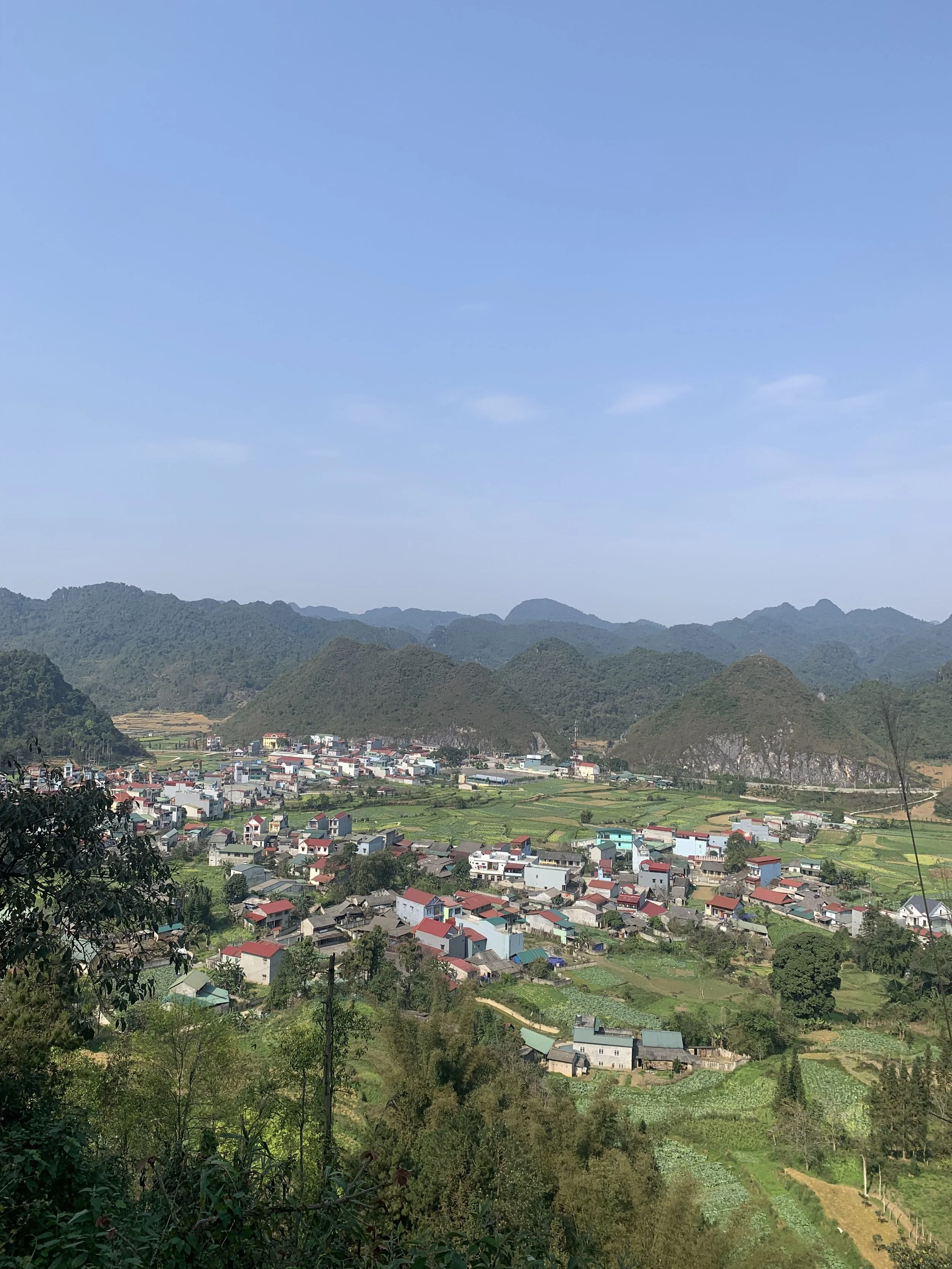
Roadside Village. Harper Noteboom
Eventually, the leader of my group returned and put me on the back of his bike, he turned to me and said “Hold on tight we need to catch up”. And just like that, I was on my way to our homestay for the night. We closed out our first day with a delicious meal of authentic H’mong cuisine and shots of rice wine, accompanied by a chant-like toast from the group leaders.
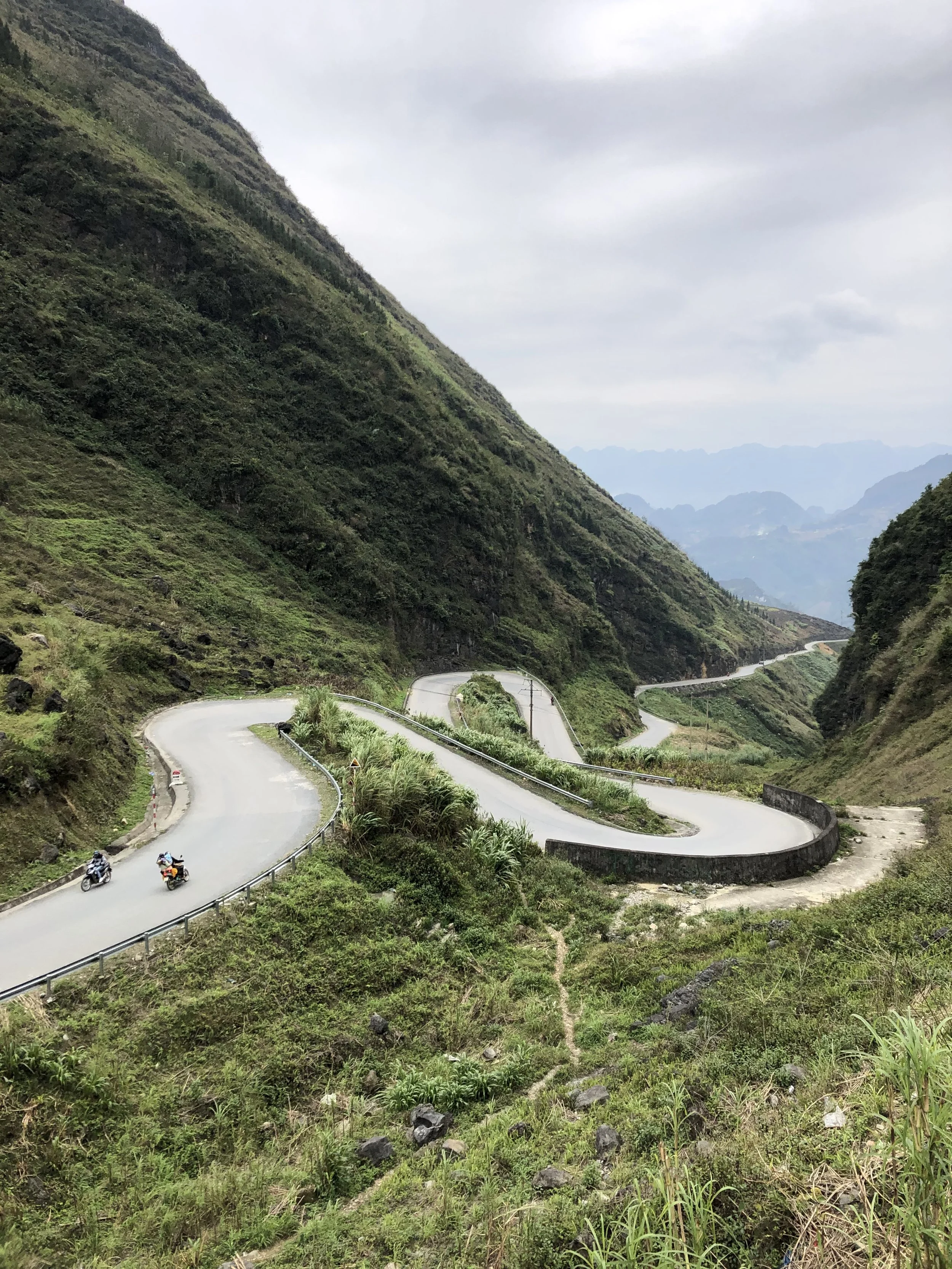
Pass along the Dong Van Plateau. Sabourock. CC BY-SA 4.0
We started day two with a visit to Kings' Royal Palace, the home of the traditional leader of the Hmong ethnic group. The 19th-century mansion, built fully by hand, combines Hmong, Chinese and French architecture and serves as both a majestic home and a protected army base. The palace's harmonic design and original furnishings transport the visitor back in time and give a real glance into the life of the Hmong King. After indulging in a traditional Vietnamese coffee, we took a brief drive to Lung Cu Flag Tower. At over 35 meters tall, the octagon-shaped tower sits at the northernmost point of Vietnam and represents unity and independence for the country, offering a panoramic view across the Chinese border. After our morning of traveling back in time, we departed for what would be one of the most terrifying, gut-wrenching and inspiring experiences of my life, the Skywalk.
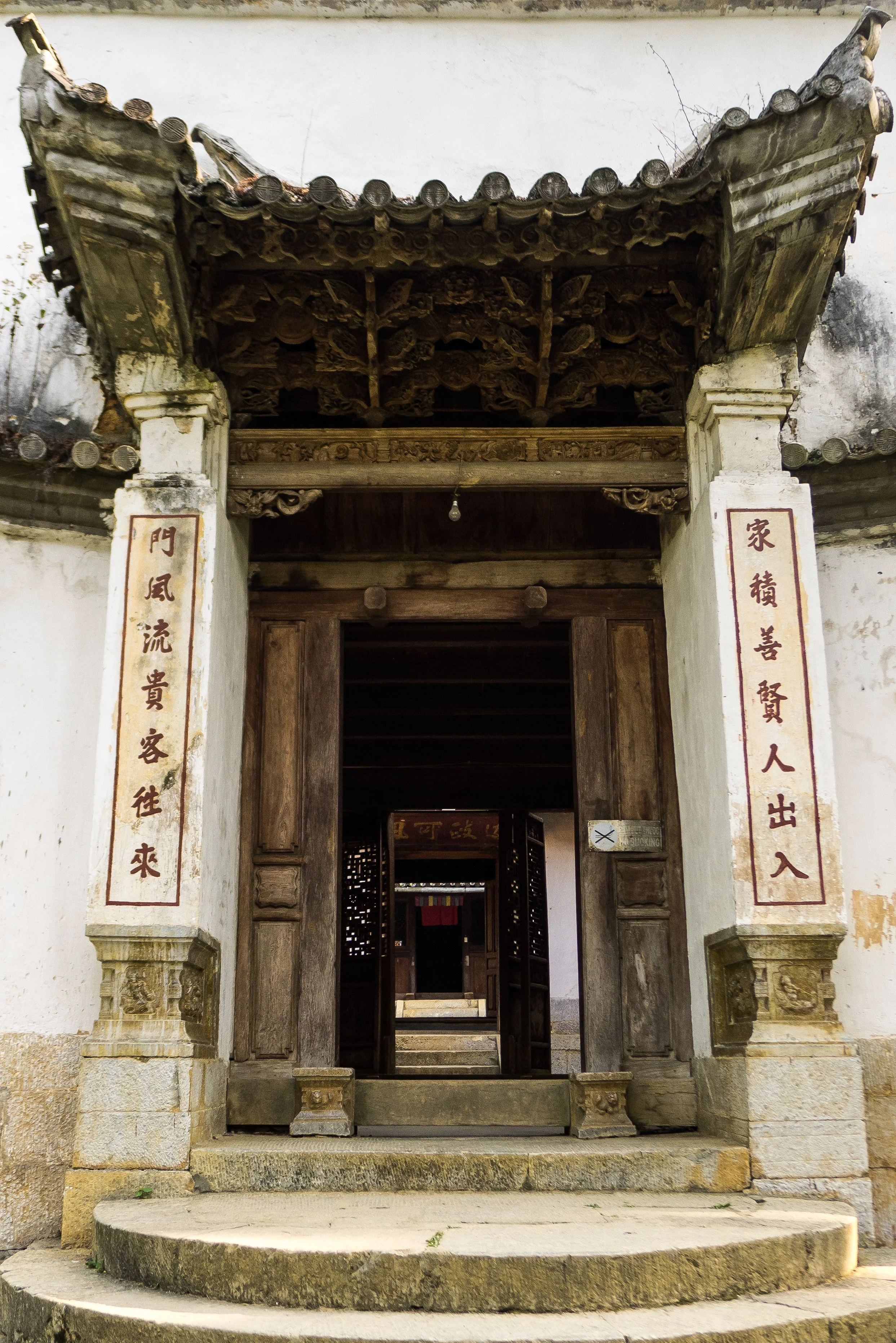
Entrance to Kings' Royal Palace. Gavin White. CC BY-NC-ND 2.0
Describing exactly what the Skywalk is and what it truly feels like to be there is no easy task. The beginning of the trail is extremely narrow and hugs the side of a mountain while snaking along its exterior. The short walk itself is nothing compared to the destination. A massive mound of rocks stretches out over the edge of a cliff and seems so perfectly balanced that a single shift would result in the complete crumbling of the cliff and all the people on it. From the side, one long, narrow, flat rock extends out from the rest. While barely big enough for two people and high enough that a misstep would result in a deadly drop, there was a long line of eager backpackers waiting for their turn to cautiously creep out onto the rock. When it was my turn to go, I was overwhelmed with fear and even glancing down sent my stomach into my chest, but I carefully and slowly crept to the edge and sat down. As I looked out at the 360-degree view of the sharp peaks and luscious fields below me, I felt like I was truly the queen of the world. In this moment I had a realization, this is what traveling is all about, this is what life is all about; it’s about facing your fears to fully take in the beautiful world that we are so blessed to explore. The memory of this moment is one I return to often, and I revel in the euphoria of travel and the beauty of experience.
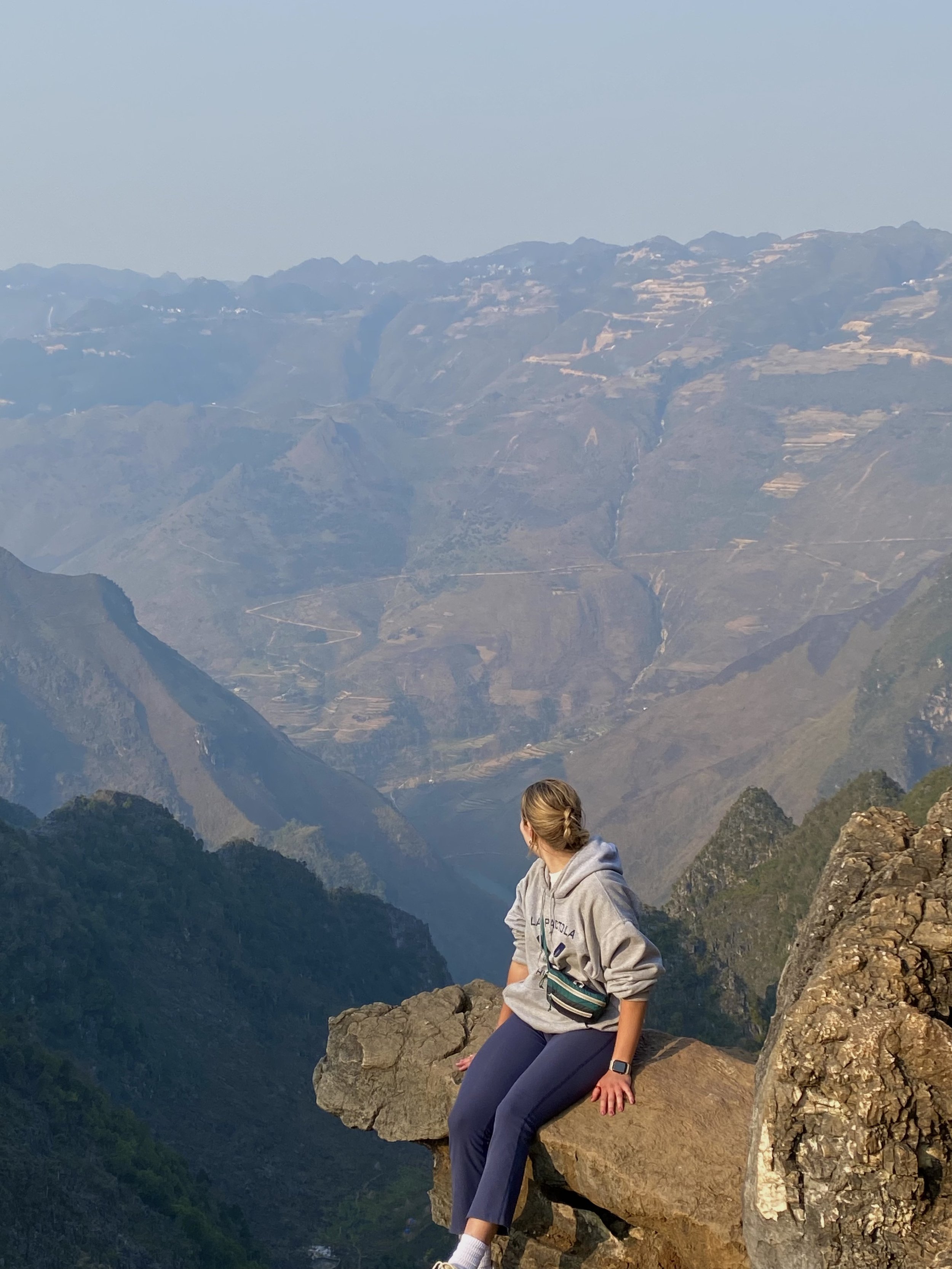
Skywalk. Harper Noteboom
I rode the high of that moment for the rest of our drive to the quaint village where we would stay for the night. The following morning, as a final send-off, we took a cruise down the limestone-crested Tu San Canyon before our long, bumpy, and admittedly very dusty journey back to the city before catching our even longer bus back to Hanoi.
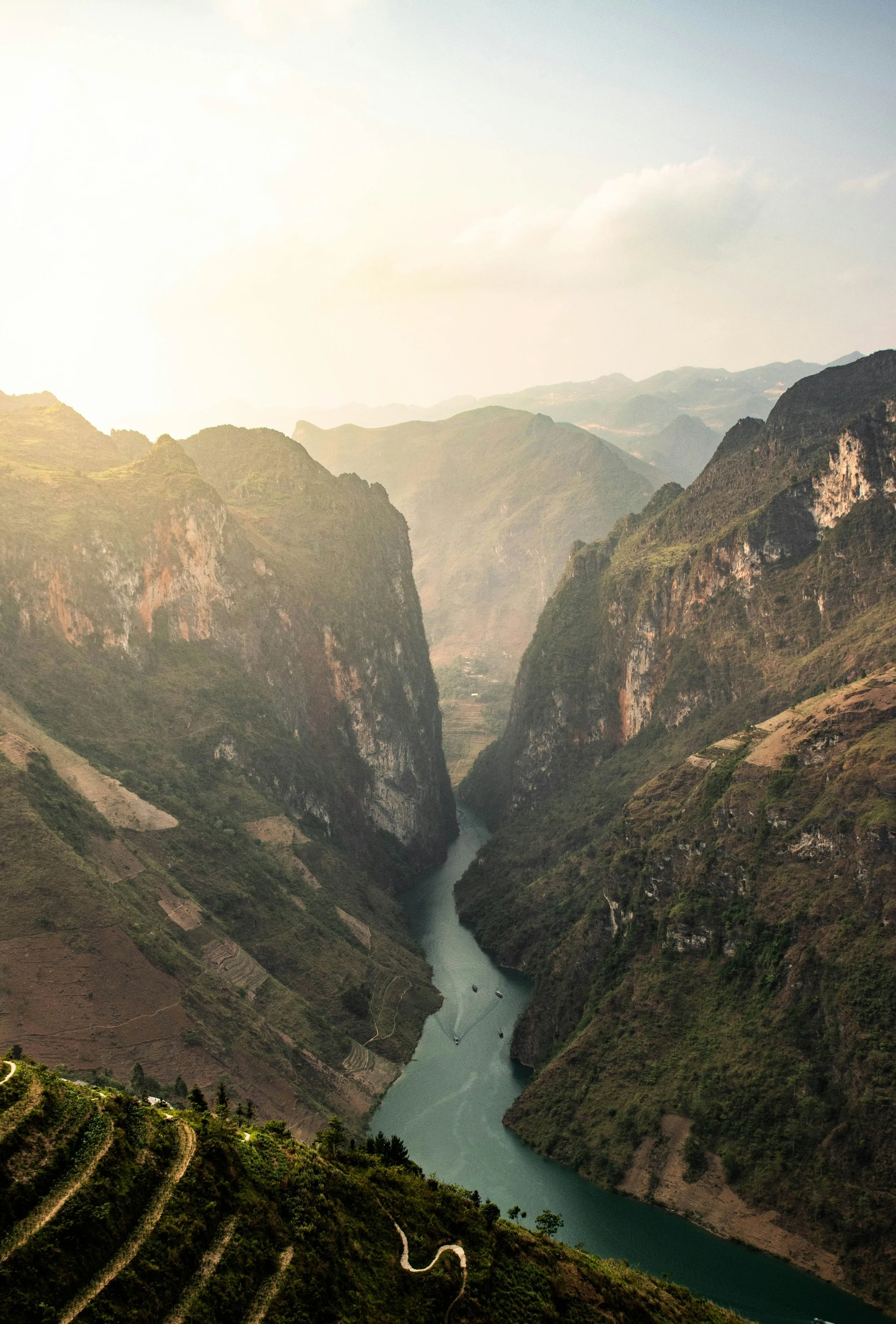
Tu San Canyon. Ryan Le. CC0
As I reflect on these 3 marvelous days, there's no way to describe the life-altering effect that the Ha Giang loop has had on me. I never thought I would have the chance to soar through epic mountain ranges on the back of a motorbike with some of my best friends, but I’m overjoyed that I did and I urge everyone who is visiting Vietnam to experience the Ha Giang Loop.
Harper Noteboom
Harper is a student at Pomona College majoring in Computer Science while exploring many interests in the liberal arts nature. Her worldly curiosity and passion for traveling took her to The Netherlands for High School and then on a gap year around Southeast Asia. Harper hopes to share the immense joy of traveling through her writing.
7 Stunning Caves Worth Exploring
Though caves often hold a fearsome reputation, they have a myriad of captivating natural features and intriguing histories.
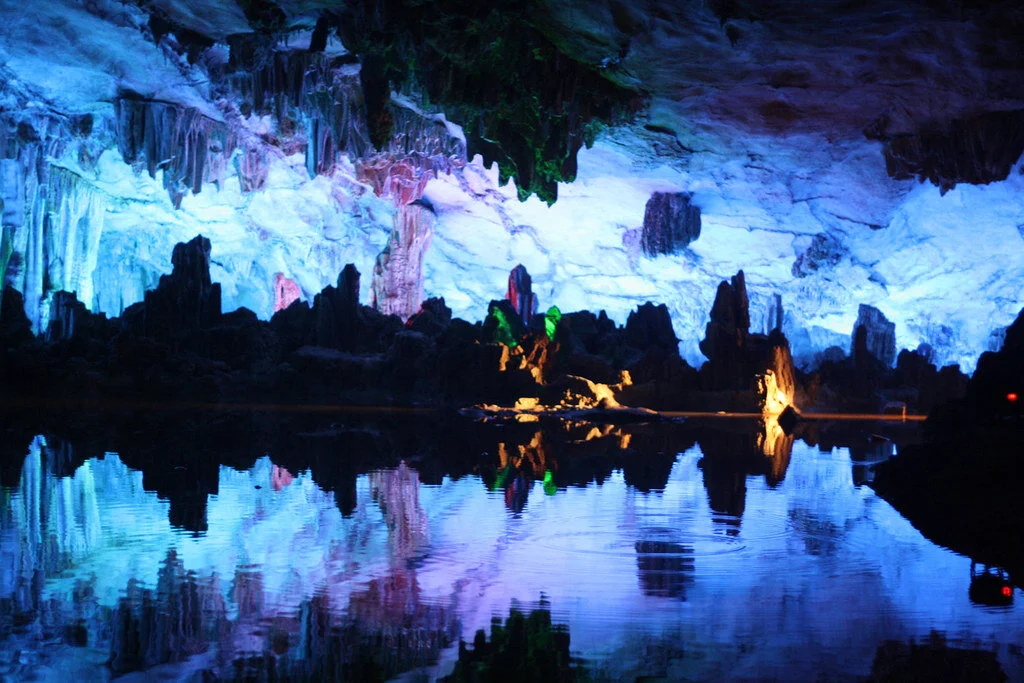
Caves often get a bad reputation: cold, dark, damp and uninteresting, or even frightening. In reality, caves offer snapshots of history, unusual natural structures, and examples of remarkable biodiversity. There are thousands of caves on Earth, and even more that are yet to be discovered. Each cave is unique, with specific natural formations that cannot be found anywhere else. Here are seven incredible caves to add to your list of must-see sights.
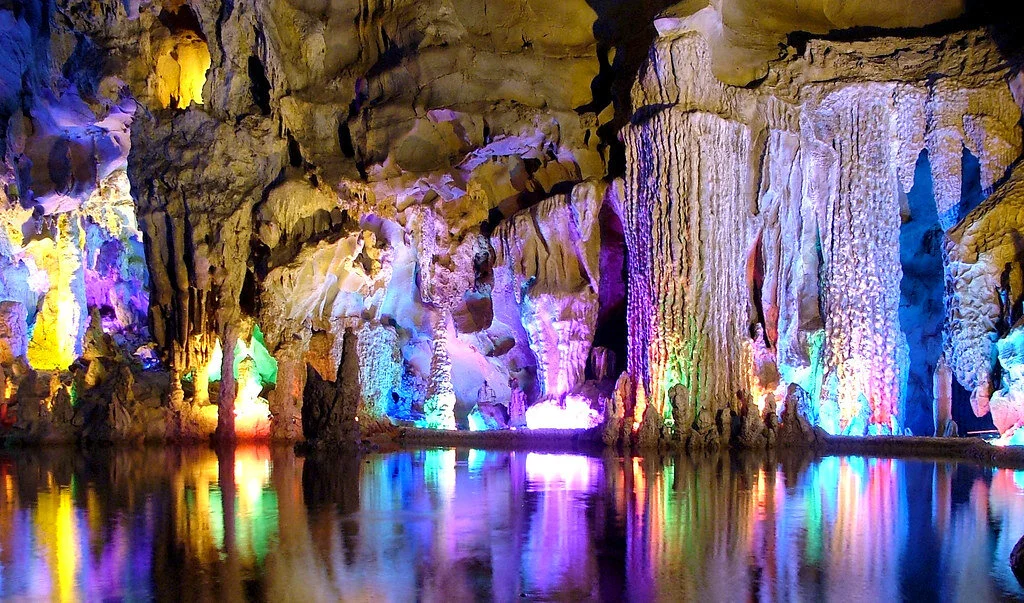
1. Reed Flute Cave, China
Called “the Palace of Natural Art,” Reed Flute Cave is known for its impressive stone curtains and pillars. Reed Flute Cave is located just 3 miles from downtown Guilin, China, and has been an attraction for centuries. Seventy-seven inscriptions of poems and travel descriptions can be found around the cave, and the oldest dates back to 790 A.D., the era of the Tang dynasty. There are inscriptions from the Tang, Song, Yuan and Ming dynasties, written by monks, poets, scholars and tourists from all over China. Today, the cave is lit by many multicolored lights hidden in its natural cracks and crevices, which cast a bright rainbow glow around the dark space, giving cave visitors a surreal and breathtaking experience. The cave was forgotten for years until its rediscovery in 1940, when a group of Chinese refugees stumbled upon it while fleeing from Japanese forces. During World War II, the cave’s large chamber, called the “Crystal Palace of the Dragon King,” was used as a bomb shelter. The cave regained popularity after its rediscovery at the end of the war, and was officially opened to the public in 1962.
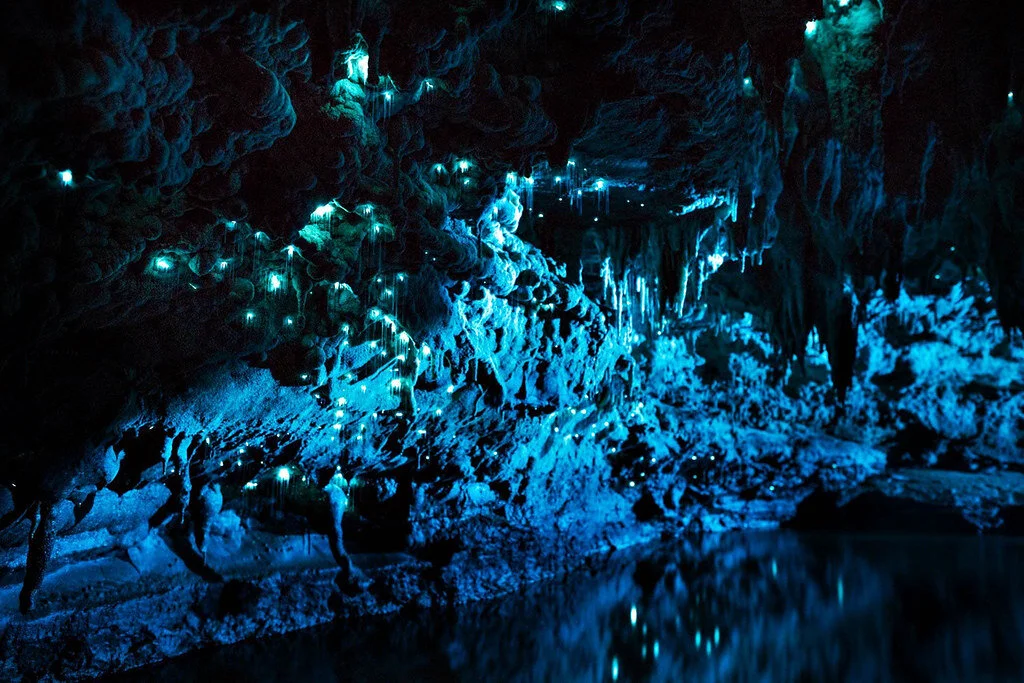
2. Waitomo Glowworm Caves, New Zealand
Visitors to the Waitomo Glowworm Caves will take a trip into the past by exploring a cave over 30 million years old. The cave, located in Waitomo on the North Island of New Zealand, is praised as one of New Zealand’s best natural attractions. It contains an underground river, towering rock formations, and thousands of shimmering glowworms. The Glowworm Caves have been an attraction for over 130 years. These limestone caves formed at the bottom of the ocean millions of years ago. Local Maori communities knew about the caves, but they were first explored in 1887 by Maori Chief Tane Tinorau and English surveyor Fred Mace. After discovering the natural beauty of the caves, Chief Tinorau opened the caves to tourists in 1889. Many of the guides for tours today are descendants of Chief Tinorau. Guides take visitors on walking tours through the caves, as well as boat tours through the glowworm grotto. These boat tours take visitors to the center of the grotto, where they can look up in awe at the luminescent glowworms covering the cave walls and ceiling.
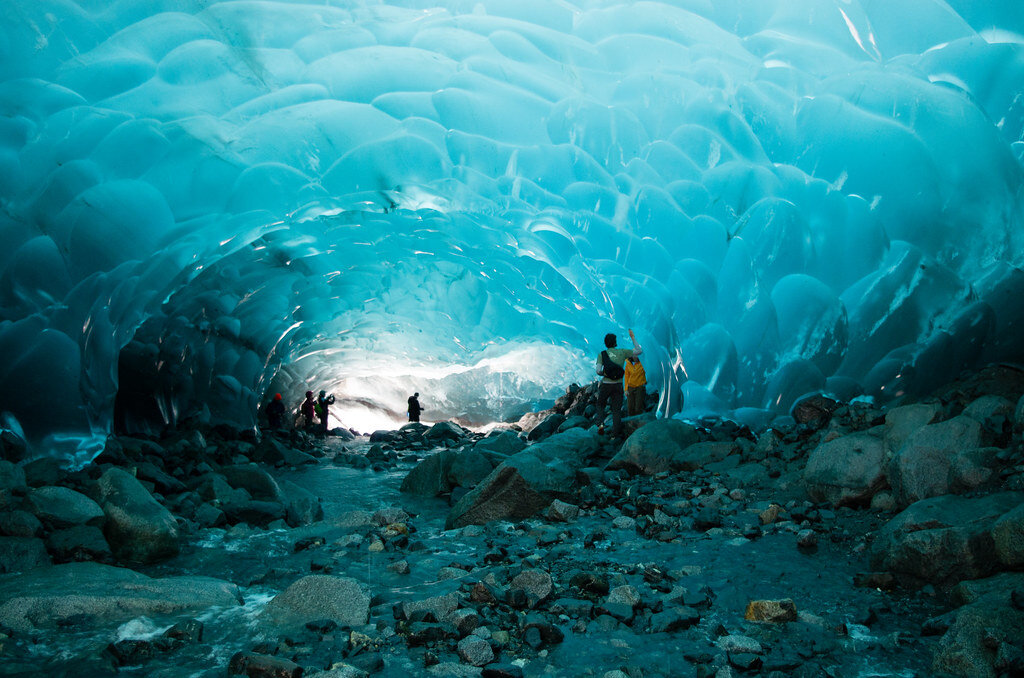
3. Mendenhall Ice Caves, Alaska
Just 12 miles outside downtown Juneau lies Mendenhall Glacier, known as the “Glacier Behind the Town.” Inside the glacier are the Mendenhall ice caves, passageways formed by water flowing through the glacier. These caves vary in size from tiny openings visitors have to squeeze through to giant caverns. Mendenhall Glacier was first explored in 1794 by Joseph Whidbey, a member of the British Royal Navy serving on Capt. George Vancouver’s 1791-95 expedition of the Pacific Northwest coast. To visit the caves, travelers can hike through the Tongass National Forest and then across the glacier, or they can canoe across Mendenhall Lake to the glacier. Both options offer breathtaking views of the glacier and surrounding landscapes, and both are somewhat strenuous but well worth the effort. Inside the caves, visitors are immersed in the cool blue shades of light coming through the glacier and can explore ever-changing ice formations. The caves change as the ice melts, so each visit to the Mendenhall ice caves is unique. The presence of the caves is also inconsistent and typically seasonal, so visitors should be sure to check on the status of the caves before planning a trip.
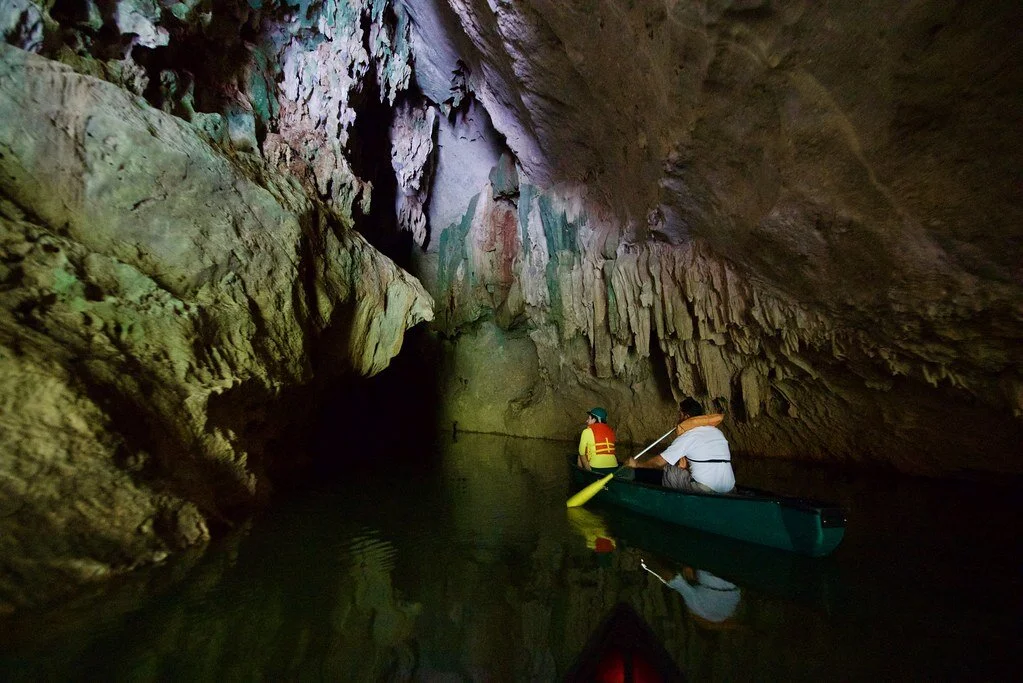
4. Barton Creek Cave, Belize
To discover the wonders of Barton Creek Cave, visitors will have to board a canoe. Barton Creek Cave is located east of San Ignacio along the western edge of Belize. It is a wet cave because it has a cave river running through it, and paddling along this tranquil river is the only way to take in the cave’s majesty and history. It is the largest river cave in Belize and contains evidence of ancient Mayan culture. The cave is natural, but archaeologists have identified a number of areas they believe were purposefully modified by the Mayans to improve access to the cave. These modifications include natural formations of flowstone broken to allow access to a rimstone pool and holes drilled by Mayan tools, likely to serve as handholds or to attach climbing ropes. Ten ledges made by the Maya line the cave walls, where archaeologists have discovered thousands of pottery shards, most of which are from large jars called ollas, and a number of stone tools. These discoveries have helped archaeologists determine the use of the cave during Mayan times; it was likely the site of ritual activity and worship. The Maya regarded caves as sacred sites, and the artifacts found in Barton Creek Cave reflect this view. Tours through the cave offer visitors the opportunity to witness incredible natural formations and to learn how the ancient Mayans interacted with the cave.
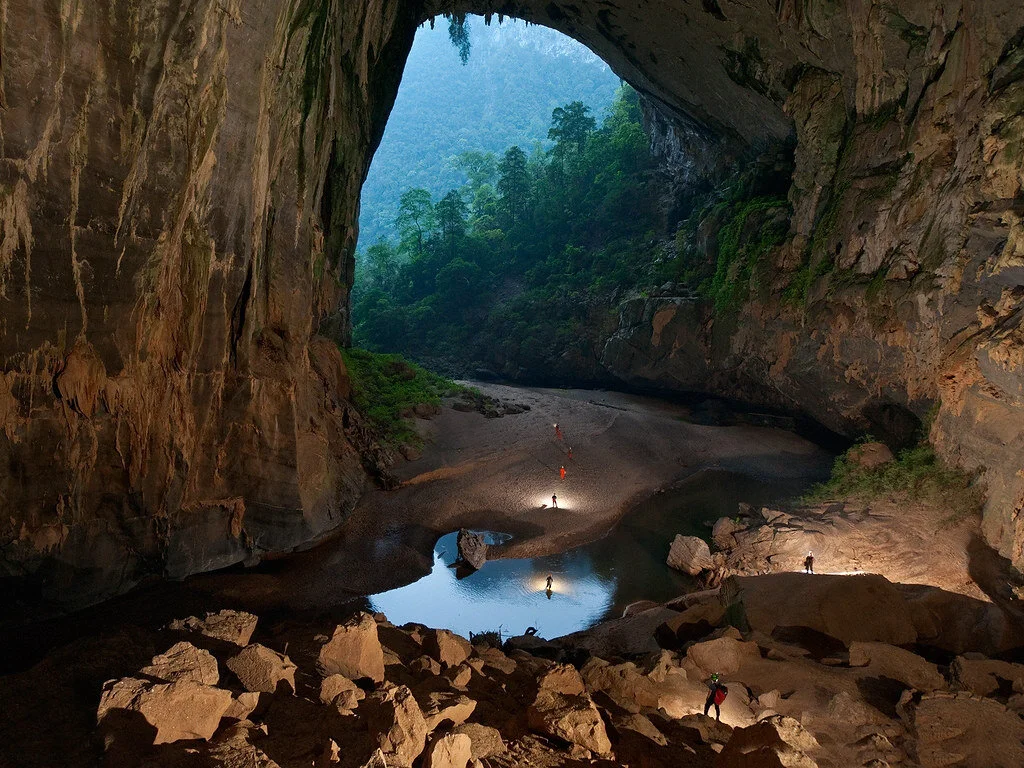
5. Hang Son Doong, Vietnam
For travelers who want to explore a cave but worry about darkness and small spaces, Son Doong Cave in central Vietnam is the perfect place to visit. Son Doong has the largest cross section of any cave in the world, reaching over 5 miles long, 650 feet wide and 490 feet tall. In some areas, the limestone ceiling of the cave grew weak and collapsed, creating huge skylights and allowing areas of lush vegetation to grow inside the cave. It was formed millions of years ago by the Rao Thuong River eroding limestone. Son Doong Cave was initially discovered in 1990 by a local man named Ho Khanh, who stumbled upon the entrance while searching the area for food and timber. He then returned home and no further exploration of the cave occurred until Howard and Deb Limbert, members of the British Cave Research Association, heard Ho Khanh’s story and urged him to find the cave again. In 2008, he successfully rediscovered the cave, and a survey was conducted by Howard Limbert and a group of British cavers. The cave opened to the public in 2013. Visitors are sure to be impressed by the sheer size of the cave, as well as its natural formations, river and distinctive vegetation growth.
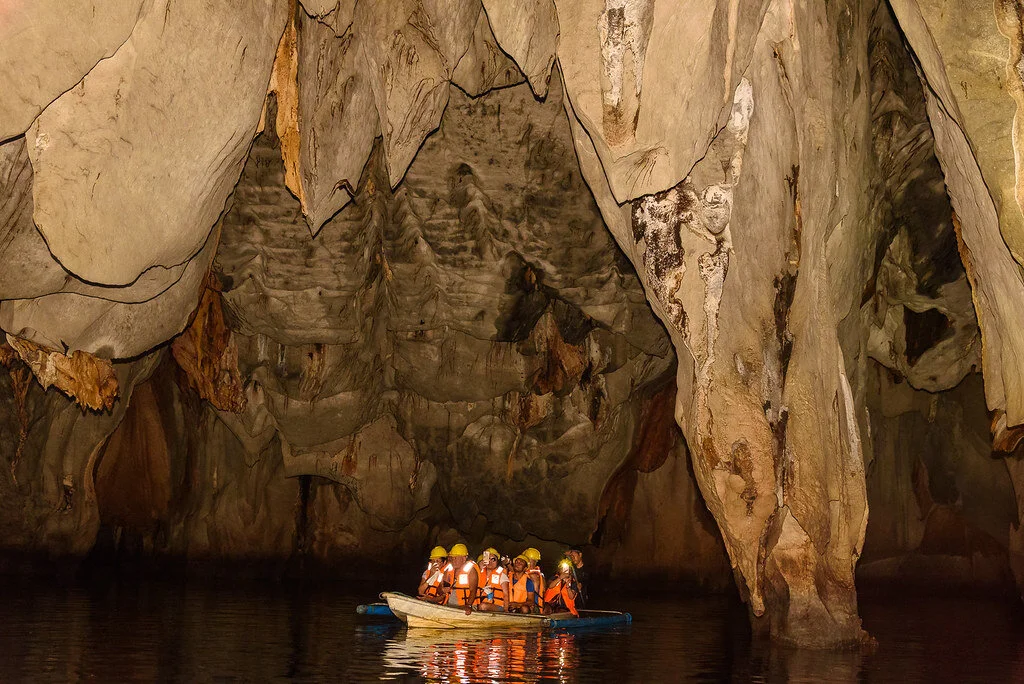
6. Puerto Princesa Underground River, Philippines
Located on Palawan, the westernmost island in the Philippines, Puerto Princesa Subterranean River National Park is home to old-growth forests, wildlife and an expansive limestone cave system. The Puerto Princesa Underground River, as it is commonly known, flows for over five miles through beautiful caverns and eventually meets the sea. Visitors can take underground river tours on paddleboats to see the stunning cave formations and limestone cliffs, as well as a variety of native animal species. There are records of the Puerto Princesa Underground River dating back to 1898, but it is believed to have been known to early inhabitants of the Philippines and investigated by foreign explorers prior to that time. The area was established as an official attraction in 1971, and the cave system is still being explored. In 2010, researchers discovered a large cave dome above the underground river, with more river channels and access to an even deeper cave. The Puerto Princesa Underground River offers an abundance of fascinating natural formations to explore.
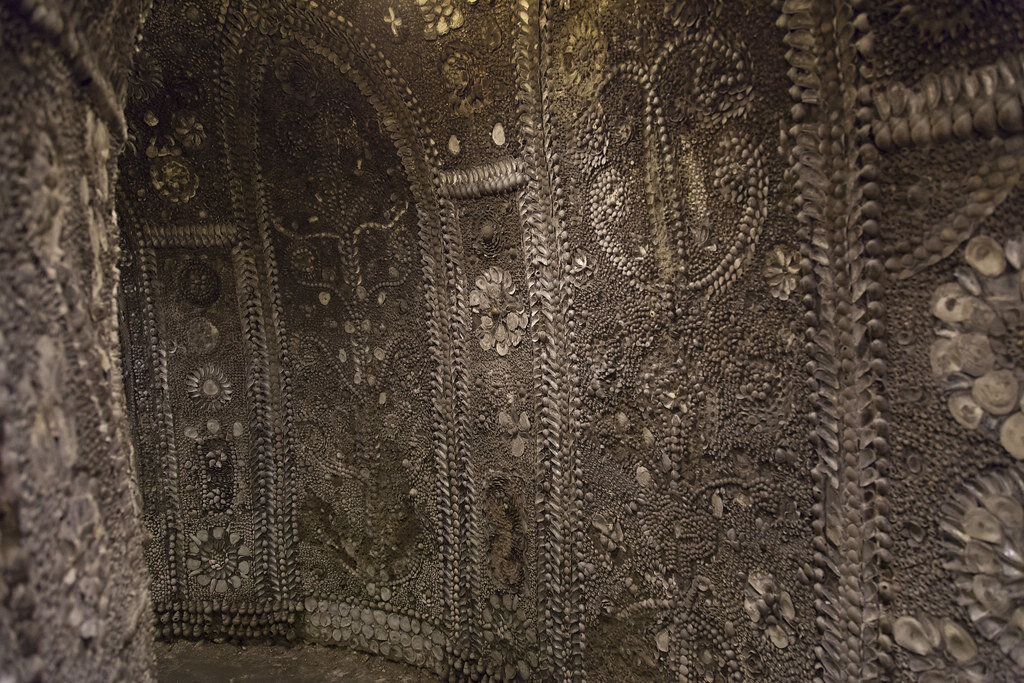
7. Shell Grotto, England
Shell Grotto is one of England’s most mysterious sites, encompassing over 70 feet of tunnels under the seaside town of Margate. These caves were discovered by chance in 1835, when a man excavating his new land stumbled upon them. Sprawling mosaics made of mussel, oyster, whelk and cockle shells cover every wall of the tunnels. Historians are unsure of who built Shell Grotto, or why. Theories range from Shell Grotto being a place of worship to a simple display of extreme wealth to the meeting room of a secret society. The elaborate shell designs offer little explanation, displaying swirling patterns that can be interpreted as a number of different things. Shell Grotto is a tremendous work of art, and the questions surrounding its origin and purpose add a layer of intrigue that draws visitors from around the world.

Rachel Lynch
Rachel is a student at Sarah Lawrence College in Bronxville, NY currently taking a semester off. She plans to study Writing and Child Development. Rachel loves to travel and is inspired by the places she’s been and everywhere she wants to go. She hopes to educate people on social justice issues and the history and culture of travel destinations through her writing.
Summit the Tallest Mountain in Southeast Asia
At more than 10,000 feet, Fansipan Mountain in Vietnam is the tallest mountain in SE Asia. Hikers traverse clouds and thick forests to get to the top. Cable cars ascend to the peak for those who don’t want to make the trek.
Read MoreBeyond the Wall, Berlin’s Multicultural Roots Shine Through
When Germany’s capital is mentioned, people often think of Berlin’s turbulent history, thriving arts scene and hipster culture. However, multiculturalism ought to also come to mind. With 21% of its population hailing from non-German backgrounds representing 190 countries, Berlin is becoming a true melting pot. Often nicknamed “Multikulti,” Berlin portrays itself as a tolerant city aiming to attract talent from abroad while celebrating its diversity within.
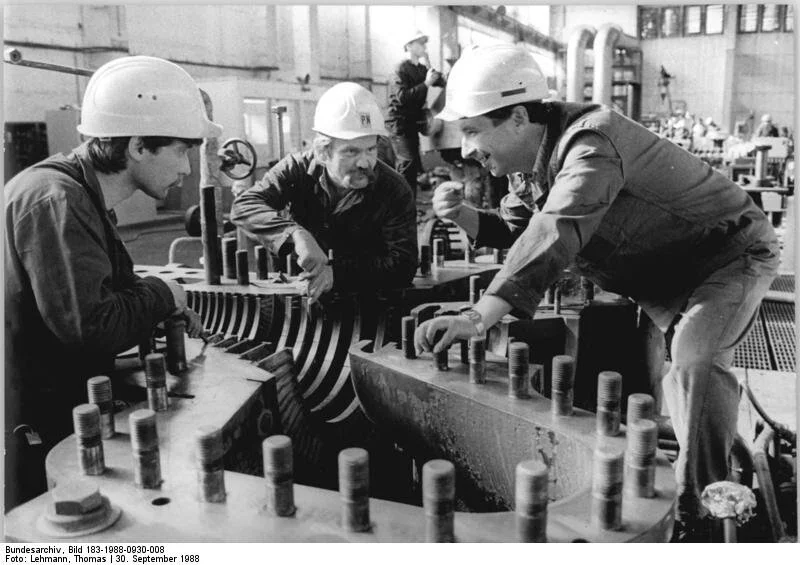
Guest-workers from Hungary in East Germany. Lehmann. 30 Sept. 1988. CC3.0
A History of Migration
After World War II, the Allied Powers divided Berlin into four regions. The American, British and French regions made up West Berlin and the region occupied by the Soviet Union made up East Berlin. Immigration to Berlin was largely influenced by the dynamics of the divided city’s various zones. After the war, there was a strong need for labor to help rebuild Germany. West Germany recruited “guest-workers” to fill this need from nearby areas such as Turkey and southeastern Europe. The East German government recruited guest-workers from other socialist countries, such as North Vietnam and North Korea. More recently, many immigrants escaping conflicts in the Middle East and North Africa have sought refuge in Berlin.
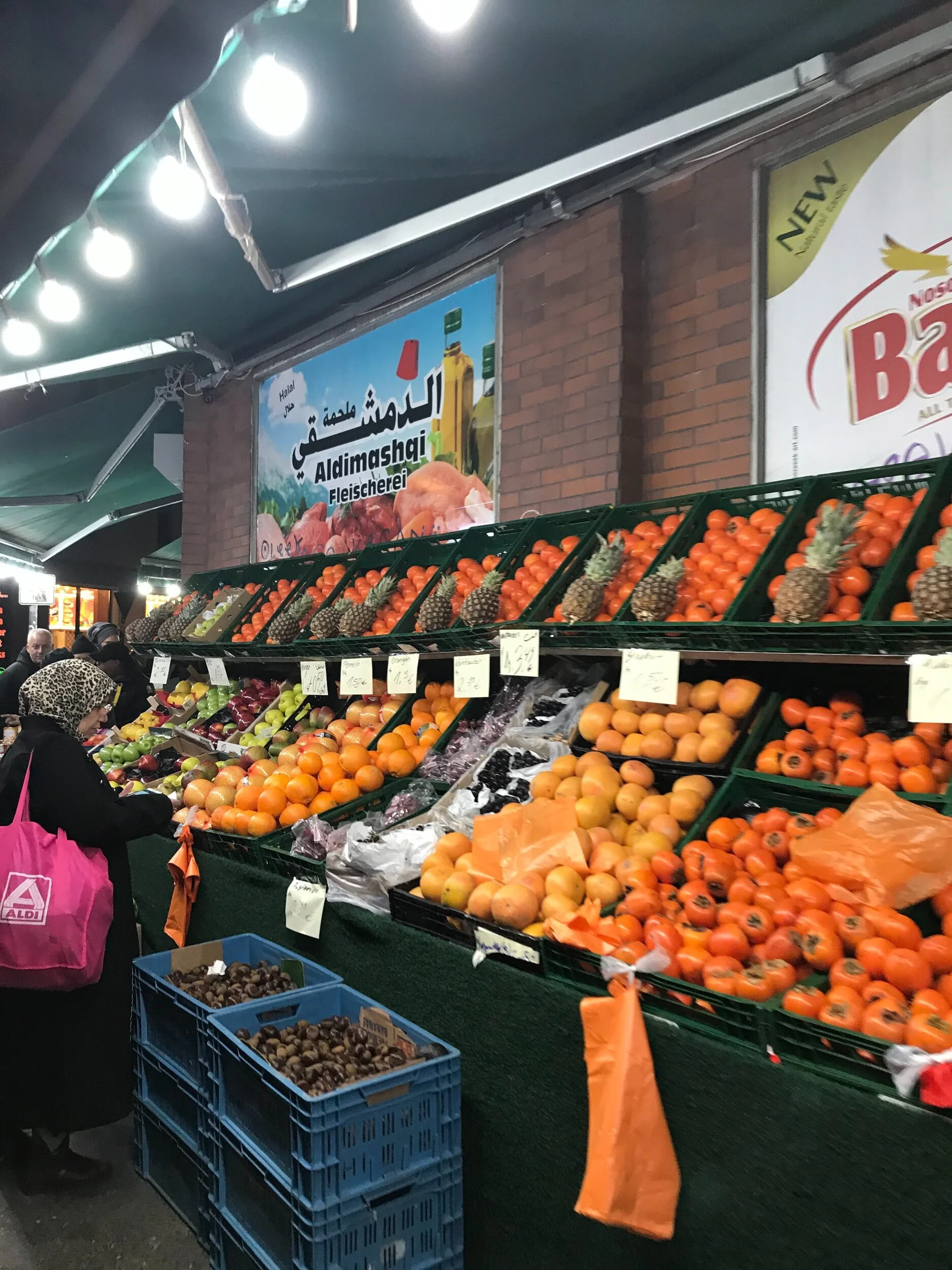
An Arabic market in Neukolln Gürer CC2.0
Multicultural Districts in Berlin
Although Berlin has a sizable international population, being an immigrant in the city is not without its problems. Areas of Berlin with high immigrant populations tend to be weaker economically and are known for social problems including high unemployment, increased crime rates, drug trafficking and gentrification. Ethnic minorities are usually present only in certain neighborhoods and are underrepresented in German popular culture and politics. Immigrants are also subjected to acts of hatred and violence due to strongholds of White nationalism in areas of East Berlin. Additionally, previous immigration policies in Berlin have focused on tolerating, rather than accepting, immigrants in the city. The term “Auslander” or foreigner negatively refers to immigrants in Germany, speaking to the difficulties they face with integrating into German society.
However, things are slowly changing. Immigrant communities in Berlin are proudly showcasing their cultures for others to see. Travelers who visit Berlin’s multicultural hubs can help change the narrative of immigration in Germany.
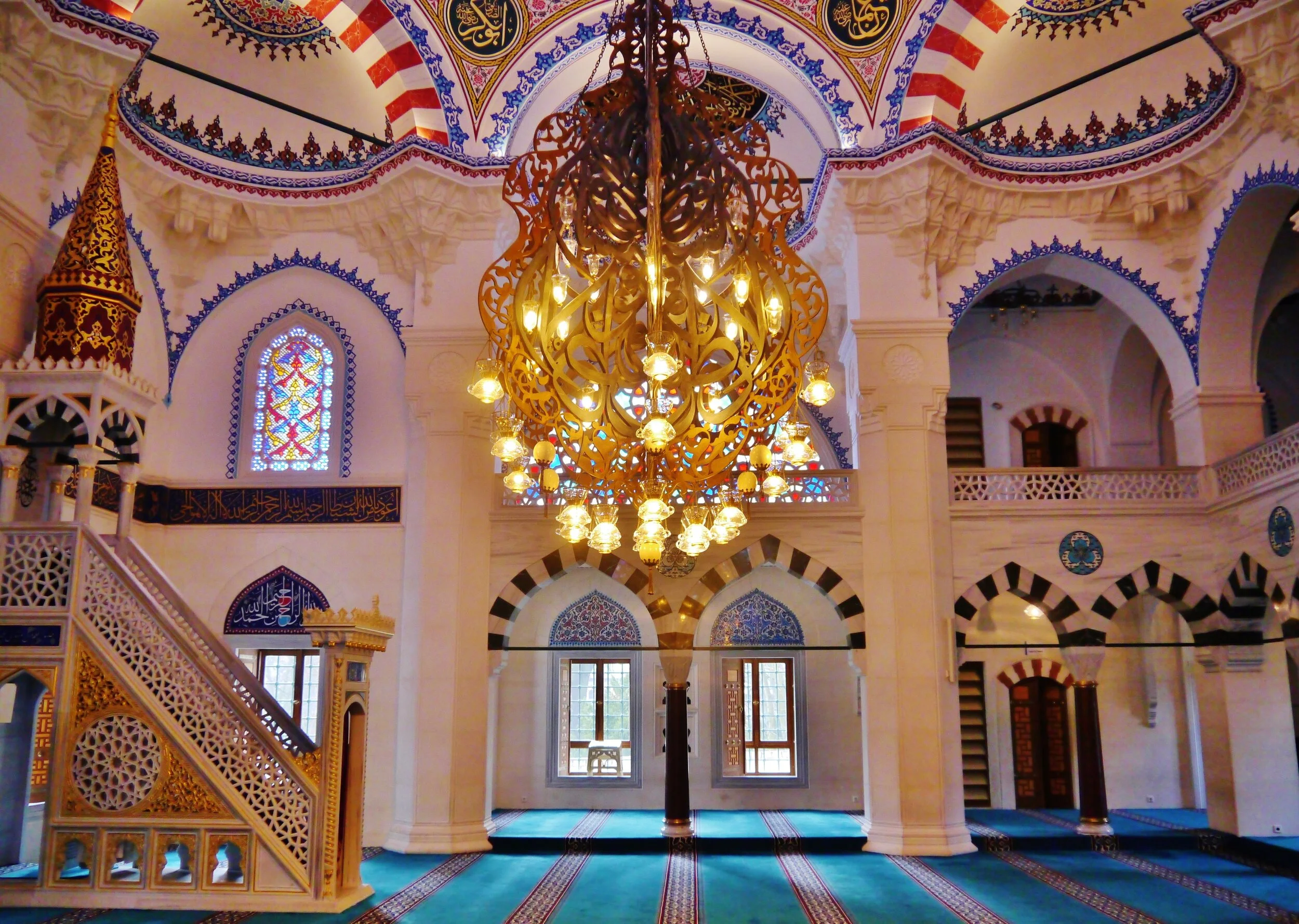
Sehitlik Mosque in Berlin’s Neukolln district. Zairon CC International 4.0
Neukolln
Today, the majority of Berlin’s immigrant population resides in the center of the city in the districts of Neukolln and Kreuzberg. Although previously known for its unemployment and drug problems, Neukolln is reinventing itself as a hip and multicultural center. One of Neukolln’s iconic areas is Sonnenallee, often nicknamed “Arab Street,” which is home to many Middle Eastern restaurants, grocery stores and baklava shops. Walking through Sonnenallee, one is nearly as likely to hear various Arabic dialects and Turkish as German. Neukolln is also home to the Sehitlik Mosque, which is the most visited mosque in Berlin. The mosque participates in the Long Night of Religions, an annual event where houses of worship all over the city open their doors to the public to promote tolerance and interreligious dialogue.
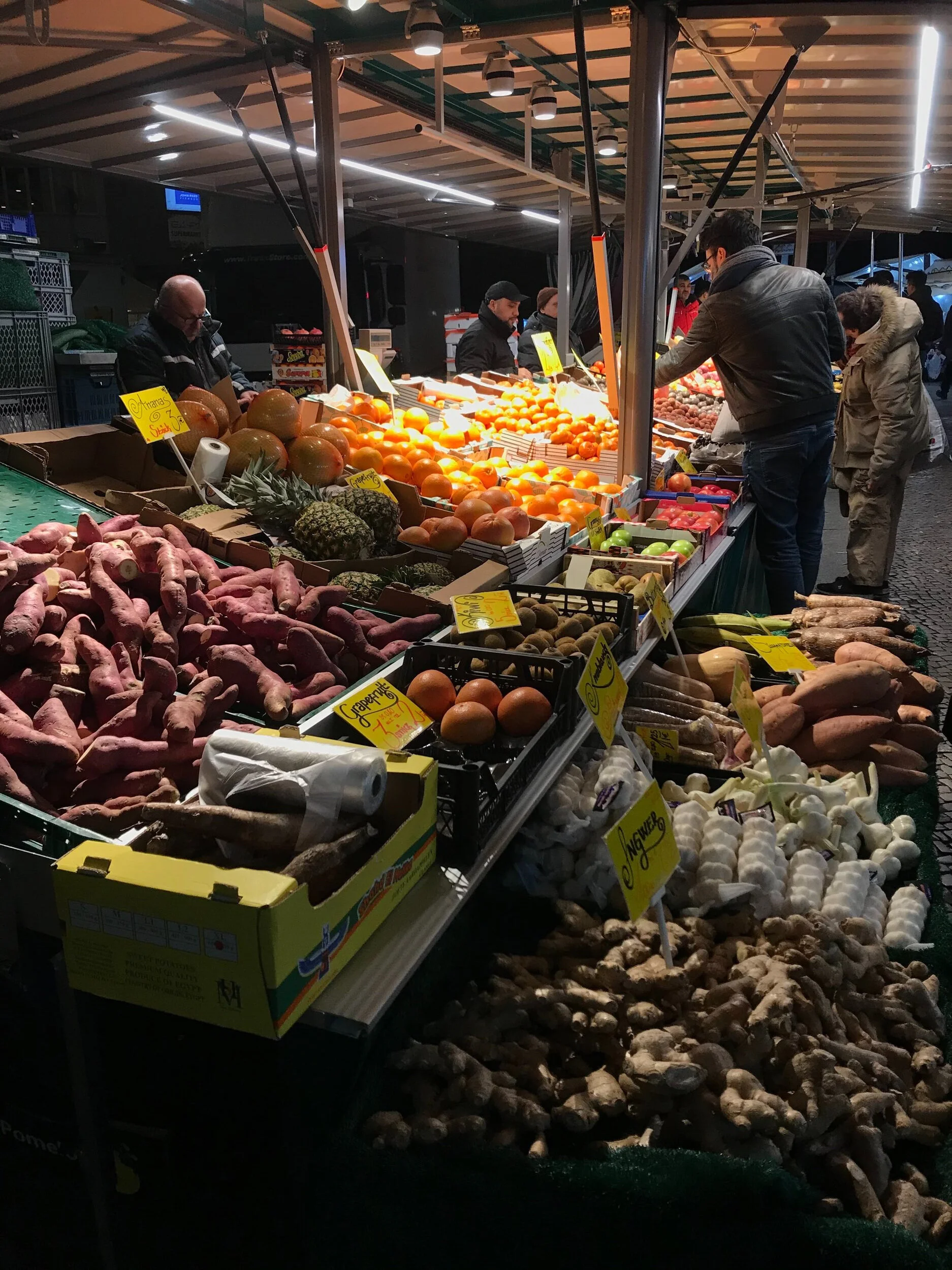
Turkish market in Kreuzberg. Gürer. CC2.0
Kreuzberg
Berlin’s Kreuzberg district is often nicknamed “Little Istanbul” for good reason; the neighborhood is home to the largest Turkish population outside of Turkey. On Tuesdays and Fridays, Kreuzberg hosts an expansive Turkish Market, selling everything from fresh produce and spices to fabrics and street food. Kreuzberg is an excellent place to try Turkish staples such as doner kebab and gozleme. Markthalle Neun is another acclaimed international market in Berlin. On Thursday evenings, it hosts “Street Food Thursday” with seemingly endless vendors serving diverse culinary options. Berlin’s Jewish Museum, also located in Kreuzberg, is the largest museum in Europe focusing on Jewish history and culture. Known for its nightlife and hip culture, Kreuzburg is rising in popularity. At the same time, this has given rise to gentrification which makes it difficult for migrant families to afford life there.
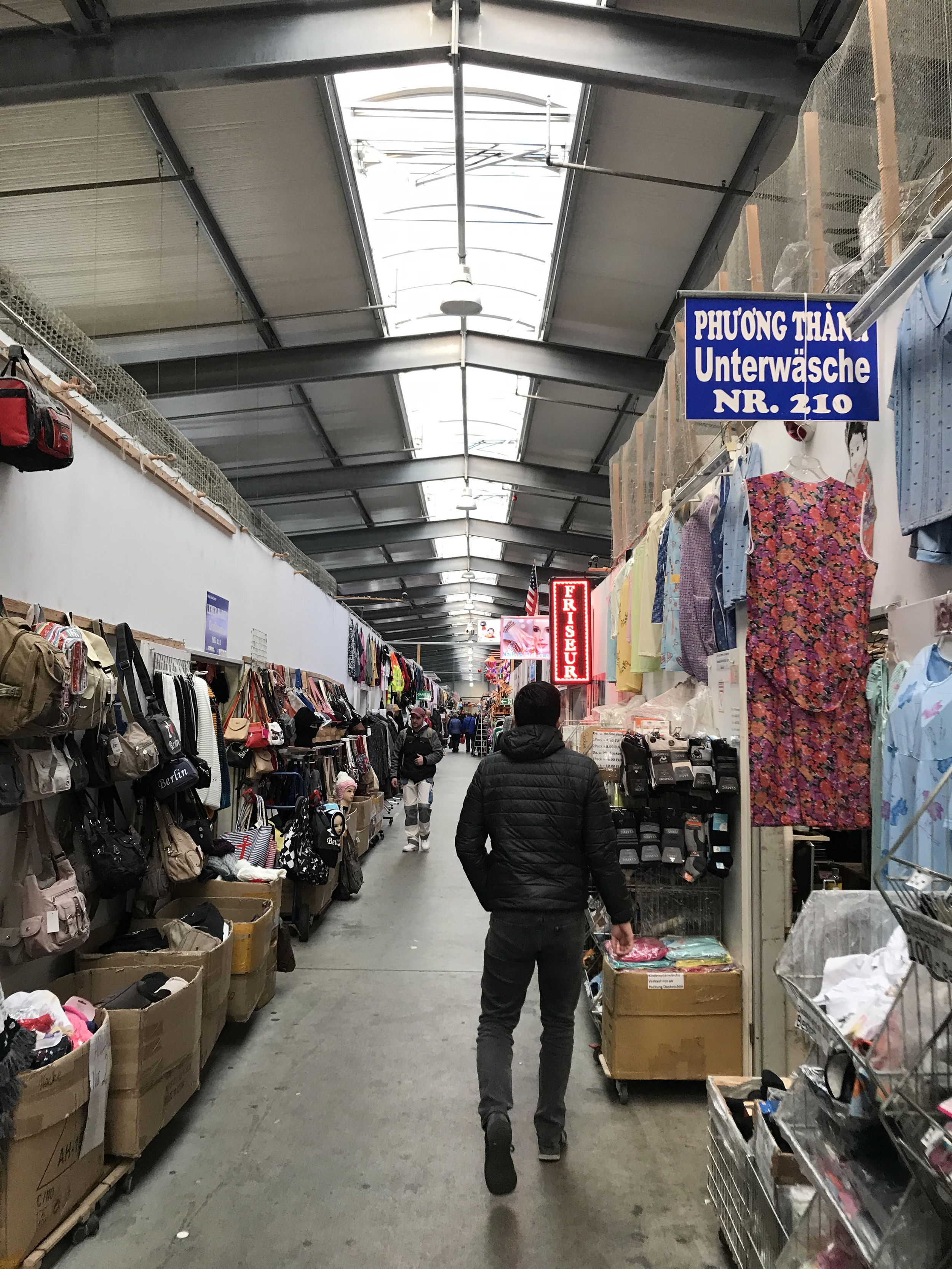
One of the many warehouses in the Dong Xuan Center in East Berlin. Gürer. CC2.0
East Berlin’s Vietnamese Population
Vietnamese make up the largest Southeast Asian population in Berlin, most of whom reside in the eastern part of the city. The Dong Xuan Center in Lichtenberg is home to Berlin’s hub of Vietnamese culture: a warehouse-like market that contains vegetable shops, clothing stores, beauty salons and authentic restaurants.
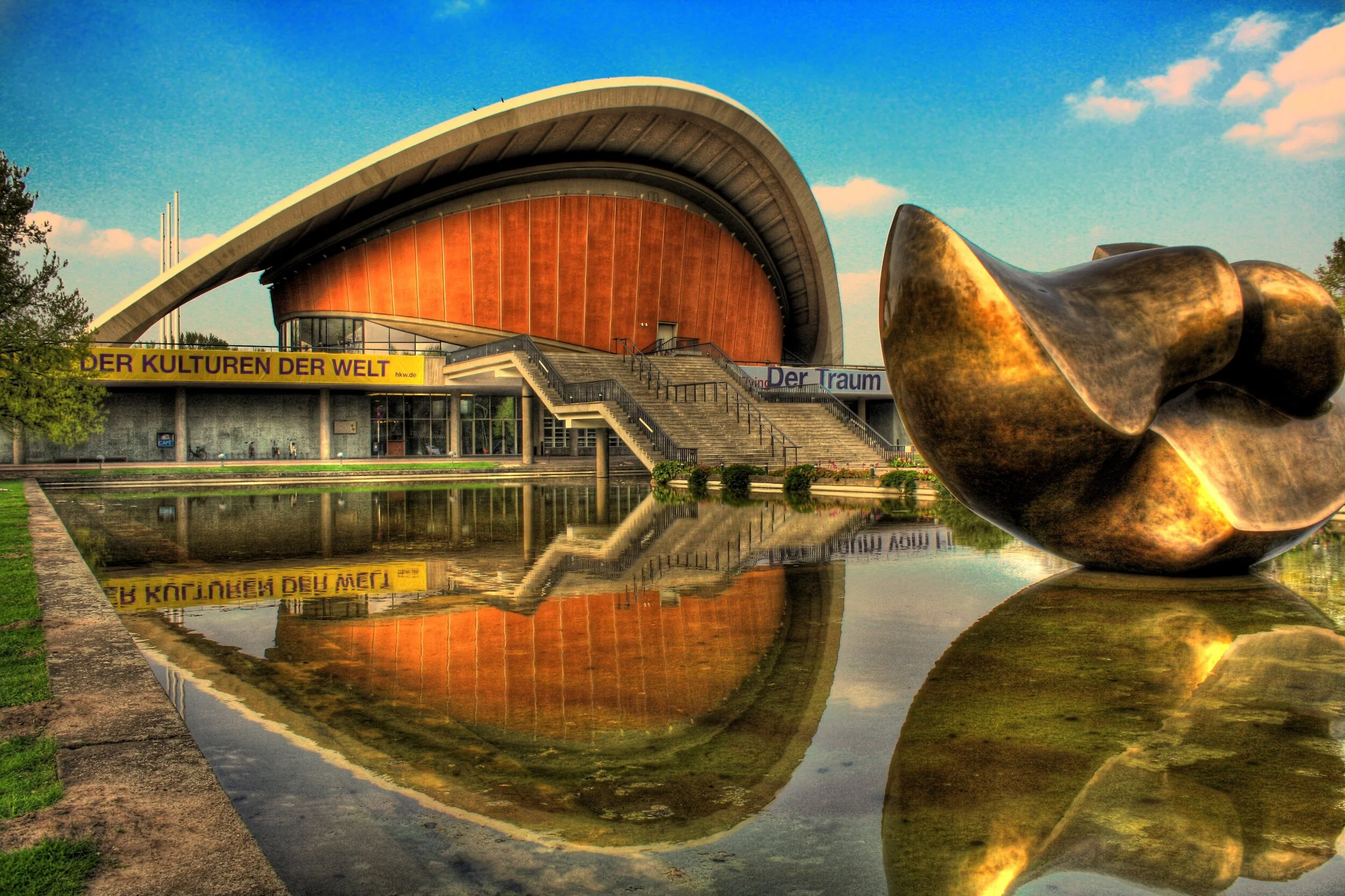
The House of World Cultures in Berlin. Mennerich. CC 2.0
House of World Cultures
Founded in 1989, the House of World Cultures is an arts and cultural center that hosts exhibitions, conferences and themes focused predominantly on non-Western cultures and societies. Located in the Tiergarten area near the Spree River, the center’s primary focus is to provide Berliners with an authentic view of contemporary art and culture from around the world. Past events include a Korean film festival and various world music events.
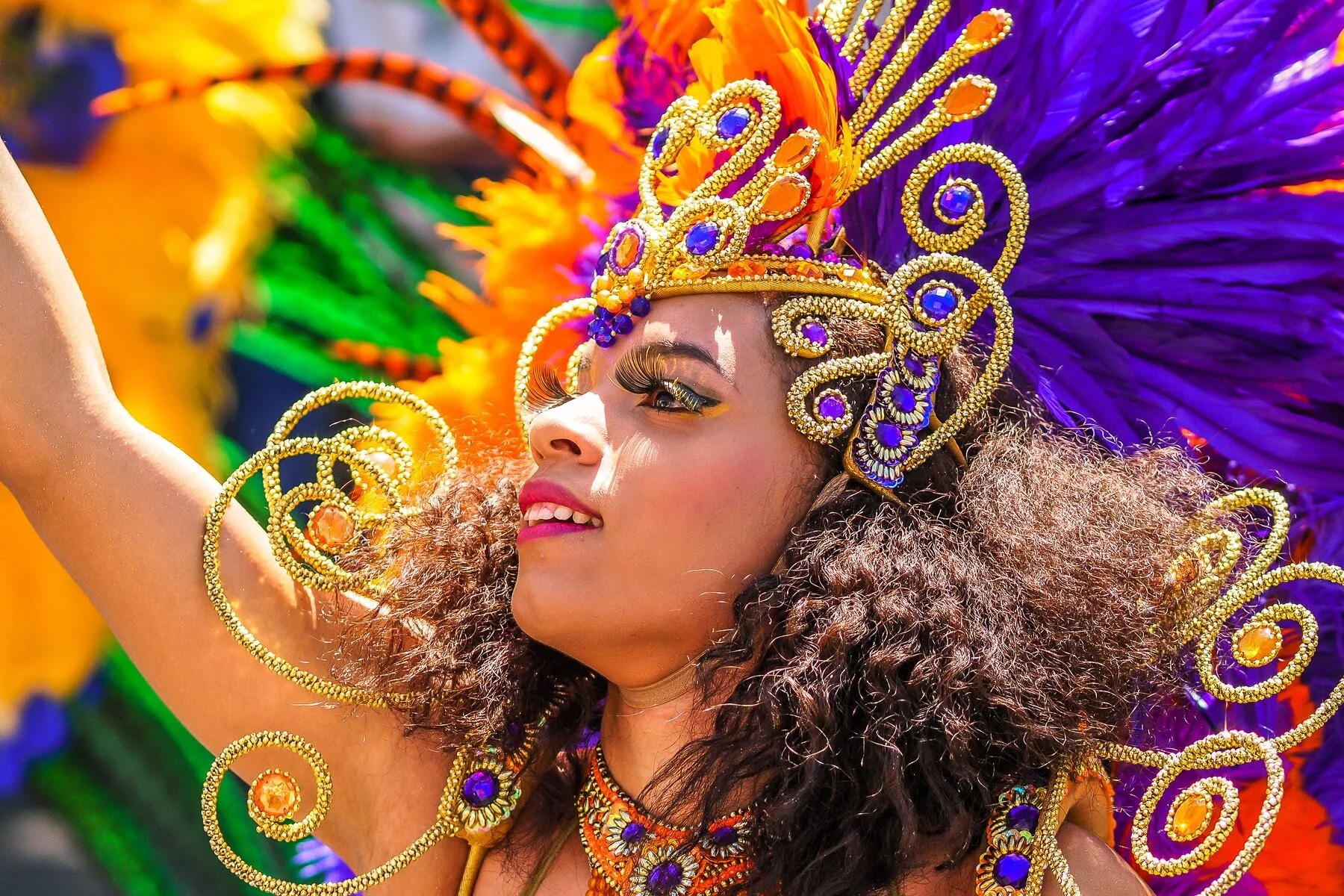
Performer at the annual Carnival of Cultures. Reichert. CC 2.0
Carnival of Cultures
The Carnival of Cultures is a four-day celebration of Berlin’s cultural diversity that occurs every spring. Festivities include music, dance, street performances, street food and crafts. On Pentecost Sunday, the last day of the celebration, a procession of floats travels through Kreuzberg.
Immigration has shaped Berlin’s culture and history for decades, providing a fascinating framework for travelers to explore. Despite the contested status of refugees in Germany today, migration into Berlin is nothing new. Visiting these multicultural spaces is a step toward tolerance and appreciation of the beauty and diversity so often brought about by means of immigration.

Megan Gürer
is a Turkish-American student at Wellesley College in Massachusetts studying Biological Sciences. Passionate about environmental issues and learning about other cultures, she dreams of exploring the globe. In her free time, she enjoys cooking, singing, and composing music.
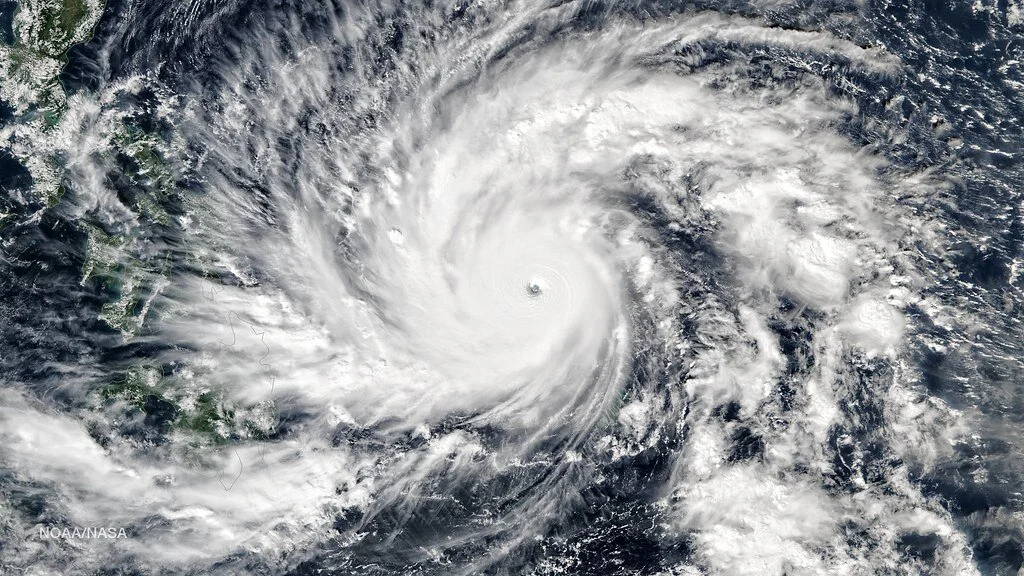
Typhoon Hagupit’s eye. Sjrankin. CC BY-NC 2.0
East Asia Braces Itself as the 2020 Typhoon Season Begins
Southeast Asia is known for its tropical climate and distinct rainy, or monsoon, season. This sort of climate brings about an annual typhoon season. Typhoons are mature, tropical cyclones that mostly occur in the Pacific Ocean. They carry with them heavy winds, rain and tornadoes that rip through villages and beaches. These storms have the potential to be devastating, a fact confirmed by history several times over.
Thailand
While Thailand is not hit with as much force as its southern neighbors, the typhoon season is still clear. From September through November, the country is prone to typhoons with the potential to change the country’s landscape and infrastructure.
In 2006, Typhoon Xangsane made landfall in the Philippines and devastated its way across Laos, Vietnam and Thailand. It wiped out 810 square miles of farmland across Thailand and caused 47 deaths. The storm brought with it strong winds, landslides and torrential rain that wiped out villages and caused hundreds of families to become homeless.
Fortunately for Thailand, most storms are not nearly as devastating as Xangsane. Monsoons can be counted on, though, to bring about tropical storms each year.
Vietnam, Laos and Cambodia
These three Southeast Asian countries feel the brunt of two different sets of cyclones. Typhoons move in from the northern Pacific, while tropical cyclones make landfall from the south. While safety measures are in place, such as shelters, help lines and emergency services, ultimately their geographic location leaves them vulnerable to Mother Nature’s worst.
In 2017, Vietnam experienced its deadliest typhoon since 2001. Dubbed Typhoon Damrey, the storm originated in the Philippines’ Visayan archipelago toward the end of the rainy season and killed at least 123 people and over 600 injured. The severe flooding and winds swept away anything that was not secured to the ground and left an estimated $1 billion in damages across Vietnam. Since then, the country has taken measures to ensure that it has a better communication system for its citizens to learn about the threat of storms as they arise.
Korea
Farther north, the Korean Peninsula sits in a spot not nearly as impacted by typhoon season as countries in Southeast Asia. While the peninsula experiences jangma, or the rainy season, its normal extent is heavy rains that inconvenience residents. This shows just how quickly tropical storms lose power as they move inland; they dissipate soon after doing so.
A recent exception was Typhoon Hagupit, which made landfall in August. The Category 1 typhoon traveled north from the Philippines to China before impacting Korea as a subtropical storm. South Korea reported 15 deaths along with considerable property damage from the storm.
The western Pacific typically sees more tropical storms than anywhere else in the world. About one-third of the world’s natural disasters occur in the region, and the numbers only seem to increase each year. These storms have caused countries to increase safety measures, focus on disaster communication, develop evacuation measures and create safe spots in public areas. The countries are well-known among visitors, but during the rainy season, the more experienced traveler might count these locations out.

Elizabeth Misnick
Elizabeth is a Professional Writing and Rhetoric major at Baylor University. She grew up in a military family and lived in Europe for almost half her life, traveling and living in different countries. She hopes to continue writing professionally throughout her career and publish her writing in the future.

Dog in rural Cambodian school campus. Bryon Lippincott. CC BY-ND 2.0
Animal Activists Celebrate as More of Asia Bans Dog Meat Consumption
The eating of dog meat, though not widespread anymore, is still practiced today in countries such as South Korea, China, Vietnam, Thailand and Cambodia. 30 million dogs are killed for consumption every year in Asia, motivating animal rights activists to speak up and call for change. Many have pushed back against the practice, finding success in the last few weeks as the first Cambodian province and India’s Nagaland state ban the selling, trading and consumption of dog meat. This marks a crucial turning point for animal rights activists across the world.
Siem Reap - The “Hub” of Dog Meat
While only about 12% of Cambodians eat dog meat on a regular basis, the province of Siem Reap has been identified as a “hot spot” for the trading and consumption of dog meat in wet markets. Tea Kimsoth, head of Siem Reap province’s agriculture, forestry and fisheries department, stated that “dog meat has been a lot more popular following the arrivals of foreigners, especially among the South Koreans.” On July 8, Siem Reap became the first province in Cambodia to mark the practice as illegal. Consequences of defying the ban include up to five years in prison and $12,200 in fines. The implementation of the law banning dog meat consumption marks a victory for the Humane Society International (HSI), which hopes that Siem Reap will serve as a model for the rest of the country to save the lives of millions of dogs.
Nagaland, India - Following Suit
After pictures of “dogs bound in sacks at wet markets” circulated online, the Federation of Indian Animal Protection Organisations called for change and headed a campaign to stop the illegal trading and slaughtering of the animals. However, many civil rights activists retaliated against the ban, calling it “an attack on food customs in the state.” While illegal in some parts of India, dog meat is still considered a delicacy by some in the northeastern areas of the country. The government has not revealed how it plans to enforce the ban, but it announced that it would also ban commercial importation, trading and dog markets in general. This comes as a relief to HSI, which has been campaigning for years to stop the consumption and slaughtering of dogs.
The Movement Continued
These victories come in light of the decision by Shenzhen, China, to ban the eating of both dogs and cats. This makes Shenzhen the first Chinese city to do so, after beginning to enforce the decision on May 1. Ultimately, the eating of dog meat is not common in China, only practiced by a few with the majority stating they have never tried it and never will. This comes after the city government released a statement saying that “dogs and cats have established a much closer relationship with humans than all other animals.” The city followed suit after Hong Kong and Taiwan banned the practice.
In the meantime, organizations such as the Humane Society International and People for the Ethical Treatment of Animals are celebrating their success while working constantly to target other countries where the practice is still prevalent.

Elizabeth Misnick
is a Professional Writing and Rhetoric major at Baylor University. She grew up in a military family and lived in Europe for almost half her life, traveling and living in different countries. She hopes to continue writing professionally throughout her career and publish her writing in the future.
VIETNAM: Hungry in Hanoi
In the summer of 2016 Alex Schiller and his girlfriend embarked on a week long trip to Hanoi and Ha Long Bay. When they weren't busy eating incredible street food, they filmed some stuff.
The Road Story - Vietnam
Georgy Tarasov made a short film starring his own brother, documenting their travel experience through Vietnam. Daniil gets around Vietnam through train, on foot, by bicycle, and by motorbike with many adventures and new friendships along the way.
The Old Ways - A Journey to Northwest Vietnam
This is a short film in Northwest Vietnam, one of important sub-regions of Vietnam. This region plays a crucial role in Vietnam defense and security. Northwest Vietnam is always characterized by untouched beauty of landscapes and local people. Locations featured in this film are Tu Le, Mu Cang Chai, Sapa, Bac Ha, Hoang Su Phi, and Ban Phung village.