The Victims of Agent Orange Making a Living Crafting Art

Ryan Yianni

On the outskirts of Ho Chi Minh City, victims of American bombing achieve financial independence through their unique artwork.
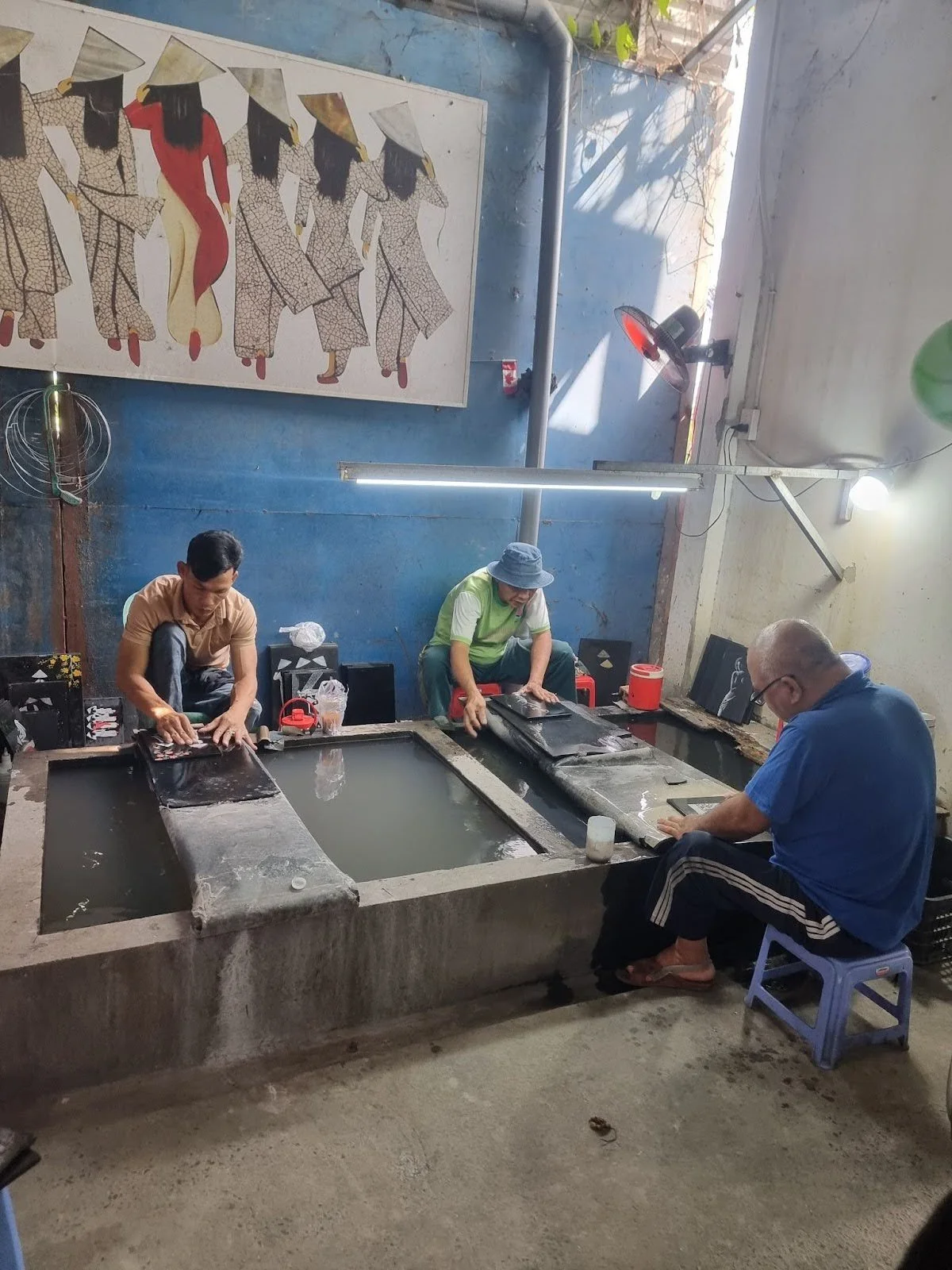
Artists working at Lang Viet Lacquers. Ryan Yianni.

If you ever find yourself in Ho Chi Minh City, it is almost a given that, at some point in your journey, you will travel to the Cu Chi Tunnels. Located just under 30 miles north of the country’s largest city, this famous spot along the Vietnam War-era network of underground tunnels has become a must-see attraction. There are a myriad of tour operators running daily trips to the tunnels, no doubt with some stops along the way. On my tour, our first visit was Lang Viet Lacquers, a small art factory on the outskirts of the city with a unique story.

Lang Viet Lacquers, situated in the city’s northwest, is a government-supported enterprise allowing victims of America’s brutal Agent Orange bombing campaign to achieve financial independence through lacquer painting, an art form that has existed in Vietnam and Southeast Asia for over 2,000 years. The stunning artwork consists of rich, almost reflective colors, with the addition of eggshell and mother-of-pearl to create bright, contrasting sparkles against the background.
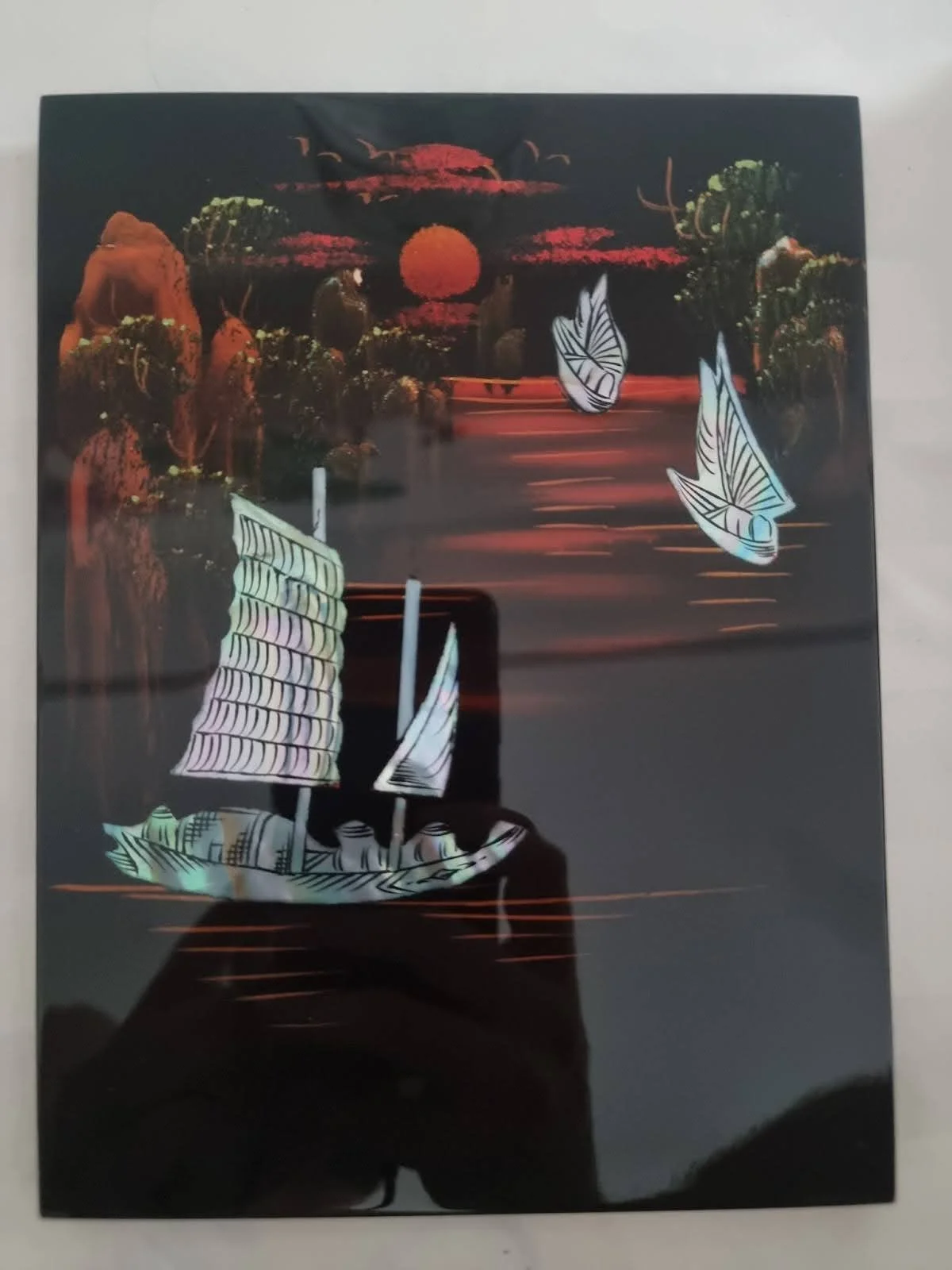
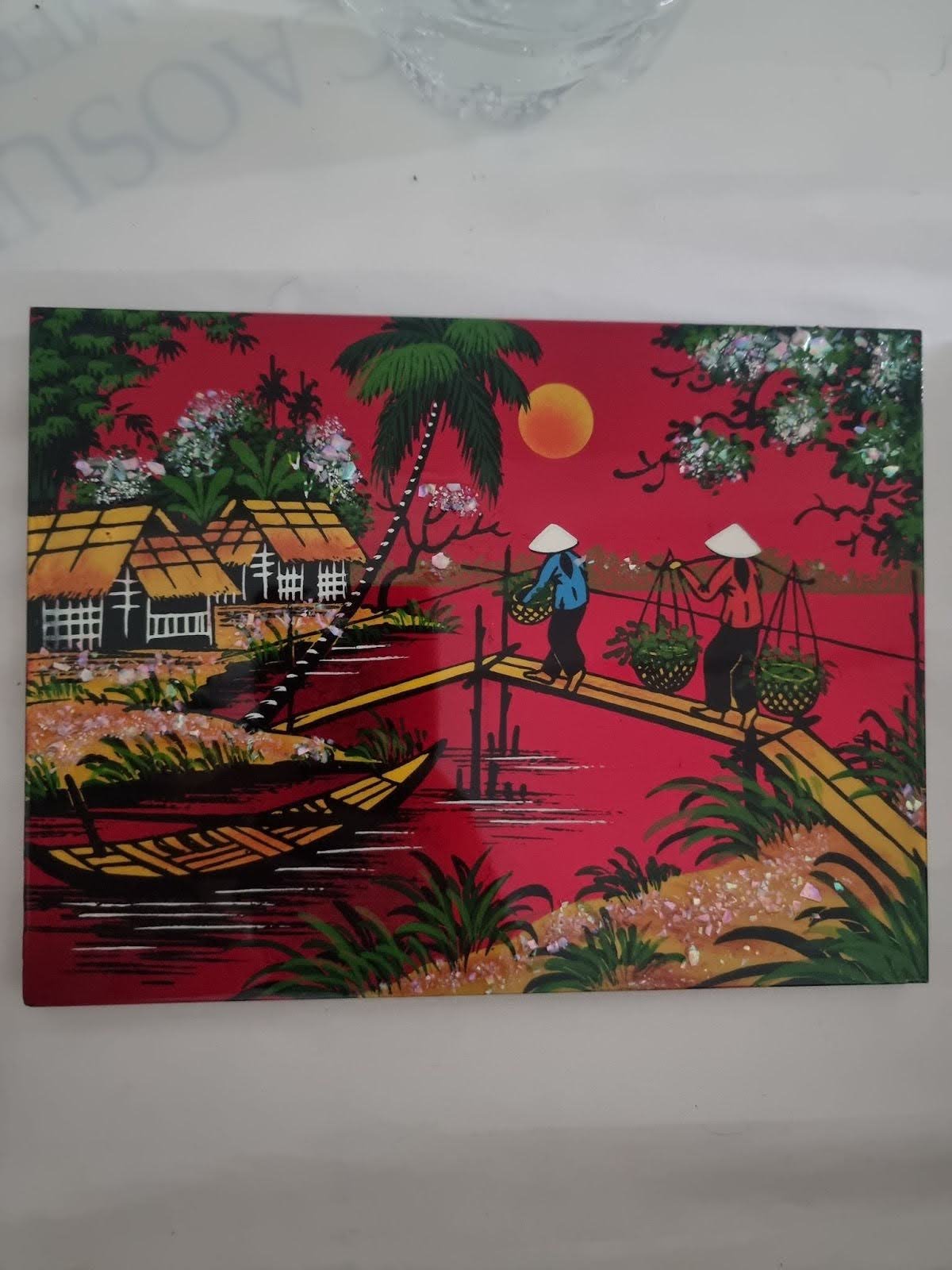
My two purchases from Lang Viet Lacquers. Ryan Yianni.

Arriving in the intense heat of the Vietnamese sun, we stepped off the coach and were ushered into the workshop, where we saw firsthand the artwork being created with painstaking care and detail. We were told how all the artists are victims of Agent Orange, the herbicide sprayed in large quantities over Vietnam by U.S. forces during the Vietnam War. These victims are not just war veterans; the devastating effects of Agent Orange were passed down to descendants of those affected, and the succeeding generations have suffered greatly in turn. For each work of art sold, the proceeds go directly to the artists, helping them achieve financial independence. Many of the injuries and conditions they suffer from mean they cannot work in the traditional sense, predominantly due to mobility or developmental issues, so this outlet allows them to maintain their freedom. In their shop, you are able to purchase a wide variety of items, from small souvenirs to large, wall-hung art, so there is something for everyone’s budget and luggage space.
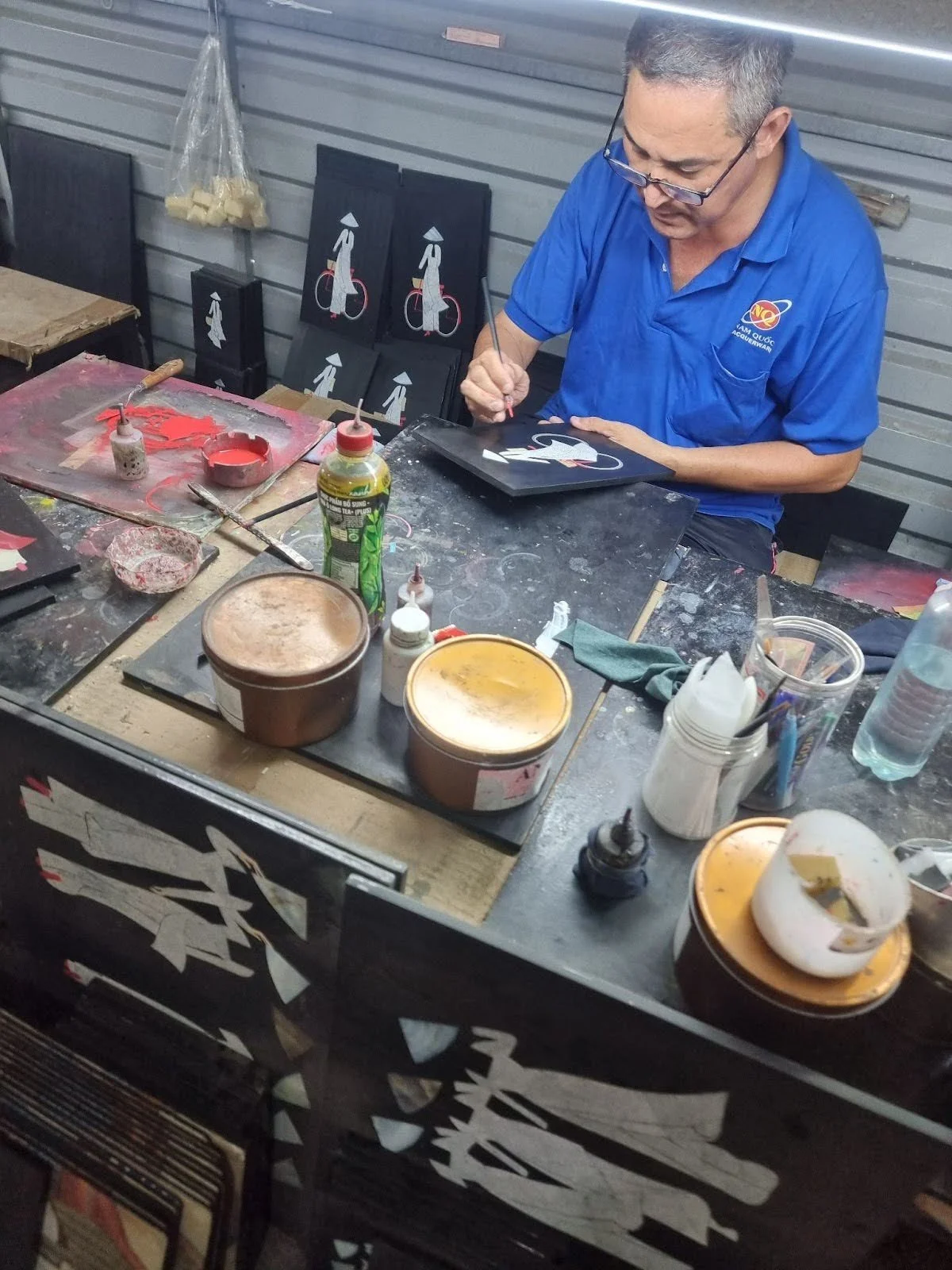
Artist adding finishing touches to painting. Ryan Yianni.

The actors behind Agent Orange initially claimed their intent to destroy the Vietnamese jungle and root out guerrilla forces deep in the overgrown countryside, but the effects were much more serious and long-lasting. Being sprayed across almost 3 million hectares, over 4 million Vietnamese were exposed to the chemical, and while those directly exposed suffered from health issues, such as multiple neurological disorders, increased cancer rates, heart disease and serious skin rashes and scarring, the effects of Agent Orange were also passed onto their children and grandchildren. Later generations of Vietnamese citizens whose parents and grandparents were victims of Agent Orange have suffered from cleft lip, heart defects, birth disorders leading to lack of limbs, increased cancer rates, congenital heart diseases and severe learning disabilities, to name a few. Studies have shown that Vietnamese exposed to Agent Orange also have a higher rate of dioxins in their bodies, which are highly toxic pollutants that can cause issues like chloracne, cancer, immune and reproductive problems, developmental issues and chronic illnesses.

One of the reasons for the continued effects of Agent Orange on the younger generations is the fact that these dioxins are still found in Vietnamese soil, water and food chain. It is consumed through contaminated crops and livestock, breathed in via dust and absorbed through the skin, meaning that Agent Orange has continued to plague Vietnamese civilians for decades after the last of the chemical was dropped on the country. Additionally, dioxins have a half-life of 7 to 11 years, meaning that the strength of the chemicals did not decrease until approximately 1980 and is still present today, although in lower quantities and intensity

Agent Orange also had a strong impact on Vietnamese wildlife: A post-war study found 24 species of birds and 5 species of mammals in an area of forest that had been heavily sprayed, compared to two non-sprayed forest areas that each had over 100 bird species and at least 30 mammal species. Studies have found that the rate of miscarriages and birth defects was significantly higher in women who had been exposed to Agent Orange. Research has also shown that U.S and Australian soldiers who were exposed to Agent Orange have a much higher risk of elevated blood pressure and tumors, among other health issues, while those soldiers exposed to the dioxins had a higher rate of soft-tissue sarcoma, a rare type of cancer found in muscle tissue. A 2021 study also found that American veterans exposed to the herbicide were almost twice as likely to develop dementia.

The United States began to deploy herbicidal agents in Vietnam in January 1962, with the launch of Operation Ranch Hand, although the first major operations did not begin until September, when mangrove forests on the Mekong River were targeted. The majority of Agent Orange usage was between 1966 and 1969, with an estimated 170 kilograms of dioxin dropped on Vietnam and even more sprayed onto the border areas of Laos and Cambodia. By 1971, the evidence of the harmful effects was beginning to be known, and the U.S. government halted all herbicidal spraying operations in Vietnam, with the remaining stock destroyed by 1977.

The use of Agent Orange was incredibly controversial at the time. The Federation of American Scientists urged the U.S. government not to use chemical and biological weapons unless used by the enemy first in 1964, concerned that the government was not discriminating between military and civilian targets. In 1966, a group of scientists led by John Edsall of Harvard University appealed to President Lyndon B. Johnson to ban the use of such weapons. The statement reads, “such tactics are barbarous because they are indiscriminate; they represent an attack on the entire population of the region where the crops are destroyed, combatants and non-combatants alike." Similar protests continued for the remainder of the war. 

If you are able to visit Lang Viet Lacquers, it is well worth the trip. Being able to purchase some great souvenirs, along with helping those who have suffered the consequences of America’s brutal war, is a worthy highlight of a trip to Vietnam. I’m a big believer in leaving somewhere better than I found it, embracing local cultures and giving back to the communities I have discovered through my travels, and this is a great way to do all three. 

GETTING THERE:

Lang Viet’s is located just nine miles north of the airport. You can book a Grab Bike from the center of Ho Chi Minh City near Ben Thanh Market, Saigon Central Post Office, Independence Palace or the Cathedral for about four dollars. It is also served by buses 13, 24, 74 and 94, which stop just outside the shop.


Ryan Yianni

Ryan is a lover of all things travel. After undertaking his first solo adventure in 2025, he has relocated to Australia from the UK. A history graduate from the University of the West of England, Ryan’s writing focuses on the historical issues faced by the places he has explored, looking at how the hardships of the past have been overcome and remembered.
4 Stunning Coral Reefs: Their Threats and Beauty

Coral reef systems are home to some of the largest concentrations of biodiversity in the world, but climate change is putting them at risk. 

Fish swimming through coral reefs in Panama. Thinkpanama. CC BY-NC 2.0

Home to countless fish and vibrant aquaflora, these awe-inspiring reefs are feeling the impacts of climate change. 

To dive into the world of coral reefs is to experience an underwater garden defined by vibrant colors, rare plant life, and unparalleled biodiversity. Not only are coral reefs visually stunning and awe-inspiring, but they serve an important role in food systems and economic growth, as approximately one billion people rely on coral reefs across their world for food and income.

However, the effects of climate change are damaging the health and vitality of reef systems. One major effect of rising water temperatures on coral reefs is coral bleaching. Coral bleaching occurs as an adaptive response to warming waters, during which corals shed their symbiotic algae, or zooxanthellae, in the hopes of replacing it with algae that is more heat tolerant, a process that leads the corals to take on a white color and appear ‘bleached.’ This doesn’t immediately kill the coral, but the environmental keystone is left vulnerable and its death rate increases. With so many species relying on reefs as a source of nutrients and shelter, bleaching not only affects the health of the coral itself but the entire network of life that the reefs support.

The impacts of coral bleaching are increasing steadily alongside rising temperatures, with an ocean heat wave causing roughly 75% of the world’s reefs to experience bleaching between 2014 and 2017.  

As reefs around the world feel the effects of climate change, now more than ever is it crucial to understand and appreciate the beauty and significance of coral reef systems around the world, as well as the efforts being made to protect them.

Great Barrier Reef, Australia

The Agincourt Reef in the Great Barrier Reef. Robert Linsdell. CC BY 2.0

Perhaps the most famous of all coral reefs, the Great Barrier Reef is also the largest coral reef system in the world, stretching some 348,000 square kilometers along the Australian coast. Home to distinct ecology and biodiversity, the reef holds roughly 400 distinct types of coral, 1,500 different species of fish, and around 240 different species of birds. The Great Barrier Reef is one of the most popular tourism destinations in Australia, with some 2 million people visiting the Marine Park each year.

Around  344,400 square kilometers or about 99% of the reef is included as part of the Great Barrier Reef Marine Park. As part of The Reef 2050 Long-Term Sustainability Plan, the Australian government invested  $260 million into the park in an effort to aid reef protection and conservation efforts. The Great Barrier Reef Marine Park Authority has also taken strides to acknowledge Indigenous communities’ relationships to the reef and reserves specific marine tourism permits that offer opportunities for Indigenous people to build tourism businesses and collaborate with other operators to share their cultural connection with the reefs.

In 1981, the Great Barrier Reef became a World Heritage Site, an area that is granted legal protection by the United Nations Education, Scientific and Cultural Organization (UNESCO), making it the most biodiverse ecological area to be included in the category. 

Despite such protections, the Great Barrier Reef is vulnerable to harmful bleaching practices, with nearly 400,000 hectares disappearing due to bleaching between 2015 and 2016 alone. As outlined in The Reef 2050 Plan, the Australian Government aims to reduce the nutrients loads entering the ocean via rivers by 80% by 2025

The Great Barrier Reef is one of the most popular diving destinations, and offers travelers the experience to glimpse a range of marine life, from whitetip sharks to yellow snappers. The town of Cairns is a popular entry point and has a bustling hostel season in peak diving season during which day boats take divers out to nearby reefs. If travelers want to escape the crowds they can venture farther north to Port Douglas and utilize the town's diving resort options.  Because the quality of reefs increases as one moves further from the mainland, divers frequently utilize liveaboard trips, which allow them to spend multiple days and nights living on a boat that transports them to different diving sites. While diving is possible year-round, Australia’s summer months between December and February bring in warmer and clearer water to talk in the stunning vibrancy of the corals. However, during the winter months from March to November (the Southern Hemisphere’s de facto summer), divers are more likely to come across large marine mammals. The Great Barrier Reef is suitable for divers at all levels, though degrees of difficulty vary depending on the site, with spots such as the Osprey and Ribbon Reef being more suitable for advanced divers.

Raja Ampat, Indonesia

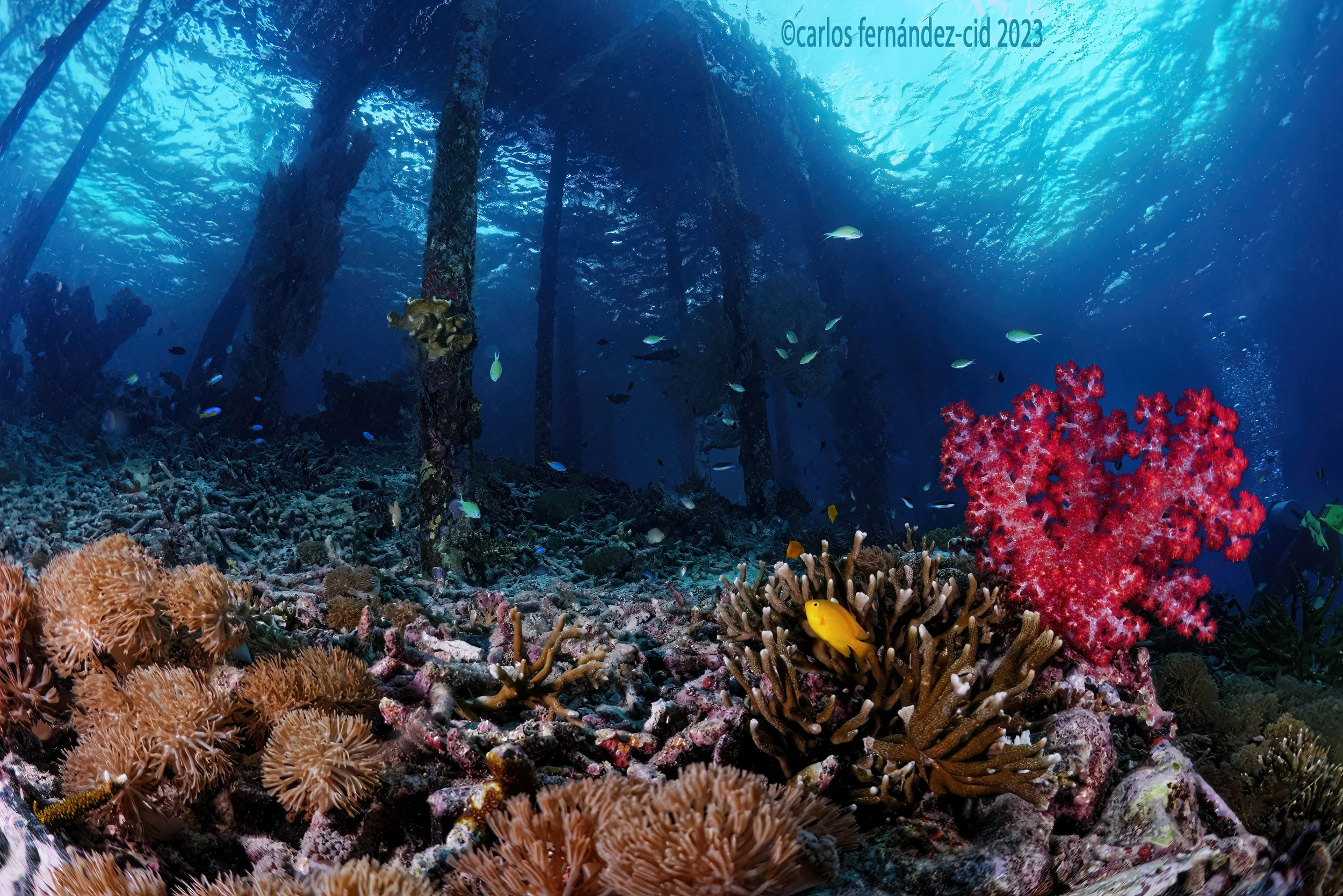
Colorful corals and fish at the Raja Ampat. Carlos Fernandez-Cid. CC BY 2.0

As part of The Coral Triangle, an oceanic ecological area in Southeast Asia and the Pacific, the Raja Ampat reef stretches nearly 4 million square miles. The rich nutrients and biodiversity of this area makes it home to 1,600 different fish species and 75% of the world’s coral species. The diversity in the area in part stems from the area's proximity to the “Ring of Fire”, a range of underwater volcanoes that extends for some 25,000 miles along the Pacific Ocean. Stretching along the boundaries of several tectonic plates, the area is rich in volcanic activity, and holds 75% of the Earth’s volcanoes, of which it has more than 450

Parts of the Raja Ampat are included in the network of Marine Protected Areas that was established by local communities and governments along with Conservation International, The Nature Conservancy, and Worldwide Fund For Nature, to provide conservation and zone regulations to a total of 2,000,109 hectares.   

The Raja Ampat has proven widely resilient to the effect of climate change and warming waters. The reef’s unique location has rendered it adaptable to a variety of different climates, with low tide reefs heated by the sun and deep ocean reefs that experience oceanographic upwellings which bring in cold, nutrient rich water. Temperatures across The Raja Ampart can range between 66 degrees to 96 degrees Fahrenheit. Because coral bleaching is a stress response to climate change, The Raja Ampat reefs resilience to intense warm water temperatures also means that the reef system has exhibited few signs of bleaching. 

Due to its remote locale, the Raja Ampat is less popular with divers than some of the other major reef systems. But those who choose to embark on the journey will not be disappointed. Liveaboarding is the most popular way to see the reefs, with around 40 liveaboards in the area, and trips are on offer from October to May.  Dive resorts are also popular for visitors who want a land-based option.  Some of the most popular diving spots include Sardine's Reef, Mike's Point and Blue Magic, located at the Dampier Strait. Along with its coral, the Raja Ampat contains a plethora of rich marine life including reef sharks, barracudas, and octopuses. With such diversity, it's no wonder the Raja Ampat reef holds the record for the largest number of different species recorded in a single dive. 

Red Sea Coral Reefs, Indian Ocean

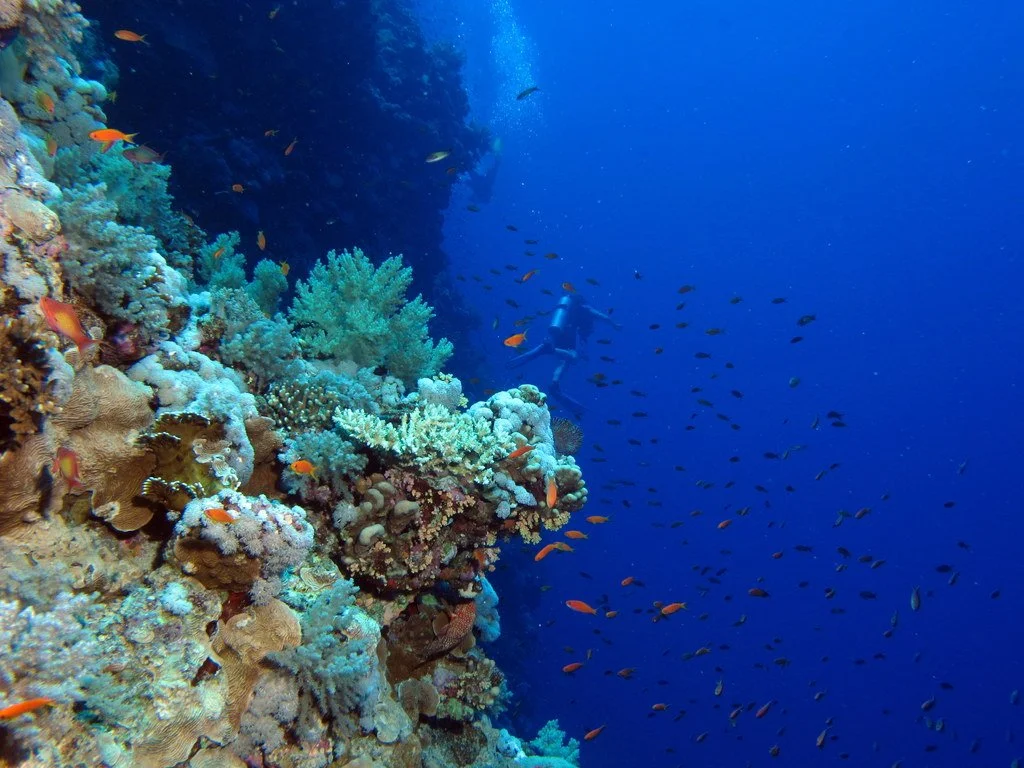
Divers in the Red Sea near Big Brother Island. Derek Keats. CC BY 2.0

The Red Sea Coral Reefs are defined by their distinct location and geological history. The reef platforms are over 5,000 years old and extend for some 1,240 miles (2,000 km). Due to its unique location and regional climate, the Red Sea reefs are tolerant to extreme climates, including high temperatures, salinity, and frequent turbidity from seasonal dust storms. A lack of river discharge, combined with low rainfall in the region helps make the water exceptionally clear and free of heavy sediments. This unique geology makes the Red Sea Reefs an ideal home for rare species, with roughly 10% of its 1,200 recorded fish species being endemic, meaning that they are found nowhere else. 

The Red Sea Coral reefs are unique in their resistance to climate change and ocean bleaching. This resistance is in part due to the fact that many of the reefs in the Red Sea actually migrated to their current location from the south, an area with significantly higher temperatures. Relying on their historical comfort with extreme heat, today, reefs in the Red Sea seem to be actively thriving as water temperatures rise, with algae doubling the amount of oxygen they produce. In order to learn more about the Red Sea reefs’ ability to thrive in such extreme weathers, scientists have built a Red Sea Stimulator to try and mimic the conditions of the area and understand how the specific environment in the Red Sea can be used to help protect other reef systems that are not as resistance to climate change. 

While the Red Sea coral reefs have proven resilient to climate change, they face the threat of degradation from nearby urban expansion that can create runoff and debris harmful to the water quality. In 1994, the governments of Israel and Jordan collaborated to found the Red Sea Marine Peace Park, in the Gulf of Aqaba. The park offers a groundbreaking example of a cross-national collaboration to preserve and protect coral reefs.  

Diving the Red Sea allows an opportunity not just to see the coral, but also large marine mammals such as sharks and dolphins, unique underwater environments including labyrinths and lagoons, and remnants of past shipwrecks, including the SS Thistlegorm, a British cargo steamship that sunk in 1941. Most dive resorts can be found in the coastal towns of Sharm el Sheikh and Dahab. The Red Sea’s high evaporation rates and infrequent rainfall and isolated location make it a nearly year-round diving destination. Diving in the northern region allows opportunities to explore the lagoons of El Gouna and shipwrecks found in the Straits of Gubal. In the South, the Fury Shoals is perfect for gentle drift dives, and the Zabargad and Rocky Islands house shallow reefs and black coral trees. The St. John’s Reef on the border of Sudan is one of the more isolated regions of the Red Sea. Divers can explore pristine caves and tunnels, however choppy winds between October and April can cause harsh conditions. 

Rainbow Reef, Fiji

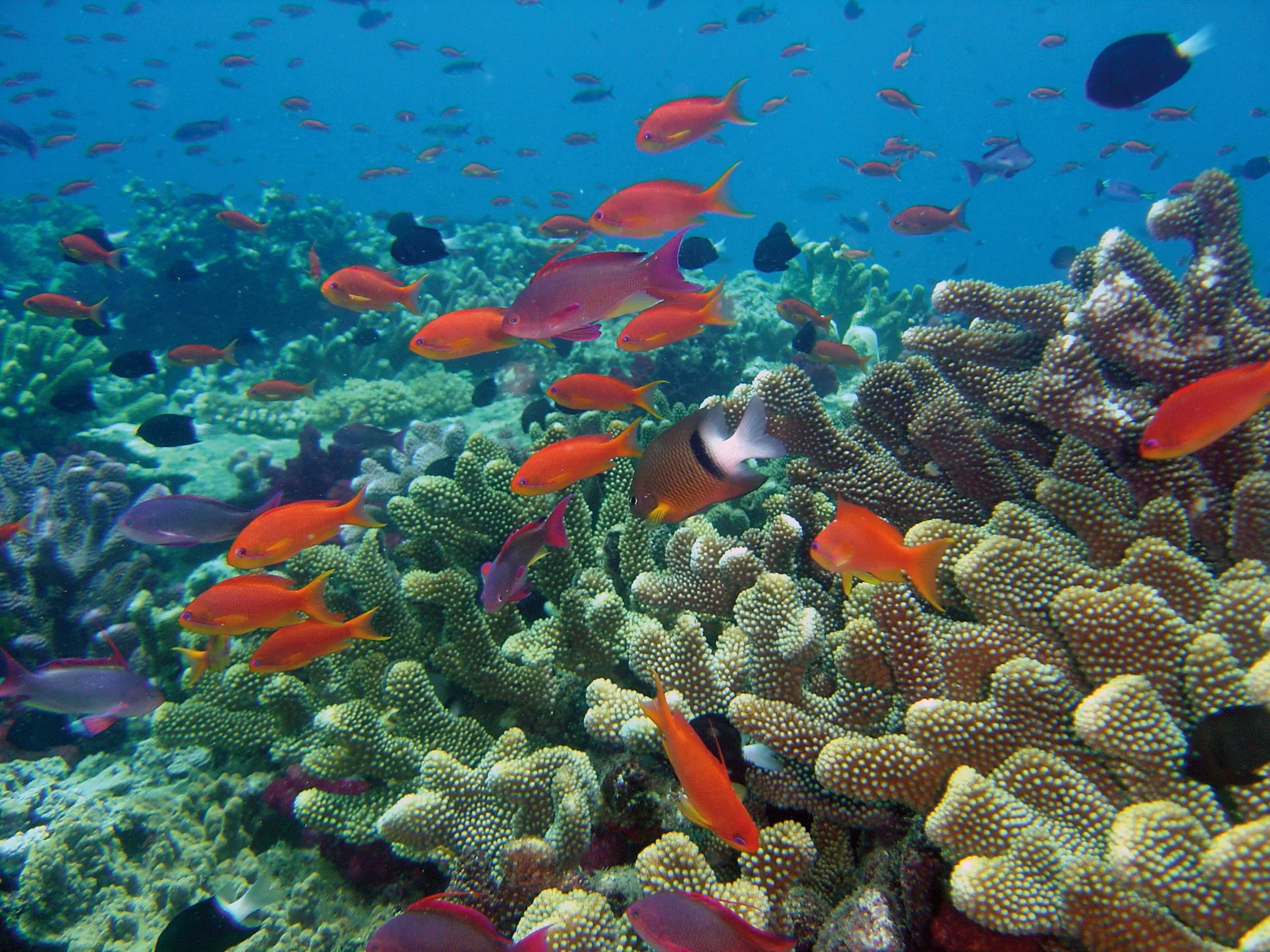
Fish swimming in Fiji’s Rainbow reef. David Burdick. CC BY-NC-ND 2.0

Located in the Somosomo Strait, a passageway that separates the Taveuni and Vanua Levu islands in Fiji, the Rainbow Reef offers a striking spectrum of colors that live up to its name. The Rainbow Reef is often called the soft coral capital of the world, and one of its most popular reefs is the Great White Wall, an underwater slope covered in a tapestry of soft white corals and home to countless colorful anthias as well as reef sharks and manta rays. 

Fiji’s reefs have also been impacted by rising temperatures and bleaching. In 2017, a major bleaching event killed nearly half of Australia’s Great Barrier Reef and affected almost all of the reef’s protected by UNESCO as World Heritage Sites. As a reaction to the devastating bleaching, Fijian Prime Minister Frank Bainimarama called for greater protection of reefs as they face the triple manmade threats of ocean acidification, rising temperatures, and harmful fishing practices. In January 2018, the Fijian government banned the sale of live coral, in an effort to provide further protection of the coral systems and recognize the important role these reefs play for local Fijians who rely on them for food and economic stability.

The Rainbow Reef is a popular diving spot, with the Great White Wall being included as one of the top 10 diving destinations by U.S. Divers Magazine  and there are a few different diving resorts in the area. Most diving is done through resorts as there is only one liveaboard in Fiji.  One of the most popular diving spots is Annie's Bommies, located between the Taveuni and Vanua Levu islands. The ‘bommies’ refer to the three submerged coral reefs that provide the perfect passageways for divers to weave between and catch a glimpse of the schools of fish, eels, leopard sharks and the stunning hues of the opal bubble coral.  The best visibility for diving along the Somosomo Strait occurs from April to October, with the winter season from July to September ushering in choppier water conditions.


Jessica Blatt

Jessica graduated from Barnard College with a degree in English. Along with journalism, she is passionate about creative writing and storytelling that inspires readers to engage with the world around them. She hopes to share her love for travel and learning about new cultures through her work.