• Travel Features
  • Global Action
  • Take A Trip
  • Travel Guides
    • Podcast
    • Courses
    • Bookshop
  • About
  • Sign Up
Menu

CATALYST PLANET

  • Travel Features
  • Global Action
  • Take A Trip
  • Travel Guides
  • Discover
    • Podcast
    • Courses
    • Bookshop
  • About
  • Sign Up

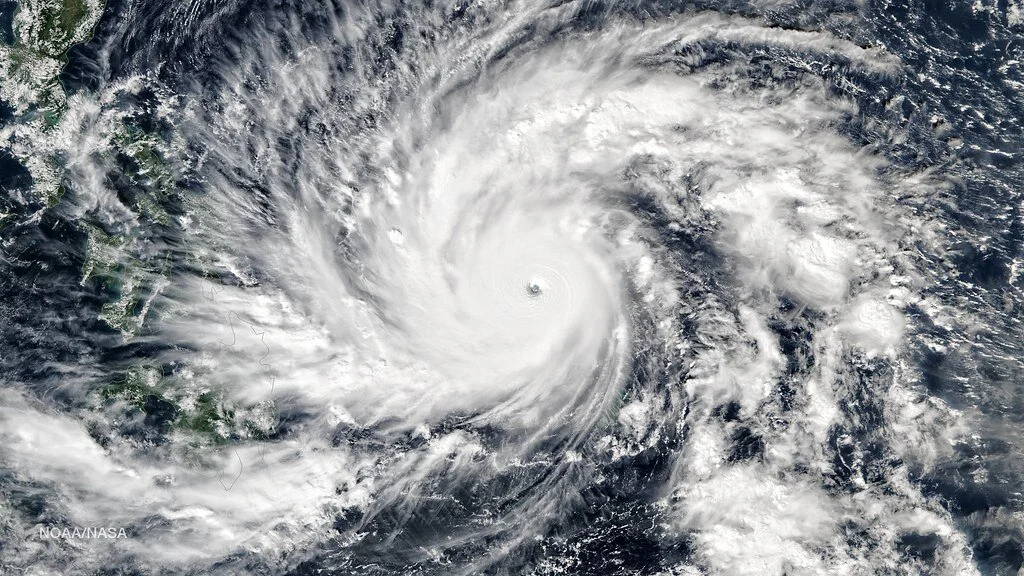
Typhoon Hagupit’s eye. Sjrankin. CC BY-NC 2.0

East Asia Braces Itself as the 2020 Typhoon Season Begins

September 6, 2020

Southeast Asia is known for its tropical climate and distinct rainy, or monsoon, season. This sort of climate brings about an annual typhoon season. Typhoons are mature, tropical cyclones that mostly occur in the Pacific Ocean. They carry with them heavy winds, rain and tornadoes that rip through villages and beaches. These storms have the potential to be devastating, a fact confirmed by history several times over.

Thailand

While Thailand is not hit with as much force as its southern neighbors, the typhoon season is still clear. From September through November, the country is prone to typhoons with the potential to change the country’s landscape and infrastructure. 

In 2006, Typhoon Xangsane made landfall in the Philippines and devastated its way across Laos, Vietnam and Thailand. It wiped out 810 square miles of farmland across Thailand and caused 47 deaths. The storm brought with it strong winds, landslides and torrential rain that wiped out villages and caused hundreds of families to become homeless. 

Fortunately for Thailand, most storms are not nearly as devastating as Xangsane. Monsoons can be counted on, though, to bring about tropical storms each year. 

Vietnam, Laos and Cambodia 

These three Southeast Asian countries feel the brunt of two different sets of cyclones. Typhoons move in from the northern Pacific, while tropical cyclones make landfall from the south. While safety measures are in place, such as shelters, help lines and emergency services, ultimately their geographic location leaves them vulnerable to Mother Nature’s worst.

In 2017, Vietnam experienced its deadliest typhoon since 2001. Dubbed Typhoon Damrey, the storm originated in the Philippines’ Visayan archipelago toward the end of the rainy season and killed at least 123 people and over 600 injured. The severe flooding and winds swept away anything that was not secured to the ground and left an estimated $1 billion in damages across Vietnam. Since then, the country has taken measures to ensure that it has a better communication system for its citizens to learn about the threat of storms as they arise. 

Korea 

Farther north, the Korean Peninsula sits in a spot not nearly as impacted by typhoon season as countries in Southeast Asia. While the peninsula experiences jangma, or the rainy season, its normal extent is heavy rains that inconvenience residents. This shows just how quickly tropical storms lose power as they move inland; they dissipate soon after doing so. 

A recent exception was Typhoon Hagupit, which made landfall in August. The Category 1 typhoon traveled north from the Philippines to China before impacting Korea as a subtropical storm. South Korea reported 15 deaths along with considerable property damage from the storm. 

The western Pacific typically sees more tropical storms than anywhere else in the world. About one-third of the world’s natural disasters occur in the region, and the numbers only seem to increase each year. These storms have caused countries to increase safety measures, focus on disaster communication, develop evacuation measures and create safe spots in public areas. The countries are well-known among visitors, but during the rainy season, the more experienced traveler might count these locations out.


Elizabeth Misnick

Elizabeth is a Professional Writing and Rhetoric major at Baylor University. She grew up in a military family and lived in Europe for almost half her life, traveling and living in different countries. She hopes to continue writing professionally throughout her career and publish her writing in the future.
In News and Social Action, Asia, Global Health & Crisis Tags typhoon, Thailand, Vietnam, Laos, Cambodia, jangma, rainy season, tropical, storm, Disaster Relief, Travel, Asia, South Korea
Comment

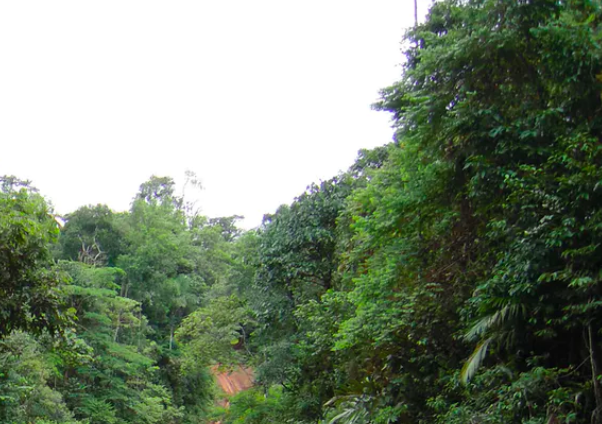
A regenerating stand of rainforest in northern Costa Rica. Matthew Fagan, CC BY-ND

Restoring Tropical Forests Isn’t Meaningful if Those Forests Only Stand For 10 or 20 years

March 25, 2019

Tropical forests globally are being lost at a rate of 61,000 square miles a year. And despite conservation efforts, the global rate of loss is accelerating. In 2016 it reached a 15-year high, with 114,000 square miles cleared.

At the same time, many countries are pledging to restore large swaths of forests. The Bonn Challenge, a global initiative launched in 2011, calls for national commitments to restore 580,000 square miles of the world’s deforested and degraded land by 2020. In 2014 the New York Declaration on Forests increased this goal to 1.35 million square miles, an area about twice the size of Alaska, by 2030.

Ecological restoration is a process of helping damaged ecosystems recover. It produces many benefits for both wildlife and people – for example, better habitat, erosion control, cleaner drinking water and jobs.

That’s why the Bonn Challenge is so exciting for geographers and ecologists like us. It brings restoration into the center of global discussions about combating climate change, preventing species extinctions and improve farmers’ lives. It connects governments, organizations, companies and communities, and is catalyzing substantial investments in forest restoration.

However, a closer look shows that a struggle remains to fully realize the Bonn Challenge vision. Some reforestation efforts provide only limited benefits, and studies have shown that maintaining these forests for decades is critical to maximize the economic and ecological benefits of establishing them.

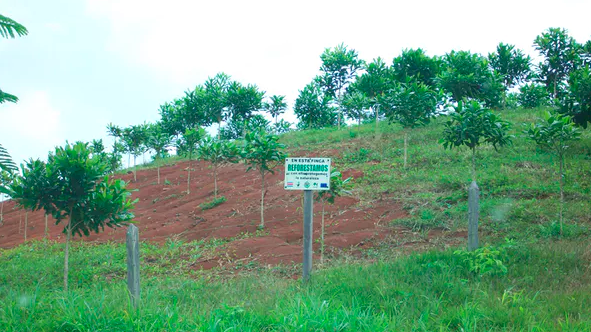
Reforestation project in northern Costa Rica: a plantation of native trees with valuable wood. Matthew Fagan, CC BY-ND

Putting trees back on the land

So far, 48 nations and 10 states and companies have made Bonn Challenge commitments to restore 363,000 square miles by 2020 and another 294,000 square miles by 2030. The United States and a Pakistani province have already fulfilled their commitments, restoring a total of 67,000 square miles.

Restoring forests poses political and economic challenges for national governments. Letting forests grow back inevitably means pulling land out of farming. Natural forest regeneration mainly occurs where farmers have abandoned poor quality land, or where governments discourage poor farming practices – for example, near wetlands or on steep slopes. Opportunities for natural regeneration elsewhere are limited.

As a result, much forest landscape restoration under the Bonn Challenge focuses on improving existing landscapes using trees. Restoration activities may include creating timber or fruit plantations; agroforestry, or planting rows of trees in and around agricultural fields; and silviculture, or improving the condition of degraded forests.

The U.N. Decade of Ecosystem Restoration seeks to restore some 5 billion acres of deforested and degraded landscapes and seascapes between 2021 and 2030.

One early success, the “Billion Tree Tsunami” in Pakistan’s Khyber Pakhtunkhwa province, has exceeded its 350,000-hectare pledge through a combination of protecting forest regeneration and planting trees. Similarly, Rwanda has restored 700,000 of the 2 million hectares it pledged, primarily through agroforestry and reforesting erosion-prone areas, and created thousands of green jobs.

Green deserts

However, these “restored forests” are often poor replacements for natural habitat. For animals dwelling in tropical forests, agroforestry and tree plantations can look more like green deserts than forests.

Many tropical forest wildlife species are only found in mature tropical forests and cannot survive in open agroforests, monoculture tree plantations or young natural regeneration. Truly restoring tropical forest habitat takes a diversity of forest species, and time.

Nonetheless, these working “forests” do have ecological value for some species, and can spare remaining natural forests from axes, fire and plows. In addition, scientists have estimated that restored forests could sequester up to 16 percent of the carbon needed to limit global warming to less than 2 degrees Celsius above pre-industrial levels, while generating some US$84 billion in assets such as timber and erosion control.

Restored, but for how long?

Benefits for wildlife and Earth’s climate from forest restoration accrue over decades. However, many forests are unlikely to remain protected for this long.

In a 2018 study we showed that forests that naturally regenerated in Costa Rica between 1947 and 2014 had only a 50 percent chance of enduring for 20 years. Most places where forests regrew were subsequently re-cleared for farming. Twenty years represents about a quarter of the time needed for forest carbon stocks to fully recover, and less than one-fifth of the time required for many forest-dwelling plants and animals to return.

Unfortunately, 20 years may be more than most new forests get. Studies in Brazil and Peru show that regenerating forests there are re-cleared even faster, often after just a few years.

This problem is not limited to natural forests. Agroforests worldwide are under pressure. For example, until recent decades, coffee and cocoa farmers in the tropics raised their crops in agroforests under a shady canopy of trees, which mimicked the way these plants grow in nature and maximized their health. Today, however, many of them grow their crops in the sun. This method can improve yield, but requires pesticides and fertilizer to compensate for added stress on the plants.

And although timber plantations sequester additional carbon with every harvest and replanting, their replanting is dependent on shifting market demand for wood. Once they are harvested after six to 14 years of growth, tropical timber plantations can be abandoned as a bad investment and replaced with higher-yielding row crops or pasture.

Solid foundations for recovery

If the Bonn Challenge is to achieve its goals, nations will have to find ways of converting short-term restoration pledges into long-term ecosystem recovery. This may require tightening the rules.

Some countries have pledged to protect unrealistically large areas. For example, Rwanda committed to restore 77 percent of its national territory, and Costa Rica and Nicaragua pledged to restore 20 percent of their territories apiece. Another flaw is that the Bonn Challenge does not prevent countries from deforesting some areas even as they are restoring others.

It will be impossible to track overall progress without an international commitment to monitor and sustain restoration successes. International organizations need to invest in satellite and local monitoring networks. We also believe they should consider how large international investmentsin sectors such as agriculture, mining and infrastructure drive forest loss and regrowth.

Countries like Indonesia that may be considering a Bonn Challenge pledge should be encouraged to focus on long-term impacts. Instead of restoring 10,000 square miles of one-year-old forest by 2020, why not restore 5,000 square miles of 100-year-old forest by 2120? Countries like Costa Rica that have already pledged can lock in those gains by protecting regrown forests.

The U.N. General Assembly recently approved a resolution designating 2021 to 2030 as the U.N. Decade of Ecosystem Restoration. We hope this step will help motivate nations to keep their promises and invest in restoring Earth’s deforested and degraded ecosystems.

MATTHEW FAGAN is an assistant Professor of Geography and Environmental Systems at the University of Maryland, Baltimore County.

LEIGHTON REID is a faculty associate at the University of Missouri-St. Louis.

MARGARET BUCK HOLLAND is an associate Professor at the University of Maryland, Baltimore County.

THIS ARTICLE WAS ORIGINALLY PUBLISHED ON THE CONVERSATION

Tags nature, forest, tropical, tropical forest, restoration, Billion Tree tsnami, ecology, deforestation, Environment, Climate Change
Comment

Also check out...

Featured
Vietnam’s Floating Markets Are Disappearing
The Supernatural Role of Masks in Nigeria’s Yoruba Tribal Culture
Opening the World to Deaf Travelers with Lily Yu

Featured trips

Featured
Offer NGO Support While Visiting Quito
Experience Life as a Mongolian Nomad
Help Grow Organic Costa Rican Coffee

Sign up for the CATALYST newsletter

Sign up for our newsletter to get the scoop on international travel, global social impact insights, our latest podcast releases, and more from around the world, all delivered right to your inbox!

We respect your privacy.

Thank you!
Newsletter Sign Up | Advertise | Careers + Internships | Privacy Policy | Submissions | Contact Us

Copyright © 2025, MISSION MEDIA LLC. All rights reserved.