• Travel Features
  • Global Action
  • Take A Trip
  • Travel Guides
    • Podcast
    • Courses
    • Bookshop
  • About
  • Sign Up
Menu

CATALYST PLANET

  • Travel Features
  • Global Action
  • Take A Trip
  • Travel Guides
  • Discover
    • Podcast
    • Courses
    • Bookshop
  • About
  • Sign Up

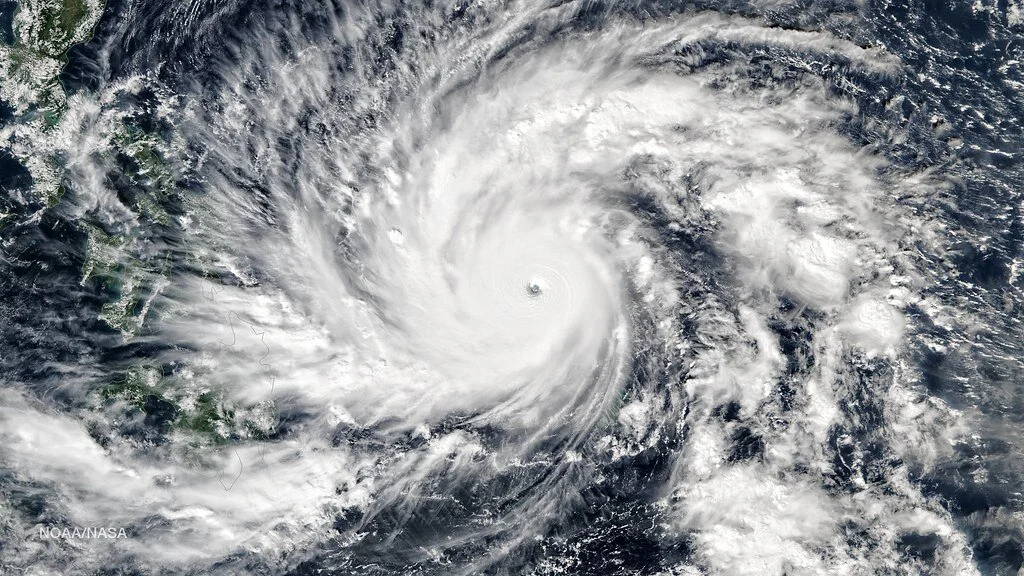
Typhoon Hagupit’s eye. Sjrankin. CC BY-NC 2.0

East Asia Braces Itself as the 2020 Typhoon Season Begins

September 6, 2020

Southeast Asia is known for its tropical climate and distinct rainy, or monsoon, season. This sort of climate brings about an annual typhoon season. Typhoons are mature, tropical cyclones that mostly occur in the Pacific Ocean. They carry with them heavy winds, rain and tornadoes that rip through villages and beaches. These storms have the potential to be devastating, a fact confirmed by history several times over.

Thailand

While Thailand is not hit with as much force as its southern neighbors, the typhoon season is still clear. From September through November, the country is prone to typhoons with the potential to change the country’s landscape and infrastructure. 

In 2006, Typhoon Xangsane made landfall in the Philippines and devastated its way across Laos, Vietnam and Thailand. It wiped out 810 square miles of farmland across Thailand and caused 47 deaths. The storm brought with it strong winds, landslides and torrential rain that wiped out villages and caused hundreds of families to become homeless. 

Fortunately for Thailand, most storms are not nearly as devastating as Xangsane. Monsoons can be counted on, though, to bring about tropical storms each year. 

Vietnam, Laos and Cambodia 

These three Southeast Asian countries feel the brunt of two different sets of cyclones. Typhoons move in from the northern Pacific, while tropical cyclones make landfall from the south. While safety measures are in place, such as shelters, help lines and emergency services, ultimately their geographic location leaves them vulnerable to Mother Nature’s worst.

In 2017, Vietnam experienced its deadliest typhoon since 2001. Dubbed Typhoon Damrey, the storm originated in the Philippines’ Visayan archipelago toward the end of the rainy season and killed at least 123 people and over 600 injured. The severe flooding and winds swept away anything that was not secured to the ground and left an estimated $1 billion in damages across Vietnam. Since then, the country has taken measures to ensure that it has a better communication system for its citizens to learn about the threat of storms as they arise. 

Korea 

Farther north, the Korean Peninsula sits in a spot not nearly as impacted by typhoon season as countries in Southeast Asia. While the peninsula experiences jangma, or the rainy season, its normal extent is heavy rains that inconvenience residents. This shows just how quickly tropical storms lose power as they move inland; they dissipate soon after doing so. 

A recent exception was Typhoon Hagupit, which made landfall in August. The Category 1 typhoon traveled north from the Philippines to China before impacting Korea as a subtropical storm. South Korea reported 15 deaths along with considerable property damage from the storm. 

The western Pacific typically sees more tropical storms than anywhere else in the world. About one-third of the world’s natural disasters occur in the region, and the numbers only seem to increase each year. These storms have caused countries to increase safety measures, focus on disaster communication, develop evacuation measures and create safe spots in public areas. The countries are well-known among visitors, but during the rainy season, the more experienced traveler might count these locations out.


Elizabeth Misnick

Elizabeth is a Professional Writing and Rhetoric major at Baylor University. She grew up in a military family and lived in Europe for almost half her life, traveling and living in different countries. She hopes to continue writing professionally throughout her career and publish her writing in the future.
In News and Social Action, Asia, Global Health & Crisis Tags typhoon, Thailand, Vietnam, Laos, Cambodia, jangma, rainy season, tropical, storm, Disaster Relief, Travel, Asia, South Korea
Comment

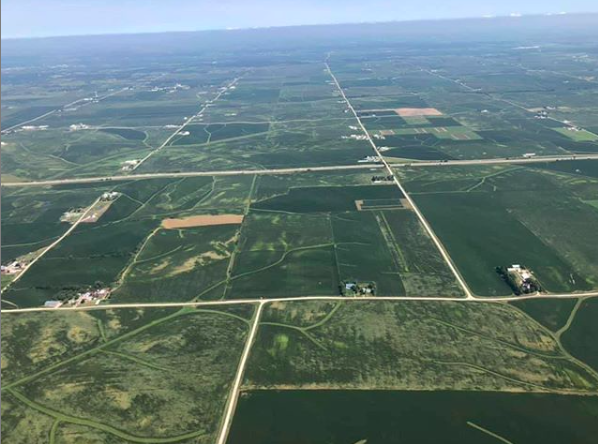
Aerial view of Iowa’s crop damage. Kim ReynoldsIA. Instagram.

Iowa’s ‘Inland Hurricane’ Wreaks Havoc on Locals — and the World’s Food Supply

August 26, 2020

On Aug. 10, Iowa and much of the United States’ Midwest experienced one of the most damaging storms seen in recent history. Hurricanes usually strike states like Florida and Louisiana, so the idea of one ravaging a landlocked state like Iowa was something residents were not prepared to face. After nearly a week, the Midwest is finally free of the devastating derecho, and now some are coining it as “Iowa’s Katrina.” 

The prolonged storms in Iowa are what the National Weather Service refers to as a derecho, a widespread, persistent windstorm associated with a band of quick-moving showers or thunderstorms. Because these storms are so powerful, they tend to leave similar damage to hurricanes and tornadoes. “Straight-line wind damage,” when the wind gusts powerfully in one direction, generally concentrates the destruction caused by derechos. 

According to the National Weather Service's Storm Prediction Center, it barreled eastward across the Midwest, traveling 770 miles in just 14 hours. Since the storms, thousands are still without water and power, with Cedar Rapids being one of the hardest-hit cities. According to Greg Smith, the city’s fire chief, more than 800 buildings have partially collapsed and more than 20 school buildings in Cedar Rapids have been damaged.

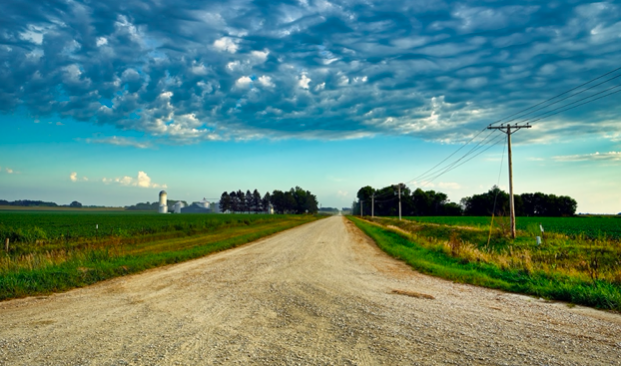
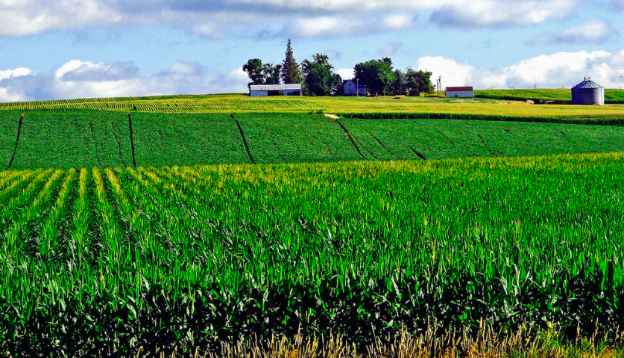
Cornfields on an Iowa farm. inkknife_2000. CC BY-SA 2.0.

This sweeping derecho  impacts not only Iowans and Midwesterners but also the world’s food supply. According to Iowa’s Gov. Kim Reynolds, this storm destroyed at least one-third of Iowa’s crops, which is about 10 million acres. Tens of millions of bushels of stored grain were blown away by extreme winds as well.

Soy farm in Iowa. User1778011. Pixabay.

Iowa Agriculture Secretary Mike Naig said in total, 14 million acres of insured crops were in the path of the derecho. About 3.57 million acres of corn and 2.5 million acres of soybeans in 36 counties were damaged or destroyed during the storms. 

As the United States is one of the largest exporters of soy and the top exporter of corn, this could place a strain on domestic and international food and feed supplies. Iowa and Illinois, the top corn-producing states, typically grow about one-third of the U.S. crop. The widespread devastation of crops in the region only increases the burden on an already strained agricultural industry recovering from the COVID-19 pandemic. 

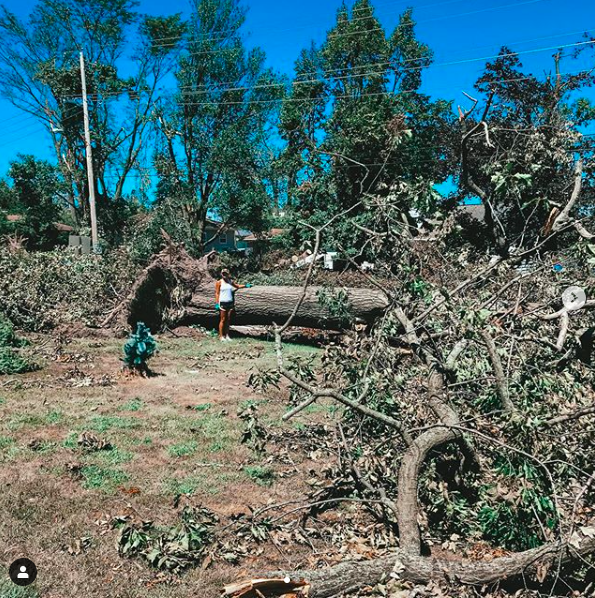
Damage in Cedar Rapids, Iowa. Alli_jakoubek. Instagram.

While this event has been classified as a federal emergency, Iowa residents and farmers will not see much assistance. The federal major disaster declaration approved on Aug. 17 does not include financial assistance for Iowans despite President Donald Trump tweeting that he approved the state's application in "FULL." Gov. Kim Reynolds' request for $82.7 million to cover the 8,273 homes that were damaged or destroyed was not approved. Also denied were her requests for $3.77 billion for damage to farmland, grain bins and buildings along with a request for $100 million toward private utilities repair. The state did receive $45 million from the federal government to put toward recovery. 

This storm has shown the importance of states like Iowa as the repercussions of the derecho radiate across borders. For suppliers reliant on corn and soy as well as farmers who use the crops for feed, the derecho has depleted essential supplies already strained by the pandemic. While very little international attention has been given to this derecho, Midwestern farmers’ vital role in agriculture is essential to the world.

Renee Richardson

is currently an English student at The University of Georgia. She lives in Ellijay, Georgia, a small mountain town in the middle of Appalachia. A passionate writer, she is inspired often by her hikes along the Appalachian trail and her efforts to fight for equality across all spectrums. She hopes to further her passion as a writer into a flourishing career that positively impacts others.

Tags Iowa, hurricane, corn, crops, agriculture, storm, Midwest, derechos, soybean, federal emergency, farm, Global Poverty, COVID
Comment

Removing the Ghosts of Hurricane Maria from Puerto Rico’s Sea

October 11, 2019

Raimundo Chirinos has devoted his life and career to protecting Puerto Rico’s waters. And in the wake of Hurricane Maria, his devotion matters more than ever. Among its many assaults, the Category 5 storm pulled fishing gear from the island’s shores into the ocean, creating “ghost traps.” These misplaced traps inadvertently catch fish and other species, disrupting the ecosystem and the local fishing economy. More determined than ever to protect his island’s waters, Raimundo has hired local dive fishermen to help him locate ghost traps, creating economic opportunity and community in the wake of devastation.

Tags Puerto Rico, Hurricane Maria, Hurricane, storm, nature, pollution, conservation, Environment
Comment

Also check out...

Featured
Vietnam’s Floating Markets Are Disappearing
The Supernatural Role of Masks in Nigeria’s Yoruba Tribal Culture
Opening the World to Deaf Travelers with Lily Yu

Featured trips

Featured
Offer NGO Support While Visiting Quito
Experience Life as a Mongolian Nomad
Help Grow Organic Costa Rican Coffee

Sign up for the CATALYST newsletter

Sign up for our newsletter to get the scoop on international travel, global social impact insights, our latest podcast releases, and more from around the world, all delivered right to your inbox!

We respect your privacy.

Thank you!
Newsletter Sign Up | Advertise | Careers + Internships | Privacy Policy | Submissions | Contact Us

Copyright © 2025, MISSION MEDIA LLC. All rights reserved.