• Travel Features
  • Global Action
  • Take A Trip
  • Travel Guides
    • Podcast
    • Courses
    • Bookshop
  • About
  • Sign Up
Menu

CATALYST PLANET

  • Travel Features
  • Global Action
  • Take A Trip
  • Travel Guides
  • Discover
    • Podcast
    • Courses
    • Bookshop
  • About
  • Sign Up

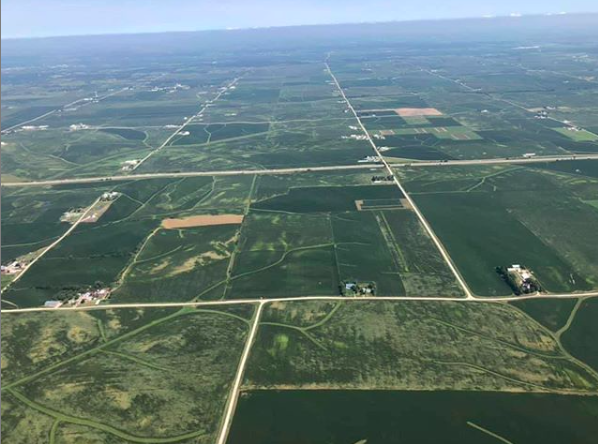
Aerial view of Iowa’s crop damage. Kim ReynoldsIA. Instagram.

Iowa’s ‘Inland Hurricane’ Wreaks Havoc on Locals — and the World’s Food Supply

August 26, 2020

On Aug. 10, Iowa and much of the United States’ Midwest experienced one of the most damaging storms seen in recent history. Hurricanes usually strike states like Florida and Louisiana, so the idea of one ravaging a landlocked state like Iowa was something residents were not prepared to face. After nearly a week, the Midwest is finally free of the devastating derecho, and now some are coining it as “Iowa’s Katrina.” 

The prolonged storms in Iowa are what the National Weather Service refers to as a derecho, a widespread, persistent windstorm associated with a band of quick-moving showers or thunderstorms. Because these storms are so powerful, they tend to leave similar damage to hurricanes and tornadoes. “Straight-line wind damage,” when the wind gusts powerfully in one direction, generally concentrates the destruction caused by derechos. 

According to the National Weather Service's Storm Prediction Center, it barreled eastward across the Midwest, traveling 770 miles in just 14 hours. Since the storms, thousands are still without water and power, with Cedar Rapids being one of the hardest-hit cities. According to Greg Smith, the city’s fire chief, more than 800 buildings have partially collapsed and more than 20 school buildings in Cedar Rapids have been damaged.
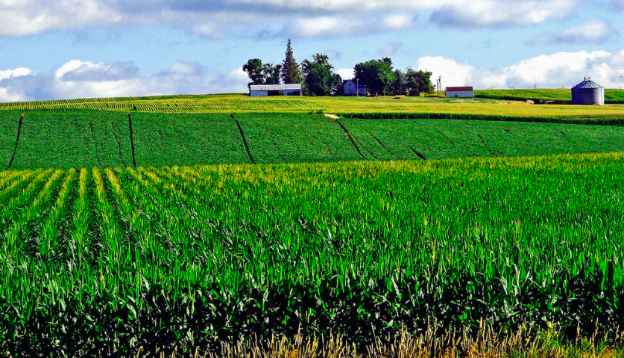
Cornfields on an Iowa farm. inkknife_2000. CC BY-SA 2.0.

This sweeping derecho  impacts not only Iowans and Midwesterners but also the world’s food supply. According to Iowa’s Gov. Kim Reynolds, this storm destroyed at least one-third of Iowa’s crops, which is about 10 million acres. Tens of millions of bushels of stored grain were blown away by extreme winds as well.
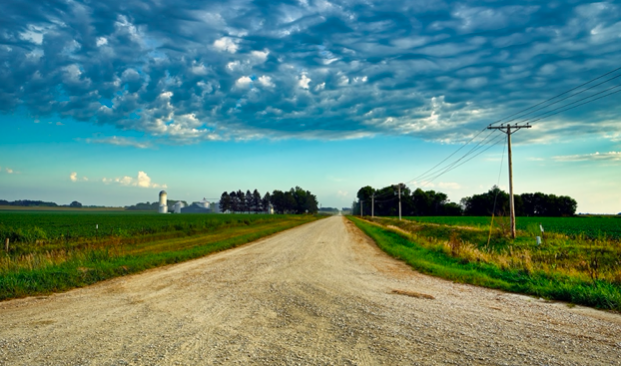
Soy farm in Iowa. User1778011. Pixabay.

Iowa Agriculture Secretary Mike Naig said in total, 14 million acres of insured crops were in the path of the derecho. About 3.57 million acres of corn and 2.5 million acres of soybeans in 36 counties were damaged or destroyed during the storms. 

As the United States is one of the largest exporters of soy and the top exporter of corn, this could place a strain on domestic and international food and feed supplies. Iowa and Illinois, the top corn-producing states, typically grow about one-third of the U.S. crop. The widespread devastation of crops in the region only increases the burden on an already strained agricultural industry recovering from the COVID-19 pandemic. 
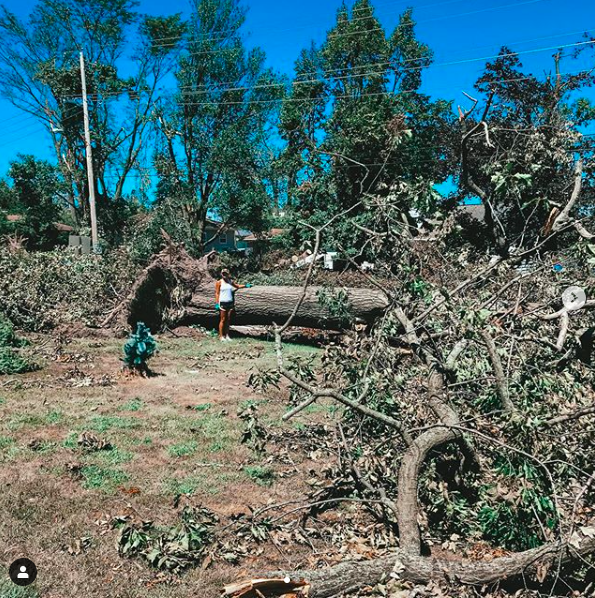
Damage in Cedar Rapids, Iowa. Alli_jakoubek. Instagram.

While this event has been classified as a federal emergency, Iowa residents and farmers will not see much assistance. The federal major disaster declaration approved on Aug. 17 does not include financial assistance for Iowans despite President Donald Trump tweeting that he approved the state's application in "FULL." Gov. Kim Reynolds' request for $82.7 million to cover the 8,273 homes that were damaged or destroyed was not approved. Also denied were her requests for $3.77 billion for damage to farmland, grain bins and buildings along with a request for $100 million toward private utilities repair. The state did receive $45 million from the federal government to put toward recovery. 

This storm has shown the importance of states like Iowa as the repercussions of the derecho radiate across borders. For suppliers reliant on corn and soy as well as farmers who use the crops for feed, the derecho has depleted essential supplies already strained by the pandemic. While very little international attention has been given to this derecho, Midwestern farmers’ vital role in agriculture is essential to the world.

Renee Richardson

is currently an English student at The University of Georgia. She lives in Ellijay, Georgia, a small mountain town in the middle of Appalachia. A passionate writer, she is inspired often by her hikes along the Appalachian trail and her efforts to fight for equality across all spectrums. She hopes to further her passion as a writer into a flourishing career that positively impacts others.
Tags Iowa, hurricane, corn, crops, agriculture, storm, Midwest, derechos, soybean, federal emergency, farm, Global Poverty, COVID
Comment

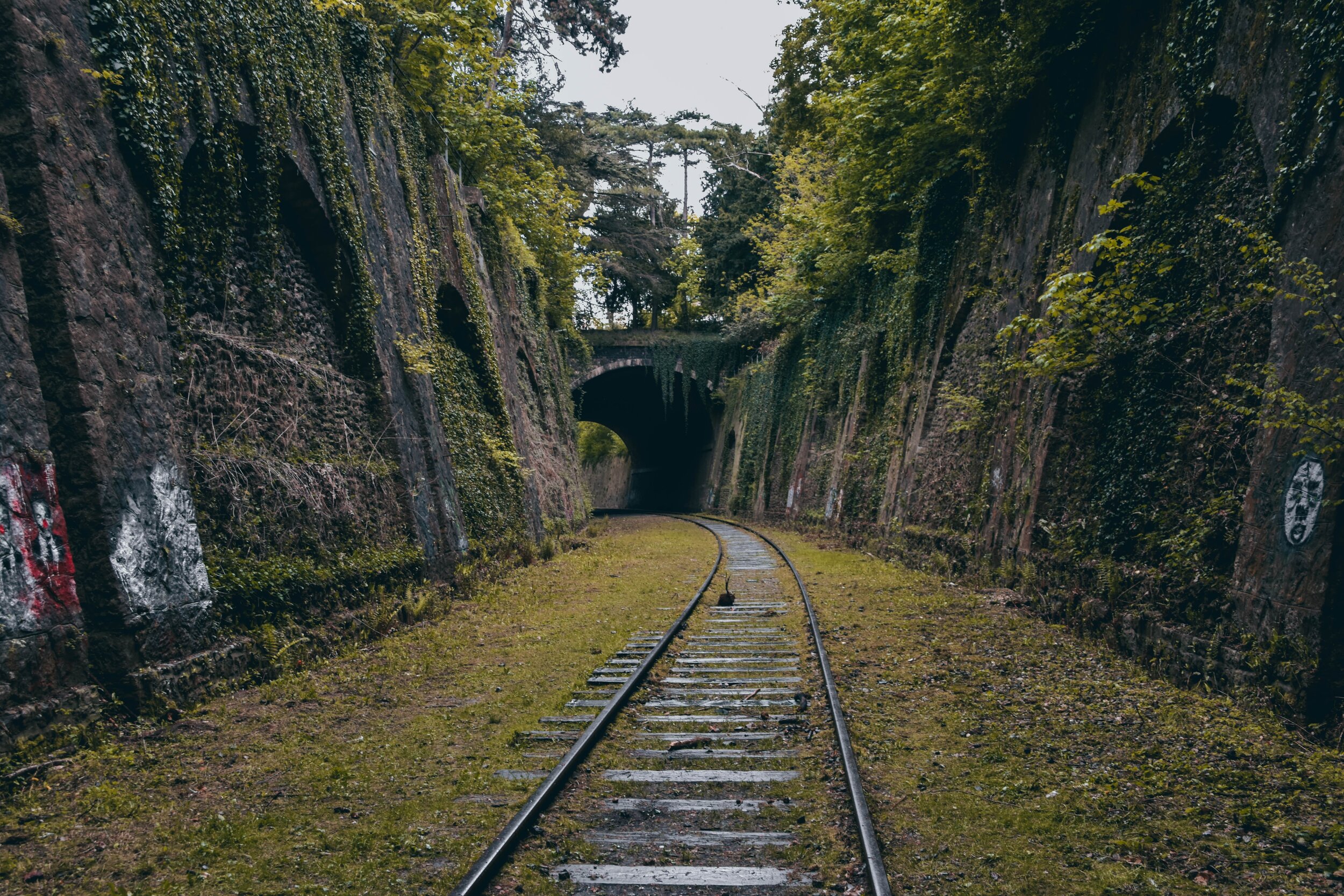
Greenery overtakes an abandoned train track. Florian Olivo. Unsplash.

4 Abandoned Railroads that Have Been Brought Back to Life

August 7, 2020

Abandoned railroad tracks are everywhere. Although many trains are still running, they rarely hold the same mysterious charm as the ones that have been neglected. To many, trains signify a bygone era, an old means of transportation, and an opportunity to see the world without the drama of plane flights. While many enthusiasts have created databases of abandoned railroads, there has also been a wave of people who are remodeling these railroads to give them a new purpose and life. 

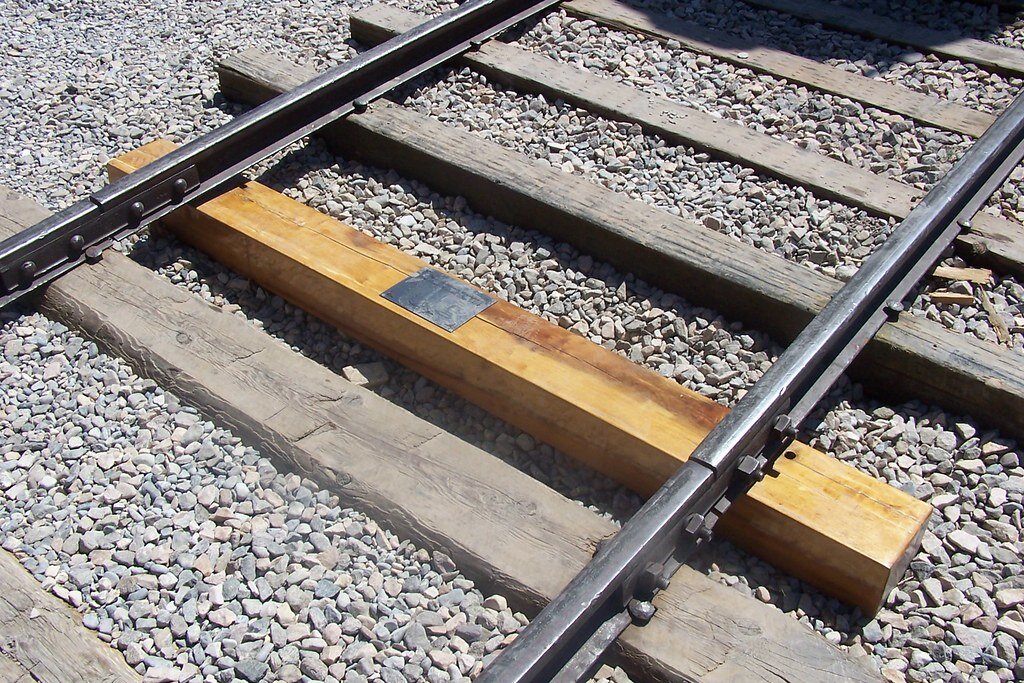
The golden point of the Transcontinental Railroad. J. Stephen Conn. CC BY-NC 2.0

Golden Spike National Historical Park

The Golden Spike National Historical Park is home to the “golden spike,” the final spike needed to complete the United States’ Transcontinental Railroad. Located in Promontory, Utah, this park attracts about 60,000 visitors each year. While the site has an abundance of offerings, its main attraction is the “golden spike” itself. The Transcontinental Railroad was built over a period of six years, with the last spike being laid in 1869. It is worth noting that the Transcontinental Railroad was actually built by two separate companies, the eastbound Central Pacific Railroad and the westbound Union Pacific,. Nevertheless, the Transcontinental Railroad was a symbol of western progress at the time and finishing the railroad was cause for major celebration. The park hosts reenactments of the event every year on May 10, with last year being a celebration of the 150th anniversary of the Transcontinental Railroad’s completion. 

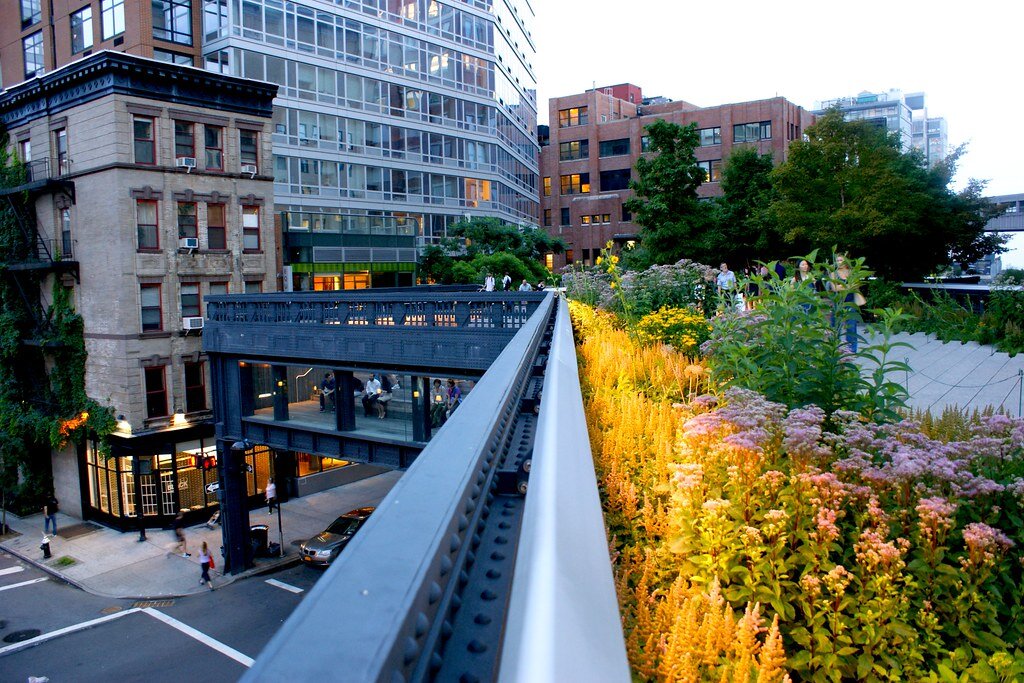
A view from New York City’s High Line. Finchermac. CC BY-ND 2.0

The High Line

Located in New York City, the High Line is a refurbished railroad track that allows visitors to enjoy a picturesque 1.45-mile walk above Manhattan’s West Side. The line became fully operational in 1933 and transported supplies such as meat and produce, but it declined in use in the 1980s as people began to favor trucking for supply delivery. Although the High Line was set for demolition, a new project gained traction in the early 2000s that allowed for its conversion. Today, the High Line has integrated a multitude of sustainable practices, community engagement initiatives and small businesses into the overall experience. The walkway is adorned with over 500 different species of plants and trees and there are regular art installations that are either on the High Line or can be seen from it. 

A shot of the High Trestle Trail Bridge lit up at night. Tony Webster. CC BY-NC-SA 2.0

High Trestle Trail

The High Trestle Trail, a multi-use 25-mile trail on the outskirts of Des Moines, Iowa, is a popular biking and outdoor activity destination. The High Trestle Trail is one of many rail-to-trail projects, with this one opening in 2011. There are a multitude of amenities nearby, such as a bike shop, restaurants and visitor centers, but the trail itself contains the top points of interest. One such location is the High Trestle Trail Bridge, which has been dubbed “Iowa’s Stonehenge.” After the railway was decommissioned in 2003, Union Pacific wanted to reuse the steel beams of one of the bridges on the route but had no use for the original support structure. The company left 22 huge, 130-foot-tall concrete pillars which used to hold up the bridge. As interesting a landmark as this was, the Iowa Natural Heritage Foundation realized that these poles could have a more practical purpose. After an extensive project costing over $1.75 million, the bridge was revamped and now stands as an impressive light-up art installation that is an ode to the area’s mining history.

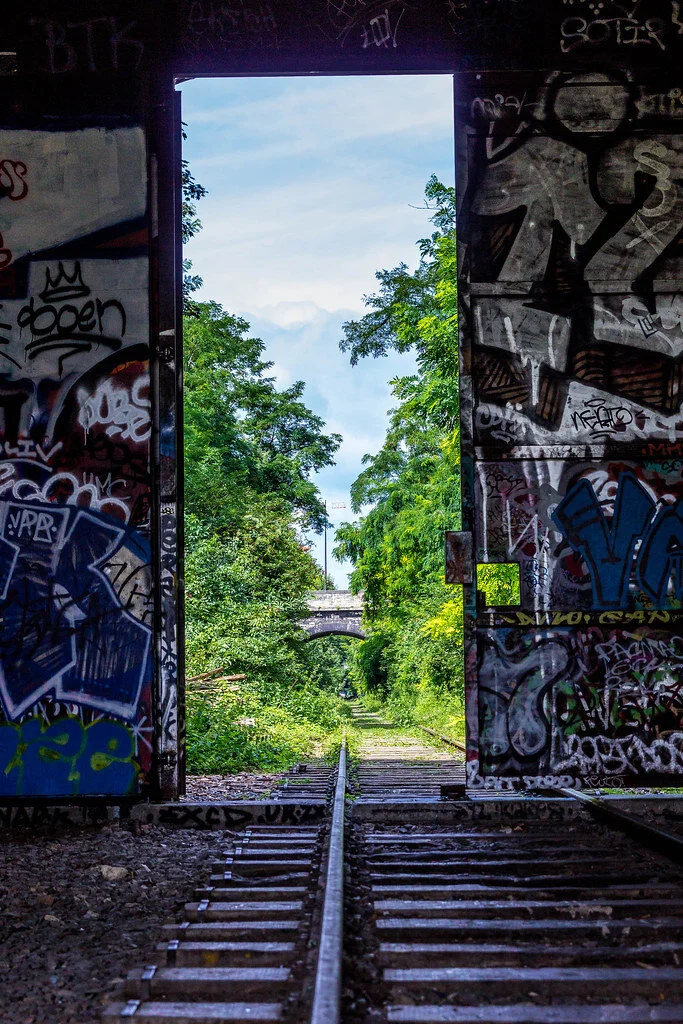
Nature, art and train tracks. French_Villain. CC BY-NC-SA 2.0

La Petite Ceinture

This railroad is quite different from the others. It is located in Paris, France, and contains one of the best access points to the city’s catacombs. Additionally, this abandoned rail line is home to an abundance of graffiti and artwork. In terms of natural life, the area is now home to more than 200 different plant species and more than 70 types of animals. La Petite Ceinture was built intermittently between the years of 1852 and 1869 but has been unused since 1934. While the tunnels themselves can be dark and less than pleasant, the open areas of La Petite Ceinture offer an intriguing destination and a beautiful example of how people might organically reclaim abandoned spaces. 

Phoebe Jacoby

is a Media Studies major and Studio Art minor at Vassar College who believes in the importance of sharing stories with others. Phoebe likes to spend her free time reading, drawing, and writing letters. She hopes to continue developing her skills as a writer and create work that will have a positive outward effect.

Tags railroad, resoration, train, remodeling, Golden Spike National Historical Park, golden spike, Transcontinental Railroads, The High Line, New York City, High Trestle Trail, Des Moines, Iowa, Le Petite Ceinture, Paris, France, Outdoor, Sustainability
Comment

Also check out...

Featured
Vietnam’s Floating Markets Are Disappearing
The Supernatural Role of Masks in Nigeria’s Yoruba Tribal Culture
Opening the World to Deaf Travelers with Lily Yu

Featured trips

Featured
Offer NGO Support While Visiting Quito
Experience Life as a Mongolian Nomad
Help Grow Organic Costa Rican Coffee

Sign up for the CATALYST newsletter

Sign up for our newsletter to get the scoop on international travel, global social impact insights, our latest podcast releases, and more from around the world, all delivered right to your inbox!

We respect your privacy.

Thank you!
Newsletter Sign Up | Advertise | Careers + Internships | Privacy Policy | Submissions | Contact Us

Copyright © 2025, MISSION MEDIA LLC. All rights reserved.