
By Caleb A Yamamura
Explaining the decades-long issues that surround Mindanao Island.
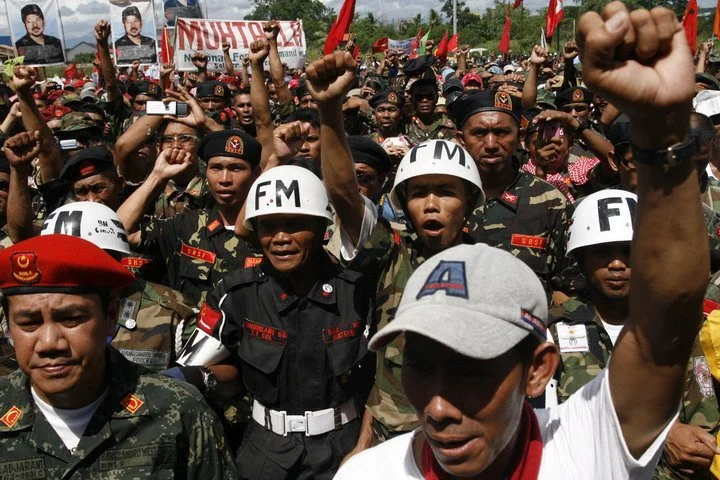
A MNLF demonstration. Keith Bacongco. CC BY 2.0.
Mindanao is a major island in the southern Philippines, the second-largest island of the archipelagic nation, and the nation’s breadbasket, producing over 40% of the nation’s food. However, it is also the site of two enduring, multifaceted conflicts. Since the late 1960s, a conflict involving Moro separatist and Islamist groups has claimed around 150,000 lives and displaced hundreds of thousands more. Since 1969, a conflict involving communist rebels has claimed around 40,000 lives across the whole of the country, with Mindanao being a major hotspot.
Muslim peoples in the southern Philippines are referred to by the umbrella term “Moros,” based on the Spanish term “Moors,” a North African and Iberian Muslim ethnic group, with whom Spain had an extensive history. The Moro population is a diverse collection of 13 major ethnolinguistic groups which are predominantly Muslim in faith.
Though both conflicts are long past their peak, with the Moro conflict peaking in the 1970s and the communist conflict in the 1980s, both continue to this day. The Moro-related conflicts have claimed over 1,000 lives since 2015, with a major spike in 2016.
Communist-related deaths in that same period are harder to trace, but hundreds have been killed annually within the last decade, though not all these killings have taken place in Mindanao. Hundreds of leftist activists and civilians were targets of extrajudicial killings during the government’s counterinsurgency campaign between 2016 and 2020. In terms of active combat, dozens of rebels have been killed fighting government forces, and dozens of government security personnel have been ambushed and killed by rebels in turn yearly over the last decade.
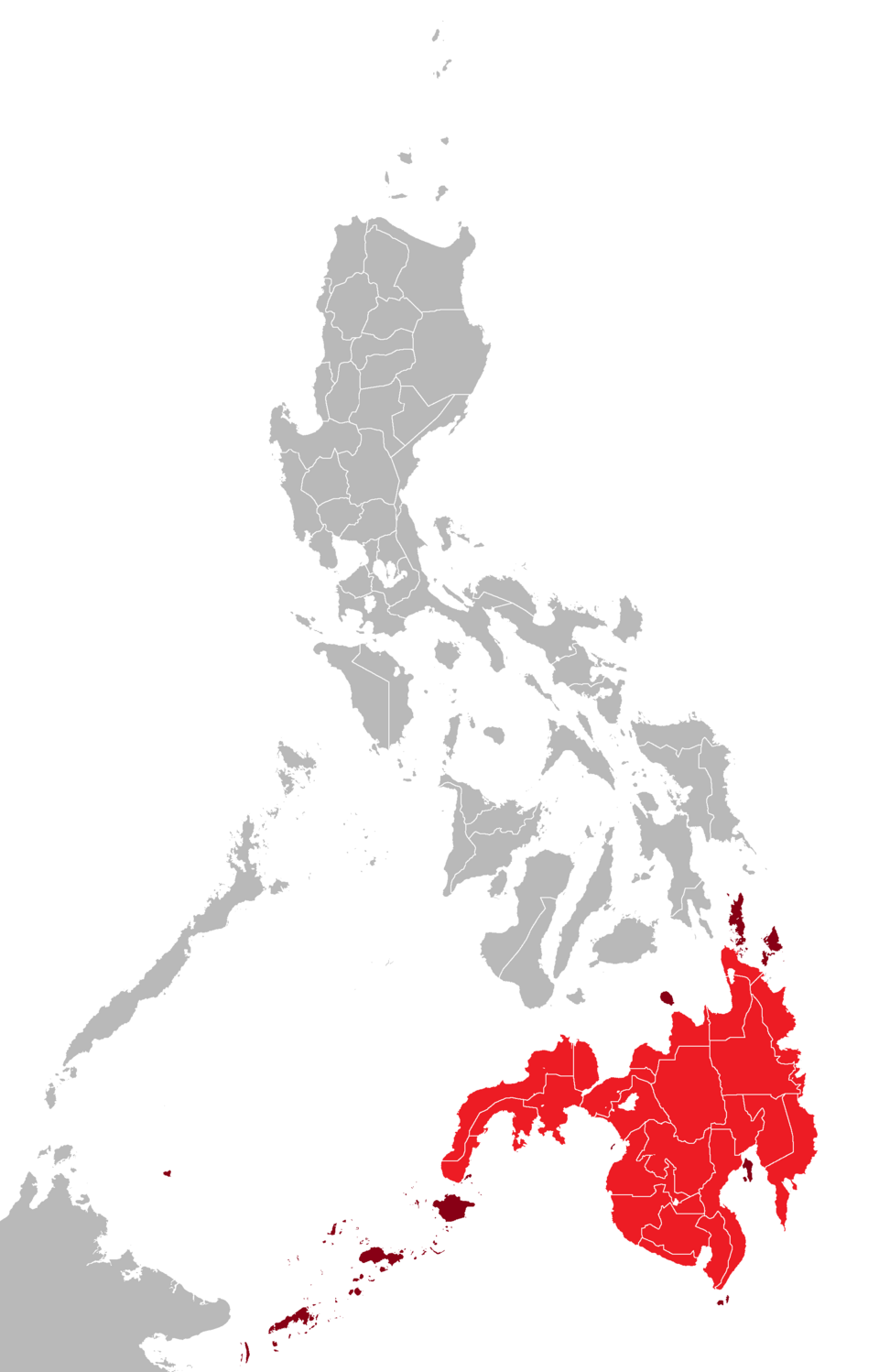
Mindanao Island is highlighted in bright red, and the Sulu Islands are highlighted in dark red. JL 09. CC BY-SA 3.0.
While, according to a 2020 census, around 79% of the population of the whole Philippines is Roman Catholic, 6.4% of the population is Muslim. Most of the Filipino Muslim population is concentrated in Mindanao and the Sulu Archipelago, and many identify as Moro. In Mindanao proper, the 2015 census found that around 57% of the population was Roman Catholic, whereas 23.4% of the population declared themselves Muslim.
The Spanish colonization of the Philippines did not fully conquer Mindanao, due to the strength of those 13 Moro groups. However, Spanish colonization included extensive conversion efforts across the rest of the Philippines. When the U.S. took the Philippines in 1898, U.S. forces fought Moro groups in a series of conflicts commonly known as the Moro Wars from 1899 to 1913. Subsequently, the U.S. colonized Mindanao, encouraging settlement by Christian Filipinos from Luzon and other islands, resulting in the Moro not only losing most of their ancestral territory but also becoming a minority group on Mindanao.
This continued after the Philippines' independence in 1946, when Moro languages were marginalized in formal education. Most political positions on Mindanao Island went to non-Muslims. That system of oppression caused the MNLF and associated groups to organize and begin their armed anti-government activities.
The Moro peoples are central to the major anti-government insurgent groups that have been active in Mindanao since the 1960s: the Moro National Liberation Front (MNLF), Moro Islamic Liberation Front (MILF), Abu Sayyaf and a branch of ISIS. The MNLF was founded in 1972 by Nur Misuari to fight for an independent Moro nation. It formed after the 1968 Jabidah Massacre, which saw Muslim military trainees reportedly killed by Filipino special forces. It was most active from the 1970s to the 1990s, combating Filipino governmental forces.
The MILF formed after it split from the MNLF in the late 1970s, and it initially pursued a separate Islamic state but later negotiated for greater autonomy. However, both have independently brokered agreements with the Philippine government, granting greater autonomy to the Moro peoples.
The result is that both organizations have largely reduced their violent activity in recent decades, and instead have primarily become political organizations. The MNLF signed the 1996 Final Peace Agreement with the Philippine government, ending their own insurgent activities.
In 1989, then-President Corazon Aquino signed Republic Act 6734, which established the Autonomous Region in Muslim Mindanao, or ARMM. While the ARMM granted greater autonomy to the Moro peoples, it had many shortcomings, such as a bad reputation for corruption.
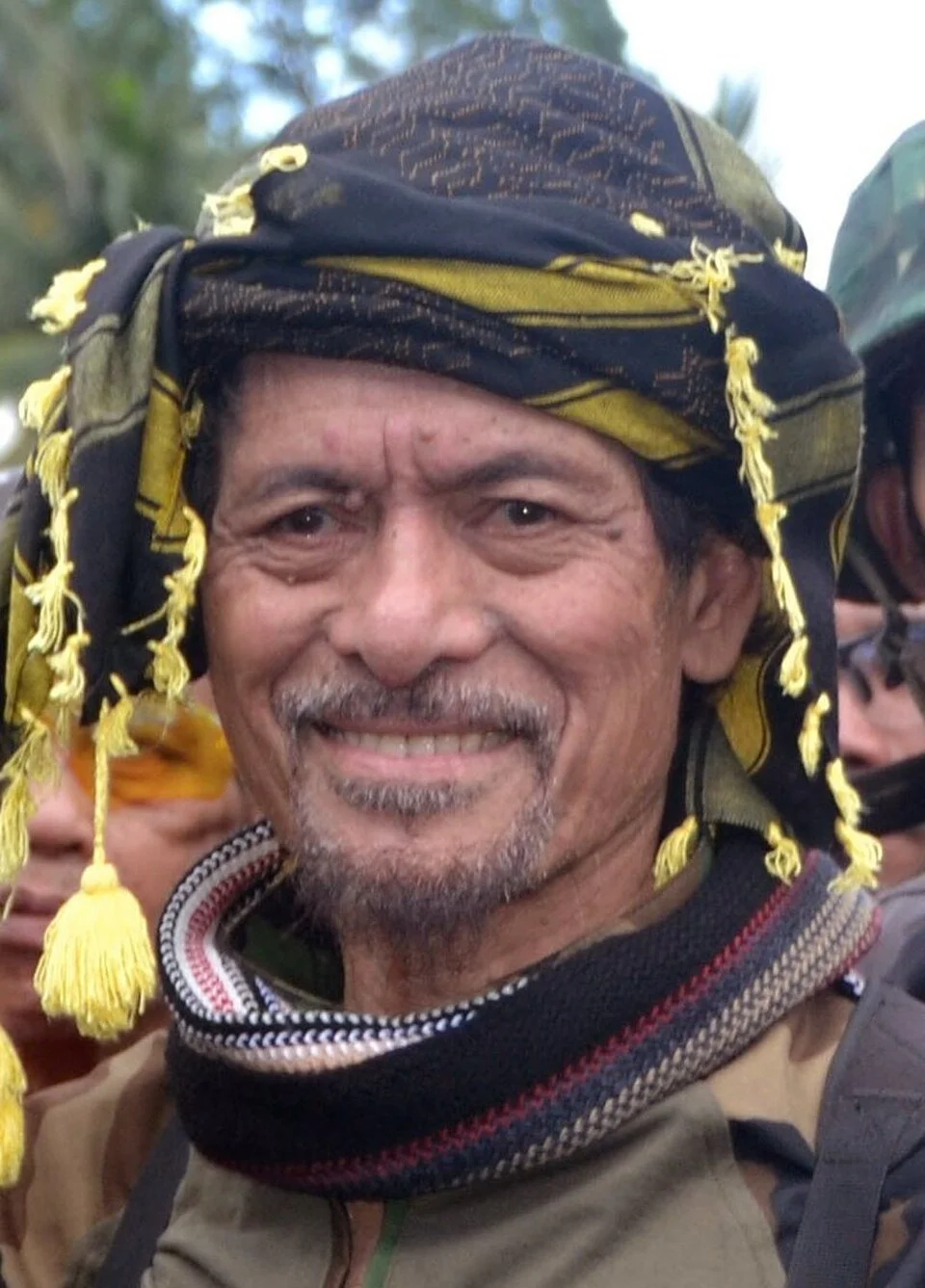
Photo of Nur Misuari in 2016. Presidential Communications Operations Office. CC0.
The failure of ARMM left many MNLF members unsatisfied, leading to a strengthening of MILF. However, MILF signed the 2014 Comprehensive Agreement on the Bangsamoro and began to disarm and cease violent activities in 2015, following the establishment of Bangsamoro Autonomous Region in Muslim Mindanao (BARMM), which seeks to address the shortcomings of ARMM.
Abu Sayyaf also broke off from the MNLF, forming in 1991. It is the most radical of the Islamist militant groups in the southern Philippines and is classified as a terrorist organization by the United States. They are also connected to the ISIS branch, which formed in 2016.
Abu Sayyaf and ISIL were part of the force that attacked the city of Marawi from May to October 2017. Marawi was the largest Muslim-majority city in the Philippines. The five-month siege displaced around 300,000 civilians and resulted in around a thousand deaths, the majority of which were militants. U.S.-backed Philippine forces and civilians also suffered significant deaths.
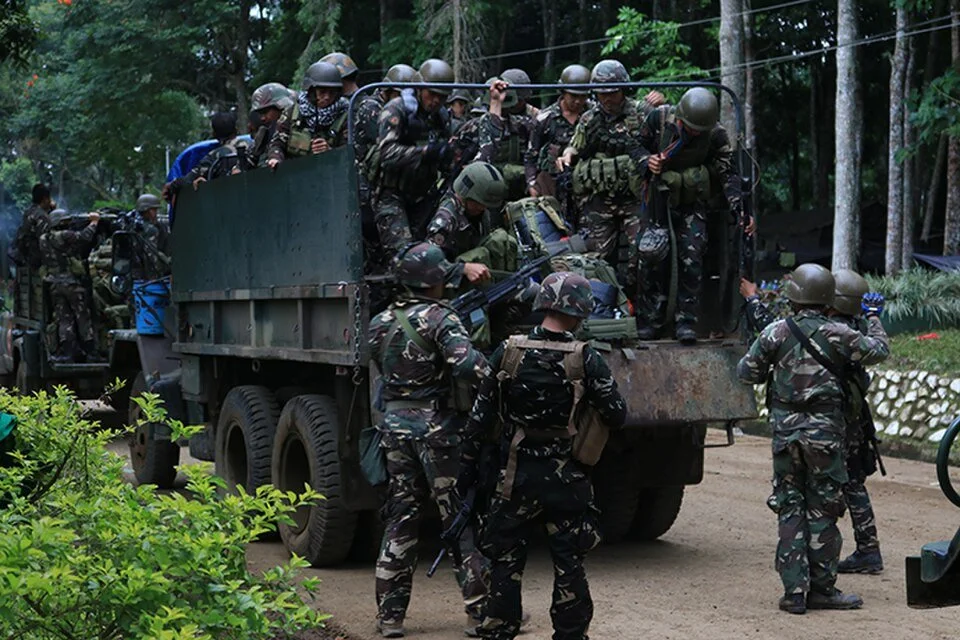
Filipino soldiers load into trucks during the 2017 siege of Marawi. Philippine Information Agency. CC0.
However, following the Siege of Marawi, the Philippine and U.S. governments cracked down hard on Abu Sayyaf. They are now severely weakened, with a 2025 report estimating around 50 surviving members.
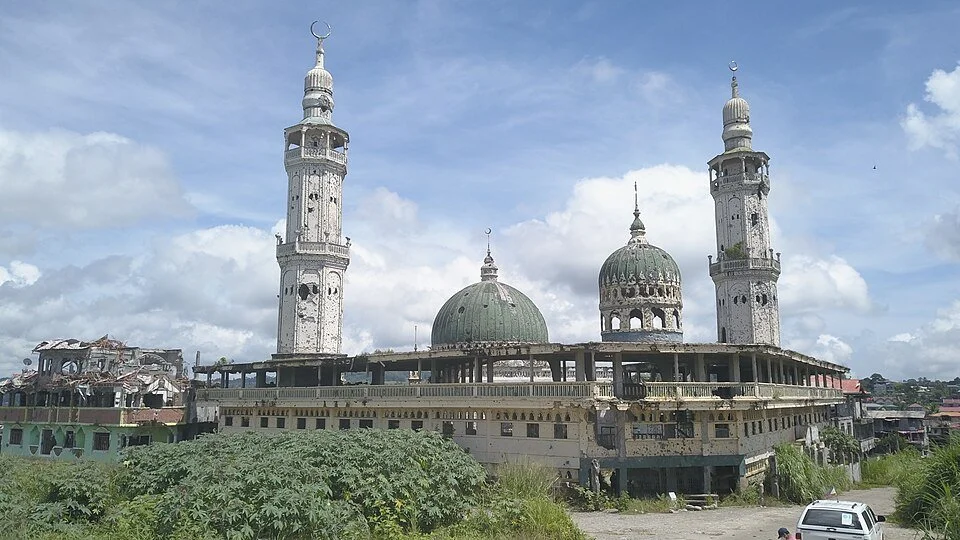
Grand Mosque of Marawi post-2017 Siege. Philippine Information Agency. CC0.
The story of Filipino communist movements is long and complex. They were active across all of the Philippines, especially around World War II. Today, Mindanao serves as a major stronghold and recruiting ground.
The communist organization of interest is the Communist Party of the Philippines (CPP), founded in 1968, and its armed wing, the New People’s Army (NPA). There also exists a formal political wing, the National Democratic Front of the Philippines (NDFP).
The CPP and NPA seek to overthrow the Philippine government. It is the NPA that serves as the movement’s armed wing and targets a mixture of state-affiliated security forces and pro-government civilians. Since the movement began, around 40,000 deaths have been caused.
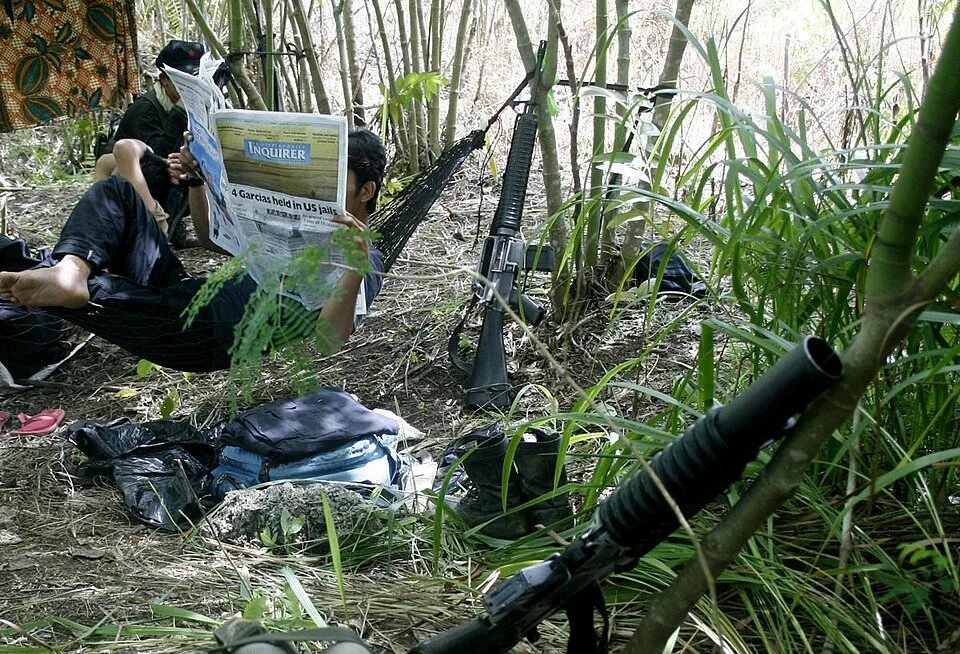
NPA guerrilla fighters relaxing in their base. Keith Bacongco. CC BY 2.0.
The CPP-NPA redoubled its activities as a result of the 2016 actions of former President Rodrigo Duterte and his war against communists. The conflict has claimed hundreds of lives from 2016 to 2024. However, a potential end is in sight, as there have been peace talks between the Philippine government and CPP-NPA-NDF.
At the end of 2024, the Philippine government announced that the NPA and related communist insurgent groups had been effectively dismantled. However, reporting still indicates ongoing engagements as of May 2026.
And yet, we have not covered all the struggles endured by the people of Mindanao. Despite being the nation’s breadbasket, it is also one of the most economically underdeveloped and impoverished regions in the Philippines.
The Philippines has been a nation receptive to foreign development investments and economic aid efforts. Yet, despite decades of foreign investment, the state of Mindanao’s economic development is painfully slow. The simmering violence, which continues despite the government being receptive to peace efforts, has contributed to Mindanao’s economic challenges.
Poverty and socioeconomic strife are major forces that contribute to localized violence. An example of this is rido, which refers to violent exchanges between various, usually Moro, clans based on old rivalries and land disputes, such as a 2024 firefight between rival clansmen and former MILF-trained fighters, which claimed four lives.
Abu Sayyaf remnants, ISIS-aligned militants and the NPA remain active violent insurgent groups, even if significantly reduced. And crushing poverty continues to breed localized conflict, rooted in the recent history of various intense insurgent forces. The result continues to be displacement, deaths and destruction, further exacerbating the economic difficulties endured by the island. However, it is also clear that this situation is steadily improving, as major anti-government insurgencies are dismantled, and development continues, however slowly.
GET INVOLVED:
The situation is highly complex. However, for those who would like to get involved, there are a number of Moro activist groups and international aid organizations who work in Mindanao.
Some Moro activist groups include both the Moro People’s Community Organisation for Reform and Empowerment (Moro PCORE) and Moro Against Racial Injustice Alliance Movement (MARIAM). Moro PCORE is an outreach and advocacy organization that hopes to foster dialogue between the conflicting parties to reach a peaceful resolution. MARIAM seeks to address racial inequality, particularly that which affects the Moro peoples, as well as expand women's rights and protection.
The Mindanao Peacebuilding Institute (MPI) is a Philippine-based institution that works toward creating lasting peace. The Catholic Peacebuilding Network (CPN) connects a number of foreign and domestic institutions that engage in direct charity work and peacebuilding efforts.

Caleb A Yamamura
Caleb is from New York City, and is currently an undergrad at Vassar College, majoring in History and Psychology. He is also an avid traveler, having visited countries on each continent with his family (save for Antarctica… of course). He has a profound love for learning about the world, its cultures and people, and is happy to have the opportunity to share what he has learned about.