
By Nina Esteghamat
Puerto Rico is officially in another water crisis, and recently proposed luxury resort development plans threaten the already fragile water ecosystem.
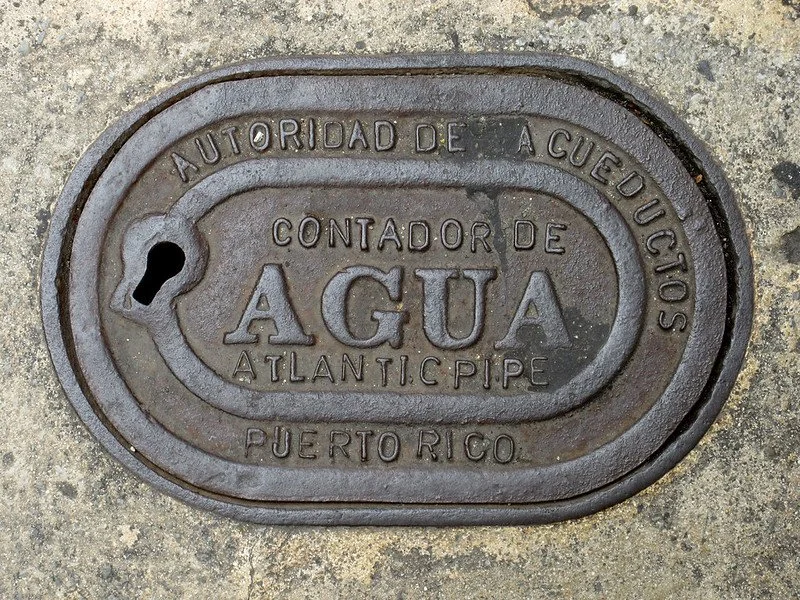
Utility Cover for the Puerto Rican Autoridad de Acueductos y Alcantarillados (AAA), 2018. Terence Faircloth. CC BY-NC-ND 2.0.
Since July 31, when Gov. Jenniffer Gonzalez declared a state of emergency, Puerto Rico has been in a drought. Combined with low reservoir levels and aging, failing pipes, the island is struggling to provide water to all its citizens. Over 180,000 households lack access to potable water, in part due to rotating water outages lasting 48 hours at a time.
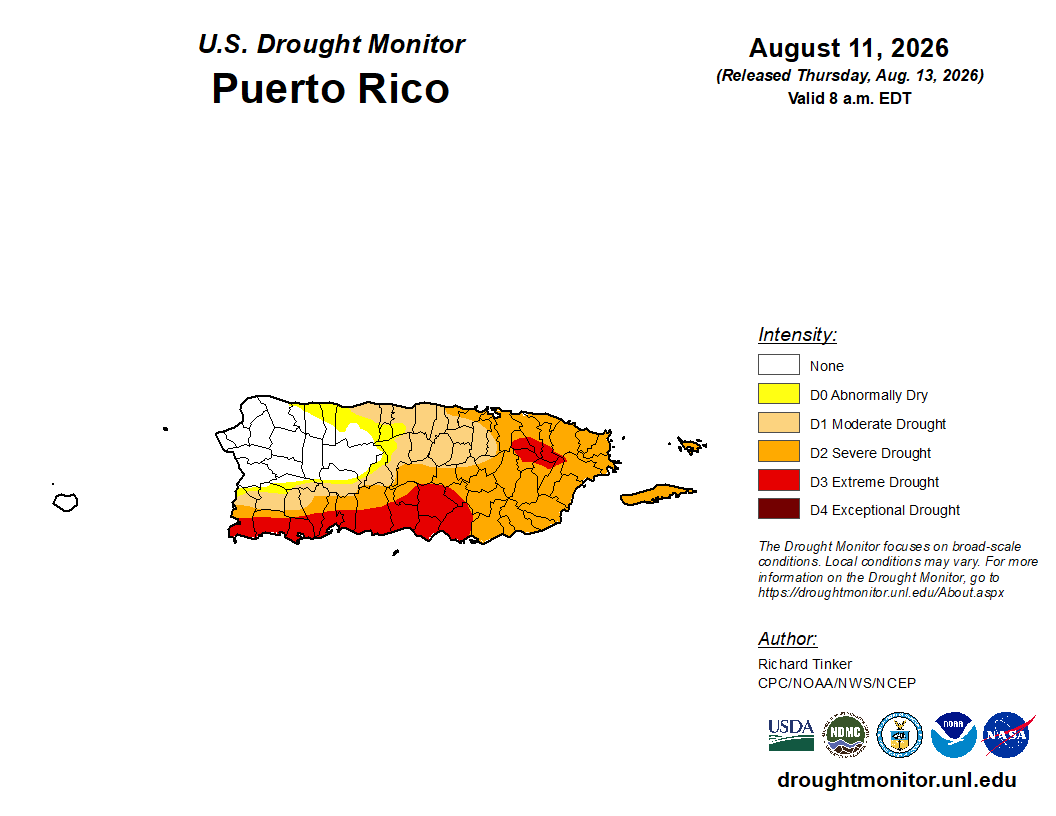
The U.S. Drought Monitor is produced by the National Drought Mitigation Center at the University of Nebraska-Lincoln, the United States Department of Agriculture, the National Oceanic and Atmospheric Administration and the National Aeronautics and Space Administration. Map courtesy of the National Drought Mitigation Center.
The U.S. Drought Monitor is produced by the National Drought Mitigation Center at the University of Nebraska-Lincoln, the United States Department of Agriculture, the National Oceanic and Atmospheric Administration and the National Aeronautics and Space Administration. Map courtesy of the National Drought Mitigation Center.
The U.S. Drought Monitor states that 72.2% of Puerto Rico is in drought. There are four levels of drought, D1 through D4, which become increasingly dire and impactful. As of August 11, 17% of Puerto Rico is in D3, extreme drought.
A prolonged D3-level drought affects access to water supply, impacting health and crop growth. The last time drought levels reached D3 was during the 2014-2016 drought, when the local government implemented “severe water restrictions that affected over a million people and resulted in more than $14 million in agricultural losses.”
How Did It Get So Bad?
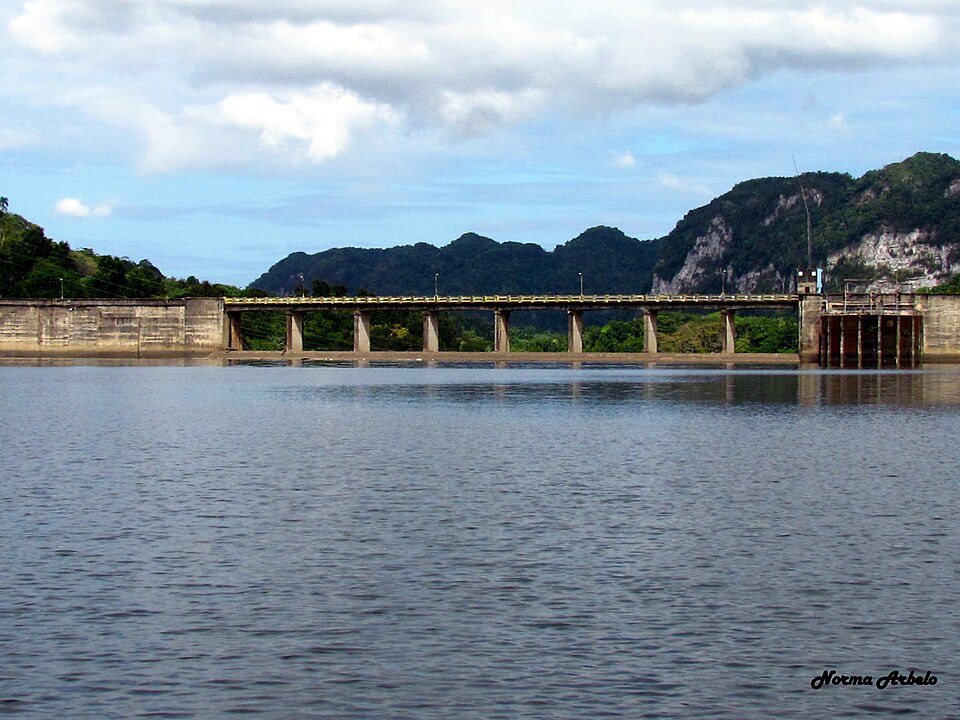
Puerto Rican reservoir, 2016. Norma Arbelo Irizarry. CC BY-SA 3.0.
The Puerto Rican water infrastructure has historically been poor. Even without the drought, the AAA reported that 65% of potable water did not make it through the pipes or was unbilled.
There is heavy rain in Puerto Rico, but the water infrastructure is unequipped to handle it. Water filtration plants are unable to properly filter sediment, and government water workers went on strike on Aug. 11 due to mismanagement and poor working conditions. Fortunately, their demands were met, and the strike ended a day later.
Project Esencia
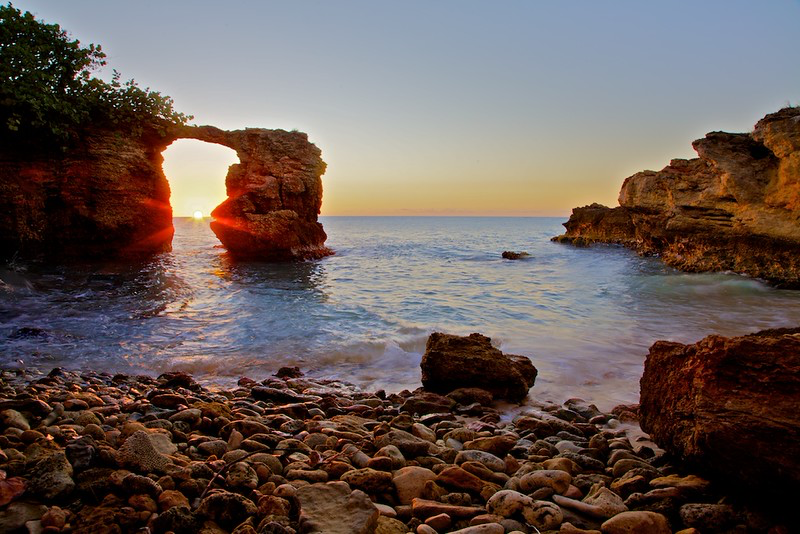
Cabo Rojo, where Project Esencia is set to be built. Rafy Rodriguez. CC BY-NC-SA 2.0.
Project Esencia is a $2 billion luxury hotel and residential project. According to its website, Esencia will be built on the “breathtaking western coast of Puerto Rico, spanning 2,000 tropical acres and 3 miles of pristine beachfront.”
The project was announced in May and was immediately controversial because of the strain it will put on the island’s natural resources. With an already limited water supply, a luxury build will likely dominate access and control. The developers spoke to these environmental concerns, stating “the development would be entirely powered by renewable energy and would have its own water and energy infrastructure.”
People have pushed back, citing the project as an extension of U.S. co-option of Puerto Rico, using the natural resources while denying Puerto Ricans’ rights and enfranchisement. “The local Puerto Ricans will face displacement and the destruction of their lands,” says a local activist group, Diaspora Pa'lante Collective.
With the worsening water supply issue, Project Esencia has become especially topical. The proposed area, Cabo Rojo, is experiencing D3, or extreme drought, conditions. Puerto Ricans worry that their access to water will be less affordable and reliable once the luxury development moves in. Tourists already put a strain on the water system, as the resources are directed away from the native population. How will a massive influx of residents to these luxury developments impact the water system?
GET INVOLVED:
Currently, Puerto Rico needs infrastructure support. To donate, Project PR Relief and PRxPR send 100% of donations to support Puerto Ricans.
If you are a U.S. citizen, it is also important to advocate for Puerto Ricans. As a territory, they are under U.S. jurisdiction, without the ability to vote. Contact your House and Senate members and request support for aid and emergency funding.
To stay involved with Project Esencia, follow @comiteesencia on Instagram and sign its petition: “Detengan ahora el megaproyecto de lujo ‘Esencia’ en Cabo Rojo, Puerto Rico.” You can also visit the Diaspora Pa’lante Collective website to stay engaged with their activism.

Nina Esteghamat
Nina is a student at Smith College, where she is double-majoring in English Literature and the Study of Women, Gender & Sexuality. She is passionate about bringing global awareness and a human lens to storytelling.