
By Carol Khorramchahi
Yemen’s conflict is not only a military crisis; it’s a hunger, health, displacement and childhood crisis reshaping ordinary life across the country.
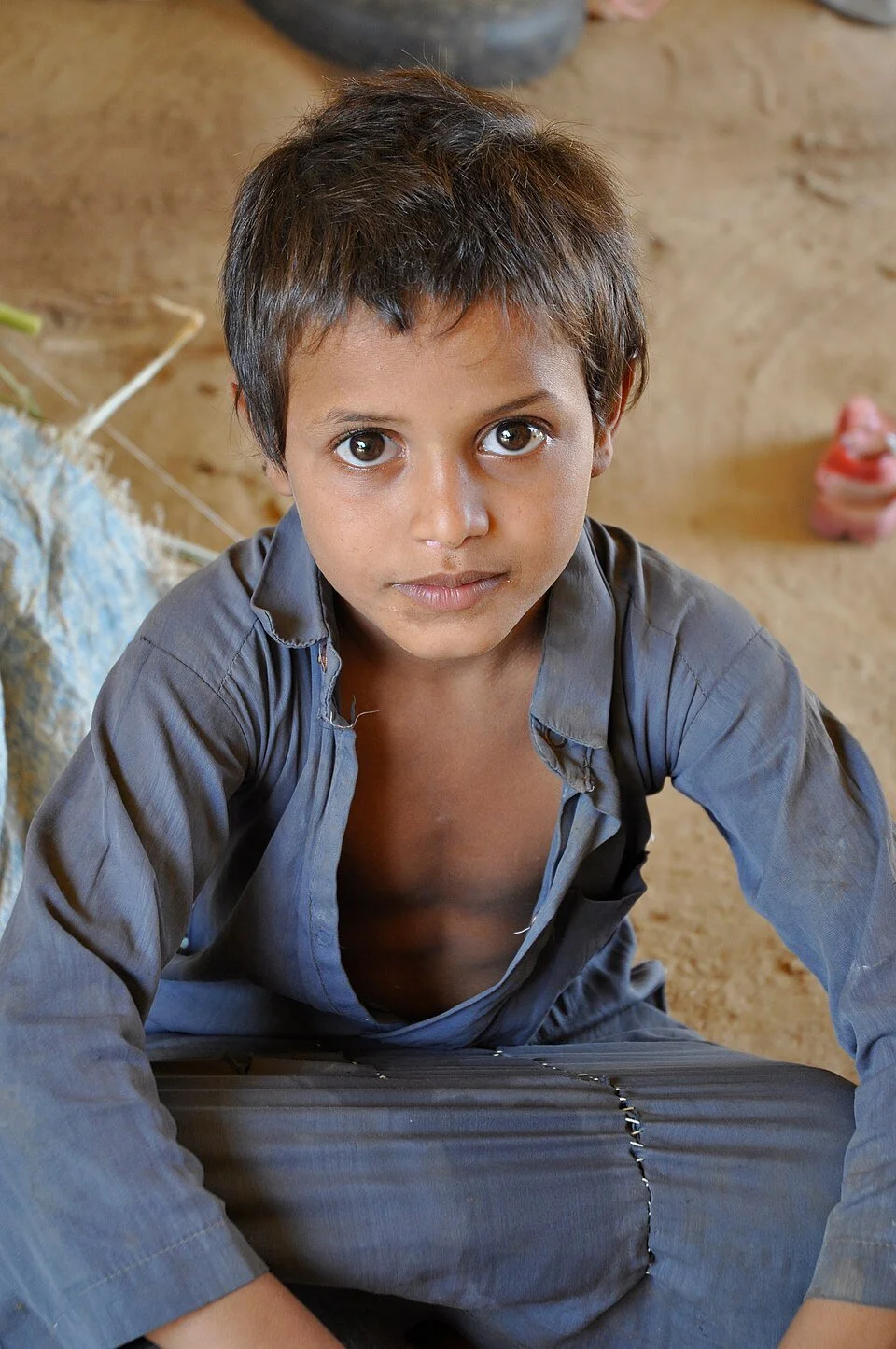
Displaced boy in Yemen, 2013. Julien Harneis. CC BY-SA 2.0.
Yemen’s war is often described through the language of front lines and armed groups, but for civilians, the conflict is felt in smaller and more exhausting ways. It is felt when food prices rise faster than wages, when a clinic has no medicine, when a family flees with nothing but the clothes they are wearing or when a child misses years of schooling because classrooms are damaged, teachers are unpaid and displacement leaves no clear path back to regular education.
After more than a decade of conflict, Yemen remains one of the world’s most severe humanitarian crises. In 2026, the U.N. estimated that 22.3 million people in Yemen need humanitarian assistance and protection, including 5.2 million internally displaced people. Recent fighting has made that crisis worse, pushing more families from their homes and stretching aid groups already operating with severe funding gaps.
The hunger crisis is one of the clearest measures of the war’s cost. About 18.3 million people, or over half the population, face acute food insecurity, meaning they do not have reliable access to enough food to live safely and healthily. The World Food Programme has warned that hunger is rising as conflict weakens purchasing power, keeps agricultural costs high and contributes to a sharp decline in humanitarian assistance.
For children, hunger can turn into permanent damage. UNICEF says more than 2.2 million children under five are acutely malnourished, including more than 515,000 with severe acute malnutrition, the most dangerous form. Malnutrition does not only mean a child is thin. It weakens the immune system, makes disease more dangerous and can affect development long after the emergency passes.
Healthcare has also been hollowed out by years of war. The World Health Organization says only about 60% of health facilities in Yemen are fully functional, while outbreaks of cholera, malaria, dengue and vaccine-preventable diseases continue to strain a system already short on staff, supplies and fuel. For a family, that can mean a treatable illness becomes dangerous because the nearest clinic is too far away, too expensive or not operating at full capacity.
The war has also stolen normal childhood. UNICEF warned in September that renewed hostilities are pushing more than 12 million children deeper into crisis, disrupting health care, education and basic services. Across the country, 3.2 million school-aged children are out of school, and thousands of schools have been damaged, destroyed or used for purposes other than education.
Displacement is another part of the humanitarian story. Families do not leave home once and simply start over. Many are displaced repeatedly as front lines move, rents rise or camps become unsafe. Recent reporting by the Associated Press described families fleeing renewed fighting in western Yemen, some arriving exhausted after long journeys with children, with no belongings and no clear idea of when they might return.
Yemen’s crisis is sometimes treated as old news because the war has lasted so long. That is exactly why it matters. A short emergency can destroy homes; a long one can reshape an entire society. Hunger becomes normal. School becomes a luxury. Illness becomes a financial decision. Childhood becomes work, displacement or survival.
The world does not need to know every militia or every political negotiation to understand Yemen. It needs to know that behind the military conflict is a society where millions of people are still trying to do ordinary things under impossible conditions: feed children, find medicine, stay in school, reach safety and imagine a future beyond war.
GET INVOLVED:
Follow verified humanitarian updates through OCHA Yemen, UNICEF Yemen and the World Food Programme. Support medical and emergency relief through Doctors Without Borders, the International Rescue Committee Yemen and UNHCR Yemen.

Carol Khorramchahi
Carol Khorramchahi is a student at Boston University, where she studies English and Psychology and minors in Journalism. She enjoys writing and reporting on stories that bring together culture, identity, and community, and has experience in both newsroom reporting and digital media. She is especially interested in thoughtful storytelling with a global lens.