
Magnifying crises already facing the country, political struggles between Houthi rebels and foreign countries, including Israel, the U.S. and Saudi Arabia, contribute to Yemen’s rapid devastation.
Read MoreYemen Experiences World's Worst Humanitarian Crisis
Yemen’s ongoing civil war has left 24 million in need of assistance and more than 100,000 dead since the conflict began in late 2014. Today, Yemen is considered the world’s worst humanitarian crisis and is on the brink of being labeled by the United Nations as the world’s worst famine in 100 years.
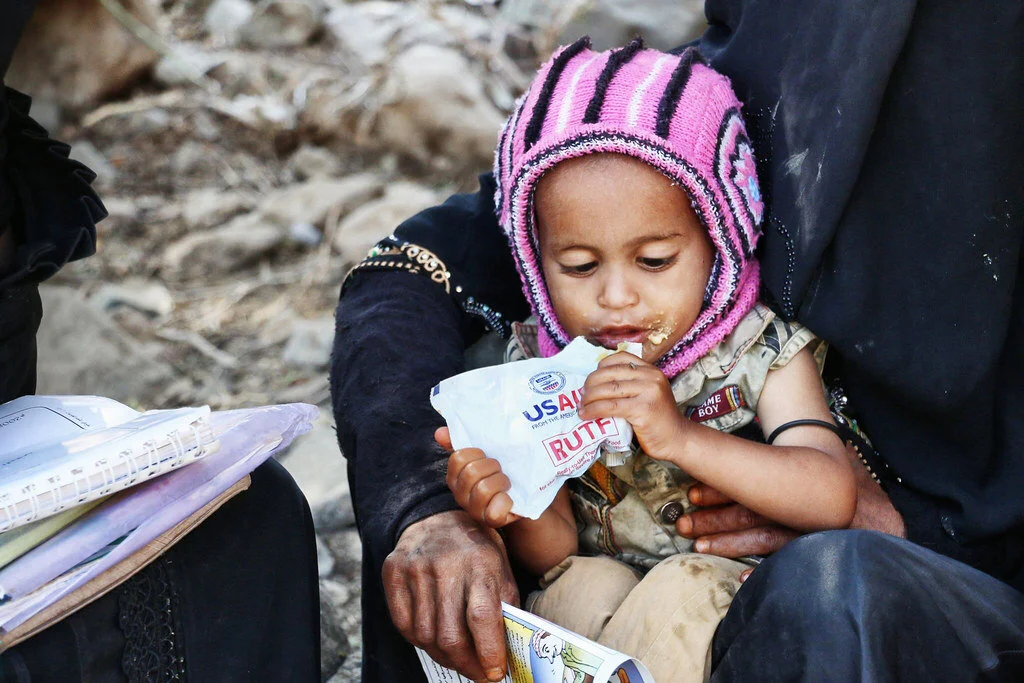
A hungry Yemeni child eats a food bag. USAID_IMAGES. CC BY-NC 2.0.
Hunger, malnutrition, famine, displacement and mental health issues are among some of the devastating consequences imposed upon Yemeni civilians by the country’s civil war. Although the conflict between Yemeni President Abdrabbuh Mansour Hadi’s government and the Houthi, or Ansar Allah, armed movement broke out in late 2014, Yemen was already one of the most vulnerable countries in the Middle East.
Following the Arab Spring in late 2011, previous Yemeni President Ali Abdullah Saleh was forced to turn over his power to his deputy, Abdrabbuh Mansour Hadi. Since then, the country has been enthralled in a civil war which has left millions of civilians hungry homeless, or dead. Houthi forces took over Sana’a, the capital of Yemen, in late 2014, instigating the war. By early 2015, Houthi officials declared mobilization to overthrow Hadi’s regime and, only a day later, fighting broke out in Lahij Governorate. Lahij Governorate quickly succumbed to Houthi rule and President Hadi fled the nation.
With the help of the United Arab Emirates, Saudi Arabia created a coalition of mostly Sunni Arab states to combat Houthi forces and the rise of Iranian influence in the Middle East in 2015. Today, much of the conflict in Yemen is a proxy conflict for the power struggle between Iran and Saudi Arabia in the region.
The Arab coalition conducted countless air campaigns to drive out Houthi forces from Yemen and facilitate the return of Hadi’s government, despite the trail of destruction these air strikes leave behind. Funerals, weddings, homes, mosques, schools and hospitals have all fallen victim to these bombs. In response to an attack on Saudi Arabia’s eastern oil fields—which disrupted nearly five percent of the world’s global oil supply—Saudi Arabia spearheaded a bombing campaign. According to the Yemen Data Project, the conflict and air strikes since 2015 left around 17,000 Yemeni civilians dead or injured, as of March of 2019.
According to the United Nations, Yemen remains the world’s worst humanitarian crisis. With over 100,000 people killed and 85,000 children dead from famine, the UN warned that millions of Yemenis could face starvation in what could be “the world’s worst famine in 100 years.” Currently, 16.2 million Yemenis are food insecure while famine continues to rise; child malnutrition there is one of the highest in the world, with two million children in need of acute malnutrition assistance; and at least one child dies of malnutrition or diarrhea every 10 minutes in Yemen.
Displacement is another major consequence of the war in Yemen. With more than five million people estimated to have been forced to flee their homes, four million Yemenis remain displaced today. These displaced families live in camps of makeshift shelters, forcing them to continue moving around and making them vulnerable to severe weather conditions, air strikes and other dangers. In addition to the overwhelming number of displaced and homeless Yemenis, the nation is also home to around 300,000 refugees mostly from the Horn of Africa.
The devastating impacts of Yemen’s ongoing war does not stop at the physical realm—consequences of the violence have affected the mental health of Yemeni youth. According to Columbia Global Centers’ PGIF Project, a 25-year-old living in Yemen today “has already lived through 15 major conflicts and wars,” making depression, PTSD and other mental health disorders common in Yemen’s youth. Considering the lack of infrastructure and medical facilities already in Yemen, mental health concerns are pushed to the backburner. With roughly one psychiatrist per 500,000 people, only three mental health hospitals exist in Yemen. The lack of mental health services and resources has forced individuals who battle with mental health issues to turn to alternate methods of help, such as Quranic healing, while professional help is reserved for more extreme disorders, such as psychosis.
PTSD is one of the most common products of war, and this is evident with Yemeni children. Growing up with bombs dropping all around them, PTSD in Yemeni civilians and children is often triggered by loud noises and the sounds of planes whooshing overhead. Behavioral changes such as bedwetting, isolating oneself and emotional detachment are common consequences of PTSD in children.
Beyond death by air strike or on-the-ground fighting, many Yemenis have lost their lives to hunger and diseases because of restrictions on humanitarian assistance, imports and access to essential services. Because of this, UN Secretary-General Antonio Guterres refers to Yemen’s crisis as “man-made.” Many third party nations, organizations and institutions have requested the warring countries involved to improve civilian protection, but have experienced little success. Now, many activists have taken to social media to garner support and aid for Yemen’s children, as well as raise awareness of Yemen’s situation—for being the world’s worst humanitarian crisis, Yemen is often underrepresented in the media.
GET INVOLVED
Despite the restrictions on humanitarian aid in Yemen, there are still ways to help. Save the Children is one of the largest organizations operating in Yemen and is currently aiding children suffering from malnutrition, supporting health facilities in hard-to-reach areas and leading educational programs.
The international organization, World Food Programme, aims to provide 13 million people with food assistance across Yemen. To accomplish this goal and ensure their efforts are uninterrupted in 2021, the WFP is seeking to raise $1.9 billion.
The Danish Refugee Council offers partnership opportunities to private companies, where partners will have the opportunity to help solve the global displacement crisis. The DNC is a trusted partner of the United Nations, is rated the world’s third best non-governmental organization, and is a Core Humanitarian Standards certified organization.

Mia Khatib
Mia is a rising senior at Boston University majoring in journalism and minoring in international relations. As a Palestinian-American, Mia is passionate about amplifying the voices of marginalized communities and is interested in investigative and data-driven journalism. She hopes to start out as a breaking news reporter and one day earn a position as editor of a major publication.
U.N. Drops Saudi Arabia-Led Coalition From Blacklist Despite Recent Killings of Children
With no evidence that children are safe, the U.N. decided to remove the Saudi Arabia-led coalition in Yemen off a blacklist for violations of children’s rights.
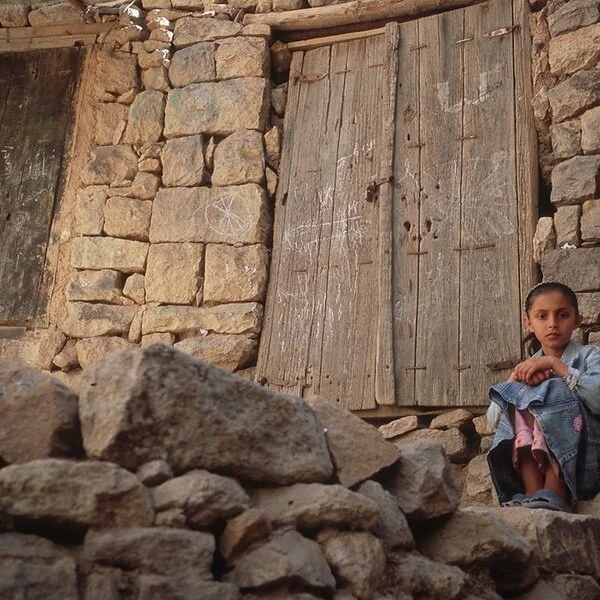
Child in Yemen among the rubble. Carl’s eye. CC BY-NC-ND 2.0
On June 17, the U.N. made the decision to remove the military coalition led by Saudi Arabia from one of its blacklists. The significance of this specific list, which focuses on children in armed conflict, is to shame groups that are guilty of violating the rights of children. Anyone can be placed on the list for a multitude of violations ranging from killing children to the recruitment of children for war. U.N. Secretary-General Antonio Guterres stated that the coalition’s removal was decided by efforts made to reduce the number of deaths and decrease the airstrikes that caused the killings over the previous three years.
However, there is a discrepancy in the decision. According to data released by the U.N., 222 children were hospitalized or killed as a result of these attacks last year. In addition, several hours after the U.N. announced its decision to remove the coalition, four children were killed in an attack in northwest Yemen.
The war in Yemen can be traced back to 2011. Following the Arab Spring, there has been unrest due to a failed political transition that led to terrorist attacks, a separatist movement and corruption. However, in 2014 a rebel group known as the Houthis, backed by Iran, ousted the government. What started out as a civil war transitioned into a conflict with neighboring countries as the Saudi Arabia-led coalition stepped in, attempting to help restore the government and defeat the Houthis.

Child of Yemen. Carl’s eye. CC BY-NC-ND 2.0
As of March 2020, it is estimated that 7,700 civilians have died in the war, largely due to airstrikes from the coalition. However, these are only verified deaths. Some statistics estimate it to be as high as 100,000 fatalities. On top of the conflict, Yemen has been experiencing one of the worst famines it has seen in over 100 years. The country is considered the poorest Arab nation, and the war has ruined the economy to the extent that many people, especially children, are considered malnourished.
There has been backlash over the U.N.’s decision to remove the coalition from the blacklist. From a video posted by Al Jazeera, protests have taken to the streets outside of the U.N. headquarters in Yemen to speak of their disapproval. The main concern is that the removal could leave children vulnerable to future attacks, as voiced by groups like Save the Children. Observers are also questioning the integrity of the blacklist itself, including Iran which said that “the U.N. is giving a free pass.” Iran claims that the Houthis and the Yemeni government have been responsible for the same number of deaths yet only the Houthis remain on the list.
Guterres has said that U.N. would monitor the coalition’s activity over the next year. If there is an increase in children’s casualties, the coalition would be placed back on the list.

Eva Ashbaugh
Eva is a Political Science and Gender, Sexuality, and Women's Studies double major at the University of Pittsburgh. As a political science major concentrating on International Relations, she is passionate about human rights, foreign policy, and fighting for equality. She hopes to one day travel and help educate people to make the world a better place.
Investing in War: How Violence Has Turned into a Profitable Business
Violence finds its home most often in some of the poorest places. But money filtrates its way through often gathering in arms businesses and corrupt governments. In recent times, this has been true in many countries throughout Africa and the Middle East. Is the price of death worth it?
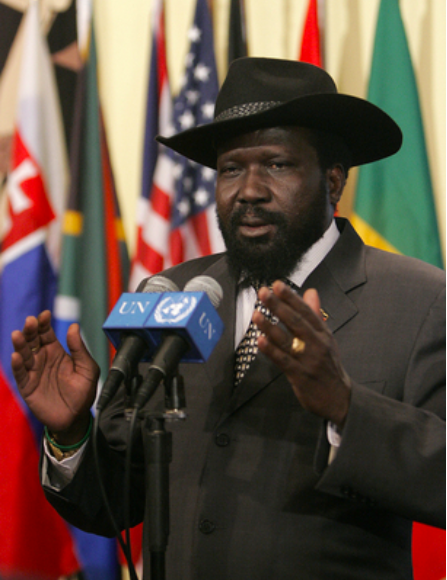
Salva Kiir, President of South Sudan. Jenny Rockett. CC BY-SA 1.0.
There is a moral question that has surfaced over the years on whether you would have to choose between the death of someone you loved or thousands of strangers. Most of the time it would be frowned upon if you picked one life at the expense of thousands. But not everybody agrees. That moral standard doesn’t translate when power is involved. Too often the death of innocent people is picked for monetary gain. This isn’t just found with governments often associated with corruption but also can be found in US foreign policy and even in the UN. Just look at the Rwandan Genocide and Iraqi War for example. The US tends to only involve itself in conflict in which it has another interest in, often oil or another economic benefit. In Rwanda, the UN actually left the country when violence broke out and only got re-involved once it reached international attention. After the genocide ended, the country got so much foreign aid that its capital city, Kigali, is being recreated as a post-modern enterprise focused solely on appearance and not reality. This pattern has continued throughout many conflicts. It is, quite frankly, the business of war.
This best current examples of this trend lie in South Sudan and Yemen. The rise of the Arab Spring lead to the intermingling of conflict, with wealthy monarchies fueling and funding neighboring battles. This is seen in both Syria and Libya. The most notable pairing though is the UAE in Yemen. Like most foreign involvement it is motivated by economic gain, namely control of the Red Sea coastline, and military prowess, as presence equals power. The UAE’s influence has led to the risk of starvation for 14 million people and a much more complex civil war. The leaders of militia groups are now benefiting greatly from foreign aid while the gap between rich and poor continues to spread.
South Sudan follows a similar pattern. The civil war has led to leadership on both sides of line pocketing millions and pursuing private business in real estate acquisitions and capital investments. South Sudan’s economy is completely dependent on oil leading to endless conflict over oil reserves and wealth distribution. The war has left over 5 million in need of aid yet little is being done to stop it. When those in charge get nothing but wealth, why save the people?
One of the biggest culprits of profiting from war lies in the companies controlling valuable natural resources. Often these companies are foreign owned and operated and give little thought to the violence surrounding it, focusing only on the influx of cash. These goals often coincide with a repressive regime. A study from the World Bank found that if one-fourth of the country's GDP is from primary commodity exports, the possibility of a civil war increases by 30%. Two examples of this are in Columbia and Tibet. Both areas have repressive governments with Tibet under illegal occupation of China. This has allowed for the expansion of foreign interest in mining in both countries, often with little regard to the surrounding area and the people that live there. In Columbia alone, 68% of displacements occurred in mining areas.
As long as money is involved and there are people, governments, and companies benefitting from war and violence, there is little motivation to change. If only we could learn that you don’t need to fight violence with violence, you fight by combatting the wealth of those with power.
DEVIN O’DONNELL’s interest in travel was cemented by a multi-month trip to East Africa when she was 19. Since then, she has continued to have immersive experiences on multiple continents. Devin has written for a start-up news site and graduated from the University of Michigan with a degree in Neuroscience.


People crowded in Rock Palace, Yemen. stepnout. CC by 2.0
YEMEN: A Call for Action: The Worst Humanitarian Crisis in the World
War has torn Yemen apart. According to the 2019 Humanitarian Needs Overview for Yemen, “The humanitarian crisis in Yemen remains the worst in the world”. It states that “An estimated 80 per cent of the population – 24 million people – require some form of humanitarian or protection assistance, including 14.3 million who are in acute need. Severity of needs is deepening, with the number of people in acute need a staggering 27 per cent higher than last year”. This devastating famine is a consequence of the Yemen civil war that started in 2015 and has been ongoing since.
The civil war broke out in 2015 between two factions of Yemen: the armed movement of the Houthi and the Yemeni geovernemnt led by Abdrabbuh Mansur Hadi. The fighting started over legitimization of who actually runs Yemen and who gains mass support. Their feud, though, has resulted in their country becoming one of the worst humanitarian crises currently in the world. It has left thousands of adults and children “food insecure”, an official term to identify the starving people in the country. According to an article by the UN, “During the past four years of intense conflict between Government forces and Houthi rebels have left tens of thousands dead or injured including at least 17,700 civilians as verified by the UN”. These people have lost their lives because of a war that took their resources.
In a video by CNN reporter, Sam Kiley, Kiley asked local businessman, Hussein Al-Jerbi, if he thought it was surprising that Yemen is having a problem with hunger. Al-Jerbi responded with, “Not [a] problem - it is a disaster, it is a disaster”. The famine in Yemen is a direct example of what war can bring to a country. The economy has become so poor that the people of Yemen have resulted to selling Khat - an oral drug. In the same video, Sam Kiley interviewed farmer Mounir Al-Ruba’i about why he grows he grows Khat, Al-Ruba’i states, “We only make a profit from Khat - other crops do not cover our home expenses. This is the only crop that would cover our daily and annual expenses.”
The UN and UNICEF have on going sites and systems that allow you to donate to the crisis. While the UN focuses donations on multiple issues, UNICEF provides direct support to the children that are growing up or being born into this humanitarian crisis. On the UNICEF page where you can donate, their call to action states, “An estimated 360,000 children under age 5 are acutely malnourished and fighting for their lives”. An instagram account, @wearthepeace, made a post explaining that if reposted on their story or account, the people running the account would donate meals to Yemen. They not only have a link in their bio for anyone who wants to donate can, but their campaign, which is a post explaining that for every 10 times the post is reposted, they will donate $1 to the Yemen crisis. Their intention behind the post was to not only raise money, but also raise awareness about the humanitarian crisis so people are talking and doing something about it. With their 107K following, they have done just that. Their donations also include food baskets (the contents of those food baskets are listed in the post). On June 14th, the post was removed over controversy that the campaign was a hoax, but after contacting Instagram and providing proof of their legitimacy, their post was reinstated on June 23rd. To this day, they are still spreading awareness and raising funds for the Yemen crisis.
This is considered one of the worst humanitarian crises in the world because of the amount of innocent lives it is affecting. But we can help. With a donation, no matter how big or small, to the organizations listed above, we can make sure the funds are going to the right place. If donation is out of the question, please share and repost articles and stories about Yemen, specifically the account that donates once you repost. Ensuring that this crisis is not forgotten or swept under the rug will aid the people of Yemen.
The livelihood of the Yemeni people are at stake. With consistent awareness and donations, we can help aid the Yemeni people and ensure the war does not destroy them.
OLIVIA HAMMOND is an undergraduate at Emerson College in Boston, Massachusetts. She studies Creative Writing, with minors in Sociology/Anthropology and Marketing. She has travelled to seven different countries, most recently studying abroad this past summer in the Netherlands. She has a passion for words, traveling, and learning in any form.
A Beacon of Hope in Yemen
Just ten miles away from Yemen’s capital city, Dar al-Hajar is a manmade wonder that sits atop a mountain of rocks. Created by Imam Yahya in the 1930s, the palace was the summer home and royal residence for the then ruler of Yemen. The palace, which boasts traditional Yemeni architecture, is five stories high, has several balconies and its own water supply sourced from a deep well on the premises. In a country riddled with conflict and disaster, this palace has become a sanctuary for local residents and a beacon of hope for peace in the region.

Yemeni women take part in a sit-in and a protest against the ongoing conflict in the Arab country, outside the UN offices in Sana'a, Yemen, 16 March 2017. EPA/YAHYA ARHAB
How Yemeni Women Are Fighting the War
Since 2015, a Saudi-led coalition has waged war against Shia Houthi forces in Yemen. More than 8,000 people have been killed, and more than 49,000 injured; at least 69% of the population is reportedly in need of humanitarian assistance. Million of Yemenis are facing starvation. Weapons circulation is widespread and uncontrolled: in 2016, a UN report estimated that between 40m to 60m firearms were circulating freely in the country.
The conflict has had a devastating impact on the women of the country. Household breadwinners are usually men; many are fighting, injured or killed. There is an economic crisis in the private sector, and many public sector jobs are no longer paying salaries. The health and security of the female population is endangered by exposure to cholera and other diseases. And then there’s the issue of child marriages: the severe poverty crisis means that prepubescent girls are married off to repay debts, or to raise funds to feed the rest of the family.
A woman from the Northern Ibb region, which is occupied by the rebel Houthi army, explained the situation to a research team:
We live in a state of lawlessness: no security, no protection and no functional law enforcement authorities. A person may be shot dead for a trivial thing. The security situation doesn’t look like it did in the past. Now, there are informal groups behaving as if they were law enforcement authorities. These groups have power, and their power is the law. They use force against whoever disagrees with them or criticises their behaviour.
As the feminist scholar Cynthia Enloe has pointed out, women are crucial for war and play supportive roles for the military. Indeed, many Yemeni women are not victims of war or just escaping or hiding from this war. In many contrasting ways, they are actively supporting it, and not only on humanitarian grounds.
Women engaging in war
Although many Yemeni women discourage their family members from taking part in the conflict and very few take up arms themselves, they also help recruit men to the army. They also support combatants by cooking food for them and helping to distribute it.
A young woman, Nasseem Al-Odaini, whose family has fled to the neighbouring Ibb region, stayed behind in Houthi-occupied Taiz and initiated an organisation that assist the combatants that support the former government. As she told Middle East Eye: “We want to encourage the pro-government forces to advance in the province, by raising the spirits of the fighters”.
Other Yemeni women try to mitigate the impact of the conflict the best way possible. For example, women engage in humanitarian relief and in providing social and psychological support for people who have been traumatised by the war. They also engage in peace processes when they initiate discussions of the conflict in their communities.
Since the war is not equally intense in every part of the country, there are better possibilities for women to participate in peace processes around the port city of Aden, in the south, than it is in the north, where the Houthi army has taken control and Saudi coalition airstrikes are part of everyday life. Accordingly, women’s conditions and activities differ from one region to another.

Yemeni women and girls wait to receive free bread provided by a charity bakery during a severe shortage of food in Sana'a, Yemen, 15 August 2017. EPA/YAHYA ARHAB
A blocked momentum
In the north, local communities are more divided (between supporters and adversaries of the Houthi government) than in the south. When women enter the public and participate in charity work, they may be questioned by “de facto authorities” (read: the Houthi army) who, according to one woman, would try to prevent them from doing their work. They would also tell women that they are not allowed to appear in public before men:
They [the Houthis] are opposed to women playing a role in public life. According to them, the woman’s role is restricted to cooking and housework. They marginalise women; they deny their role in the community.
Women in Northern and Southern parts of Yemen are not full citizens. According to Amnesty International, they “face discrimination in matters of marriage, divorce, inheritance, and child custody, and the state fails to take adequate measures to prevent, investigate, and punish domestic violence”. Discrimination against women in Yemen go back far beyond the war and are associated with local customs according to several studies. And yet, Yemeni women maintain their engagement in the development of their country.
An old engagement
During the popular uprising in the country in 2011 where hundreds of thousands of Yemenis followed the “youth movement” and protested against the corrupt reign of the then-president, Ali Abdullah Saleh, Yemeni women took to the streets to an extent that was unforeseen and unprecedented.
Many women participants were independent of political groups, but in the later stages of the protests the Islamic Reform party – inspired by the Muslim Brotherhood – managed to take charge of the protest movement, raising independent women’s concern that their rights would be disregarded.
However, independent women and women belonging to the political parties, including the Islamic Reform party and the Houthi political wing, Ansar Allah, constituted almost one third of participantsin the UN-guided National Dialogue Conference which followed the forced resignation of the President in November 2011. The aim of the 10 months long conference was to formulate a new and more democratic constitution for a united Yemen. However, the draft constitution which included a general 30% gender quota was rejected by the Houthi movement in September 2014, before the population had given their voice in a referendum.
By then disappointment with the process towards a new Yemen had given the Houthis wide popular support. They occupied major government institutions in the capital, Sana'a and removed the transition government recognised internationally. Interestingly, it was not the gender quota which made the Houthis reject the draft constitution, but the view to a power-sharing model which did not give them what they expected.
The Houthi movement’s occupation of the capital and seizure of government seemed to mark both the beginning of a war, and the end of momentum for women’s rights in Yemen – a country which generally figures in the lowest ranks of Arab gender equality indexes. In 2014, a group of women from diverse political backgrounds pushed for political solutions instead of war. Since then they have been sidelined from peace negotiations – but that doesn’t mean that Yemeni women have lost all hope.
This article was originally published on The Conversation.

CONNIE CHRISTIANSEN
Dr. Connie Carøe Christiansen is a visiting associate professor in Gender Studies. She was an associate professor at Roskilde University in Denmark and a senior advisor at KVINFO, the Danish Centre for Research and Information on Gender, Equality and Diversity, where she managed academic programs in the Arab region, including a program which established an M.A. program on International Development and Gender at Sanaa University in Yemen. She has published research on gender, migration and Islam in Denmark, Turkey, Morocco and Yemen. She has her M.A. in Cultural Sociology and Ph.D. in Anthropology from Copenhagen University, Denmark.