
Here is how the sacred site of Mecca in Saudi Arabia shapes faith, identity and worship in Islam.
Read More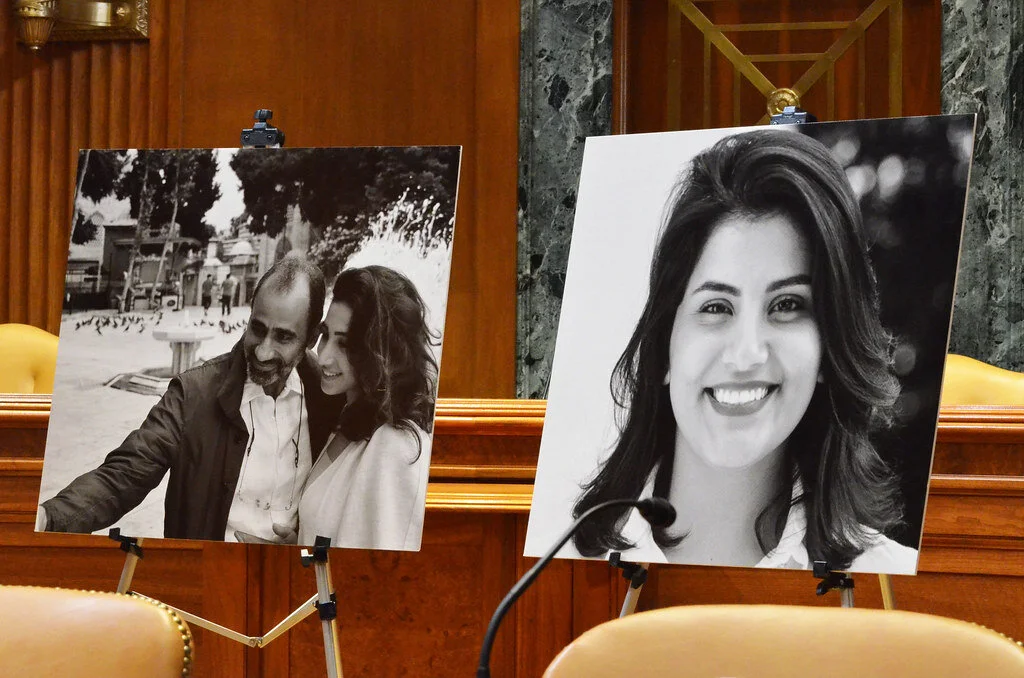
A photo of Loujain al-Hathloul at a conference about human rights in Saudi Arabia. POMED. CC BY 2.0.
Saudi Arabia: Women’s Rights Activists Remain Imprisoned
Saudi Arabia has received criticism in recent months for its continued imprisonment of five women’s rights activists: Loujain al-Hathloul, Samar Badawi, Nassima al-Sada, Nouf Abdulaziz and Maya’a al-Zahrani, who were all arrested in 2018. Seven European human rights ambassadors, as well as rights group Amnesty International, have called for the release of these five women’s rights activists and declared that peaceful activism is not a crime.
On Nov. 29, these seven ambassadors argued for the release of all political detainees, including the five Saudi Arabian women’s rights activists. Their statement also expressed regret that the cases of two of the activists, Hathloul and Badawi, have been referred to the Special Criminal Court, which tries terrorism and national security cases.
Hathloul, the most high-profile of the five activists, was arrested in May 2018 during a sweep targeting opponents of Saudi Arabia’s law prohibiting women from driving, just a few weeks before the ban was lifted. Hathloul’s activism consisted of peaceful protests, most conducted through social media, such as a video of herself driving posted in 2013. After her 2018 arrest, Hathloul was held without charges for 10 months, denied any outside communication for the first three months, and was tortured throughout. In March 2019, she was finally charged with promoting women’s rights, protesting for the end of Saudi Arabia’s male guardianship system, and communicating with other activists as well as international organizations and the media. On Nov. 25, 2020, Hathloul appeared in court again, reportedly weak from a two-week hunger strike protesting the conditions of her imprisonment. Her case was transferred to the Special Criminal Court.
Badawi, Sada, Abdulaziz and Zahrani were arrested during the same sweep as Hathloul in 2018, along with eight other women who have since been released. Like Hathloul, the four other women protested the state of women’s rights in Saudi Arabia, specifically the driving ban on women and the male guardianship system. This process forces women to have a male guardian who makes important decisions, such as her ability to work or access health care, for her. Abdulaziz and Zahrani both worked as journalists before their arrests, as well as running blogs where they wrote about women’s rights.
On Oct. 26-27, Saudi Arabia hosted this year’s virtual B-20 summit, a subgroup of the G-20 summit, which aims to prevent international crises. The G-20 group is made up of 19 countries and the European Union. The B-20 summit is made up of businesses from the G-20 group and focuses on business policy development. In 2020, women’s empowerment was one of the key topics at the B-20 summit, despite Saudi Arabia’s continued detainment of women’s rights activists. Amnesty International urged participants not to “be fooled by this shameless hypocrisy” and to support human rights over business opportunities. Amnesty International also released a statement on Nov. 19, before the Saudi-hosted G-20 summit took place virtually, urging G-20 leaders to call for the “immediate and unconditional release” of the activists.
Saudi Arabia has rejected the calls to release the five women, and they and other human rights activists remain in prison.
To Get Involved:
Donate to Front Line Defenders, which protects and supports human rights activists around the world, by clicking here.
Learn more about the situation in Saudi Arabia by visiting Amnesty International, which campaigns for global human rights, by clicking here, or find Amnesty International petitions and volunteer or donation opportunities by clicking here.
Rachel Lynch
Rachel is a student at Sarah Lawrence College in Bronxville, NY currently taking a semester off. She plans to study Writing and Child Development. Rachel loves to travel and is inspired by the places she’s been and everywhere she wants to go. She hopes to educate people on social justice issues and the history and culture of travel destinations through her writing.
Cutting Ties: Saudi Arabia Announces Reforms for Migrant Workers
Saudi Arabia has begun lifting up its struggling migrant workers with its most recent initiative. However, what this decision truly means in terms of effective change remains uncertain.
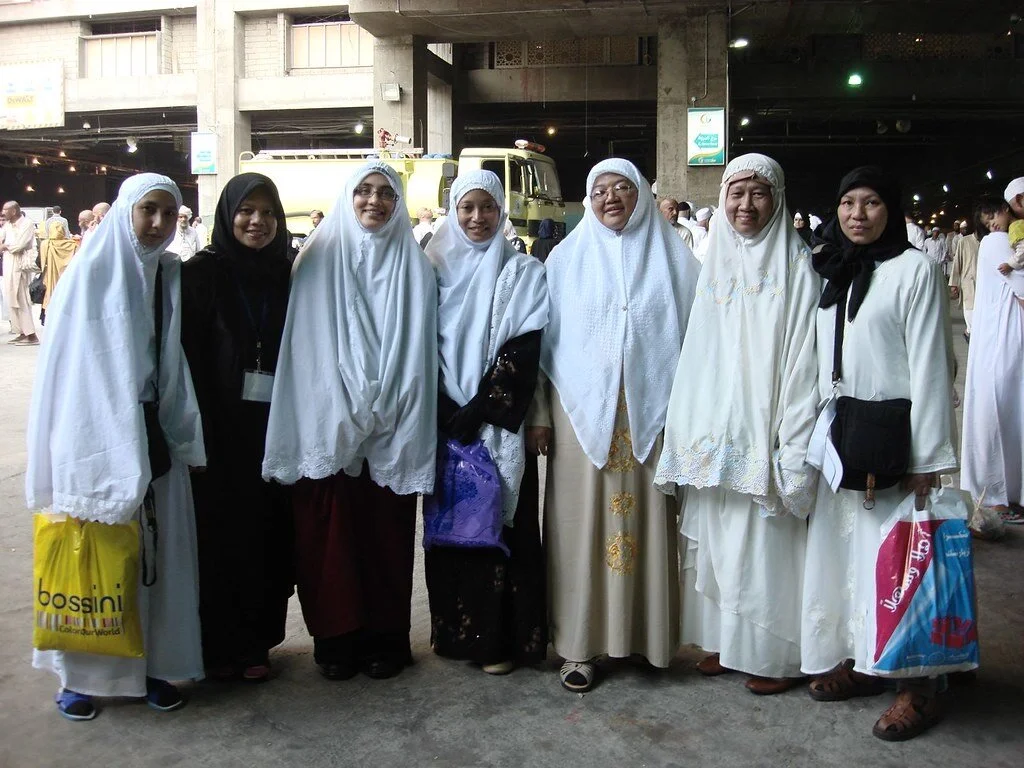
Saudi women. Mohd Azli Abdul Malek.CC By-NC-SA 2.0.
Saudi Arabia recently kick-started the “Labor Relation Initiative” that will eliminate policies tightly binding migrant workers to their sponsors. It is expected that the changes will begin in March 2021, potentially impacting up to one-third of the nation’s population. This initiative may be the beginning of the end of the notorious “kafala” system that has been under international scrutiny since its conception in the 1950s.
The kafala sponsorship system, which is currently practiced in most Persian Gulf states, began about 70 years ago to create a beneficial flow in the migrant labor force. Workers are assigned a sponsor, or “kafeel,” for their decided contract period. The sponsor may be a single person or a company. The sponsor has complete control over the worker’s ability to change jobs or enter and exit the country; written permission must be granted for any changes. Thus, the worker must report all related activity to the sponsor, and failure to do so will result in criminal punishment. The sponsor must then report all activity to the immigration authorities, and fund the worker’s entry and exit.
Essentially, the kafeel is the migrant’s legal tie to the country, leaving the worker no choice but to acquiesce. The kafala system has allowed kafeels to exercise excessive control over their workers, such as taking their travel documents; this is illegal, though, in some of the countries that practice the system. The kafala system has faced much criticism with claims that it is a gateway to modern slavery; there have been many reports of forced work and sexual abuse. However, it appears that the intense exploitation of workers over the years may potentially begin to close with Saudi Arabia’s new Labor Relation Initiative.
The initiative now allows workers to move their sponsorship to other jobs and to cross the border without permission of their kafeel. The policy is only one aspect of Crown Prince Mohammed bin Salman’s “Vision 2030,” in which he aims to increase international economic activity. Many are hopeful that this initiative will bring about substantial change for not only the current 10 million impacted workers, but also future generations who would benefit from the complete abolishment of the kafala system.
Others are wary of holding out hope, stating that ties to a sponsor would need to be completely cut in order for change to be sustained. At the moment, this limited reform has not clarified whether all migrant workers are shielded, nor whether sponsors can still report their workers for running away. Concerns over this unanswered portion of the policy bring much fear; a worker whose travel documents have been invalidated by their sponsor faces immediate deportation.
Maybe this initiative will end the process for good, or perhaps it is merely a camouflaged political scheme. Regardless, much hope remains that the injustices of the kafala system will be reduced.

Ella Nguyen
is an undergraduate student at Vassar College pursuing a degree in Hispanic Studies. She wants to assist in the field of immigration law and hopes to utilize Spanish in her future projects. In her free time she enjoys cooking, writing poetry, and learning about cosmetics.
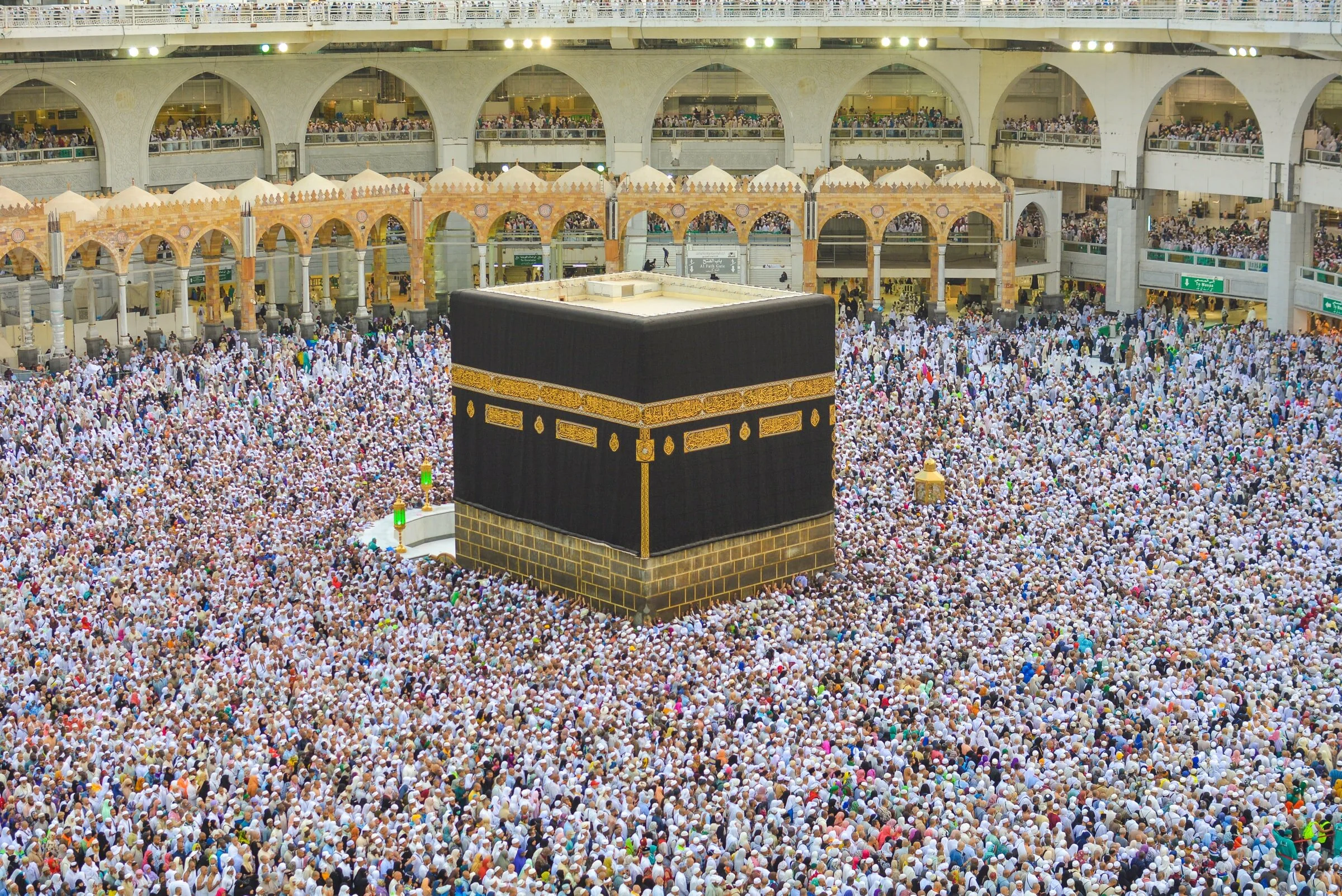
One of the rituals of hajj includes walking around the Kaaba seven times. Adli Wahid. Unsplash.
Hajj Canceled for Most of World’s Muslims Due to COVID-19
Every year, more than 2 million Muslims from all over the world perform the special pilgrimage called hajj in Saudi Arabia. Performing hajj is an extremely important ritual for Muslims as it is one of the five pillars of Islam, which make up the core practices and beliefs. It is obligatory for Muslims to make the annual pilgrimage at least once in their lifetime as long as they are able-bodied and financially able to afford the trip.
In a rare move, Saudi Arabia announced on July 6 that hajj would be canceled for the majority of the world’s Muslims—the first time in recent years that it has been disrupted by an epidemic. This is also the first time that Saudi Arabia has significantly curtailed the pilgrimage since the country was founded in 1932—only people living in Saudi Arabia may perform the pilgrimage this year. “Hajj Minister Mohammad Benten said the government is still in the process of reviewing the number of overall pilgrims allowed, saying they could be ‘around 1,000, maybe less, maybe a little more,’” according to Al-Jazeera. Furthermore, no one over the age of 65 will be allowed to make the pilgrimage this year. Authorities released strict guidelines including a ban on touching the Kaaba, one of the holiest sites in Islam.
In March, the Saudi government made the decision to enforce travel restrictions into the Muslim holy sites of Mecca and Medina for umrah, a pilgrimage that can be performed at any time of the year that is not obligatory for Muslims as hajj is. While that decision caused frustration for some, hajj is sacred and typically a once-in-a-lifetime opportunity for Muslims. As such, the decision to cancel hajj is devastating to many who were planning to go.
For the rest of the world’s Muslims, fears of spreading the coronavirus during the upcoming Eid al-Adha holiday has prompted leaders to urge Muslims to continue following coronavirus guidelines.
Eid al-Adha marks the completion of the annual five to six day pilgrimage, and takes place on the tenth day of Dhul-Hijja, the last month of the Islamic lunar calendar. Eid al-Adha serves as a remembrance of the willingness of the prophet Ibrahim (Abraham to Christians and Jews) to sacrifice his son to God. The holiday does not celebrate bloodshed in order to please God—a sheep was provided at the last moment—but instead honors giving up something beloved and promotes charity and equality. To commemorate God’s intervention, an animal is sacrificed (typically a sheep, but goats, camels and cows are also acceptable) and the meat divided into three portions—one-third goes to the poor and needy, one-third to friends and family, and the final portion is reserved for one’s own household.
Muslim countries’ leaders worry that Eid al-Adha celebrations will cause a spike in COVID-19 cases as people travel to animal markets and slaughterhouses to perform the sacrifice. The head of Istanbul’s Chamber of Veterinary Surgeons, Murat Arslan, has warned that 1 million people could be at risk of contracting the virus in Turkey. As such, he said face masks should be made mandatory and disposable plastic shoe covers should be worn upon entering the marketplace, and buyers and sellers should avoid shaking hands upon completing a sale. Pakistan’s National Institute of Health is urging the public to stick to the coronavirus guidelines, especially on Eid al-Adha. The Pakistani government issued new rules for the holiday, including instructing people to avoid greeting friends and relatives on Eid al-Adha and urging sellers to arrange online purchases when possible, according to The Washington Post. Oman announced a complete lockdown beginning on July 25 and ending on Aug. 8, a drastic effort to prevent a spike in positive COVID-19 cases.
Hajj begins on July 29 with Eid al-Adha being celebrated on July 31 by the majority of Muslims.
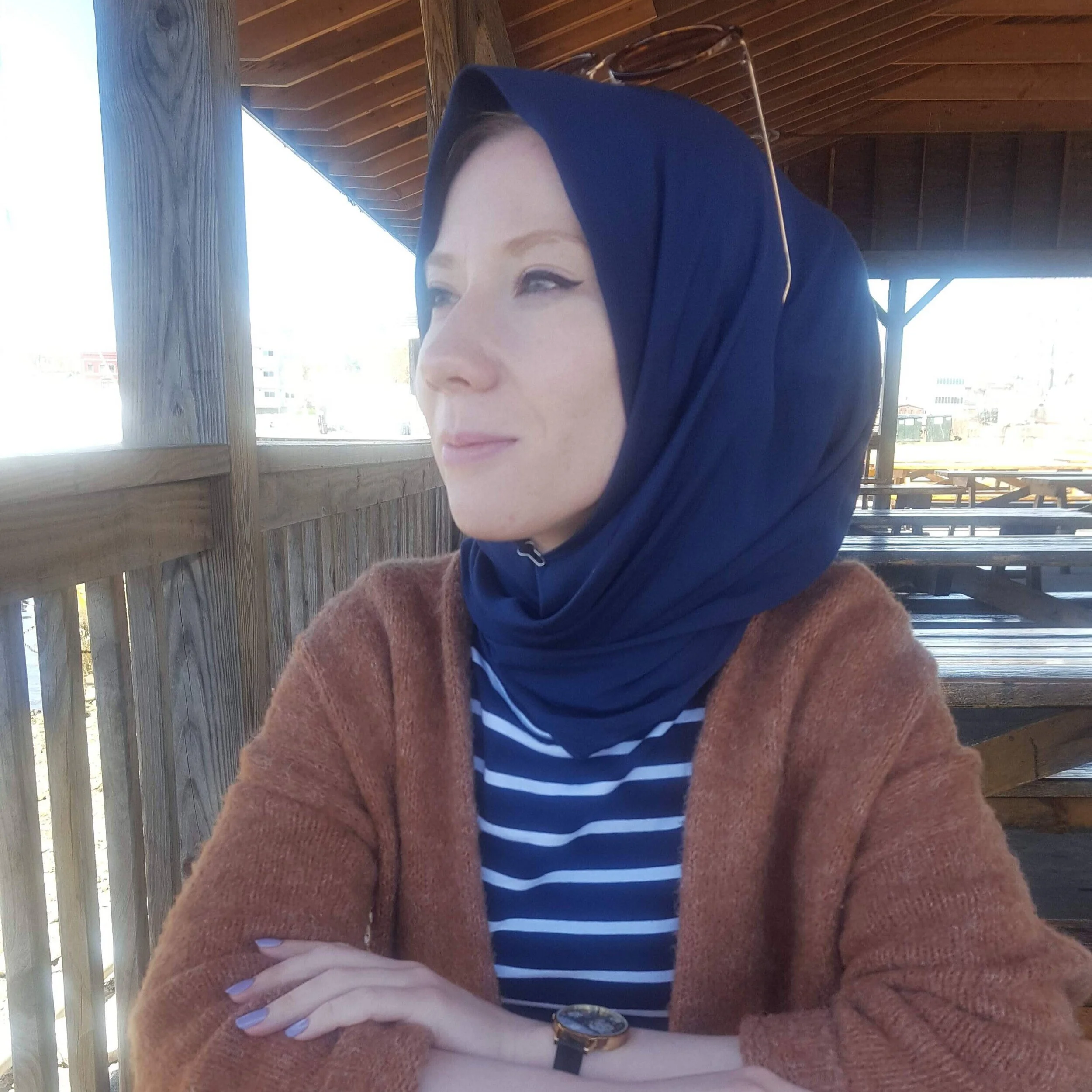
Asiya Haouchine
is an Algerian-American writer who graduated from the University of Connecticut in May 2016, earning a BA in journalism and English. She was an editorial intern and contributing writer for Warscapes magazine and the online/blog editor for Long River Review. She is currently studying for her Master’s in Library and Information Science. @AsiyaHaou
U.N. Drops Saudi Arabia-Led Coalition From Blacklist Despite Recent Killings of Children
With no evidence that children are safe, the U.N. decided to remove the Saudi Arabia-led coalition in Yemen off a blacklist for violations of children’s rights.
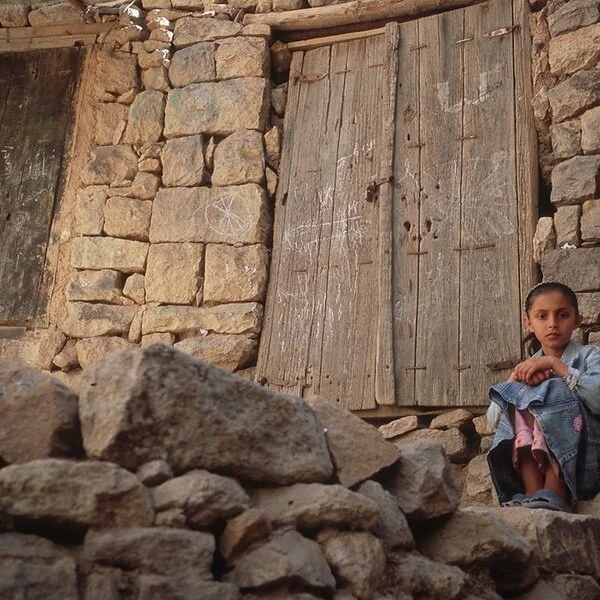
Child in Yemen among the rubble. Carl’s eye. CC BY-NC-ND 2.0
On June 17, the U.N. made the decision to remove the military coalition led by Saudi Arabia from one of its blacklists. The significance of this specific list, which focuses on children in armed conflict, is to shame groups that are guilty of violating the rights of children. Anyone can be placed on the list for a multitude of violations ranging from killing children to the recruitment of children for war. U.N. Secretary-General Antonio Guterres stated that the coalition’s removal was decided by efforts made to reduce the number of deaths and decrease the airstrikes that caused the killings over the previous three years.
However, there is a discrepancy in the decision. According to data released by the U.N., 222 children were hospitalized or killed as a result of these attacks last year. In addition, several hours after the U.N. announced its decision to remove the coalition, four children were killed in an attack in northwest Yemen.
The war in Yemen can be traced back to 2011. Following the Arab Spring, there has been unrest due to a failed political transition that led to terrorist attacks, a separatist movement and corruption. However, in 2014 a rebel group known as the Houthis, backed by Iran, ousted the government. What started out as a civil war transitioned into a conflict with neighboring countries as the Saudi Arabia-led coalition stepped in, attempting to help restore the government and defeat the Houthis.

Child of Yemen. Carl’s eye. CC BY-NC-ND 2.0
As of March 2020, it is estimated that 7,700 civilians have died in the war, largely due to airstrikes from the coalition. However, these are only verified deaths. Some statistics estimate it to be as high as 100,000 fatalities. On top of the conflict, Yemen has been experiencing one of the worst famines it has seen in over 100 years. The country is considered the poorest Arab nation, and the war has ruined the economy to the extent that many people, especially children, are considered malnourished.
There has been backlash over the U.N.’s decision to remove the coalition from the blacklist. From a video posted by Al Jazeera, protests have taken to the streets outside of the U.N. headquarters in Yemen to speak of their disapproval. The main concern is that the removal could leave children vulnerable to future attacks, as voiced by groups like Save the Children. Observers are also questioning the integrity of the blacklist itself, including Iran which said that “the U.N. is giving a free pass.” Iran claims that the Houthis and the Yemeni government have been responsible for the same number of deaths yet only the Houthis remain on the list.
Guterres has said that U.N. would monitor the coalition’s activity over the next year. If there is an increase in children’s casualties, the coalition would be placed back on the list.

Eva Ashbaugh
Eva is a Political Science and Gender, Sexuality, and Women's Studies double major at the University of Pittsburgh. As a political science major concentrating on International Relations, she is passionate about human rights, foreign policy, and fighting for equality. She hopes to one day travel and help educate people to make the world a better place.
Saudi Women Protesting Driving Ban Remain Jailed, Details of Trial Unclear
In 2017, the driving ban was lifted for Saudi women. However, the women who vocally protested the ban have been jailed, subjected months of torture and unable to communicate with their families.
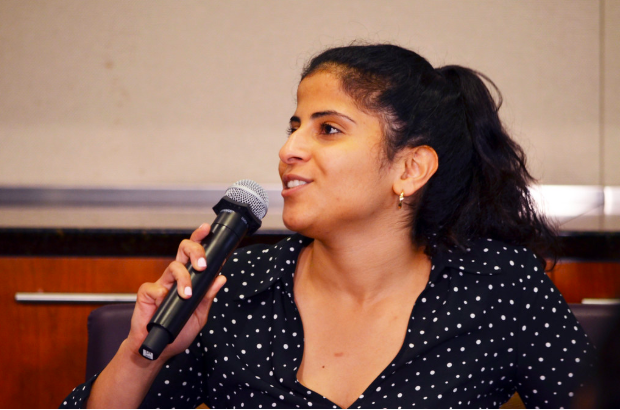
Lina Al-Hathloul speaking about the imprisonment of her sister, Loujain. POMED. CC BY 2.0
June 24th, 2018 marked the first day women in Saudi Arabia could legally obtain drivers licenses, following an announcement by King Salman in September that women driving would be considered acceptable under sharia law. By March of 2019, more than 70,000 Saudi women had received a license. Under the interpretation of sharia law enforced by the Saudi government, women are effectively minors, subject to guardianship by their fathers, husbands, or even their sons should their husbands pass away or become otherwise unable to fulfill the role of guardian. Women must receive permission to enroll in school, open bank accounts, sign contracts, or acquire a passport, to name a few of the many restrictions women face under guardianship laws.
Regarding the announcement of the end of the driving ban, Eman al-Nafjan writes in her blog, “Initially I was overwhelmed with my own powerlessness as a woman living in a patriarchal absolute monarchy. Were our efforts the reason the ban was lifted? Or was it a decision that had been made regardless of our struggles?” Dr. al-Nafjan is one of eleven women who was detained, subject to torture, solitary confinement, and threats of rape and death—more than once by Crown Prince Mohammed bin Salman himself—in 2018 as a result of their protests against the ban. The protests against the driving ban began in 1990, and have lead to the arrest, imprisonment, and severe punishment of many individuals. Of the eleven arrested in May-June 2018, some were released on bail. Al-Nafjan, as well as two other women, Loujain al-Hathloul and Nouf Abdulaziz, have borne the brunt of cruelty at the hands of the Saudi government, and as a result have received the most media attention. Their trials began in late March of 2019, however little is known of their current situation.
Nouf Abdulaziz, one of the women held in prison, writes in a letter sent during her detainment: “Hello my name is Nouf, and I am not a provoker, inciter nor a wrecker, nor a terrorist, nor a criminal nor a traitor.” The women imprisoned have sought justice for their fellow women, and we must honor their work by seeking justice on their behalf. There exists a clear duplicity in the West’s reaction to these human rights violations: although outwardly supportive of human rights, the U.S., France, and the U.K. have been complicit in the Saudi regime’s actions by maintaining close economic and security ties with Saudi Arabia. At the end of her letter, Abdulaziz implores her readers: “if what is happening does not please you, help our people to see clearly that our sister in the homeland is mistreated and she does not deserve other than her freedom, to maintain her dignity and to have the warmth in her parents [sic] arms, that has been taken away from her.” Many human rights organizations have spoken up on behalf of these activists, and Abdulzaziz, al-Hathloul, and al-Nafjan were awarded the 2019 PEN Freedom to Write Award for their work.
In this vein, Amnesty International marked May 2018-May 2019 a “year of shame for Saudi Arabia” due especially to its treatment of women’s rights activists and the assassination of Jamal Khashoggi, a dissident Saudi journalist. Although Crown Prince Salman, accepting the position of Crown Prince in 2017, labeled himself a reformer, he immediately launched a campaign to repress dissenters of the regime. In this way, the worries expressed by Nafjan were prescient: the Saudi government lifted the driving ban in an effort to improve international opinion, as well as increase the number of women working in Saudi Arabia’s flagging private sector, not with genuine progressive intent. Those who most vehemently spoke up for the rights of women were made examples of for other dissenters. While ultimately a victory for the greater female Saudi population, the patriarchal regime insisted upon a last word—in the form of human rights violations against the very women who created the momentum for the lifting of the ban.
HALLIE GRIFFITHS is an undergraduate at the University of Virginia studying Foreign Affairs and Spanish. After graduation, she hopes to apply her passion for travel and social action toward a career in intelligence and policy analysis. Outside of the classroom, she can be found, quite literally, outside: backpacking, rock climbing, or skiing with her friends.
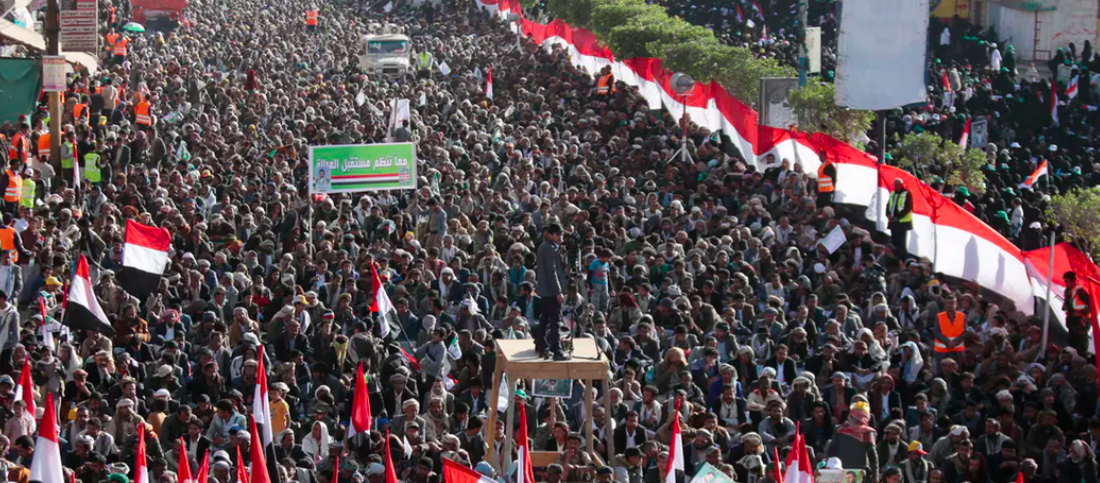
Supporters of Shiite Houthi rebels attend a rally in Sanaa, Yemen, in 2017. AP Photo/Hani Mohammed, File
Who are Yemen’s Houthis?
Fully half of Yemen’s population – 14 million people – are on the brink of starvation. Some analysts blame their inability to access basic foodstuff on escalating conflict between two religious factions: the country’s Sunni Muslims and its Houthis. The Houthis belong to the Shiite branch of Islam.
Saudi Arabia, which shares a border with Yemen and is predominantly Sunni, has been helping Yemen’s government forces try to regain control over Houthi-held parts of the country. For several weeks, a Saudi-led coalition has unleashed near-continuous airstrikes on Houthi strongholds including access points for the majority of humanitarian aid coming into country.
What are the Houthis’ religious beliefs?
Roots of Houthi movement
Just as the Protestant tradition is subdivided into Methodists, Presbyterians, Congregationalists and others, Shiite Islam is also subdivided. Houthis belong to the Zaydi branch.
From the ninth century onward, or for a thousand years, a state ruled by Zaydi religious leaders and politicians existed in northern Yemen. Then, in 1962, Egyptian-trained Yemeni military officers toppled the Zaydi monarchy and replaced it with a republic. Because of their ties to the ancient regime, Zaydis were perceived as a threat to the new government and were subjected to severe repression.
Nearly three decades later, in 1990, the region known as south Yemen merged with north Yemen to become the Republic of Yemen. Zaydis remained a majority in the north and west of the country, and also in the capital city of Sanaa. However, in terms of the overall population, they became a minority.
According to a 2010 CIA estimate, 65 percent of Yemen’s people are Sunnis and 35 percent are Shiites. The majority of those Shiites are Zaydis. Jews, Bahais, Hindus and Christians make up less than 1 percent of inhabitants, many of whom are refugees or temporary foreign residents.
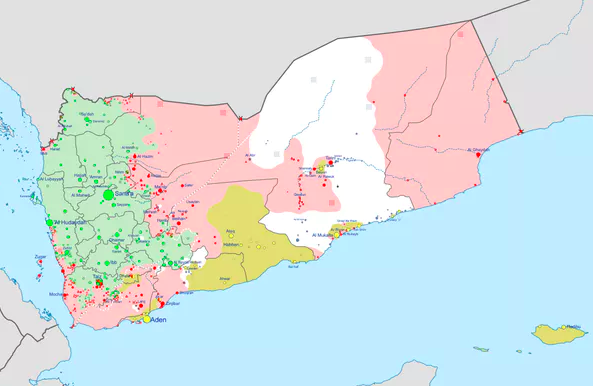
Yemen: 2015 Civil War map. The section in green is controlled by the Houthis. 0ali1,via Wikimedia Commons, CC BY-SA
To reduce the dominance of Zaydis in the north, government authorities encouraged Muslims belonging to two Sunni branches with links to Saudi Arabia – Salafis and Wahhabis – to settle in the heart of the Zaydis’ traditional territories.
Start of Houthi insurgency
Contributing to this trend, in the early 1990s, a Yemeni cleric founded a teaching institute in the Zaydis’ heartland. This cleric, educated in Saudi Arabia, developed a version of Salafi Islam.
His institute proselytized with the goal of reforming Muslims through conversion. It educated thousands of Yemeni students and, in less than three decades, the new religious group grew large enough to compete with older groups such as the Zaydis.
According to scholar Charles Schmitz, the Houthi insurgency began in the early 1990s, spurred, in part, by Zaydi resistance to growing Salafi and Wahhabi influence in the north.
Hussein Badreddin al-Houthi, son of a prominent Zaydi cleric, gave the grassroots movement its name. He coalesced support among his followers around a narrative of Houthis as defenders and revivers of Zaydi religion and culture.
Sunni vs. Zaydi Shiite beliefs
What beliefs set Zaydis apart from Sunni Muslims? That is an old story, dating back to the seventh century when the Prophet Muhammad died.
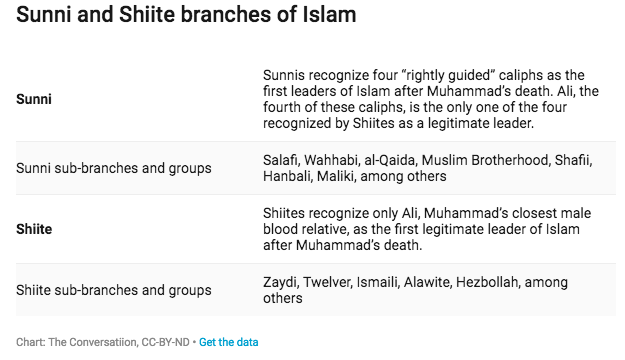
Shiites and Sunnis disagree about who should have been selected to succeed Muhammad as head of the Muslim community. Two groups emerged after his death. One group of the Prophet’s followers – later called Sunnis – recognized four of his companions as “rightly guided” leaders In contrast, another group – later called Shiites – recognized only Ali, the fourth of these leaders, as legitimate.
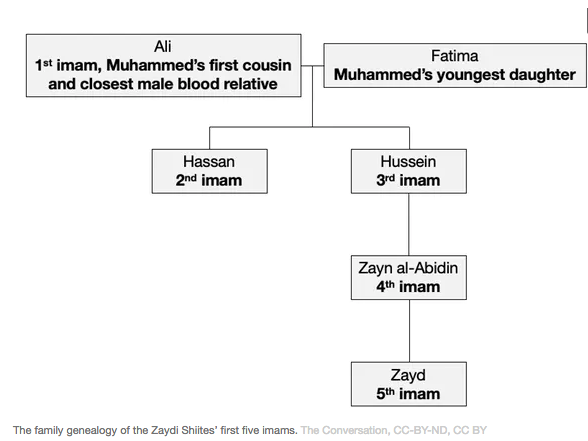
Ali was the Prophet’s first cousin and closest male blood relative. He was also married to Fatima, Muhammad’s youngest daughter. For these and other reasons, Shiites believe that Ali was uniquely qualified to lead. In support of this claim, they cite sources describing Muhammad’s wish that Ali succeed him. Shiites consider Ali second in importance only to the Prophet.
Over time, further divisions took place. Allegiances to different descendants of Ali and his two sons, Hassan and Hussein, split Shiites into sub-branches. A grandson of Hussein called Zayd gave the Zaydis their name. To them, he is the fifth imam after Muhammad, giving the Zaydis their other name: “Fivers.”
Zayd earned the respect of his followers when he rose up against the powerful Muslim rulers of his time, whom he believed to be tyrannical and corrupt. Though his rebellion was ill-fated, his fight against oppression and injustice inspires Zaydis to actively resist.
A key Zaydi belief is that only blood relatives of Ali and Fatima are eligible to serve as religious leaders, or imams. In Yemen, these relatives form a notable class of people called Sada. Hussein al-Houthi, the first leader of the Houthis, came from a prestigious clan of Sada.
Impact of sectarian differences
Not all Zaydis have a favorable view of Sada elites. When north and south Yemen merged in 1990, the republican government, led by a Zaydi president sought to reduce their outsized influence and limit their privileges.
Some members of the Sada reacted to the country’s changing political landscape by joining electoral politics to secure honor and exercise power. This path was initially followed by Hussein al-Houthi but, after he decided it was ineffective, he abandoned it.
Other members of the Sada, particularly the youth, reacted by pledging to teach and promote Zaydism among their peers who had forgotten their ancestors’ religion. To accomplish this, they founded the Believing Youth organization and set up a cultural education program based on a network of summer camps in the north. Hussein al-Houthi joined this organization in the early 2000s and later transformed it into a political movement critical of the Yemeni government’s ties to the West.
Security forces sent to arrest Hussein al-Houthi touched off the first war with the Houthis. Hussein was killed during the conflict and leadershippassed to Hussein’s father and then to Hussein’s youngest brother, Abdul-Malik Badreddin al-Houthi. Abdul-Malik helped transform the Houthi movement into a powerful fighting force.
Five additional wars followed over the next six years until, in 2010, the rebels had grown strong enough to repel a ground and aerial offensive launched against them by Saudi Arabia. During these wars, the Houthispushed beyond their traditional base and captured vast sections of territory.
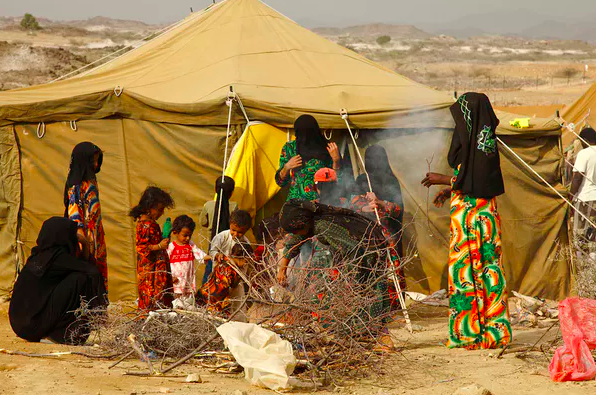
Yemeni women and children at a camp in north Yemen. IRIN Photos/Flickr.com, CC BY-NC-ND
Many Yemenis, according to one expert, believe that the Houthis are fighting to restore a state like the one prior to 1962, led by imams who came exclusively from Sada families.
Complex factors today
Houthis continue to focus on protecting the Zaydi region of north Yemen from state control. However, they have also forged coalitions with other groups – some of them Sunni – unhappy with Yemen’s persistent high unemployment and corruption.
A 2015 U.N. Security Council report estimates that the Houthi movement includes 75,000 armed fighters. However, if unarmed loyalists are taken into account, they could number between 100,000 and 120,000.
Sectarian tension is only one factor in the complex set of interlocking factors responsible for violence and starvation in Yemen. But it is, without a doubt, a contributing factor.
MYRIAM RENAUD is the Principal Investigator and Project Director of the Global Ethic Project, Parliament of the World's Religions at the University of Chicago.
THIS ARTICLE WAS ORIGINALLY PUBLISHED ON THE CONVERSATION
Female Saudi Arabian Activist on Death Row for Peaceful Protest
On August 21, 2018, Saudi Arabian public prosecutors announced that they were considering the death penalty for five Saudi Shia activists. One of the five is Israa al-Ghomgham, a female activist who could become the first woman sentenced to death in Saudi Arabia. Ghomgham, along with four other Saudi Shia activists including her husband, engaged in peaceful demonstrations for Shia rights beginning in 2011 during the rise of the Arab Spring, which led to their 2015 arrests.
Saudi Arabian Flag. Iqbal Osman. Wikimedia Commons
“Any execution is appalling, but seeking the death penalty for activists like Israa al-Ghomgham, who are not even accused of violent behavior, is monstrous,” said Sarah Leah Whitson, who directs the Middle East sector of Human Rights Watch. “Every day, the Saudi monarchy’s unrestrained despotism makes it harder for its public relations teams to spin the fairy tale of ‘reform’ to allies and international business.”
Responding to peaceful protests with the death penalty is compromising both to proponents of human decency and order, and these actions are symptomatic of a larger illness. If Saudi Arabia is to continue to suppress and murder its own citizens, its actions could lead to its internal combustion. To preserve its tenuous position of prosperity, the Saudi Arabian government must honor the voices of its insurgents—or at least allow them to live.
Saudi Arabia, a desert country in the Middle East said to be the birthplace of Islam, holds a complex position at the pinnacle of capital and culture. It has the world’s third highest national total estimated value of natural resources. It is home to the world’s largest oil company, and it has been the proponent of various reform agendas, significant amount of money invested in solar energy. It is also ruled by the ultraconservative Wahhabi religious movement, which is part of Sunni Islam.
It has shown support for counterterrorism and revolutionary liberal and Arab Spring ideals and has supported rebel forces in Syria and Yemen, but internally it has been a breeding ground for violent forms of radical Islam, placing it at a crux between the most progressive and oppressive sides of the ideological spectrum. The nation’s 32-year-old king, Mohammed bin Salman, has been pushing to modernize his country, opening movie theatres and allowing women to drive for the first time—but his actions towards protestors despite his presentation of liberalism rings eerily close to the actions of Bashar al Assad, Syrian president who also began his reign by encouraging Westernization in Syria before cracking down on protestors and unleashing a bloody civil war. Under Salman, critics of the Saudi Arabian regime have been arrested in scores, and 58 people are currently on death row. Many of these prisoners are women, often arrested for protesting the country’s guardianship system, which places Saudi Arabian men in almost complete control of their daughters’ or wives’ lives.
Israa al-Ghomgham and her husband were arrested on December 5, 2015, and are on trial at the Specialized Criminal Court, which Saudi Arabia installed in 2008 and which has drawn expense criticism from human rights activists, sentencing eight protestors to death in 2014 and 14 in 2016. Currently human rights campaigners are working to secure her freedom and life.
EDEN ARIELLE GORDON is a writer, musician, and avid traveler. She attends Barnard College in New York.

Women Take the Mic on Nsawya FM
Saudi feminists are giving voice to obstacles against women’s rights in their new radio show.
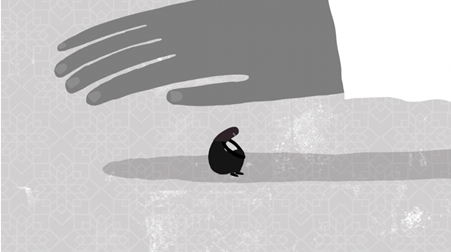
Illustration depicting the impact of restricted women’s rights because of male guardianship.
(Source: Human Rights Watch. Saudi Arabia: ‘Unofficial Guardianship Rules Banned. © 2016 by Human Rights Watch
On July 27th, eleven women gave life to Nsawya FM, or Feminism FM, with a simple tweet stating their aim to be the “voice of the silent majority.” Since then, their radio broadcasts have detailed stories of women’s rights abuse with just a laptop, editing software (to disguise the voices of the women sharing the stories), and a microphone. According to Ashtar, a pseudonym for one of the women involved, “the voice of women is revolution.”
And women have been raising their voices. Of the 6.3 million Saudis on Twitter in 2016, 40% were women as found in a study by the Rutgers’s Center for Women’s Global Leadership Report. The same study supported the importance of Twitter in Saudi society by stating that it was the “most effective and influential social network.” This is in part because political leaders monitor Twitter, making political activity more likely to be seen on the social media platform.
Still the potential to be blocked by the government on Twitter—which Nsawya FM states happened temporarily—is why they have chosen the radio: they do not want to risk losing the “archive of [their] thoughts.”
Nsawya FM’s archive consists of submissions by Saudi women of their stories, opinions, and criticisms on women’s rights, such as domestic abuse. The first stories told were of Hanan Shahri and Sara. Both stories highlight the effects of male guardianship: a system where a women’s crucial decisions—including travel, marriage, and studying abroad—are made by a male figure. These guardians can be fathers, husbands, brothers, or sons.
Shahri’s story was widely reported in 2013 after she killed herself following a beating by her brother and uncle and their refusal to allow her to marry her fiancé. Then there is Sara, a university student whose dream to marry her fiancé from Yemen, following approval from her parents, was ended when her brother shot her.
So it is no surprise that women began turning to Twitter to push back against guardianship. In 2016 they coined #AbolishGuardianship to highlight abuse and rally support against it. Within two months, 14,000 signatures had been collected for an online petition against guardianship. Although gradual changes have occurred for women, most notably the ability to drive, male guardianship is grounded in religion and cuts across all socio-economic classes.
But to these 11 women producers and their 2500 audience members there is hope that civilian law might one day replace the Islamic law. They are bringing the stories traditionally protected under male guardianship to light and public criticism.
“Of course [they] are scared,” as Ashtar has also been quoted saying. But their fear is driven by a determination for equal rights. For them it begins with placing the women’s narrative before the public’s eyes: Nsawya FM is making a statement on behalf of Saudi women to the world that they exist.
TERESA NOWALK is a student at the University of Virginia studying anthropology and history. In her free time she loves traveling, volunteering in the Charlottesville community, and listening to other people’s stories. She does not know where her studies will take her, but is certain writing will be a part of whatever the future has in store.
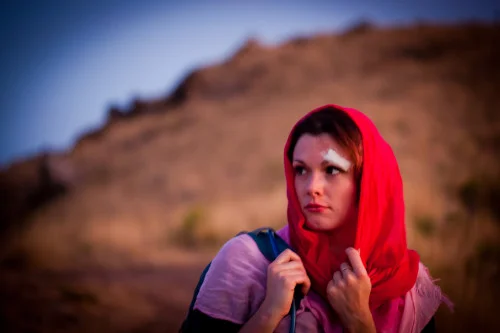
Featured image by David Sorich.
How do I balance being a feminist with respecting other cultures?
Q: When visiting a country that has a culture that represses women, how far do you go in respecting their culture when visiting? Covering my head and shoulders seems okay. But I have a friend whose husband called out a waiter in India for asking him what she wanted to order when she was perfectly capable of answering for herself. That seems awesome to me but may have been offensive to them. Where’s the line?
Sincerely,
Yes Always to Solidarity with Kickass Women in Eastern & Extremist Nations
That’s a really great question, YASKWEEN. I have opinions, but I am also a dude, and as such, am at risk of mansplaining. So it seems worthwhile to ask a few women who either travel or live in more patriarchal cultures what they think before offering up my own dudepinion.
On cultures that repress women:
When we think of the most oppressive society towards women, we probably think of a country like Saudi Arabia. Sydney Meredith, the travel blogger behind Passports & Prose, currently lives in Saudi Arabia told me she doesn’t love equating “repressing women” with “covering your head and shoulders,” as many Muslim women consider it a personal religious choice to wear the hijab, and not something that’s imposed upon them by men. In regards to wearing it as a traveler, she says:
“I remember visiting historic churches in Spain and France during a trip in high school and the women were asked to cover their shoulders. Do I consider Spain and France ‘repressive?’ No. I was just respecting someone’s wishes.”
She also warns against developing a sense of superiority:
“I mean, aren’t women repressed everywhere? …The US is among only 2 other countries in the world who do not pay pregnant women who take time off from work. We were only allowed to vote just a 100 years ago.”
On "calling people out":
Traveler Sarah Lewis says it usually comes down to reading the situation, and points out there may be alternatives to “calling out” someone that are more effective.
“I feel like in that one specific situation, I would try not to be rude about it, especially at first, because the waiter was just doing what he considers to be polite in his particular culture in his line of work. As a server in the US, I’ve seen men order for women, so for some people that type of thing is still traditional, even in less conservative countries. If he addressed a man I was with rather than myself, I would probably just answer the questions and not necessarily “correct” him per se. (Similar to how in Japan, the server always talks to the Asian-looking person. You correct them not by calling them out, but by just responding in Japanese, and eventually they realize they can talk to you.)”
What’s important, then, is trying to gauge intent. She adds:
“However, if he continued or was being obviously rude to me, that would be another thing entirely, and I think that’s where the ‘line’ sort of starts. If a person is doing something that, even in his culture, would be rude (such as catcalling or harassment), that would not be tolerated.”
On balancing idealism with safety and comfort:
My friend Nandika Kumari is an Indian human rights activist, and she says this regarding the clothes issue:
“The class divide in India often means that urban girls/women from the upper classes will usually dress like any other American twenty year old. However, this is a very small number of people. Most women in India will dress as per their cultural traditions (which are often conservative)… The one rule I’ve always followed is to be 100% comfortable with myself. This also means that in a place where I am likely to get stares if I wear shorts, I will make the functional decision to wear something more conservative so I don’t have to get into arguments with creepy men every 10 steps.”
In regards to the what visitors should do, she adds:
“If someone is just on holiday it probably makes sense to dress close to the way most women in the area are dressed simply to reduce chances of harassment (I know how that sounds). A dress code is only likely to be enforced in religious places. Everywhere else, you are free to dress the way you like. If a woman feels comfortable wearing a dress in an Indian market, then please go ahead and do it. The culture of trying to control women’s behaviour doesn’t need encouragement. Seeing a western woman in different clothing may actually do some good.”
She also noted, “This is India, where you won’t get a death threat for pushing cultural boundaries.” This doesn’t hold true for every country, however, and there are other places where pushing the envelope may be a much more dangerous thing to do. Sarah Lewis adds:
“If something isn’t exactly rude in their culture, but I feel uncomfortable with it, I would probably say something, although again, depending on my level of comfort, I would probably in varying degrees attempt to be sensitive to the culture and not aim to immediately embarrass the person (unless I was really in danger or in a bad situation).”
And, of course, some mansplaining.
Okay, so this isn’t technically mansplaining: I don’t really know what it’s like to travel as a woman, and I won’t pretend to. But I have come across similar situations where something happens in a culture I’m visiting that clashes with my own personal values. A quick story:
When I was working a journalism internship at an English-languge newspaper in China, I really wanted our editors to cover issues like human rights. My bosses had to worry about government censors, so they weren’t really on board with taking editorial advice from an uppity 22-year-old foreigner. I pushed them on it, and all it did was alienate me from my bosses, to the point where I wasn’t being given any work. Towards the end of the internship, I was grabbing drinks with a British journalist who’d worked in China for years. I bitched to him about the Chinese journalists, calling them cowards.
“That’s not been my experience of Chinese journalists,” he said. “I’ve found them to be quite brave.”
I asked how. He said, “You’ve been here what, two months? You need to get to know the system better before you can attack it. These journalists are quite subversive, but they have to be more subtle in their attacks than a British or American could be. They don’t seek to topple anything, just to chip away. Keep in mind very few western journalists are actually risking their necks when they go to work every day.”
He went on to tell me how Chinese journalists would frequently undermine government-mandated stories through the subtle use of puns. For example, when the government wanted to show off their expensive new language-teaching program (which was incredible ineffective), the paper’s editors titled the piece, “GOVERNMENT CREATES ARMY OF CUNNING LINGUISTS.” This effective pun-usage has become so pervasive among Chinese dissidents that censors in China have actually banned the use of puns and idioms.
The lesson of that internship for me was that while the causes I was fighting for were just the world over, the tools for fighting for them changed from place to place depending on the context. It’s easy to fall prey to the whole “when you have a hammer, every problem looks like a nail” trap, and for a lot of Westerners, becoming confrontational over small or large injustices is our hammer.
Your impulse to resist misogyny is always a good one, YASKWEEN, but you may simply not have the localized knowledge to resist it effectively. Which is fine. It creates an opportunity to learn and listen. The best thing you can do if you want to support feminists in the area you’re visiting is to ask them how you can best support them. Some may say money. Some may say political support from your government. Some may say “call out the waiter when he ignores you to talk to your husband.” Some may say, “definitely don’t call out the waiter.” The response will change based on the place you’re in and even on whom you’re talking to.
That said, respect cuts both ways. If you are trying to treat another culture with respect, you’re allowed to insist they treat you with respect as well.
Writer’s note: could we all take a second to appreciate how far I came in a single week with my anonymous questioner acronyms? Last week, I dubbed my questioner “TUTBFTS.” This week, I pulled off motherfucking YASKWEEN. At this exponential rate of improvement, I’ll be a billionaire in a goddamn MONTH.

THIS ARTICLE WAS ORIGINALLY PUBLISHED ON DON'T BE A DICK TRAVEL.


MATT HERSHBERGER
Matt Hershberger is a writer and blogger who focuses on travel, culture, politics, and global citizenship. His hobbies include scotch consumption, profanity, and human rights activism. He lives in New Jersey with his wife and his Kindle. You can check out his work at the Matador Network, or over at his website.