• Travel Features
  • Global Action
  • Take A Trip
  • Travel Guides
    • Podcast
    • Courses
    • Bookshop
  • About
  • Sign Up
Menu

CATALYST PLANET

  • Travel Features
  • Global Action
  • Take A Trip
  • Travel Guides
  • Discover
    • Podcast
    • Courses
    • Bookshop
  • About
  • Sign Up

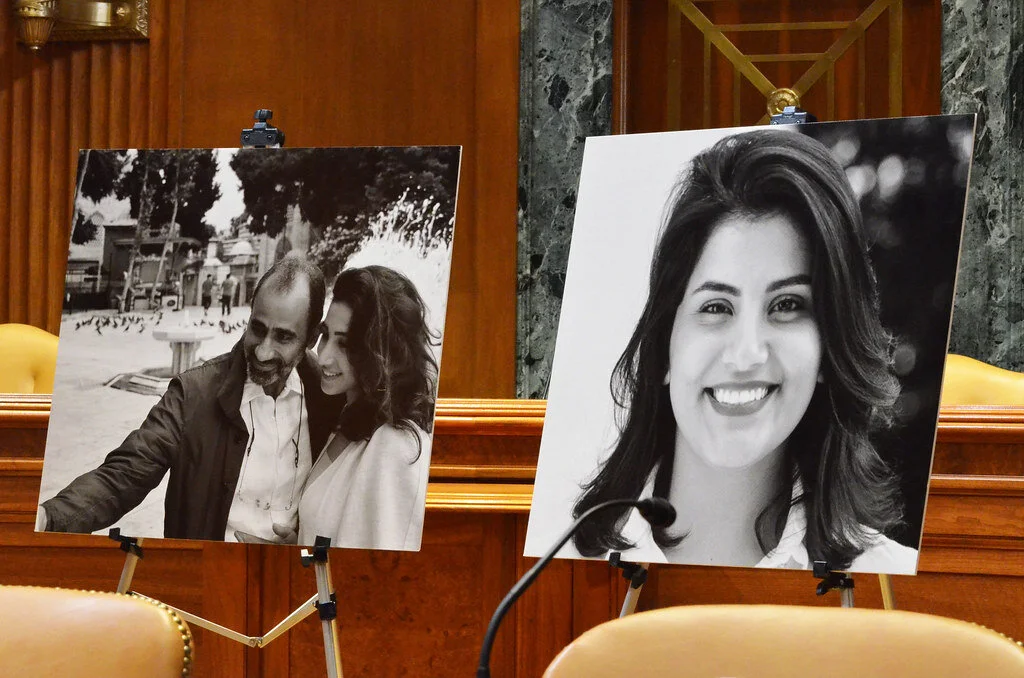
A photo of Loujain al-Hathloul at a conference about human rights in Saudi Arabia. POMED. CC BY 2.0. 

Saudi Arabia: Women’s Rights Activists Remain Imprisoned

December 23, 2020

Saudi Arabia has received criticism in recent months for its continued imprisonment of five women’s rights activists: Loujain al-Hathloul, Samar Badawi, Nassima al-Sada, Nouf Abdulaziz and Maya’a al-Zahrani, who were all arrested in 2018. Seven European human rights ambassadors, as well as rights group Amnesty International, have called for the release of these five women’s rights activists and declared that peaceful activism is not a crime. 

On Nov. 29, these seven ambassadors argued for the release of all political detainees, including the five Saudi Arabian women’s rights activists. Their statement also expressed regret that the cases of two of the activists, Hathloul and Badawi, have been referred to the Special Criminal Court, which tries terrorism and national security cases. 

Hathloul, the most high-profile of the five activists, was arrested in May 2018 during a sweep targeting opponents of Saudi Arabia’s law prohibiting women from driving, just a few weeks before the ban was lifted. Hathloul’s activism consisted of peaceful protests, most conducted through social media, such as a video of herself driving posted in 2013. After her 2018 arrest, Hathloul was held without charges for 10 months, denied any outside communication for the first three months, and was tortured throughout. In March 2019, she was finally charged with promoting women’s rights, protesting for the end of Saudi Arabia’s male guardianship system, and communicating with other activists as well as international organizations and the media. On Nov. 25, 2020, Hathloul appeared in court again, reportedly weak from a two-week hunger strike protesting the conditions of her imprisonment. Her case was transferred to the Special Criminal Court. 

Badawi, Sada, Abdulaziz and Zahrani were arrested during the same sweep as Hathloul in 2018, along with eight other women who have since been released. Like Hathloul, the four other women protested the state of women’s rights in Saudi Arabia, specifically the driving ban on women and the male guardianship system. This process forces women to have a male guardian who makes important decisions, such as her ability to work or access health care, for her. Abdulaziz and Zahrani both worked as journalists before their arrests, as well as running blogs where they wrote about women’s rights. 

On Oct. 26-27, Saudi Arabia hosted this year’s virtual B-20 summit, a subgroup of the G-20 summit, which aims to prevent international crises. The G-20 group is made up of 19 countries and the European Union. The B-20 summit is made up of businesses from the G-20 group and focuses on business policy development. In 2020, women’s empowerment was one of the key topics at the B-20 summit, despite Saudi Arabia’s continued detainment of women’s rights activists. Amnesty International urged participants not to “be fooled by this shameless hypocrisy” and to support human rights over business opportunities. Amnesty International also released a statement on Nov. 19, before the Saudi-hosted G-20 summit took place virtually, urging G-20 leaders to call for the “immediate and unconditional release” of the activists.  

Saudi Arabia has rejected the calls to release the five women, and they and other human rights activists remain in prison. 

To Get Involved: 

Donate to Front Line Defenders, which protects and supports human rights activists around the world, by clicking here. 

Learn more about the situation in Saudi Arabia by visiting Amnesty International, which campaigns for global human rights, by clicking here, or find Amnesty International petitions and volunteer or donation opportunities by clicking here. 


RELATED CONTENT:

Female Saudi Arabian Activist on Death Row for Peaceful Protest

Saudi Women are Fighting for Their Freedom – and Their Hard-Won Victories are Growing


Rachel Lynch

Rachel is a student at Sarah Lawrence College in Bronxville, NY currently taking a semester off. She plans to study Writing and Child Development. Rachel loves to travel and is inspired by the places she’s been and everywhere she wants to go. She hopes to educate people on social justice issues and the history and culture of travel destinations through her writing.
In News and Social Action Tags Saudi Arabia, imprisonment, prison, G-20, Amnesty International, protest, CheckOut, Activism, Women and Girls
Comment

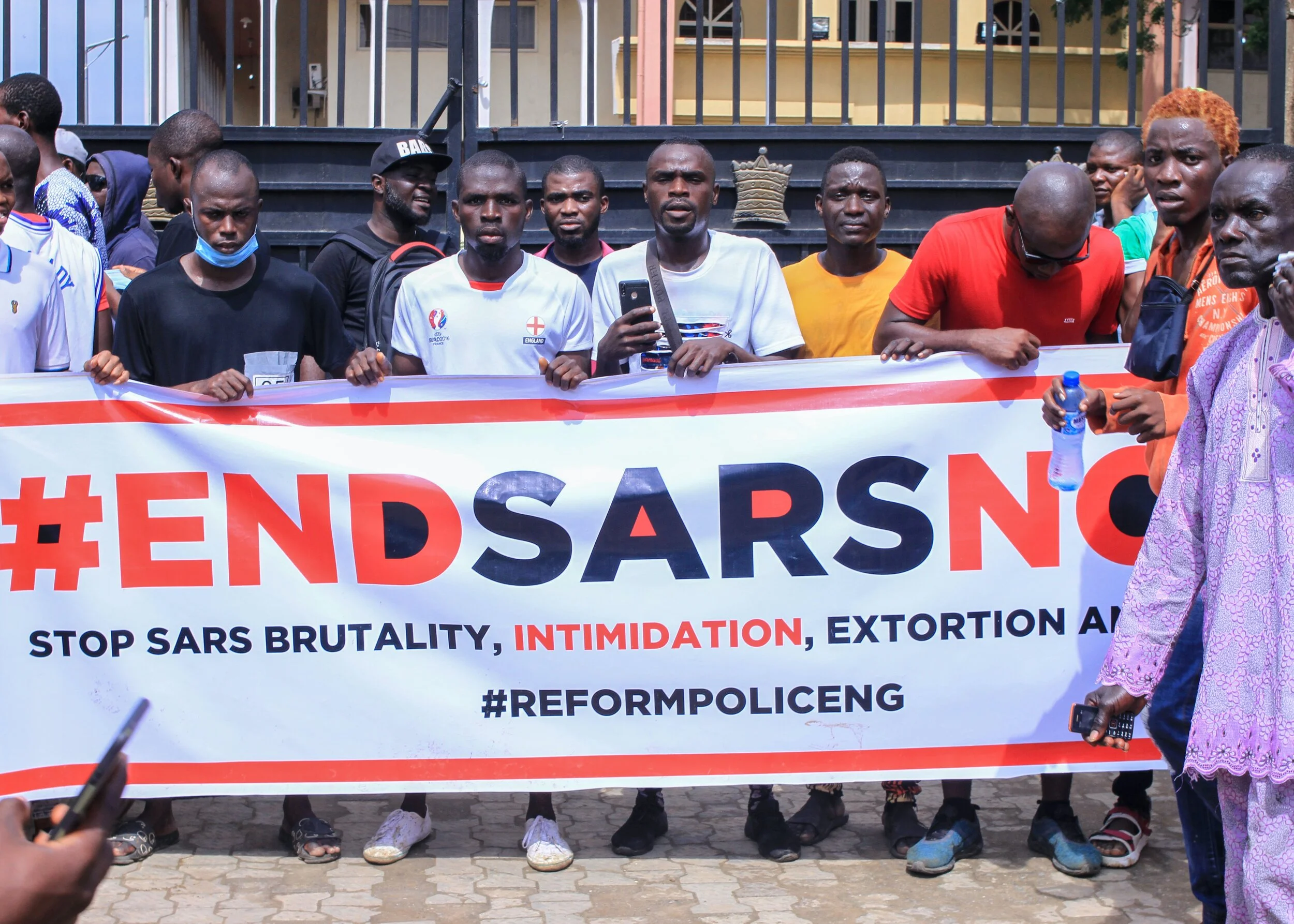
Ongoing protests in Nigeria. Tobi Ishannakie. Unsplash.

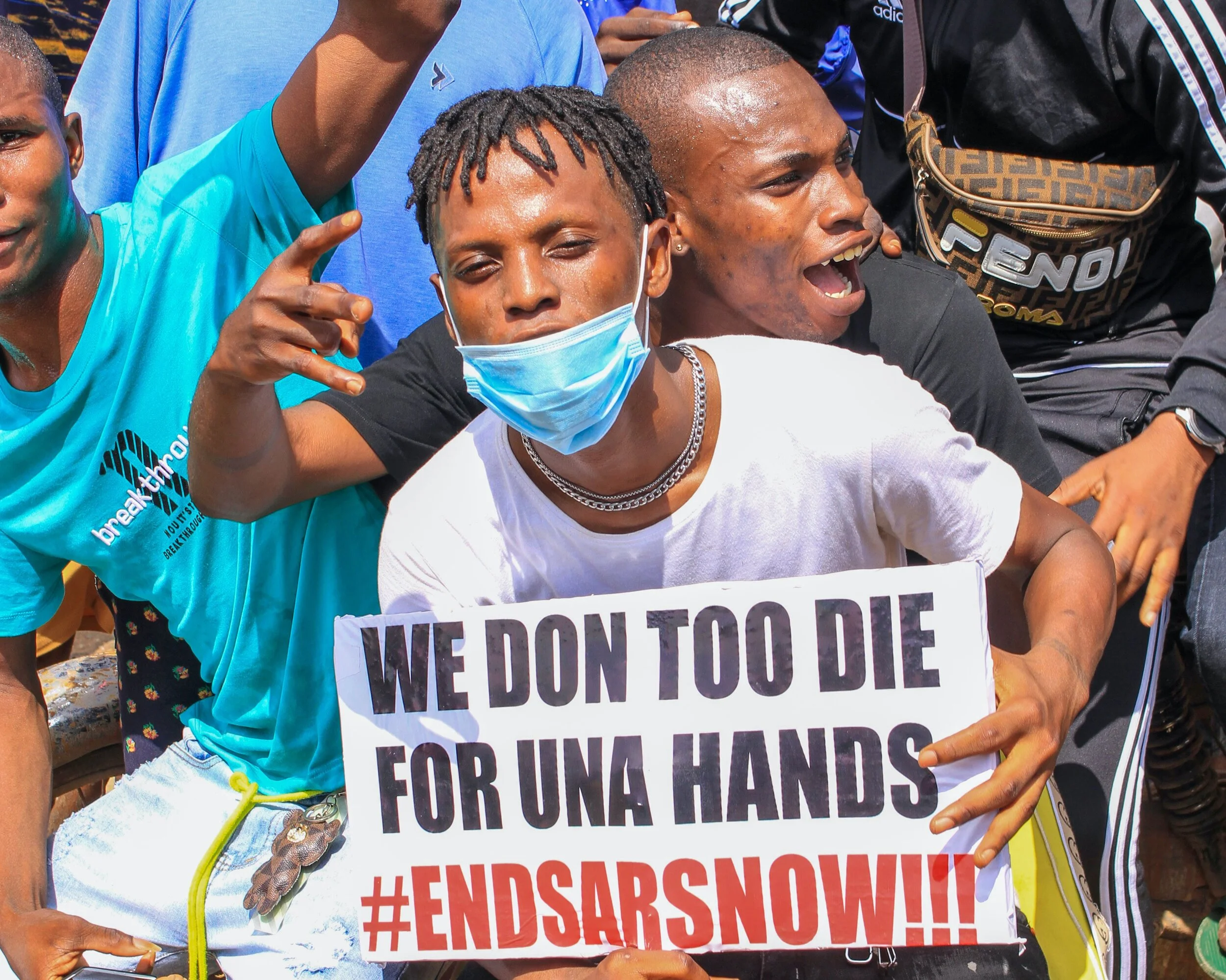
#ENDSARS: Nigerians Declare Partial Victory in Fight Against Police Brutality

October 22, 2020

Since the beginning of October, the people of Nigeria have been campaigning and protesting to disband a police force that has been intruding upon their livelihoods with violence and surveillance: the Special Anti-Robbery Squad (SARS). This police unit has been present in Nigeria for almost four decades, and it has only increased in power since its formation. The group was initially founded with the intention of fighting violent crime, including banditry and kidnapping, but now the police force has been accused of extreme profiling through aggressive targeting, especially of young Nigerian men. 

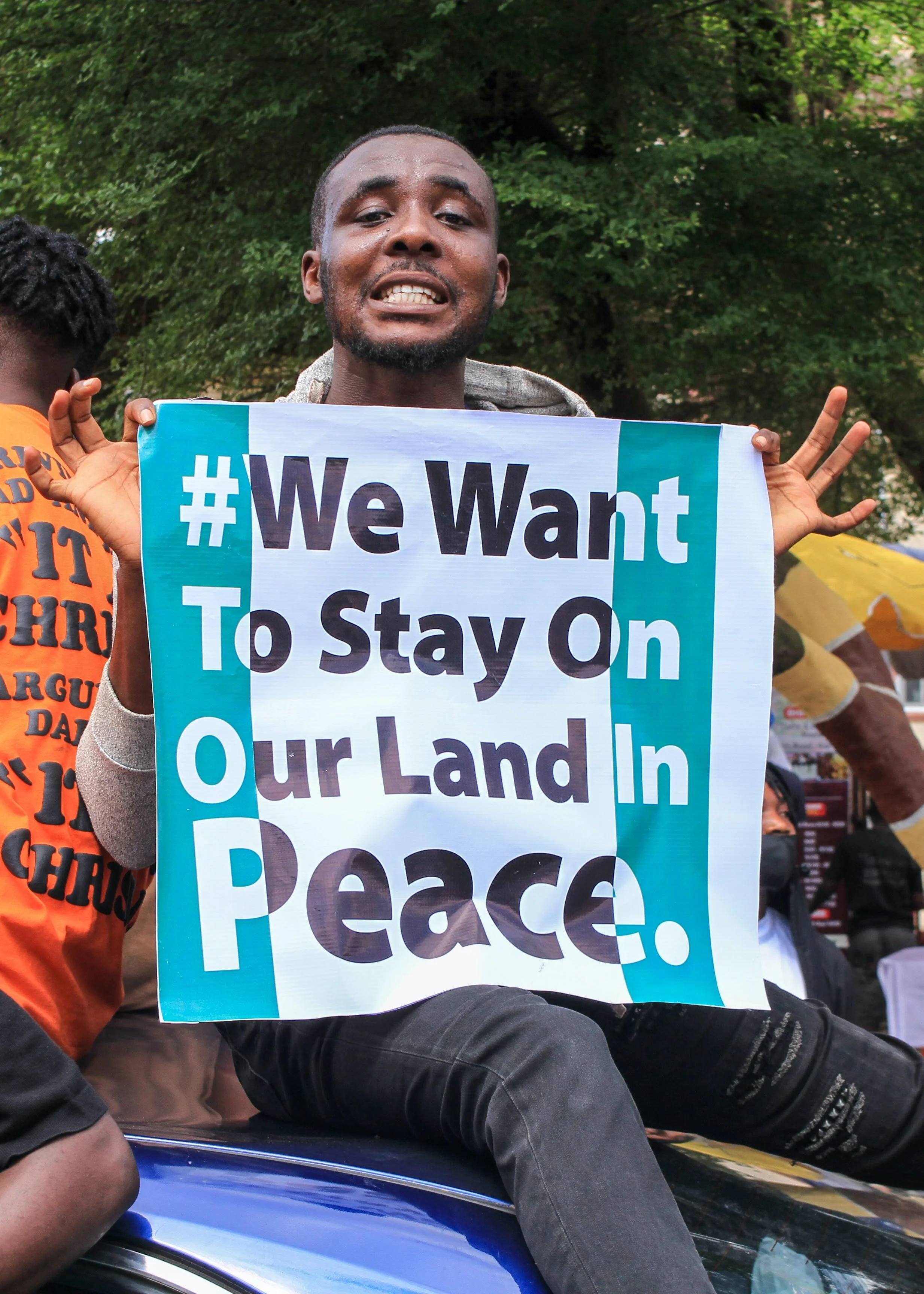
Protester encouraging peace. Tobi Ishannakie. Unsplash.

Beginning in 1984, this police force has only increased its power, and the young people of Nigeria have taken to social media to spread this information. With the hashtag #ENDSARS, young Nigerians revealed the problems they face in being subject to an unchecked police force. In addition to the social media campaigns, the extent of SARS’ crimes has brought this issue to the international forefront. The people of Nigeria have made it apparent that they live in fear of this violent police force, and they refuse to be held hostage by them. Amnesty International has backed the Nigerian people’s claims against SARS of extortion, brutality and torture. 

These protests come in the wake of over 80 violations of the 2017 Anti-Torture Act passed by the Nigerian government. Amnesty International did an internal study regarding these violations and found that there were little to no repercussions for the officers involved despite overwhelming physical evidence of scars, bruises and dried blood on victims’ bodies. In the same report, they found that many individuals were subject to beatings with weapons like sticks and machetes and were also denied medical care. 

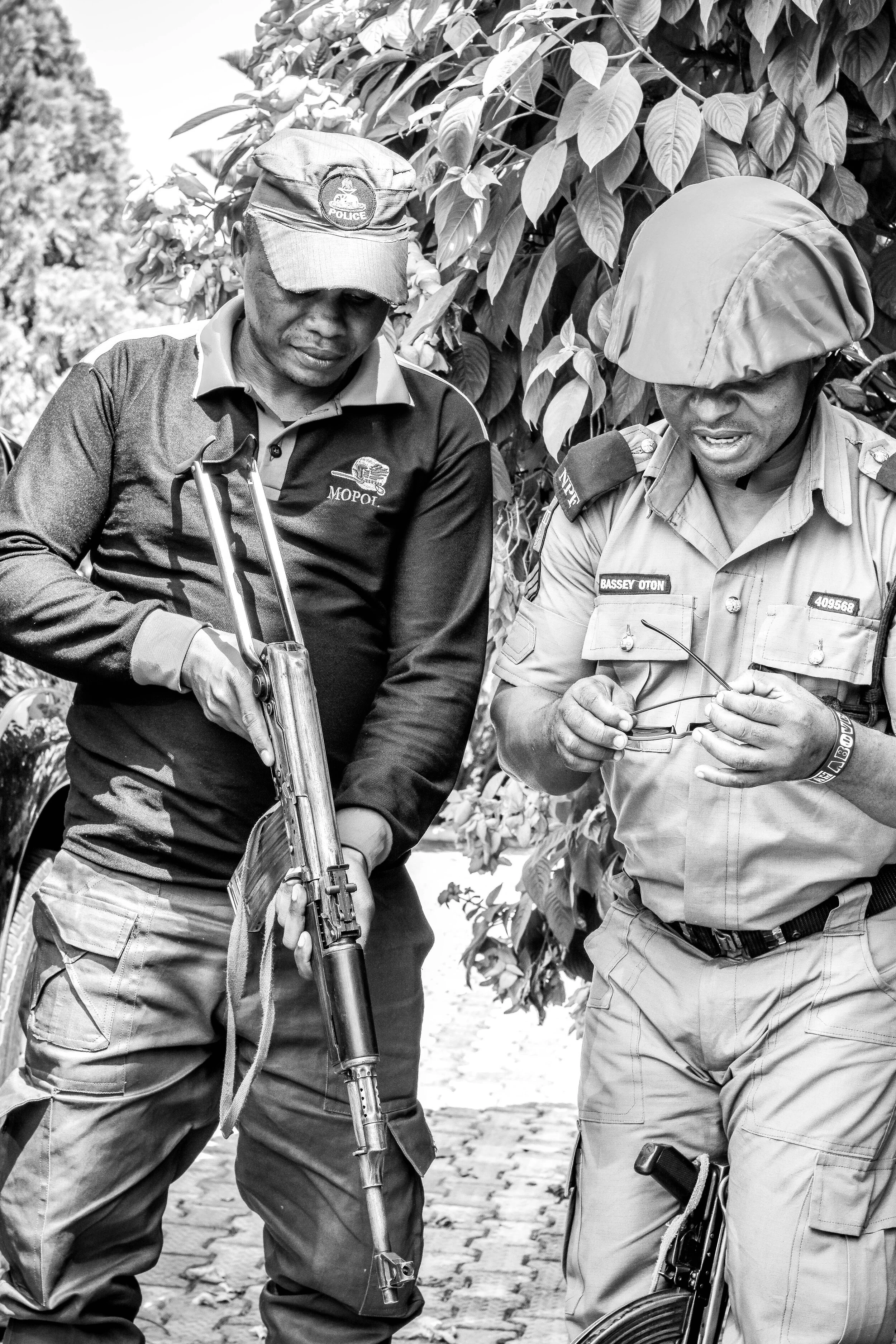
Nigerian private police officers. Iyinoluwa John Onaeko. Unsplash.

As mentioned, young men were most frequently subjected to discrimination and mistreatment by SARS. Amnesty International found that those most at risk of arrest, torture and extortion are between the ages of 17 and 30 with common accusations of being internet fraudsters or armed robbers. In terms of physical profiling, young men with dreadlocks, ripped jeans, tattoos, flashy cars or expensive gadgets are frequently targeted by SARS.

Masked protester among other protesters. Tobi Oshinnaike. Unsplash.

Now, as protests have continued, the protesters themselves are being targeted by police. In Edo state, police accused people "posing" as protesters of looting weapons and torching police buildings. As protests grow bigger and escalate in force, military presence has increased in protest areas and prisoners have escaped.

Although the government agreed to disband the unit and dissolved it on Oct. 11 with the intention of retraining the officers, protests have transitioned into calls for wider reforms. The Nigerian people see the government’s plan to retrain officers as a temporary solution to a greater problem. Protesters have been gaining mass support on social media as they use the hashtags #EndBadGovernance, #BetterNigeria and #FixNigeriaNow. The movement has transformed into a greater call for peace and a Nigeria that is safe for all. 

Renee Richardson

is currently an English student at The University of Georgia. She lives in Ellijay, Georgia, a small mountain town in the middle of Appalachia. A passionate writer, she is inspired often by her hikes along the Appalachian trail and her efforts to fight for equality across all spectrums. She hopes to further her passion as a writer into a flourishing career that positively impacts others.

Tags Nigeria, police brutality, Special Anti-Robbery Squad, SARS, violent crime, crime, kidnapping, Amnesty International, protesting, protester, government
Comment

Storm clouds gather over the Pacific, where countless workers endure slavery and abuse aboard fishing vessels. Sheila Sund. CC BY 2.0

Slavery and Torture Bait Fishermen in the Pacific

June 10, 2020

Tuna is a $22 billion industry across the Pacific Ocean, where over 60% of the world’s supply originates. That much is known. Look much farther, though, and the subject becomes quite murky.

Try finding out about the treatment of workers aboard fishing vessels, as the corporate watchdog Business & Human Rights Resource Centre did at the end of 2018. Unsurprisingly, companies were tight lipped in their responses. Out of 35 canned tuna companies and supermarkets surveyed, only four reported following due diligence procedures to prevent modern slavery in their supply chains. 20 companies, including tuna giant StarKist, refused to even respond.

There are strong reasons for the tuna companies’ silence; slavery runs rampant throughout the industry. Incredibly low oversight has allowed for the rise of third-party recruitment agencies, who often find willing employees in less developed nations. These workers, desperate for money, pay thousands of dollars to brokers who connect them with fishing vessels – for a price.

The price is high. When workers cannot pay their allotted amount, recruiters cover the costs by removing the loaned money from future wages. What fishermen are not told is that their wages are often as low as 70 cents an hour, if they are paid at all.

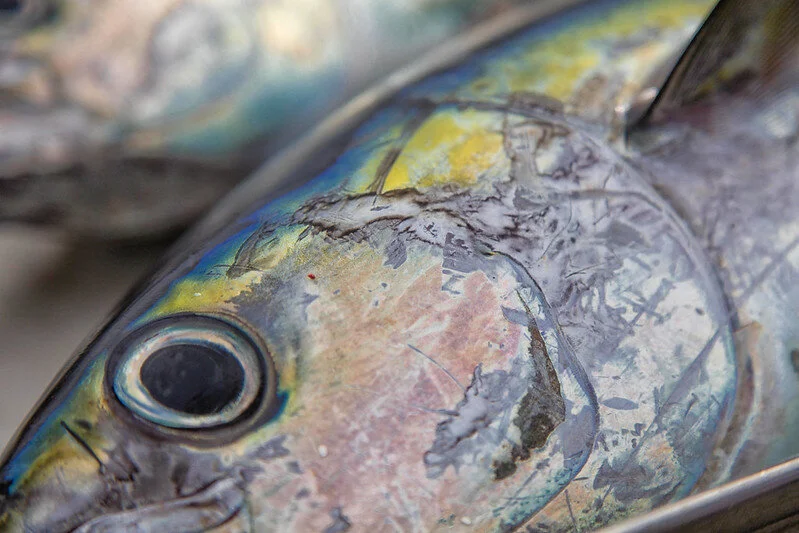
A close-up of a yellowfin tuna caught in waters off the coast of Fiji. Arnie Papp. CC BY 2.0

The story of Supriyanto, an Indonesian fisherman, shines a painful light on the system’s injustices: a recruitment company offered him a contract for $350 per month. He found out on the job, though, that $200 per month would be withheld in fees to keep him from running away. In the end, Supriyanto ended up with little over $100 per month to offer his recruiter, to whom he owed thousands. He had no chance of escape, much less with any money to spare. Supriyanto died four months after starting work on the vessel, a victim of debt bondage.

This experience is far from uncommon. Those who escape Pacific fishing boats usually tell similar tales of debt servitude. Yet somehow, the horrors run far deeper than this. While enslavement traps the workers, torture and abuse truly break their spirits.

In 2011, 32 Indonesian fishermen escaped from the South Korean-flagged Oyang 75 while it docked in New Zealand. They told horrifying tales of being physically and sexually assaulted repeatedly by Korean officers, who would chase them as they returned from the showers. Punishments on board included being fed rotten fish bait and being locked inside of refrigerators. On good days, fishermen worked for 20 hours straight. On bad days, up to 48.

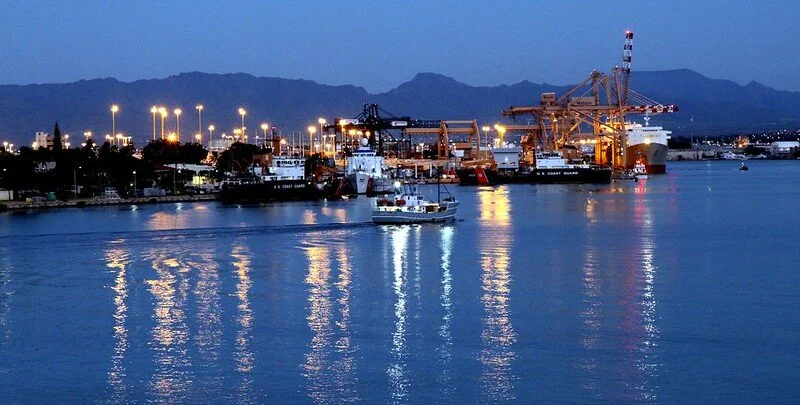
Honolulu Harbor in Hawaii is a common port of call for ships that practice slavery, as U.S. officials often look past it. Prayitno. CC BY 2.0

Nearly every country across the Pacific has turned a blind eye to the slavery on tuna boats, including the United States. Take, for example, the case of Sorihin. He paid $6,000 to a broker who connected him with the Sea Queen II, a tuna vessel that trawled the waters between American Samoa, Hawaii and California. Despite nearly losing a finger while wrestling a shark, he was denied medical attention. Safety gear aboard the ship was only offered for a price – as was escape. He finally ran away while the boat was docked in San Francisco after realizing he would never be able to fully pay back his debt to recruiters. Also, Sorihin mentioned, “If I stayed on that boat I was going to die.”

The United States has codified laws that effectively protect human traffickers and slaveholders who ply the Pacific. Tuna boats are permitted to dock at U.S. ports such as Honolulu and San Francisco if the foreign workers remain on board the vessel. Since the fishermen are denied U.S. visas, no on-board inspections are performed and the workers’ conditions rest outside of the U.S.’s responsibility. So, the inhumane treatment of workers is tolerated while the Coast Guard looks the other way.

Similar examples of forced labor, slavery, human trafficking and child labor can be found throughout the Pacific, from New Zealand and Taiwan to Fiji and Thailand. Solutions can only come through greater clarity and stronger efforts on the part of tuna producers. Unfortunately, workers’ voices continue to be silenced by powerful vessel owners, lackadaisical companies and complicit authorities. Organizations such as Human Rights at Sea, Amnesty International and Anti-Slavery International are working to bring awareness to the mistreatment of the region’s fishermen. As the public learns more about the issue, there is hope that slavery in the Pacific may end once and for all.

Stephen Kenney

is a Journalism and Political Science double major at the University of North Carolina at Chapel Hill. He enjoys sharing his passion for geography with others by writing compelling stories from across the globe. In his free time, Stephen enjoys reading, long-distance running and rooting for the Tar Heels.

Tags slavery, Pacific Ocean, fishing, StarKist, fishermen, Indonesia, South Korea, fair wage, anti-slavery, human trafficking, Amnesty International, CheckOut, Human Rights, Women and Girls, USA
Comment

Also check out...

Featured
Vietnam’s Floating Markets Are Disappearing
The Supernatural Role of Masks in Nigeria’s Yoruba Tribal Culture
Opening the World to Deaf Travelers with Lily Yu

Featured trips

Featured
Offer NGO Support While Visiting Quito
Experience Life as a Mongolian Nomad
Help Grow Organic Costa Rican Coffee

Sign up for the CATALYST newsletter

Sign up for our newsletter to get the scoop on international travel, global social impact insights, our latest podcast releases, and more from around the world, all delivered right to your inbox!

We respect your privacy.

Thank you!
Newsletter Sign Up | Advertise | Careers + Internships | Privacy Policy | Submissions | Contact Us

Copyright © 2025, MISSION MEDIA LLC. All rights reserved.