• Travel Features
  • Global Action
  • Take A Trip
  • Travel Guides
    • Podcast
    • Courses
    • Bookshop
  • About
  • Sign Up
Menu

CATALYST PLANET

  • Travel Features
  • Global Action
  • Take A Trip
  • Travel Guides
  • Discover
    • Podcast
    • Courses
    • Bookshop
  • About
  • Sign Up

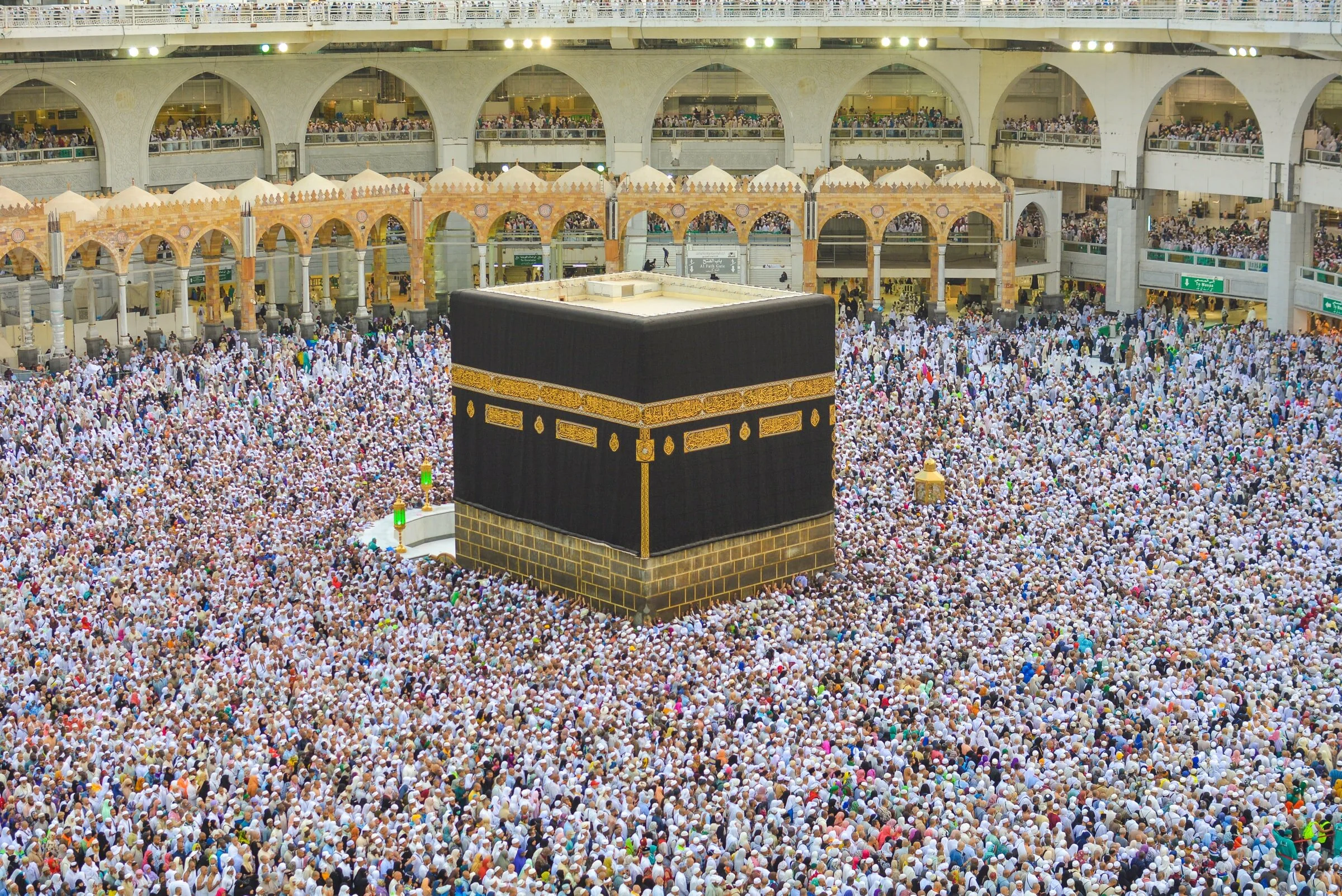
One of the rituals of hajj includes walking around the Kaaba seven times. Adli Wahid. Unsplash.

Hajj Canceled for Most of World’s Muslims Due to COVID-19

July 23, 2020

Every year, more than 2 million Muslims from all over the world perform the special pilgrimage called hajj in Saudi Arabia. Performing hajj is an extremely important ritual for Muslims as it is one of the five pillars of Islam, which make up the core practices and beliefs. It is obligatory for Muslims to make the annual pilgrimage at least once in their lifetime as long as they are able-bodied and financially able to afford the trip.

In a rare move, Saudi Arabia announced on July 6 that hajj would be canceled for the majority of the world’s Muslims—the first time in recent years that it has been disrupted by an epidemic. This is also the first time that Saudi Arabia has significantly curtailed the pilgrimage since the country was founded in 1932—only people living in Saudi Arabia may perform the pilgrimage this year. “Hajj Minister Mohammad Benten said the government is still in the process of reviewing the number of overall pilgrims allowed, saying they could be ‘around 1,000, maybe less, maybe a little more,’” according to Al-Jazeera. Furthermore, no one over the age of 65 will be allowed to make the pilgrimage this year. Authorities released strict guidelines including a ban on touching the Kaaba, one of the holiest sites in Islam.

In March, the Saudi government made the decision to enforce travel restrictions into the Muslim holy sites of Mecca and Medina for umrah, a pilgrimage that can be performed at any time of the year that is not obligatory for Muslims as hajj is. While that decision caused frustration for some, hajj is sacred and typically a once-in-a-lifetime opportunity for Muslims. As such, the decision to cancel hajj is devastating to many who were planning to go.

For the rest of the world’s Muslims, fears of spreading the coronavirus during the upcoming Eid al-Adha holiday has prompted leaders to urge Muslims to continue following coronavirus guidelines.

Eid al-Adha marks the completion of the annual five to six day pilgrimage, and takes place on the tenth day of Dhul-Hijja, the last month of the Islamic lunar calendar. Eid al-Adha serves as a remembrance of the willingness of the prophet Ibrahim (Abraham to Christians and Jews) to sacrifice his son to God. The holiday does not celebrate bloodshed in order to please God—a sheep was provided at the last moment—but instead honors giving up something beloved and promotes charity and equality. To commemorate God’s intervention, an animal is sacrificed (typically a sheep, but goats, camels and cows are also acceptable) and the meat divided into three portions—one-third goes to the poor and needy, one-third to friends and family, and the final portion is reserved for one’s own household.

Muslim countries’ leaders worry that Eid al-Adha celebrations will cause a spike in COVID-19 cases as people travel to animal markets and slaughterhouses to perform the sacrifice. The head of Istanbul’s Chamber of Veterinary Surgeons, Murat Arslan, has warned that 1 million people could be at risk of contracting the virus in Turkey. As such, he said face masks should be made mandatory and disposable plastic shoe covers should be worn upon entering the marketplace, and buyers and sellers should avoid shaking hands upon completing a sale. Pakistan’s National Institute of Health is urging the public to stick to the coronavirus guidelines, especially on Eid al-Adha. The Pakistani government issued new rules for the holiday, including instructing people to avoid greeting friends and relatives on Eid al-Adha and urging sellers to arrange online purchases when possible, according to The Washington Post. Oman announced a complete lockdown beginning on July 25 and ending on Aug. 8, a drastic effort to prevent a spike in positive COVID-19 cases.

Hajj begins on July 29 with Eid al-Adha being celebrated on July 31 by the majority of Muslims.
Asiya Haouchine

is an Algerian-American writer who graduated from the University of Connecticut in May 2016, earning a BA in journalism and English. She was an editorial intern and contributing writer for Warscapes magazine and the online/blog editor for Long River Review. She is currently studying for her Master’s in Library and Information Science. @AsiyaHaou
Tags Hajj, muslim, Saudi Arabia, epidemic, Mecca, holy city, sacred, pilgrimage, Pakistan, holiday, lockdown, Turkey, market, COVID-19, Coronavirus
1 Comment

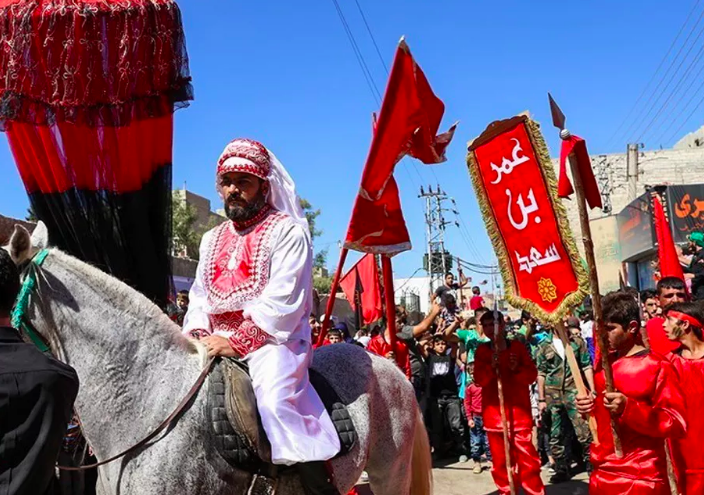
Ashura in Syria. Tasnim News Agency, CC BY-SA

What is Ashura? How this Shiite Muslim Holiday Inspires Millions

September 9, 2019

Tens of millions of Shiite Muslims from around the world will visit Iraq on Sept. 10 this year to see the shrines of Hussain, grandson of Prophet Mohammed, and his brother Abbas on the day of “Ashura.”

This annual pilgrimage marks the 10th day of Muharram, the first month of the Islamic new year. As the Islamic calendar is a lunar one, the day of Ashura changes from year to year.

Muslims visit the shrines to observe the martyrdom day of Hussain, who was killed in the desert of Karbala in today’s Iraq in A.D. 680. Shiite Muslims believe that Hussain was their third imam – a line of 12 divinely appointed spiritual and political successors.

Muharram may be an ancient festival, but as my research tracing the modern-day impact of Islamic pilgrimage shows, its meaning has changed over the centuries. What was once a commemoration of martyrdom today inspires much more, including social justice work around the globe.

Martyrdom of Hussain

The story of Muharram dates back 13 centuries, to events that followed the death of Prophet Mohammed.

After the prophet’s death in A.D. 632, a dispute emerged over who would inherit the leadership of the Muslim community and the title of caliph, or “deputy of God.” A majority of Muslims backed Abu Bakr, a close companion of the prophet, to become the first caliph. A minority wanted the prophet’s cousin and son-in-law, Ali. Those that supported his claim later came to be called Shiite Muslims.

Even if Ali was not made the caliph, Shiite Muslims would consider Ali their first imam – a leader divinely appointed by God. The title of imam would be passed on to his sons and his descendants.

Political leadership largely remained out of the hands of Shiite Imams. They would not be caliphs, but Shiites came to believe that their imam was the true leader to be followed.

By the time Ali’s second son, Hussain, came to be the third imam, divisions between the caliph and the imam had further deepened.

In A.D. 680, during the holy month of Muharram, a caliph of the Umayyad dynasty, Yazīd, ordered Hussain to pledge allegiance to him and his caliphate – a dynasty that ruled the Islamic world from A.D. 661 to 750.

Hussain refused because he believed Yazīd’s rule to be unjust and illegitimate.

His rejection resulted in a massive 10-day standoff at Karbala, in modern-day Iraq, between Umayyad’s large army and Hussain’s small band, which included his half-brother, wives, children, sisters and closest followers.

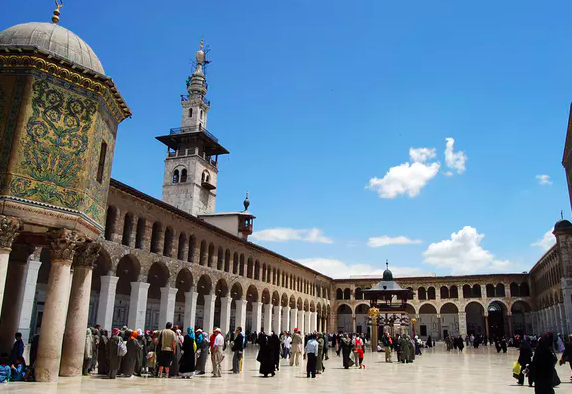
The Umayyad Mosque in Damascus. Alessandra Kocman, CC BY-NC-ND

The Umayyad army cut off food and water for Hussain and his companions. And on the day of Ashura, Hussain was brutally killed. Among the men, only Hussain’s sick son was spared. Women were unveiled – a violation of their honor as the family members of the prophet – and paraded to Damascus, the seat of Umayyad rule.

Passion plays and performances

This history is reenacted throughout the world on the day of Ashura.

In Iraq, millions of pilgrims fill the streets to visit the shrines, chanting poems of lamentation, and witness a reenactment of violence in Karbala and the capture of the women and children.


From New York and London to Hyderabad and Melbourne, thousands take part in Ashura processions carrying replicas of Hussain’s battle standard and following a white horse. This symbolizes Hussain’s riderless horse returning to the camp after his martyrdom.

Persian passion plays known as “taziyeh,” music dramas of the many martyrs and tragedies of Karbala, are performed across Iran and many other countries. Taziyeh performances are meant to evoke deep emotions of grief in the audience.

A powerful set of themes

Numerous historians and anthropologists have explored how communities across time and space have adapted the story of Karbala or the rituals around Ashūrā.

In the 16th century, a vast majority of the population across Persia, or today’s Iran, would be converted to Shiite Muslims. In this region, the passion plays evolved into a popular form of religious and artistic expression.

The character of Zainab, the Prophet Mohammed’s granddaughter, has also come to play a central role in remembrance of the Karbala story.

Scholars have drawn attention to speeches in which Zainab denounced the violence in Karbala and lauded Hussain’s “martyrdom.”

Today, Zainab is seen as a strong female model of resistance.

In the Iranian Revolution in 1979, the story of Karbala became a rallying point for opponents of the shah, who were fighting against the shah’s brutal and oppressive regime. They compared the shah to the caliph Yazīd and argued that ordinary Iranians had to stand up to an oppressor, just like Hussain had.

Zainab’s resistance to oppression helped emphasize the role of women in Islamic society.

Anthropologist Michael Fischer calls this the “Karbala paradigm” – a story that captures a powerful set of themes, including people standing up to the state and fighting for justice and morality.

Inspiring change?

Today the story of Karbala has become a powerful tool of fight for social justice in Muslim communities.

“Who is Hussain?,” a social movement with chapters in over 60 cities worldwide, carries out charitable activities and blood donations in the name of Hussain. Volunteers are encouraged to organize around events that will be meaningful in their communities and will tie into social justice issues that Hussain is believed to have fought for.

In 2018, local volunteers donated tens of thousands of bottles of water in Flint, Michigan in remembrance of Hussain and his companions, who were denied water for three days before they were killed.

As historian Yitzhak Nakash points out, the tragedy of Karbala gives Shiite Muslims a common narrative to pass on to the next generations. And commemorating it in multiple ways is an part of their unique identity.

NOORZEHRA ZAIDI is an Assistant Professor of History at the University of Maryland, Baltimore County.

THIS ARTICLE WAS ORIGINALLY PUBLISHED ON THE CONVERSATION

Tags Ashura, holiday, festivity, tradition, Shiite, Muslim, Islam, religion, religious, Arts and Culture
Comment

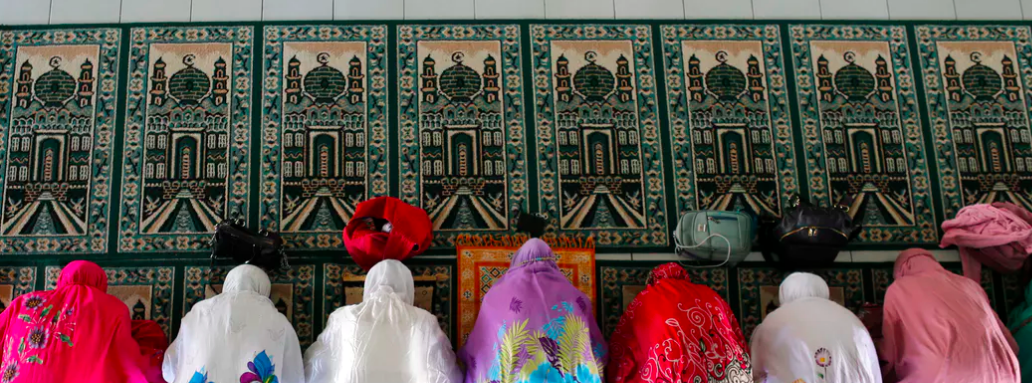
Women pray at a mosque during the first day of the holy fasting month of Ramadan on May 6 in Bali, Indonesia. AP Photo/Firdia Lisnawati

What Ramadan Means to Muslims: 4 Essential Reads

June 6, 2019

During the month of Ramadan, Muslims around the world will not eat or drink from dawn to sunset. Muslims believe that the sacred text of Quran was first revealed to Prophet Muhammad in the final 10 nights of Ramadan.

Here are four ways to understand what Ramadan means for Muslims, and in particular for American Muslims.

1. Importance of Ramadan

Ramadan is one of the five pillars of Islam. Each pillar denotes an obligation of living a good Muslim life. The others include reciting the Muslim profession of faith, daily prayer, giving alms to the poor and making a pilgrimage to Mecca.

Mohammad Hassan Khalil, associate professor of religious studies and director of the Muslim Studies Program at Michigan State University, explains that the Quran states that fasting was prescribed for Muslims so that they could be conscious of God. He writes,

“By abstaining from things that people tend to take for granted (such as water), it is believed, one may be moved to reflect on the purpose of life and grow closer to the creator and sustainer of all existence.”

He also notes that for many Muslims, fasting is a spiritual act that allows them to understand the condition of the poor and thus develop more empathy.

2. Halal food

During Ramadan, when breaking fast, Muslims will eat only foods that are permissible under Islamic law. The Arabic word for such foods, writes religion scholar Myriam Renaud, is “halal.”

Renaud explains that Islamic law draws on three religious sources to determine which foods are halal. These include “passages in the Quran, the sayings and customs of the Prophet Muhammad, which were written down by his followers and are called ‘Hadith’ and rulings by recognized religious scholars.”

In the United States, some states such as California, Illinois, Michigan, Minnesota, New Jersey and Texas restrict the use of halal label for foods that meet Islamic religious requirements. Various Muslim organizations also oversee the production and certification of halal products, she writes.

3. Puerto Rican Muslims

In Puerto Rico, where many have been reverting to the religion of their ancestors – Islam – Ramadan could mean combining their identity as a Puerto Rican and as a Muslim.

Ken Chitwood, a Ph.D. candidate at the University of Florida, explainsthat Muslims first came to Puerto Rico as part of the transatlantic colonial exchange between Spain, Portugal and the New World. There is evidence, he writes, of the first Muslims arriving somewhere around the 16th century.

In his research, he found Puerto Rican Muslims in search of a “Boricua Islamidad” – “a unique Puerto Rican Muslim identity that resists complete assimilation to Arab cultural norms even as it reimagines and expands what it means to be Puerto Rican and a Muslim.”

He saw the expression of this identity in the food as Puerto Rican Muslims broke fast – “a light Puerto Rican meal of tostones – twice-fried plantains.”

4. Jefferson’s Quran

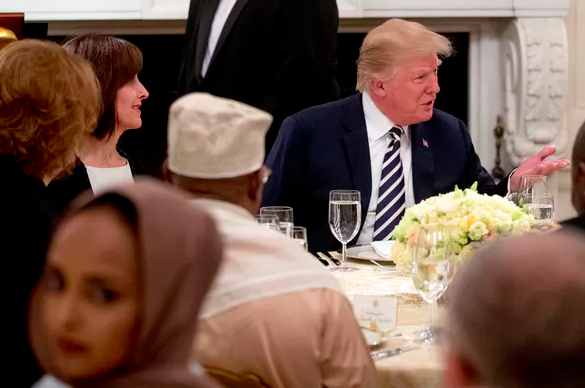
Ramadan dinner at White House in 2018. AP Photo/Andrew Harnik

With an estimated 3.3 million American Muslims, Ramadan is celebrated each year at the White House, except for one year in 2017. Scholar Denise A. Spellberg explains that the tradition was started by Hillary Clinton when she was the first lady.

She writes that “Islam’s presence in North America dates to the founding of the nation, and even earlier.” Among the most notable of the key American Founding Fathers who demonstrated an interest in the Muslim faith was Thomas Jefferson. Her research shows that Jefferson bought a copy of the Quran as a 22-year-old law student in Williamsburg, Virginia, 11 years before drafting the Declaration of Independence. And as she says,

“The purchase is symbolic of a longer historical connection between American and Islamic worlds, and a more inclusive view of the nation’s early, robust view of religious pluralism.”

KALPANA JAIN is a Senior Religion and Ethics Editor.

THIS ARTICLE WAS ORIGINALLY PUBLISHED ON THE CONVERSATION

Tags Ramadan, holiday, celebration, religion, Muslim, Islam, Arts and Culture
Comment

Also check out...

Featured
Vietnam’s Floating Markets Are Disappearing
The Supernatural Role of Masks in Nigeria’s Yoruba Tribal Culture
Opening the World to Deaf Travelers with Lily Yu

Featured trips

Featured
Offer NGO Support While Visiting Quito
Experience Life as a Mongolian Nomad
Help Grow Organic Costa Rican Coffee

Sign up for the CATALYST newsletter

Sign up for our newsletter to get the scoop on international travel, global social impact insights, our latest podcast releases, and more from around the world, all delivered right to your inbox!

We respect your privacy.

Thank you!
Newsletter Sign Up | Advertise | Careers + Internships | Privacy Policy | Submissions | Contact Us

Copyright © 2025, MISSION MEDIA LLC. All rights reserved.