• Travel Features
  • Global Action
  • Take A Trip
  • Travel Guides
    • Podcast
    • Courses
    • Bookshop
  • About
  • Sign Up
Menu

CATALYST PLANET

  • Travel Features
  • Global Action
  • Take A Trip
  • Travel Guides
  • Discover
    • Podcast
    • Courses
    • Bookshop
  • About
  • Sign Up

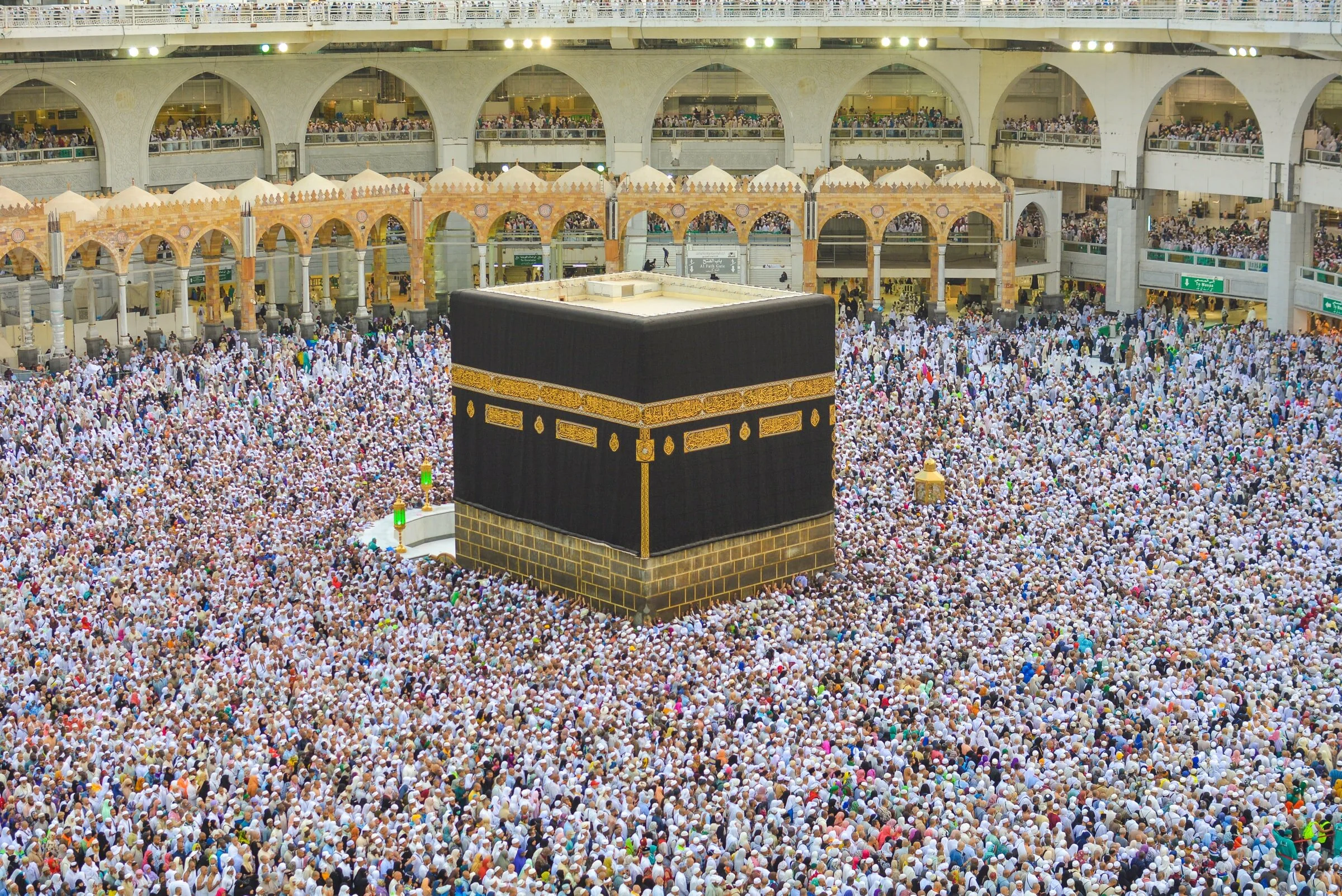
One of the rituals of hajj includes walking around the Kaaba seven times. Adli Wahid. Unsplash.

Hajj Canceled for Most of World’s Muslims Due to COVID-19

July 23, 2020

Every year, more than 2 million Muslims from all over the world perform the special pilgrimage called hajj in Saudi Arabia. Performing hajj is an extremely important ritual for Muslims as it is one of the five pillars of Islam, which make up the core practices and beliefs. It is obligatory for Muslims to make the annual pilgrimage at least once in their lifetime as long as they are able-bodied and financially able to afford the trip.

In a rare move, Saudi Arabia announced on July 6 that hajj would be canceled for the majority of the world’s Muslims—the first time in recent years that it has been disrupted by an epidemic. This is also the first time that Saudi Arabia has significantly curtailed the pilgrimage since the country was founded in 1932—only people living in Saudi Arabia may perform the pilgrimage this year. “Hajj Minister Mohammad Benten said the government is still in the process of reviewing the number of overall pilgrims allowed, saying they could be ‘around 1,000, maybe less, maybe a little more,’” according to Al-Jazeera. Furthermore, no one over the age of 65 will be allowed to make the pilgrimage this year. Authorities released strict guidelines including a ban on touching the Kaaba, one of the holiest sites in Islam.

In March, the Saudi government made the decision to enforce travel restrictions into the Muslim holy sites of Mecca and Medina for umrah, a pilgrimage that can be performed at any time of the year that is not obligatory for Muslims as hajj is. While that decision caused frustration for some, hajj is sacred and typically a once-in-a-lifetime opportunity for Muslims. As such, the decision to cancel hajj is devastating to many who were planning to go.

For the rest of the world’s Muslims, fears of spreading the coronavirus during the upcoming Eid al-Adha holiday has prompted leaders to urge Muslims to continue following coronavirus guidelines.

Eid al-Adha marks the completion of the annual five to six day pilgrimage, and takes place on the tenth day of Dhul-Hijja, the last month of the Islamic lunar calendar. Eid al-Adha serves as a remembrance of the willingness of the prophet Ibrahim (Abraham to Christians and Jews) to sacrifice his son to God. The holiday does not celebrate bloodshed in order to please God—a sheep was provided at the last moment—but instead honors giving up something beloved and promotes charity and equality. To commemorate God’s intervention, an animal is sacrificed (typically a sheep, but goats, camels and cows are also acceptable) and the meat divided into three portions—one-third goes to the poor and needy, one-third to friends and family, and the final portion is reserved for one’s own household.

Muslim countries’ leaders worry that Eid al-Adha celebrations will cause a spike in COVID-19 cases as people travel to animal markets and slaughterhouses to perform the sacrifice. The head of Istanbul’s Chamber of Veterinary Surgeons, Murat Arslan, has warned that 1 million people could be at risk of contracting the virus in Turkey. As such, he said face masks should be made mandatory and disposable plastic shoe covers should be worn upon entering the marketplace, and buyers and sellers should avoid shaking hands upon completing a sale. Pakistan’s National Institute of Health is urging the public to stick to the coronavirus guidelines, especially on Eid al-Adha. The Pakistani government issued new rules for the holiday, including instructing people to avoid greeting friends and relatives on Eid al-Adha and urging sellers to arrange online purchases when possible, according to The Washington Post. Oman announced a complete lockdown beginning on July 25 and ending on Aug. 8, a drastic effort to prevent a spike in positive COVID-19 cases.

Hajj begins on July 29 with Eid al-Adha being celebrated on July 31 by the majority of Muslims.
Asiya Haouchine

is an Algerian-American writer who graduated from the University of Connecticut in May 2016, earning a BA in journalism and English. She was an editorial intern and contributing writer for Warscapes magazine and the online/blog editor for Long River Review. She is currently studying for her Master’s in Library and Information Science. @AsiyaHaou
Tags Hajj, muslim, Saudi Arabia, epidemic, Mecca, holy city, sacred, pilgrimage, Pakistan, holiday, lockdown, Turkey, market, COVID-19, Coronavirus
1 Comment

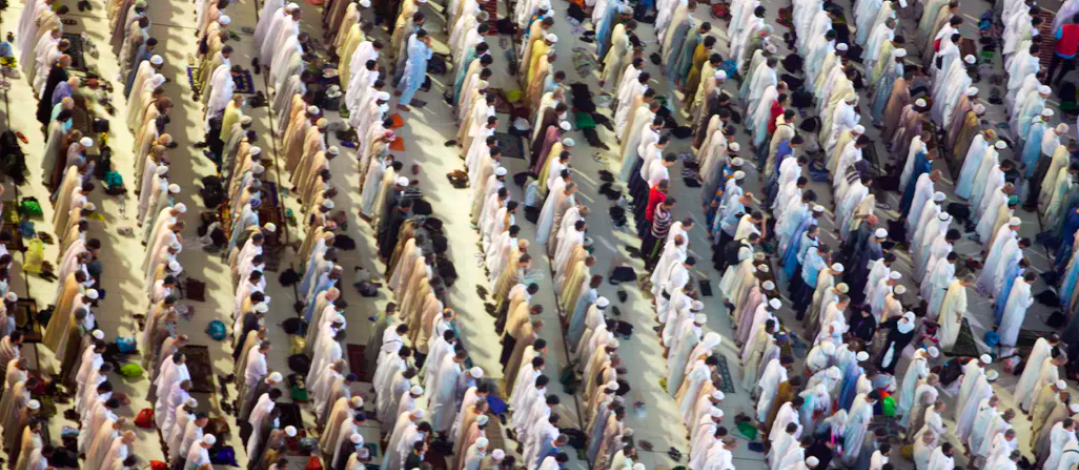
Muslim pilgrims pray at the Grand Mosque, ahead of the annual Hajj pilgrimage in Mecca, Saudi Arabia, in August 2017. AP Photo/Khalil Hamra

What is the Hajj?

October 10, 2018

Nearly 2 million Muslim pilgrims are gathering in the holy city of Mecca in Saudi Arabia for the Hajj. This five-day pilgrimage is a once-in-a-lifetime obligation for all Muslims who have the physical and financial ability to undertake the journey.

What is the religious and political significance of this annual pilgrimage?

The fifth pillar

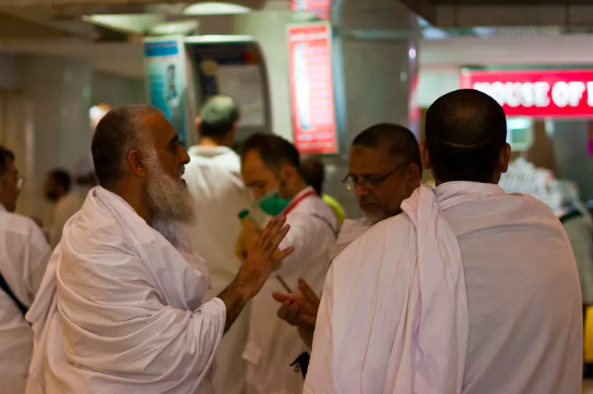
Millions of Muslims come from countries as diverse as Indonesia, Russia, India, Cuba, Fiji, the United States and Nigeria – all dressed in plain white garments.

Pilgrims dressed in white garments. Al Jazeera English, CC BY-NC

Men wear seamless, unstitched clothing, and women, white dresses with headscarves. The idea is to dress plainly so as to mask any differences in wealth and status.

The pilgrimage is considered to be the fifth pillar of Islamic practice. The other four are the profession of faith, five daily prayers, charity and the fast of Ramadan.

The first day of the Hajj

The rites of the Hajj are believed to retrace events from the lives of prominent prophets such as Ibrahim and Ismail.

Pilgrims start by circling the “Holy Kaaba,” the black, cube-shaped house of God, at the center of the most sacred mosque in Mecca, seven times. The Kaaba occupies a central place in the lives of Muslims. Muslims, all over the world, are expected to turn toward the Kaaba when performing their daily prayers.

The Quran tells the story of Ibrahim, who when commanded by God, agreed to sacrifice his son, Ismail. Muslims believe the Kaaba holds the black stone upon which Ibrahim was to carry out his oath.

Pilgrims are bound by specific rules regarding going around the Kaaba. They may kiss, touch or approach the Kaaba during the pilgrimage as a sign of their devotion.

In performing these rituals, they join a long line of pilgrims to Mecca – including Prophet Muhammad, who circled the Kaaba.

Pilgrims then proceed to a ritual walk – about 100 meters from the Kaaba – to hills known as “Safa” and “Marwah.” Here they re-create another significant event recorded in the Quran.

The story goes that Ibrahim was granted a son by God through his Egyptian slave girl Hajar. After the birth of Ismail, God instructed Ibrahim to take Hajar and her newborn son out into the desert and leave them there. Ibrahim left them near the present-day location of the Kaaba. Ismail cried out with thirst and Hajar ran between two hills, looking for water until she turned to God for help.

God rewarded Hajar for her patience and sent his angel Jibreel to reveal a spring, which today is known as “Zamzam Well.” Pilgrims drink water from the sacred well and may take some home for blessings.

The second day of the hajj

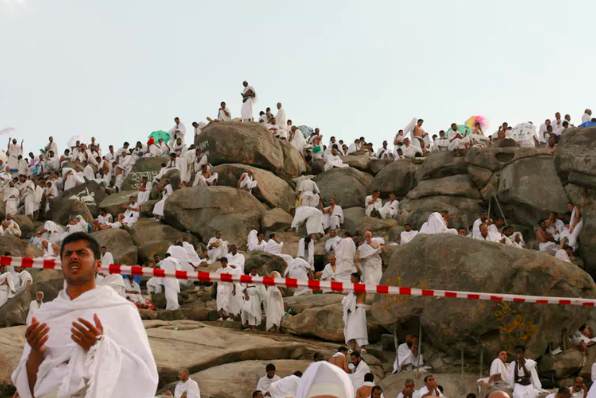
Pilgrims praying on Arafat. Al Jazeera English, CC BY-SA

The hajj “climaxes” with a sojourn in the plains of Arafat near Mecca. There, pilgrims gather in tents, spend time with one another and perform prayers. Some pilgrims will ascend a hill known as the “Mount of Mercy,” where Prophet Muhammad delivered the farewell sermontoward the end of his life.

They then proceed to an open plain near Mecca, often a highlight of the journey for many pilgrims. Muslims believe that the spirit of God comes closer to Earth in this place at the time of the pilgrimage.

As a scholar of global Islam, during my fieldwork I have interviewed those who have gone on the Hajj. They have described to me their personal experiences of standing in the plains of Arafat or circling the Kaaba with fellow Muslims and feeling a close communion with God.

Final three days

Afterwards, pilgrims move to Mina, also known as the Tent City where more than 100,000 tents house the millions of pilgrims about 5 kilometers from the holy city of Mecca.

Here they recall how Satan tried to tempt Ibrahim to disobey God’s call to sacrifice Ismail. Ibrahim, however, remained unmoved and informed Ismail, who was willing to be offered to God. To reenact Ibrahim’s rebuff of Satan’s temptation, pilgrims throw small stones at a stone pillar.

They then proceed to follow Ibrahim in the act of sacrifice. The Quran says just as Ibrahim attempted to kill his son, God intervened and a ram was killed in place of Ismail. In remembrance, Muslims all over the world ritually slaughter an animal on this day. The “festival of the sacrifice” is known as Eid al-Adha.

Pilgrims stoning the devil in Mina. Al Jazeera English, CC BY-SA

Many pilgrims spend the next few days in Mina, where they repeat some of the rituals. It is where they start to transition to their worldly life by putting on their everyday clothes.

Muslims believe that a proper performance of the Hajj can absolve them of any previous sins. However, they also believe that just undertaking the pilgrimage is not enough: It is up to God to judge, based on the intention of those undertaking the pilgrimage.

Creating one Muslim community

Of course, the pilgrimage does not take place in a political void. The Hajj is a massive organizational project for the Saudi authorities. Issues concerning crowd management, security, traffic and tensions constantly plague the successful organization of the event. A tragic stampede in 2015 left over 700 dead. Since then Saudi authorities review preparations even more carefully.

There are other tensions too that come up at this time: Some Shiagovernments such as Iran, for example, have leveled charges alleging discrimination by Sunni Saudi authorities.

This year, Muslims from Canada are concerned about logistics traveling back from the Hajj. Saudi Arabia has suspended all direct flights to Canada in a diplomatic feud sparked by tweets related to the Kingdom’s human rights violations.

To address such issues, Muslims in the past have called to put together an international, multi-partisan committee to organize the pilgrimage. Perhaps that could help avoid regional or sectarian conflicts. The Hajj, after all, is any individual Muslim’s single most symbolic ritual act that reflects the ideal of unity.

By requiring Muslims to don the same clothes, pray in the same space and perform the same rituals, the Hajj has the potential to unite a global Muslim community across national and class boundaries.

KEN CHITWOOD is a Ph.D. Candidate of Religion in the Americas and Global Islam at the University of Florida

THIS ARTICLE WAS ORIGINALLY PUBLISHED ON THE CONVERSATION

Tags Islam, Hajj, Pilgramage, pilgrim, muslim, mosque, religion, Arts and Culture
Comment

Also check out...

Featured
Vietnam’s Floating Markets Are Disappearing
The Supernatural Role of Masks in Nigeria’s Yoruba Tribal Culture
Opening the World to Deaf Travelers with Lily Yu

Featured trips

Featured
Offer NGO Support While Visiting Quito
Experience Life as a Mongolian Nomad
Help Grow Organic Costa Rican Coffee

Sign up for the CATALYST newsletter

Sign up for our newsletter to get the scoop on international travel, global social impact insights, our latest podcast releases, and more from around the world, all delivered right to your inbox!

We respect your privacy.

Thank you!
Newsletter Sign Up | Advertise | Careers + Internships | Privacy Policy | Submissions | Contact Us

Copyright © 2025, MISSION MEDIA LLC. All rights reserved.