• Travel Features
  • Global Action
  • Take A Trip
  • Travel Guides
    • Podcast
    • Courses
    • Bookshop
  • About
  • Sign Up
Menu

CATALYST PLANET

  • Travel Features
  • Global Action
  • Take A Trip
  • Travel Guides
  • Discover
    • Podcast
    • Courses
    • Bookshop
  • About
  • Sign Up

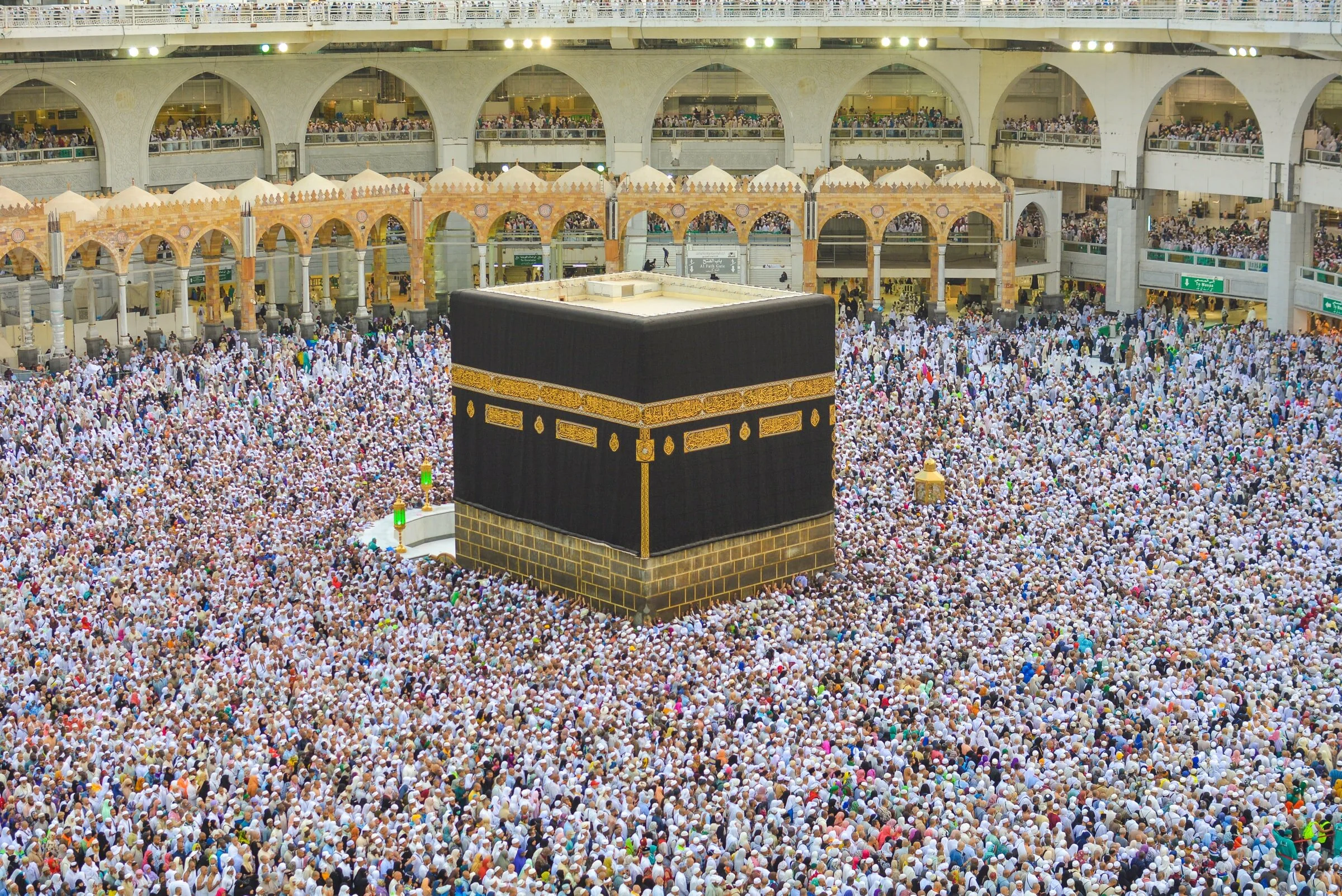
One of the rituals of hajj includes walking around the Kaaba seven times. Adli Wahid. Unsplash.

Hajj Canceled for Most of World’s Muslims Due to COVID-19

July 23, 2020

Every year, more than 2 million Muslims from all over the world perform the special pilgrimage called hajj in Saudi Arabia. Performing hajj is an extremely important ritual for Muslims as it is one of the five pillars of Islam, which make up the core practices and beliefs. It is obligatory for Muslims to make the annual pilgrimage at least once in their lifetime as long as they are able-bodied and financially able to afford the trip.

In a rare move, Saudi Arabia announced on July 6 that hajj would be canceled for the majority of the world’s Muslims—the first time in recent years that it has been disrupted by an epidemic. This is also the first time that Saudi Arabia has significantly curtailed the pilgrimage since the country was founded in 1932—only people living in Saudi Arabia may perform the pilgrimage this year. “Hajj Minister Mohammad Benten said the government is still in the process of reviewing the number of overall pilgrims allowed, saying they could be ‘around 1,000, maybe less, maybe a little more,’” according to Al-Jazeera. Furthermore, no one over the age of 65 will be allowed to make the pilgrimage this year. Authorities released strict guidelines including a ban on touching the Kaaba, one of the holiest sites in Islam.

In March, the Saudi government made the decision to enforce travel restrictions into the Muslim holy sites of Mecca and Medina for umrah, a pilgrimage that can be performed at any time of the year that is not obligatory for Muslims as hajj is. While that decision caused frustration for some, hajj is sacred and typically a once-in-a-lifetime opportunity for Muslims. As such, the decision to cancel hajj is devastating to many who were planning to go.

For the rest of the world’s Muslims, fears of spreading the coronavirus during the upcoming Eid al-Adha holiday has prompted leaders to urge Muslims to continue following coronavirus guidelines.

Eid al-Adha marks the completion of the annual five to six day pilgrimage, and takes place on the tenth day of Dhul-Hijja, the last month of the Islamic lunar calendar. Eid al-Adha serves as a remembrance of the willingness of the prophet Ibrahim (Abraham to Christians and Jews) to sacrifice his son to God. The holiday does not celebrate bloodshed in order to please God—a sheep was provided at the last moment—but instead honors giving up something beloved and promotes charity and equality. To commemorate God’s intervention, an animal is sacrificed (typically a sheep, but goats, camels and cows are also acceptable) and the meat divided into three portions—one-third goes to the poor and needy, one-third to friends and family, and the final portion is reserved for one’s own household.

Muslim countries’ leaders worry that Eid al-Adha celebrations will cause a spike in COVID-19 cases as people travel to animal markets and slaughterhouses to perform the sacrifice. The head of Istanbul’s Chamber of Veterinary Surgeons, Murat Arslan, has warned that 1 million people could be at risk of contracting the virus in Turkey. As such, he said face masks should be made mandatory and disposable plastic shoe covers should be worn upon entering the marketplace, and buyers and sellers should avoid shaking hands upon completing a sale. Pakistan’s National Institute of Health is urging the public to stick to the coronavirus guidelines, especially on Eid al-Adha. The Pakistani government issued new rules for the holiday, including instructing people to avoid greeting friends and relatives on Eid al-Adha and urging sellers to arrange online purchases when possible, according to The Washington Post. Oman announced a complete lockdown beginning on July 25 and ending on Aug. 8, a drastic effort to prevent a spike in positive COVID-19 cases.

Hajj begins on July 29 with Eid al-Adha being celebrated on July 31 by the majority of Muslims.
Asiya Haouchine

is an Algerian-American writer who graduated from the University of Connecticut in May 2016, earning a BA in journalism and English. She was an editorial intern and contributing writer for Warscapes magazine and the online/blog editor for Long River Review. She is currently studying for her Master’s in Library and Information Science. @AsiyaHaou
Tags Hajj, muslim, Saudi Arabia, epidemic, Mecca, holy city, sacred, pilgrimage, Pakistan, holiday, lockdown, Turkey, market, COVID-19, Coronavirus
1 Comment

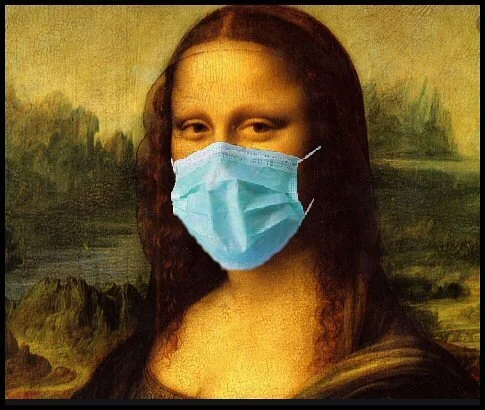
Graphic of Mona Lisa wearing sanitary mask. Folsom Natural. CC BY 2.0

Studying Abroad Amid Lockdown

May 7, 2020

According to the Institute of International Education, the University of Georgia ranks thirteenth in the nation for the number of students who study abroad. With over one hundred faculty-led programs and nearly 2,000 students studying abroad each year, global experiential learning promises an expanded worldview and diversified education. 

During my second year pursuing a Spanish degree at the University of Georgia, I decided to study abroad in Valencia, Spain. Expecting to explore Europe for six months, I eagerly boarded a plane from Atlanta to Madrid with three bulky suitcases. From December to January, I spent my days attending lectures at a local university, traversing the Spanish countryside, and conversing with locals. Amid my cultural immersion, reports began to emerge about the coronavirus outbreak in China. I naively believed this novel disease would not impede trips to England, France, and Portugal.  

By February, however, COVID-19 had inundated Europe, forcing many study abroad students to return home. UGA’s Office of Global Engagement, like many universities, consequently issued this statement: “The University of Georgia recognizes that international travel, communication, and partnerships are essential to UGA's academic, research, and outreach mission and supports these endeavors. Countries and areas that carry U.S. State Department Travel Advisory Level 3/4 require special consideration and review to manage and mitigate risk, and in many circumstances, require the avoidance of travel altogether.” After a soccer match against Milan, a coronavirus epicenter, Valencia’s travel advisory was raised to a level 2. 

Fearing my study abroad program would abruptly end, I intended on visiting as much of Europe as possible. For three consecutive weeks, I took advantage of cheap airfare and traveled to London, Paris, and Lisbon. Each city’s hotels, restaurants, and tourist attractions were practically vacant. I had imagined the streets of Paris, the city of romance and culture, to be bustling with music and lovers walking hand in hand. Yet, during the last week of February, Paris was eerily still. I waited for five minutes to climb the Eiffel Tower and Arc de Triomphe, while most tourists wait over an hour. In the Louvre, which normally averages 15,000 visitors per day, I observed artwork like the Mona Lisa and Venus de Milo in silence. Even Champs-Elysees, the most famous street in Paris, was deserted. Apart from the occasional Parisian in mask, it seemed I had the city to myself. Days after departing Paris, the government announced, “All gatherings of more than 5,000 people in confined spaces will be cancelled.” Infamous sites that I had just toured, like the Louvre and Eiffel Tower, were closed indefinitely. 

On March 11, more chaos ensued as the World Health Organization’s Director General, Tedors Adhanom, declared the coronavirus a pandemic, stating, “We have rung the alarm bell loud and clear.” The following day, while I slept in my Valencia dorm, President Trump announced travel restrictions on 26 European countries, including Spain. Although the 30-day travel ban did not apply to legal residents of the United States, Spain simultaneously imposed a nationwide lockdown to combat the virus. Madrid barred travel to and from the city, and word spread that international flights would soon be suspended. In the early hours of March 12, I was awoken to program directors frantically pounding on my door. They affirmed we had a mere 24 hours to escape Spain on the final flight to Atlanta. 

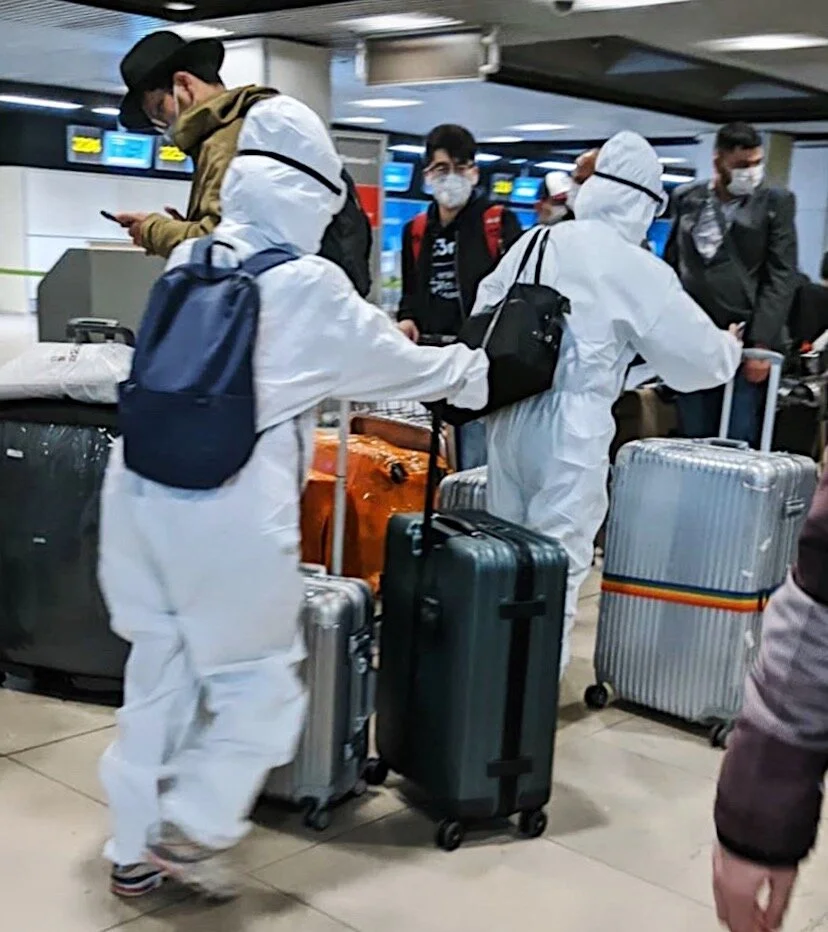
I hastily packed clothes and souvenirs and boarded a bus to Madrid, leaving behind two suitcases full of belongings and many unsaid farewells to Spanish friends. After a five-hour excursion and many failed attempts to enter the city due to strict quarantine orders, I finally arrived at the Madrid-Barajas Airport. Panicked passengers in makeshift masks and hazmat suits rushed to their gates. Travelers emptied suitcases into trash cans to avoid long check-in lines. University students tearfully begged customer service for tickets home. While rushing through security, the customs officer reviewing my ticket murmured, “You’re lucky you found a flight out of here. Volver pronto,” meaning “come back soon.” On March 14, one day after my return to the United States, the Spanish Prime Minister, Pedro Sanchez, declared a state of emergency which placed the country on lockdown and cancelled all outgoing flights. I had narrowly escaped an impending two-month state of emergency.

On March 13th, travelers in hazmat suits rush through the Madrid-Barajas Airport. Photo by Shannon Moran.

Upon arrival in Atlanta, CDC workers recommended 14-day quarantine and randomly screened a handful of passengers for fevers. On April 20, Georgia Governor Kemp disregarded public health officials by announcing, “We will allow gyms, fitness centers, bowling alleys, barbers, cosmetologists, hair designers, nail care artists, estheticians, and massage therapists to reopen their doors.” Following a chaotic return to the United States and cancellation of my study abroad experience, I continue to fear contracting and spreading COVID-19 in a state reopening. In spite of dismay and uncertainty, I witnessed the world at a pivotal moment in history. Amidst a worldwide pandemic, I visited Europe’s cultural epicenters, and volveré pronto, I will return soon.


Shannon Moran

Shannon is a Journalism major at the University of Georgia, minoring in English and Spanish. As a fluent Spanish speaker, she is passionate about languages, cultural immersion and human rights activism. She has visited seven countries and thirty states and hopes to continue traveling the world in pursuit of compelling stories.

In News and Social Action, Global Health & Crisis Tags Coronavirus, COVID-19, Georgia, Spanish language, Valencia Spain, Spain, Europe, China, U.S. State Department, study abroad, Paris, Mona Lisa, Parisian, Atlanta, Madrid, lockdown, CDC, Global Health, Travel
Comment

Divyakant Solanki/EPA

In India’s Cities, Life is Lived on the Streets – How Coronavirus Changed That

April 30, 2020

In India, where the coronavirus lockdown affects 1.3 billion people, the effect is a big contrast to a place where the city streets are normally thronged with life in all its guises.

Read More
In India Tags COVID-19, Coronavirus, India, homelessness, lifestyle, London, New York, public transportation, urban living, market, city planner, lockdown, architecture, Global Poverty, Guide Feature
Comment

‘Today, the pond. Tomorrow, the world!’ Patrick Robert Doyle/Unsplash, CC BY-SA

Coronavirus: What the Lockdown Could Mean for Urban Wildlife

April 23, 2020

As quarantine measures take hold across the world, our towns and cities are falling silent. With most people indoors, the usual din of human voices and traffic is being replaced by an eerie, empty calm. The wildlife we share our concrete jungles with are noticing, and responding.

You’ve probably seen posts on social media about animals being more visible in urban centres. Animals that live in cities or on their outskirts are exploring the empty streets, like the Kashmiri goats in Llandudno, Wales. Others that would normally only venture out at night are becoming bolder and exploring during the daytime, like the wild boar in Barcelona, Spain.

Our new habits are altering the urban environment in ways that are likely to be both positive and negative for nature. So which species are likely to prosper and which are likely to struggle?

Hooray for hedgehogs

It’s important to note some species may be unaffected by the lockdown. As it coincides with spring in the northern hemisphere, trees will still bud and flower and frogs will continue to fill garden ponds with frog spawn. But other species will be noticing our absence.

The way we affect wildlife is complex, and some of the changes that we’ll see are hard to predict, but we can make some assumptions. In the UK, hedgehogs are our most popular mammal, but their numbers are in rapid decline. There are many reasons for this, but many die on roads after being hit by cars. With people being asked to only make essential journeys, we are already seeing reduced road traffic. Our spiny friends will have just emerged from hibernation and will no doubt be grateful for the change.

The lockdown could be well timed for hedgehogs emerging from hibernation. Besarab Serhii/Shutterstock

Cities are also noisy places, and the noise affects how different species communicate with each other. Birds have to sing louder and at a higher pitch than their rural counterparts, which affects the perceived quality of their songs. With reduced traffic noise, we could see differences in how bats, birds and other animals communicate, perhaps offering better mating opportunities.

School closures may not be ideal for working parents, but many will use their time to connect with nature in their own backyard. More time spent in gardens (for those lucky enough to have one), perhaps doing activities like making bird feeders, could help encourage nature close to home. There’s been a surge in people taking part in citizen science projects like the Big Butterfly Count too. These help scientists to predict the population trends of different species. The British Trust for Ornithology has just made participation in their Garden BirdWatch Project free during the lockdown, so you can connect with wildlife and contribute to important scientific research.

Desolation for ducks

All is not rosy for wildlife. Many species currently rely on food provided by humans. From primates fed by tourists in Thailand, to the ducks and geese at local parks which have been closed to the public, many animals may be seeking new sources of food.

In the UK, the bird breeding season has already begun for earlier breeders like robins. Depending on how long restrictions last, many birds could ultimately make bad decisions about where to breed, assuming their carefully chosen spot is always rarely disturbed. This could threaten rarer birds which breed in the UK, such as little terns, as dog walkers and other people flock to beaches once restrictions are lifted, potentially trampling and disturbing breeding pairs and their young.

A little tern sheltering eggs on an open beach. BOONCHUAY PROMJIAM/Shutterstock

Dog walkers also enjoy lowland heathlands, especially those near urban areas such as Chobham Common in Surrey. These rare heaths are home to many rare bird species, like Dartford warblers, which could also see their nests disturbed once humans begin to emerge again in larger numbers. People who are enthralled by wildlife venturing into new areas during lockdown will need to carefully manage their return to the outdoors once restrictions are lifted.

Though some species may face challenges in now silent towns and cities, those species that live alongside us do so because they are so adaptable. They will find new sources of food, and will exploit new opportunities created in our absence. Hopefully this time will allow people to appreciate their local environments more, and find new ways to nurture them once all this is over.

Becky Thomas: Senior Teaching Fellow in Ecology, Royal Holloway

THIS ARTICLE WAS ORIGINALLY PUBLISHED ON THE CONVERSATION

Tags COVID-19, Coronavirus, lockdown, urban living, United Kingdom
Comment

City Streets Across the Globe Emptied

April 11, 2020

TIME Magazine presents chilling footage of city streets across the globe which have been emptied due to coronavirus lock-downs.

Tags Time Magazine, COVID-19, Coronavirus, cityscapes, lockdown, quarantine, social isolation
Comment

Also check out...

Featured
Vietnam’s Floating Markets Are Disappearing
The Supernatural Role of Masks in Nigeria’s Yoruba Tribal Culture
Opening the World to Deaf Travelers with Lily Yu

Featured trips

Featured
Offer NGO Support While Visiting Quito
Experience Life as a Mongolian Nomad
Help Grow Organic Costa Rican Coffee

Sign up for the CATALYST newsletter

Sign up for our newsletter to get the scoop on international travel, global social impact insights, our latest podcast releases, and more from around the world, all delivered right to your inbox!

We respect your privacy.

Thank you!
Newsletter Sign Up | Advertise | Careers + Internships | Privacy Policy | Submissions | Contact Us

Copyright © 2025, MISSION MEDIA LLC. All rights reserved.