
Paige Geiser
Here is how the sacred site of Mecca in Saudi Arabia shapes faith, identity and worship in Islam.
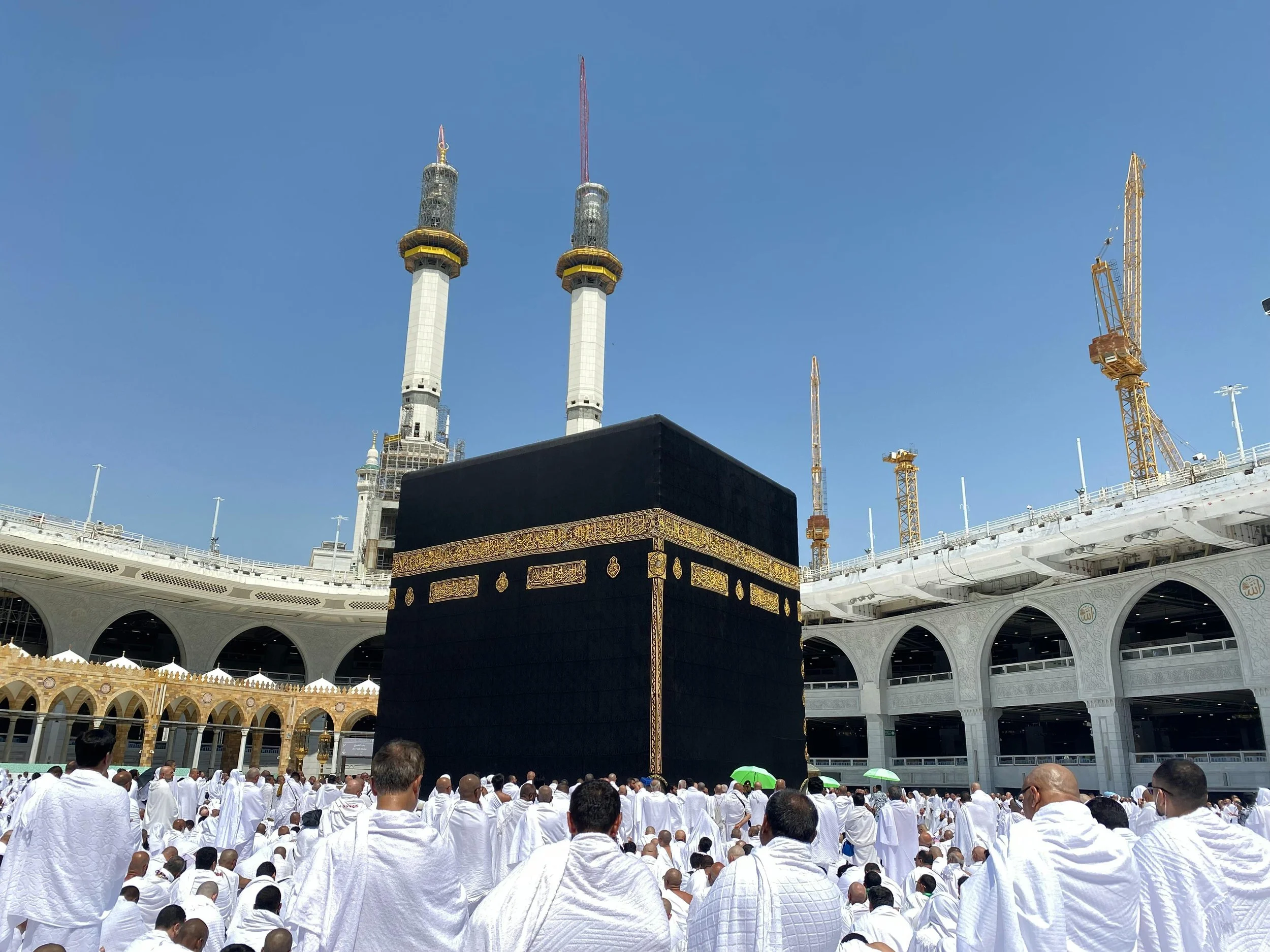
Worshippers surrounding the Kaaba. Muhammad Khawar Nazir. CC0.
The Kaaba is a great stone structure in Mecca, Saudi Arabia, that all financially and physically able Muslims must travel to at least once in their lifetime. Muslims have been making the journey to Mecca for over 1,400 years, as pilgrimage to the site, known as “hajj,” is one of the five pillars of the Islamic faith. This pilgrimage occurs during the last month of the Islamic year, "Dhu al-Hijjah" or "The Month of Hajj.” The pilgrimage rites occur during a five-day period, between the 8th and 12th days of the 12th month in the Islamic calendar. Every year, the calendar shifts due to the lunar cycle, and the hajj pilgrimage shifts with it. In 2025, the hajj pilgrimage dates were June 4 to June 9. Standing 50 feet tall, the Kaaba is built entirely of gray stone and marble. The inside of the cube is empty except for three supporting pillars and numerous silver and gold lamps.
The Quran says that the Kaaba was the first “House of God,” built by Adam himself. Throughout time, the Kaaba has been destroyed and rebuilt, but its location has remained the same. The Kaaba that Muslims pilgrimage to now was rebuilt in 684 A.D. after a fiery attack burned down the majority of the structure. Again in 1996, the Kaaba was renovated both inside and out. The mortar around the original stones had lost its cohesiveness, so the stones were taken apart, washed and refitted in their original positions with new adhesive. This way, much of the original Kaaba was kept intact.
In the eastern corner of the Kaaba is the Black Stone, which legend claims has been in existence since the time of Adam, given to him after his expulsion from paradise as a way to obtain forgiveness for his sins. It is believed that this stone was once white but has turned black from the countless sins it has absorbed from travelers all across the world.
The Kaaba is considered to be the “House of God,” which is why a mandatory pilgrimage to see it in person is a crucial part of the Muslim faith. Other than a pilgrimage, the Kaaba is a fundamental part of daily life as a Muslim. Many Muslims pray five times a day, each time orienting themselves to face Mecca and the Kaaba. Because of both daily prayer practice and mandatory pilgrimage, the Kabba is a place that connects all Muslims no matter where they are in the world and highlights the universality of Islam.
When Muslims make their pilgrimage to Mecca, they are required to walk around the Kaaba counterclockwise seven times, following the example set by the Prophet Muhammad. As God’s messenger, the Prophet’s actions became a model for worship, and Muslims have continued these rituals ever since. While walking around the Kaaba, Muslims are encouraged to touch or kiss the Black Stone if possible. However, heavy traffic crowds lead many to only wave at it. Contrary to popular belief, these acts of service are not worship of the Kaaba, as the Islamic faith does not worship statues, objects and other worldly things. Rather, the Kaaba is a gathering place and a symbol of unity for Muslims all around the world.
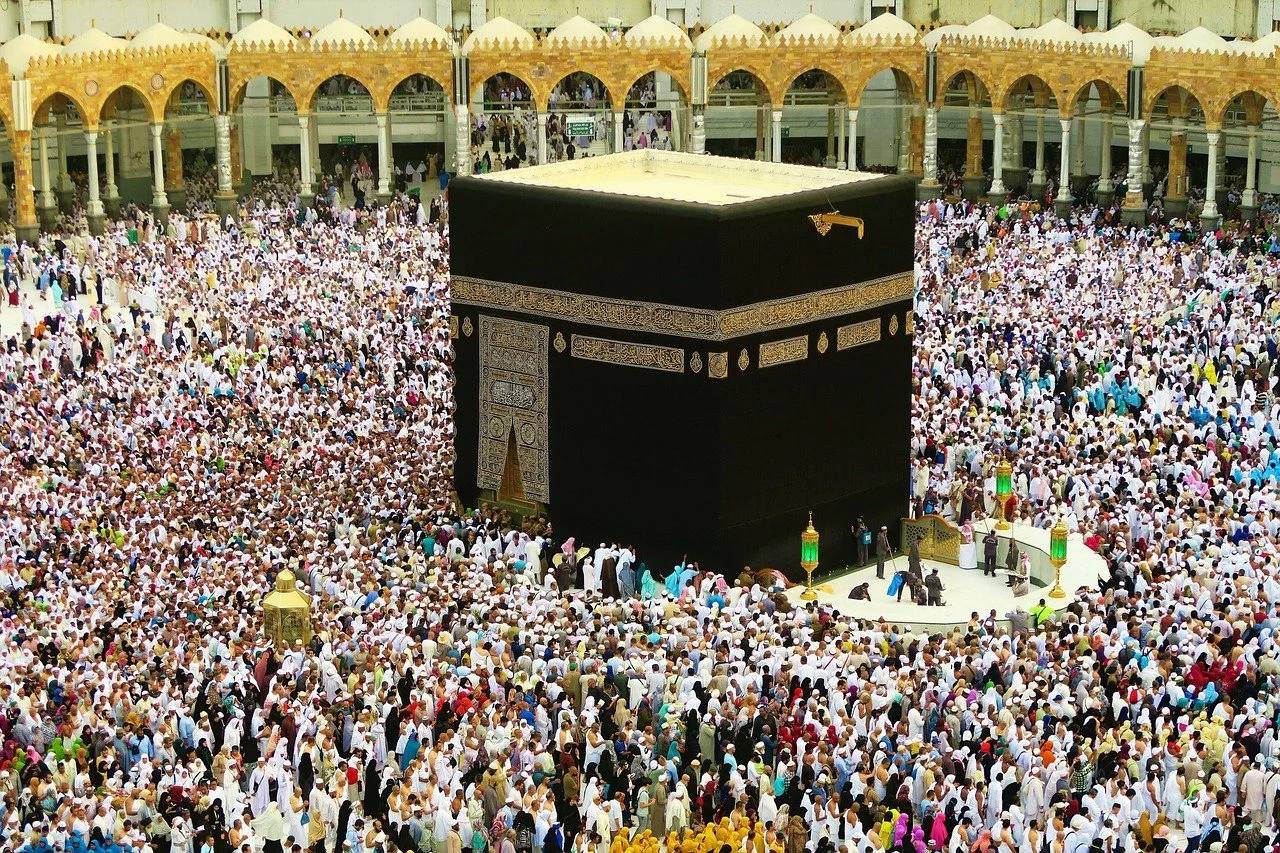
Crowd of people surrounding the Kaaba. Ekrem Osmanoğlu. CC0.
The Quran specifically states that no non-Muslims can enter the holy city of Mecca. Because this belief is so rooted in Islamic faith, the Saudi Arabian government strictly enforces who is allowed inside the city. Verification of religion is done by checking passports, IDs or pilgrimage visas that all visitors must apply for to enter Mecca. There are also checkpoints heading into the city with guards who make sure that visitors are adhering to Islamic norms and customs. Non-Muslims who attempt to enter the city can face punishments as severe as imprisonment or deportation.
Although there are strict rules pertaining to who can enter Mecca, the Saudi Arabian government has started to promote tourism, and there are many other ways to experience the country’s culture. Medina, Riyadh and Jeddah are all cities in Saudi Arabia that welcome visitors and have many attractions to see. For those interested in the Islamic faith, non-Muslims are allowed and welcomed in mosques, although there may be certain protocols they need to follow, such as dress code and behavior. Being respectful of local traditions and customs is the best way to get the full experience when visiting any country.

Paige Geiser
Paige is currently pursuing a bachelor’s degree in English with a minor in Criminal Justice at the University of Wisconsin-La Crosse. She grew up in West Bloomfield, MI, and has been fortunate enough to travel all throughout the country. She is an active member of the university’s volleyball team and works as the sports reporter for The Racquet Press, UWL’s campus newspaper. Paige is dedicated to using her writing skills to amplify the voices of underrepresented individuals and aspires to foster connections with people globally.