
After nearly one million Russian men fled conscription in 2022, the countries that received them are still grappling with the impacts of this influx three years later.
Read MoreRussian Poets and the Risk of Resistance
Kennedy Kiser
From public readings to prison cells, Russian poets are paying the price for speaking against the war.
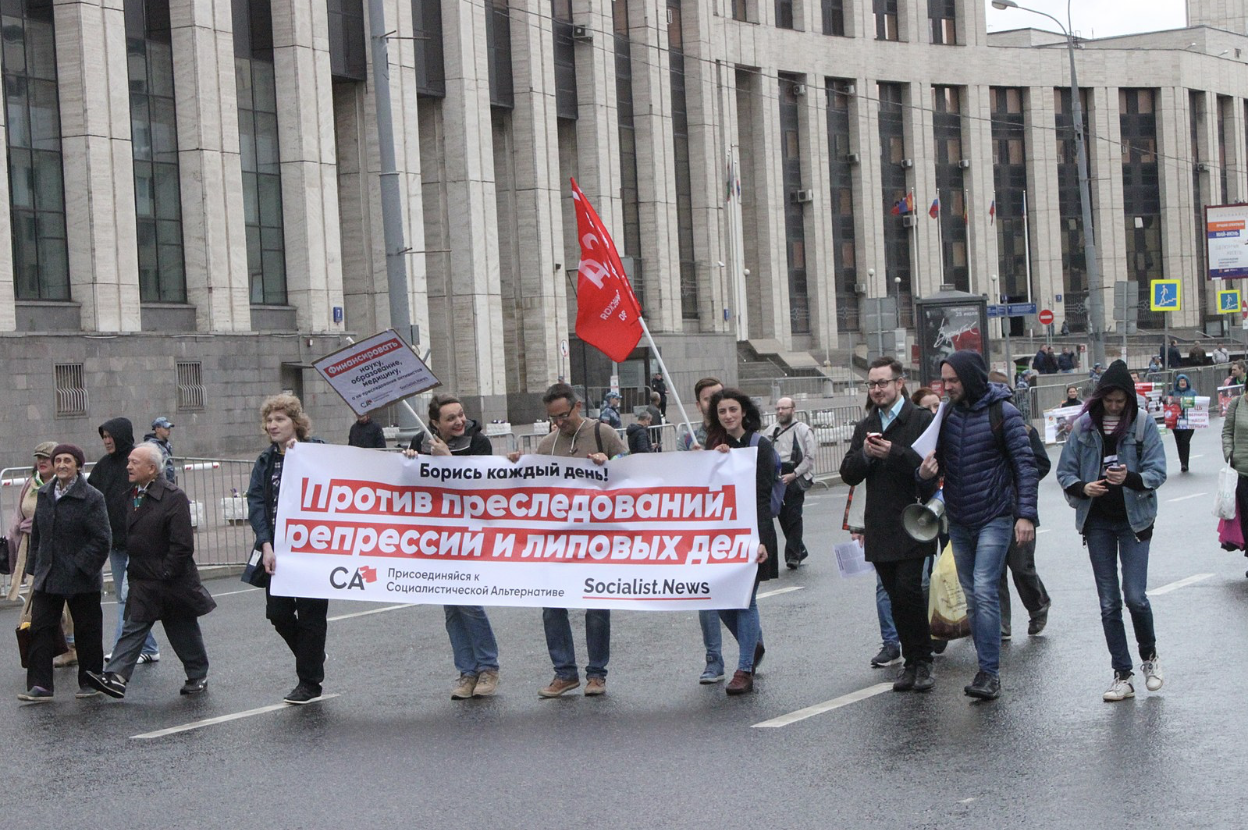
Protesters march in Moscow against repression and fabricated charges. DonSimon. CC0.
“Kill me, militiaman!
You’ve already tasted blood!
You’ve seen how battle-ready brothers
Dig mass graves for the brotherly masses.
You’ll turn on the television—you’ll lose it,
Self-control has never been your strong suit.”
— Artyom Kamardin, “Kill Me, Militiaman”
In December 2023, Russian poet Artyon Kamardin was sentenced to seven years in prison for reciting anti-war verses during the public “Mayakovsky Readings” in Moscow. Fellow poet Yegor Shtovba, who performed at the same event, received a sentence of five and a half years. Kamardin was reportedly beaten and sexually assaulted during his arrest for reciting poetry in response to Russia’s war in Ukraine.
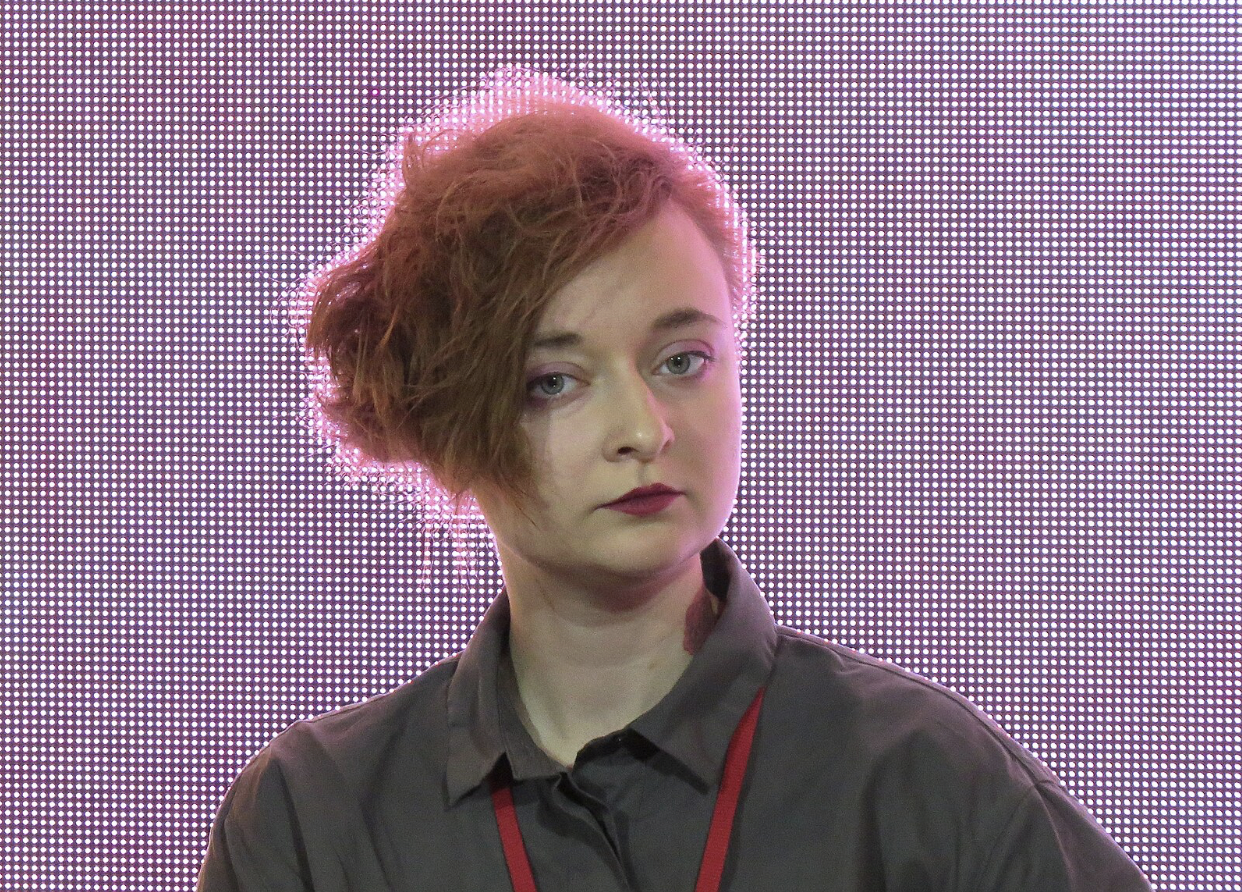
Daria Serenko at the Moscow International Book Fair in 2019. Sergey Leschina. CC BY 4.0.
Their cases are not isolated. In April 2024, feminist poet and activist Daria Serenko was added to Russia’s federal wanted list. Known for combining poetry with political action, Serenko has faced years of harassment. Her arrest warrant, however, marked a shift in the state’s approach. Where once artists were threatened, they are now hunted.
Literature has long played a role in Russian resistance. During the Soviet era, banned texts circulated underground through samizdat networks. Today, Telegram channels and independent journals continue that tradition, sharing poetry that challenges state narratives. But the stakes are now much higher. Poets are not just being silenced; they are being criminalized. The penalties include imprisonment, forced exile and public brutality.
At the center of this increased repression is the state’s fear of language itself. Poetry distills dissent into a form that is emotionally direct and difficult to contain. It spreads quickly, often through digital platforms, in defiance of Russia’s 2022 censorship laws. Unlike journalism or political commentary, verse can bypass logic and speak directly to the reader’s gut. As poet Osip Mandelstam once wrote, “Only in Russia is poetry respected — it gets people killed. Is there anywhere else where poetry is so common a motive for murder?”
This crackdown is not limited to well-known names. Emerging writers, students and performers with modest online followings have also been detained or investigated for speech-related offenses. In some cases, posting a poem on VKontakte, Russia’s largest social network, has led to criminal charges. The line between art and activism has been effectively erased, especially for those who oppose the war.
International literary organizations have responded by offering emergency grants, publication platforms and legal aid. PEN International, Freemuse and countless other organizations have condemned Russia’s actions, calling for the immediate release of detained artists. Yet the risks persist. For many Russian writers, exile is the only path to safety, though it often comes with the painful cost of losing direct access to their audiences.
Repressing writers like Kamardin, Shtovba and Serenko reveals a broader strategy: to eliminate not just protest but the imagination of a different future. By imprisoning poets, the government also suppresses the potential for alternative visions of the world.
Still, Russian poetry persists. In exile, through online platforms and underground readings, writers continue to speak out. In a regime that fears language, each poem becomes an act of resistance.
GET INVOLVED:
These organizations offer support to writers and artists facing political persecution. From legal aid to international advocacy, their work helps protect freedom of expression and document human rights abuses. Getting involved means helping preserve creative resistance in some of the world’s most repressive environments.
To learn more about PEN International, click here.
To learn more about Freemuse, click here.
To learn more about Memorial International, click here.
Kennedy Kiser
Kennedy is an English and Comparative Literature major at UNC Chapel Hill. She’s interested in storytelling, digital media, and narrative design. Outside of class, she writes fiction and explores visual culture through film and games. She hopes to pursue a PhD and eventually teach literature!
Noon Against Putin: Russian Citizens Continue Navalny’s Mission
In Russia, protests in opposition to Putin’s rule continue despite the death of Alexei Navalny.
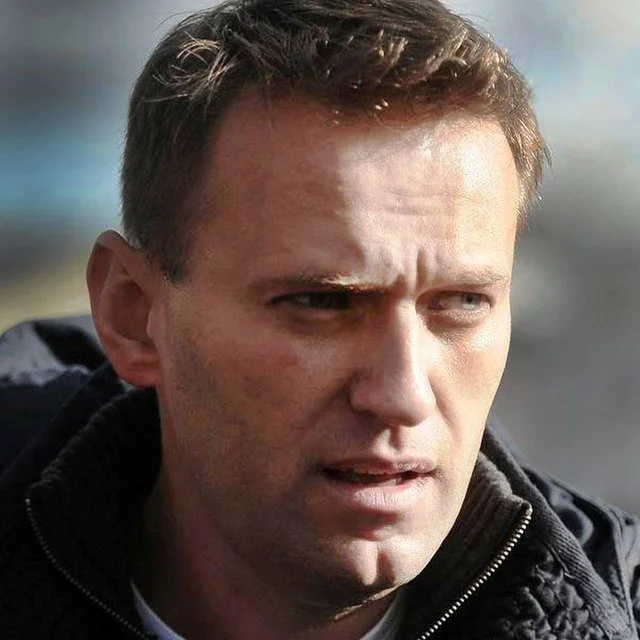
The late Alexei Navalny. Mitya Aleshkovskiy. CC BY-SA 4.0
On February 16, 2024, Alexei Navalny, outspoken critic of Vladimir Putin and major activist in Russian domestic politics, died in a Russian prison. On March 17, 2024, believers in Navalny’s vision took the next step in opposition to the president.
Despite his death, Navalny’s anti-Putin rhetoric continues to echo through the streets of Moscow. On the final day of the 2024 Russian presidential election, groups of silent protestors gathered at polling places across the country at exactly twelve o'clock noon in a demonstration dubbed “Noon Against Putin.” The plan had been endorsed by Navalny prior to his death, and the call was taken up afterwards by his widow, Yulia Navalnaya, via a video on YouTube in the days before the election.
The demonstrators voiced their disapproval of the unfair elections by either writing in Navalny’s name on their ballots, invalidating their vote, or simply leaving without voting at all. Around the world, Russian citizens also formed silent queues at embassies in Berlin and London, standing in solidarity with the demonstrators in Siberia and Moscow. Many also took to social media to decry what they called an unfair and rigged election, denying the Kremlin’s repeated claims that their president is always democratically chosen.
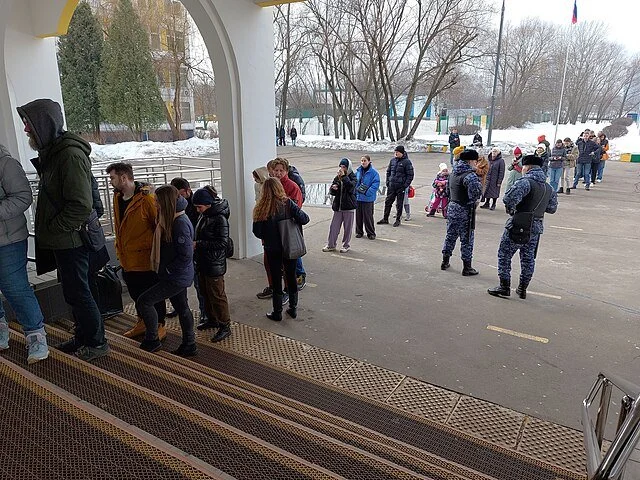
Protestors outside of a polling place in Moscow. Konopeg, CC0
Navalny was one of the few Russian citizens willing to outright oppose Vladimir Putin’s rule. He was arrested several times for leading protests against corruption in the Kremlin and eventually joined a centrist political party to work towards fair and just elections, among other humanitarian improvements in the daily lives of the Russian people. Navalny’s death in a Russian prison in the Arctic sparked outcry worldwide, with many world leaders accusing Putin of direct involvement.
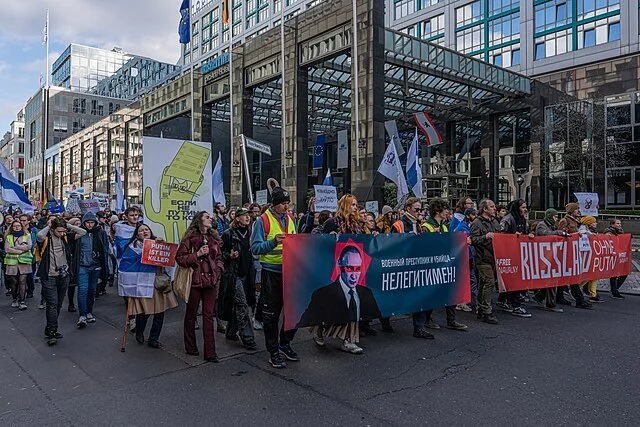
A procession outside the Russian Embassy in Berlin. A.Savin, Free Art License
“Noon Against Putin” was carried out with the knowledge that some arrests were inevitable. The demonstration ended with at least 60 citizens imprisoned and 15 criminal charges filed. Not only did the people gathering at the ballot boxes understand that their demonstration would not change the election, but they also came in spite of the laundry list of potential punishments from the authorities. The threats of imprisonment, and possibly death in captivity, hang over the heads of any Russian citizen who speaks out against the Kremlin. But the community that Navalny has built seems unafraid of these consequences. Even though Putin was still reelected, this brief and solemn display of unity among the Russian people shows that even without their vocal leader, the anti-Putin masses are still here, and are still willing to show their disapproval.
The Kremlin, and thus Vladimir Putin, still holds complete control over Russia and its government, but the forward momentum that these protestors represent, no matter how small it may appear now, suggests a potential shift in the balance of power. In the past, Russian citizens have had little choice but to put their heads down and keep moving forward. Today, Navalny’s memory has spurred those same citizens to take action towards a vision of change.
Ryan Livingston
Ryan is a senior at The College of New Jersey, majoring in English and minoring in marketing. Since a young age, Ryan has been passionate about human rights and environmental action and uses his writing to educate wherever he can. He hopes to pursue a career in professional writing and spread his message even further.
Moscow Moves
Filmmaker Alex Soloviev tried to avoid favourite tourist clichés (though not without some), catching with camera what is usually missing in the regular timelapse videos - the true rhythm and the flow of the city. It is impossible to do it in just 2 minutes, it's just a little piece of what you can see there. Alex says "Moscow is an unusual city, it's really huge and has different shapes. The city with so many stereotypes that are often spoken about it. The city that is easy to overestimate and underestimate at the same time. "
Moscow Russia Aerial 5K
Come see Russia's capital from the skies in this short film. Produced by Timelab.pro.
For LGBTI Employees, Working Overseas Can Be a Lonely, Frustrating and Even Dangerous Experience
As the number of workers taking international assignments increases, companies have more responsibility to look after their LGBTI employees who face persecution while on assignment.
Russia, Nigeria, Saudi Arabia and Indonesia are becoming some of the most challenging expatriate assignment destinations for multinational firms, according to relocation business BGRS. This is in part because some of these countries advocate the death penalty for homosexuality. Other popular assignment destinations include Brazil, India, China, Mexico and Turkey, and these countries exhibit less sensitivity to homosexuality.
International assignments among multinational corporations have increased by 25% since 2000 and the number is expected to reach more than 50% growth through 2020.
The opportunity for LGBTI expatriates and their respective families to be part of an intra-company transfer is statistically likely. Worldwide, the LGBTI population is estimated to be between 1-in-10 and 1-in-20 of the adult population, and over 200 million people worldwide live and work in a country other than their country of origin.
LGBTI employees relocating for a foreign assignment are likely to experience additional hardships compared to the typical expatriate. It’s not uncommon for a destination country to refuse spousal visas if same-sex marriage is not legal in that country.
Likewise, access to healthcare and other benefits can be restricted for those relocating as a same-sex couple. In their study about LGBTI expatriates in dangerous locations, Ruth McPhail and Yvonne McNulty highlighted an interview with one LGBTI expatriate who experienced difficulty in gaining a spousal visa in Indonesia:
I knew my wife would never get a spousal visa in Indonesia; my experience had prepared me for that. So instead I wanted to be guaranteed two things: firstly that my wife could come and stay at least 90 days at a time with multiple entry, and second that if there was a medical evacuation or civil strife situation that we would be evacuated as a family. These two matters were more important to me than what type of visa we were allocated.
On a daily basis, a lack of access to or interaction with other LGBTI families may be common among LGBTI expatriates, and “fitting in” is not always guaranteed. From a career perspective, LGBTI people may face a difficult workplace climate, a perceived lack of career opportunities or status at work.
For example, research shows that lesbians are faced with unique challenges for their career development. These include identifying the right job, and finding a way to get the job and develop on the job. This can easily stifle their potential.
Taking all of this into account, the experience of LGBTI employees on international assignment can be a frustrating and lonely experience. As a result, LGBTI employees may not accept international assignments in the first instance, out of fear of being stigmatised, unsupported or discriminated against by colleagues and the legal system in the host country.
Helping LGBTI employees on assignment overseas
In the end, multinational companies have two choices. One is to turn a blind eye to the challenges faced by LGBTI employees and subsequently suffer the consequences of premature assignment returns and failed assignment costs. The other is taking an equally challenging path by acknowledging the challenges and concentrating on efforts to support LGBTI people through their international assignment experience.
The Williams Institute found that some multinational companies are leading the way by adopting policies specific to LGBTI people. They are reporting improved employee morale and productivity as a result.
If companies are aware that these issues deter LGBTI employees from considering international assignments in the first place, there are effective support mechanisms to use. One option is to map out an LGBTI employee’s career and where that fits with their life goals, because these influence their experience overseas.
Whether or not the employee chooses to disclose their sexual orientation could also affect their assignment overseas. These needs should be weighed up relative to the degree of assignment difficulty.
During an assignment companies can provide additional support to mitigate liabilities, like offering a voluntary reassignment or the option to return home prematurely. As with any good support system, the lines of communication must go both ways.
Multinational corporations have a duty of care to the LGBTI community to ensure that their international assignment experiences maintain a suitable level of support.
This article was originally published by The Conversation.

AUTHORS
MIRIAM MOELLER
Senior Lecturer, International Business, The University of Queensland
JANE MALEY
Senior lecturer in management, Charles Sturt University
RUTH MCPHAIL
Head of the Department of Employment Relations and Human Resources & Professor at Griffith University President RQAS GC, Griffith University
Love and Rubbish: Documentary on Child Poverty In Russia
If you live in poverty, can you afford to dream? An estimated five million people are homeless in Russia; one million of them are children. This WHY POVERTY film takes a look at the lives of a group of children living on a rubbish dump outside of Moscow, showing the hardships they face and the dreams they hold on to.