
Rampant child labor in the Congo has ignited an ethical social movement among Generation Z.
Read MoreHow Congo and Rwanda Arrived at the Brink of War
In their fight over marginalized peoples and access to rare minerals, the Congolese military and Rwanda-backed rebels risk triggering a broader regional war in southeast Africa.
Read MoreChild Slavery in Congo’s Cobalt Mines
The world’s high demand for cobalt mining has led to the exploitation of child labor in the Congo.
Read MoreHow King Leopold’s Colonial Legacy Still Haunts the Congo Today
Occupied by Belgians for almost 80 years, the effects of colonization still resonate in the Democratic Republic of the Congo decades after independence.
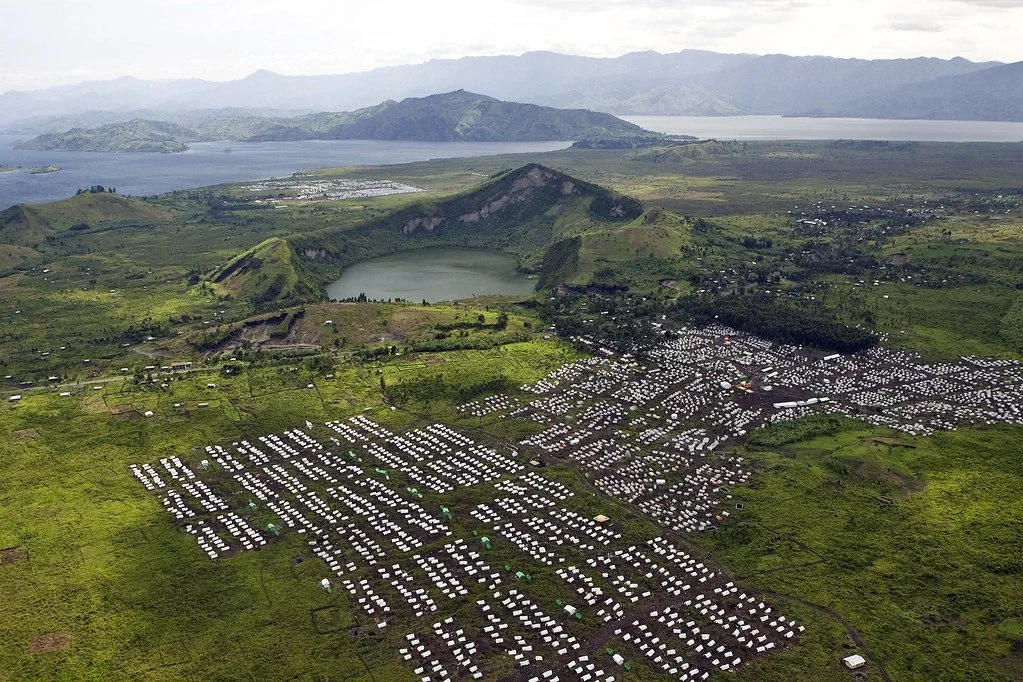
A refugee center in the Democratic Republic of the Congo. United Nations Photo. CC BY-NC-ND 2.0.
As the leader of the small European country of Belgium in the 1880s, King Leopold II did not have much political clout with his fellow European statesmen. He wanted more political power so he achieved this by gaining personal control of a vast swath of Central Africa, which became the Congo Free State. King Leopold ruthlessly subjugated the local populations of the region in order to extract as much raw materials such as ivory and rubber as possible, committing human rights violations in the process. It was not until 1902 when Joseph Conrad published the novel Heart of Darkness criticizing Leopold’s administration of the Congo and in 1904 when Edmund Dene Morel published a report detailing the atrocities in the Congo did Western public opinion turn against King Leopold, who was forced in 1908 to relinquish control of the Congo Free State to the Belgian government.
Today, those atrocities committed by King Leopold and the Belgians are still felt by the area, now the Democratic Republic of the Congo (DRC). The relationship that the Belgian colonial administration espoused was one of paternalism, where the Congolese were treated like children, which resulted in them unprepared for self-determination. When the DRC gained independence in 1960, it plunged into a state of sporadic political conflicts due to the dictatorship of Mobutu Sese Seko that lasted until the 1990s. The peace that ended that drawn out conflict only lasted a short time, and violence soon erupted again.
Currently, the eastern region of the country is held by at least 122 rebel groups, with the legitimate government struggling to control the region. That has caused more than 5 million people to be displaced between 2017 and 2019 and an additional 72,000 and counting since May 2022, with many fleeing areas controlled by rebel groups. Many areas receiving refugees are overwhelmed and do not have the proper infrastructure to support them.
The almost incessant warfare since independence may seem unconnected to the legacy of imperialism, but that is not the case. The seeds for the present political instability were sowed when the Congo was under Belgian rule. The Congo is a region with vast natural resources, from ivory and rubber of old to the mineral wealth of today. The abundance of raw materials and resources was exactly why Congo was colonized. When the borders of Africa were carved up by European powers, no regard was made to the various tribes already living in the area. Some groups of people were divided between different countries, and enemy tribes sometimes found themselves within the same domain. When the DRC gained independence, the various tribes were not united, leading to no coherent vision for the future of the country, thus sowing political instability.
In addition, since the purpose of the Congo Free State was solely to enrich King Leopold and later Belgium, there was no effort to develop a political or academic class among the local population. As such, at independence, there was no model of self-governance to follow after decades of infantilization by Europeans. That caused Mobutu Sese Seko to take advantage of the power vacuum and install himself dictator for more than 30 years.
The international response to the violence in the DRC has deprived the country of even more of its sustenance. International companies are refusing to do business with the DRC due to its human rights violations, depriving many of the mining jobs that they depend on. In order to survive, those people end up joining rebel groups, further perpetuating the violence.
The cycle of violence that started with Belgian occupation did not end in the 1990s. Subsequent leaders of the DRC used violence to consolidate their rule, since that was the only method they ever experienced. But, efforts have been made to ensure a sustainable future. The UN is stepping in by giving the DRC a peacebuilding fund to provide services to ex-rebels to reintegrate into their communities and to support over 300 women miners to better manage their sites and defend their rights. UNICEF also supports school reopenings, an essential indicator of peace. By prioritizing the reopening of schools in conflict zones, UNICEF ensures peaceful coexistence after prolonged conflict. The outside aid that the DRC is receiving gives local communities the agency to control their future.
To Get Involved
Cordaid is one organization providing humanitarian aid to the region. Another organization working to improve conditions by enabling local communities to form cooperatives that can successfully sustain peace in the communities in the DRC is Peace Direct.

Bryan Fok
Bryan is currently a History and Global Affairs major at the University of Notre Dame. He aims to apply the notion of Integral Human Development as a framework for analyzing global issues. He enjoys hiking and visiting national parks.
Report Finds W.H.O. Workers Sexually Exploited Women During Ebola Mission
Women were sexually exploited and abused by aid workers in order to obtain or keep jobs during the Ebola Crisis in the Democratic Republic of Congo.
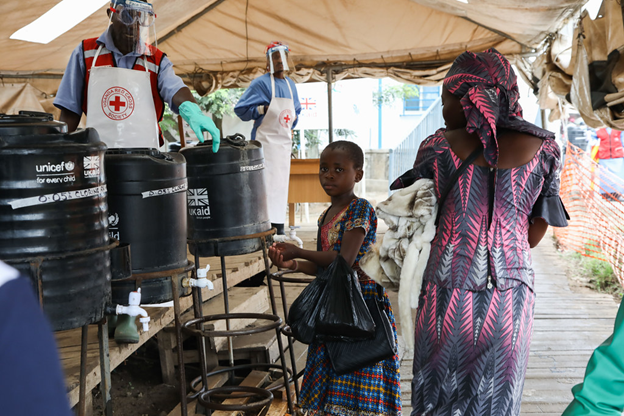
A young girl washes her hands at a checkpoint at the border between Uganda and the DRC. UK Department for International Development. CC BY 2.0
According to a report commissioned by the agency’s head, World Health Organization workers sexually abused women while in the Democratic Republic of the Congo to aid the Ebola outbreak from 2018 to 2020. The report found that 83 people participated in the abuse, and in 21 cases, those involved were confirmed to be WHO officials. The investigation started in September 2020 when The New Humanitarian and the Thomas Reuters Foundation published a report investigating abuse claims. The report found that 31 out of 50 women interviewed reported abuse and exploitation from men working for the WHO. In response, leadership in the World Health Organization ordered an independent commission to investigate. After working in Beni, one woman interviewed by the commission stated, “To get ahead in the job, you had to have sex … Everyone had sex in exchange for something. It was very common.” In addition, women reported that they were sexually harrassed and faced exploitation in order to keep their jobs, get paid or get a promotion. In some cases women were dismissed from their jobs when they refused to have sex with supervisors.
The commission established that the majority of the victims were already vulnerable because of precarious social and economic status, and women with more education and economic power were less vulnerable to abuse. The report found that there was a “systematic tendency to reject all reports of sexual exploitation and abuse unless they were made in writing”. While the WHO has training in place to prevent sexual abuse, the report found that training for employees did not happen until November 2019, months after the outbreak had been declared an emergency. Only 371 out of 2,800 workers attended the training. Additionally, men make up the vast majority of employees during the crisis, averaging 73.4% overall. The report cites that men held 77.49% of leadership positions and 91.52% of operations support and logistic positions.
The WHO was not the only organization accused of abuse, The New Humanitarian’s investigation found that there were allegations against workers at World Vision, Unicef and Alima, among others. Additionally, the investigation found that underreporting was prevalent in these cases, with one woman stating, “Why would you even ask if I reported it?” The New Humanitarian found that many women were unaware of how to report abuse or exploitation at all. Most aid agencies claimed they had received no reports of abuse, and the WHO stated they had received only a small number of complaints. Dr. Tedros Adhanom Ghebreyesus, the Director-General of the WHO, apologized to victims and said it was his top priority to hold perpetrators accountable during a press conference after the report’s publication.

Dana Flynn
Dana is a recent graduate from Tufts University with a degree in English. While at Tufts she enjoyed working on a campus literary magazine and reading as much as possible. Originally from the Pacific Northwest, she loves to explore and learn new things.
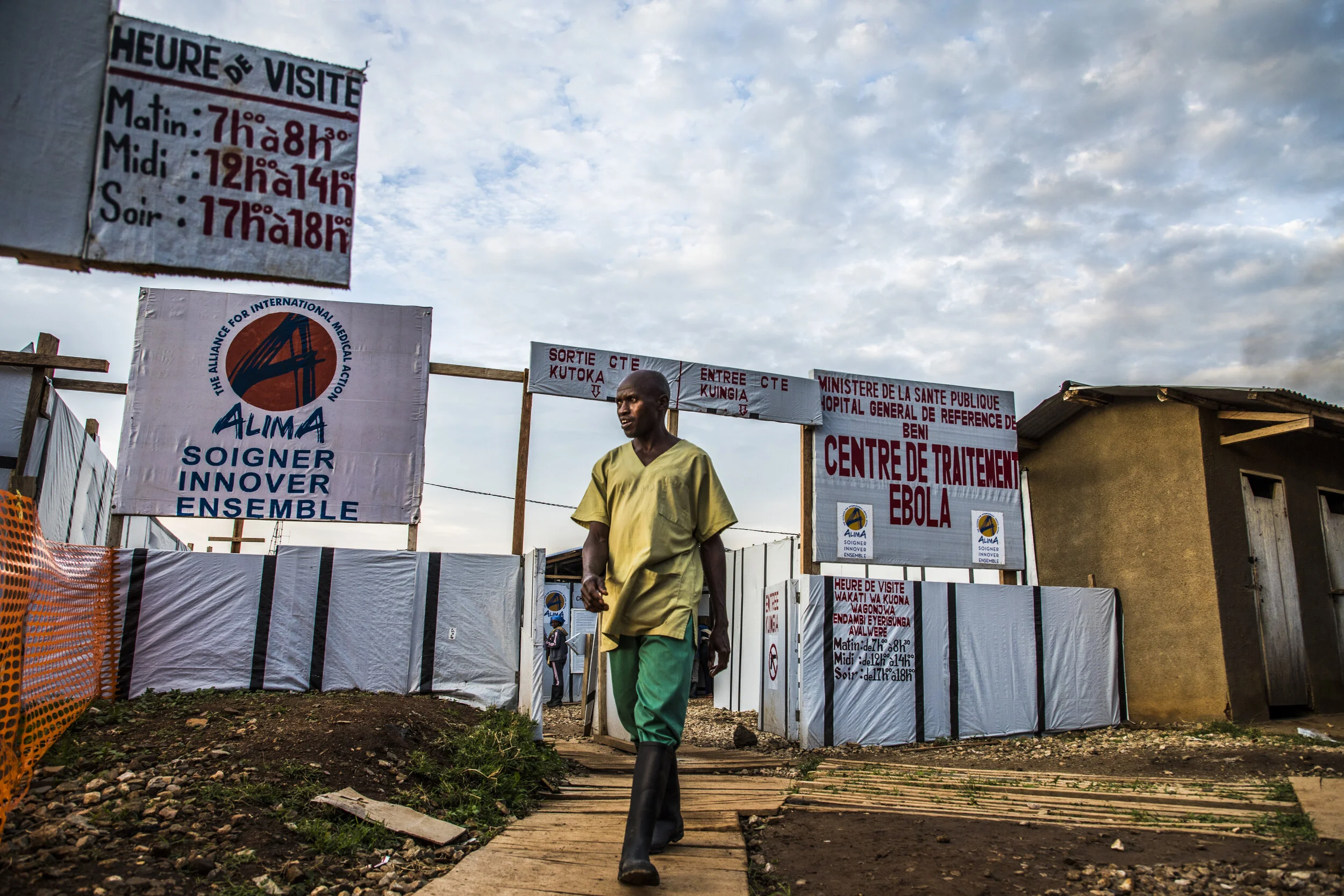
A health worker walking outside of the ALIMA Ebola Treatment Center in the Democratic Republic of Congo in January 2019. World Bank Photo Collection. CC-BY-NC-ND 2.0.
Congo Faces New Ebola Outbreak Amid Global Pandemic
The World Health Organization has called on the international community for financial support and aid in combating the latest Ebola outbreak in the Democratic Republic of Congo. This latest outbreak was announced by the country’s government on June 1 and has seen 56 cases reported in the Equateur province, a region which has been a hot spot for the disease in recent years.
Ebola is a deadly disease with outbreaks occurring primarily in Africa. In humans, the virus can be caused by one of four virus species: Ebola virus, Sudan virus, Tai Forest virus and Bundibugyo virus. The virus spreads through direct contact with organic matter from infected humans and animals. Common symptoms include fever, aches, weakness, fatigue, abdominal pain, gastrointestinal symptoms, and hemorrhaging, bleeding and bruising.
This latest outbreak comes as the 11th in a long line of Ebola outbreaks in the Congo since the disease was first discovered in 1976. A couple of weeks ago, the WHO celebrated the end of the country’s 10th outbreak, which began in August 2018. That Ebola outbreak was the deadliest recorded in the DRC and second worst in history, seeing 2,280 deaths.
According to The New York Times, the WHO has gathered $1.75 million to combat the outbreak, but this funding would only last the organization for a couple more weeks. Dr. Matshidiso Moeti, the WHO’s regional director for Africa, called for additional funding to be allocated toward vaccinations, testing and treatment, as well as contact tracing and health education resources.
“Responding to Ebola in the midst of the ongoing COVID-19 pandemic is complex, but we must not let COVID-19 distract us from tackling other pressing health threats,” Dr. Moeti said. “The current Ebola outbreak is running into headwinds because cases are scattered across remote areas in dense rainforests. This makes for a costly response as ensuring that responders and supplies reach affected populations is extremely challenging.”
Dr. Moeti also stated that over 12,000 people living in the Equateur province had been vaccinated since the outbreak was first reported in June.
WHO Director-General Dr. Tedros Adhanom Ghebreyesus echoed Dr. Moeti’s sentiments in a recent news release on the situation.
“This is a reminder that COVID-19 is not the only health threat people face,” Dr. Ghebreyesus said. “Although much of our attention is on the pandemic, WHO is continuing to monitor and respond to many other health emergencies.”
This call for funding follows a challenging six months for the organization, as the WHO has partnered with global leaders to combat the ongoing COVID-19 pandemic.
While much of the world has been supportive of the organization, the United States has been an exception. President Donald Trump pulled the country out of the WHO in late May over concerns about Chinese influence, with the withdrawal going into effect on July 6, 2021. The U.S. is the organization’s single largest financial contributor, having provided over $400 million in 2019.
President Trump has not publicly commented on this latest Ebola outbreak. While the U.S. directed $21 million in aid through the U.S. Agency for International Development for the 10th outbreak in 2019, it is unclear whether the country will direct any funding toward this latest outbreak’s relief efforts.
The WHO is expected to continue Ebola relief operations within the Equateur province for the foreseeable future, as governmental agencies such as the United Nations have directed additional funding to the organization. However, it is unclear how long this funding will last and how the ongoing COVID-19 pandemic will complicate these relief measures.
Jacob Sutherland
is a recent graduate from the University of California San Diego where he majored in Political Science and minored in Spanish Language Studies. He previously served as the News Editor for The UCSD Guardian, and hopes to shed light on social justice issues in his work.
Conflict Zones Through The Lens of Marcus Bleasdale
“This is an exciting time for digital storytellers.”
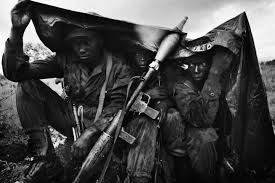
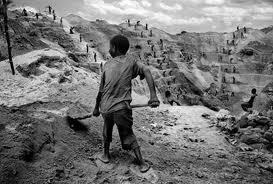
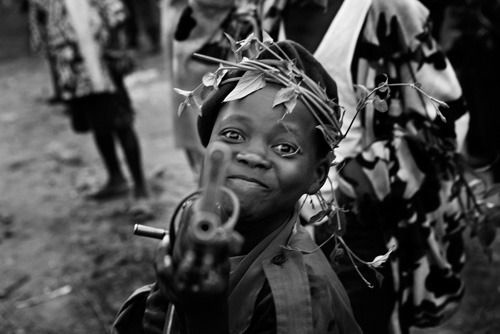
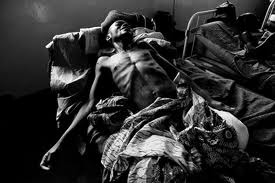
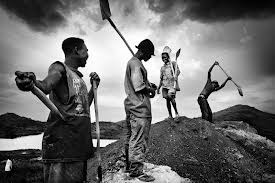

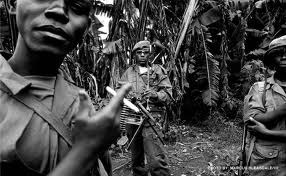
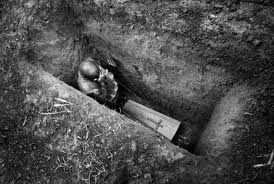
Truer words have never been spoken. But in the spirit of the commencement of this year’s Social Good Summit, it should be noted that these storytellers also hold a great responsibility to the masses. As a distinguished photographer, Marcus Bleasdale embodies this sense of responsibility in his coverage of conflict areas around the world through the medium of his trusted camera lens. Over the past 15 years, the region of the Democratic Republic of Congo (DRC) has captured his steady attention.
Throughout his time working within the DRC, Bleasdale has gained a first-hand perspective into a nation that, while rich in minerals, has been coerced into a haunting reality of violence, disease, poverty and profound injustice. Children are stripped of their adolescence, forced into militant lives plagued by mindless violence at the behest of their devious superiors. Families are torn apart, displaced, and involuntary bare witness to the perils of life within the misleading comfort of their own backyards.
More
As the conflict within the borders has continued to run its rampant course over the past 15+ years, 2 million Congolese natives have been displaced, 40,000 women fall victim of sexual violence annually, and over 5.5 million deaths have been recorded as a result of rampant disease, and violence throughout the region. In his Keynote adderess to the Social Good audience, Bleasdale stressed that these are simply the statistics; his images however, are what interpret the reality.
An important distinction however, is how Bleasdale goes about creating a narrative of an area so riddled by conflict for decades. He goes into depth about how he works to construct such a narrative in saying:
“For me, I’m trying to engage in order to enhance the narrative that I’m trying to tell. There are many different aspects of the story to engage with - the mind, the child soldiers, the sexual violence, displacement, horrific health issues that have spread through the DRC. I have to touch on each one of those in each unique situation to try and engage with a subject in a way that will truly hone the message that this should stop.”
He delves deeper in his philosophy toward photojournalism in conflict areas, stating, “Every image cannot be misery, and should not be so difficult to look at that you want to turn away. You have to also try to look for the beauty, and the hope, to show the opportunity that is available that has not necessarily been seized.”
Having covered the Democratic Republic of Congo for more than 15 years now, Bleasdale’s knowledge and wisdom towards his craft should be respected. As for his advice for the brave soul aspiring to photojournalism of this nature; one word came to mind, patience.
“Everything takes time, especially when working within the areas I have. In relation to my work in the DRC, you can’t tell that story in a week, a month. I’ve been telling that story for 15 years now and still I don’t think it’s finished, because it’s still going on.“
An award-winning photographer who has been heralded by the US House of Representatives, The United Nations and the House of Parliament in the UK, Bleasedale will undoubtedly continue to be a respected voice within the realm of photography, specifically within regions of conflict.
He can be followed on twitter @marcusbleasedale.
ANDREW BRIDGE @Bridgin_TheGap
Andrew is Editor-in-Chief of CATALYST's Social Good Summit Daily, and Managing Editor of CATALYST. He is a global enthusiast with a passion for the road less traveled. As a frequent collaborator with World Hip Hop Market and Nomadic Wax, Andrew has worked with numerous socially conscious artists from around the world in the pursuit of inspiring cultural understanding and exchange through entertainment. This fascination with the world at large has taken him to over 20 countries (so far) through studying, volunteering, and writing about his travels, with no signs of slowing.