• Travel Features
  • Global Action
  • Take A Trip
  • Travel Guides
    • Podcast
    • Courses
    • Bookshop
  • About
  • Sign Up
Menu

CATALYST PLANET

  • Travel Features
  • Global Action
  • Take A Trip
  • Travel Guides
  • Discover
    • Podcast
    • Courses
    • Bookshop
  • About
  • Sign Up

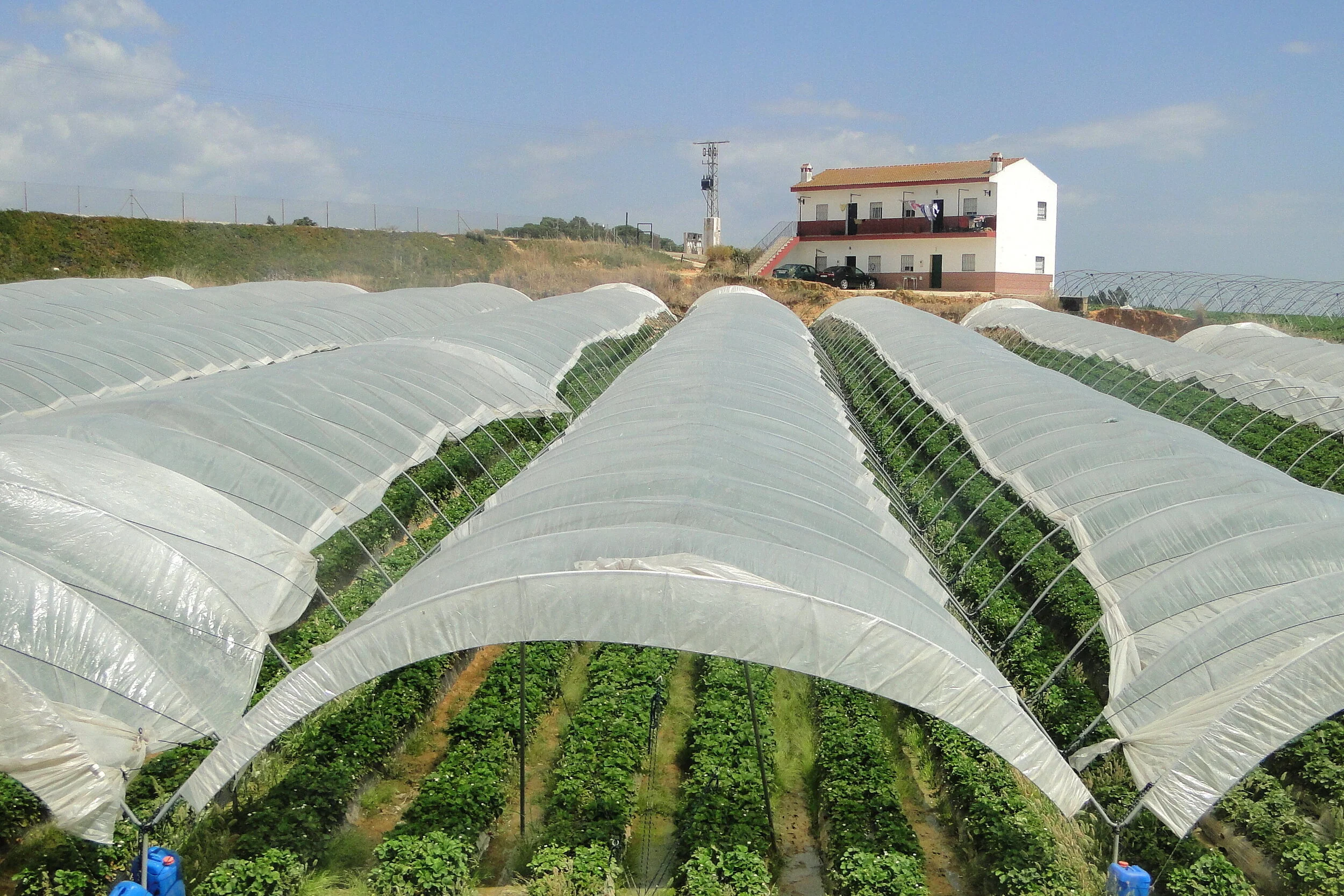
Strawberry fields in Spain, such as this one near Palos de la Frontera, supply 90% of Europe’s strawberries. Adam Jones, Ph.D./Global Photo Archive/Flickr. CC BY-SA 2.0.

The Dark Side of Spain’s Strawberry Fields

July 23, 2020

On July 1, Reuters reported that thousands of Moroccan women were brought over to Spain’s southern Huelva province as essential workers to harvest strawberries in the midst of the coronavirus pandemic. These women were housed in “abysmal conditions and without basic hygiene,” according to Olivier De Schutter, the United Nations Special Rapporteur on extreme poverty and human rights. De Schutter told Reuters that the migrant workers are housed in overcrowded settlements with “poor access to water and sanitation … no ventilation of work spaces ... absence of cleaning of any surfaces or objects.” CNN reported that more than 7,000 Moroccan workers are now stranded in Huelva province after Morocco closed its borders in order to stem the spread of COVID-19. The workers, desperate to get home to their families, have no money and nowhere to go.

The exploitation of Moroccan migrant workers—women in particular—in Spain is not new, but during the middle of a global pandemic the disregard for the migrant workers’ lives is made more apparent.

For years, Moroccan women have reported that they have been sexually assaulted and harassed, abused, forced to work in unsafe conditions, and not been paid their full wages. Many of these reports come from workers on the strawberry farms.

Spain is the largest exporter of strawberries in the European Union. The fruit is so vital to Spain’s economy that it is sometimes called “red gold.” The strawberry farms in Huelva produce 97% of the summer fruit. “The delicate fruits - which sell for around 3 euros per kilogram in Spanish supermarkets - are harvested by the hands of thousands of migrant workers, including between 14,000 and 19,000 temporary laborers from Morocco. During harvest, workers often live in crowded huts on the farm and rarely get a glimpse of life beyond the strawberry fields,” according to Middle East Eye.

In 2001, Spain and Morocco signed a labor agreement granting Moroccan women temporary visas to harvest fruit in Spain under specific conditions: the women had to be poor and they had to be mothers. These requirements ensure that the women are desperate for work and will not stay in Spain as they have a family they have to get back to in Morocco.  

In July 2019, The New York Times reported on the exploitation of Moroccan women on Spanish strawberry farms. 10 women who worked on the Donana 1998 d’Almonte farm filed lawsuits that included “accusations of sexual harassment and assault, rape, human trafficking and several labor violations.” The women had been promised high wages, training and accommodations with a kitchen and washing machine with four women per room. Instead, the women lived in dusty, overcrowded rooms with windows covered in cardboard. “I felt like a slave. Like an animal. They brought us to exploit us and then to send us back. I wish I drowned in the sea and died before arriving in Spain,” one woman told The New York Times.

Workers’ unions and human rights groups like Women’s Link Worldwide are advocating on behalf of the Moroccan women. On June 3, Women’s Link and seven other organizations sent an urgent report to the U.N. warning of the risk COVID-19 poses for the Moroccan women and other seasonal migrant workers on the strawberry farms. They have asked the U.N. “to issue a joint statement to the competent authorities of Spain and Morocco and the businesses involved demanding protection for the health and rights of migrant workers in Huelva.” Women’s Link further specified that the protections should be long term and not last only for the duration of the coronavirus pandemic.

In 2019, Women’s Link represented four women who had been hired to work in Huelva in 2018. The four women were told they would have continuous employment for three months and a trial period of 15 days, with housing provided at no extra cost. When the women arrived in Spain, they discovered the conditions were not what they had been promised. In addition to having an unpaid trial period that would last an entire month, the women were expected to work longer hours for less pay, and the cost of accommodation would be deducted from their wages. According to Women’s Link, the four women also “reported the sexual harassment they suffered at the hands of the field manager.”

The field manager in question is currently under investigation and is awaiting trial by a court in the town of Moguer.
Asiya Haouchine

is an Algerian-American writer who graduated from the University of Connecticut in May 2016, earning a BA in journalism and English. She was an editorial intern and contributing writer for Warscapes magazine and the online/blog editor for Long River Review. She is currently studying for her Master’s in Library and Information Science. @AsiyaHaou

Asiya Haouchine
Tags stawberry fields, Spain, Coronavirus, COVID-19, UN, United Nations, Morocco, sexual harrassment, human trafficking, Europe
Comment

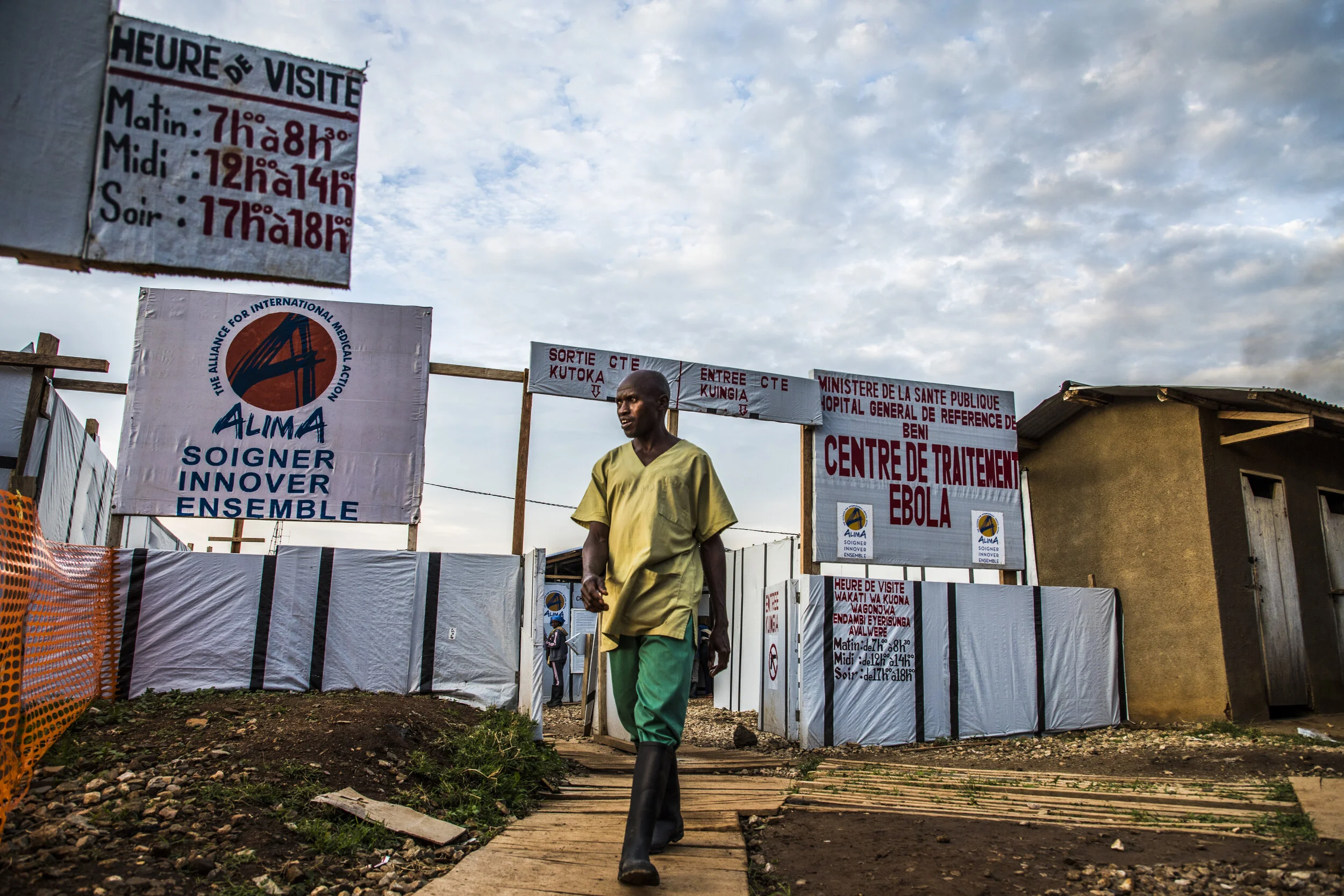
A health worker walking outside of the ALIMA Ebola Treatment Center in the Democratic Republic of Congo in January 2019. World Bank Photo Collection. CC-BY-NC-ND 2.0.

Congo Faces New Ebola Outbreak Amid Global Pandemic

July 23, 2020

The World Health Organization has called on the international community for financial support and aid in combating the latest Ebola outbreak in the Democratic Republic of Congo. This latest outbreak was announced by the country’s government on June 1 and has seen 56 cases reported in the Equateur province, a region which has been a hot spot for the disease in recent years.

Ebola is a deadly disease with outbreaks occurring primarily in Africa. In humans, the virus can be caused by one of four virus species: Ebola virus, Sudan virus, Tai Forest virus and Bundibugyo virus. The virus spreads through direct contact with organic matter from infected humans and animals. Common symptoms include fever, aches, weakness, fatigue, abdominal pain, gastrointestinal symptoms, and hemorrhaging, bleeding and bruising.

This latest outbreak comes as the 11th in a long line of Ebola outbreaks in the Congo since the disease was first discovered in 1976. A couple of weeks ago, the WHO celebrated the end of the country’s 10th outbreak, which began in August 2018. That Ebola outbreak was the deadliest recorded in the DRC and second worst in history, seeing 2,280 deaths.

According to The New York Times, the WHO has gathered $1.75 million to combat the outbreak, but this funding would only last the organization for a couple more weeks. Dr. Matshidiso Moeti, the WHO’s regional director for Africa, called for additional funding to be allocated toward vaccinations, testing and treatment, as well as contact tracing and health education resources.

“Responding to Ebola in the midst of the ongoing COVID-19 pandemic is complex, but we must not let COVID-19 distract us from tackling other pressing health threats,” Dr. Moeti said. “The current Ebola outbreak is running into headwinds because cases are scattered across remote areas in dense rainforests. This makes for a costly response as ensuring that responders and supplies reach affected populations is extremely challenging.”

Dr. Moeti also stated that over 12,000 people living in the Equateur province had been vaccinated since the outbreak was first reported in June.

WHO Director-General Dr. Tedros Adhanom Ghebreyesus echoed Dr. Moeti’s sentiments in a recent news release on the situation.

“This is a reminder that COVID-19 is not the only health threat people face,” Dr. Ghebreyesus said. “Although much of our attention is on the pandemic, WHO is continuing to monitor and respond to many other health emergencies.”

This call for funding follows a challenging six months for the organization, as the WHO has partnered with global leaders to combat the ongoing COVID-19 pandemic.

While much of the world has been supportive of the organization, the United States has been an exception. President Donald Trump pulled the country out of the WHO in late May over concerns about Chinese influence, with the withdrawal going into effect on July 6, 2021. The U.S. is the organization’s single largest financial contributor, having provided over $400 million in 2019.

President Trump has not publicly commented on this latest Ebola outbreak. While the U.S. directed $21 million in aid through the U.S. Agency for International Development for the 10th outbreak in 2019, it is unclear whether the country will direct any funding toward this latest outbreak’s relief efforts.

The WHO is expected to continue Ebola relief operations within the Equateur province for the foreseeable future, as governmental agencies such as the United Nations have directed additional funding to the organization. However, it is unclear how long this funding will last and how the ongoing COVID-19 pandemic will complicate these relief measures.

Jacob Sutherland

is a recent graduate from the University of California San Diego where he majored in Political Science and minored in Spanish Language Studies. He previously served as the News Editor for The UCSD Guardian, and hopes to shed light on social justice issues in his work.

Tags Ebola, Democratic Republic of Congo, DRC, Africa, vaccination, medicine, POTIS, President Trump, United Nations, UN, funding, COVID, Global Health
Comment

VIDEO: Age Demands Action

February 15, 2017

An estimated 100 million older people are living on less than $1 a day. Older people are among the poorest and most marginalized in many countries. Older people, especially older women, play key roles as caretakers in support of people with HIV/AIDS and orphaned grandchildren. The nonprofit HelpAge is a network of organizations promoting the right of all older people to lead dignified, healthy and secure lives.
 

In News and Social Action Tags age, aging, dignity, aging with dignity, elderly, older people, age demands action, UN, united nations, international day of older persons, international, organization, global, social justice, Activism, Human Rights
Comment

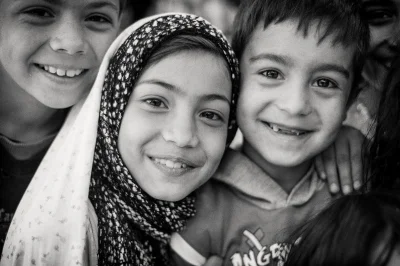
Pictures of Afghan children at a school run by a local mosque for Afghan orphans & refugees in Shiraz, Iran. Photo by Simon Monk (CC BY-NC-ND 2.0).

IRAN: A Commitment to Provide Universal Public Healthcare to Refugees

November 4, 2015

In an announcement from the United Nation mission in Iran, the Iranian government will include all of its registered refugees into its Salamat Insurance Scheme. This is a collaboration between the Ministry of Interior, responsible for immigrant affairs, the Iranian Health Insurance Organization and the United Nations High Commissioner for Refugees (UNHCR). This plan is targeted at Iran's Afghan and Iraqi refugee population.

Iran's English daily Tehran Times, part of the Mehr News Agency owned by the Islamic Ideology Dissemination Organisation, described the “gratitude” of Sivanka Dhanapala, the UNHCR Representative in Iran, for the program:

“UNHCR’s Representative in Iran acknowledged the Iranian Government’s contribution, expressed UNHCR’s gratitude towards the Government of the Islamic Republic of Iran for all the services it has rendered to the largest protracted urban refugee population in the world for over three decades, and inclusion of the refugees in this Universal Insurance Scheme which is exemplary not only regionally but also globally, and added that such a services haven’t been provided before and I sincerely hope other countries will follow this example.
”

Half of the coverage for the program will come from the Iranian government, while the UNHCR will contribute with US $8.3 million. The program will be available to all registered refugees, who will receive access to a health insurance package for “hospitalization and temporary hospitalization”, as available to Iranian nationals.

According to the UNHCR website, Iran is home to one of “the world's largest and most protracted refugee populations.” Iran's Afghan refugee population nears 1 million, with an additional estimated 1.4 to 2 million unregistered refugees living and working in the country.

Iran's treatment of this demographic has been subject to past criticism, however, most notable in the 2013 Human Rights Watch report that detailed the mistreatment and sometimes abuse Afghans faced from both Iranian society and the government.

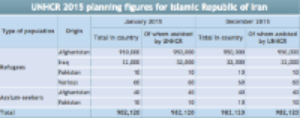
For their 2015 projection, the UNHCR detailed their expectations for Iran's intake for mostly Afghan, Iraqi and Pakistani refugees as outlined in the image below.


Iran has been criticized for not taking in any Syrian refugees throughout the civil war there. This reproach comes amidst the fact that it is heavily involved in the Syrian conflict as an ally and supporter of the Syrian President Bashar Al-Assad.

Indeed, this development in instating universal public healthcare for refugee populations is a notable milestone for both Iran and the region. Iran can, however, still improve its image in bolstering its role in alleviating the neighbouring Syrian refugee crisis.

ORIGINALLY PUBLISHED ON GLOBALVOICES


Mahsa Alimardani

@maasalan

Mahsa Alimardani is an Iranian-Canadian Internet researcher. Her focus in on the intersection of technology and human rights, especially as it pertains to freedom of expression and access to information inside Iran. She holds an Honours Bachelor in Political Science from the University of Toronto and is completing her Masters degree in New Media and Digital Culture at the University of Amsterdam.

In Iran, Middle East, News and Social Action, Global Health, Human Rights Tags iran, middle east, universal, UN, Refugees, Global Health, International Affairs
Comment

Also check out...

Featured
Vietnam’s Floating Markets Are Disappearing
The Supernatural Role of Masks in Nigeria’s Yoruba Tribal Culture
Opening the World to Deaf Travelers with Lily Yu

Featured trips

Featured
Offer NGO Support While Visiting Quito
Experience Life as a Mongolian Nomad
Help Grow Organic Costa Rican Coffee

Sign up for the CATALYST newsletter

Sign up for our newsletter to get the scoop on international travel, global social impact insights, our latest podcast releases, and more from around the world, all delivered right to your inbox!

We respect your privacy.

Thank you!
Newsletter Sign Up | Advertise | Careers + Internships | Privacy Policy | Submissions | Contact Us

Copyright © 2025, MISSION MEDIA LLC. All rights reserved.