• Travel Features
  • Global Action
  • Take A Trip
  • Travel Guides
    • Podcast
    • Courses
    • Bookshop
  • About
  • Sign Up
Menu

CATALYST PLANET

  • Travel Features
  • Global Action
  • Take A Trip
  • Travel Guides
  • Discover
    • Podcast
    • Courses
    • Bookshop
  • About
  • Sign Up

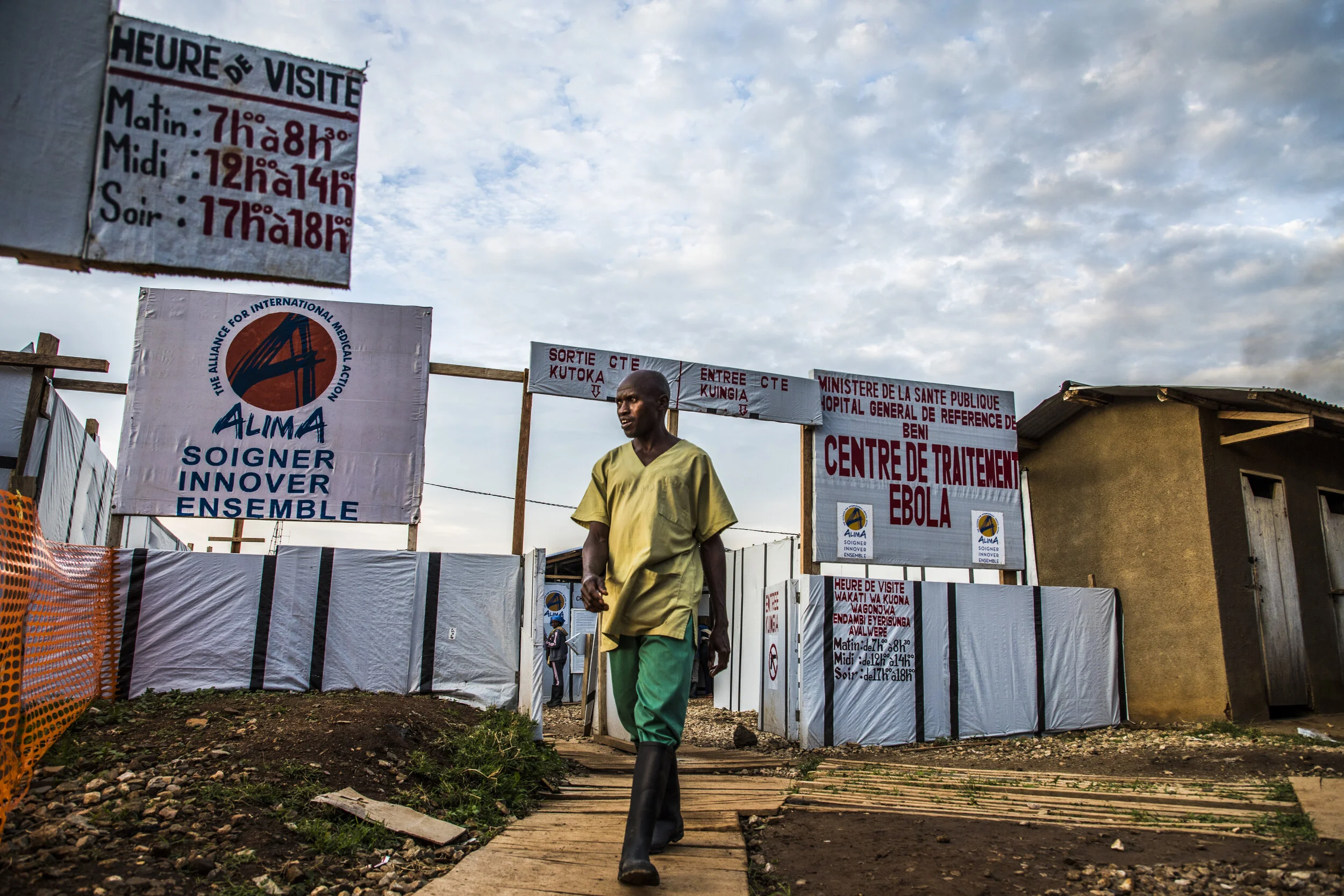
A health worker walking outside of the ALIMA Ebola Treatment Center in the Democratic Republic of Congo in January 2019. World Bank Photo Collection. CC-BY-NC-ND 2.0.

Congo Faces New Ebola Outbreak Amid Global Pandemic

July 23, 2020

The World Health Organization has called on the international community for financial support and aid in combating the latest Ebola outbreak in the Democratic Republic of Congo. This latest outbreak was announced by the country’s government on June 1 and has seen 56 cases reported in the Equateur province, a region which has been a hot spot for the disease in recent years.

Ebola is a deadly disease with outbreaks occurring primarily in Africa. In humans, the virus can be caused by one of four virus species: Ebola virus, Sudan virus, Tai Forest virus and Bundibugyo virus. The virus spreads through direct contact with organic matter from infected humans and animals. Common symptoms include fever, aches, weakness, fatigue, abdominal pain, gastrointestinal symptoms, and hemorrhaging, bleeding and bruising.

This latest outbreak comes as the 11th in a long line of Ebola outbreaks in the Congo since the disease was first discovered in 1976. A couple of weeks ago, the WHO celebrated the end of the country’s 10th outbreak, which began in August 2018. That Ebola outbreak was the deadliest recorded in the DRC and second worst in history, seeing 2,280 deaths.

According to The New York Times, the WHO has gathered $1.75 million to combat the outbreak, but this funding would only last the organization for a couple more weeks. Dr. Matshidiso Moeti, the WHO’s regional director for Africa, called for additional funding to be allocated toward vaccinations, testing and treatment, as well as contact tracing and health education resources.

“Responding to Ebola in the midst of the ongoing COVID-19 pandemic is complex, but we must not let COVID-19 distract us from tackling other pressing health threats,” Dr. Moeti said. “The current Ebola outbreak is running into headwinds because cases are scattered across remote areas in dense rainforests. This makes for a costly response as ensuring that responders and supplies reach affected populations is extremely challenging.”

Dr. Moeti also stated that over 12,000 people living in the Equateur province had been vaccinated since the outbreak was first reported in June.

WHO Director-General Dr. Tedros Adhanom Ghebreyesus echoed Dr. Moeti’s sentiments in a recent news release on the situation.

“This is a reminder that COVID-19 is not the only health threat people face,” Dr. Ghebreyesus said. “Although much of our attention is on the pandemic, WHO is continuing to monitor and respond to many other health emergencies.”

This call for funding follows a challenging six months for the organization, as the WHO has partnered with global leaders to combat the ongoing COVID-19 pandemic.

While much of the world has been supportive of the organization, the United States has been an exception. President Donald Trump pulled the country out of the WHO in late May over concerns about Chinese influence, with the withdrawal going into effect on July 6, 2021. The U.S. is the organization’s single largest financial contributor, having provided over $400 million in 2019.

President Trump has not publicly commented on this latest Ebola outbreak. While the U.S. directed $21 million in aid through the U.S. Agency for International Development for the 10th outbreak in 2019, it is unclear whether the country will direct any funding toward this latest outbreak’s relief efforts.

The WHO is expected to continue Ebola relief operations within the Equateur province for the foreseeable future, as governmental agencies such as the United Nations have directed additional funding to the organization. However, it is unclear how long this funding will last and how the ongoing COVID-19 pandemic will complicate these relief measures.

Jacob Sutherland

is a recent graduate from the University of California San Diego where he majored in Political Science and minored in Spanish Language Studies. He previously served as the News Editor for The UCSD Guardian, and hopes to shed light on social justice issues in his work.

Tags Ebola, Democratic Republic of Congo, DRC, Africa, vaccination, medicine, POTIS, President Trump, United Nations, UN, funding, COVID, Global Health
Comment

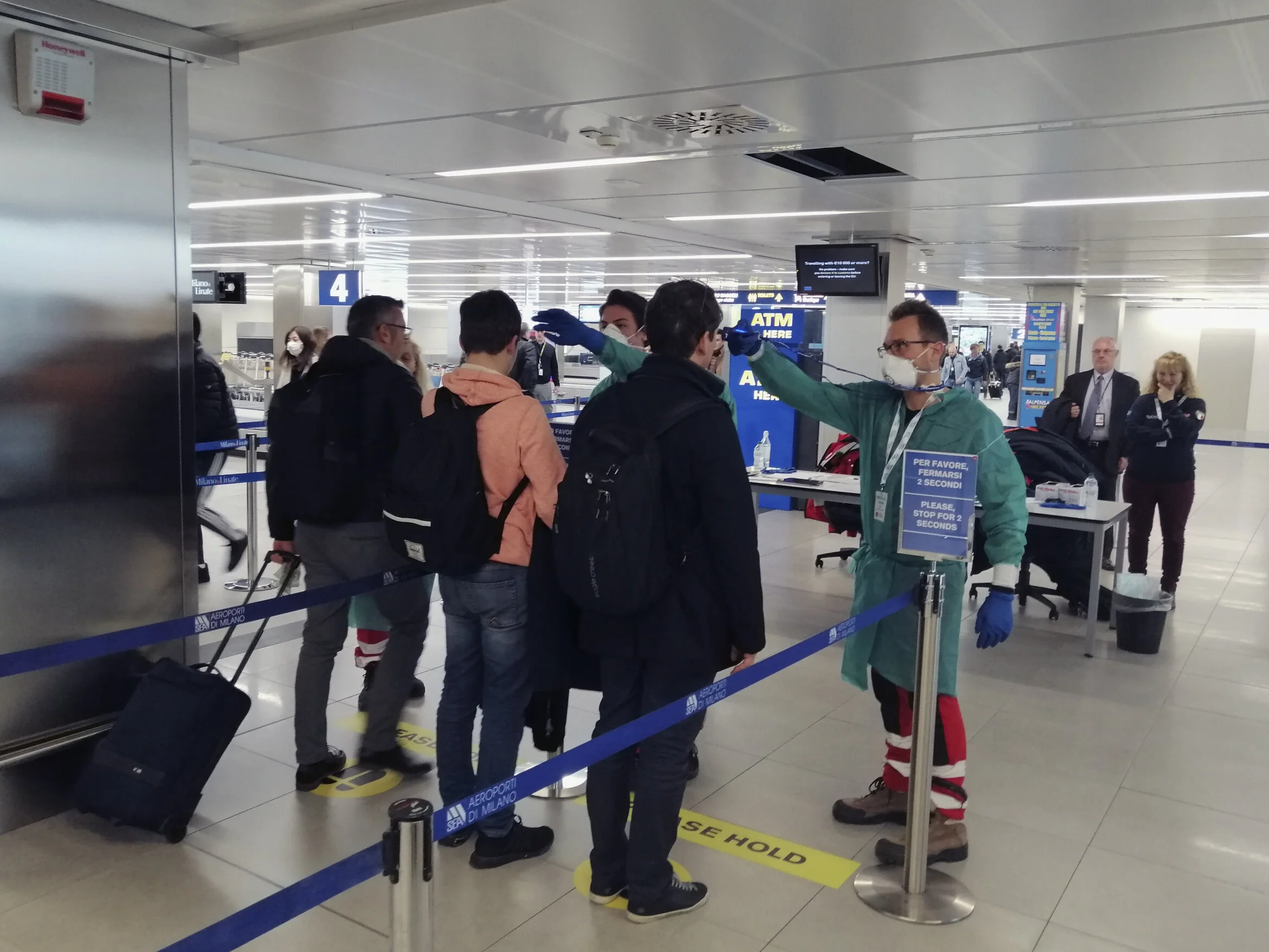
Travelers being screened for COVID-19 at an Italian airport. Dipartimento Protezione Civile from Italia. CC BY.

The World Shuts Its Doors to US Travelers

July 9, 2020

As countries around the world continue to maintain flattened curves of COVID-19 cases and begin the process of reopening their borders to visitors, many have enacted restrictions and bans on entry for all United States citizens. The U.S., a country which has not flattened the curve, has seen its number of COVID-19 cases increase to over 3 million as of July 8, the highest in the world for any country.

The European Union and the non-EU nations of Iceland, Norway, Switzerland and Liechtenstein began the process of allowing foreign visitors into their respective borders on July 1. This initial list of 15 countries highlights the cautious standards set by the EU to limit the spread of the virus by foreign travelers arriving from countries experiencing surges of COVID-19 cases.

According to the Council of the EU, a country that is to be considered for the travel restrictions to be lifted must include: “[the] number of new COVID-19 cases over the last 14 days and per 100,000 inhabitants [be] close to or below the [June 15] EU average, stable or decreasing trend of new cases over this period in comparison to the previous 14 days, [and the country’s] overall response to COVID-19 taking into account available information.”

These travel restrictions do not apply to travelers with “an essential function or need” in Europe. Likewise, the EU will review the situation every two weeks and may add or remove countries from the list of those whose travelers are permitted to enter the aforementioned European countries.

While the EU is the latest governing body to bar U.S. citizens from travel to the region, others have had similar restrictions in place for a much longer duration of the ongoing pandemic. Cuba, a country which notably shut its borders to all non-Cuban citizens on March 20 and flattened its curve early on, extended its suspension of all international flights to August 1.

New Zealand, a country which has virtually eradicated COVID-19 within its borders, imposed similar travel restrictions to those of Cuba. The nation essentially barred all foreign travelers from entering the country at the beginning of the pandemic, and will continue to uphold these restrictions for the foreseeable future.

China, where the COVID-19 outbreak began, has not imposed an official ban on U.S. travelers entering the country. However, all international travelers entering China are subject to COVID-19 screening upon entry and a mandatory 14-day quarantine at either a government-selected facility or hotel at the traveler’s expense.

The U.S. Department of State’s Bureau of Consular Affairs continues to update its travel database daily with any new information in regard to travel restrictions and COVID-19 cases around the globe. While the Trump administration has not officially restricted U.S. citizens from traveling abroad, the Centers for Disease Control and Prevention discourages any form of nonessential travel.

Jacob Sutherland

is a recent graduate from the University of California San Diego where he majored in Political Science and minored in Spanish Language Studies. He previously served as the News Editor for The UCSD Guardian, and hopes to shed light on social justice issues in his work.
Tags COVID-19, Coronavirus, flatten the curve, EU, essential workers, New Zealand, China, quarantine, POTIS, President Trump, non-essential travel, CDC, Center for Disease Control and Prevention, Travel, USA, Europe
Comment

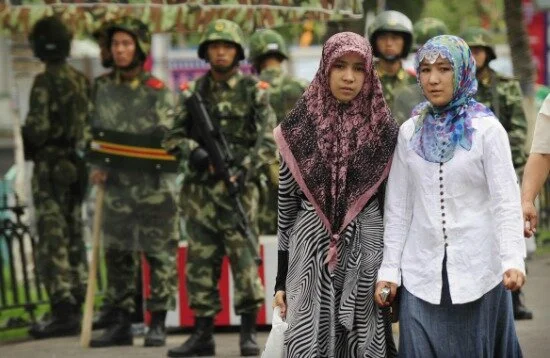
Chinese soldiers entering a Uyghur community. Peter Parks. CC 2.0.

US Calls for Action Against Chinese for Treatment of Uyghur Muslims

May 21, 2020

Last week, the U.S. Senate passed the Uyghur Human Rights Policy Act of 2020 to seek justice for Uyghur Muslims forced into labor camps in China.

It is believed that the Chinese government’s placement of Uyghur Muslims in labor camps in Xinjiang province represents the largest mass detention of people since World War II. However, since 2017, there has been an international investigation into the matter. It is estimated by the United Nations that approximately 2 million Uyghurs have been placed into at least 28 camps. 

Yet, when questioned about this activity, the government denies wrongdoing  and explains that the purpose of the camps is vocational training for the minority group to increase its participation in the economy. The government staged a press conference of alleged former “civilians” who were at the camps to show that the camps helped transform their lives and ideologies. By transformation, it is implied that they were taught to give up Muslim practices and take on more “modern” Chinese ways. Family members who are living outside of China have spoken out against Chinese statements and helped expose the torture that may actually be taking place in these modern-day concentration camps.

The Uyghur people make up 60% of Xinjiang’s population, but are a minority in the rest of China. Specifically, they are of Turkish descent, and are often labeled as terrorists and religious extremists by the Chinese government. The name “Uyghur” is actually an umbrella term for multiple Muslim minorities that have been singled out. Many of those who have been targeted have been forcibly detained for reasons such as facial hair or even clothing. 

In November 2019, United States senators called for sanctions against Chinese leaders for the detention of Uyghurs. However, due to the impeachment hearings of President Trump, the bill failed to get past the Senate floor. The U.S. is not the first country to bring attention to this human rights crisis. Xinjiang province sits along the path of China’s Belt and Road Initiative, a  plan to expand trade throughout Asia and Europe by essentially revamping the Silk Road. The human rights violations against the Uyghurs have given pause to some countries about joining the project.

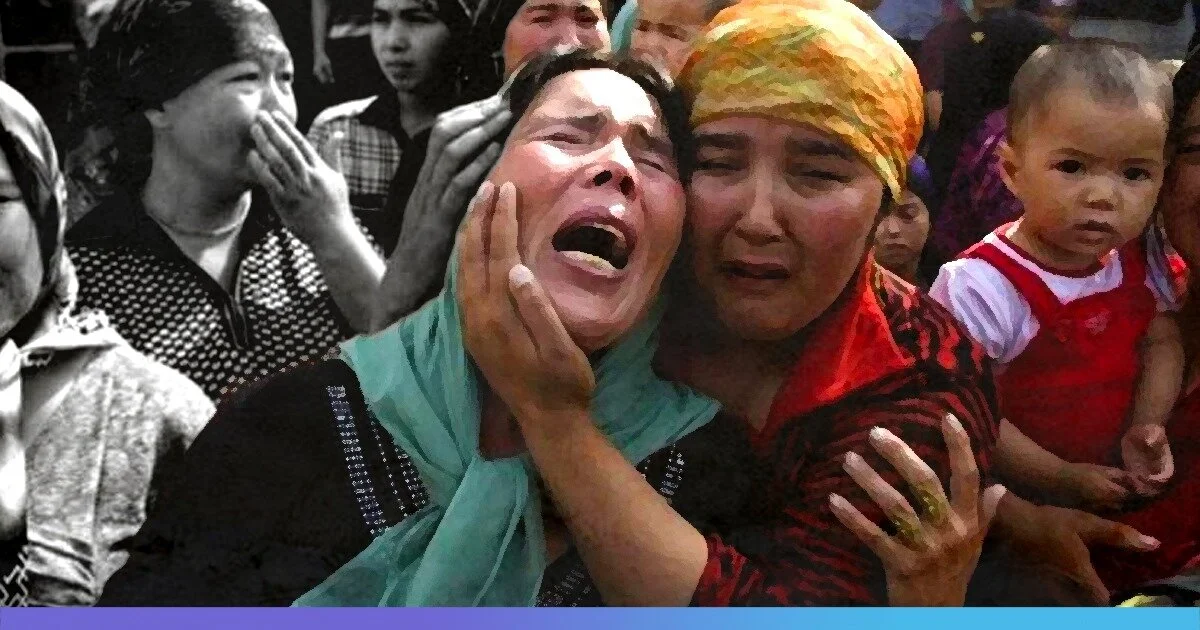
Uyghur women grieving over those who have been forcibly taken by Chinese government. Han Guan. CC 2.0

On May 14, the U.S. Senate passed the Uyghur Human Rights Policy Act of 2020. If enacted by President Trump, it would establish sanctions against China and its officials who are held responsible for inhumane acts ranging from the kidnapping of Muslims  to the high rates of abuse and death taking place in the camps.The sanctions include placing restrictions on imports of goods made at these camps as well. The State Department would also be tasked with compiling a report detailing the conditions of these camps, which would be separate from the annual Human Rights and International Religious Freedom documents.

In light of the COVID-19 pandemic, Senate Republicans have taken up an agenda that  questions many of the Chinese government’s practices. The Uyghur Human Rights Policy Act of 2020 is only one of many issues the U.S. is bringing up.

This is not the first case of Muslims being targeted in Asia. Back in August 2017, Rohingya Muslims faced persecution in Myanmar by the country’s Buddhist majority government on claims of terrorism, just like the Uyghur people. Similar to China, Myanmar’s government also refused to take responsibility for its actions.

Eva Ashbaugh

is a Political Science and Gender, Sexuality, and Women's Studies double major at the University of Pittsburgh. As a political science major concentrating on International Relations, she is passionate about human rights, foreign policy, and fighting for equality. She hopes to one day travel and help educate people to make the world a better place.

Tags China, Uighur Muslim, Uyghur Muslims, labor camps, Chinese, Asia, Europe, Silk Road, President Trump, Donald Trump, Rohingya Muslims, Refugees, Human Rights, USA, International Affairs
Comment

Also check out...

Featured
Vietnam’s Floating Markets Are Disappearing
The Supernatural Role of Masks in Nigeria’s Yoruba Tribal Culture
Opening the World to Deaf Travelers with Lily Yu

Featured trips

Featured
Offer NGO Support While Visiting Quito
Experience Life as a Mongolian Nomad
Help Grow Organic Costa Rican Coffee

Sign up for the CATALYST newsletter

Sign up for our newsletter to get the scoop on international travel, global social impact insights, our latest podcast releases, and more from around the world, all delivered right to your inbox!

We respect your privacy.

Thank you!
Newsletter Sign Up | Advertise | Careers + Internships | Privacy Policy | Submissions | Contact Us

Copyright © 2025, MISSION MEDIA LLC. All rights reserved.