• Travel Features
  • Global Action
  • Take A Trip
  • Travel Guides
    • Podcast
    • Courses
    • Bookshop
  • About
  • Sign Up
Menu

CATALYST PLANET

  • Travel Features
  • Global Action
  • Take A Trip
  • Travel Guides
  • Discover
    • Podcast
    • Courses
    • Bookshop
  • About
  • Sign Up

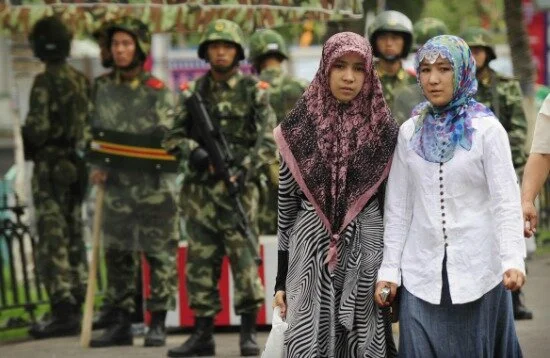
Chinese soldiers entering a Uyghur community. Peter Parks. CC 2.0.

US Calls for Action Against Chinese for Treatment of Uyghur Muslims

May 21, 2020

Last week, the U.S. Senate passed the Uyghur Human Rights Policy Act of 2020 to seek justice for Uyghur Muslims forced into labor camps in China.

It is believed that the Chinese government’s placement of Uyghur Muslims in labor camps in Xinjiang province represents the largest mass detention of people since World War II. However, since 2017, there has been an international investigation into the matter. It is estimated by the United Nations that approximately 2 million Uyghurs have been placed into at least 28 camps. 

Yet, when questioned about this activity, the government denies wrongdoing  and explains that the purpose of the camps is vocational training for the minority group to increase its participation in the economy. The government staged a press conference of alleged former “civilians” who were at the camps to show that the camps helped transform their lives and ideologies. By transformation, it is implied that they were taught to give up Muslim practices and take on more “modern” Chinese ways. Family members who are living outside of China have spoken out against Chinese statements and helped expose the torture that may actually be taking place in these modern-day concentration camps.

The Uyghur people make up 60% of Xinjiang’s population, but are a minority in the rest of China. Specifically, they are of Turkish descent, and are often labeled as terrorists and religious extremists by the Chinese government. The name “Uyghur” is actually an umbrella term for multiple Muslim minorities that have been singled out. Many of those who have been targeted have been forcibly detained for reasons such as facial hair or even clothing. 

In November 2019, United States senators called for sanctions against Chinese leaders for the detention of Uyghurs. However, due to the impeachment hearings of President Trump, the bill failed to get past the Senate floor. The U.S. is not the first country to bring attention to this human rights crisis. Xinjiang province sits along the path of China’s Belt and Road Initiative, a  plan to expand trade throughout Asia and Europe by essentially revamping the Silk Road. The human rights violations against the Uyghurs have given pause to some countries about joining the project.
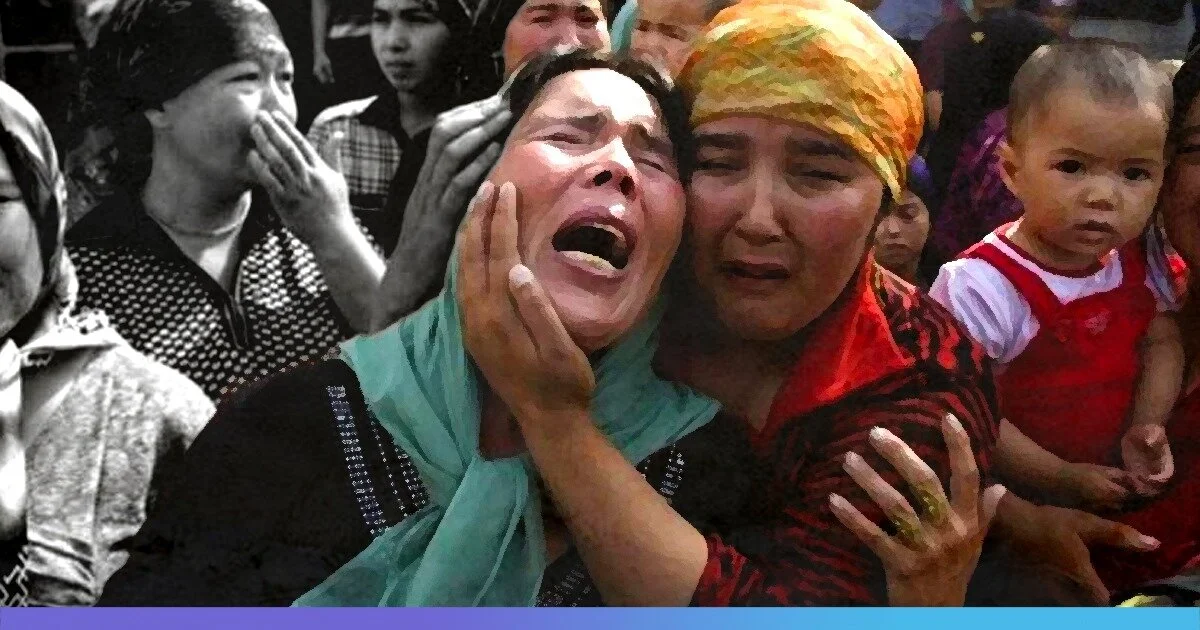
Uyghur women grieving over those who have been forcibly taken by Chinese government. Han Guan. CC 2.0

On May 14, the U.S. Senate passed the Uyghur Human Rights Policy Act of 2020. If enacted by President Trump, it would establish sanctions against China and its officials who are held responsible for inhumane acts ranging from the kidnapping of Muslims  to the high rates of abuse and death taking place in the camps.The sanctions include placing restrictions on imports of goods made at these camps as well. The State Department would also be tasked with compiling a report detailing the conditions of these camps, which would be separate from the annual Human Rights and International Religious Freedom documents.

In light of the COVID-19 pandemic, Senate Republicans have taken up an agenda that  questions many of the Chinese government’s practices. The Uyghur Human Rights Policy Act of 2020 is only one of many issues the U.S. is bringing up.

This is not the first case of Muslims being targeted in Asia. Back in August 2017, Rohingya Muslims faced persecution in Myanmar by the country’s Buddhist majority government on claims of terrorism, just like the Uyghur people. Similar to China, Myanmar’s government also refused to take responsibility for its actions.

Eva Ashbaugh

is a Political Science and Gender, Sexuality, and Women's Studies double major at the University of Pittsburgh. As a political science major concentrating on International Relations, she is passionate about human rights, foreign policy, and fighting for equality. She hopes to one day travel and help educate people to make the world a better place.
Tags China, Uighur Muslim, Uyghur Muslims, labor camps, Chinese, Asia, Europe, Silk Road, President Trump, Donald Trump, Rohingya Muslims, Refugees, Human Rights, USA, International Affairs
Comment

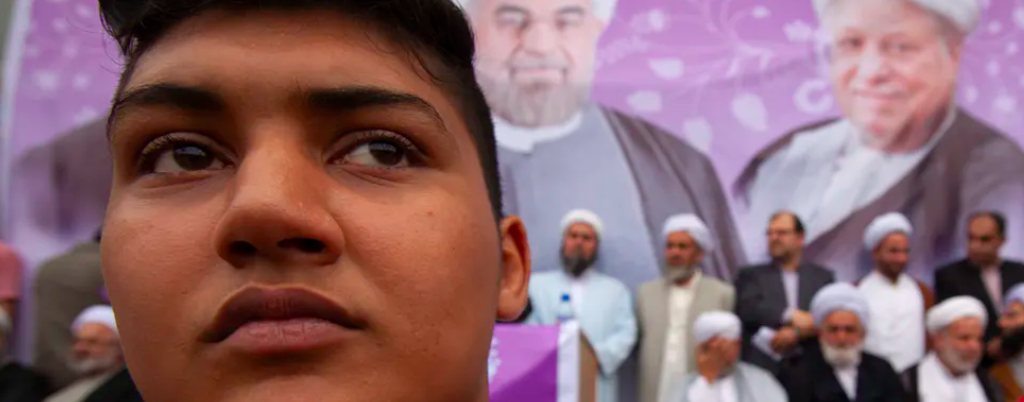
Within Iran’s lower classes, there is a highly conformist youth culture. Farzin Mahmoudzadeh, Author provided

How Iran’s Millennials Are Grappling With Crippling US Sanctions

February 23, 2020

In early January, after tensions between Iran and the United States escalated to the brink of war, President Donald Trump announced a detente of sorts, stating, “The United States is ready to embrace peace with all who seek it.”

It may have sounded like a conciliatory gesture, but the Trump administration went on to levy additional economic sanctions against the country only two days later.

As someone who has studied the lives of Iran’s working classes, I know just how damaging economic warfare has been. It’s hit young Iranians, who comprise a large portion of the population, particularly hard. High rates of inflation – on the order of 38.6% over the past 12 months – and a youth unemployment rate of 28.6% have drastically reduced their ability to purchase basic goods and feel any semblance of financial security.

Over the past 12 years, I’ve studied various groups of lower-class young people and their families in their homes, neighborhoods and workplaces, in shops, and in parks. I’ve also interviewed 44 youth between the ages of 15 and 29 who have been sidelined to the socioeconomic margins.

I wanted to know how they cope with prolonged insecurity and the constant threat of crisis.

Interestingly – and despite what you might see on the news – many don’t react by rebelling against authority or by regularly taking to the streets.

A central observation from my research and forthcoming book has been that, when faced with conditions of uncertainty, the young people I spoke with simply sought respect, acceptance and support from their communities. Life becomes a quest not for revolution, riches or vengeance, but for dignity.

A highly conformist culture

The desire for status and dignity is an integral part of Iranian society.

Most of the poor, younger city dwellers I studied try to achieve this through both their conduct and their dress. They want to be seen as classy, diligent and moral. In communities that value prestige and look down on poverty, this becomes their ticket to a better life.

So in an attempt to conceal their poverty, they’ll spend their limited income on the latest trends so they can attain a “modern” appearance, from having the latest smartphones to wearing brand-name shoes and shirts – or at least knockoffs.

In order to avoid being seen as lazy or delinquent, the young people I interviewed work diligently and avoid being associated with petty criminals, like drug dealers. Even though there’s rarely enough work to go around, they get creative. They work in the informal economy as shop apprentices, street vendors and seamstresses. Those who can’t find work take up unpaid work babysitting for family members or helping with a family business in an effort to appear hardworking. By doing this, they can assume a moral high ground – regardless of how little money they’re actually making.

As one local, middle-aged woman told me, “There’s something wrong with a kid who doesn’t work.”

These young men and women are adhering to a set of values prized by their communities and promoted by society through billboards, national television and official speeches.

The result is a relatively stable social order – and a youth culture that’s highly conformist.

This might come as a surprise to some, since some Western media outlets sometimes fixate on acts of rebellion.

In reality, deviance – especially among the lower classes – is rare. Many simply can’t afford the consequences of being shunned by those around them.

Rewards don’t need to be material

The quest for dignity is only part of the story. Like many young people around the world, most youth in Iran have dreams of a better future. But for those dealing with daily economic hardship, there’s a chasm between their goals and what’s possible.

“I wanted to get my bachelor’s degree and have a job where I sat behind a desk,” said Babak, a street vendor, “but I had to drop out of ninth grade in order to meet my family’s expenses.”

That gap may never be fully breached. But many young Iranians I met still feel as if it’s possible to – in the words of a mechanic’s apprentice – “bring themselves up.”

The young people I interviewed do this not by trying to game the system, but by following the rules: diligence, self-sufficiency, a smart appearance, and moral and sexual cleanliness. For this, communities reward them with jobs, small promotions, or even just more deference. The material benefits might be minimal, but people nonetheless feel validated and included in the broader fabric of the nation.

In other contexts, researchers have found that “looking the part” – performing what’s deemed to be attractive to society – matters to people’s life prospects. The youth I knew in Iran do the same. They might not fully escape poverty, but they can escape stigma.

To them, that matters.

The limits of virtue

Of course, not everyone in Iran can maintain an appearance of industry, class and virtue.

There are young people who are desperately poor, who can’t even scrape together enough money for a new pair of shoes. There are drug addicts. There are young women who have been outed as prostitutes.

Focused on only helping those they deem “deserving,” communities do little to lift up people who have fallen through the cracks. Friends and acquaintances are unwilling to recommend them for jobs, neighbors avoid connecting with them, families view them with shame.

It can all seem a bit Darwinian, with those deemed unfit becoming social pariahs.

And yet, there are many youth who persevere, who believe that living by the rules, day in and day out, is the right way to live. As Ibrahim, a laborer, emphasized, “I try to live in a good way. If people remember you as good, this is reason to be proud.” To youth like Ibrahim, living a worthy life means not simply accumulating material goods, but staying true to a moral code.

In the face of rising prices, dwindling jobs, and few prospects for socioeconomic change, the routines of daily life create space for those who have suffered most under the weight of suffocating sanctions to breathe – and, in many cases, grow.


Manata Hashemi is a Farzaneh Family Assistant Professor of Iranian Studies, University of Oklahoma.

THIS ARTICLE WAS ORIGINALLY PUBLISHED ON THE CONVERSATION

In News and Social Action, Global Politics Tags Iran, sanction, Donald Trump, Darwinian, conformist, millenial, CheckOut, USA, International Affairs
Comment

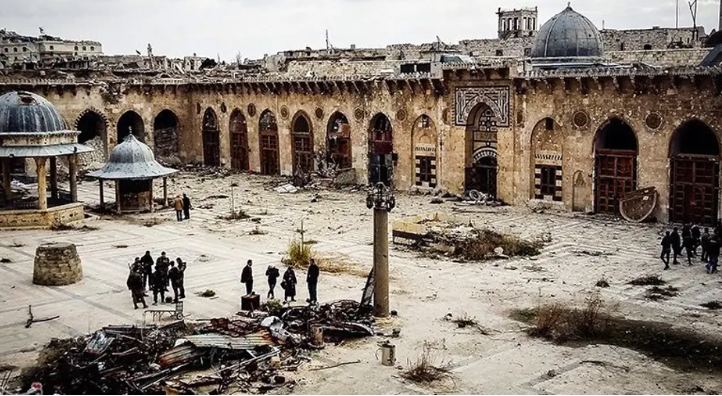
The Great Mosque of Aleppo, Syria, was destroyed in December 2016. Fathi Nezam /Tasnim News Agency, CC BY-NC-SA

Destroying Cultural Heritage Is an Attack on Humanity’s Past and Present – It Must Be Prevented

January 25, 2020

Since Sun Tzu wrote The Art of War in China in the sixth century BC, military writers have argued that to destroy the cultural heritage of your enemy is bad military practice. Many international agreements since have banned the destruction of cultural heritage in war. That is why there was a horrified reaction to President Trump’s recent threat to Iran’s cultural heritage following the assassination of General Soleimani.

Read More
In News and Social Action, Global Politics Tags UNESCO, Donald Trump, China, heritage, U.S., Iran, Arts and Culture, International Affairs
Comment

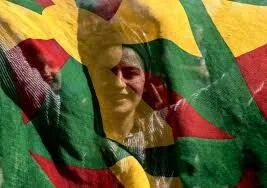
Hidden in plain sight: the Kurdish question in Turkey. Sedat Suna/EPA

Why the Kurdish Conflict in Turkey is so Intractable

October 31, 2019

The ramifications of Donald Trump’s decision to withdraw US troopsfrom the Turkish-Syrian border continues to have a seismic effect on the situation in northern Syria. 

Faced with the Turkish invasion of northern Syria, the Kurdish-led Syrian Democratic Forces (SDF) who controlled the area were forced to make compromises. On October 13, they announced a deal with the Syrian army, which began moving troops towards the Turkish border. A five-day ceasefire was brokered by the US on October 18, during which Turkey agreed to pause its offensive to allow Kurdish forces to withdraw. 

For many, the SDF proved itself to be the most effective force in the fight against Islamic State (IS). Turkey, however, considers the SDF as an extension of the Kurdistan Workers’ Party (PKK), which it, the US and EU label as a terrorist organisation.

But behind this lies a long history of Turkey denying the very existence of the Kurdish conflict, and the political and cultural rights of its Kurdish population. Understanding this history helps explain why the conflict is so intractable, and the impact it continues to have on Turkey’s foreign policy choices.

No room in the nation state

The Kurdish conflict cannot be understood without considering the question of power and exclusion. Its origins go back to the mid-19th century when the Ottomans attempted to end the 300-year-old autonomy of the Kurdish principalities in Kurdistan. This struggle for autonomy wasn’t resolved during the rule of the Ottoman era, and when it collapsed, all of the new nation states that eventually emerged – Turkey, Syria, Iraq and Iran – inherited their own Kurdish conflict. 

The Turks and the Kurds fought a successful war of independencetogether in 1919 against the Allied forces. Nevertheless, when the new Republic of Turkey was established in 1923, Turkish identity was presented as its unifying force, at the expense of the society’s political, social and cultural differences.

Not only was political power further centralised in Ankara, but the domination of the ethnic, Turkish and Sunni majority became the norm. The decision to create a centralised and homogeneous nation state was implemented in a top-down and violent fashion. The seeds of the long-term problems that Turkish and Kurdish communities confront today were created by this decision. 

Various Kurdish groups challenged this new social and political order with different revolts, uprisings, and resistance, but these were violently suppressed. Repressive policies of assimilation were later implemented to transform the Kurds into civilised and secular Turks.

A conflict buried

The Kurdish conflict laid buried for many years. Then, the most serious challenge to Turkey’s nation state project was initiated by the PKK in 1984, which embraced a political agenda called democratic autonomy. The violent struggle between Ankara and the PKK has resulted in a huge economic and human cost. 

Peace talks which began in 2013 with the PKK’s jailed leader Abdullah Öcalan were widely considered to be the best chance for ending the conflict, but these collapsed in 2015. This led to increasing violence in the form of a destructive armed conflict in southeastern Turkey and a wave of bombings, including in Ankara and Istanbul.

The resolution of intractable conflicts is only possible when conflicted parties can confront their past and learn from it. In 2015, amid attempts by Turkish opposition parties to reopen peace negotiations with the Kurds, Turkish president Recep Tayyip Erdoğan insisted: “There is no Kurdish conflict”. Such positioning, which continues today, keeps the political dimension of the conflict in the background. 

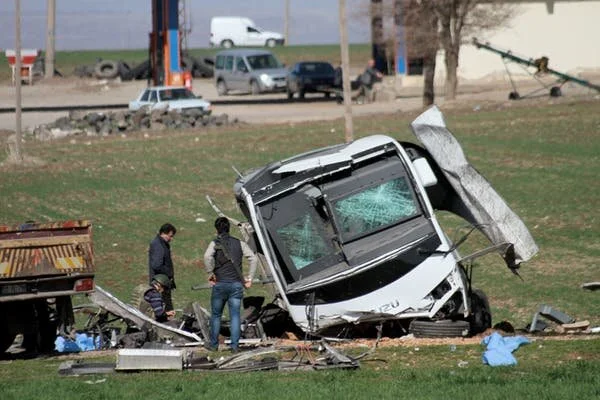
Aftermath of a bomb attacking a military convoy in Diyarbakir, Turkey. EPA

The state carefully controls what can and cannot be said about the conflict. Typically, words such as “terror” and “traitor” are used to criminalise those who criticise government policy towards the Kurds. A group of academics who signed a petition in 2016 calling for the resumption of peace talks were charged with making “terrorism propaganda”. The non-violent wing of the Kurdish movement – activists, politicians, political parties – has also been criminalised.

Blame game

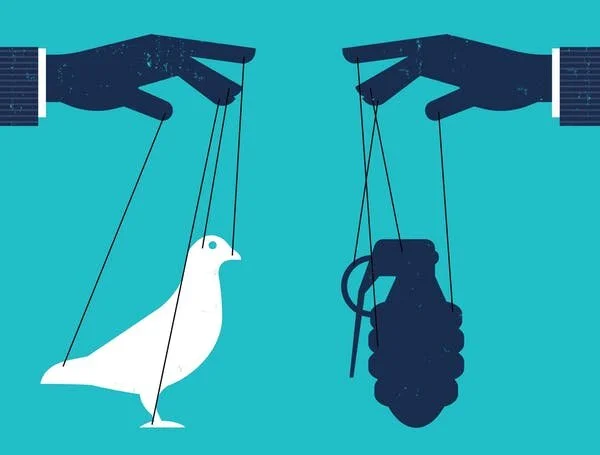
Instead of confronting their failure to bring about peace, Turkish political elites have tried to apportion blame elsewhere. Erdoğan, for example, repeatedly refers to an invisible “mastermind” who orchestrates the PKK. Such rhetoric is deployed to play on the collective fear and anxiety about national security felt by parts of Turkish society. 

Some have called this the “Sèvres syndrome” – referring to the 1920 Treaty of Sèvres that marked the end of the Ottoman empire and proposed to divide it into small states and occupation zones. The treaty was never implemented, and superseded by the 1923 Lausanne Treatywhich recognised the Republic of Turkey.

This syndrome – also referred to as “Sèvres Paranoia” – in essence reflects the collective fear that the Treaty of Sèvres will be revived and that the Turkish state is encircled by enemies who want to divide and weaken the country. 

Today, this line of thinking is an integral part of Turkish political life and continues to influence public perception towards the external world. In a 2006 public opinion survey, for example, 78% of participants agreed that “the West wants to divide and break up Turkey like they broke up the Ottoman Empire”.

Driving Turkey’s choices. By kmlmtz66/Shutterstock

In this way, the Kurdish conflict has been used to mobilise Turkish society to act against its own collective interest: a peaceful and just society. Policies aimed at managing the conflict have been implemented mostly within a state of emergency, in ways that continue to undermine Turkish democracy. Not only has the tremendous economic and human cost of the conflict become a “normal” part of Turkish life, but the state has also been successful in actively keeping the political dimension of the conflict at bay.

For a long time, Turkey refrained from talking about the Kurdish issue by assuming that it would eventually fade away. But it didn’t and instead, the conflict has become more deeply entrenched. Time will tell whether the Turkish state will ultimately gain or lose by its latest military intervention in Syria. However, what’s clear is that the Kurdish conflict will get more complicated with this latest move, and both the Turkish state and Turkish society will no longer be able to ignore it.

Recep Onursal is a PhD candidate in International Conflict Analysis, University of Kent


THIS ARTICLE WAS ORIGINALLY PUBLISHED ON THE CONVERSATION

Tags Kurds, Turkey, PKK, conflict, Donald Trump, Erdogan, Middle East
Comment

What exactly is the point of the border

August 16, 2018

The past few weeks have seen widespread outrage over the Trump administration’s now-defunct policy of separating migrant families at the border. Four members of the president’s Homeland Security advisory council have resigned in protest, citing the “morally repugnant” practice.

Read More
Tags immigration, America, Mexico, Donald Trump, borders, government
Comment

Also check out...

Featured
Vietnam’s Floating Markets Are Disappearing
The Supernatural Role of Masks in Nigeria’s Yoruba Tribal Culture
Opening the World to Deaf Travelers with Lily Yu

Featured trips

Featured
Offer NGO Support While Visiting Quito
Experience Life as a Mongolian Nomad
Help Grow Organic Costa Rican Coffee

Sign up for the CATALYST newsletter

Sign up for our newsletter to get the scoop on international travel, global social impact insights, our latest podcast releases, and more from around the world, all delivered right to your inbox!

We respect your privacy.

Thank you!
Newsletter Sign Up | Advertise | Careers + Internships | Privacy Policy | Submissions | Contact Us

Copyright © 2025, MISSION MEDIA LLC. All rights reserved.