
• Travel Features
  • Global Action
  • Take A Trip
  • Travel Guides
    • Podcast
    • Courses
    • Bookshop
  • About
  • Sign Up
Menu

CATALYST PLANET

  • Travel Features
  • Global Action
  • Take A Trip
  • Travel Guides
  • Discover
    • Podcast
    • Courses
    • Bookshop
  • About
  • Sign Up

The Potala Palace in Tibet’s capital city of Lhasa. H Bieser. CC BY 2.0.

Chinese Labor Camps Threaten Tibet’s Culture and Identity

October 8, 2020

On Sept. 22, the Jamestown Foundation reported that the Chinese government is running large-scale “training centers” in Tibet. These camps, extremely similar to the secret camps currently used to detain China’s Uyghur population in Xinjiang province, have processed over half a million Tibetans since January. 

Tibet is an autonomous region of China with just over 3 million inhabitants who largely work in agriculture. The number of people processed in these camps is staggering, with 543,000 rural surplus laborers having completed the training program in seven months—around 18% of Tibet’s current population.

In the report, researcher Adrian Zenz details China’s efforts to systematically train Tibetan farmers and transfer them to other regions of Tibet and across China. In the government’s efforts to eradicate poverty, Tibetan farmers are offered vocational training and wage increases in exchange for handing over their land and herds.
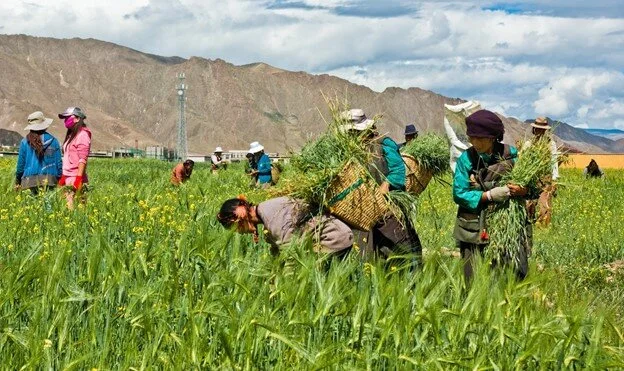
Farmers in Tibet. Antoine Taveneaux. CC BY-SA 3.0.

With this structure, jobs are created prior to training, and laborers are conditioned to fit the country’s employment needs. Companies benefit from creating jobs for trained laborers; the largest state-owned food company in China, the COFCO Group, is a major transfer location in Tibet.

While the Chinese government maintains that participation in these labor camps is voluntary, the report details that “the systemic presence of clear indicators of coercion and indoctrination, coupled with profound and potentially permanent changes in modes of livelihood, is highly problematic.” 

The forced cultural assimilation in these camps is a severe threat to Tibetan culture and history. “In the context of Beijing’s increasingly assimilatory ethnic minority policy, it is likely that these policies will promote a long-term loss of linguistic, cultural and spiritual heritage,” Zenz writes. 

While these camps are not identical to the Uyghur detainment camps in northwest China, they bear a striking resemblance. Both programs target the same group—rural surplus laborers—and modify traditional livelihoods through the militarization of education and training. With the removal of religious influence, these camps also “emphasize the need to ‘transform’ laborers’ thinking and identity.”

Ultimately, Tibetan identity is being directly targeted by the Chinese government as it forces Tibetan farmers into the formal Chinese economy. In the effort to eradicate poverty in the region, the Chinese government also seems determined to destroy traditional Tibetan culture.

Sarah Leidich

is currently an English and Film major at Barnard College of Columbia University. Sarah is inspired by global art in every form, and hopes to explore the intersection of activism, art, and storytelling through her writing.
Tags China, TIbet, labor camps, farmers, Uyghur, Beijing, assimilation, detainment camp, cultural genocide, Arts and Culture
Comment

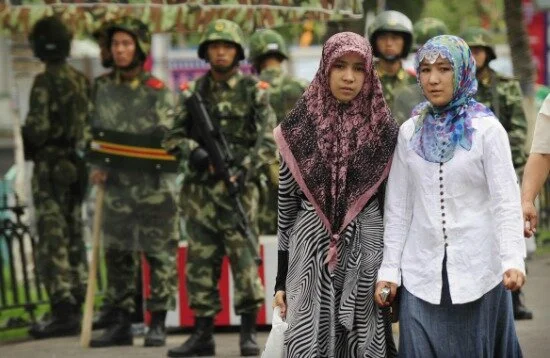
Chinese soldiers entering a Uyghur community. Peter Parks. CC 2.0.

US Calls for Action Against Chinese for Treatment of Uyghur Muslims

May 21, 2020

Last week, the U.S. Senate passed the Uyghur Human Rights Policy Act of 2020 to seek justice for Uyghur Muslims forced into labor camps in China.

It is believed that the Chinese government’s placement of Uyghur Muslims in labor camps in Xinjiang province represents the largest mass detention of people since World War II. However, since 2017, there has been an international investigation into the matter. It is estimated by the United Nations that approximately 2 million Uyghurs have been placed into at least 28 camps. 

Yet, when questioned about this activity, the government denies wrongdoing  and explains that the purpose of the camps is vocational training for the minority group to increase its participation in the economy. The government staged a press conference of alleged former “civilians” who were at the camps to show that the camps helped transform their lives and ideologies. By transformation, it is implied that they were taught to give up Muslim practices and take on more “modern” Chinese ways. Family members who are living outside of China have spoken out against Chinese statements and helped expose the torture that may actually be taking place in these modern-day concentration camps.

The Uyghur people make up 60% of Xinjiang’s population, but are a minority in the rest of China. Specifically, they are of Turkish descent, and are often labeled as terrorists and religious extremists by the Chinese government. The name “Uyghur” is actually an umbrella term for multiple Muslim minorities that have been singled out. Many of those who have been targeted have been forcibly detained for reasons such as facial hair or even clothing. 

In November 2019, United States senators called for sanctions against Chinese leaders for the detention of Uyghurs. However, due to the impeachment hearings of President Trump, the bill failed to get past the Senate floor. The U.S. is not the first country to bring attention to this human rights crisis. Xinjiang province sits along the path of China’s Belt and Road Initiative, a  plan to expand trade throughout Asia and Europe by essentially revamping the Silk Road. The human rights violations against the Uyghurs have given pause to some countries about joining the project.

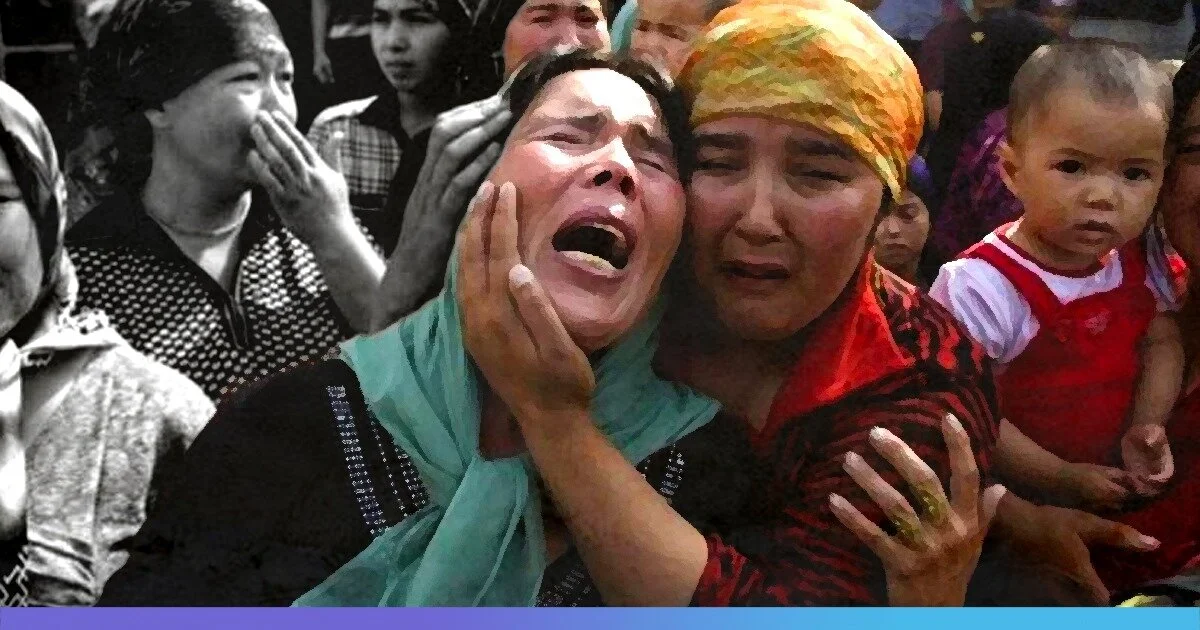
Uyghur women grieving over those who have been forcibly taken by Chinese government. Han Guan. CC 2.0

On May 14, the U.S. Senate passed the Uyghur Human Rights Policy Act of 2020. If enacted by President Trump, it would establish sanctions against China and its officials who are held responsible for inhumane acts ranging from the kidnapping of Muslims  to the high rates of abuse and death taking place in the camps.The sanctions include placing restrictions on imports of goods made at these camps as well. The State Department would also be tasked with compiling a report detailing the conditions of these camps, which would be separate from the annual Human Rights and International Religious Freedom documents.

In light of the COVID-19 pandemic, Senate Republicans have taken up an agenda that  questions many of the Chinese government’s practices. The Uyghur Human Rights Policy Act of 2020 is only one of many issues the U.S. is bringing up.

This is not the first case of Muslims being targeted in Asia. Back in August 2017, Rohingya Muslims faced persecution in Myanmar by the country’s Buddhist majority government on claims of terrorism, just like the Uyghur people. Similar to China, Myanmar’s government also refused to take responsibility for its actions.

Eva Ashbaugh

is a Political Science and Gender, Sexuality, and Women's Studies double major at the University of Pittsburgh. As a political science major concentrating on International Relations, she is passionate about human rights, foreign policy, and fighting for equality. She hopes to one day travel and help educate people to make the world a better place.

Tags China, Uighur Muslim, Uyghur Muslims, labor camps, Chinese, Asia, Europe, Silk Road, President Trump, Donald Trump, Rohingya Muslims, Refugees, Human Rights, USA, International Affairs
Comment

Also check out...

Featured
Vietnam’s Floating Markets Are Disappearing
The Supernatural Role of Masks in Nigeria’s Yoruba Tribal Culture
Opening the World to Deaf Travelers with Lily Yu

Featured trips

Featured
Offer NGO Support While Visiting Quito
Experience Life as a Mongolian Nomad
Help Grow Organic Costa Rican Coffee

Sign up for the CATALYST newsletter

Sign up for our newsletter to get the scoop on international travel, global social impact insights, our latest podcast releases, and more from around the world, all delivered right to your inbox!

We respect your privacy.

Thank you!
Newsletter Sign Up | Advertise | Careers + Internships | Privacy Policy | Submissions | Contact Us

Copyright © 2025, MISSION MEDIA LLC. All rights reserved.