
Carol Khorramchahi
For civilians in Tehran, war isn’t a headline; it’s the sound of strikes at night, the scramble for safety and the fear of what comes next.
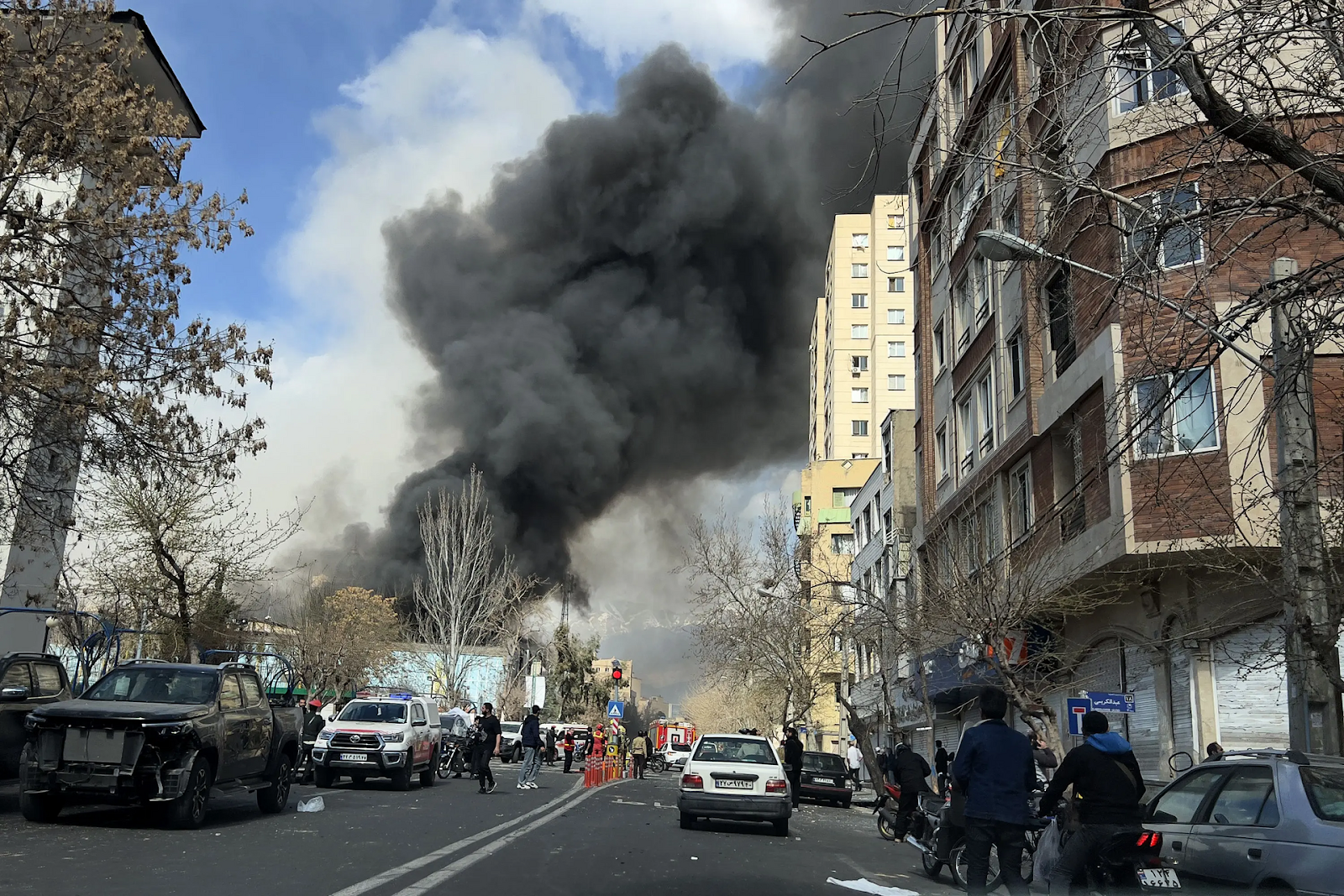
War in Tehran. Muhammad Ali Burno. CC BY 4.0.
For people in Tehran, war is not experienced through maps or military briefings. Instead, it’s felt in nights that don’t feel safe to sleep through, in the sudden rush to a hallway or bathroom when blasts shake the building, in the moment the lights flicker, and you don’t know if it’s a blackout or something worse.
In recent days, the scale of loss has been staggering. Iran’s U.N. ambassador said at least 1,332 Iranian civilians have been killed so far in the conflict, with thousands more injured. And while numbers can’t capture fear, they do show what Tehran residents already know: This is not a distant front line. This is a war reaching into neighborhoods, hospitals, schools and daily routines.
Iran’s Red Crescent reported that about 20,000 civilian buildings have been affected, along with over 70 healthcare facilities. In Tehran, that’s not just damage on paper; it’s what determines whether families can return home, whether clinics can operate and whether ambulances can move quickly when streets are congested or unsafe.
Some of the clearest snapshots of war in Tehran come from the voices of residents themselves. In one report, several Tehran residents described bright flashes turning night “into day,” and one woman told Al Jazeera that “the ground and the windows and our hearts were shaking,” adding that her family sheltered in the bathroom and asked not to be named for security reasons.
Hospitals are still running, but they are under strain. Tehran’s Gandhi Hospital was damaged after strikes hit nearby, and officials said medical facilities and schools had been impacted in multiple places. When healthcare sites are hit or even shaken by nearby blasts, the ripple effects are immediate: Patients get moved, surgeries are delayed and staff are forced to work in uncertainty.
Schools, too, have become part of the story. Reports described strikes that hit schools near Tehran and a wider pattern of attacks affecting education sites. Many parents now face a question that shouldn’t exist: Do you send your child to class when the situation can change overnight?
Even communication, something people rely on to find family, confirm safety and understand what’s happening, has become unreliable. NetBlocks has posted repeated social media updates showing Iran’s wartime internet blackout reaching extreme levels, with connectivity around 1% of ordinary levels during parts of the shutdown. When the internet collapses, it not only silences communities but also cuts off payment systems, disrupts work and makes it harder for people inside and outside Iran to reach each other.
As the threat grows, displacement has become another measure of fear. A U.N. estimate said 3.2 million Iranians have been displaced since the war began, alongside wrenching decisions families face, like whether to flee, where to go and whether leaving might mean not being able to return.
Underneath all of it is a question Iranians are likely arguing about quietly, even when they can’t say it publicly: What comes after this? Some will hope war brings political change. Others will fear that it brings only deeper repression and instability. Some will rally around the state. Others will blame it. Those divisions are visible in glimpses, like demonstrations framed as “defiance and resilience,” even as fear and exhaustion spread.
What’s certain is that for Tehran, war is no longer something “out there.” It is an atmosphere, felt in the noise overhead, the tension in ordinary errands, the uncertainty of school and hospital access and the desperate need to stay connected to the people you love.
GET INVOLVED:
Follow humanitarian updates through ReliefWeb and civilian protection statements from the International Committee of the Red Cross. Track internet shutdown reporting via NetBlocks and digital rights advocacy through Access Now. For human rights documentation, see the U.N. Human Rights Office and Amnesty International.
Carol Khorramchahi
Carol Khorramchahi is a student at Boston University, where she studies English and Psychology and minors in Journalism. She enjoys writing and reporting on stories that bring together culture, identity, and community, and has experience in both newsroom reporting and digital media. She is especially interested in thoughtful storytelling with a global lens.