
Learn about the little-known conflict in the Indonesian-controlled territory of Western New Guinea.
Read MoreIran at War: A Day in Tehran
Carol Khorramchahi
For civilians in Tehran, war isn’t a headline; it’s the sound of strikes at night, the scramble for safety and the fear of what comes next.
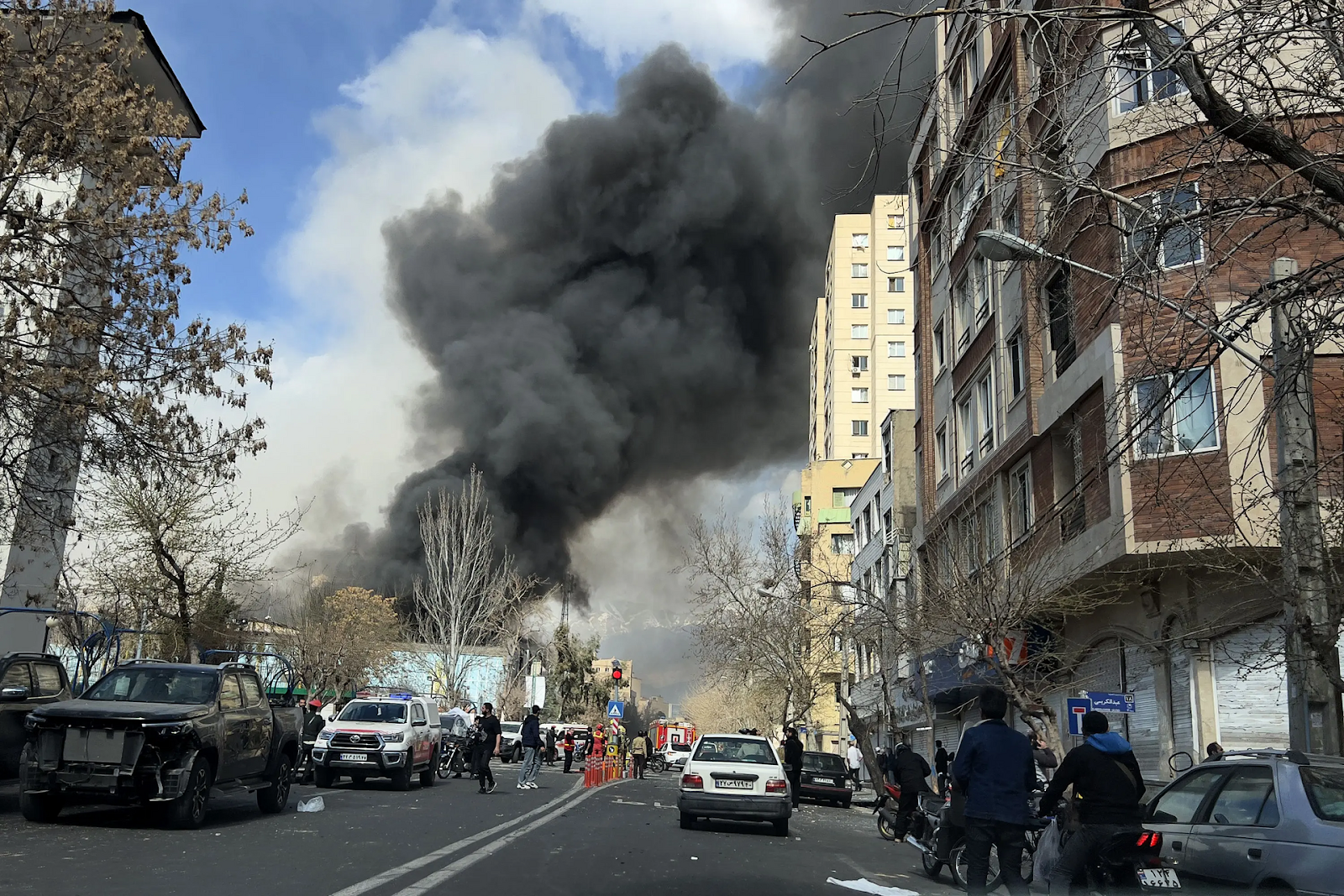
War in Tehran. Muhammad Ali Burno. CC BY 4.0.
For people in Tehran, war is not experienced through maps or military briefings. Instead, it’s felt in nights that don’t feel safe to sleep through, in the sudden rush to a hallway or bathroom when blasts shake the building, in the moment the lights flicker, and you don’t know if it’s a blackout or something worse.
In recent days, the scale of loss has been staggering. Iran’s U.N. ambassador said at least 1,332 Iranian civilians have been killed so far in the conflict, with thousands more injured. And while numbers can’t capture fear, they do show what Tehran residents already know: This is not a distant front line. This is a war reaching into neighborhoods, hospitals, schools and daily routines.
Iran’s Red Crescent reported that about 20,000 civilian buildings have been affected, along with over 70 healthcare facilities. In Tehran, that’s not just damage on paper; it’s what determines whether families can return home, whether clinics can operate and whether ambulances can move quickly when streets are congested or unsafe.
Some of the clearest snapshots of war in Tehran come from the voices of residents themselves. In one report, several Tehran residents described bright flashes turning night “into day,” and one woman told Al Jazeera that “the ground and the windows and our hearts were shaking,” adding that her family sheltered in the bathroom and asked not to be named for security reasons.
Hospitals are still running, but they are under strain. Tehran’s Gandhi Hospital was damaged after strikes hit nearby, and officials said medical facilities and schools had been impacted in multiple places. When healthcare sites are hit or even shaken by nearby blasts, the ripple effects are immediate: Patients get moved, surgeries are delayed and staff are forced to work in uncertainty.
Schools, too, have become part of the story. Reports described strikes that hit schools near Tehran and a wider pattern of attacks affecting education sites. Many parents now face a question that shouldn’t exist: Do you send your child to class when the situation can change overnight?
Even communication, something people rely on to find family, confirm safety and understand what’s happening, has become unreliable. NetBlocks has posted repeated social media updates showing Iran’s wartime internet blackout reaching extreme levels, with connectivity around 1% of ordinary levels during parts of the shutdown. When the internet collapses, it not only silences communities but also cuts off payment systems, disrupts work and makes it harder for people inside and outside Iran to reach each other.
As the threat grows, displacement has become another measure of fear. A U.N. estimate said 3.2 million Iranians have been displaced since the war began, alongside wrenching decisions families face, like whether to flee, where to go and whether leaving might mean not being able to return.
Underneath all of it is a question Iranians are likely arguing about quietly, even when they can’t say it publicly: What comes after this? Some will hope war brings political change. Others will fear that it brings only deeper repression and instability. Some will rally around the state. Others will blame it. Those divisions are visible in glimpses, like demonstrations framed as “defiance and resilience,” even as fear and exhaustion spread.
What’s certain is that for Tehran, war is no longer something “out there.” It is an atmosphere, felt in the noise overhead, the tension in ordinary errands, the uncertainty of school and hospital access and the desperate need to stay connected to the people you love.
GET INVOLVED:
Follow humanitarian updates through ReliefWeb and civilian protection statements from the International Committee of the Red Cross. Track internet shutdown reporting via NetBlocks and digital rights advocacy through Access Now. For human rights documentation, see the U.N. Human Rights Office and Amnesty International.
Carol Khorramchahi
Carol Khorramchahi is a student at Boston University, where she studies English and Psychology and minors in Journalism. She enjoys writing and reporting on stories that bring together culture, identity, and community, and has experience in both newsroom reporting and digital media. She is especially interested in thoughtful storytelling with a global lens.
PHOTOESSAY: The Young Men of the Free Syrian Army
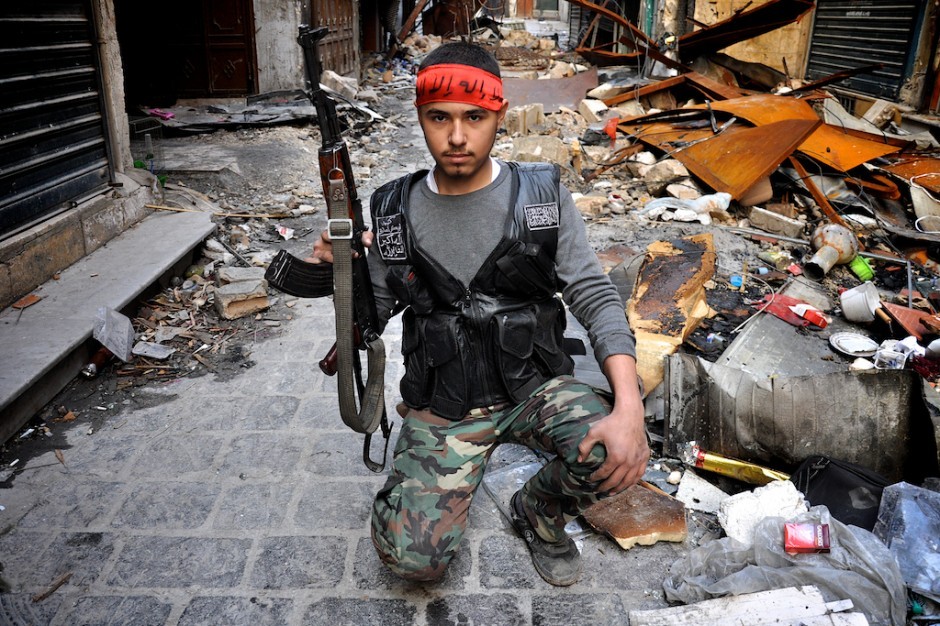
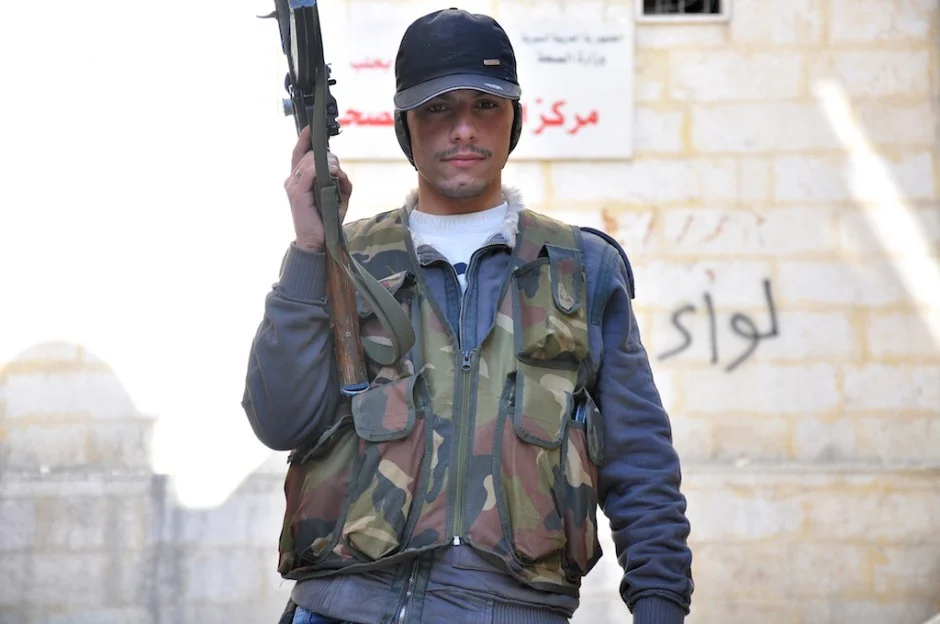
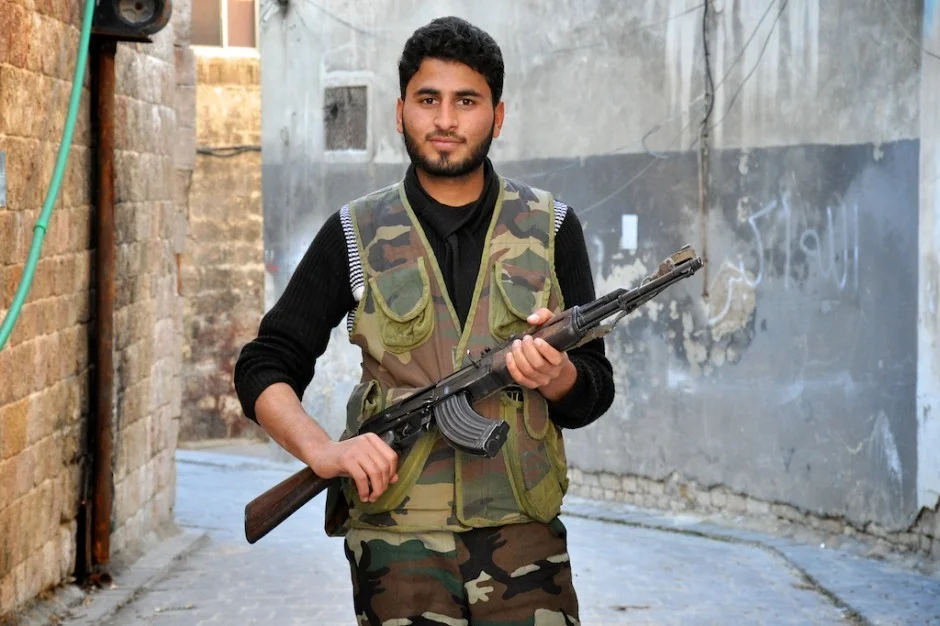
The front lines of the Syrian Civil War trace through alleys and ancient streets in the Old City of Aleppo. Defending these lines are young men, most less than two decades old, carrying AK-47s and homemade grenades.
They have no military training and will not wear body armor for fear of delaying the time of death anointed for them by Allah. They are kids and recent college graduates who picked up guns for their country and, most of all, for revenge. All have lost friends and family to Assad. "These young men are warmhearted and hospitable, but daily burdened and degraded by the fighting. Every fighter I met had a different story that brought him to Aleppo; this project attempts to tell those stories.” — Cengiz Yar.





![[Name withheld] - 20](https://images.squarespace-cdn.com/content/v1/638a651ad5f9324e20972bf2/1670014524351-36X8BO8GD9MSYFTOO5G8/11+syria11youngmen-11aleppo-syria-matador-seo-940x624.jpg)



CENGIZ YAR @cengizyar
Based out of Chicago, Cengiz is a documentary photographer and freelance photojournalist whose work has been featured in publications around the world. His photography focuses on human conflicts, both violent and peaceful, and aims to encourage understanding by fostering interest and making the alien familiar.
SYRIA: Raising Among Ruins, Dancing Amid Bullets
The Syrian Civil War has torn apart homes, families, and entire cities.
From September 2014 to January 2015, the Syrian city of Kobanî, on the northern border with Turkey, and more than 350 villages in the Kobanî district, were held under siege by militants of the Islamic State of Iraq and the Levant (also known as ISIL, ISIS, or Daesh). The fighting left the city utterly destroyed and by January more than 400,000 displaced Kurds had fled the region for neighbouring Turkey.
Yet the courageous women fighters of the Kurdish YPJ (Women’s Protection Units) stayed behind, taking up arms alongside their male comrades in the Kurdish YPG (People’s Protection Units), as part of an ongoing and dedicated effort to overcome the Islamic State militants in the region, and to rebuild and reclaim their lives.
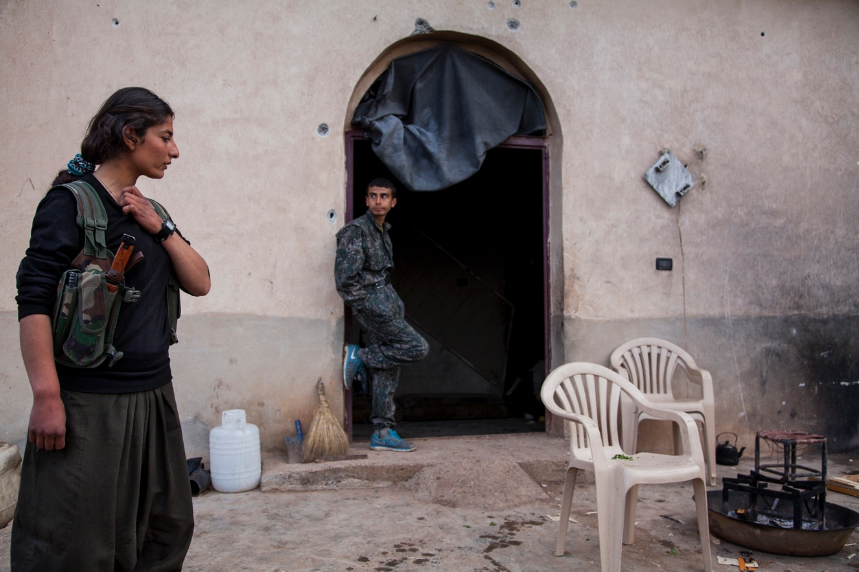
Serda, a YPJ fighter, with her fellow male comrade from YPG, in Baghdak village, near Kobanî.
Finally, on 26th January 2015, the Kurdish fighters — alongside reinforcements from the Free Syrian Army and supported by US-led airstrikes — began to retake the city, driving ISIS into a steady retreat. The following day, on 27th January 2015, in a historic and strategic defeat that was reported around the world, the city of Kobanî was fully recaptured. The flag of the Kurdish resistance flew once again on the hill above the city.
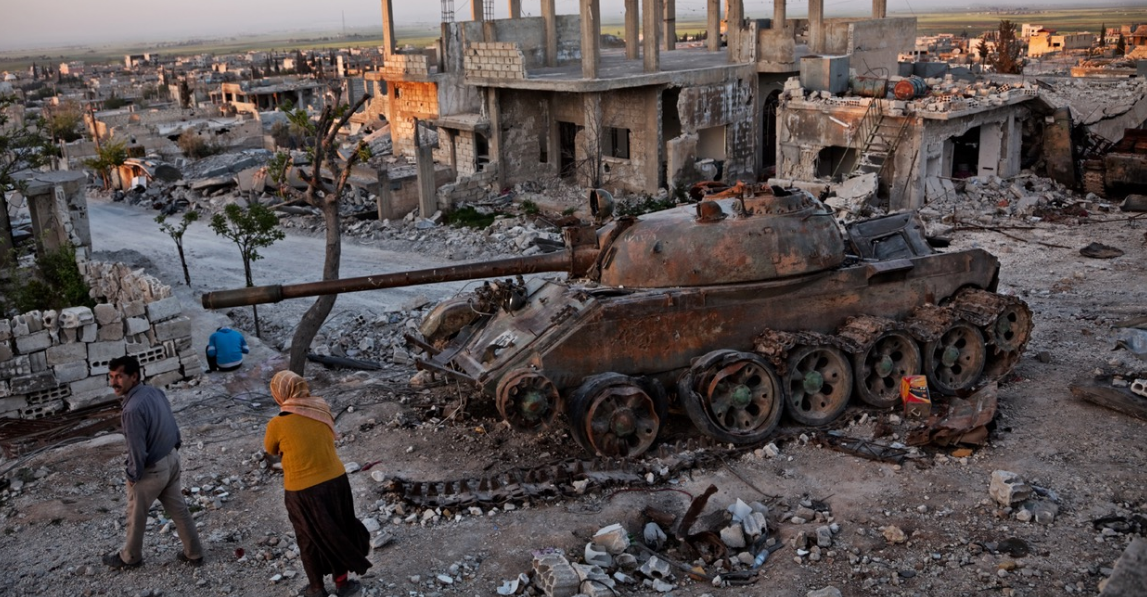
A destroyed tank stands amid the rubble in the devastated city of Kobanî.
In the weeks and months following the liberation of Kobanî, and as the Kurdish fighters continued to advance, taking back many of the villages ISIS had captured during the siege, the families of Kobanî have begun to return to what was left of their homes. With hopes of rebuilding their lives, their homes, and their city, the people cleared the streets of dead bodies and buried the fighters who lost their lives.
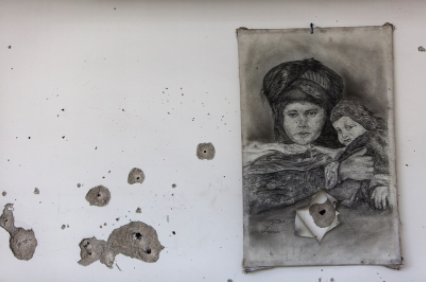
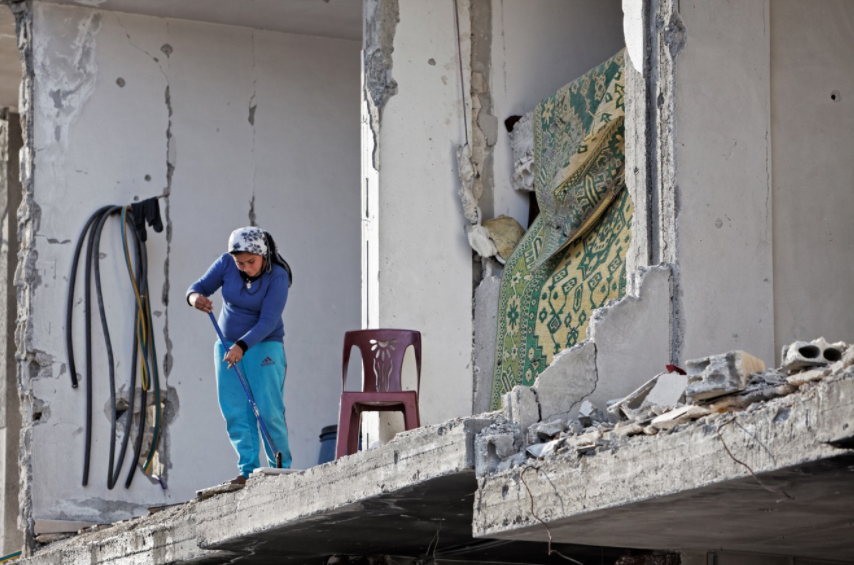
Travelling to the Kobanî region in March 2015, less than eight weeks after the city had been recaptured from the Islamic State, I lived with a group of Kurdish fighters for almost a month.
I was able to witness their pain and their sorrow, their joy and their triumphs, as they continued to fight for their freedom.
In part, this trip was a continuation of my ongoing project documenting the lives and experiences of Kurdish women fighters, which began back in 2012, when I spent time with the female soldiers living in military camps in Iraqi Kurdistan. I realized that these women are fighting more than one battle. Not only are they fighting the oppression and violence of the Islamic State, they are also determined to prove their role as women in a male-dominated society — a difficult yet promising battle.
After the liberation of Kobanî, the world’s attention was finally focused, for a time, on this region, and many cameras were pointed towards the women who had fought alongside their male comrades. Sadly I realized that not many people knew about the long history of female fighters’ involvement in previous battles — as if during the war in Syria, they had picked up a gun for the first time!
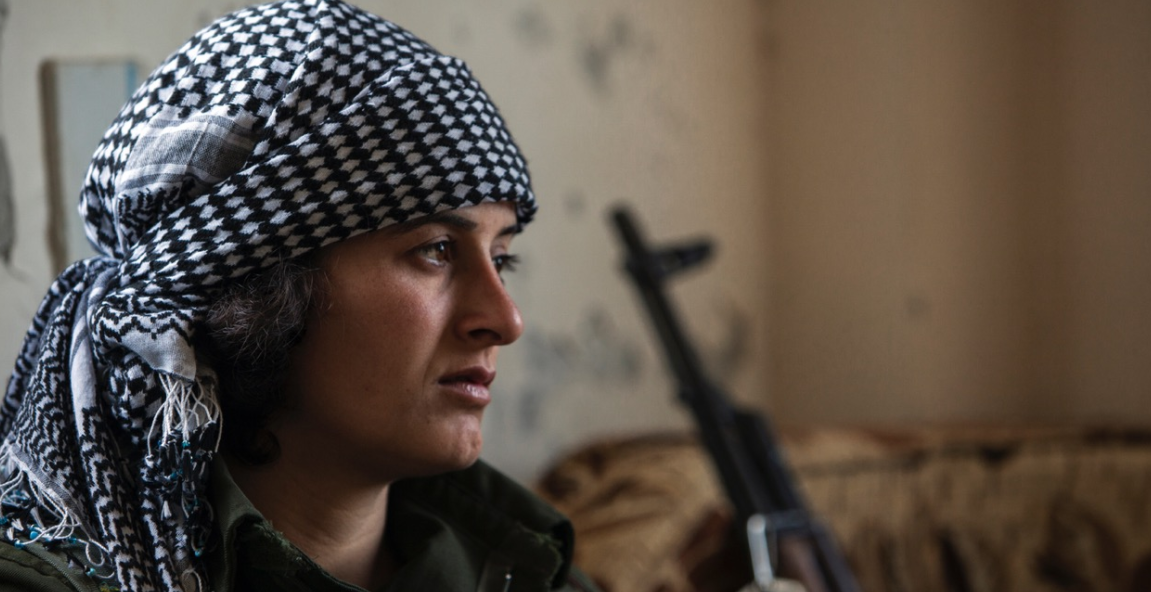
Portrait of a young Kurdish YPJ fighter.
To reach what was left of Kobanî, I had to cross illegally through the Turkish border like many other journalists and activists. We passed through the city of Suruç on the Turkish side of the border, where I spent a week waiting. A few months later, on July 20th 2015, an ISIS suicide bomber, identified as a 20-year-old student, killed more than 30 people and wounded more than 100 at a Turkish cultural centre in Suruç.
Finally one night we crossed the border and entered Kobanî. On the same way back a month or so later, I was arrested by the Turkish police and after a few hours was released. Since it was my first time, they let me go with the promise of not making this “mistake” again.
While in Kobanî I stayed part of the time at a house for journalists or often with people from Kobanî whom I met and got to know. The 35 days I spent in and around this shattered city was an unforgettable and moving experience. Seeing the people returning to what little was left of their homes was sobering, but encouraging as well.
The story of Kobanî is not only about war and its horrific consequences, it is also about the power of humanity, courage, and solidarity.
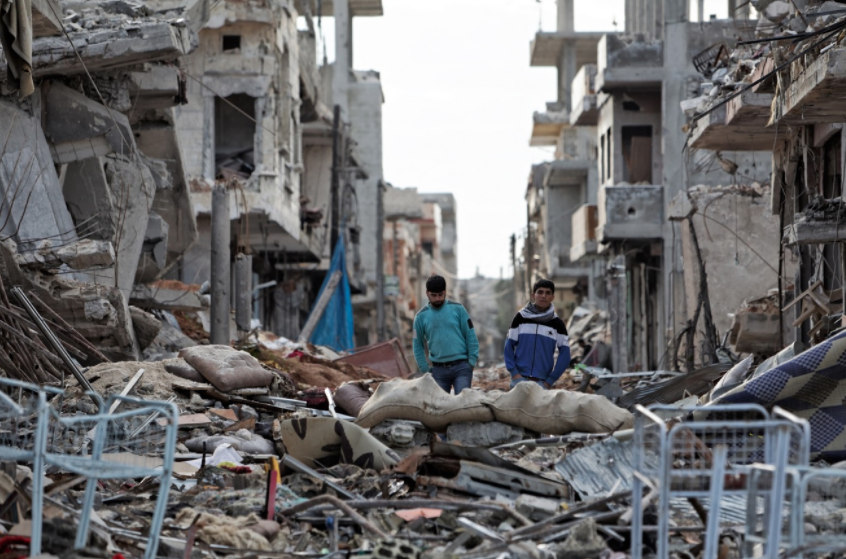
Having returned to the city, Kurdish men walk through the destroyed buildings in Kobanî.
Kobanî is in fact part of Rojava, or Western Kurdistan — a de facto autonomous region in northern Syria. The region gained its autonomy during November 2013, as part of the ongoing Rojava Revolution, and aims to establish a society based on the principles of direct democracy, gender equality, and sustainability.
And while Kurdish women have gained some equality in recent years, for most of these women, fighting with the military forces is their first opportunity for independence and empowerment in their traditionally male-dominated society. The more I spent time with women of different ages and backgrounds, the more I realized the significance of this story.
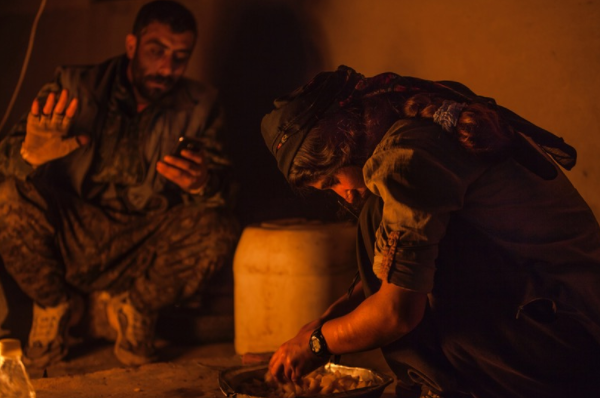
26 March 2015, Roonahit, a YPJ fighter prepares dinner for the fighters in Baghdak village.
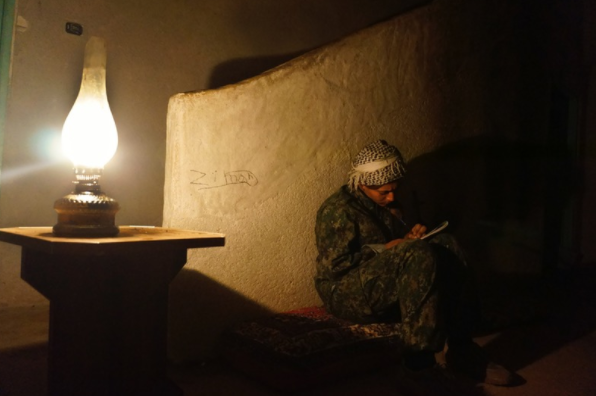
27 March 2015, newly joined YPJ fighter writes her diary by gas light in Baghdak village.
Too many images of people fighting create an “us” and “them” dynamic in the mainstream media. Portraits of daily life, or times of great emotion, give us moments that we can feel and relate to, perhaps opening the doors of understanding. There were some moments of joy, too.
Below you see a group of young YPG and YPJ fighters dancing in the village of Baghdak, outside the city. Each day a truck passed by, bringing food and other basic supplies for the fighters. During the few minutes while the truck unloaded, they took advantage of the music coming from the radio. Such moments were seized with abandon, bringing momentary relief and release from the hard reality of the ongoing fight.
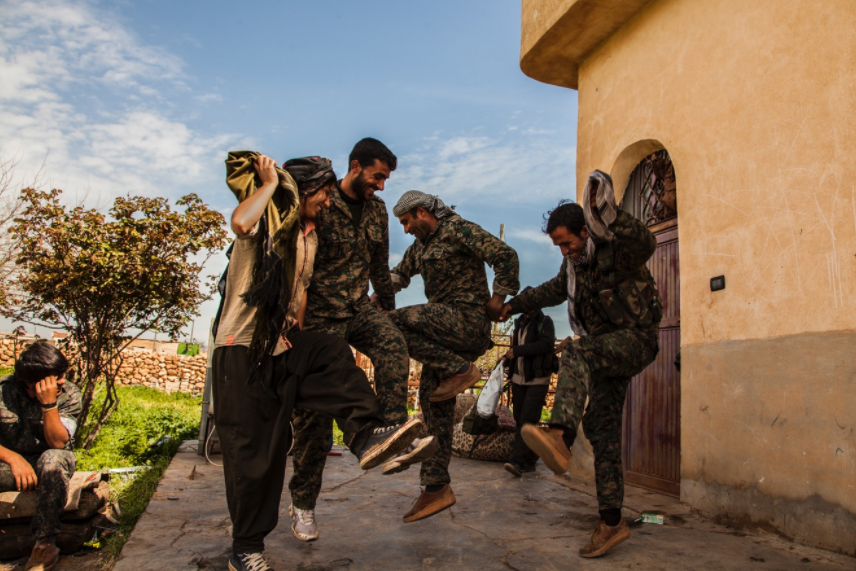
I can only hope that each reader will be able to put themselves in the place of the women, and men, in these images, remember their faces and surroundings, and understand the plight of these brave people.
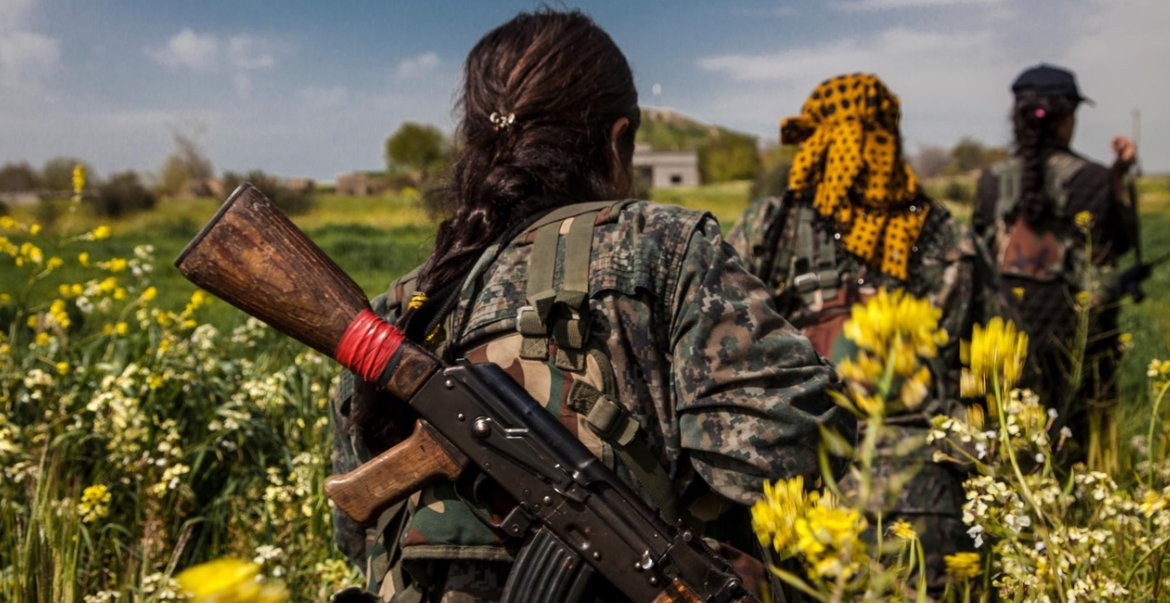
Three fighters from the YPJ walk through fields on the western front-line near the city of Kobanî on April 7, 2015.
Even though Kobanî had been liberated, every two days during my stay, there was a funeral for more of the fighters on the front-lines who were still defending the city. At the time of my visit the Kurdish fighters had reclaimed 160 villages, and by late April 2015, ISIS had lost almost all of the villages it had captured during the siege. During May and June of 2015, the YPG, along with allied reinforcements, continued to fight and captured huge swaths of territory in northern Syria, linking the district of Kobanî with another Kurdish region, Jazira.
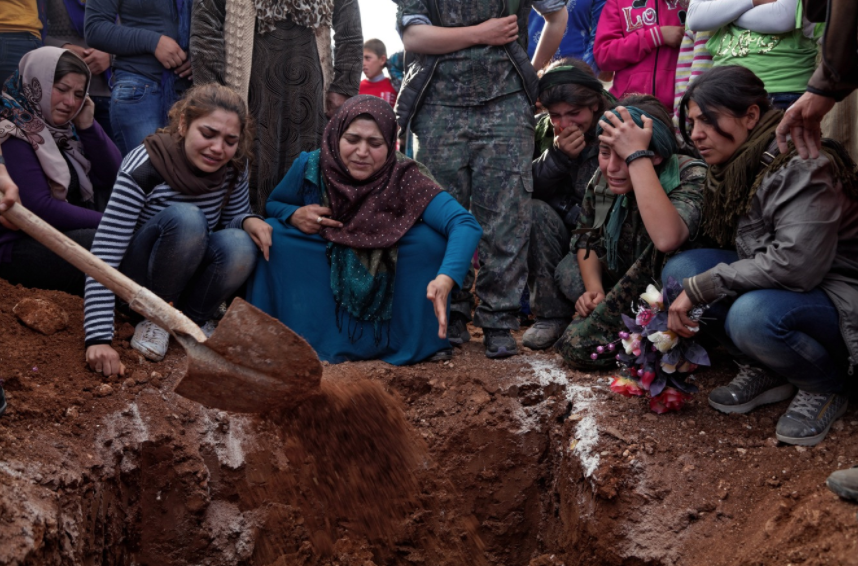
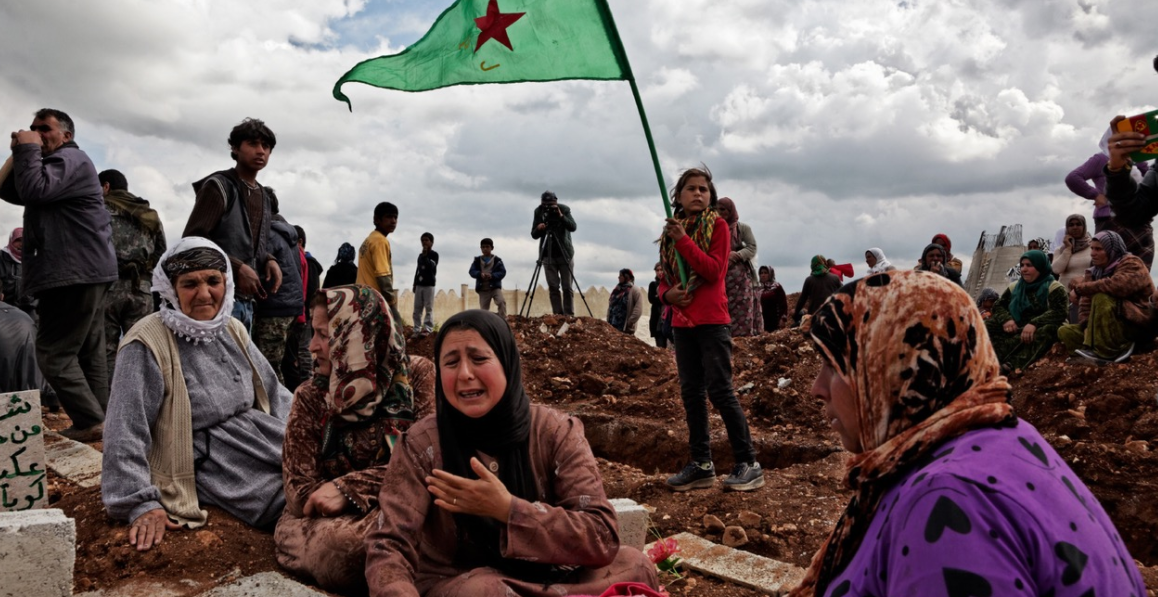
Below, in a cemetery in Kobanî, you see family and fellow fighters sit by the graves as they mourn their loved ones, YPG and YPJ fighters, who were killed during clashes with ISIS on these front-lines outside the city.
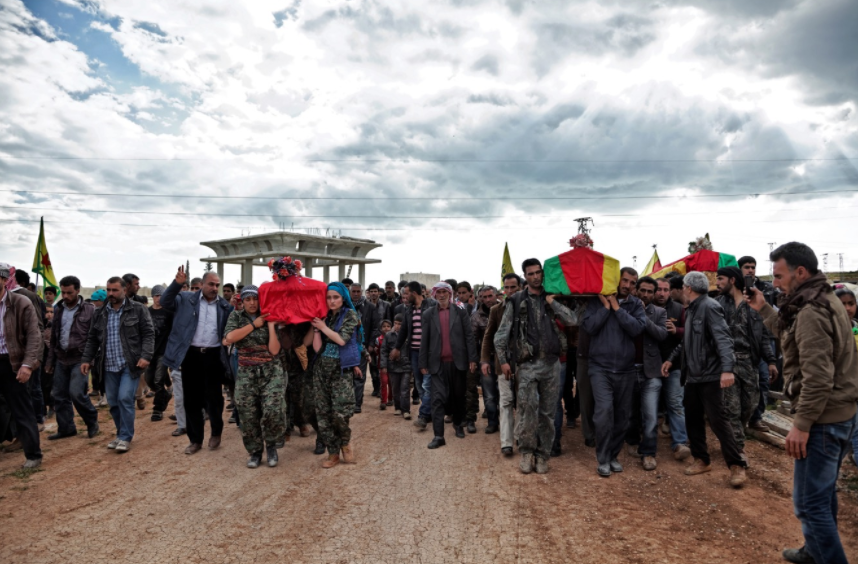
And here, you see a group of YPJ and YPG fighters carrying coffins and mourning their fellow Kurdish fighters, one of whom was called Ageri, killed during fierce clashes with ISIS on eastern front-line near Kobanî.
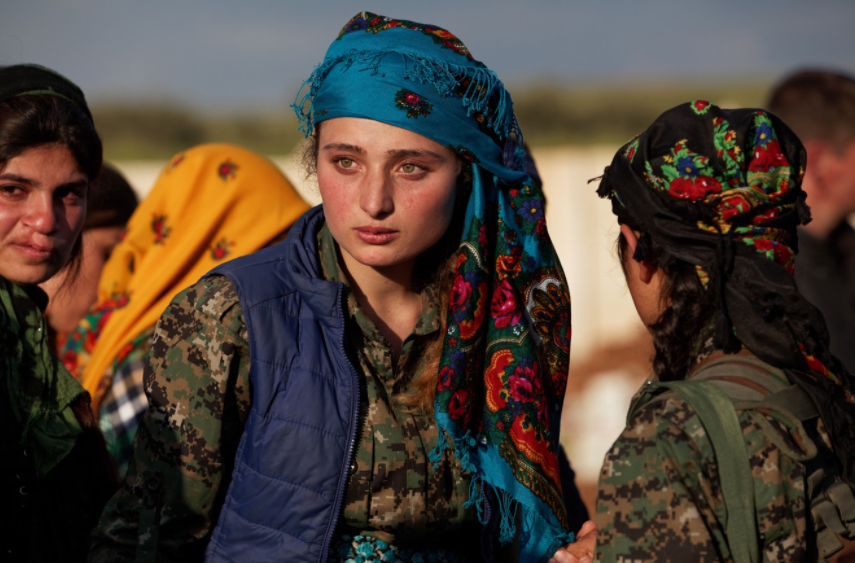
During the siege of Kobanî, in times of heavy fighting with ISIS who still controlled part of the city, the bodies of Kurdish fighters who were killed in action were buried between the houses in a part of the city that was under Kurdish control. Below you see a family, who have just returned to the city to rebuild their lives, passing by this temporary cemetery.
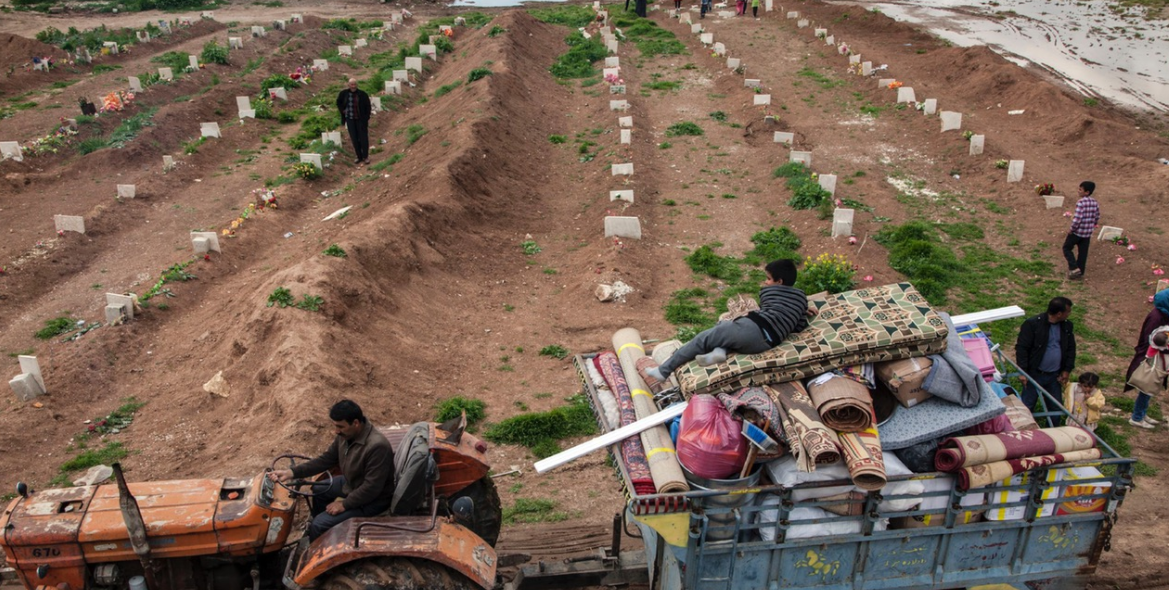
Even now, before and after their victories defending the villages and regions outside the city, there is a constant threat of death or serious injury to the Kurdish fighters, especially during firefights and patrols. They must be constantly on the move, setting up makeshift camps in old structures, like this abandoned school you see below, in Baghdak.

At the time of my visit, two hospitals were open inside the city, but the lack of medicine and equipment made it extremely difficult for even the most trained nurse or doctor to provide basic treatment. Just a few days before I crossed back over the border to Turkey, some of the first small shops began to open again, allowing people to purchase basic necessities.
With only two schools open in Kobanî, there was little access to proper education, and no psychological support for the children of returning families, who have suffered immensely during the war. Instead, they were spending much of their time playing in the rubble. Below you see a young Kurdish boy going through some books left in a destroyed building in Azadi (Liberation) Square, during April 2015.
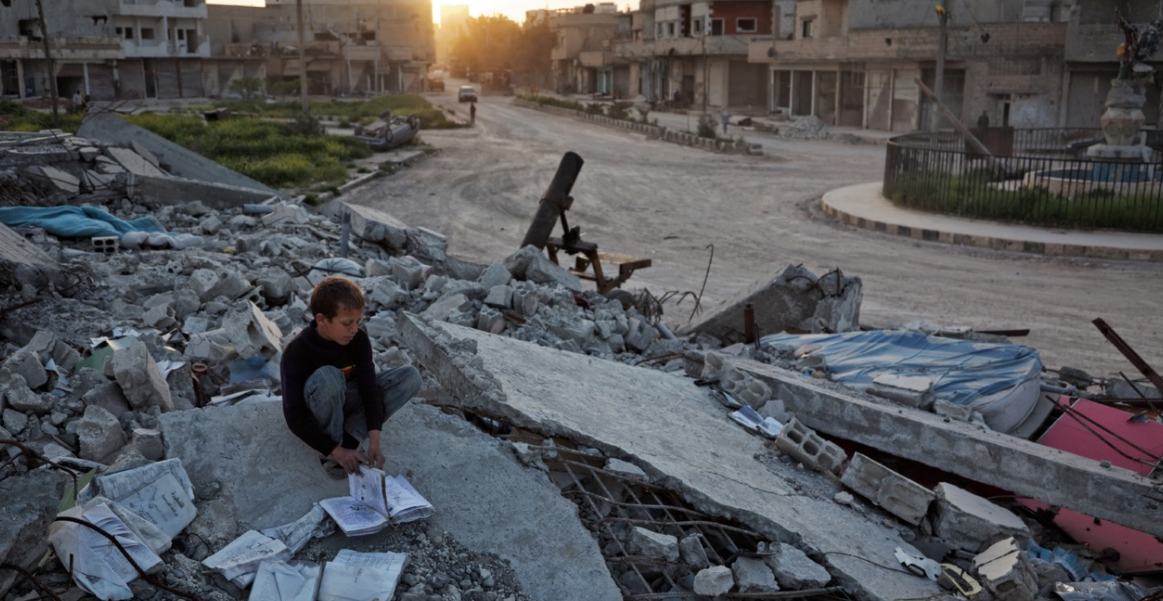
During recent months, although more progress is slowly being made towards rebuilding life in the city — for instance, in March 2016, electricity returned to Kobanî and some surrounding villages after three years of outage, due to ISIS control of the Tishreen dam and main power station — the civilians who have returned are still struggling with difficult living conditions. Food prices are escalating and there are very few opportunities for work, so that they can support their families.
While I was in Kobanî, the Turkish government had only opened the border one way, allowing families who want to go back to Kobanî to pass through, but for international organizations and people who wish to help with rebuilding Kobanî, the only way to reach the city was to cross over illegally. Today, Turkey continues control the border tightly, allowing only some materials to reach the city. For instance, in January 2016, Turkish border guards prevented an aid convoy from entering the city, confiscating its contents, and arresting aid workers. Returning to Kobanî again last month, in May 2016, I found the border still officially closed.
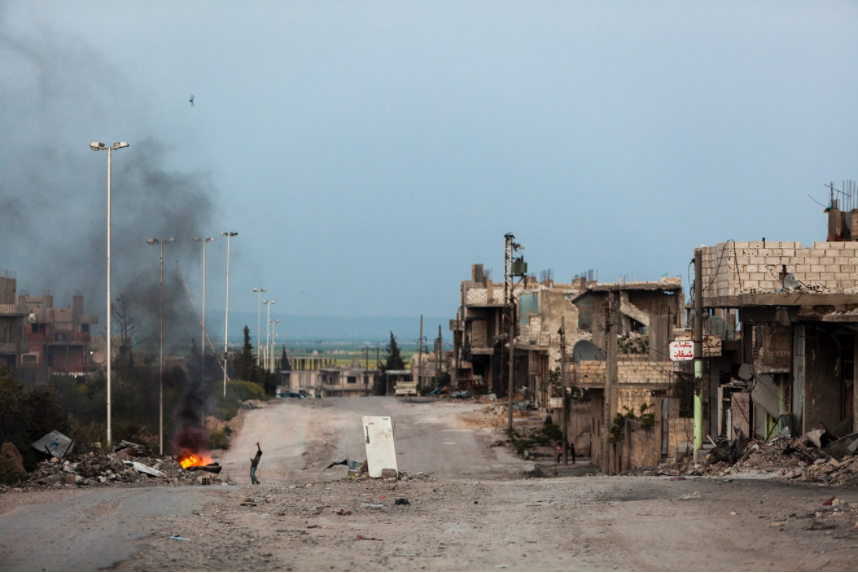
Kurdish children play by a fire in the streets of Kobanî.
And still, the battle is not over. The women fighters of the YPJ, and their male comrades, continue to defend the slowly regenerating city from ISIS attacks, and engage in mutual bombardment and fierce clashes, as they protect other villages and towns in the Kobanî region. At the end of March 2016, ISIS militants launched an offensive ahead of the important Kurdish celebration of ‘Newroz’. Shelling areas in western Kobanî with homemade rockets, they targeted residential buildings in the village of al-Qibba, killing and injuring civilians, including women and children. This brought back memories of the devastating massacre carried out by ISIS suicide bombers a few months after my visit, who infiltrated Kobanî on 25-26th June 2015, killing over 500 civilians and few Kurdish fighters.
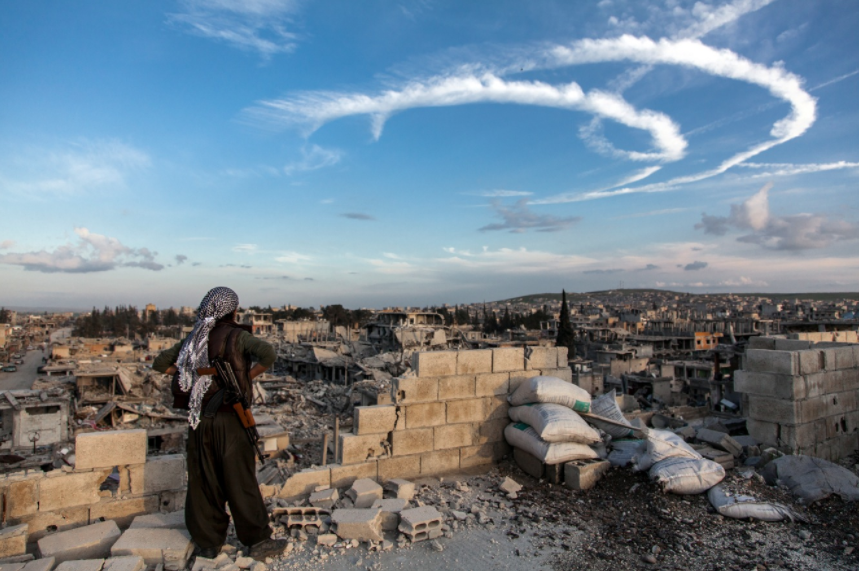
Notwithstanding the recent attacks, with the border to Turkey still tightly controlled, and international aid struggling to pass through, the people of Kobanî are left isolated, facing both the psychological trauma of conflict and the challenge of rebuilding their houses alone. Many also remain at risk from the explosive remnants of war, such as the hidden handmade bombs and landmines left behind by ISIS militants.
The lengthy after effects of war on the innocent civilian population are often quickly forgotten by those of us living in a safer world.
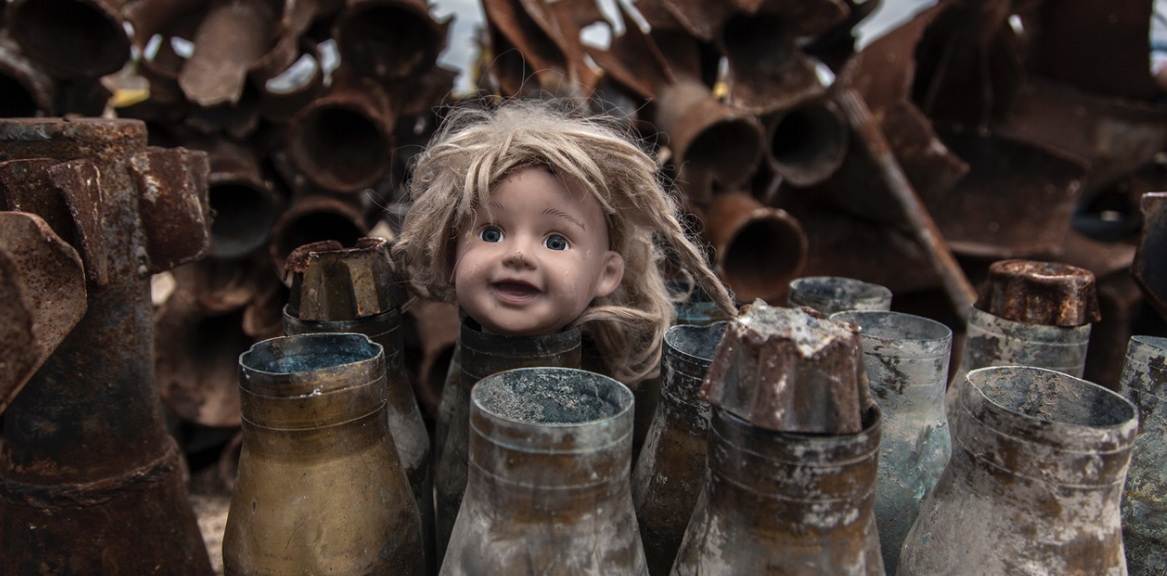
At some point, I could not help but feel angry when I saw the amount of suffering these women fighters, and their male comrades, are enduring in Northern Syria, and the little aid and support they are receiving from the outside world. It was an incredibly frustrating experience to witness so much suffering and yet not enough help getting through. The Turkish government is threatened by the independence of the Kurdish people, and so the fighters face threats on both sides of their borders, from the Islamic State and Turkey. In many ways, they are alone and vulnerable.
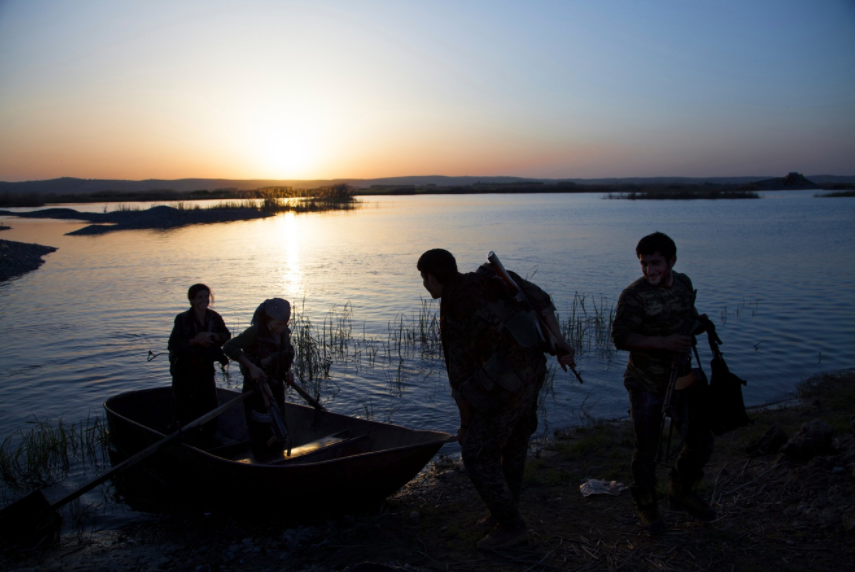
A group of YPJ and YPG fighters crossing the Euphrates river on the western front-line near Kobanî.
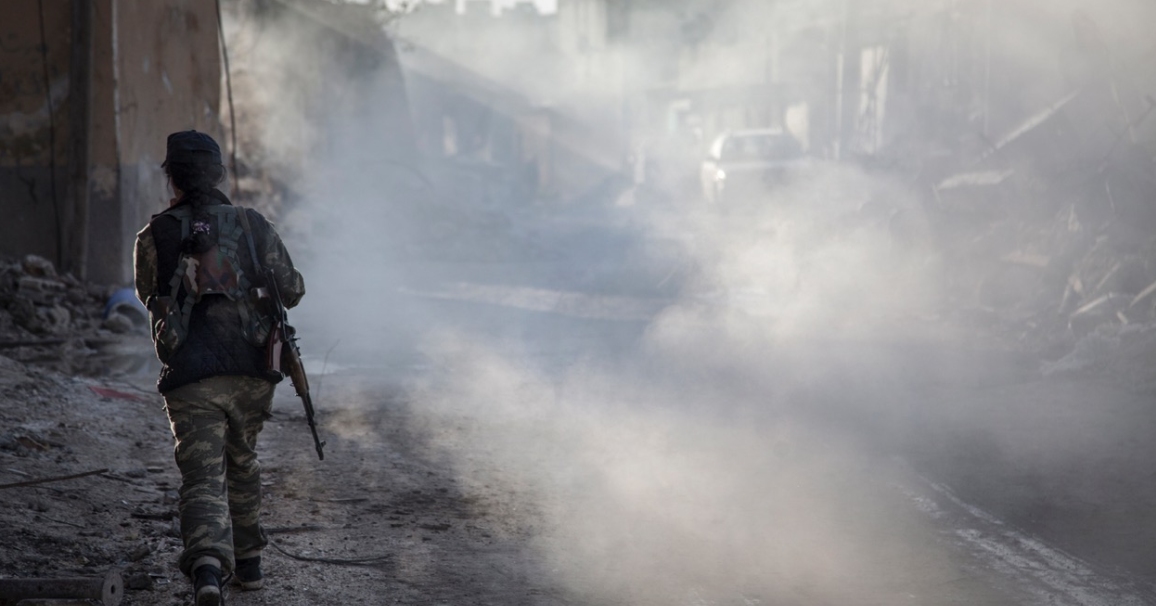
Below you see Chiman, a member of the YPJ and one of the Kurdish female fighters I got to know, walking through the wreckage in the parts of the city where she and her fellow fighters battled and eventually overcame ISIS, following the siege. Chiman, who is originally from Iraqi Kurdistan, was one of the commanders during this fight. Looking back over those hard times, she tries to keep the memory of those who passed away alive, and continues their important work protecting the city.
For Chiman and her fellow fighters, defending Kobanî is not just a matter of defending a city and its people, but of defending humanity.
THIA ARTICLE WAS ORIGINALLY PUBLISHED ON MAPTIA
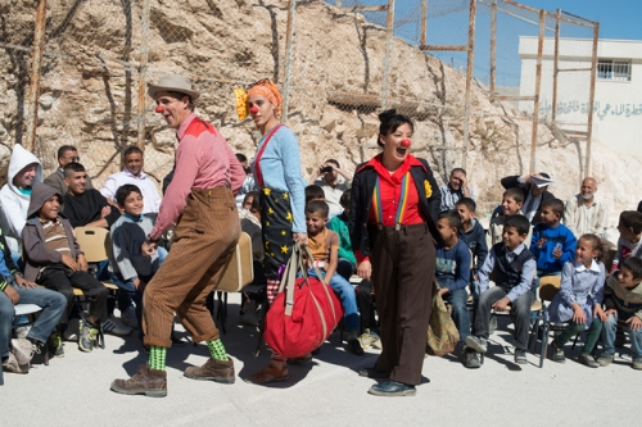
All photos courtesy of Clowns Without Borders. Palestine, 2013. Photo by Baruch Rafiach.
Clown Without Borders Go Into War Zones Armed Only with a Smile
In July 1993, a clown from Barcelona named Tortell Poltrona traveled to war-torn Croatia to do his act at a refugee camp. He had his doubts about how his performance would be received, but after an unexpectedly massive crowd of over 700 rapt children showed up to watch him, he left convinced of the value of comedy in crisis and conflict areas. That trip inspired Poltrona to found Clowns Without Borders, an organization devoted to bringing humor into lands where clowns usually dare not tread.
A year later, the internationally renowned clown Moshe Cohen, who had been bringing men and women with red noses and oversized shoes into dangerous places since 1990, opened an American chapter of Clowns Without Borders. Although it remains one of the organization’s smaller chapters (CWB has a presence in nine countries and is especially well established in France, Spain, and Sweden) and has only one part-time paid staffer, Clowns Without Borders USA now includes a board of 13 clowns, four logistical volunteers, and 30 active performers, some amateur and some professional.
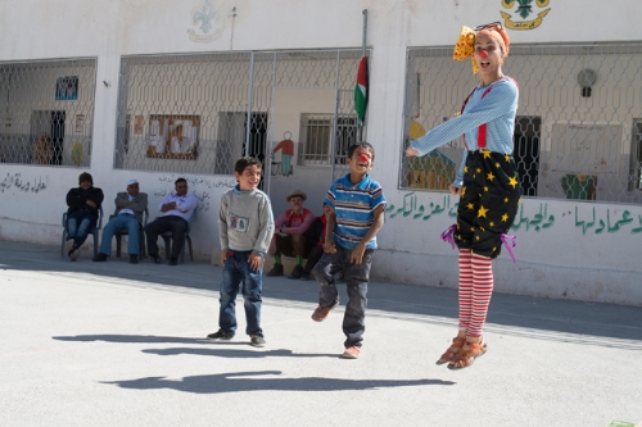
Palestine, 2013. Photo by Baruch Rafiach.
One of the earliest American Clowns Without Borders was David Lichtenstein, who had been clowning with Moshe in areas of Chiapas, Mexico affected by the Zapatista uprising since 1990. He went on to serve as a board member until, after returning from a tour in Palestine last October, he was promoted to president of the board—or the “Chief of Clown,” as he calls himself. He took over for Tim Cunningham, a graduate of the Dell’arte School of Physical Theater who got hooked on clowning when, at the invitation of fellow clown Rudy Galindo, he joined CWB on a 2003 trip to Chiapas. He later performed in Colombia, Ecuador, Haiti, Lesotho, Peru, South Africa, and Swaziland, and has promoted the organization in Brazil and America. In 2007, Tim became an emergency nurse and this year began research on the impact of clowns in crisis zones as part of a doctorate in public health at Columbia University.
Using juggling clubs and seltzer water to cheer up refugees who have lost their homes and family members is a pretty unique way to spend one’s time, so I called up David and Tim to ask them why they do what they do, and how.
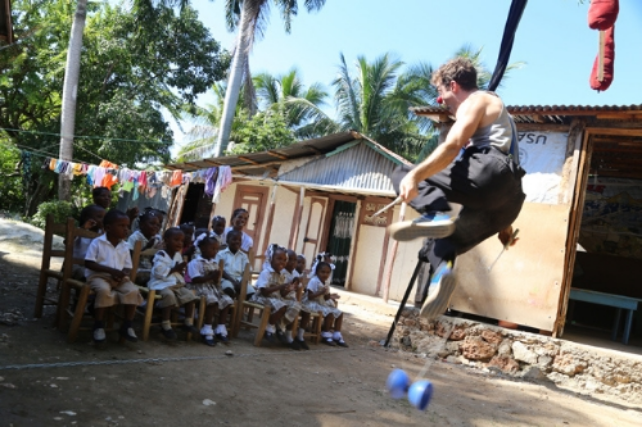
Haiti, 2013. Photo by Bobby Kintz.
Your organization is built around the concept of walking into places that have just suffered major disasters or are in the midst of armed conflict. As clowns. Isn’t that dangerous?
David Lichtenstein: We try to target the neediest people in the world. And yeah, a lot of these places are dangerous. Some of them are dangerous for the boring things like transportation issues—problems with cars and roads. Although we have been in war zones, we haven’t been too close to heated war. Still, there is often random violence in those places.
What are some of the most dangerous situations you’ve been in?
David: I’ve just been to Haiti, Guatemala, Palestine, and Chiapas, Mexico, during the [Zapatista uprisings].
Tim Cunningham: We’ve sent teams to work in Bhutanese refugee camps. I think [that we mainly ship clowns to] places that are proximal to war. In Colombia, we recently did a project along the Ecuador border and one of the towns we worked in was about 100 yards away from a FARC camp. But that [presence of violence] is in the background.
David: On that first trip to Chiapas, though, [Tim and another clown] were both robbed by Mexican police, or at least we thought they were police—we’ve been unable to find out whether they were real cops or thieves in uniforms. And during a show, Tim was lassoed by somebody and dragged by his feet on horseback. That was his first trip and he still came back for more.
Tim: I was hooked. I was like, This is real performance. This is engagement with my audience.
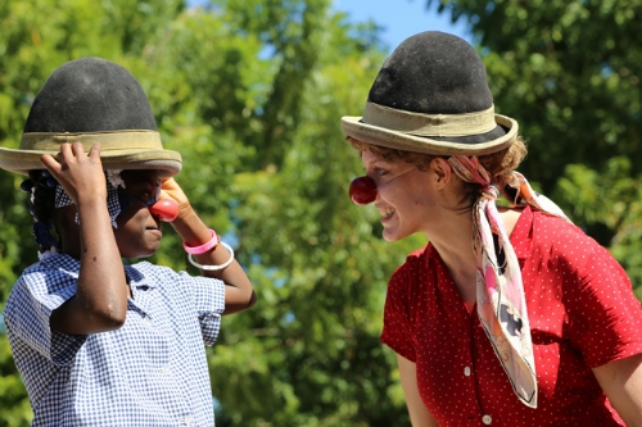
Haiti, 2013. Photo by Caitlyn Larsson.
Why did the guy lasso you?
Tim: We were in a really rural area and he was known as the regional drunk. We were doing a slapstick piece where I was working with this other clown, this really beautiful, sweet performer. And you could tell from the beginning he had his eyes set on her. He followed everything she did and was laughing really loud. In the slapstick routine we hit each other with this newspaper. She takes it from me, hits me; I take it from her… we go back and forth. Really classic slapstick. I think he decided he needed to save her, so he let out a yell during the bit and reared back on his horse like the Lone Ranger. The crowd split and I guess I was too dumb to split with everybody else. I was like, Great, I’ve touched this guy. And he touched me with his lasso. And dragged me down the road.
A lot of the places you go are very rural and have had little exposure to foreigners, much less to foreign clowns. Do you consider security risks when you travel? Like guys with lassos?
Tim: We go where we’re invited. If we have connections with other NGOs that have bases on the ground, that gives us some security. Or we have friends and family who are doing work in a place and know where we could do a show. We rarely say, “Hey guys, I think we should pack up and go to Ecuador this week and do clown work because we think it’s needed.” Haiti’s a good example of that. We’ve been working there since 2006 and wanted to go back down after the earthquake. As an organization we decided not to go until people started asking us to come. We didn’t think it was appropriate for us to go right after the catastrophe because people needed food, shelter, water… they needed life basics. We thought they would send for us six months, maybe a year later, but within a month of the earthquake we started getting calls.
It’s partially for security, but also I don’t think clowns are always appropriate. When we connect with other NGOs, where we’re welcomed and where people know we’re coming, I think it’s more ethical and effective.
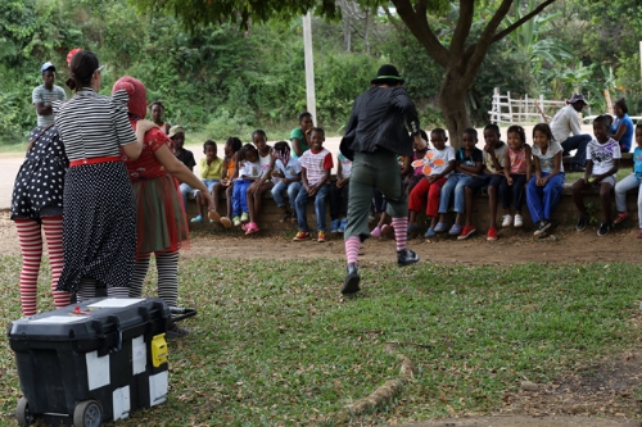
Colombia, 2013. Photo by Mauro Rebolledo.
Clowns must seem really trivial sometimes in such hard-hit areas. Are you ever criticized for what you do?
Tim: A couple of years ago I got an email from a donor who was very upset with us for what we do. He said, “You’re going to these places and you’re not bringing food, you’re not bringing shoes… what are you doing?”And I wrote back and said, “Hey, I appreciate your email and if you want to support those groups, here is a list of them that are doing exactly what you say.” But we’ve also met people who have had their minds changed after they see us with the kids, and see what a space is like when we come in, and then the change that has happened when we leave.
Is it trivial when you have people who are starving and have no medicine and you go in and clown for them? That’s a good question to ask. It’s a hard question and we certainly get a lot of pushback. We should, though. If everyone agrees with what you do, you’re probably doing something wrong.
David: As an aid group, we are a side dish. We come after medicine and water and food [aid] is underway. We’re also a volunteer-only organization. We just come in for a few weeks and do a few shows. We’re not affecting the economy. We’re doing ten major projects a year and a few small domestic projects on an annual budget of $40,000. We’re just a li’l guy in the aid world.
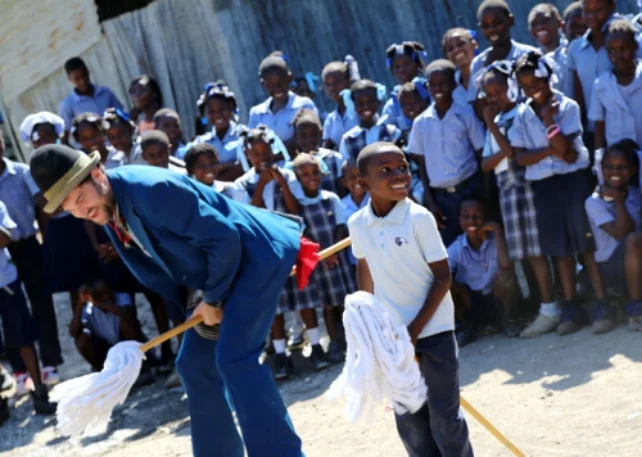
Haiti, 2013. Photo by Caitlyn Larsson
Have you had an experience where you were like, Oh, this is why I do this. This makes it all worthwhile?
Tim: In Haiti in 2006 we were working in a small, rural community called Torbeck. The kids there loved us, and one night when I was exhausted after a long day I suddenly felt this weight on my back. Before I could figure out what was going on this kid was standing on my shoulders. It was this clear night and we were looking up at the moon and I said, “Hey, hey, Jo-Jo, you and I, we’re going to go climb up to the moon.” And he laughed and looked down at me and said, “No no no, nous manger la lune [we’re going to eat the moon].”
So during this imaginary game it struck me that this kid was really malnourished. He was constantly asking us for food, but after the show and while playing with us he still had this fire of imagination that every kid in the world is capable of having. And to see his imagination explode like that just showed some really amazing resilience. I think we see that resilience with kids all over the world.
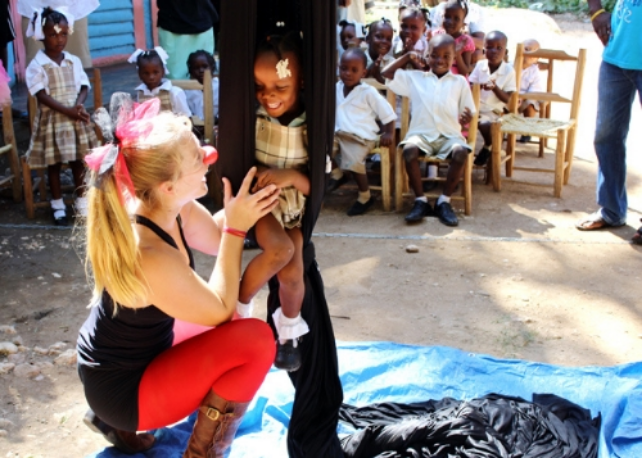
Haiti, 2013. Photo by Menley Mazile.
I imagine a lot of the people you are performing for havegone through serious trauma. And while there are some universal comedy truths—I’ve been laughed at all over the world for falling on my ass—your particular brand of performance must be unfamiliar sometimes. Do your acts ever upset people or fall flat?
David: One of the fun things for us as performers is that we get to work on a very basic, elemental version of clowning. In the US, maybe people would want something more sophisticated, but basic clowning generally works everywhere.
Tim: For example, we’ve got a bit that involves a clown finding a balloon. The clown finds the balloon, picks it up, stretches it out, slaps himself in the face by accident, and tries to blow it up. He’s not able to do it and we do all these funny things trying to figure out how to blow up the balloon. Then the bit ends with the clowns bringing a child up on stage. One of the clowns is holding the balloon in his mouth and his arm is out to the side making a half-T shape. The kid pumps his arm up and down, and that blows up the balloon. So the kid keeps pumping the arm and everyone’s laughing, but then the balloon pops. All of the clowns look at these balloon shards that are on the ground and they start crying and bawling and we have this balloon funeral.
In Haiti, we were talking with one of our sponsors about the program that we do. We told him about this funeral bit and he said, “You know, this is how women cry.” And he showed us this little hand-waving thing that women do when they wail. So we said, “OK, we’ll add that into our crying bit.”
So at the performance the female clown starts crying like that, and the kids all giggle. Then the male clowns look over to the female clown and go like, Oh, OK, that’s how we cry. So the male clowns start doing it. But in Haiti, when a male does that it’s a symbol of being gay, which is taboo—but the crowd loved it. It was one of their favorite parts on that tour because they saw us as people who didn’t know these taboos, demonstrating them in a very safe way and allowing people to laugh at them. In a way, I think we have some license through the form that you wouldn’t have if you didn’t have the nose or the character or the situation that you’re in.
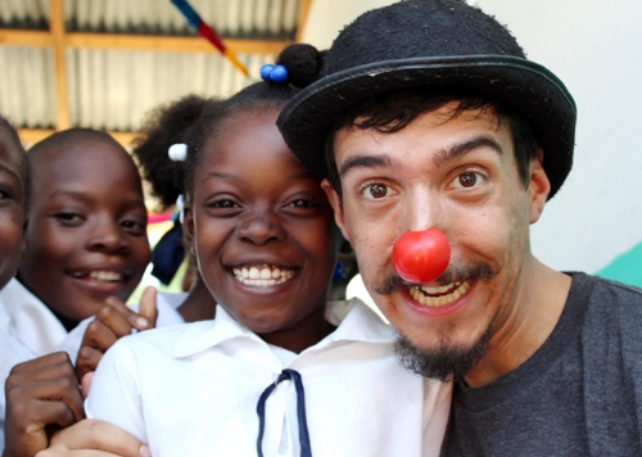
Haiti, 2013. Photo by Menley Mazile.
Have you always been that lucky with taboos? Has it ever just fallen apart?
David: In Palestine last week we developed a little checkpoint clown piece, and that worked really well there because checkpoints are a part of their daily life—not being let through, not being let out. When we started the checkpoint clowning the crowd just went quiet, but then they would laugh at the gags. Also, it’s a Muslim area and we were a mixed male and female group of clowns, as usual. We had prepared for a Muslim audience, though. We took out a lot of touching and a couple of parts where there was hip-swinging dancing because we wanted to be safe. But then we wound up putting a lot of that back in because we realized that clowns can get away with breaking the rules. It’s OK for a male and female clown to touch each other, to bang into each other or whatever, in slapstick. Clowns have different rules.
Why do you think clowns can get away with breaking taboos in so many different cultures?
David: Making fun of life is a pretty universal phenomenon. I watched a video of a Brazilian clowning troupe that went into the Amazon jungle to clown for an indigenous group. The locals had a guy who was like a clown, who made his living just going around being silly and making fun of the daily tasks that everybody else did, and the clown troupe just went in and improvised with this guy.
Speaking of universal, have you ever had any issues with coulrophobia, the fear of clowns that’s such a trope in the West, during your travels?
David: It’s the big white face and clown costume that sets it off. We’re in fairly normal costumes—goofy clothes but natural faces, with perhaps a clown nose.
Tim: In Haiti we had a clown who wore stilts. We opened the show and the kids were cheering, but as soon as the clown on stilts came around the corner they freaked out—everyone was crying and trying to back away. So the clown kind of eased off and we quieted down the music. She got the stilts off in a really funny way. Then, after about three or four minutes, they were back to sitting there, laughing with us. So there was a fear of this big thing, but I wouldn’t call it a fear of clowns.

Haiti, 2013. Photo by Bobby Kintz.
Tim, you recently started a project at Columbia to measure the impact of clowning fieldwork. What have you learned so far?
Tim: There is not a lot of evidence out there at all. People have explored clowns in hospitals and done somewhat rigorous studies looking at the benefits of stress relief for preoperative patients, as well as reducing the stress of doctors and nurses in some cases. But really very little has been done examining what Clowns Without Borders does in refugee camps, conflict zones, and zones in crisis.
There was one study where they were saying, I guess, that you can increase your chance of success with in vitro fertilization if you’re entertained by a clown while they’re doing the IVF. People say you’re less stressed and your body is more accepting of what’s going on.
Well, that’s an image.
Tim: Yeah, I don’t think I’d want to be watching a clown while I… but I guess they’ll never do that to me.
What I’d like to see, though, is if you’d have lower levels of stress in conflict zones. I’d guess there might be better community adherence. We know that using performing arts and art therapy is a whole other way for people to work with psychological trauma and find creative spaces to do something positive. I’d like to build a body of evidence that shows that. Or doesn’t show that. Who knows? Maybe what we’re doing isn’t right. That should be examined as well.
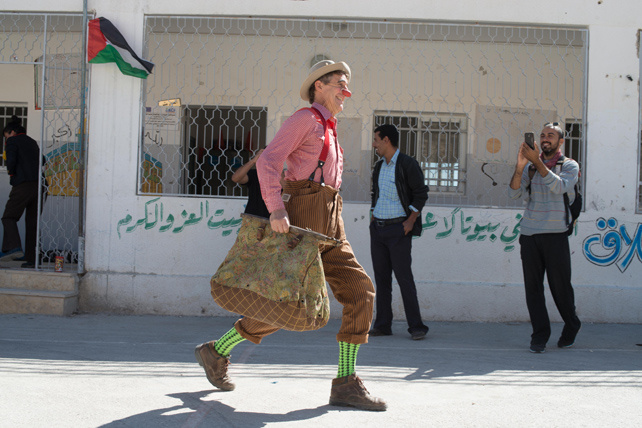
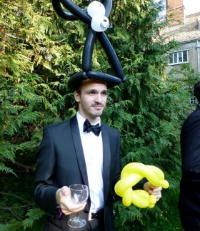
MARK HAY
Mark Hay is a sometimes-freelance write, sometimes-blogger, and former graduate student at the University of Oxford. His work appears in Asoko News, Capital New York, Esquire, The Economist, Foreign Service Journal, GOOD Magazine, Men’s Journal, Roads & Kingdoms, Slate, and VICE, among numerous other minor publications. He writes about anything under the big tent of culture, faith, identity, politics, and sexuality — basically anything human beings will fight over.
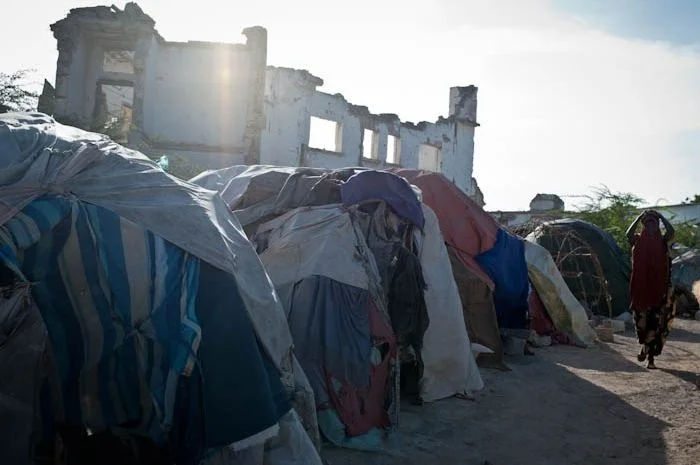
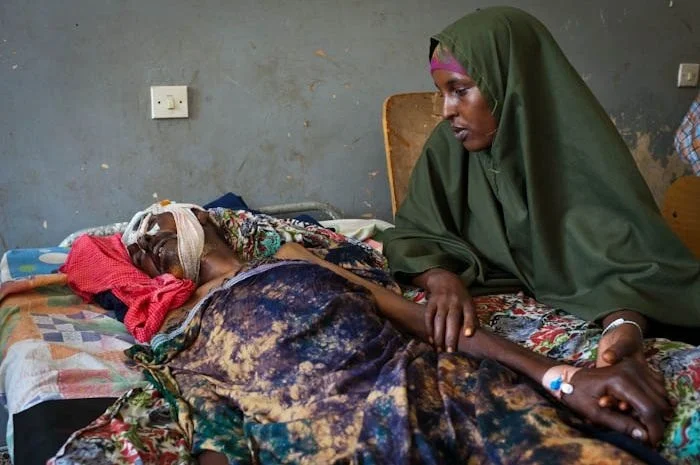
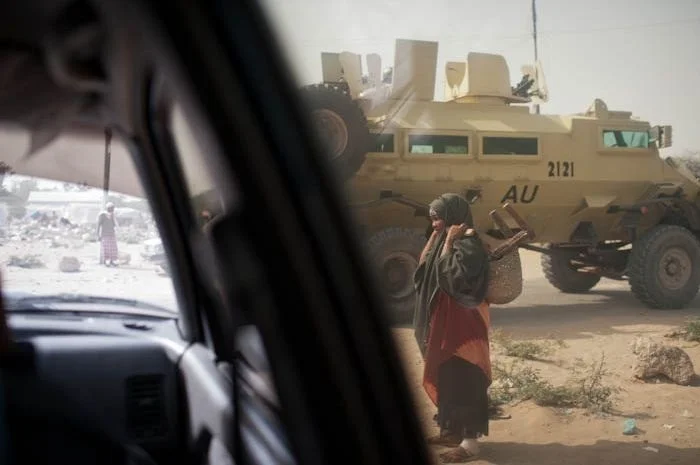
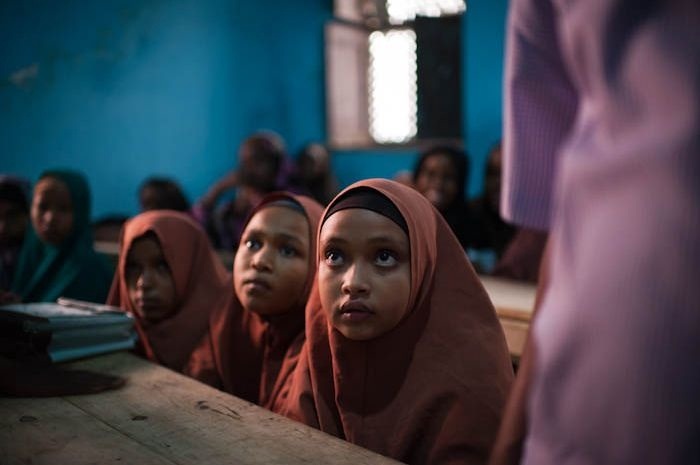
Somalia: Daily Life
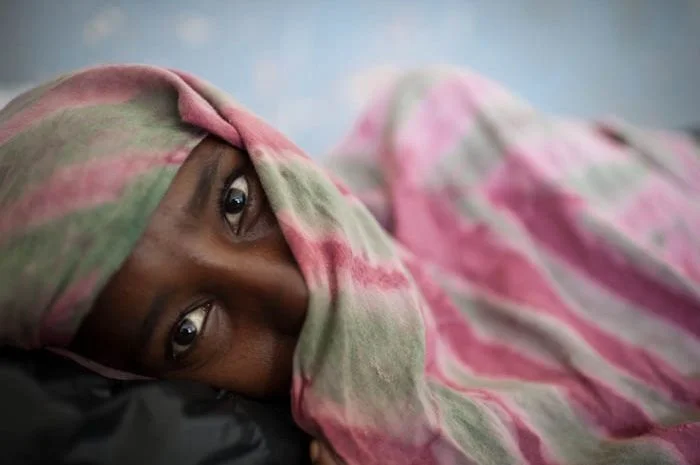
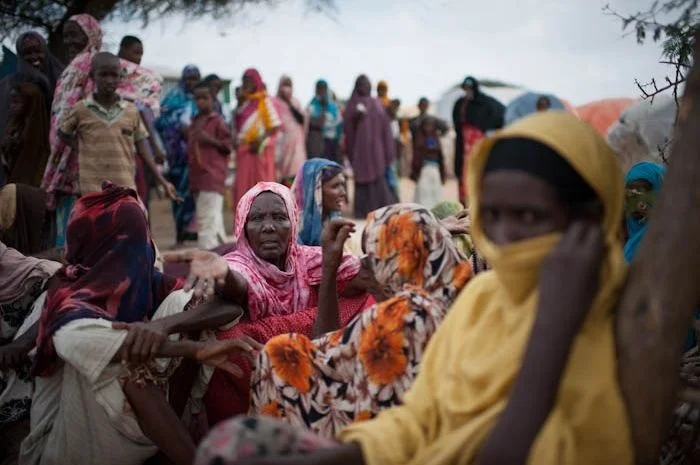
At 8:30 am the streets are crowded after the Islamic call to prayer. The echo of gunfire in the distance is a normal, and seemingly daily occurrence, in present day Mogadishu. Pick up trucks armed with groups of men carrying machine guns firing rounds to hurry along busy traffic is common, and it carries on throughout the day and into the bat-studded night sky. Mogadishu has been called the most dangerous city on earth and the country has been wrought with civil war between Islamist extremists and a failing government since 1991. Since then there has been no central government control over the country’s territory and the region has been stricken with devastating violence and famine. There are an estimated 3.7 million Somali’s living without enough food and the rate of malnutrition is approximately 50%, the highest in the world. It’s difficult for aid agencies to gain access into Somalia because many have been blocked by al-Shabab—the Somali cell of al-Qaeda—leaving nearly a quarter million people trapped without access to food. Photographer Anthony Karen ventured to Somalia’s capital in January 2012 to document the daily life of the people who call the war-torn country home and to visit the the Dadaab refugee camp on the Kenyan-Somali border.
Famine in Somalia
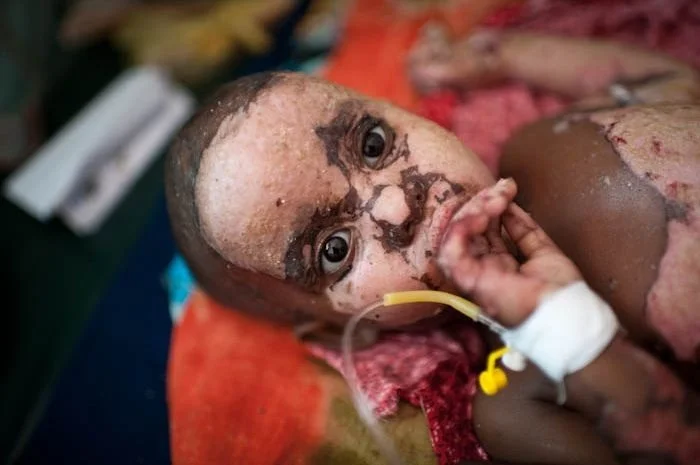
The United Nations declares a famine when 20% of households face severe food shortages. more than 30 % of the population is malnourished, and two out of every 10,000 people die from hunger each day. In July 2011, in the midst of the worst drought the country had seen in more than 60 years, the UN officially declared a famine in Somalia. The anti-Western, al-Qaeda linked militant group, al-Shabab made the situation worse, banning Western aid agencies from entering the territory and subsequently blocking starving individuals from gaining access to food. Al-Shabab has accused foreign aid workers of being spies as well as killed and kidnapped workers. The group has also diverted food supplies for themselves, leaving starving Somalis without any options and aid organizations in a tricky spot.
In February 2012, the UN declared the famine in Somalia to be over, but the country still remains in crisis with widespread hunger and violence. Since the collapse of its central government two decades ago and the civil war that ensued in 1991, Somalia has been faced with myriad disasters and has ranked as one of the poorest, most violent countries on earth. Last year, a drought killed livestock and farms which spiked death and malnutrition rates. Desperate Somalis trekked across the desert in search of aid and some arrived in Kenyan refugee camps while the few hospitals in Mogadishu were overcrowded with malnourished people affected by famine and violence.
The United Nations helped to raise more than $1 billion for relief efforts across Somalia and organizations such as the Turkish Red Crescent Society and The World Food Program have been working towards providing humanitarian relief in the country. Also, with the help of heavy rains in November, famine conditions began to subside in some parts of the country. However, the crisis is far from over and violence, instability and hunger is still widespread across Somalia.
Doctors Without Borders/Médecins Sans Frontières (MSF) is a leading humanitarian organization that provides medical care to people caught in crises. They work within over 60 countries and remain the main provider for free medical services in central and southern Somalia.
The World Food Programme reaches up to 1.3 million peopole with food relief to areas of Somalia which they have access to including, Mogadishu, Puntland, Somaliland, central regions and some border areas of the south. They have increased their nutrition programs to treat and prevent malnutrition.
CONFLICT
What happens off the front lines, when the combat concludes (or has not yet begun), but guns and poverty abound? Pete Muller is an award-winning photojournalist whose work work provides insight into the tensions that lie beneath conflict cycles.