
Nick Dauk
Camel rides and horse-drawn carriages in the tourism industry create moral dilemmas for travelers.
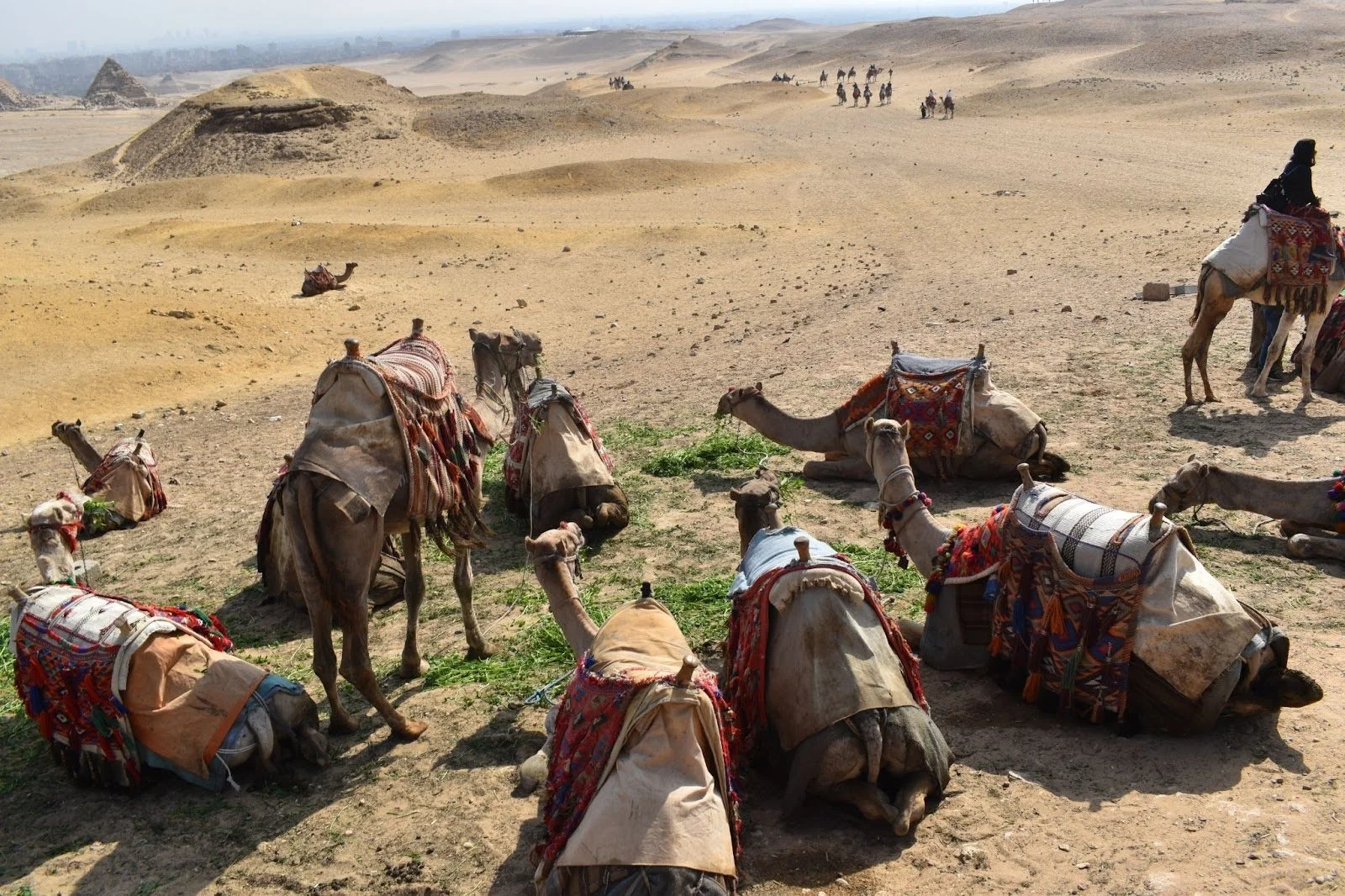
Camels used for tourist rides at the Pyramids of Giza. Nick Dauk.
Seven men stand above a dead horse, discussing the easiest way to move its carcass into a truck bed. This is the second expired equine my tour group has encountered in Egypt; the first, an unfortunate foal, was discarded like trash on the streets of Cairo. Sadly, this is a common sight for many international travelers and is the reason Luxor’s Animal Care in Egypt (ACE) charity veterinary hospital exists. The organization was founded by U.K. traveler Kim Taylor 25 years ago, after she observed the mistreatment of working horses and donkeys in Luxor.
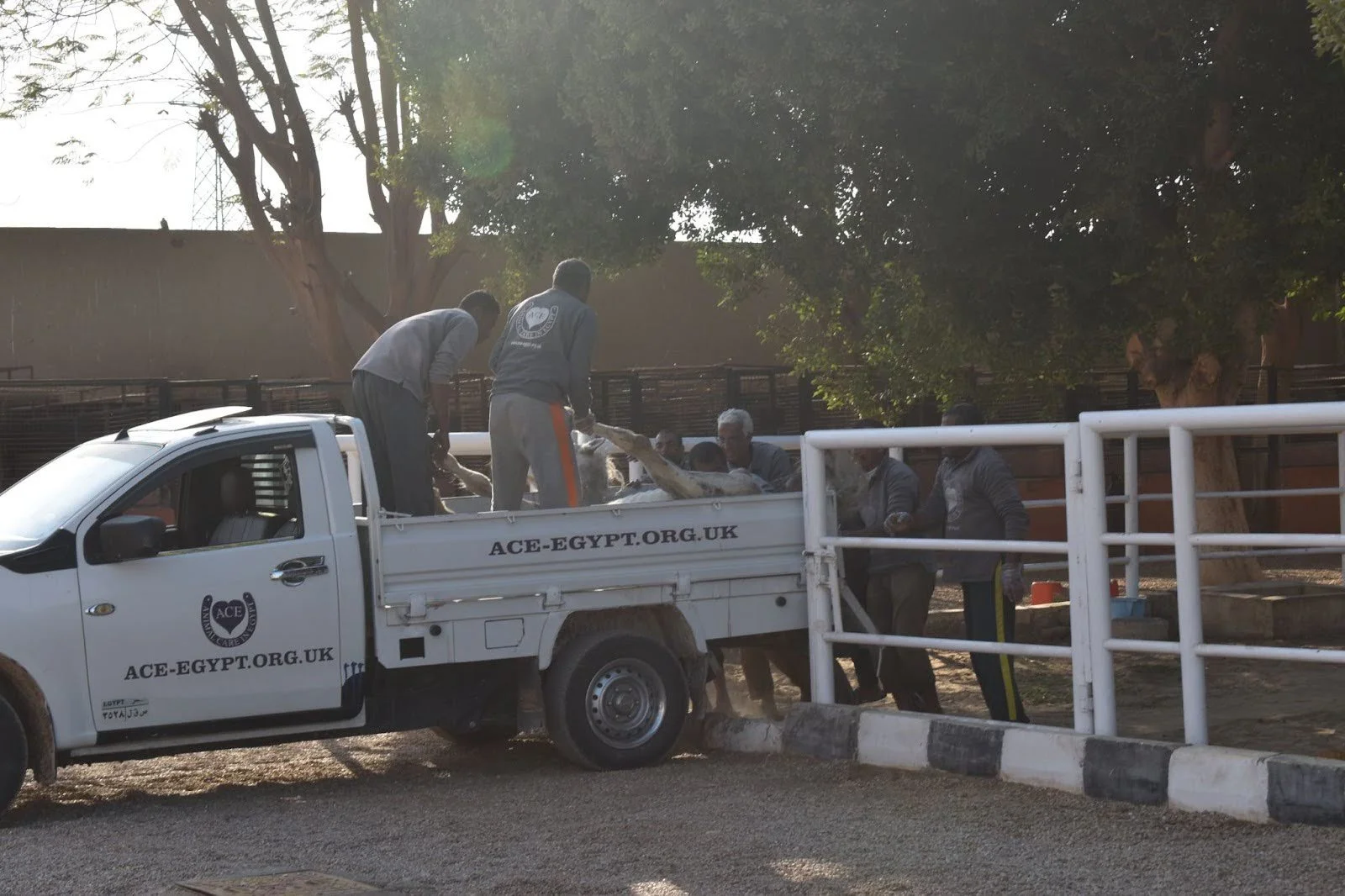
Luxor’s ACE veterinary staff loading a deceased horse into a pick-up truck. Nick Dauk.
In 2023, while I am on tour with Exodus Adventure Travels, I see horses pulling carriages through Luxor that get whipped, kicked and treated like machinery. The reality is that many of the animals working in Egypt’s tourism sector are irresponsibly cared for at best and grossly abused at worst. The issue is not unique to Egypt; elsewhere in the world, equines, elephants and other animals are also subject to mistreatment within a tourism context.
The ethics of animal welfare seem black and white in principle, but both the tourist and the tourism company are often guilty of harboring, even subconsciously, a murky gray scale. Listening to the voices of tourism companies, veterinarians and animal welfare advocates can help travelers draw the line in making ethically educated decisions when encountering animals in the tourism industry. “Animal advocacy is absolutely central to how responsible wildlife tourism should operate,” Head of Positive Impact at Jacada Travel, Natalie Lyall-Grant, tells me. In 2025, Jacada performed an audit of its wildlife-related activities and subsequently removed more than 40 animal experiences from its portfolio of tours. “We prohibit physical interactions with wild animals, refusing to sell attractions that exploit them for profit or forced performance,” Lyall-Grant adds.
Jacada is far from the only tour company to reassess animal encounters; a decade ago, companies like G Adventures and Intrepid Travel banned elephant rides on their tours. The Elephant Conservation Center (ECC) in Laos claims that traveler expectations have also shifted: more travelers are actively seeking out ethical wildlife experiences and pointedly rejecting activities like elephant rides. But even so, the fact is that animal mistreatment is often made less obvious to travelers.
Abuse and Mistreatment Are Often Hidden From Tourists
“Travelers increasingly want to do the right thing, but they’re rarely given the full picture,” says Emily Guice, Corporate Responsibility Officer for PETA. “They don’t see the open sores hidden under saddles, the stables saturated with urine and waste, or animals that are forced to work for hours without proper shade, food or water.”
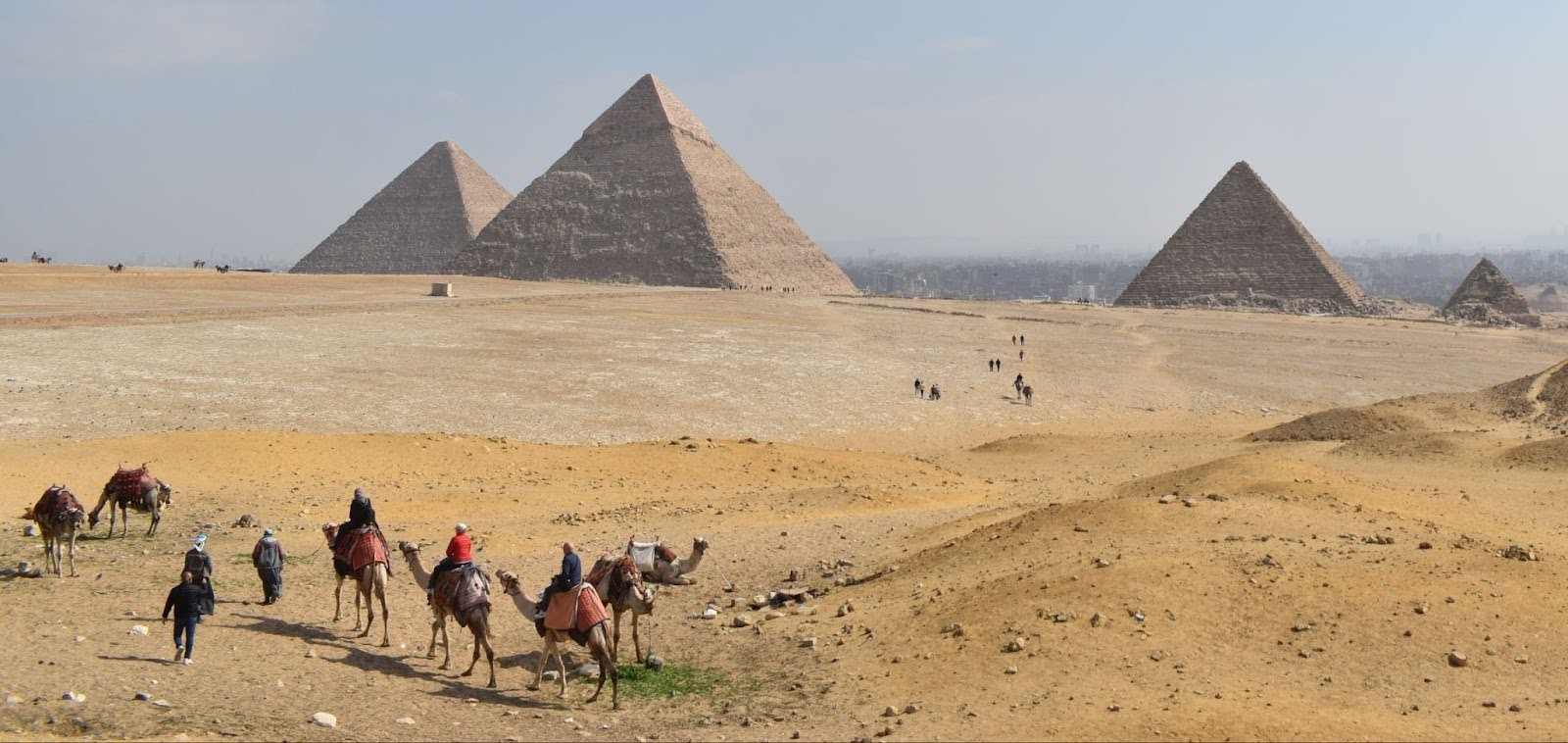
A group of camels used for tourism at the Giza Necropolis. Nick Dauk.
In 2019, PETA uncovered widespread abuse of both horses and camels in Egypt that continued through 2025. The animals were covered in wounds and emaciated, then dumped daily in a hidden graveyard near the pyramids when they expired. I hear these same claims when I visit Luxor’s ACE veterinary hospital. Jana, a German volunteer equine veterinarian, tells me that she regularly sees severe wounds and diseases that she typically doesn’t encounter in Europe. Speaking from a medical perspective, she believes that tourists should not purchase Luxor’s horse-drawn carriage rides, but she also doesn’t think that opting out instantly saves the animals’ lives. “You see a really skinny horse and assume the owners are so cruel, but they’re often just as skinny,” Jana says. “It’s not as easy of a decision as it seems, and I haven’t found a solution for myself yet.”

Jana, a German equine veterinarian at ACE in Luxor. Nick Dauk.
A spokesperson from Brooke, an international charity focused on the protection and welfare of working equines, agrees that the issue is complicated for the animal operators. “Most do the best they can within their resources, even if they lack the capacity, opportunity or motivation to make changes.” Yet, while purchasing these services may contribute to the animal’s care, the traveler still needs to understand their responsibility. “Demand drives practice, so ethical choices support better care. Consider if use of the animal is necessary, and how operators support their welfare during and outside of work.”
Other advocates like PETA take a different stance, noting that the need for change lies at a deeper level. “Jobs tied to animal exploitation are precarious by design,” Guice says. “When companies stop promoting animal rides, tourism doesn’t disappear; it shifts to ethical alternatives and opens the door to more sustainable tourism work.”
The Gray Area Between Animal Rides and Animal Rights
At no point did our Exodus tour guide offer or encourage us to ride any animal in Egypt, opting instead to include an ATV ride near Giza’s pyramids and free time to stroll Luxor’s markets on foot. However, Exodus, along with G Adventures, Intrepid Travel and Jacada Travel, does currently offer horseback riding on some Latin America tours. Travelers may find themselves in unfamiliar, sometimes uncomfortable positions where they’re encouraged to make a decision without knowing all of the details. “It really shouldn’t fall on the traveler to figure this out on their own. That’s our responsibility,” said Intrepid’s Leigh Barnes.
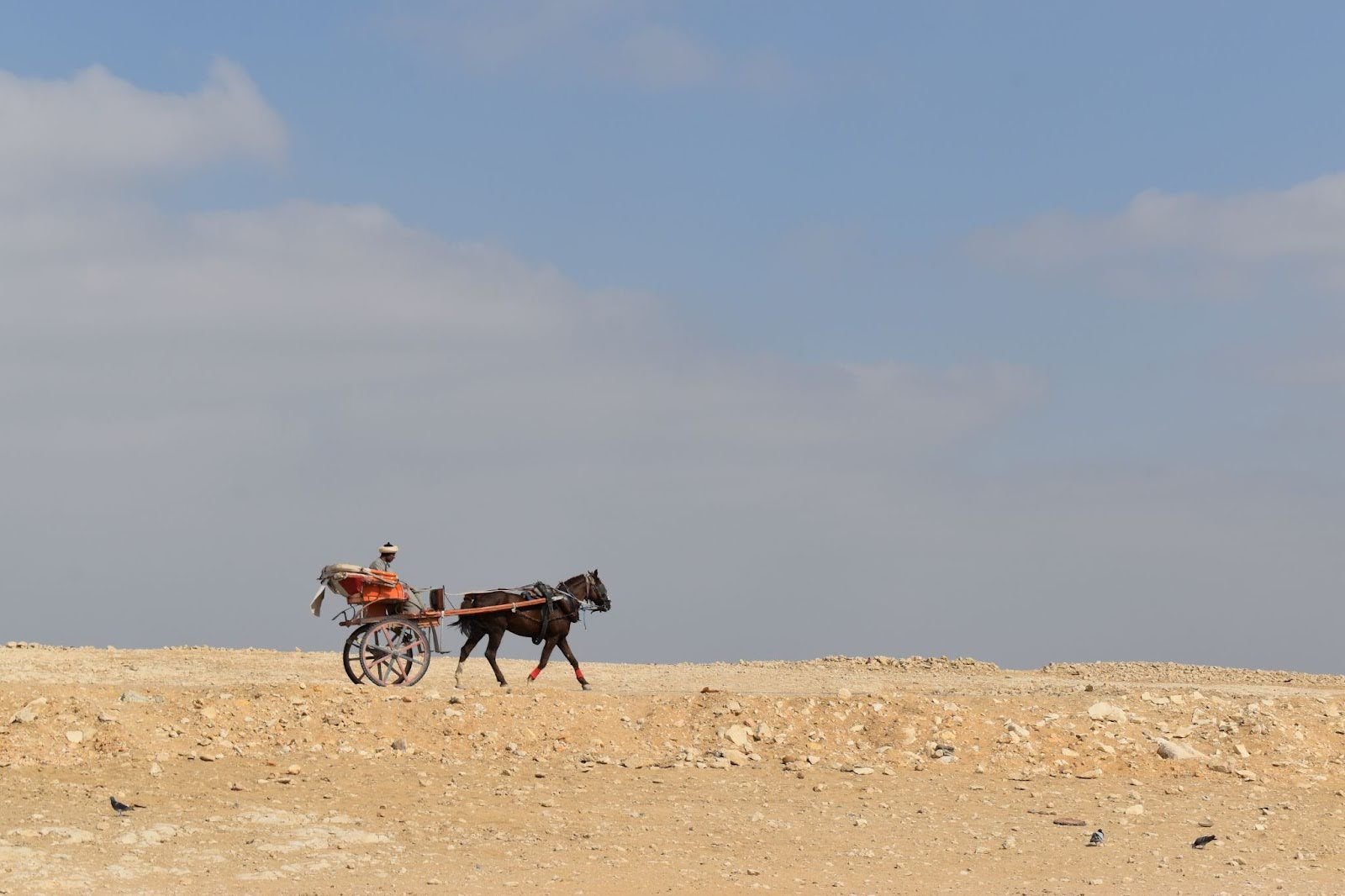
Horse cart and owner near the Great Pyramid of Giza. Nick Dauk.
Thankfully, those looking for alternatives to riding an animal can still achieve a memorable experience at many unforgettable destinations. In Giza, for instance, tourists have the option of riding the new electric buses to the pyramids. Ultimately, the responsibility does fall on both the tour company and the tourist. It’s the operator’s choice on who and how to partner with animal-focused activities, and it’s the traveler’s decision of how they choose to financially support these operators. “The future of animal-friendly tourism isn’t about finding the least harmful ride,” Guice says. “It’s about choosing experiences that let animals be animals, not attractions.”
Nick Dauk
Based in Florida, Nick Dauk is a travel writer primarily focusing on tourism sustainability initialives, endangered wildlife, and vulnerable populations. His work has been featured in National Geographic, Afar, The National Post, and Euronews. When he's not photographing the wonders of the Arctic, the Amazon, or Africa, he's usually seeking out cultural, cuisine, and community-based stories across the Americas and Europe.