
Sofia Stidham
Analysts say Israel’s recent strikes on Syria aim not only to protect the Druze minority but also to serve its goals of geopolitical influence.
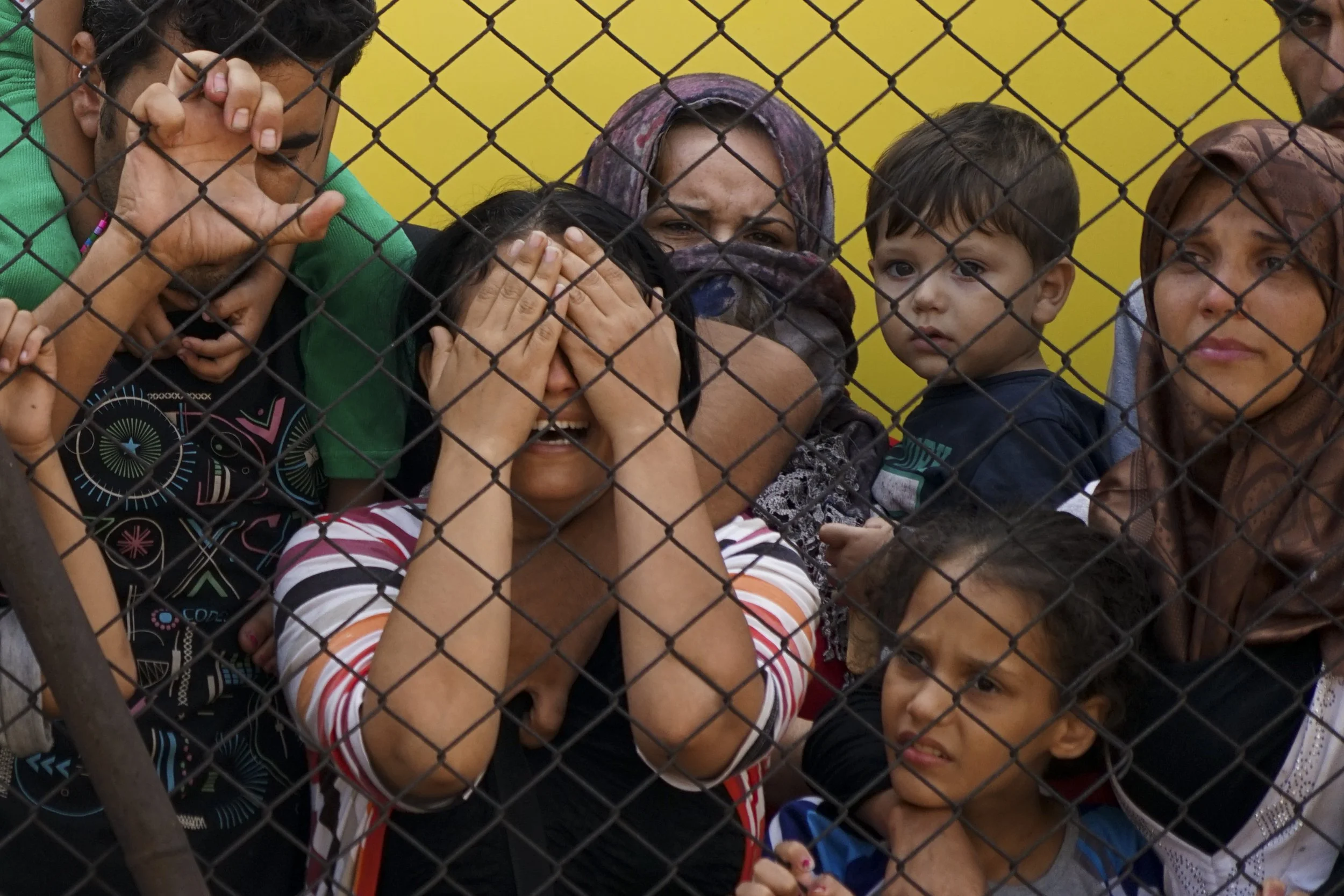
Syrian refugees during civil war in 2015. Mstyslav Chernov. CC BY-SA 4.0.
On July 15, 2025, Israel decided to enter Syria’s deadly interethnic conflict between the Druze, their ethnoreligious minority ally, and local Bedouin groups. The state launched airstrikes on two of its neighbours’ southern cities, Suwayda and Daraa, and their countryside, targeting government tanks. The attack was followed by the bombing of military and defense buildings in the capital, Damascus, the next day. Their attacks contributed 18 more people to the clash’s mounting death toll of 1,265. On July 19, Suwayda’s sectarian conflict was restricted by a shaky ceasefire. Yet the Bedouins still evacuated the city on July 21 amid violations of the agreement and fears of continued civilian bloodshed.
Israeli Prime Minister Benjamin Netanyahu explained that they intervened to protect the Druze, whom he deemed “the brothers of our brothers,” from the abuse of government forces. The rest of the world, however, remained markedly skeptical, criticizing Netanyahu’s actions as a violation of Syria's sovereignty, despite his justification.
The spiritual leader of the Druze, Sheikh Hikmat al-Hijri, however, told Middle Eastern Eye in December that he condemned Israel’s intervention and encouraged national unity. The Druze are a distinct religious community that emerged from Shi'a Islam in the 10th century. The Syrian Druze are concentrated in the Suwayda province, where recent clashes with local Bedouin tribes erupted on July 12 after the abduction of a Druze merchant. Despite community concerns, President Ahmed al-Sharaa still sent forces with the intent to restore order. Yet reports say those forces executed members of the minority group, creating a death toll of 166 people before Israel even intervened.
Secretary of State Marco Rubio said the United States was “very concerned” about the potentially unfolding devastation within Syria. Within the region, the Gulf Cooperation Council, which includes Bahrain, Kuwait, Oman, Qatar, Saudi Arabia and the United Arab Emirates, also condemned Israel’s decision in the “strongest terms.” Khaled Khiari, Assistant Secretary-General for the Middle East in the United Nations, called Israeli airstrikes on Syrian territory “escalatory.” Khiari also urged Israel to abide by the Disengagement of Forces Agreement of 1974. “Israel’s actions undermine efforts to build a new Syria at peace with itself and the region,” he said, referring to Syria’s transitional government after 53 years under the Assad family’s dictatorship.
A growing number of Middle Eastern political experts and analysts point to this erosion of Syrian territorial integrity as part of Israel’s wider, long-standing strategy to assert influence in the region. A former Israeli ambassador, Alon Pinkas, described Israel’s recent protection of the Druze in Syria as “pure opportunism,” questioning why the state didn’t help similar groups, namely the Kurds.
Soumaya Ghannoushi, an expert on Middle Eastern politics, argued that Israel’s strikes on Damascus established its dominance, describing them as “theatre designed to shock Syrians and to frighten Arabs.” Similarly, senior political analyst Marwan Bishara claimed that Israel “continues non-stop to divide its neighbours in order to be the more powerful one.” These interpretations echo narratives found on Israel’s own Government Press Office website, where a publication urging Israel to embrace its role as a regional power is listed under a section labeled “Important Information.”
However, Israel’s July airstrikes mark only the latest chapter in its encroachment on Syria’s borders. Since the beginning of the Assad family’s rule in Syria, Israel has reportedly conducted nearly 500 strikes on the country, as well as continued to occupy Syria’s Golan Heights. Israeli officials have expressed doubts about the viability of Syrian statehood. Namely, Israel’s Foreign Minister, Gideon Saar, declared that "the idea of a single sovereign Syria is unrealistic." For many observers, the policy now appears less reactive than deliberate, raising questions about the future of Israel’s attacks on the country.

Sofia Stidham
Sofia is a rising fourth-year English Literature student at the University of Edinburgh, having recently completed a year-long exchange at the University of Virginia. Outside of writing, she enjoys spending time with family and friends, going to concerts, curating her wardrobe, and zoning out on long walks. She hopes to pursue a career that allows her to channel her passion for writing into intersectional feminist advocacy.