
Evelyn Garcia Medina
Internationally, weddings are celebrated with unique cultural traditions ranging from playful games to serious rituals that symbolize the blending of lives.
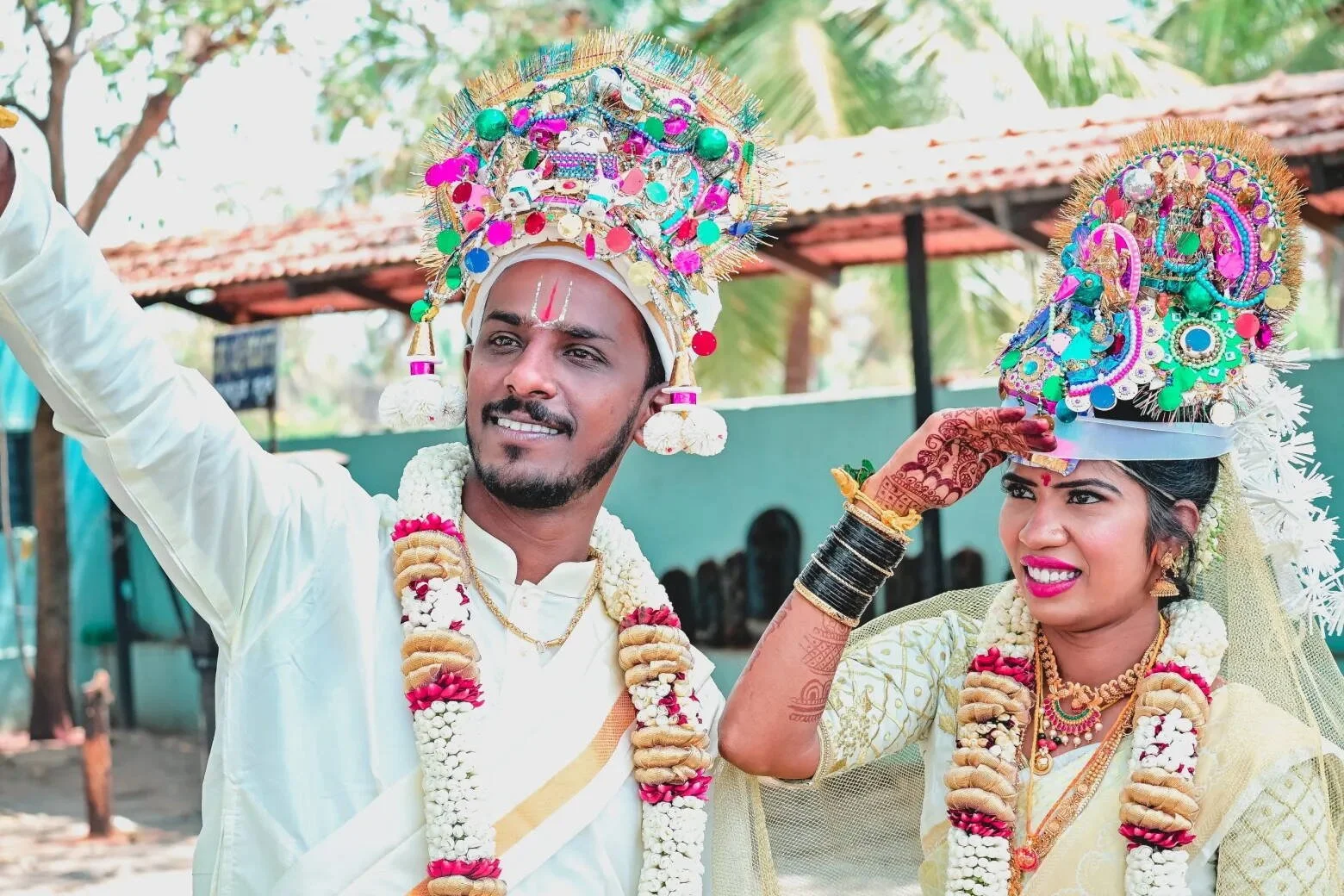
A bride and groom stand next to each other smiling. Hemanth. CC0.
Marriage is a significant milestone in various cultures and makes for important wedding traditions that represent different components of the unity. From games and dances to private and serious rituals, traditions all over the world are symbolic in their celebration of marriage. Below are eight traditions that show the symbolic elements of a cultural wedding.
1. Pakistan
Joota Chupai (Stealing the Groom’s Shoes)
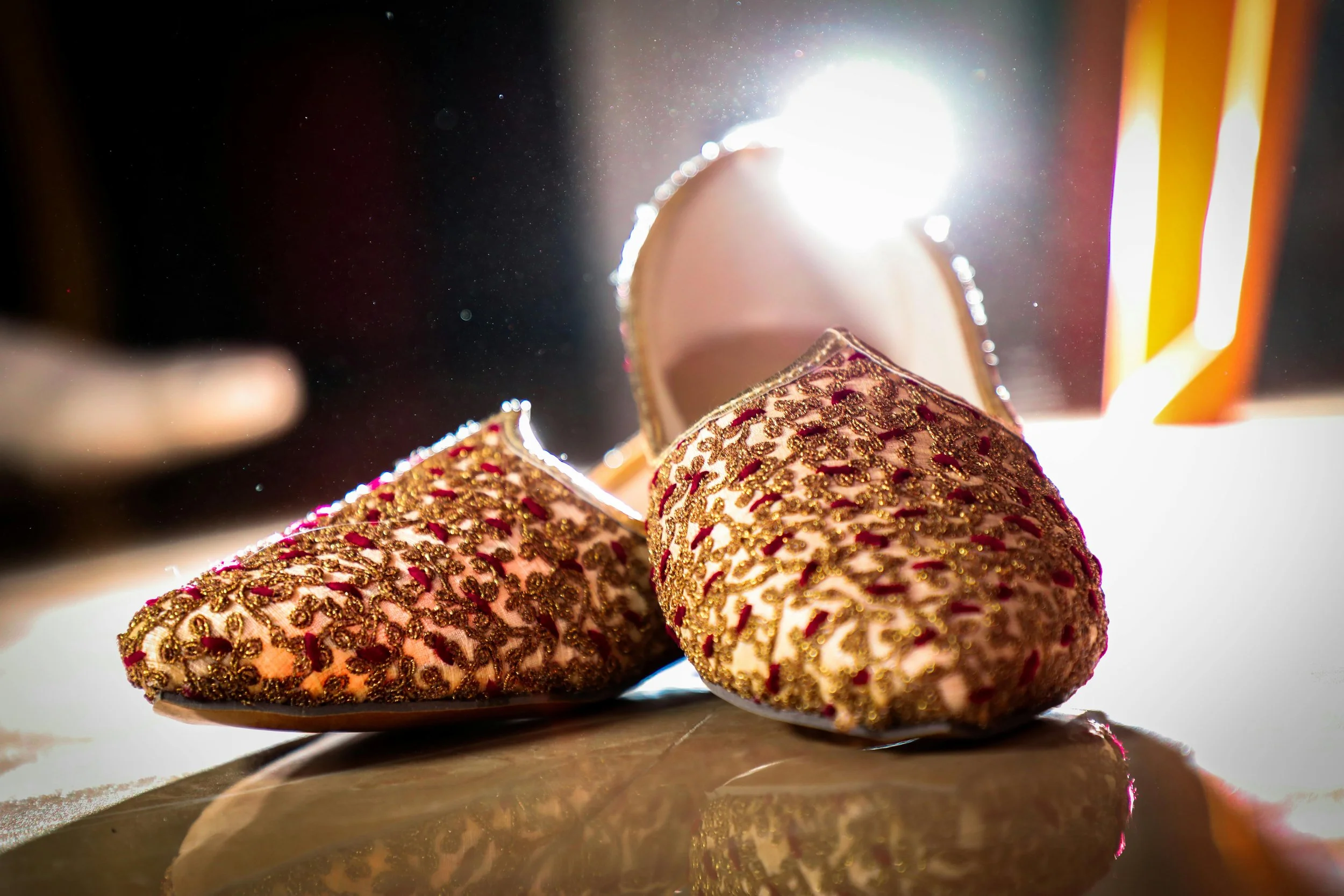
A pair of elegant shoes propped up. Viresh Studio. CC0.
In Pakistan, the bride’s sisters and cousins perform “joota chupai,” a wedding custom wherein they hide the groom’s shoes and playfully demand money to return them. In an attempt to get the shoes back, the groom and his family negotiate with money or gifts in exchange.
This tradition occurs in both Pakistan and India, and in both renditions, the game is meant to be light-hearted and filled with banter. Ultimately, it symbolizes mutual respect and the blending of the families. Pakistani wedding gown designer Hassan Sheheryar Yasin writes that joota chupai is a reminder to the groom that “entering into marriage means accepting the bride’s family as his own.”
The custom has evolved, with modern families including pre-planned jokes and negotiations. The bridesmaids might demand an outrageous ransom, the groom may have money-filled envelopes to negotiate with the bridal party or there may even be backup shoes for the groom. Today, joota chupai is still an important part of Pakistani weddings and continues to create a fun and uniting experience for both the groom’s and bride’s families.
2. South Korea
Pyebaek Ceremony (A Show of Respect to the Groom’s Family)
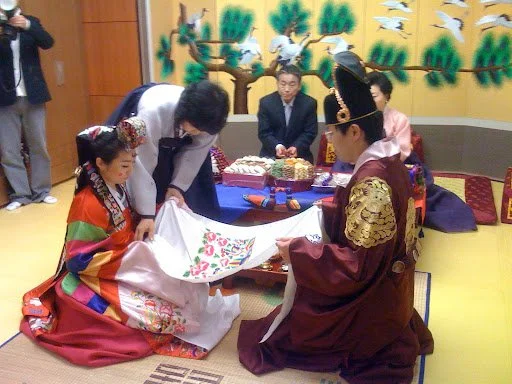
A Pyebaek ceremony in South Korea. halfGoku. CC BY-SA 2.0.
Pyebaek is a tradition that begins with a tea ceremony. The couple bows before pouring the tea, then receives blessings and gifts from their families. After additional conclusory bows, an embroidered white fabric is used to catch dates and chestnuts thrown by their parents. Korean cultural writer Dakota Kim explains, “The number of dates and chestnuts the happy couple catches in the cloth represents the number of children they will have, with dates representing sons and chestnuts representing daughters.” After this, the groom can choose, if he wants, to piggyback his new bride one to two times around the table.
Pyebaek used to be a primarily private ceremony, and the only people in attendance would be the bride, groom and his parents, as the bride would move in with her in-laws before marriage. In this regard, pyebaek symbolized the bride’s entrance into her husband’s family as a show of respect to the parents, but has since evolved.
Nowadays, couples perform this ceremony during the reception so that guests can watch and both sides of the family can be involved.
3. China
Shang Tou (Hair Combing Ceremony)
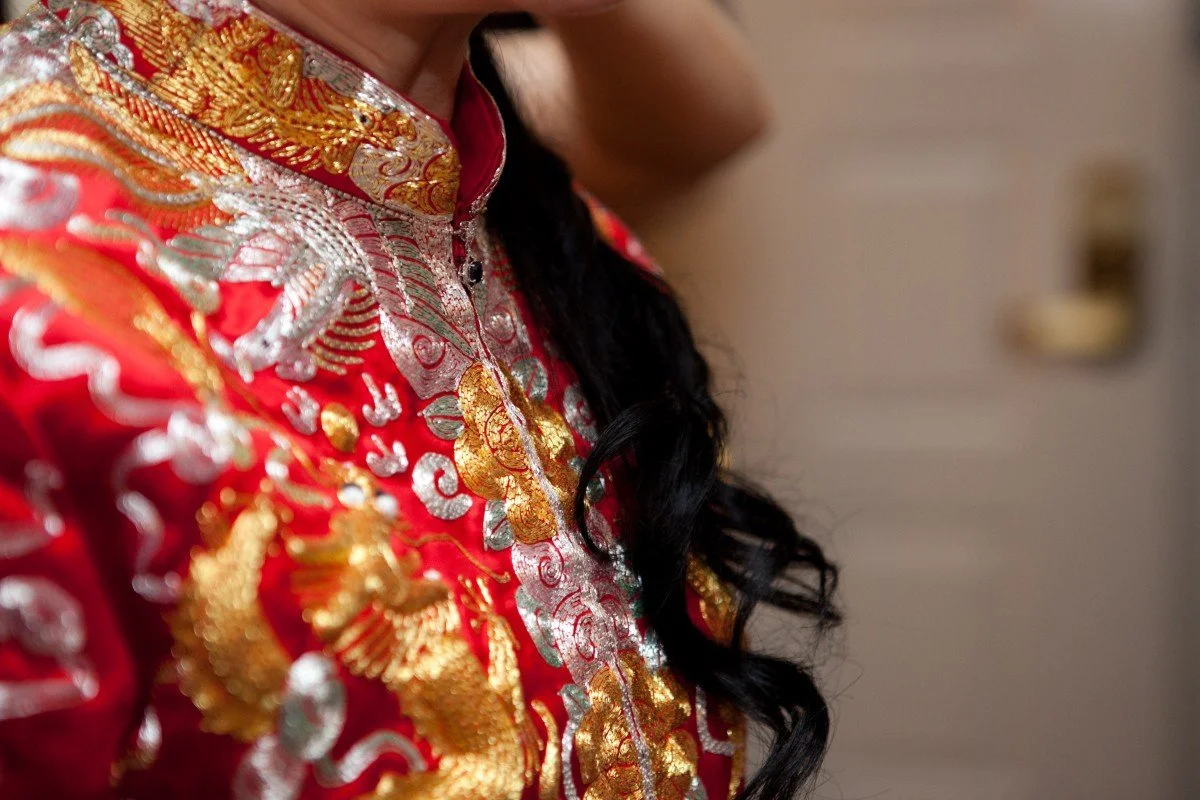
Woman wearing traditional Chinese attire with her hair over her shoulder. Cbiusa. CC0.
Shang Tou, or the hair combing ceremony, consists of the bride and groom showering with pomelo leaves meant to ward off evil and impurity, then putting on a new set of red clothes. The bride sits across from a mirror or window, and the groom sits facing the inside of the house. Next to them is a pair of red taper candles, scissors, one stick of incense, a wooden ruler, a hair comb and red yarn with cypress leaves. To start the ceremony, a female elder of the family will light one stick of incense and a pair of red taper candles before combing the couple’s hair four times while reciting blessings to them. After their hair is combed, the elder gives red yarn with cypress leaves to both.
There are different symbolic elements of the Shang Tou ceremony, such as the inclusion of a female elder. To ensure the longevity of the marriage andthe bride’s fertility, the elder chosen to perform the ritual must be somebody who has never been divorced and has grandchildren. The blessings she recites are also significant, with a different blessing recited for each stroke. The first stroke represents a healthy, long-lasting marriage, the second hopes for unconditional love and respect, the third blesses the bride and groom with prosperous lineage and the final combing asks for the couple to be granted long, healthy lives.
Shang Tou isn’t as prevalent today, especially with younger generations, but the ritual is still observed by culturally traditional families in Guangdong, Hong Kong and Fujian.
4. India
Tilak Ceremony (The Groom’s Blessing)
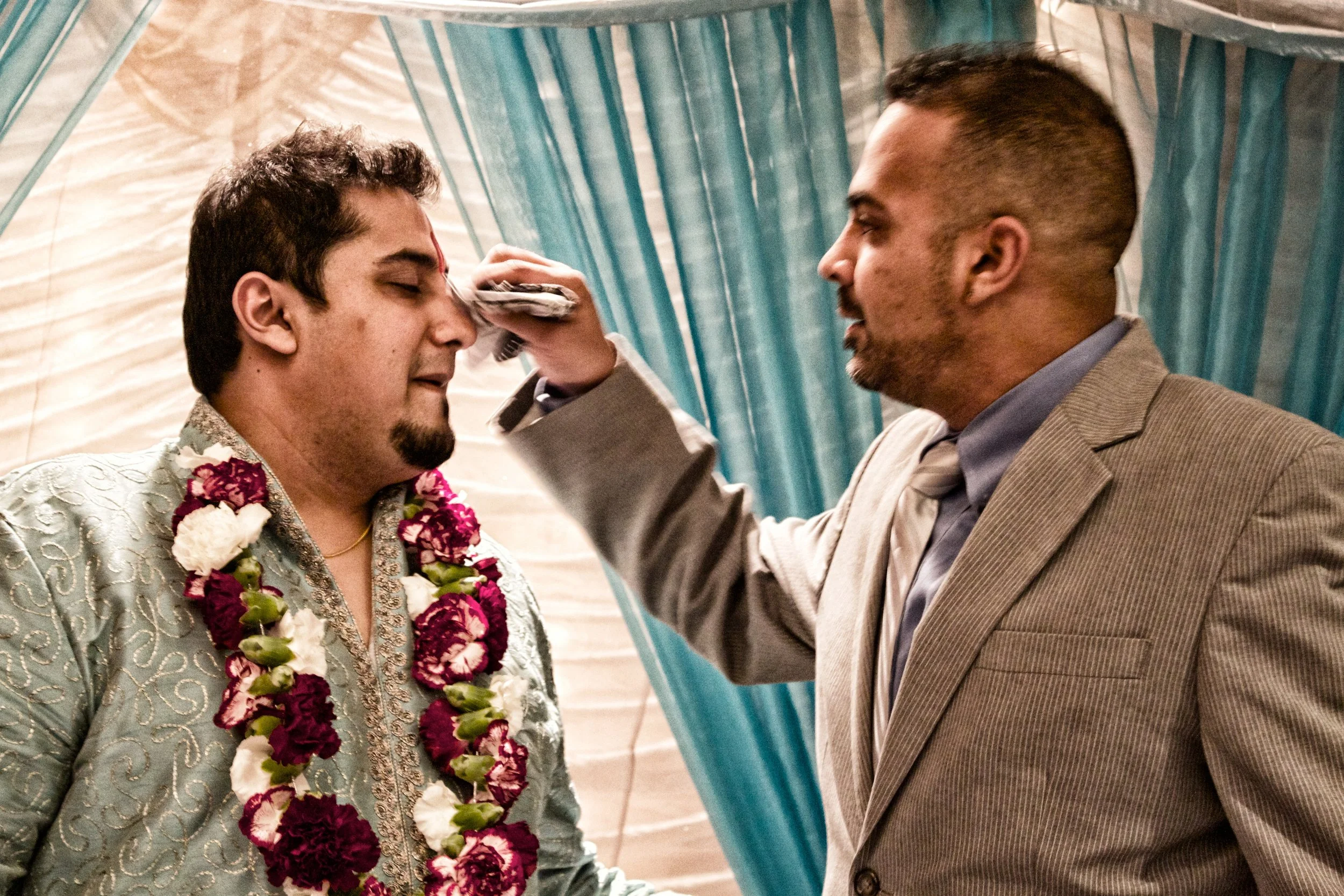
A man cleans the groom’s nose after applying the tilak. Jit Bag. CC BY 2.0.
To start the ritual, male members of both families gather, and a red mark, or tilak, is placed on the groom’s forehead by a male member of the bride’s family. A gift exchange occurs, and a small prayer is said aloud to bless the bride and groom with a happy and stable marriage.
Many of India’s wedding traditions are rooted in Hinduism and its ancient scriptures, symbolizing the sacred spiritual duties of marriage. Tilak is a historically established tradition in Indian culture and represents the family’s formal approval of the couple. It unites the families and gives an important male elder of the family an opportunity to bless the groom.
The ceremony is still an important part of Indian weddings today and a popular tradition that appears in Indian weddings no matter the region.
5. Mexico
La Vibora de la Mar (Sea Snake Dance)
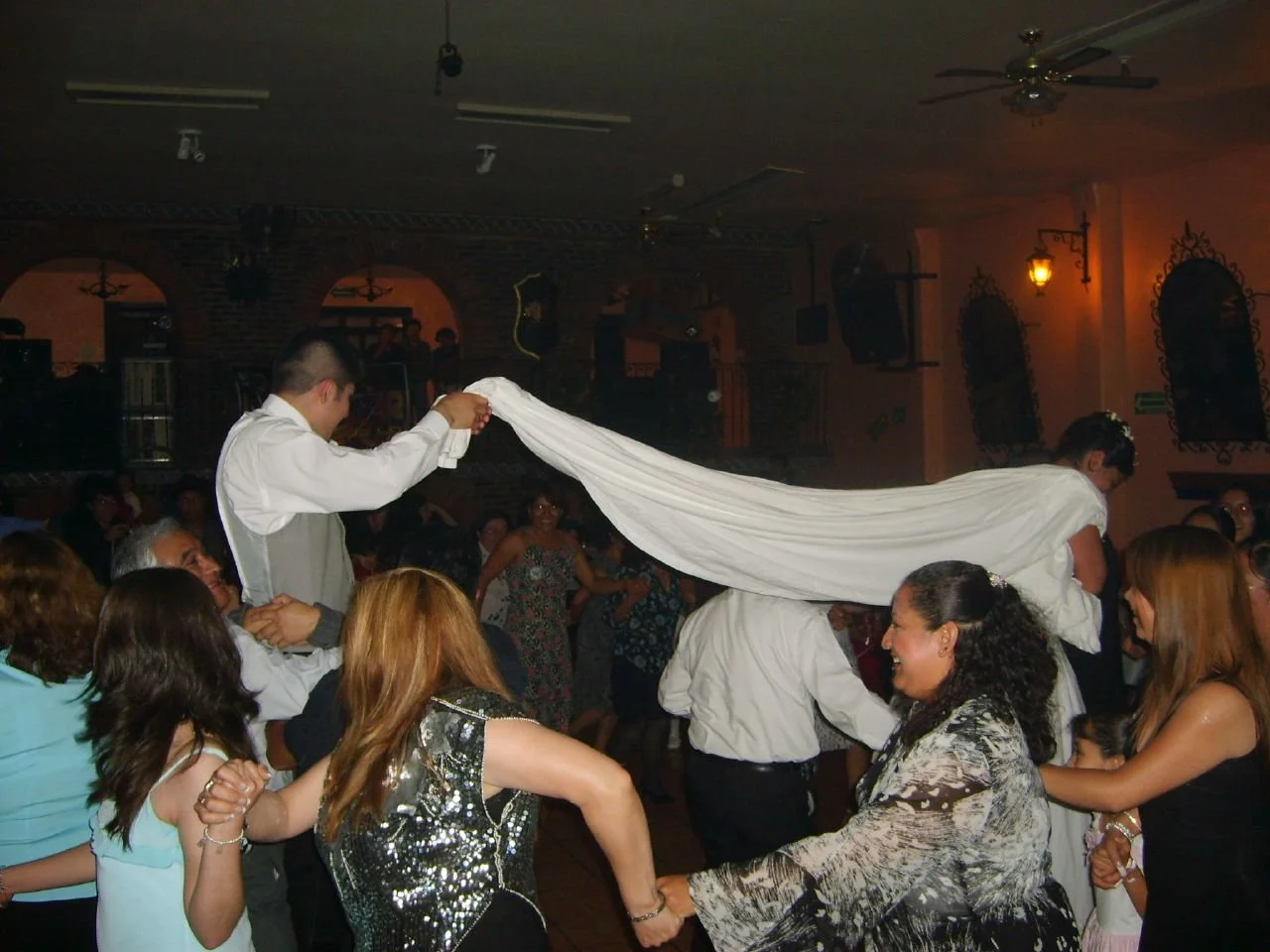
Women hold hands and run under a makeshift bridge held by the bride and groom. J.V. CC BY 2.0.
One of Mexico’s most popular traditions, La Vibora de la Mar, is performed during the reception by the men and women attending the wedding. First, the bride and groom face each other as they stand on a chair and form a bridge with long fabric. The newlyweds’ families hold the couple down on their chairs, while the women and men take turns holding hands and forming a long line, ready to dance around the venue and through the bridge. During the dance, the song “La Vibora de la Mar” plays, as guests playfully bump into them, trying to break the couple’s “bridge.” If male guests succeed in breaking the bridge, the groom is lifted into the air by friends and family as a show of camaraderie.
The snake aspect of the dance is unpredictable and is meant to symbolize the common obstacles a marriage faces. Conversely, the bridge formed by the couple and their family's support shows the necessity of a village. The couple shows mutual commitment in keeping the bridge up and remaining firm in their stance, exemplifying teamwork in overcoming obstacles. La Vibora de la Mar is meant to be a fun and exciting way to reflect the joy in celebrating the newlyweds’ marriage.
This Mexican tradition is still a staple in many parts of Mexico, as well as with Mexican families in the United States.
6. Democratic Republic of Congo
No Smiling Rule
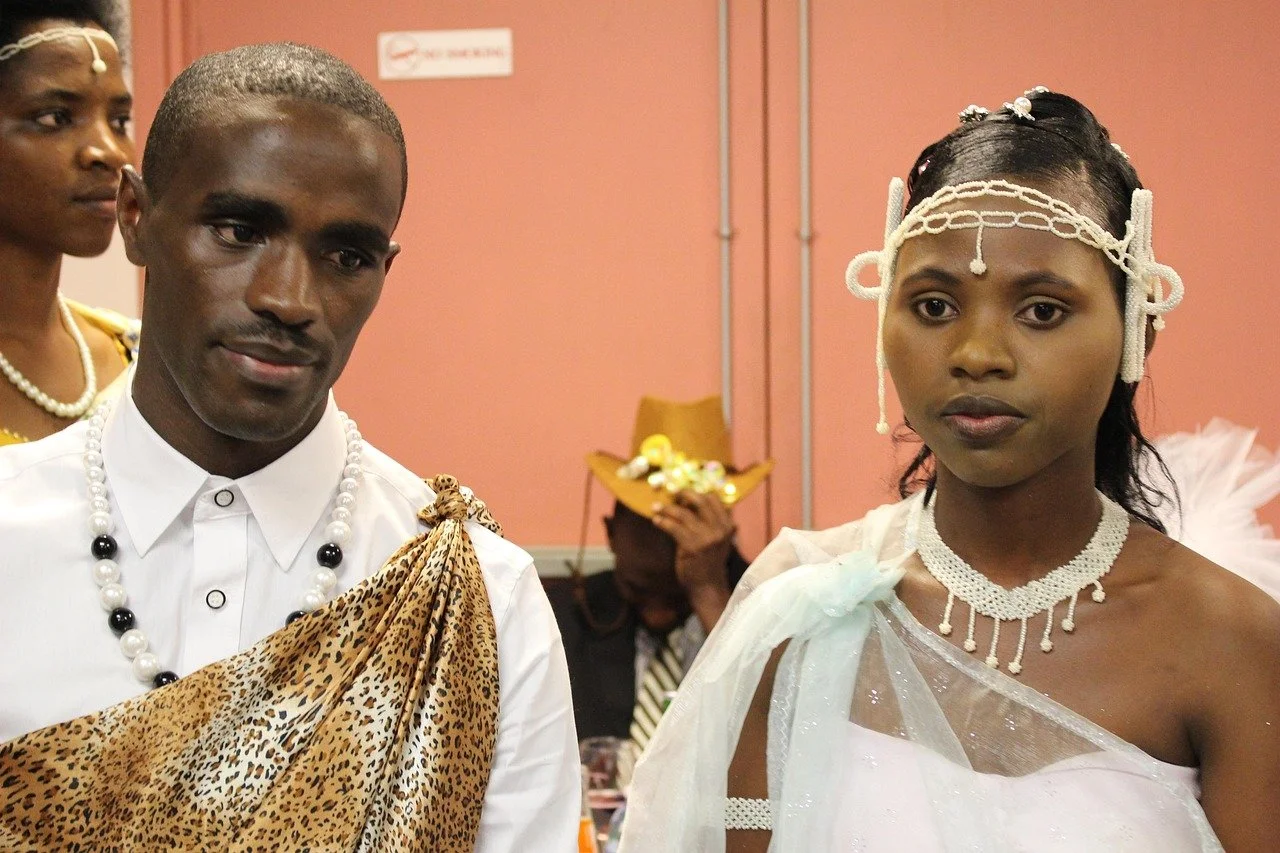
Bride and groom with serious facial expressions. Tresorissa. Pixabay.
In some parts of the Democratic Republic of Congo, there’s a cultural tradition where the bride and groom are discouraged from smiling or laughing during the wedding. When this tradition is practiced, the couple must take it very seriously and remain straight-faced for the entire event.
This tradition stems from the idea that marriage is a serious matter and must elicit serious attitudes from the couple to prove they are ready for commitment. The no-smiling rule isn’t widely practiced anymore, but it still occurs in a few small communities in Congo.
7. Ireland
Handfasting
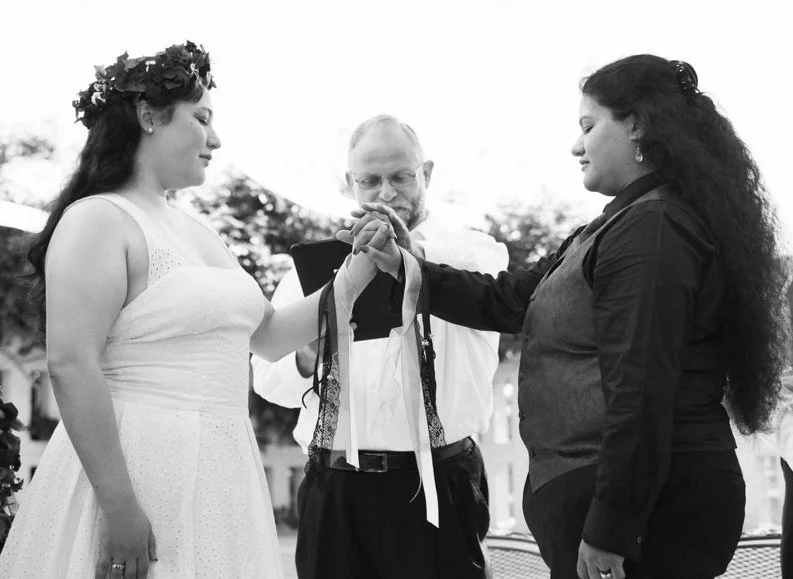
Two brides with their hands tied together stand before an officiant. Remyandlina. CC BY-NC 2.0.
In Ireland, handfasting, a tradition in which the couple’s hands are bound together with rope or ribbon, emerged from ancient Celtic tradition. Occurring well before the wedding, handfasting is akin to an engagement. In Pagan and Wiccan versions of this tradition, the ritual may also include candles, crystals, a broomstick and other symbolic items.
The ceremony is thought to be an adequate time for the betrothed to decide if they’re ready for the binding that is marriage. During the Middle Ages, handfasting was how people married each other, but law reform caused it to become a pre-wedding ritual instead.
Handfasting is still practiced in many Greek weddings but is now performed during the ceremony instead of before.
Diversely special and unique, these traditions share common core values that prioritize family, union and commitment to marriage. Traditional rituals and ceremonies are still performed in weddings today and allow for culture to remain alive.
Evelyn Garcia Medina
Evelyn is a recent Chicana graduate with a B.A. in English and Comparative Literature. Born and raised in the Bay Area, she draws inspiration from her passions: her cultural roots, environmentalism, and human rights. In her free time, she goes on hikes and enjoys learning about current social issues, history, and animals.