
Evelyn Garcia Medina
Cumbia music began in Colombia and spread across Latin America, evolving into unique styles that reflect each region’s culture and social struggles.
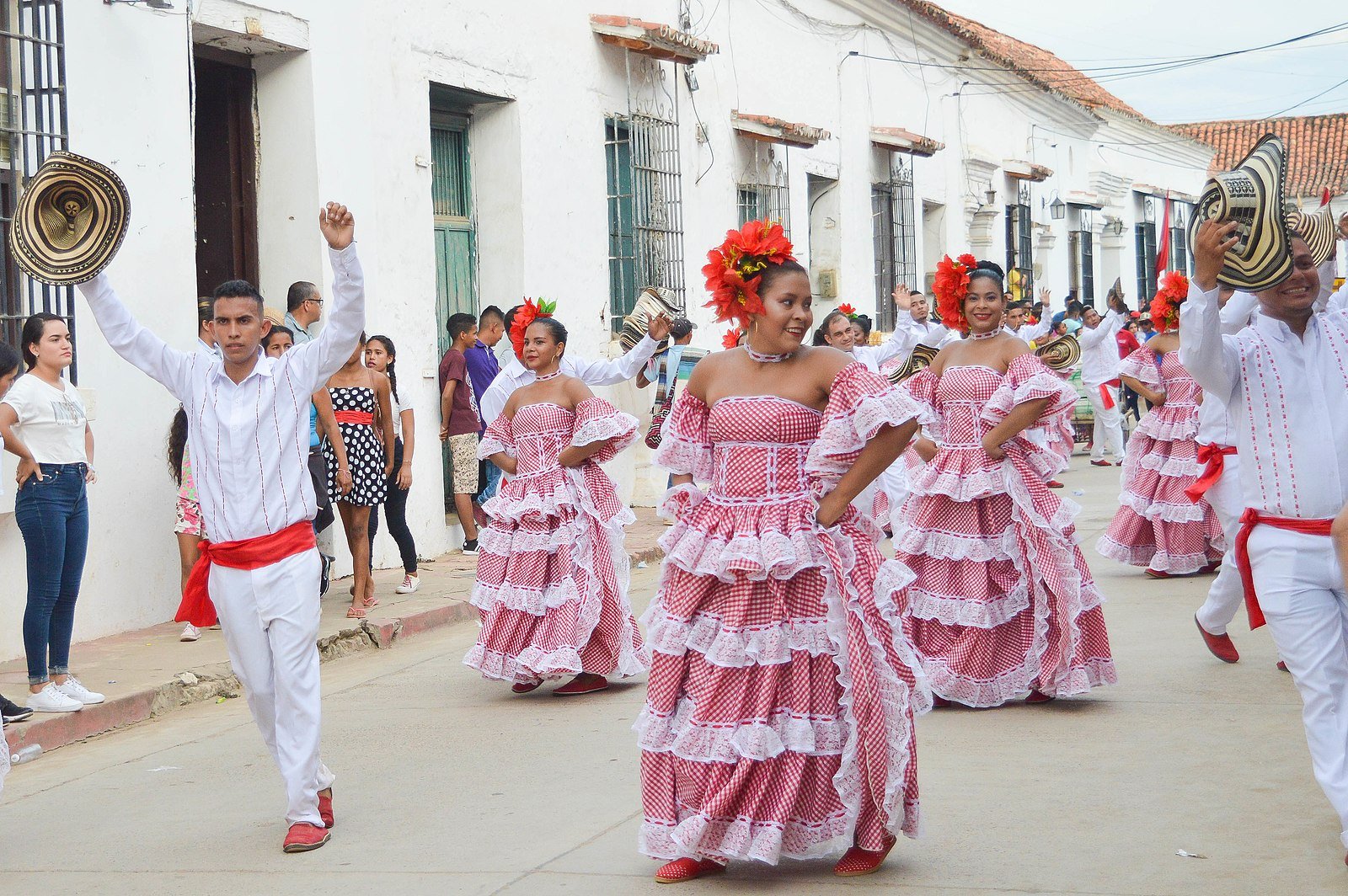
Colombian residents and dancers parade the street. NatalyG2. CC BY-SA 4.0.
If you travel to a Latin American country, you are bound to hear cumbia music in the streets. Originally from Colombia, cumbia is one of Latin America's most popular music genres. It’s so popular that it expanded to Peru, Argentina, Mexico and beyond, which has led to various renditions of the genre across these regions. Cumbia is generally known for its percussion-heavy sound and double beat played on drums or maracas, but in the 1900s, Indigenous instruments like drums and flutes came into the picture, and later European influence introduced the accordion.
Cumbia music originated from enslaved Africans on the Colombian and Caribbean coasts and was later shaped by Indigenous and Spanish influences that have historically resided in Colombia. NPR journalist Jasmine Garsd summarizes the words of Eduardo Diaz, director of the Smithsonian Latino Center, explaining that “the basic cumbia step originated because when the music itself was born, slaves had their legs shackled and very minimal movement was possible.” During this time, cumbia represented an escape for these individuals as they suffered through enslavement. Since then, cumbia has grown and adapted to various environments to represent the cultural issues of its respective regions.
PERU
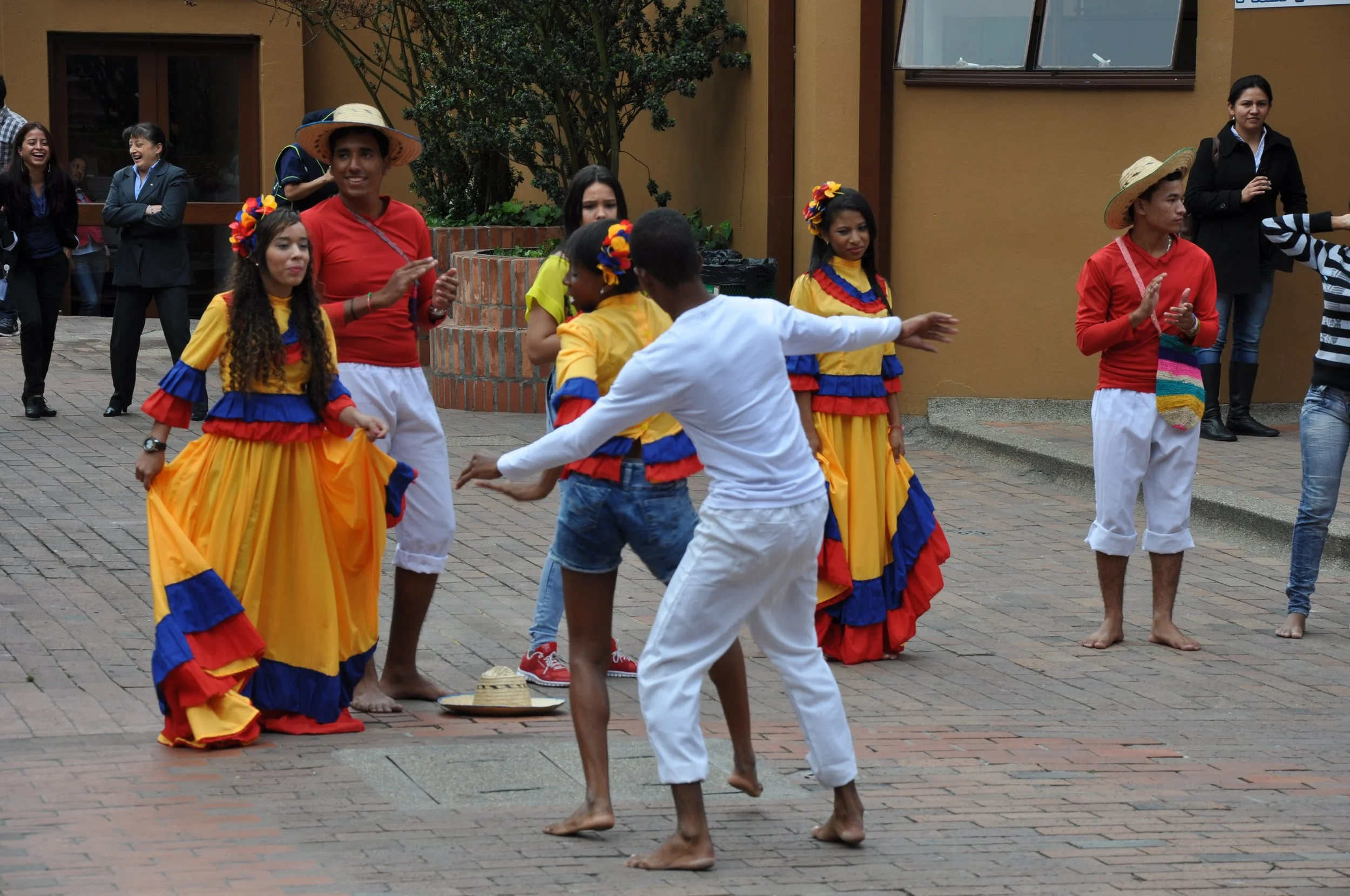
Columbian dancers wearing traditional attire. Politecnico Grancolombiano Departamento de Comunicaciones. CC BY-NC 2.0.
In Peru, they have psychedelic cumbia, known as chicha. The psychedelic rock of the 1960s heavily influenced chicha, along with Dominican merengue, Cuban guaracha and Colombian cumbia. It’s one of the more explorative subgenres of cumbia, adding all kinds of musical elements, such as delay, reverb, fuzz tone, etc. Music writer Angel Romero says that chicha musically represents the expansion from rural areas to big cities in Peru because it was played by all kinds of people, including Peruvian oil workers and businessmen alike. At one point, Chica’s traction led the subgenre to Argentina. Its popularity had died down until recently, when record collectors found Peruvian LPs with chicha in them.
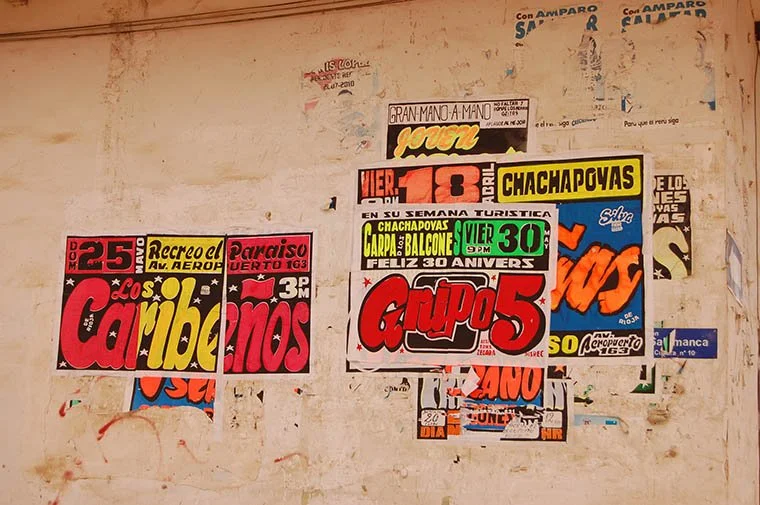
Posters for chicha concerts in Chachapoyas, Peru. Martynas. CC BY-NC 2.0.
Juaneco y Su Combo - El Brujo (Infopesa)
ARGENTINA
Argentina’s cumbia is called cumbia villera, also known as “shanty town cumbia.” In the late 90s, Peruvian and Bolivian immigrants brought cumbia music with them to Argentina and inspired the start of a new subgenre. Continuing her exploration of cumbia, Jasmine Garsd highlights her own Argentine-American identity, describing cumbia villera as “a chopped, screwed and slowed-down version of Peruvian cumbia.” Garsd adds that during her time in Argentina, there was violence and chaos all around her. Cumbia musicians acknowledged the problems journalists and politicians refused to, even being described as “protest music” by sociologist Pablo Seman. The subgenre’s honest lyrics resonate with lower-class people living in Argentina and create a safe space outside of societal pressures. Cumbia villera musician El Fanta says that “Argentina is cumbia” because its popularity there surpasses that of Mexico and Colombia.
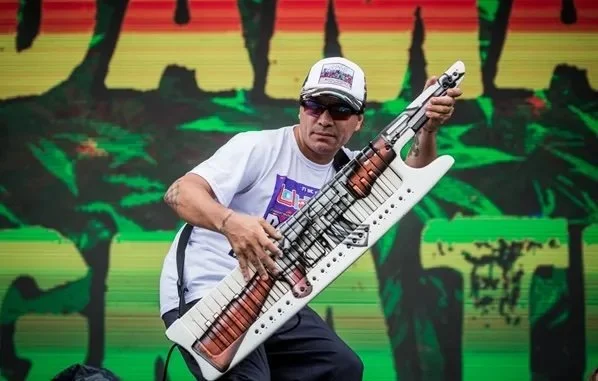
Cumbia villera artist Pablo Lescano plays keyboard guitar on stage. Tucumanaza. CC BY-SA 4.0.
MEXICO
In Nuevo Leon, Mexico, a subgenre of cumbia called cumbia rebajada, or slowed cumbia, emerged in the 1960s. When it comes to slowed cumbia, the music gets lower and deeper, almost sounding distorted. They add cowbells, timbale drums and accordion as their own twist. Cumbia rebajada was played all over the radio and even created a subculture called Kolombia, a form of resistance to the cartel violence and forced illegal activity of kids in their town. Writer Cassidy George explains that the subculture is similar to rockabilly or punk; its members wore unique outfits that represented a passion for cumbia and “a refusal to comply with established norms.”
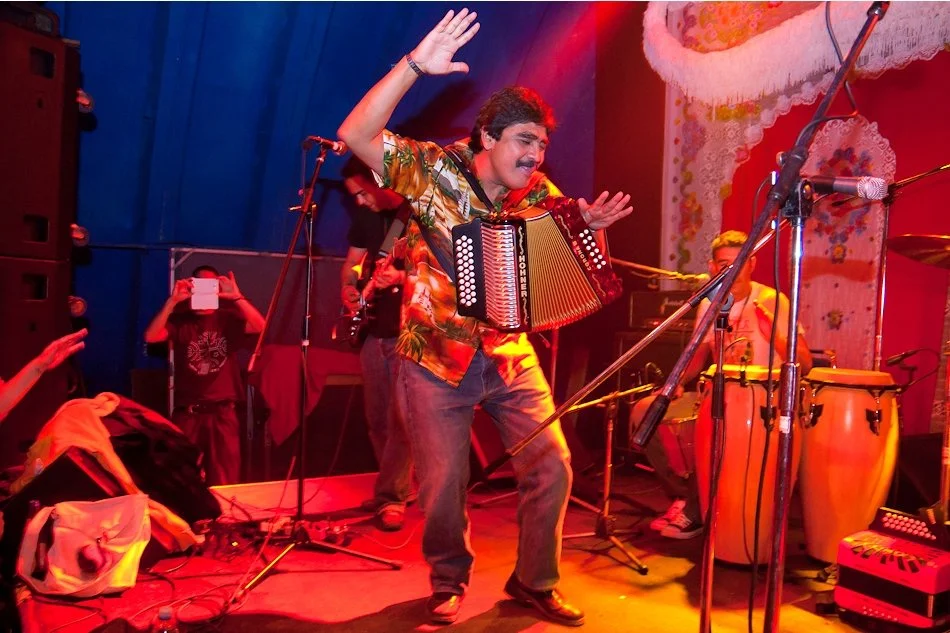
Mexican cumbia musician Celso Pina dances on stage. Montecruz Foto. CC BY-SA 2.0.
Cumbia’s journey from Colombia to the rest of Latin America shows how music can adapt and reflect the lives of the people who listen to it. From Peru’s psychedelic chicha to Argentina’s protest cumbia villera and Mexico’s slowed-down cumbia rebajada, cumbia is a cultural voice that continues to resonate across regions.
Evelyn Garcia Medina
Evelyn is a recent Chicana graduate with a B.A. in English and Comparative Literature. Born and raised in the Bay Area, she draws inspiration from her passions: her cultural roots, environmentalism, and human rights. In her free time, she goes on hikes and enjoys learning about current social issues, history, and animals.