
Claire Park
The fetishization of Asian women is a reinforcement of the late 19th century’s imperialistic practices and mindsets, stripping them of their individuality and complexity.
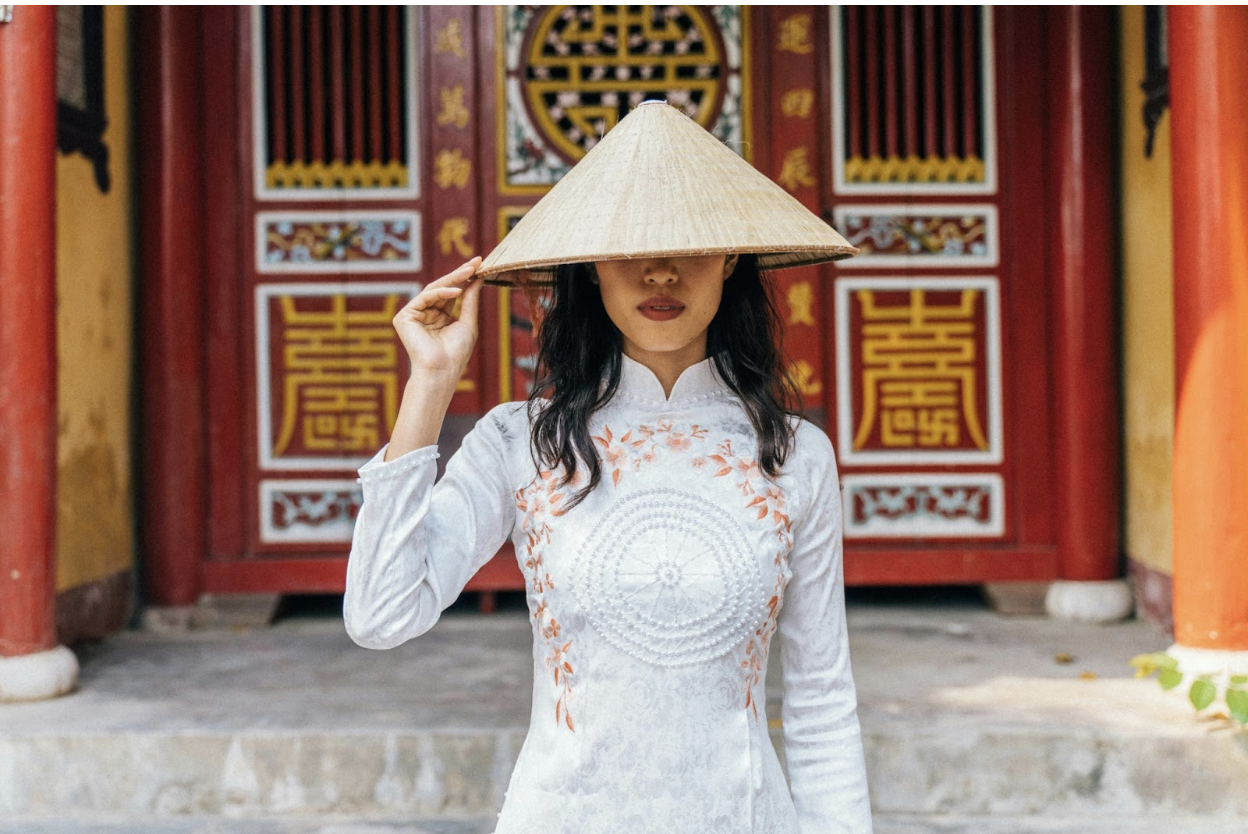
Asian woman in traditional Vietnamese dress. Anna Tarazevich. Pexels.
During the early to mid-20th century, in the midst of Western imperialism, the United States’ formal occupations of Asia left many soldiers leveraging their domination of a more specific subject: Asian women. When white soldiers arrived in countries like Japan and Vietnam with Western beliefs of supremacy, they viewed the local women as weak, submissive and demure individuals who could easily be controlled. With the plight, despair and poverty of the wars, namely World War II and the Vietnam War, this representation materialized in the form of sex and prostitution, with Asian women’s “submissiveness” catering to soldiers’ needs for outlets of rest and recreation. The rape and degradation of these women birthed the symbol of Asian women being hypersexual, docile playthings, subservient to white superiority.
As soldiers made their way back to America, they brought this fantasized Orientalism with them. These characterizations of Asian women as sexually compliant have since been reinforced through contemporary arts, literature and media. Novels like “Madame Chrysantheme” and stage productions such as “M. Butterfly” and “Miss Saigon” have perpetuated the stereotype of Asian women as mere objects dependent on white males for validation and existing only for sex. These “love” stories have romanticized the idea of forced prostitution, the struggle of Asian people during times of war and the white-savior story. Alternatively, other media, such as the film “Kill Bill,” have used Asian women’s alluring foreignness to establish the Dragon Lady stereotype, portraying them as mysterious and dangerous figures who tempt men for their own gain.
The recent popularity of anime in the West often appeals to large male audiences by combining both of these racialized stereotypes of meekness and enticement. While some female anime characters may be powerful heroines, a good portion of them are scantily clad with youthful, childlike features, which undermines those more optimal portrayals and exalts the objectification, hypersexuality and infantilization of Asian women. This depiction is not only harmful to Asian women and their perceptions of self but also completely disrespects Japanese and Asian culture by bastardizing it.
The misrepresentation of Asian women, their racial characteristics and their stories crafted through the Western gaze has conditioned people to view them as a type of fantasy rather than as individuals. While it may initially feel flattering to be desired for certain attributes one possesses, this fetishized attraction is rooted in a longstanding power imbalance, denying Asian women complexity and respect. The development and promotion of the acquiescent yet provocative racial label for Asian women has not only created external harm through harassment but has also fostered an internal pressure to perform a certain kind of sexuality or look a certain way.
Many Asian women feel othered with this emphasis on their “exotic” qualities. The constant questioning of how they’re perceived and the historical and media evidence confirming that they’re valued for certain racial traits rather than who they are as a whole person can deeply affect how they understand their self-worth. Moreover, Asian women’s racial and sexual objectification has been linked to health issues related to body image and eating disorders in pursuit of fitting the petite litheness associated with the idealized Asian woman. These uncertainties and pressures are not only harmful to Asian women’s self-esteem but also inhibit the development of their sense of self, at times making them resort to alignment with the fetishization in order to feel safe and accepted.
While the fetishization of Asian women has persisted and evolved, actively working toward dismantling its enablement starts with education. Rather than accepting racial misrepresentations as something entrenched in society, media portrayals and their origins should be questioned, individuals should examine personal biases and Asian voices should be central in storytelling. In doing so, the authenticity and individuality of Asian women as people can finally be championed.
Claire Park
Claire Park is a sophomore at the University of California, Berkeley, studying English and Media Studies with a minor in Music. Her experience writing lifestyle content for UC Berkeley's The Daily Californian newspaper has inspired her to expand her scope to the realm of travel, pursuing her aspirations of becoming a travel journalist. When not writing, Claire can be found singing, reading romance books, journaling at the beach, or acquiring a sweet, caffeinated beverage.