
Sofia Stidham
Thailand’s Constitutional Court has suspended its second woman prime minister, just like it did to its first, raising concerns about democracy and gender biases in Thai politics.
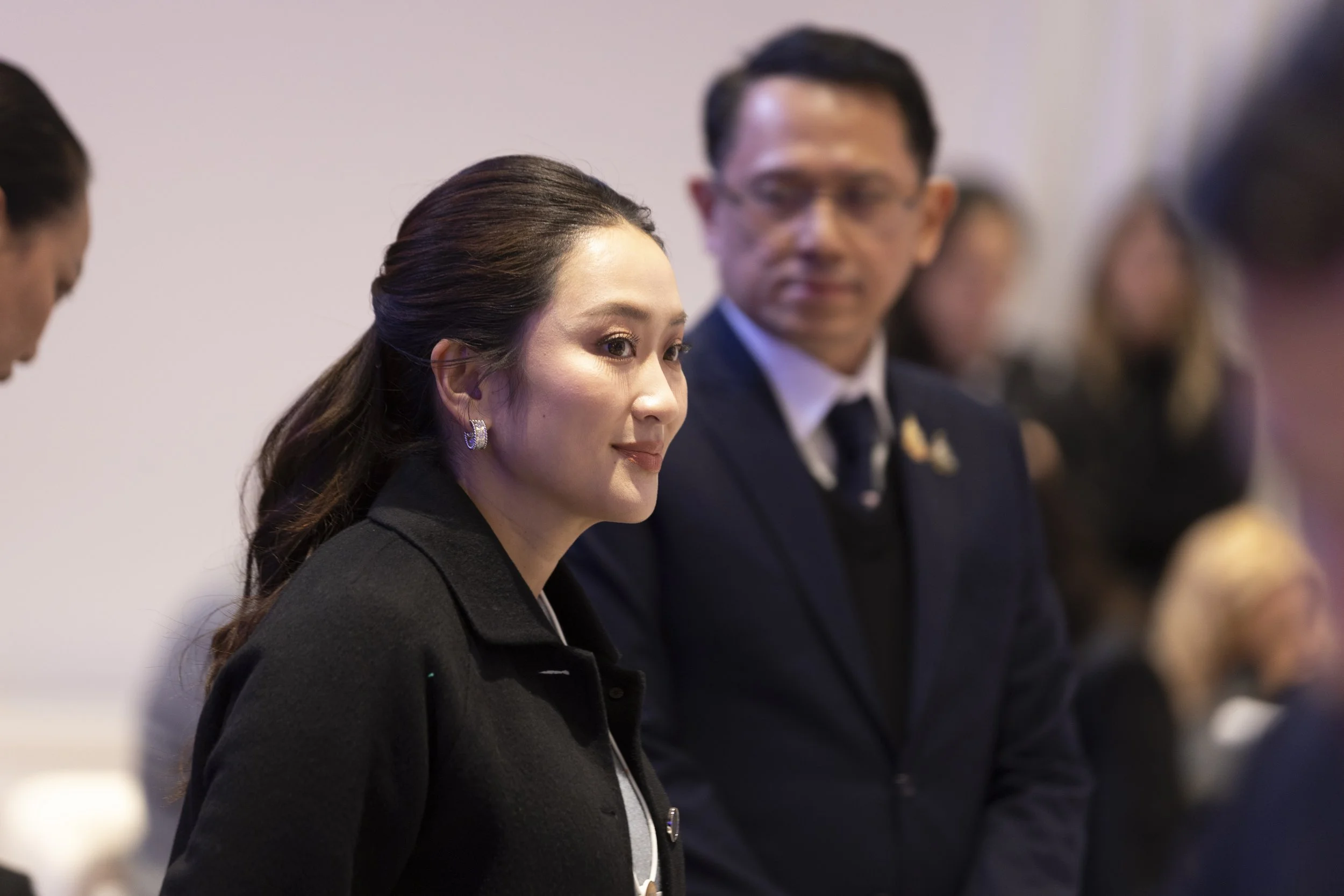
Paetongtarn Shinawatra at the World Economic Forum Annual Meeting in 2025. Greg Beadle. CC BY-NC-SA 2.0.
On Tuesday, July 1, Thailand’s conservative Constitutional Court cast the country’s political arena and, according to critics, its democracy, into chaos once more. In a seven-to-two vote, it suspended Prime Minister Paetongtarn Shinawatra over alleged ethics violations in a leaked phone call with Cambodian officials. The call, regarding the ongoing border disputes that culminated in the death of a Cambodian soldier in May, drew chastisement from the court. During the conversation, she addressed Cambodian Senate President Hun Sen, a close friend of her father, former Prime Minister Thaksin Shinawatra, as “uncle.” She urged him to ignore criticisms from an “opponent,” a Thai regional army commander. These words provoked pro-royalist nationalist protestors to rally in Bangkok on June 28.
The court has given Paetongtarn 15 days to contest the case. The Prime Minister apologized, deeming the call a mere “negotiation tactic.” “If you listened to it carefully, you'd understand that I didn't have ill intentions,” she said. “I only thought about how to avoid chaos, avoid fighting and to avoid loss of lives.”
This explanation prompted wider concerns about Thailand’s political structure. Al Jazeera’s Tony Cheng noted that Paetongtarn’s suspension “raises questions about the impact of the Constitutional Court on democracy.” Additionally, as Thailand’s second woman prime minister, Paetongtarn’s removal has emphasized the prevalence of gender bias, tying her stance to her politically disfavored father. A military coup ousted Thaksin Shinawatra from leadership in 2006, sending him into voluntary exile over his rising popularity among the working class and accusations of being anti-royalist.
The discourse surrounding Paetongtarn has often carried gendered assumptions, invoking stereotypes of passivity to demean her. Tatchakorn Srisuwan, a 47-year-old tour guide from Surat Thani province, told the Washington Post, “We’ve never had a prime minister who’s so weak.” Yet, his statement challenges Forbes, which ranked Paetongtarn 29th on its World’s Most Powerful Women list in 2024. Furthermore, these biased undertones extend to Western media. Associated Press journalist Jintamas Saksornchai called her “too fawning” and “too deferential” during the Cambodian call. Thailand’s parliament has already expressed concerns about sexist attacks on the prime minister from opposition members.
Paetongtarn has also reinforced these gendered biases by dubbing herself “daddy’s little girl,” reflecting others’ tendencies to associate her political identity with her father rather than respecting her autonomy. Thaksin’s evasion of an eight-year prison sentence for opposing the monarchy still haunts his daughter, the issue having been raised recently during Paetongtarn’s censure debates.
Moreover, Thaksin’s political legacy has also loomed over his sister, Yingluck Shinawatra, Thailand’s first woman prime minister. When Yingluck won the position in 2011, feminists worldwide refused to accept it as a victory. Gender and Development Research Director Sutada Mekrungruengkul hoped that she would “step out of her brother’s shadow.” Instead, she faced a similar fate to her brother and was ousted by protests that turned violent and another military coup.
Critics such as Cheng expressed that the Srisuwan tradition of being ousted would likely be replicated with Paetongtarn. “Thailand is running out of options … if they decide to suspend Paetongtarn permanently and remove her from her post, it’s very unclear what kind of political crisis Thailand will be in once again,” he said. The turmoil also highlights broader gender issues in Thai politics, where women hold just 13% of lower house seats, below the global average of 19.5%. Thus, the question stands: will democracy prevail in Thailand, and can the Srisuwan cycle be broken?

Sofia Stidham
Sofia is a rising fourth-year English Literature student at the University of Edinburgh, having recently completed a year-long exchange at the University of Virginia. Outside of writing, she enjoys spending time with family and friends, going to concerts, curating her wardrobe, and zoning out on long walks. She hopes to pursue a career that allows her to channel her passion for writing into intersectional feminist advocacy.