
Kennedy Kiser
In the face of inflation, austerity and inequality, Argentina’s “ollas populares” are turning meals into movements.
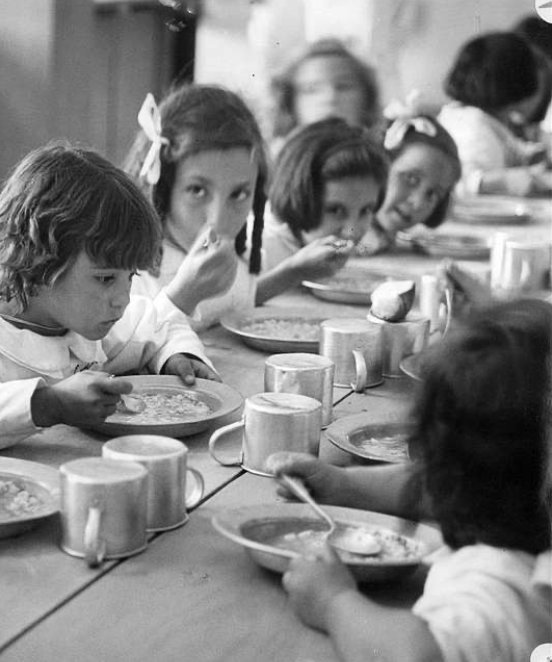
Buenos Aires soup kitchen in 1938. General Archive of the Argentine Nation. CC0.
Over the past year, Argentina has faced a deepening economic crisis. Inflation surged above 270%, while wages and social benefits have failed to keep up. In poor and working-class neighborhoods, people have struggled to afford basic goods, including food. The election of right-wing libertarian President Javier Milei, who came to power promising to slash public spending, has added fuel to the fire. Budget cuts have targeted subsidies, pensions and food assistance programs, pushing many communities further into survival mode. But amid this instability, something else is happening: kitchens are becoming political.
Known as “ollas populares,” these neighborhood kitchens gained increased visibility during Argentina’s 2001 economic collapse. Back then, they offered hot meals to those affected by mass unemployment and bank failures. Today, they remain a lifeline for many, but their role has expanded far beyond charity. They have become centers of grassroots organizing, protest planning and feminist resistance.
Most ollas are run by women, many of them unpaid, who work under the umbrella of larger social movements like the Movimiento de Trabajadores Excluidos (Movement of Excluded Workers) or Barrios de Pie (Neighborhoods Standing Up). These women are not only feeding their neighbors; they are building networks, defending public education and housing and leading marches against austerity measures. For many, the kitchen is the starting point for broader political engagement.
Daily tasks like chopping vegetables or stirring stew often overlap with discussions about upcoming demonstrations or legal workshops on women’s rights. Flyers are distributed along with servings of lentils. Pots of rice are cooked while local representatives give updates on court cases or government negotiations. In this way, the line between sustenance and strategy blurs.
This is not a new phenomenon. Argentina has a long history of grassroots resistance, especially among women. During the dictatorship of the 1970s and 1980s, an organization called the Mothers of the Disappeared marched weekly in Buenos Aires. In recent years, the Ni Una Menos (Not One Less) movement has mobilized hundreds of thousands to protest gender-based violence. The ollas populares often draw from the same communities and continue this legacy of collective care as political power.
The work is exhausting and often invisible. Many of the women running these kitchens face burnout, health issues and threats from local authorities or landlords. Still, they persist. Some kitchens have built alliances with universities and legal clinics to access more resources and support. Others have formed cooperatives or microbusinesses to generate income while continuing their mutual aid efforts.
President Milei’s government has criticized some of these networks, claiming they misuse funds or manipulate the poor for political gain. His administration recently cut food shipments to hundreds of community kitchens, prompting protests in major cities. Activists responded by staging public meals in front of government offices, demanding transparency and reinstatement of supplies. For them, food is not just a right; it is a tool for visibility.
As the crisis drags on, ollas populares show no signs of disappearing. They adapt to new pressures, shift tactics and keep cooking. While the government speaks of individual responsibility and market freedom, these kitchens emphasize interdependence and solidarity. For many in Argentina’s poorest neighborhoods, the fight for dignity starts with a bowl of soup.
GET INVOLVED:
Want to support grassroots food justice and feminist activism in Argentina? Here are a few ways to stay informed and take action:
Follow and Share: Keep up with local collectives like Barrios de Pie on Instagram and X They often post updates, videos from protests and calls for solidarity.
Donate: Some kitchens accept international donations through their partner organizations or crowdfunding platforms. Before donating, check for links through official pages or reach out via direct message to confirm current needs.
Learn More: Explore reporting from outlets like Pagina 12 or Tiempo Argentino, which offer in-depth coverage of neighborhood activism and economic policy. English-language sources like NACLA or Latin America News Dispatch also provide context for U.S. readers.
Kennedy Kiser
Kennedy is an English and Comparative Literature major at UNC Chapel Hill. She’s interested in storytelling, digital media, and narrative design. Outside of class, she writes fiction and explores visual culture through film and games. She hopes to pursue a PhD and eventually teach literature! @kennedy_kiser