
By Claire Garvin
Despite continued legal action barring the practice, thousands of Indian women die each year as dowry-giving practices evolve.
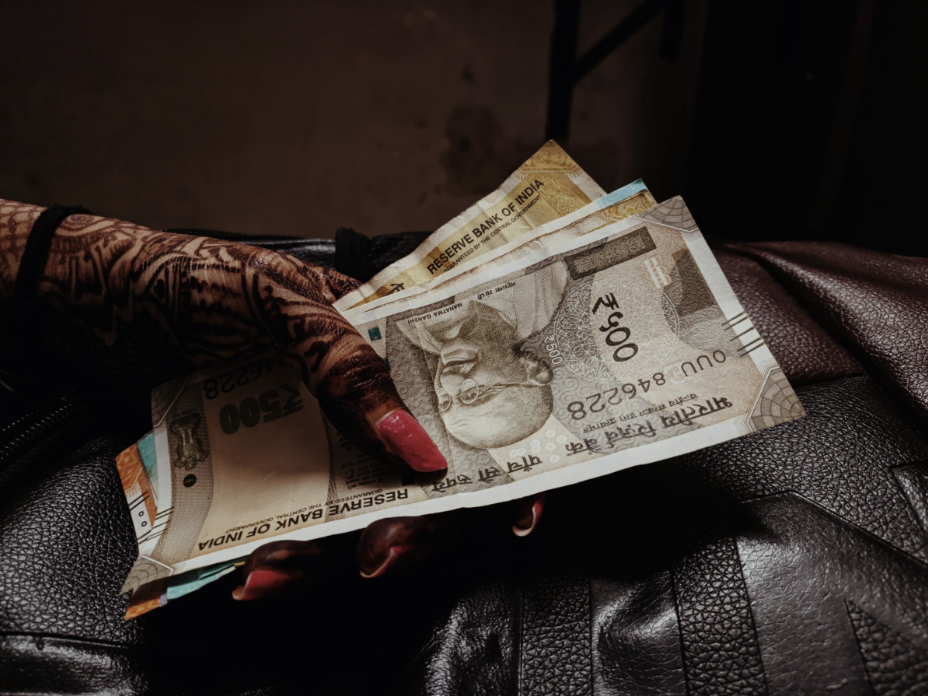
Henna-decorated hand holding stack of Indian rupees. The Capturist. Pexels.
Twisha Sharma, a model and actress from Nadia, India, married lawyer Samarth Singh on Dec. 9, 2025. Less than six months later, her body was found dead in her matrimonial home. National outrage pushed the Central Bureau of Investigation to overtake the case, as officials determine whether her death was suicide or murder. Punctuated by rumors of dowry demands and marital violence, her story echoes throughout India today.
Each day, an average of 16 Indian women lose their lives due to dowry-related violence. Driven by harsh demands of a groom and in-laws regarding a bride’s dowry, or the money and gifts given to the groom’s family by the bride’s family, over 12,000 reports of dowry-related violence are recorded each year. Nearly 6,000 women were killed over dowry-related violence in 2024 alone.
Although officially banned in 1961 under the Dowry Prohibition Act, dowry-giving, and the associated violence along with it, permeates Indian society today.
Modern dowry practices differ significantly from the traditions from which they were born. While a wide array of marriage gift practices have been observed across Southeast Asia throughout time, Indian dowry-giving today evolved primarily from the medieval Indian practice in which a bride’s family would provide money, jewelry or property to support the bride at the beginning of her marriage. When Lord Cornwallis’ 1793 Permanent Settlement of Bengal restructured Indian social and economic life predominantly into male hands, the wedding gift, previously provided voluntarily to the bride, became the groom’s property, and over time, it became an expectation.
As Indian economic growth has flourished, dowry expectations have likewise ballooned, with increasingly large gifts expected by grooms. These economic incentives fuel dowry practices today, as the bride’s family, seeking to avoid a “low quality” groom, often views the dowry as an integral investment in maintaining lateral or upward mobility through marriage. Despite gains in education, income equality and legal rights, marriage continues to play an integral role in determining a woman’s social status. In exchange for the education, status and income that their son offers, the groom’s family expects a high payment.
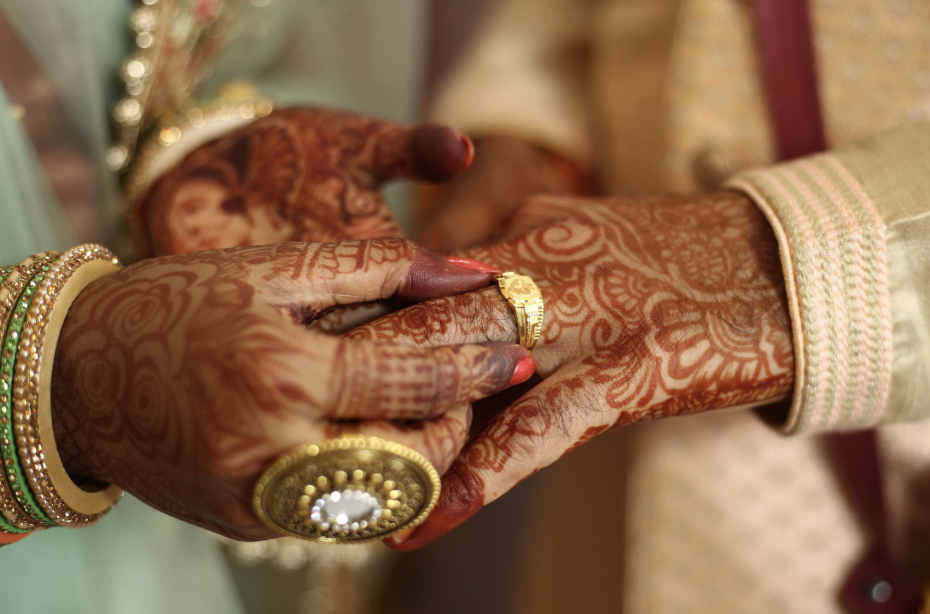
Traditional Indian wedding ceremony. Shashank Sharma. Pexels.
Although dowry-related violence is the most commonly associated effect of the practice, dowry giving has also been linked to female infanticide since the late 18th century. As families must offer increasingly large gifts and inheritances when marrying daughters, the birth of a daughter becomes increasingly less desirable than the birth of a son. Dr. Gautam Allahbadia, a reproductive specialist from Mumbai, noted that “boys are infinitely more desirable than girls. The reason is simple: when parents marry off a daughter, society expects them to give a huge dowry to the boy’s family. This represents an enormous burden that often wipes out a family’s entire savings.”
This social preference for sons leads to the continuation of gender-based sex selection through feticide (sex-selective abortion) and infanticide (post-birth infant murder), both of which constitute driving factors in the growing missing female population. In 2020, the United Nations Population Fund reported that the number of missing females had more than doubled between 1970 and 2020, growing from 61 million to 142.6 million. Of the 142.6 million missing women in 2020, over 45 million came from India alone.
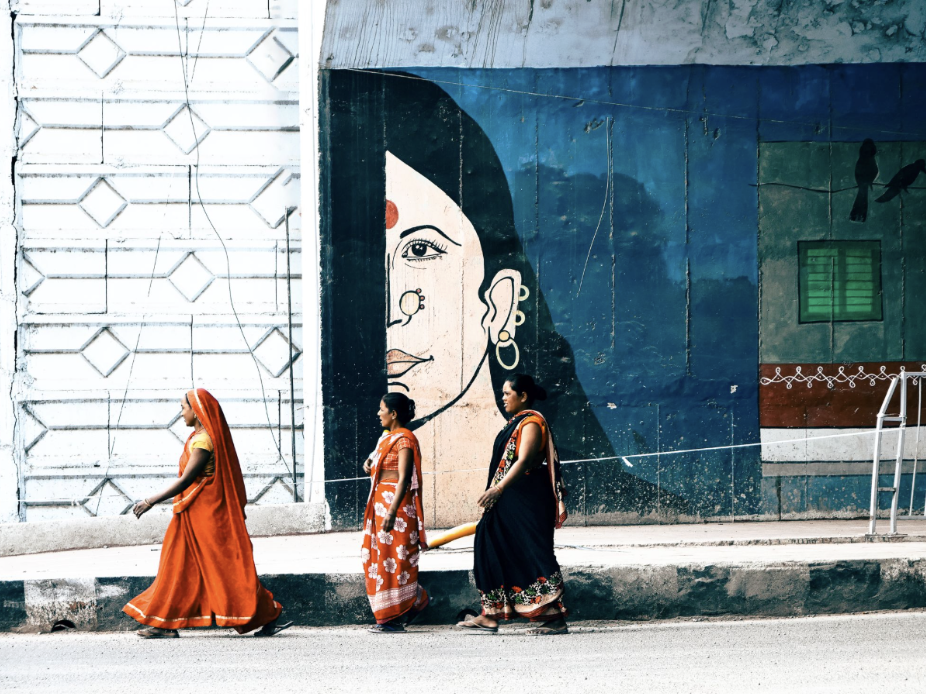
Women walking in traditional Indian saris. Shiva Kumar Reddy. Pexels.
Although dowry giving is condemned as a “social evil” in India, hazy terms, including “customs,” “support” or “help,” silently preserve the practice. Today, the dowry is rarely asked for outright. Instead, dowry conversations are shrouded in notions of "compatibility," “standard of living” and “social parity.” These vague terms also pose challenges in prosecuting and ending dowry practices.
While the practice of dowry has been outlawed in India for over 50 years, deficits in reporting and legal enforcement uphold the tradition. Cultural conditioning teaches women to accept the violence and harsh demands of their marital partner, as the alternative, returning to their family home, can be viewed as a societal failure. As Indian social worker Shivangi Deshwal explains, “there is social conditioning where a woman normalises violence and hence no complaints are registered unless things spiral fully out of control." In 2023, the National Crime Records Bureau of India recorded 15,489 dowry-related cases, yet conviction rates were staggeringly low, ranging from 30% in Uttar Pradesh to 15% in Delhi.
Even after the 1986 amendment demanding that all death or violence reported within a couple’s first seven years of marriage must be legally tried as a dowry-related offense, conviction rates remain low for a multitude of factors, including difficulty proving dowry demands, challenges in obtaining witness testimonies, circumstantial evidence and missing forensic data.
Additional legislation has aimed to increase the legislative ability to investigate and prosecute dowry-related violence, including dowry prohibition officers and the creation of specific offenses for dowry death and cruelty. However, as Senior Advocate and criminal investigator Amit Desai noted, “Legislation can’t stop all social evils. It is the signal to society.”
Preventing dowry deaths will require more than amending the law. Adequate legal enforcement, education and restructuring of social norms may help end the practice, as well as increased awareness and societal pressure to prevent such widespread practices of violence against women.
GET INVOLVED
Donate to organizations dedicated to ending domestic violence against women in India, including My Choices Foundation, Agni Raksha and Sayodhya. Support non-profits working to advance women’s rights across India, such as Breakthrough Trust and Invisible Girl Project.

Claire Garvin
Claire is a fourth-year student at Barnard College, Columbia University studying Neuroscience. She is interested in writing as a means of understanding the world, and she hopes to ignite meaningful change through her journalism. Outside of class, she enjoys baking, painting, and reading.