
By Claire Garvin
The top art shows of the summer explore what it means to live in the modern world.
Thousands of art exhibitions crop up around the world each year, redefining the boundaries of artistic expression. This summer, explore themes of identity, personhood and citizenry in these 10 art exhibitions around the world. Through integrated physical and immaterial realms, several exhibitions show how the digital world fits into the physical world. Others offer a return to nature itself, emphasizing the beauty of slowing down in a rapidly transforming world.
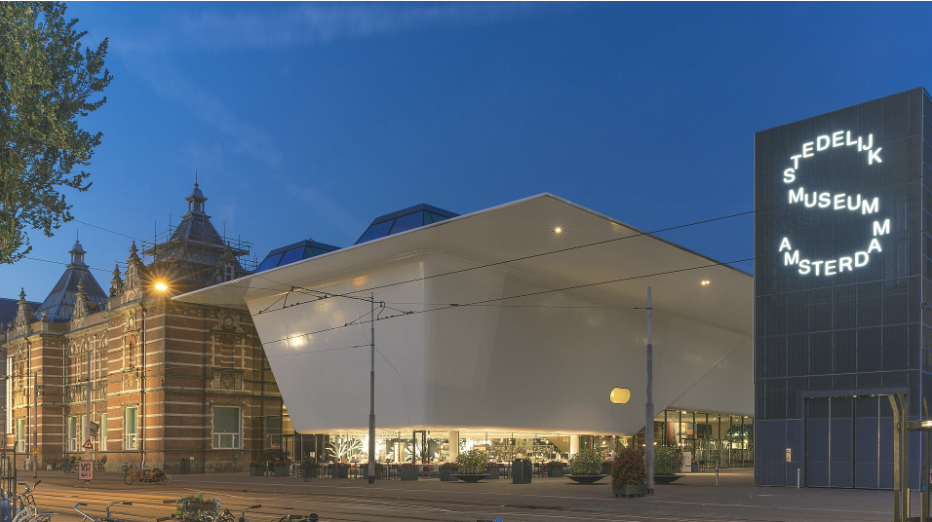
Stedelijk Museum Amsterdam. John Lewis Marshall. CC BY-SA 4.0.
1. “Beyond the Manosphere: Masculinities Today”
Stedelijk Museum Amsterdam
Amsterdam, Netherlands
April 17 to Aug. 2
The work of 35 international artists converges in the Stedelijk’s exploration of manhood: “Beyond the Manosphere: Masculinities Today.” Works from the 1960s through the 1990s intersect with modern representations of masculinity, including new pieces created specifically for the Stedelijk’s exhibition. For instance, visitors are invited to explore the interconnection between gender, wealth and race in a new work for Jasmine Gregory’s “Investment Piece” series or analyze implicit gender roles in SoiL Thornton’s site-specific “Husband Chair.”
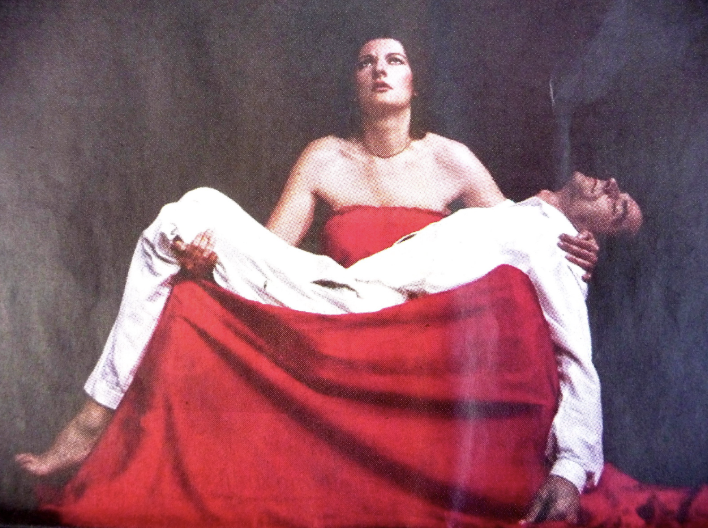
Marina Abramovic’s “Pieta (Anima Mundi)”. Luciano. CC BY 2.0.
2. Marina Abramovic: “Transforming Energy”
Gallerie dell’Accademia
Venice, Italy
May 6 to Oct. 18
Marina Abramovic’s “Transforming Energy” is not only a stunning exhibition of modern art; it will be the Gallerie dell’Accademia’s first major exhibition of a living female artist. Abramovic’s modern exhibition explores themes of endurance and transformation in a city defined by Renaissance classics. Contrasting the elusive, fortified sculptures and paintings of the Renaissance era, Abramovic invites viewers to participate directly with several of her works. In the series “Transitory Objects,” Abramovic urges viewers not only to touch the crystal-shaped sculptures but to stand and lie upon them directly. Abramovic’s 1983 “Pieta (Anima Mundi)” is placed in direct conversation with Renaissance master Titian’s unfinished masterpiece, “Pieta” (1575), illustrating the enduring themes of suffering.
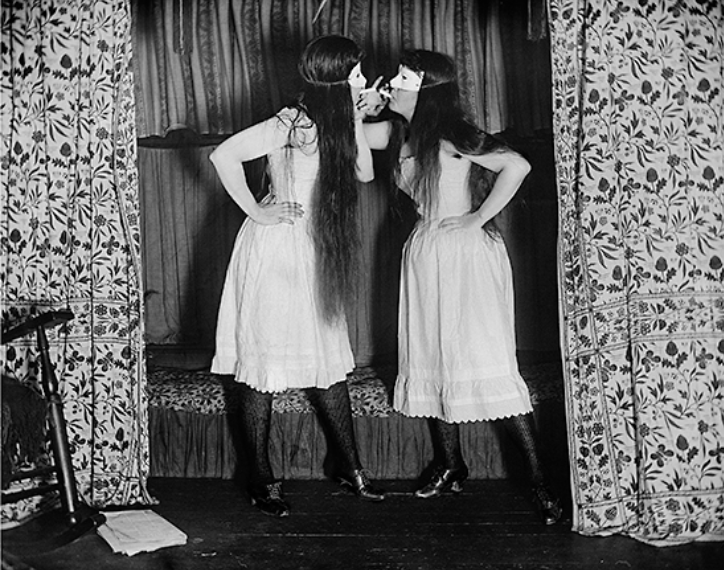
Alice Austen’s “Trude & I, Masked, Short Skirts” (1891). Alice Austen Museum. CC0.
3. “The First Homosexuals: The Birth of a New Identity 1869-1939”
Kunstmuseum Basel
Basel, Switzerland
March 7 to Aug. 2
Before 1869, the term “homosexual” had yet to be coined, and homosexual desire was not a marker of one’s identity; it was merely something you did. The Kunstmuseum Basel’s reconstruction of the Wrightwood 659’s exhibition, “The First Homosexuals: The Birth of a New Identity 1869-1939,” explores the evolution of homosexuality since its linguistic origin. Through approximately 80 artworks, including paintings, sculptures and photographs, the exhibition includes six sections, guiding viewers through themes of secrecy, identity and friendship both within the European oeuvre and beyond.
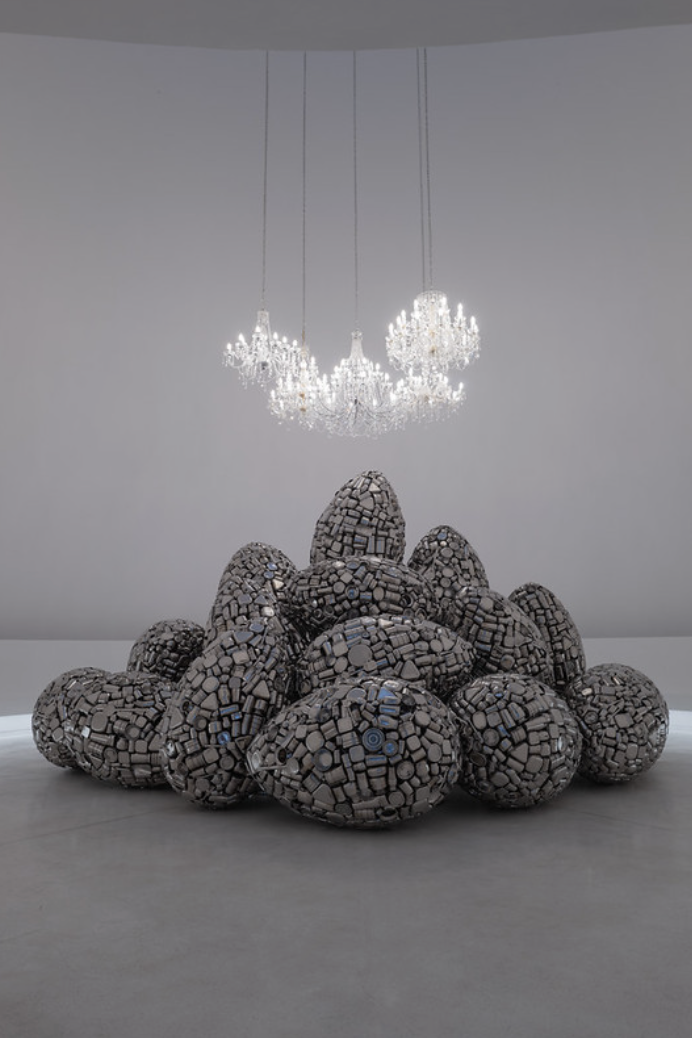
Subodh Gupta’s “Incubate” in Dib Bangkok. Merlijn Hoek. CC BY-NC-ND 4.0.
4. “(In)Visible Presence”
Dib Bangkok
Bangkok, Thailand
Dec. 21, 2025, to Aug. 3, 2026
Thailand’s largest contemporary art museum will bring together over 250 photographs exploring Soviet-era family photography for its inaugural exhibition, “(In)Visible Presence.” Covering all 11 gallery spaces in one of the most highly anticipated recent museum openings, harrowing photographs alongside novel sensory works uncover the transitory existence of elements that cannot be seen. Dib Bangkok, named one of the “World’s Greatest Places of 2026” by Time magazine, offers a synthesis of acclaimed Thai artists alongside global contemporary artists, both honoring traditional Thai roots while placing modern Thailand in conversation with the international art scene.
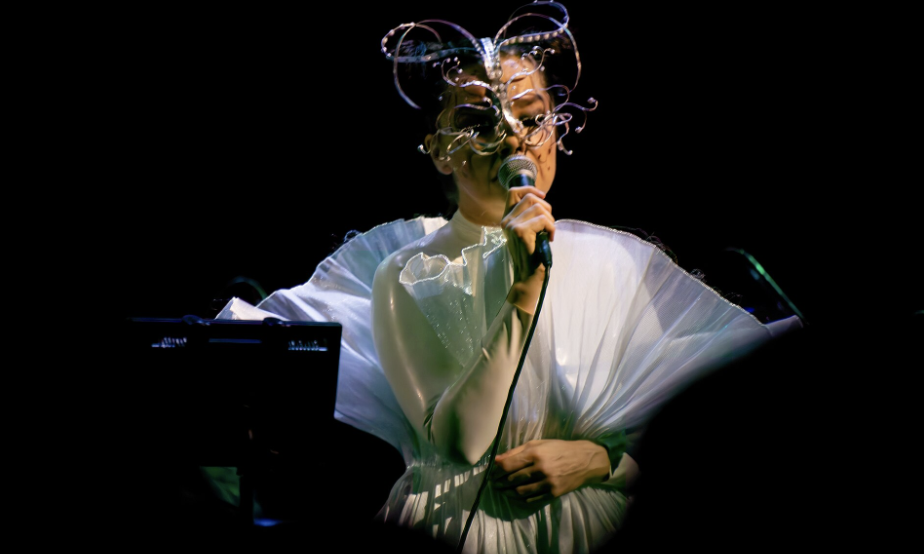
Bjork wearing a wire mask while singing at Royal Albert Hall. Raph_PH. CC BY 2.0.
5. Bjork: “Echolalia”
National Gallery of Iceland
Reykjavik, Iceland
May 30 to Sept. 19
Is the modern museum fit to express the artistic sphere of pop music? After a disappointing 2015 exhibition at the MoMA, the Icelandic singer-songwriter Bjork returns to the museum space in hopes of integrating the visual and ethereal worlds of art. Within the halls of the National Gallery of Iceland, viewers find cinematographic and audio-visual presentations of three songs: two sorrowful ballads composed in honor of her mother (“Ancestress” and “Sorrowful Soil”) and an unreleased song inspired by her new album. Viewers are invited to explore her music alongside masks and visual artwork created by her collaborator, James Merry, who has pioneered Bjork’s distinguished costume design.
On Aug. 12, as a solar eclipse brings Iceland to total darkness, Bjork herself will perform as a DJ while hosting Echolalia, a rave near the National Gallery of Iceland. Tickets to the rave will include access to the exhibition at the museum.
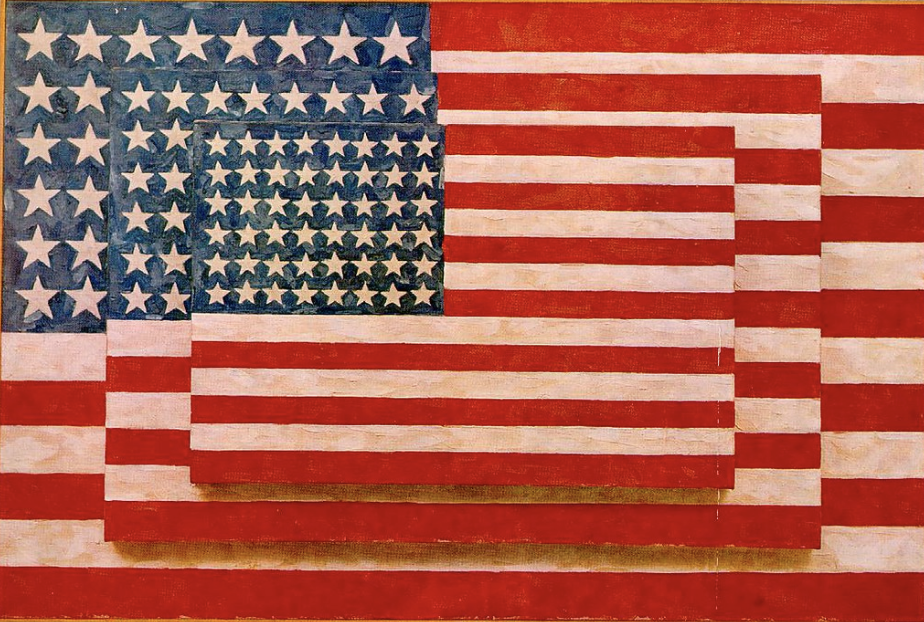
Three painted American flags stacked on top of one another. Miri.gn. CC0.
6. Jasper Johns: “Night Driver”
Guggenheim Museum Bilbao
Bilbao, Spain
May 29 to Oct. 12
One night between 1954 and 1955, American artist Jasper Johns dreamed that he painted the American flag. When he decided to actually do so the next day and subsequently destroyed all of his prior art, the moment would mark a decisive turn in the course of art history. His recurrent flag motif, alongside flat letters, targets and numbers, served as a break from the “masculine emotions” of the Abstract Expressionist movement (epitomized by Jackson Pollock’s splattered canvas and Mark Rothko’s boldly shaded rectangles). Viewed retrospectively, Johns’ work can be seen as a precursor to the later Pop Art movement (think Andy Warhol and Robert Lichtenstein). Nearly 140 works by Johns can be seen at once in the Guggenheim Museum Bilbao’s ambitious exhibition, “Night Driver.”
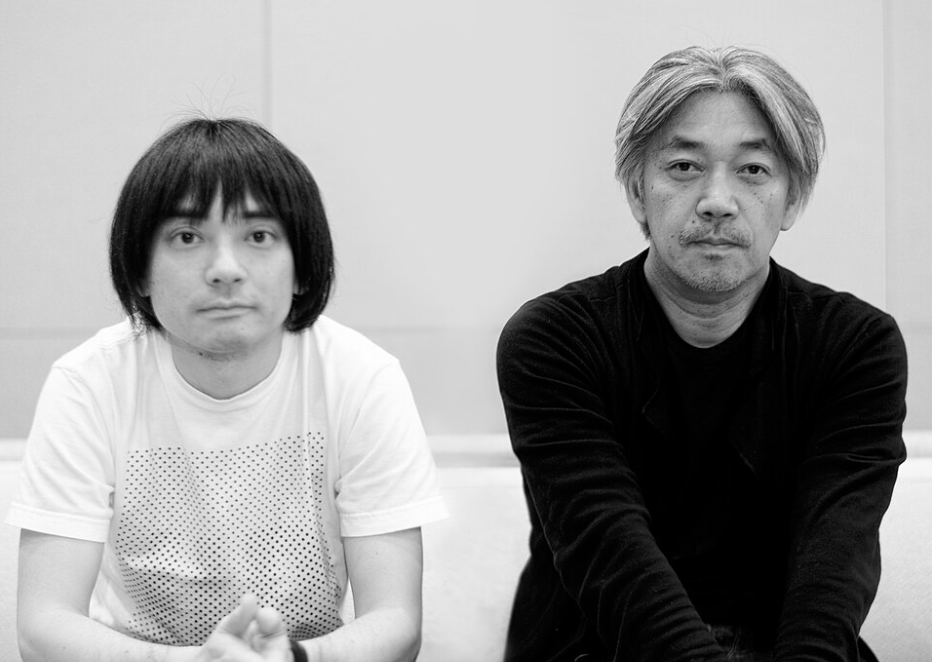
Keigo Oyamada (left) and Ryuichi Sakamoto (right). Joi Ito. CC BY 2.0.
7. Ryuichi Sakamoto: “seeing sound, hearing time”
M+ museum
Hong Kong, China
Feb. 14 to July 5
Ryuichi Sakamoto is difficult to fit into one word. Among other roles, the late Tokyo-born Sakamoto helped pioneer electronic music in the band Yellow Magic Orchestra, scored over 30 films, acted in major movies, including “The Last Emperor” and “Merry Christmas, Mr. Lawrence,” and founded the Japanese reforestation project More Trees. The exhibition places Sakamoto’s music within the physical world through immersive exhibitions by artists Shiro Takatani and Carsten Nicolai, including pulsated peripheral images, experimental cinema and Toposcan-style cyclical LED film.

Tracey Emin’s “My Bed” (1998). Karen Bryan. CC BY-ND 2.0.
8. Tracey Emin: “A Second Life”
Tate Modern
London, England
Feb. 27 to Aug. 31
In 1999, the Tate Modern’s exhibition of Tracey Emin’s vulnerable, Turner Prize-nominated artwork, “My Bed,” garnered sensational international attention. Over 25 years later, the Tate Modern will show the piece alongside over 90 works produced by the British artist. Emin, whose work frequently explores themes of femininity, mortality and identity, describes her art as an exploration of “rites of passage, of time and age, and the simple realisation that we are always alone.” Many works in the Tate Modern’s exhibition, including raw photographs and bronze sculptures, have never been publicly displayed before.
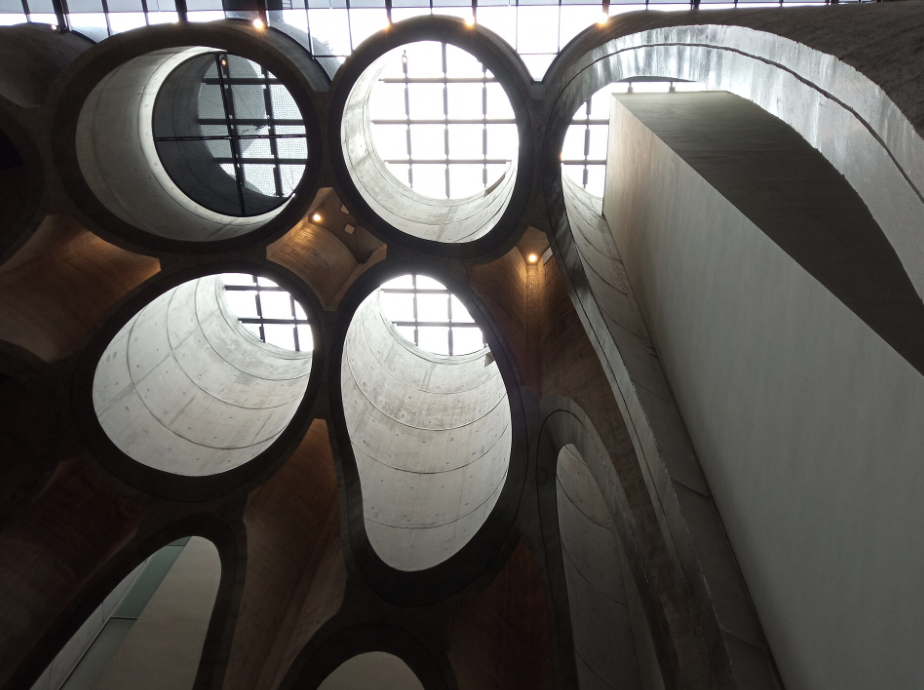
Skylights on the ceiling of Zeitz MOCAA. Michael Rowe. CC BY-SA 4.0.
9. “We Proceed in the Footsteps of the Sunlight”
Zeitz Museum of Contemporary Art Africa
Cape Town, South Africa
Sept. 11, 2025, to Oct. 4, 2026
In the first survey museum exposition of Zohra Opoku, a Ghanaian-German artist who has earned international acclaim for her revolutionary cloth designs, the Zeitz MOCAA honors Opoku’s artistic trajectory over the last decade. Through an exploration of identity, culture and geography, Opoku’s art centers upon three common themes: water, breath and ground. As a German-born member of the African diaspora, Opoku reflects upon the modern interconnection between Africa and the globe in works such as the threaded portraiture within the “Unraveled Threads” series.
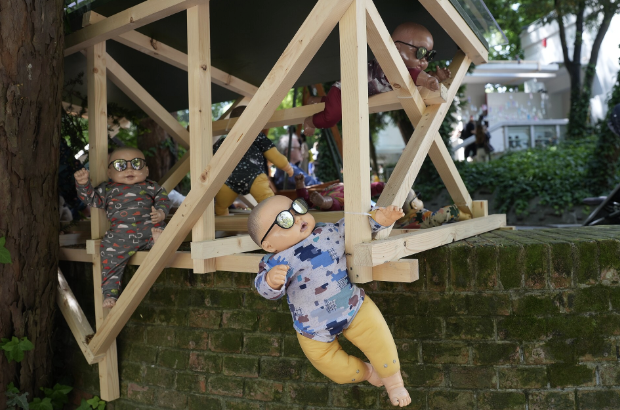
Part of Ei Arakawa-Nash’s “Grass Babies, Moon Babies” in the Japanese Pavilion at the 2026 Venice Biennale. Jennifer 8. Lee. CC BY-SA 4.0.
10. “In Minor Keys”
Venice Biennale
Venice, Italy
May 9 to Nov. 22
Each summer, the Venice Biennale draws thousands of international visitors eager to view the global exposition of modern and contemporary art. In today’s high-intensity, accelerated society, “In Minor Keys” emphasizes a grounded return to nature. As Pietrangelo Buttafuoco, the President of La Biennale di Venezia, explained, “It is an exhibition permeated with spirit, with a sacredness that puts the person, the human being, back at the heart of things, rediscovering the sense of being in the world by reacquiring a sense of proportion with respect to all earthly elements.” In 2026, eight countries will participate in the exhibition for the first time, including El Salvador, Guinea, Sierra Leone and Vietnam.
In many pavilions, the viewer is not a passive observer but a direct participant in the act of slowing down. Within the Argentinian pavilion, visitors walk along a salt-strewn trail marked with black charcoal in Matias Duville’s “Monitor Yin Yang.” In the Indian pavilion, a thinly threaded reconstruction of Sumakshi Singh’s demolished family home invites viewers to walk along the threads of the artist’s own dwelilng. Japan’s “Grass Babies, Moon Babies” by Ei Arakawa-Nash invites visitors to reflect on the vulnerability of care through temporary adoption of a sunglass-adorned babydoll.
Claire Garvin
Claire is a fourth-year student at Barnard College, Columbia University studying Neuroscience. She is interested in writing as a means of understanding the world, and she hopes to ignite meaningful change through her journalism. Outside of class, she enjoys baking, painting, and reading.