
By Hafsah Khanam
From one inside a tiger sanctuary to another where 4,000 people still live, these are the most memorable forts in Rajasthan, India.
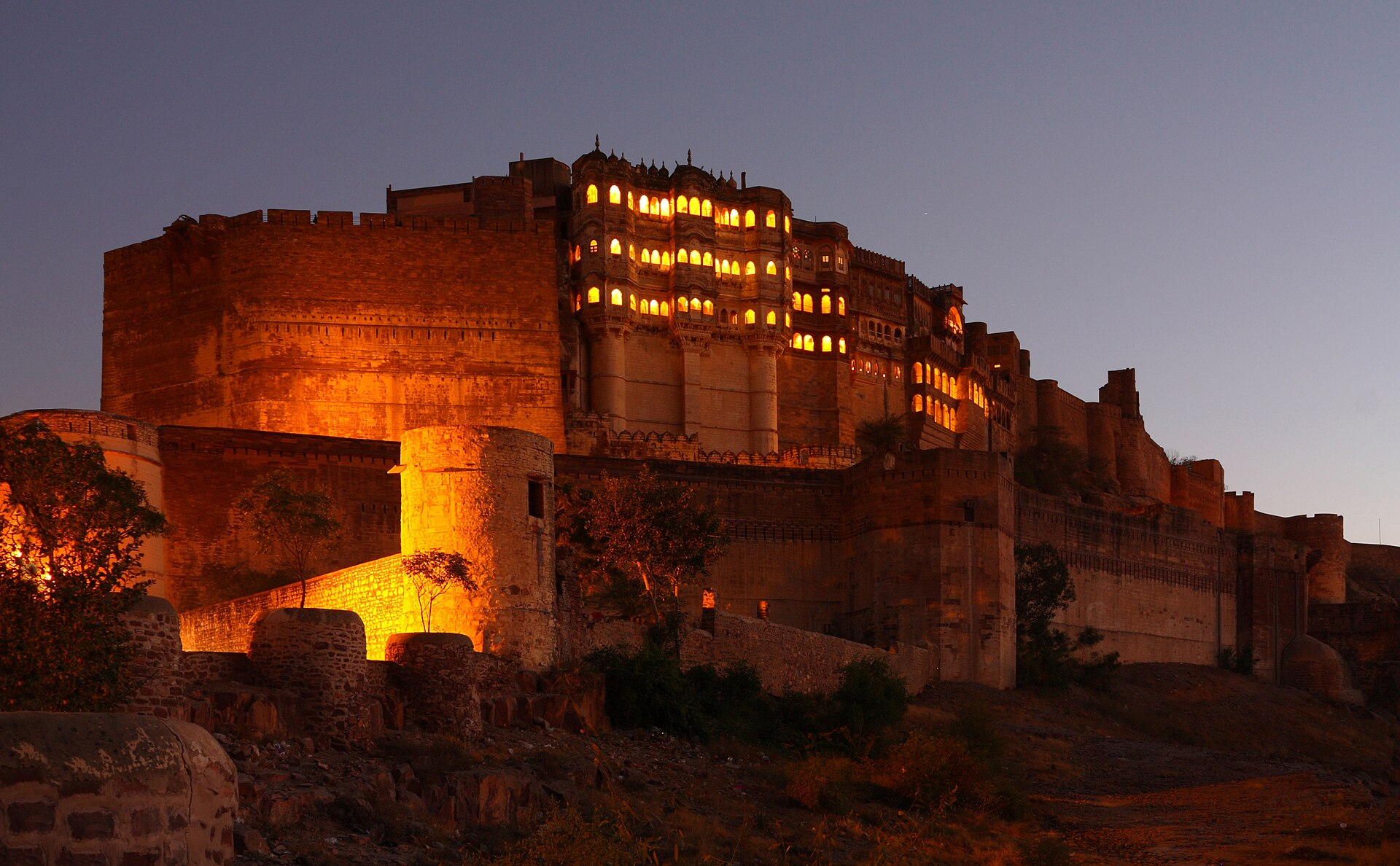
Mehrangarh Fort in Jodhpur. Kroisenbrunner. CC BY-SA 3.0.
Rajasthan is a state in northwestern India that welcomed over 250 million travelers in 2025 alone. It is home to the ancient Aravalli mountain range and the sweeping Thar Desert, and its long history is filled with tales of mighty warriors and remarkable sacrifice. There is something here for every kind of traveler. From the grand lakes of Udaipur and the blue-washed streets of Jodhpur to the quiet charm of Bundi and Alwar, Rajasthan offers an incredible range of experiences. It is especially known for its many forts, six of which are UNESCO World Heritage Sites. When it comes to timing your visit, October through February is by far the best window. Temperatures during these months stay between 10 and 23 degrees Celsius (50 and 73 degrees Fahrenheit), making it far more comfortable than the harsh summer heat, which can climb as high as 48 degrees Celsius (118 degrees Fahrenheit).
1. Amber Fort, Jaipur
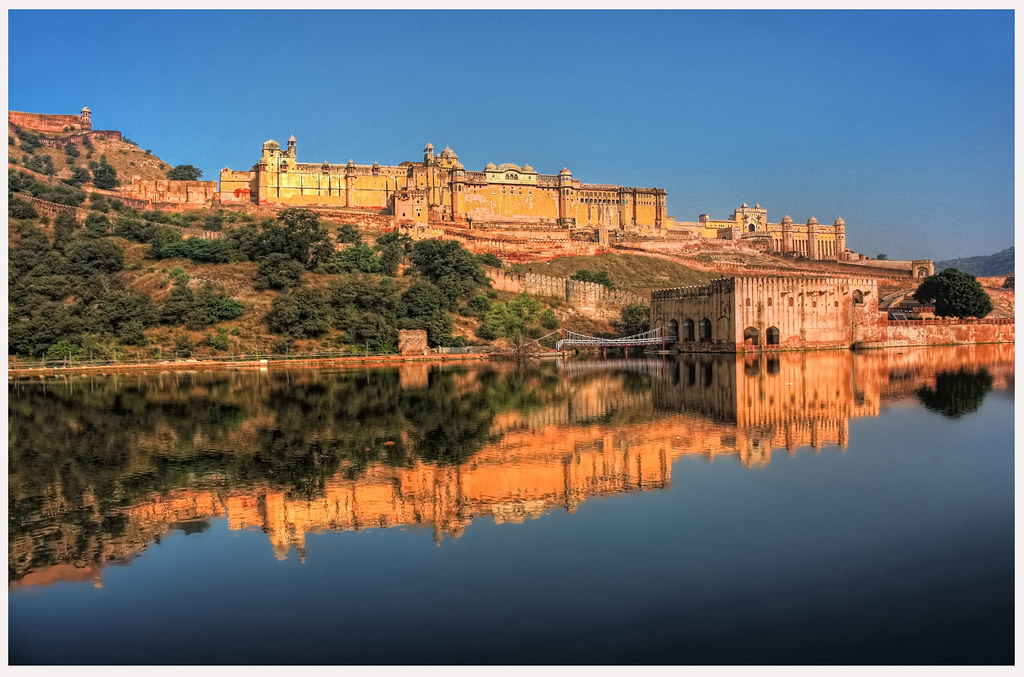
Amber Fort. Daniel Mennerich. CC BY-NC-ND 2.0.
Amber Fort (or Amer Fort) is a UNESCO World Heritage Site. It is perched on a small hill, about 11 kilometers from Jaipur. Built in 1592, it is made from pale yellow and pink sandstone, with sections of white marble adding to its elegance. As one of Jaipur's most visited attractions, it is also a key stop on India’s Golden Triangle circuit. The architecture blends Rajput and Mughal styles, and key highlights include the Diwan-e-Aam (Hall of Public Audiences), Diwan-e-Khas (Hall of Private Audiences), Sheesh Mahal (Palace of Mirrors), royal quarters, gardens and more. In the evenings, the fort also hosts a light-and-sound show. Since it gets crowded fast, an early-morning visit is recommended. Furthermore, travelers are requested to avoid elephant rides offered at the fort, as the animals are often subjected to physical abuse, raising serious animal welfare concerns.
2. Jaigarh Fort, Jaipur
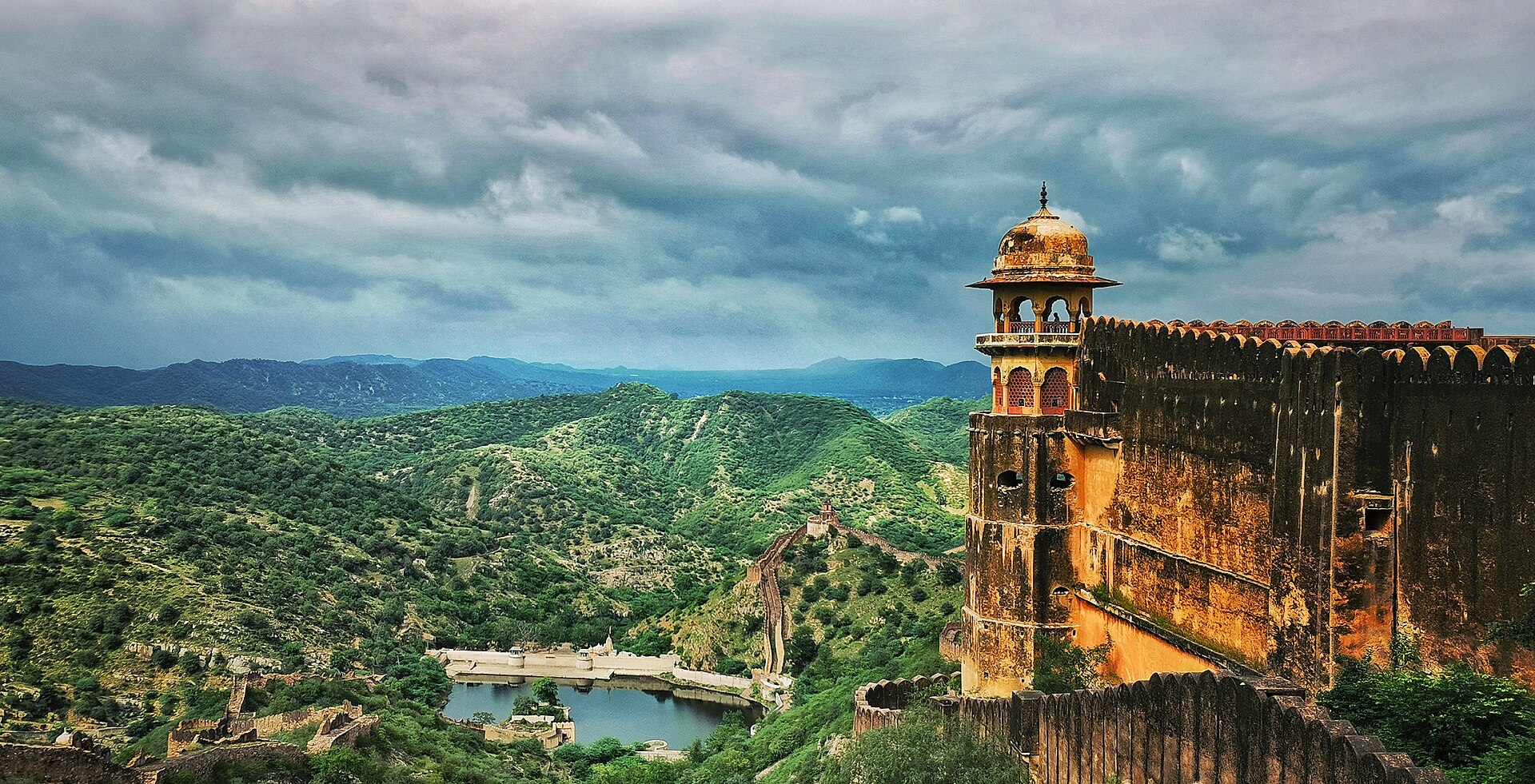
Jaigarh Fort. Luv sharma 02. CC BY-SA 4.0.
Jaigarh, meaning “Fort of Victory,” sits atop Cheel ka Teela (Hill of Eagles) in the Aravalli range. Originally built as a defensive fortress to protect Amber Fort, Jaigarh is connected to it by underground tunnels, a portion of which are open to visitors today. It overlooks Amber Fort and the Maota Lake, offering sweeping views of the surrounding hills and landscape. Despite all it has to offer, Jaigarh remains one of the more overlooked forts in Jaipur, making it worth a visit if you want to skip the crowds.
3. Ranthambore Fort, Sawai Madhopur
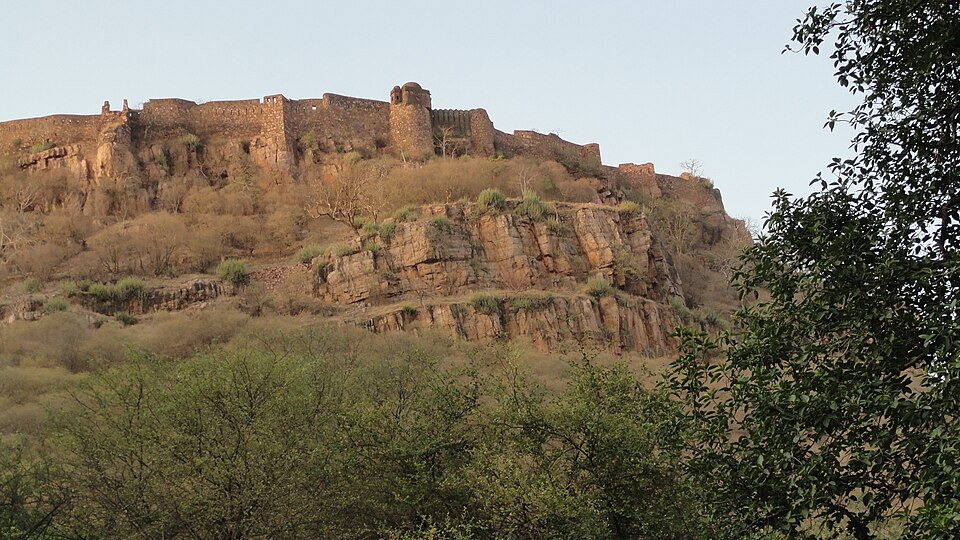
Ranthambore Fort. RahulDogra264. CC BY-SA 4.0.
Few forts come with a tiger sighting as a bonus. Ranthambore Fort sits 700 feet high inside Ranthambore National Park, near Sawai Madhopur, and is a UNESCO World Heritage Site. Its position made it impregnable in its heyday, and the forest surrounding it once served as the royal hunting grounds for the Maharajas of Jaipur. Today, the fort draws history lovers and wildlife enthusiasts alike. The national park that surrounds it is one of India's best places to spot tigers, leopards and hyenas in the wild. Visit the fort, then book a safari; the two together make for an unforgettable day.
4. Chittorgarh Fort, Chittorgarh
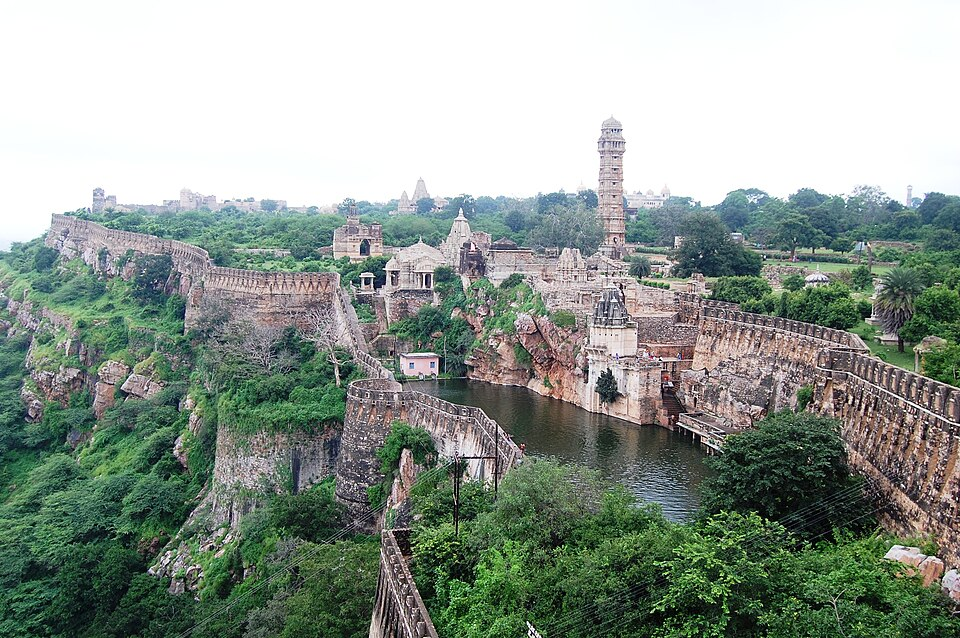
Chittorgarh Fort. Ssjoshi111. CC BY-SA 3.0.
Chittorgarh Fort is not just a UNESCO World Heritage Site but also one of the largest forts in India. It crowns a 180-meter hill and spreads across 700 acres. The fort has a turbulent past, as it faced violent attacks thrice in its history. Over the centuries, it has inspired countless tales of valor, pride and love. The fort is very spread out, so hiring a driver to get between sights is recommended.
5. Kumbhalgarh Fort, Rajsamand
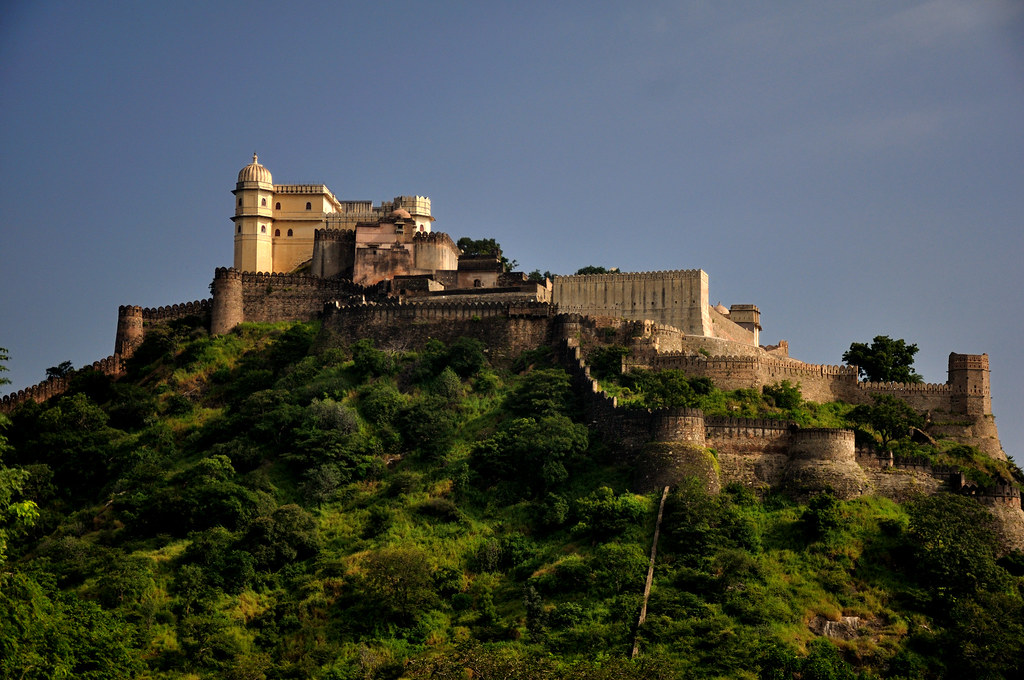
Kumbhalgarh Fort. Amit Rawat. CC BY-NC-SA 2.0.
Tucked into the Aravalli range, Kumbhalgarh Fort is another UNESCO World Heritage Site. Built in the 15th century, it is famous for being the birthplace of one of Rajasthan's most celebrated kings: Maharana Pratap. Its walls are so wide that eight horses can ride across them side by side. Nicknamed the “Great Wall of India,” the fort’s walls are second in length only to the Great Wall of China. Seven fortified gates guard the fort, hundreds of temples dot the complex and the Badal Mahal (Palace of Clouds) is a standout. The fort makes for a good day trip from Udaipur due to its proximity to the city, or you can choose to stay overnight in a hotel nearby.
6. Junagarh Fort, Bikaner
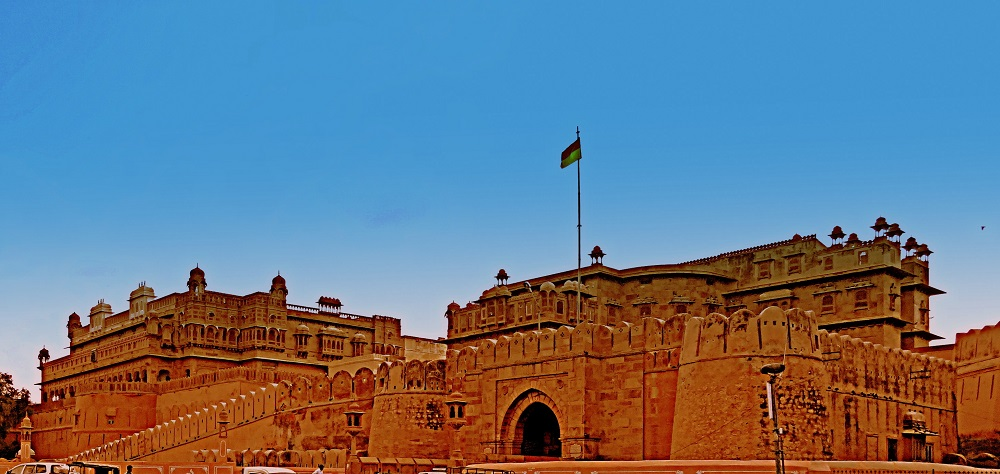
Junagarh Fort. Pratap Singh Mehta. CC BY-SA 4.0.
Unlike most of the famous forts in Rajasthan, Junagarh is built on flat ground rather than a hilltop, yet it is no less impressive. The palace interiors are ornately detailed, and its extensive museum displays a rich collection of artifacts, from weapons to royal costumes to jewelry, offering a fascinating glimpse into Bikaner's royal past.
7. Jaisalmer Fort, Jaisalmer
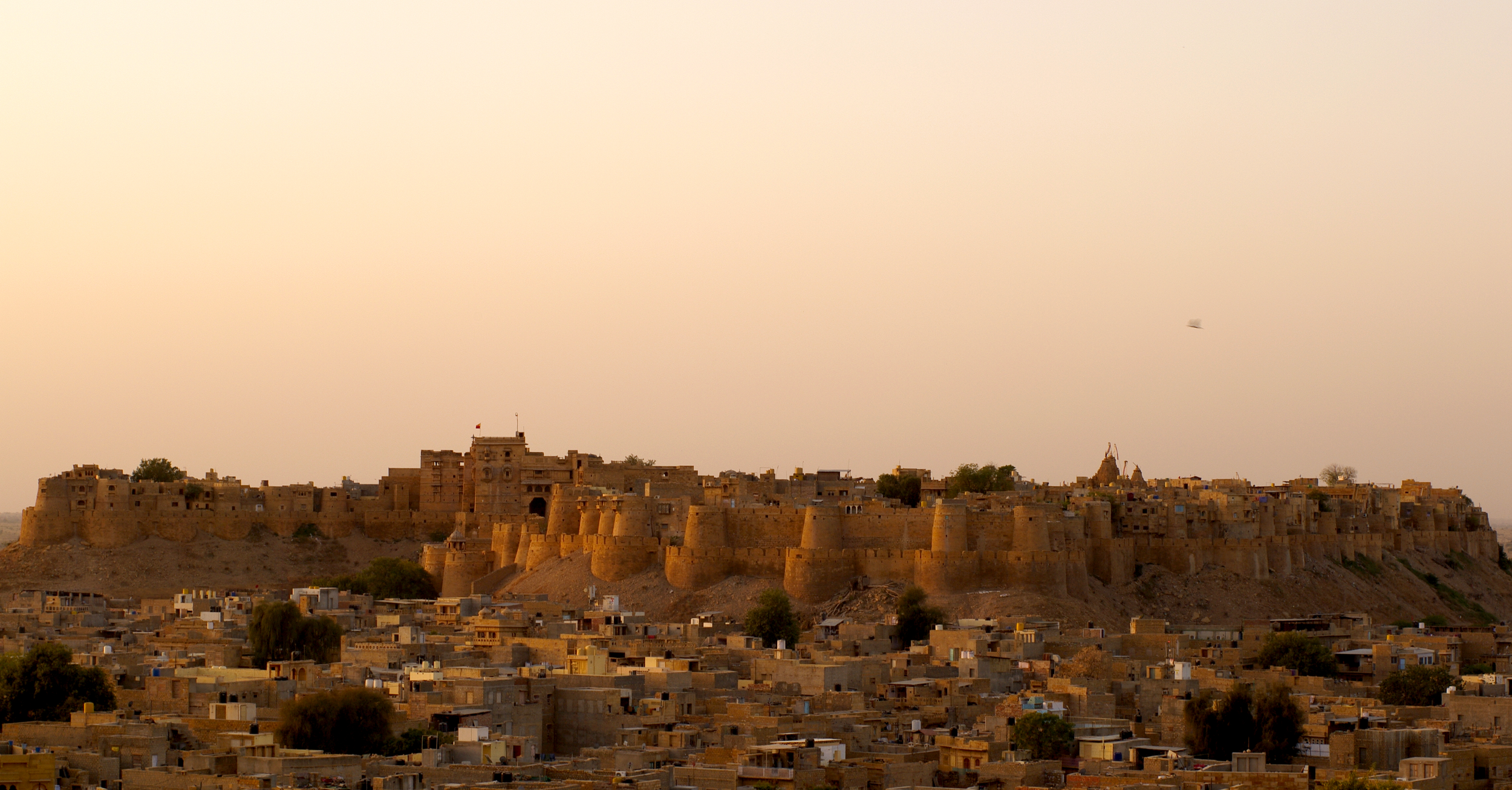
Jaisalmer Fort. Vijainder K Thakur. CC BY-SA 3.0.
Rising from the Thar Desert, Jaisalmer Fort is the most iconic landmark of the “Golden City.” Built in the 12th century, it is a UNESCO World Heritage Site and one of the few living forts in the world. Its yellow sandstone walls glow a warm honey-gold at sunset, blending right into the surrounding desert. This is how it earned its many names: Sonar Qila, Swarn Durg or simply the Golden Fort. Today, up to 4,000 people still call it home. The fort is alive with old havelis, tiny shops and cozy eateries, and the best way to experience it is to simply wander through its winding lanes. That said, centuries of continuous living and modern plumbing have gradually taken a toll on its ancient walls.

Hafsah Khanam
Hafsah is an English grad student from India. When not curled up with a book and a steaming cup of chai, she can be found traveling, inhaling the nearest snack, and spending time with friends and family. She aspires to pursue a PhD.