
Overtourism, altitude and community conflicts: unpacking the debate over visiting Vinicunca.
Read MorePeru’s Floating Islands
The Uros Floating Islands on Lake Titicaca are man-made reed constructions in an Indigenous Quechua community.
Read MoreThe History Behind Peru’s Bird Dropping Fertilizer
The boom and bust of Peru’s guano extraction and economy led to great impacts on the surrounding environment and ecosystems.
Read MoreLake Titicaca: South America’s Sacred Waters
Explore this beautiful testament to the endurance of ancient cultures in a rapidly changing world.
Read MorePeruvian Farmer Loses Climate Case, But Sets Global Precedent
Saúl Luciano Lliuya sued the German energy company RWE for damages to his home related to climate change. He lost, but the case is still considered a win for environmental activists.
Read MoreFamily Planning or Ethnic Cleansing in Peru?
In the 90s, hundreds of thousands of impoverished and often Indigenous Peruvian women were forcibly sterilized. Now, they seek justice.

Quechua Women and Children. Josh Walczak. CC BY-NC-SA 2.0.
In December of 2023, a fight that has spanned decades was dealt two major blows when former Peruvian President Alberto Fujimori was released from prison on the same day that Peru’s Supreme Court annulled an investigation into state-sponsored sterilizations. Fujimori, who oversaw the sterilization program during his presidency, had been serving time in prison after being found guilty of crimes against humanity by Interpol. Peru’s Constitutional Court authorized his release on humanitarian and health grounds less than two years after the Inter-American Court of Human Rights had overruled his pardon in 2022. Elected in 1990 during a period of great economic and political unrest in the country, Fujimori presided over an administration fraught with corruption, controversy, and human rights abuses. Most notoriously, he oversaw the Barrios Altos Massacre, for which he was charged and sentenced.
Although their cases are the most widely publicized, political dissidents were not Fujimori’s only victims. After his re-election in 1995, the President introduced the National Reproductive Health and Family Planning Program (also known as the National Population Program) to address issues of poverty, economic instability and overpopulation. Fujimori presented the program as a feminist undertaking that would assure the reproductive rights of Peruvian women. Prior to the implementation of the program in 1996, women could only be approved for sterilization if they met a number of prerequisites, such as age or health risk factors. The National Population Program did away with the majority of those prerequisites. As a result, 272,028 women were sterilized by the government. Many of those women, however, have since come forward to say that they were subjected to the procedure against their will.
In what has been called a genocide or ethnic cleansing Fujimori’s administration mainly targeted women from impoverished backgrounds for sterilization, many of whom were members of Peru’s Indigenous communities. The sterilization program utilized policies developed by the Peruvian military in their Plan Verde, a military operation initially conceived as part of a coup against Fujimori’s predecessor. In one volume titled "Driving Peru into the 21st Century," the plan emphasized the convenience of sterilizing “culturally backward and economically impoverished groups.” Fujimori’s government employed unethical practices to manipulate and downright coerce women into undergoing the sterilization procedure, including by luring women to clinics under false pretenses, locking women inside the clinics, refusing essential healthcare unless they consented to the procedure, and holding the women down and injecting them with anesthesia. Doctors employed abusive language, accusing women with large families of acting like animals and of being useless. Even women who were already using other birth control methods, such as a Copper IUD, were subjected to sterilization. Many Indigenous women spoke Quechua rather than Spanish as a first language and did not understand what they were agreeing to, raising issues of informed consent.
“The Quipu Project,” developed in collaboration with MIT, is an online, interactive documentary that seeks to record and share the stories of women who were forcibly sterilized. Testimonies from Peruvian women document the suffering inflicted by the National Population Program. Many women were promised support and treatment during the recovery stage, only to be sent home immediately after the procedure, swollen, covered in rashes, with a variety of lasting medical issues. Some women, such as Celia Edith Ramos Durand, passed away from medical complications following the procedure. One woman from San Juan described the impact the operation has had on her life, saying “I don’t know if I will ever get better. I don’t believe I will ever heal … My whole body hurts. We are all in pain. Even my vagina hurts.”
Rather than serving as a remedy to economic woes, the program National Population Program has devastated vulnerable impoverished and Indigenous communities. “Ever since I was sterilized, I haven’t been able to work as before,” one woman confessed to the Quipu hotline. “We want justice,” another says, “We have been suffering for so many years. There’s not even a doctor to check our health.”
Peru’s Supreme Court decided to annul the investigation into government-sponsored forced sterilization in December following a lawsuit filed by Fujimori’s Minister of Health, Alejandro Aguinaga, citing the statute of limitations as well as lack of evidence. This is not the first time the investigation has been impeded. For decades, the fight has been an uphill battle, as the investigation has been opened, closed and reopened many times. In 1999, various human rights groups collaborated to bring the case of Mamerita Mestanza Chavez, another woman who died following the sterilization procedure, before the Inter-American Commission on Human Rights. In 2001, the Truth and Reconciliation Commission was established to investigate human rights abuses that occurred under Fujimori’s administration. Maria Isabel Cedano, a lawyer with the nonprofit organization DEMUS, is representing over one thousand plaintiffs before the IACHR. Unfortunately, none of these efforts have yet to yield results for the victims as the Peruvian government continues to dismiss cases and throw up legal roadblocks in an incredibly complex case that encompasses issues surrounding the definitions of consent, sexual violence and genocide. It is now up to the Attorney General’s office to demonstrate that the crimes committed represent an extreme violation of human rights in order to negate the statute of limitations.
TO GET INVOLVED
Quechua Benefit: Quechua Benefit is a nonprofit organization that aims to empower Quechua people in Peru’s highlands. It provides education, economic support and medical services.
DEMUS: DEMUS is a Peruvian Feminist Organization that focuses on protecting women’s sexual and reproductive rights. One of their campaigns, “Somos 2074 Y Muchas Mas,” seeks reparations for the victims of Peru’s forced sterilization program.

Rebecca Pitcairn
Rebecca studies Italian Language and Literature, Classical Civilizations, and English Writing at the University of Pittsburgh. She hopes to one day attain a PhD in Classical Archeology. She is passionate about feminism and climate justice. She enjoys reading, playing the lyre, and longboarding in her free time.
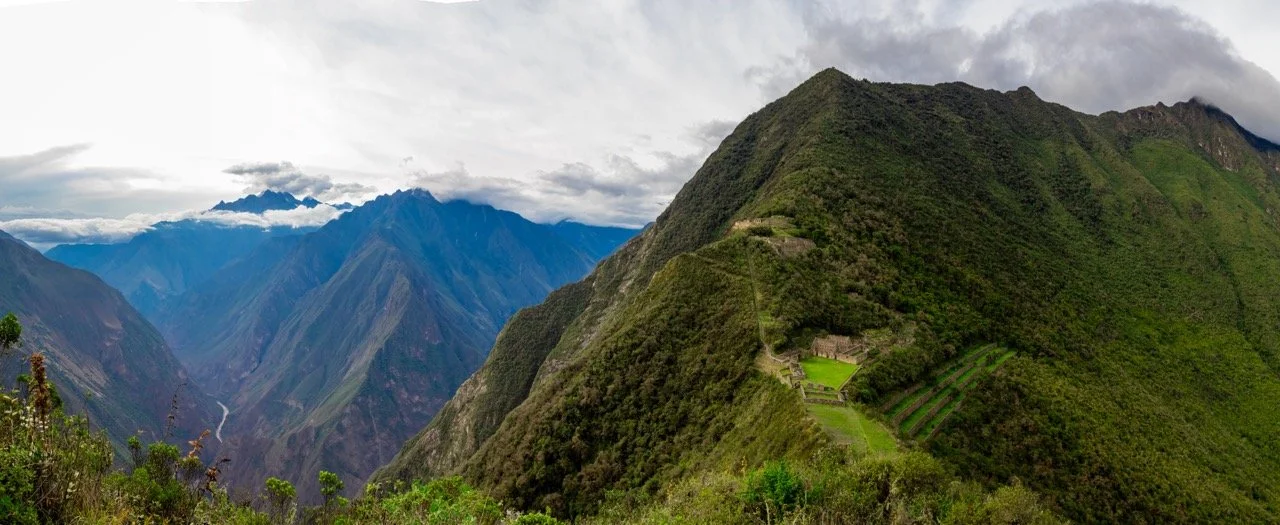
A panoramic view of Choquequirao. Laura Grier
Choquequirao: The Unknown Inca Trail
Deep in Peru's Apurimac Valley, the Incan citadel of Choquequirao exudes an aura of mystery and intrigue, owing to both its challenging journey to reach and its enigmatic history.
Read MoreHow Quechua Women Keep Stories Alive Through Their Hats
Having long been mistreated, Indigenous Quechua women have found ways to honor their ancestors and stories with their unique hats, which form an integral part of Peruvian culture.
Read MoreA Grassroots Youth Movement Is Changing the Political Narrative in Peru
Recent political instability in Peru has resulted in violent uprisings led by the nation’s youth, who are fed up with longstanding corruption.
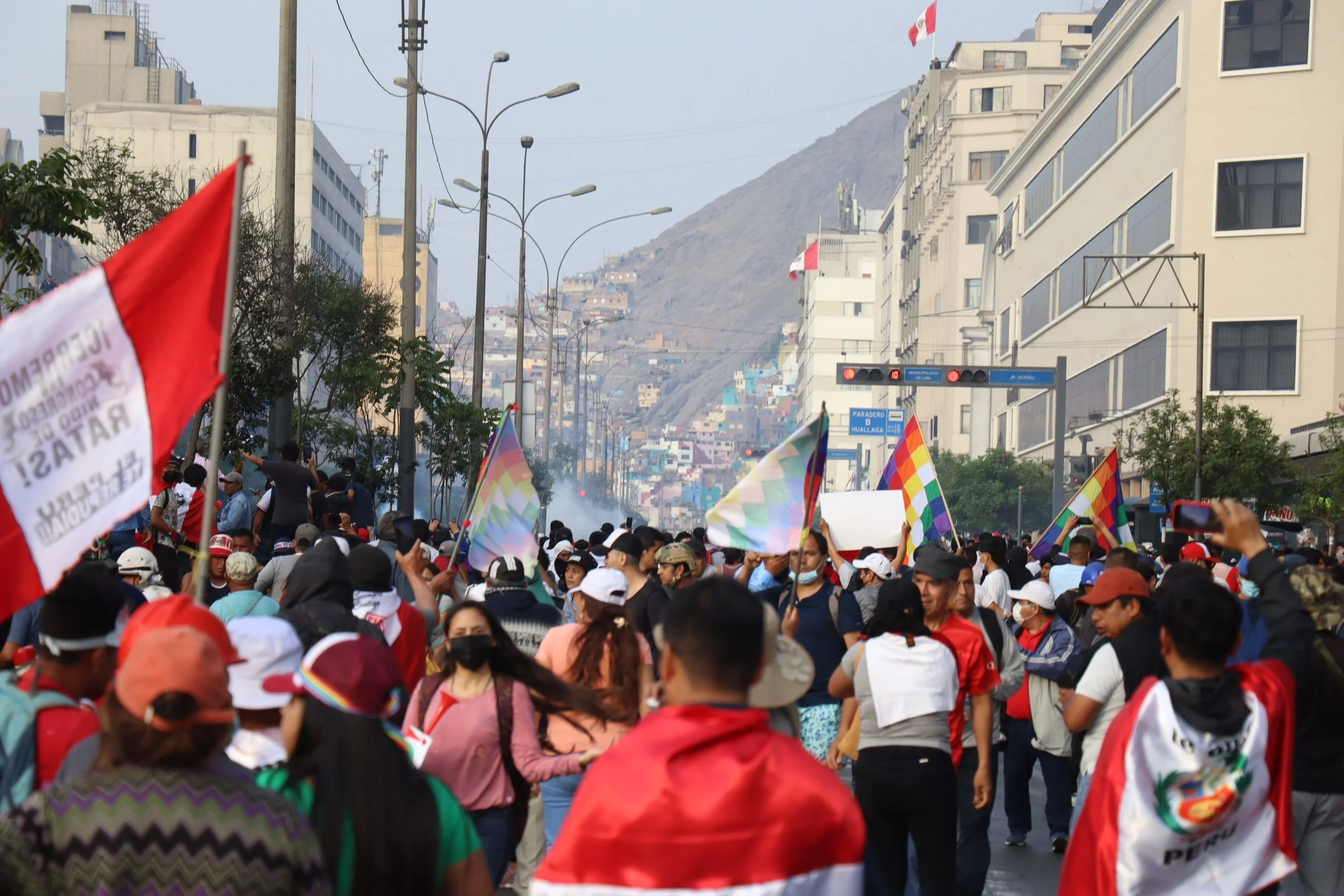
Protesters Take the Streets in Lima, Peru CC BY-SA 4.0
Over the past few months Peru’s political system, and especially its President Dina Boluarte, have come under the scrutiny of protestors demanding fair and just elections. A country that ranks 101 out of 180 on the 2022 Corruption Perceptions Index, Peru is categorized as one of the nations with the most public sector corruption. Facing regional criticism with polarization, impeachment threats, and violent manifestations across the country, Peru’s current turmoil is opening a path towards a new Peruvian identity for young citizens who wish to set their nation on a different course. Seeking democracy and transparency, a group of Peruvian students are increasing awareness of structural changes that they feel must take place in their country.
Former Peruvian President Pedro Castillo was arrested in January 2023 after an attempted coup from above, resulting in the ascension of the then Vice President Dina Boluarte to head of state. Many citizens, however, especially those outside of the capital Lima, felt that this was an attack on their freedom because there was no democratic input in the transition. Throughout the pandemic Peru suffered an economic downturn that reduced access to basic services, especially for health care and education. Triggered by the political unrest, civilians have since taken to the street in violent anti-government protests, demanding that their nation allow transparent elections and eliminate elite privilege.
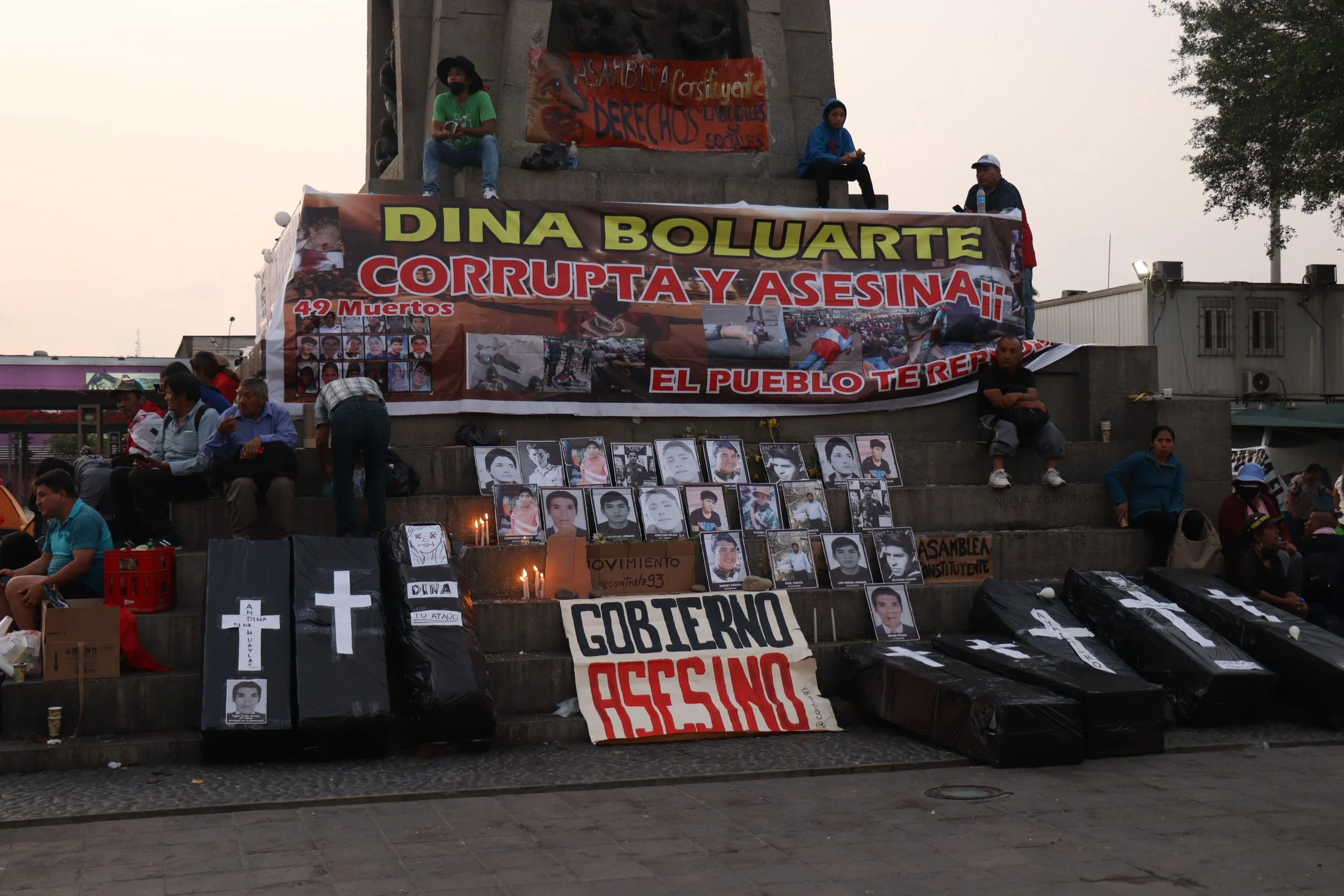
Demonstrations at Plaza Manco Capac following the Ayacucho massacre CC BY-SA 4.0
Peru’s youth have been key to these protests, taking a stand and raising their voices to demand what they view as a better future free of corruption with access to quality basic services. Creating their own slogan, #TheyMessedWithTheWrongGeneration, Peru’s younger population warns authorities that they will not rest, and plan on continuing the fight for an end to systematic dishonesty and fraud. Considered a grassroots movement, the non-partisan group is gaining momentum as even some among the older generations feel that the current government no longer represents them and that their country deserves better. One activist in the movement, a 33-year-old publicist named Diego Cruz, gave the following statement to reporters at a march, “It’s not just one generation marching here, it’s everyone, because we feel outraged that [congress] is carving up the country.”
The youth movement also demands university reform, adherents arguing that access to college is not possible for everyone, especially those that live in rural communities far from the cities. Politicians and traditional political analysts mistook the youth’s dissatisfaction of the old ways for political apathy, a supposition which has now proven woefully false. Members hope that their movement can pave the way to a better, more transparent Peru. It remains to be seen whether they will achieve this.

Kimberly Hidalgo Hernandez
Having obtained a MA in International Policy, Kimberly seeks to bridge the gap between global development and government legislation. Growing up between the United States and Spain, she believes that travel is the best way to discover yourself and understand the world. Her goal is to promote a deeper awareness of the effects of climate change in society and politics.
Before the Sex Pistols, There Was Peruvian Punk Rock
Western punk groups have taken credit for starting the punk movement, but a small group in 1960s Peru would say otherwise.
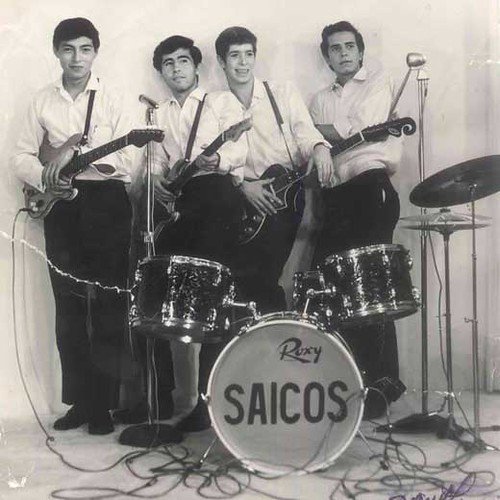
Peruvian punk band Los Saicos. TravelingMan. CC BY-NC-ND 2.0
Punk music has been used for decades as a means to express discontent about numerous topics, including politics and controversial events. But where does the genre come from? While it is easy to claim Western influences, like the Sex Pistols and The Clash to be the forefathers of the punk scene, the Peruvian rock band Los Saicos, formed in 1964, is a strong contender for the position of “Originators of Punk.”
In order to make comparisons between Los Saicos and Western punk bands, a definition of punk music is in order. Punk music consists of fast beats and often aggressive lyrics that seek to critique certain ideas or systems of power. A recent academic article discusses how the lyrics to the Sex Pistol’s “Anarchy in the U.K.” were a critique of the U.K.’s foreign policy in Ireland, a period known as The Troubles. The Los Saicos song “Demolición” lacks a specific reference to Peruvian politics at the time, but clearly expresses discontent with government infrastructure.
The members of Los Saicos were likely influenced by the political turmoil within Peru during their upbringing. Guitarist and vocalist Erwin Flores and drummer Francisco Guevara had just graduated high school and were grappling with unprecedented political strife, drastically affecting how they prosper as adults. The group was established in 1964, with “Demolición” being one of the country’s biggest songs that year. Amidst massive inflation under President Fernando Terry’s land redistribution policy, economic hardship increased for Peruvians. The lyrics are representative of a future that was promised to them with Terry’s liberal redistribution policies, but one that ultimately drowned with the Peruvian sol’s value. ‘Demolición’ expresses hatred at the government for promising a future and delivering inflation.
Los Saicos broke up in 1966, but its influence was picked up by garage rockers throughout Peru and abroad in the U.K. The punk genre’s grungy and generally angsty music did not necessarily originate from the members of Los Saicos, but they were critical in the genre’s explosion in popularity, especially in areas where there was a discontent with state functions.
“Nobody invented the wheel, we were obviously building off of what others have done,” said Flores in an interview.
The band’s desire to express themselves within a country in turmoil ranges across languages and generations, effectively changing how the music scene functioned as ‘angry’ music started becoming mainstream and profitable.
Clayton Young
Clayton is an aspiring photojournalist with a Bachelor's in Liberal Studies with a minor in History from Indiana University - Bloomington. In his free time, he enjoys hikes, movies, and catching up on the news. He has written extensively on many topics including Japanese incarceration in America during World War II, the history of violence, and anarchist theory.
The Downside of Ecotourism
The term ecotourism has been around for decades but the misunderstanding and overuse of the term has led to a lack of environmental success in a CO2 sucking industry. Places like Machu Picchu now receives over 6,000 visitors a day during peak season, making it hard to properly conserve the historical site.
According to the World Travel and Tourism Council, tourism as a whole makes up 10% of global GDP and supports over 319 million jobs. That is a huge industry but it also has a huge environmental impact. Air traffic alone accounts for 5% of CO2 emissions globally and the number of air passengers is expected to only grow, reaching 13 billion by 2030. In addition, tourists often use more resources than locals, eating at restaurants, using more water, generating more waste, and driving rental cars. Often desired tourist destinations are ones of natural beauty, with high densities in coastal, mountain, and lake areas. These environments are more susceptible to environmental degradation and increased traffic to protected areas can affect conservation efforts. A potential solution: eco-tourism.
Ecotourism was defined in 1990 by the The International Ecotourism Society (TIES) with a focus on, “responsible travel to natural areas that conserves the environment and improves the well-being of local people”. It has good intentions: natural conservation and benefiting locals. Often eco-lodges do have greener accommodations but they can often be in remote locations, therefore requiring more carbon emissions to get there. Human presence in isolated areas will always have effects on the local land and wildlife no matter how much it is tried to be controlled. The more popular eco-tourist destinations become, the harder it is to limit the impact.
A great example of this is Machu Picchu. Tourism is the second largest industry in Peru. Machu Picchu specifically is a highly sought-after tourist destination. The tourism there has had a huge impact on the environment. UNESCO recommended the Peruvian government to limit numbers to 2,000 a day to reduce the degradation. Instead, the government switched the ticketing process to half-day tickets, effectively increasing daily numbers from 2,500 to over 6,000, with an additional 500 a day on the Inca Trail. The lack of infrastructure supporting these numbers leads to an even higher impact. There is only one bathroom at the entrance and human waste is a huge problem. The closest village, Aguas Calientes, has resorted to pumping human waste into the Urubamba River. Increases in garbage, especially plastic water bottles, on the Inca Trail also contributes to uncontrolled waste. Jobs provided to locals are seasonal, often poorly paid, and have a huge physical cost. Machu Picchu had the potential to be a great eco-tourist site but overcrowding and mismanagement has led to a lack of conservation and hurting local communities. Yet, it still viewed and even advertised as eco-tourism.
The term ecotourism is now over used. It has been stretched from its original purpose to encompass any nature-related travel and to many is synonymous with sustainable. This is far from true and with companies using greenwashing, consumers are not sure what they are paying for. Greenwashing is when organizations falsely advertise through an environmentally-friendly lens. In tourism this is often increased by inconsistencies in certifying bodies. Or in something as simple as have a sign in the bathroom promoting water conservation. This has a huge impact on the effectiveness of ecotourism when people who are trying to be environmentally conscious end up supporting the wrong businesses. Eco-tourism also tends to draw from a wealthier demographic, with 57% of people making over $150.000 saying they would book an eco-tourist trip, compared to 16% at $34,000. This is largely influenced by the higher price of eco-tourist trips. If ecotourism is to decrease the large environmental impact of tourism as a whole, it has a lot of work to do to limit greenwashing, overcrowding, and transportation effects while increasing affordability, minimizing local impact and supporting local communities.

DEVIN O’DONNELL
Devin’s interest in travel was cemented by a multi-month trip to East Africa when she was 19. Since then, she has continued to have immersive experiences on multiple continents. Devin has written for a start-up news site and graduated from the University of Michigan with a degree in Neuroscience.
Peru and Bolivia: A Short Film Capturing the Beauty of the Mountains
High in the Andes mountains, the people of Peru and Bolivia inhabit one of the most unique landscapes in the world. From rainforests to rocky slopes, towns and cities coexist with the wildlife and the natural topography in a way that seems as though they were created by nature as well as human innovation.
The people living in these cities blend historical traditions with the technological advancements of the modern age— retaining the beauty of their culture, dress, and craftsmanship and passing it down to the next generation. This video, directed and edited by Baptiste Lanne, highlights the beauty of both Peru and Bolivia’s varied climate, geography, and people, illustrating the complex balance of humanity and nature. The breathtaking scenes are interspersed with shots of people’s daily lives; both are equally beautiful.

Rhythms of Peru
There is so much more to Peru than Machu Picchu. From the heart of Lima to deep in the Sacred Valley, 'Rhythms of Peru' takes you not only to Peru's most iconic, but also far off the tourist trail for a chance to experience a more intimate view of this beautiful country.
An Ancient Practice with Peru’s Last Medicine Men
Rosendo is a curandero, a healer who specializes in natural, plant-based medicines. He has been honing his trade in the mountains of the high Amazon, and at 86, he is one of the last remaining curanderos in the region. Now, he is passing the baton to his son Mauro in an effort to rescue this fading art. Our friends at Jungles in Paris bring us this story from San Martin, Peru.
Peruventure
A chilling mix between fast cuts and slow pans, Peruventure will give you a raw yet whole picture of this South American country. Placing a specific emphasis on Peruvian children, you’ll see Peru from the Andes to the pacific coast.
In Peru, a 'Foggy' Solution to a Water Shortage
Millions of people in Peru lack access to safe water and sewage services. But Abel Cruz Gutiérrez has a solution. Gutiérrez, president of the "Peruvians Without Water" association, uses an ingenious system of "fog catchers" to make water accessible to residents of Lima's low-income neighborhoods. The fog catchers resemble large rectangular sailboat sails, which are composed of nylon nets that trap microdroplets of water. The nets are set up along the foggy areas of coastal Peru and are connected to pipes, which collect the water for larger storage tanks. Residents can then use this water as irrigation for crops or to raise animals. And while the water isn't currently drinkable, Gutiérrez is working on a solution to that as well.
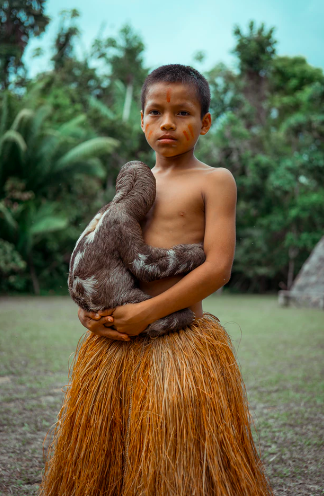
Deforestation threatens indigenous tribes living in the Peruvian jungle. Photo by Alexander Paul on Unsplash
Development and Deforestation Threatens Peru’s Indigenous Tribes
When we think of civilization, we think in Western terms: skyscrapers, factories, and automobiles. But as we progress, there is a growing need to live in tune with the natural world. While our affinity for the environments may seem relatively new, some civilizations have lived in such a way for centuries. The forests of Peru are home to 15 “uncontacted” tribes, groups who live in voluntary isolation and reject all connections to the outside world. However, the reverse is not true. Industrialization and deforestation threaten to take large pieces of territory from these indigenous peoples.
In December of 2017, the Congress of the Republic of Peru approved the construction of a road that would run along 172 miles of Peru’s eastern border with Brazil before connecting with the Interoceanic Highway, a 1600 mile stretch that links the two countries. The road was pitched as a way to jumpstart the economy in an area of Peru that was cut off from tourism and trade, but activists are worried. Clearing a way for the road would decimate 4 national parks and violate 5 protected areas belonging to the indigenous tribes. Activists also predict that the road will be a catalyst for more development, both legal and illegal. Drug traffickers are always looking for new opportunities to expand, and a road through the Amazon would provide just that.
Some smaller encounters are equally devastating to relations between the outside world and the indigenous tribes of the Peruvian forest. In April 2018, Sebastian Woodroffe, a Canadian scientist who traveled to Peru to study hallucinogenic medicine, was killed in an apparent lynching after he was accused of killing 81-year-old Olivia Arévalo, a local shaman to the tribal village of Victoria Gracia. Authorities launched an investigation after videos surfaced on social media of Woodroffe being dragged along the jungle floor by assailants. They later exhumed Woodroffe’s body from an unmarked grave. The incident has proven to be disastrous to public perception of the tribes.
When asked why they choose to remain isolated, members of these tribes often point to encounters their people had with colonists in the past and the violence and disease that resulted. Today, history seems to be repeating itself as modern society reaches further into an untouched and irreplaceable ecosystem.
JONATHAN ROBINSON is an intern at CATALYST. He is a travel enthusiast always adding new people, places, experiences to his story. He hopes to use writing as a means to connect with others like himself.

PERU: Saving an Ancient Language Through Pop Music
Renata Flores is a 16-year-old singer from Peru who is using her voice to save an ancient Incan language. Though Quechua is the second-most spoken language in Peru, native speakers have suffered from discrimination and social stigma for generations, and today, many young people aren’t learning the language at all. But with her powerful vocals to covers of pop songs by Michael Jackson and Alicia Keys in her native tongue, Flores is sparking a renewed celebration of Quechuan language and culture.
The Magical Rainbow Mountains of Peru
Deep within the Peruvian Andes, next to the Ausangate Mountain, is home to one of the most magnificent geologic features in the world, The Rainbow Mountains of Peru. While viewing the Rainbow Mountains, you are seeing millions of years of history and all the complexities that are associated with geologic weathering & erosion. The peak of the Rainbow Mountains stands at 16,520 feet.
Each color within the mountain represents a different mineral that is present within the soil & rock. National Geographic ranked the Rainbow Mountains as one of the 100 areas you must visit before you die. Our guides were from Flashpacker Connect.
SOUTH AMERICA - A Time-Lapse Adventure
In this short film, you will be taken on a journey through the incredibly varied landscapes of this imposing continent, South America.
One year of travel, nine countries, countless hours on busses, motorbikes, and cars. Hundreds of thousands of images taken. 30TB of data used, 5 months of editing. The time-lapse film features South America like it has never been before with images from Brazil, Venezuela, Guyana, Colombia, Argentina, Chile, Peru, Bolivia and Ecuador.