
Kelcie Lee
The boom and bust of Peru’s guano extraction and economy led to great impacts on the surrounding environment and ecosystems.
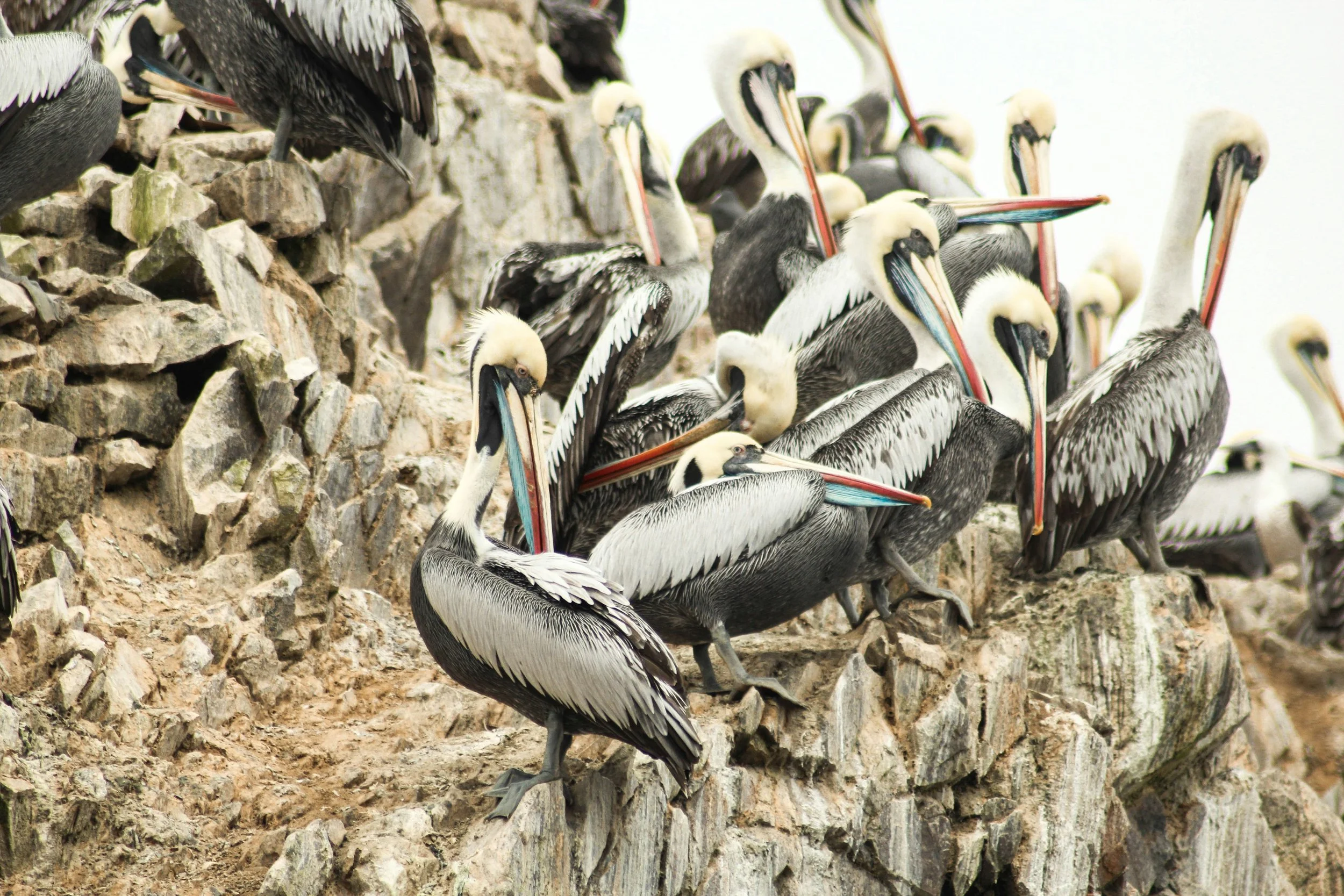
Seabirds in Peru. Loic Mermilliod. Unsplash.
In the 1800s, Peru discovered that their islands were rich in nitrogen-packed fertilizer from what seemed to be an endless supply of bird droppings, or guano. At the cost of environmental destruction due to the mass extraction of guano, the economy boomed and eventually busted from over-mining. With a change in practices, guano continues to be harvested on Peruvian islands with guidelines to protect wildlife habitats and cave ecosystems.
The earliest European records of guano being used as fertilizer date back to as early as 1548. The Inca empire used guano but extracted the fertilizer in small amounts to ensure they wouldn’t exhaust the limited resource. However, major mining of guano eventually came during the 1800s. From 1840 to 1880, Peru used the extraction of seabird droppings, as in those of penguins, pelicans and cormorants, for trading and selling substantial amounts of fertilizer. With the need for effective fertilizers in Europe and the United States, guano quickly became the main economic engine for Peru, generating massive revenue and exporting up to 12 million tons of guano to other countries.
Additionally, the guano mining industry required harsh and often exploitative physical labor. Workers shoveled and carried guano for up to 17 hours each day and worked in dangerous conditions. Laborers often flipped and drowned in the ocean, while guano landslides buried workers. Men were also housed in poorly conditioned labor camps, where problems of opium abuse, isolation and mental illness arose.
By the late 1800s, chemists’ creation of synthetic fertilizers was quickly becoming a major competitor with guano. Additionally, Peru’s reliance on its single export of guano put the country in a vulnerable position, most notably when the islands were picked dry by the 1880s. Peru quickly fell into debt as the economy went into depression. The guano was extracted at a rate too fast for the seabirds to replenish, especially because it wasn’t a sustainable resource.
As a result of guano extraction, wildlife habitats and ecosystems were harmed. At the peak of Peru’s guano mining, the islands were home to approximately 53 million seabirds. Intensive extraction led to breeding grounds for these birds being disrupted by people every year. Many birds abandoned their nesting sites, which also led to smaller amounts of guano production.
Guano is also valuable for the ecosystems that seabirds live in, as it feeds plants and invertebrate species. As for the ocean and marine life, guano helps tropical coral reefs grow and remain healthy. With the relocation of these seabirds and the loss of guano, the Peruvian island ecosystems took a hit.
“When you lose the birds, you lose that input and that’s the bottom building block, the lowest row of your Jenga tower,” said Alex Bond, the Natural History Museum’s Principal Curator of Birds. “They’re the foundation on which a lot of these island ecosystems are built.”
Guano is still used to this day in modern agriculture and smaller-scale gardening as an organic fertilizer. Peru and other countries continue to harvest and export guano in controlled conditions, being cautious not to overexploit the resource.

Kelcie Lee
Kelcie is a second-year student at UC Berkeley majoring in history and sociology, with a minor in journalism. She developed her passion for writing and journalism in high school, and has since written for a variety of news and magazine publications over the last few years. When she isn't writing, Kelcie can be found drinking coffee, listening to music or watching the sunset.