
Zoe Lodge
Explore this beautiful testament to the endurance of ancient cultures in a rapidly changing world.
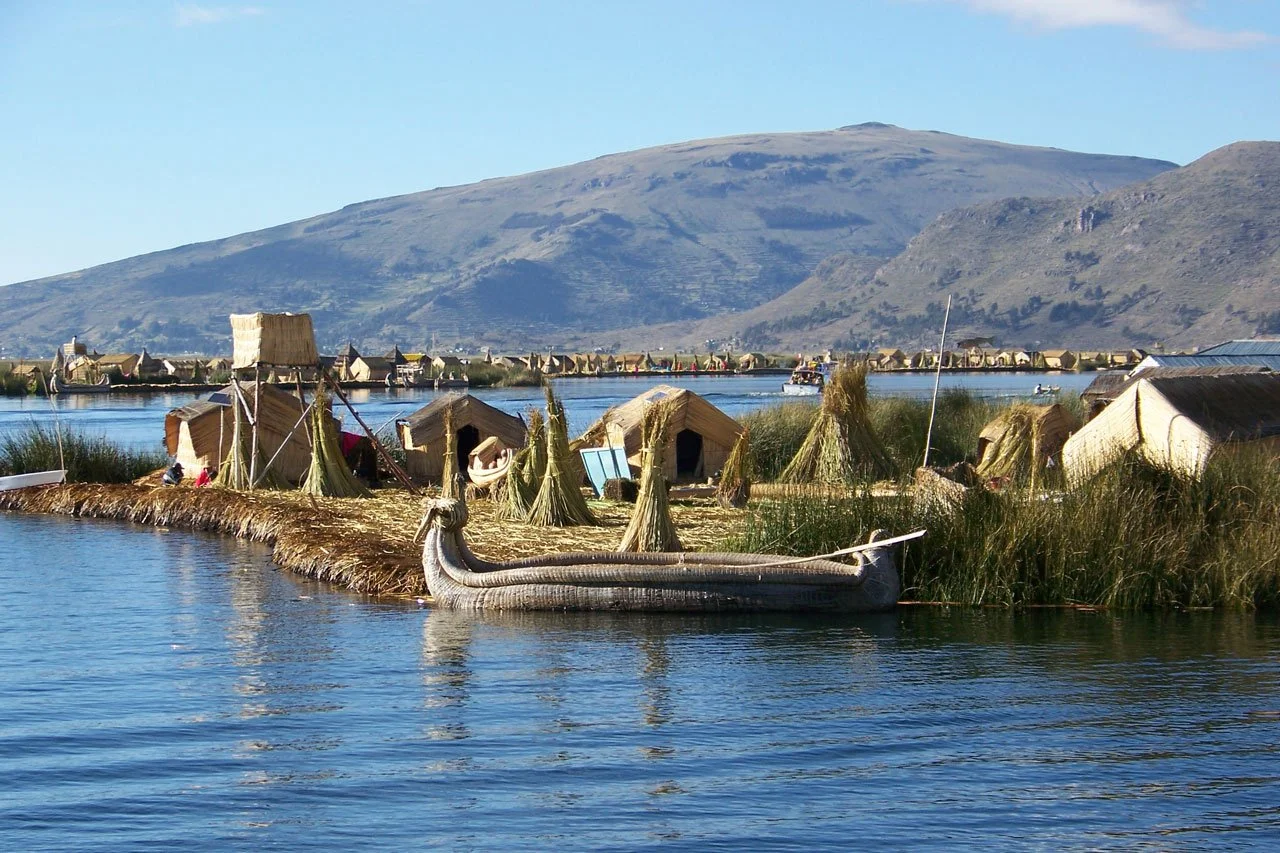
Uros Islands on Lake Titicaca. Bobistraveling. CC BY 2.0.
On the border of Peru and Bolivia, standing at a breathtaking 12,500 feet above sea level, Lake Titicaca isn’t just the largest lake in South America; it’s a sacred body of water intertwined with Indigenous mythology, slow-paced tradition and jaw-dropping natural beauty. As the highest navigable lake for large vessels in the world, Lake Titicaca offers travelers scenic grandeur and a rare cultural immersion, where ancient ways of life still thrive on floating islands and peaceful shores.
The lake covers more than 3,200 square miles and is nestled within the Andes mountains, its deep blue waters reflecting centuries of heritage and resilience. According to Inca mythology, the sun god Inti sent his son, Manco Capac, to rise from the lake's depths and become the first Inca king, making it a spiritual cradle of Andean civilization. Today, its cultural and physical significance has earned it recognition as a UNESCO World Heritage site.
One of the lake’s most well-known experiences is exploring the Uros Floating Islands, an archipelago of man-made islands crafted from totora reeds, a plant native to the region. The Uros people, an indigenous population who predate the Incas, maintain a lifestyle that relies on these reeds for building homes, boats and, of course, the islands themselves. Guided tours, often hosted by local Uros families, give travelers a chance to learn how the islands are constructed and to hear ancient stories passed down through generations.
Another popular destination is Taquile Island, known for its stunning vistas, terraced hillsides and a tight-knit community home to generations of unique traditions. The island is especially famous for its textile art, with men typically serving as the master knitters. Taquile's textiles are listed by UNESCO as Intangible Cultural Heritage, and buying a handwoven hat or belt directly from the artisan is a meaningful way to support local livelihoods.
Amantani Island offers one of the most immersive experiences on the lake. Here, visitors can visit community-run homestays, sleep in adobe homes, dine on locally grown quinoa and potatoes and join in folk dances under starlit skies. With no cars, little electricity and a deep sense of spiritual connection to the land, Amantani provides a rare window into life lived in harmony with nature, reminiscent of ancient days.
Traveling to Lake Titicaca is best done slowly, not just to acclimate to the altitude but to truly absorb its peaceful rhythm. Whether it’s sipping coca tea with an Aymara elder or paddling a reed canoe across still waters, the experience can be deeply humbling and culturally enriching. Tours that center Indigenous voices and sustainable travel practices, such as those offered by Responsible Travel or Apus Peru, help ensure that tourism uplifts rather than disrupts these fragile communities. For travelers in search of connection, authenticity and awe, this South American gem delivers a transformative journey.

Zoe Lodge
Zoe is a student at the University of California, Berkeley, where she is studying English and Politics, Philosophy, & Law. She combines her passion for writing with her love for travel, interest in combating climate change, and concern for social justice issues.