
Daud Azfar
Although Russia’s official decision to recognize the Taliban came as a surprise, many countries already unofficially acknowledge the de facto government, and some argue that Western recognition may be the best way to help the Afghan people.
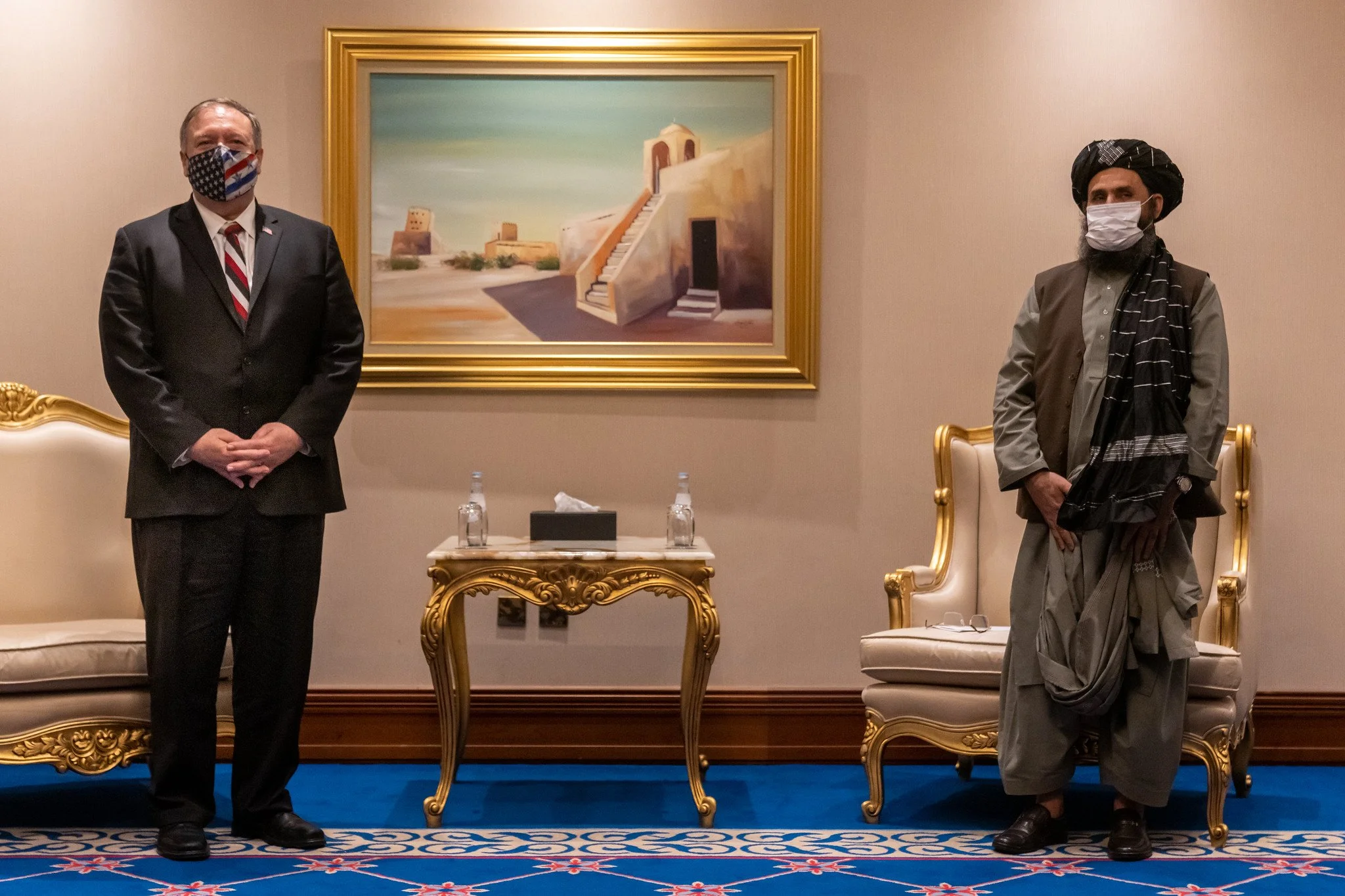
U.S. and Taliban talks in Qatar. Ron Przysucha. PDM.
Nearly four years after the Taliban regime retook control of Afghanistan, they have received official recognition from their first country: Russia. As the war in Ukraine continues to rage on, Russia’s decision to recognize Afghanistan’s de facto government has raised eyebrows. Analysts cite two main reasons for this surprising decision: security and trade. Cooperation with Afghanistan could open up strategic trade routes to Russia, with their Foreign Ministry saying the countries will focus on “energy, transportation, agriculture, and infrastructure.” Secondly, Russia has been struggling with the spread of terrorism from this region and has found common ground with the Taliban in their mutual desire to eradicate the terrorist group ISIS-Khorasan, which was responsible for the tragic 2024 Crocus City Hall attack near Moscow that claimed more than 100 lives. The reemergence of ISIS-K presents a threat to Russia’s strategic backyard, Central Asia, and risks radicalizing youth in areas of the North Caucasus, like Dagestan and Chechnya, on top of the direct threat of their terrorist activities.
To this effect, President Putin has referred to the Taliban as an “ally” in the fight against terrorism, and some see Russia’s decision to officially recognize their government as a “reward” for assisting Russia with these concerns.
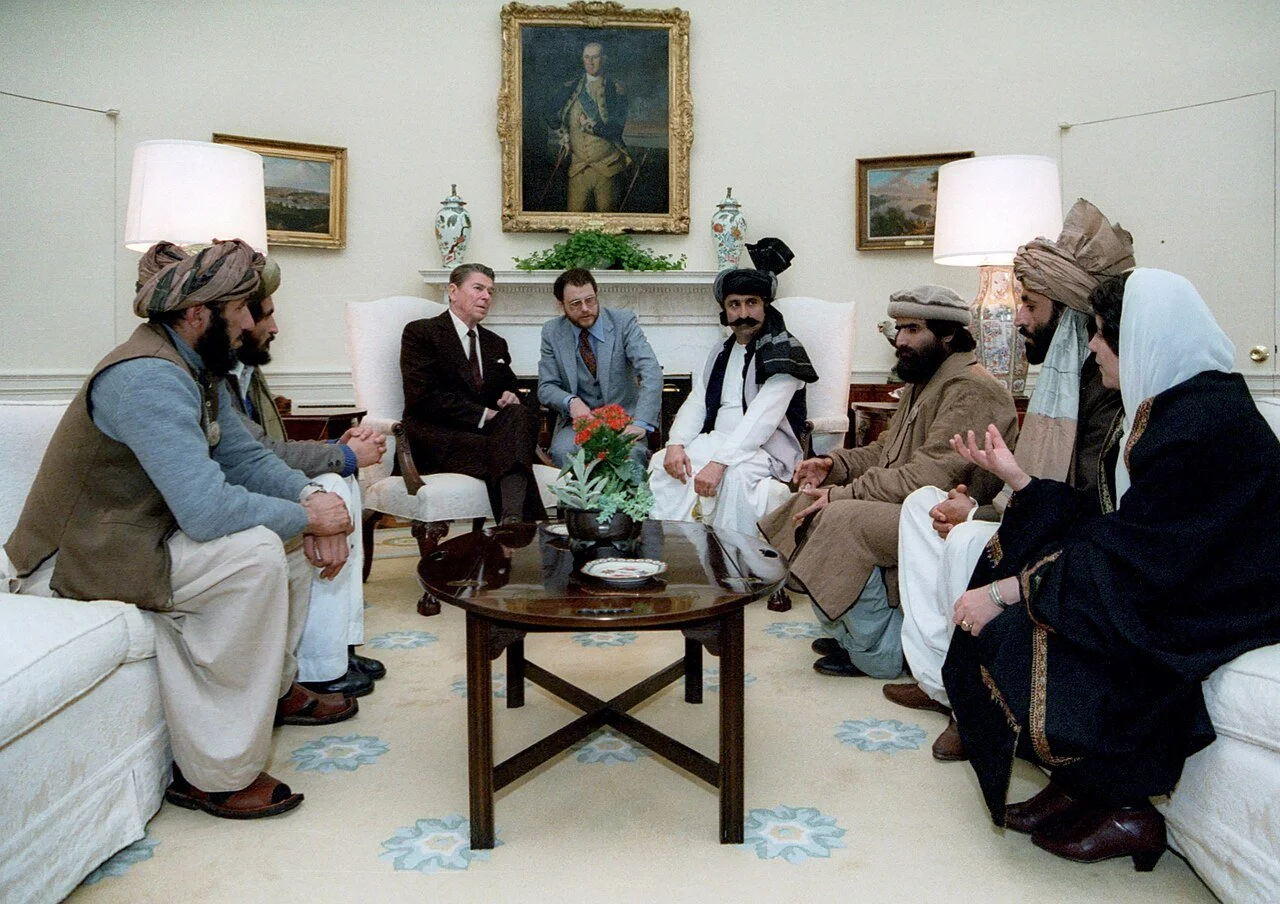
President Reagan with Afghan Leaders. Michael Evans. PDM.
The Taliban originated during the fallout of the Afghan-Soviet War, which saw the Soviet-backed communist government fight the U.S.-backed guerrilla mujahideen forces. After fighting other mujahideen factions to take control of Afghanistan in 1996, the Taliban imposed an extremely harsh social and legal system that especially suppressed the rights of women and minorities. This included significantly restricting female education, the legal imposition of the burqa or face covering, which was underlined by the establishment of a morality police, and sectarian discrimination and violence against minorities, like Shias and Hazaras. Their strict and controversial implementation of what they deemed their religious and cultural values drew global condemnation, including from across the Muslim world.
As a result, very few countries recognized the initial Taliban government, and many classified it as a terrorist group following the U.S. War on Terror in 2001, which saw the invasion of Afghanistan and toppling of the Taliban government. After their return to power in 2021, they’ve continued with similarly draconian policies and have been cut off from the global financial system, with their major leaders sanctioned. The consequences on the Afghan economy and everyday life in Afghanistan have been devastating, triggering a humanitarian crisis.
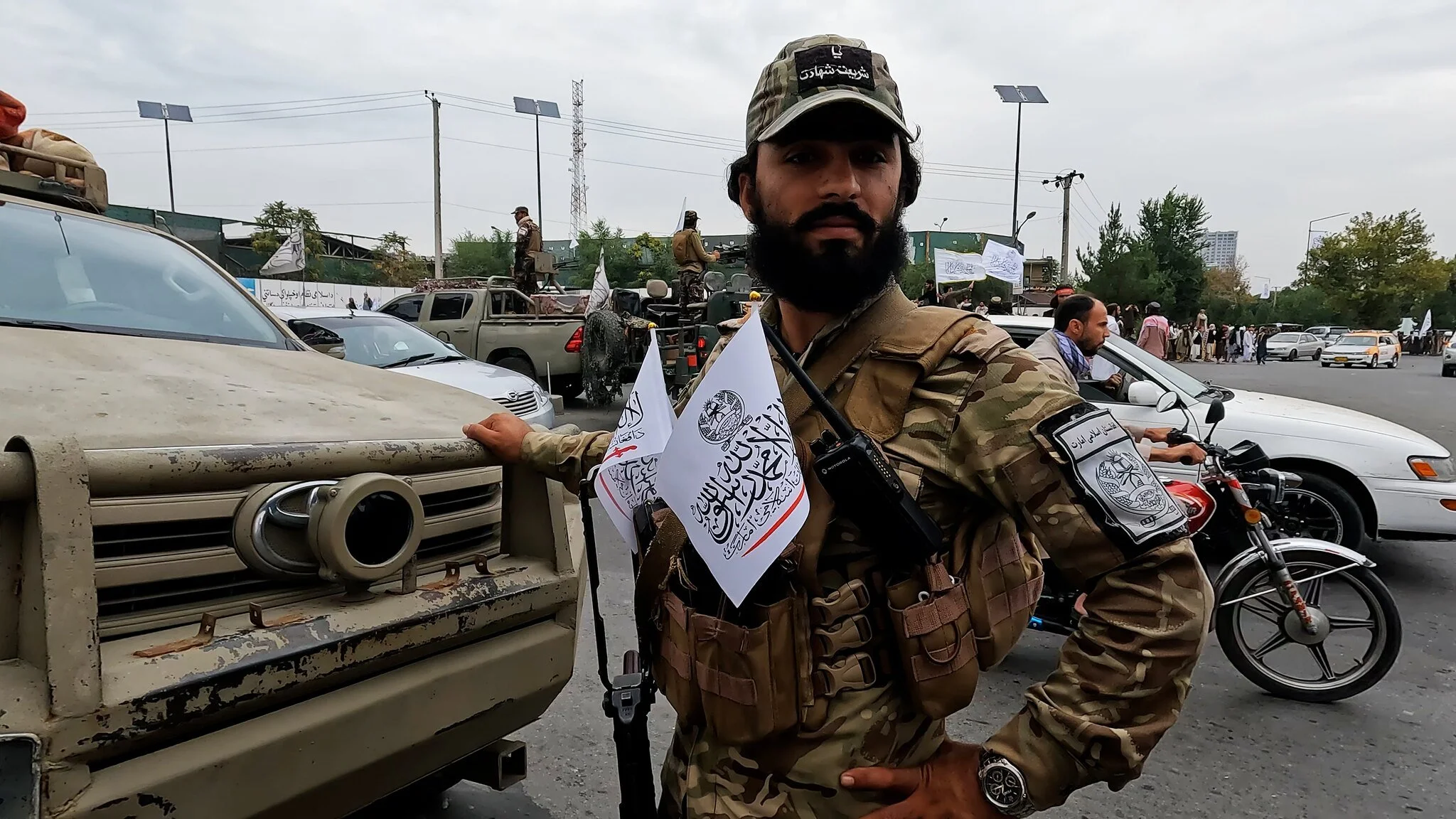
Taliban member. Callum Darragh. PDM.
This is not to say, however, that the Taliban are a complete international pariah. In fact, many countries, like China, India, the Gulf States and several Central Asian countries, continue to trade and have relations with the Taliban, despite not officially recognizing their government. Although strained and complex, trade and ties with its neighbours, Iran and Pakistan, remain deep-rooted. Russia’s decision to recognize the government may well pave the way for other countries to do so, almost like a domino effect, given its large, influential stature in the region. China has welcomed the move, which indicates a potential prospect for recognition in the future. India has been seen cozying up to the Taliban too, notably abstaining from a UN vote condemning the Taliban government on July 7th, perhaps in an attempt to counterbalance its regional rival, Pakistan.
With no end in sight to the Taliban government and with the decision to, at least officially, isolate Afghanistan from the international community and banking system, the Afghan people are left both socially suppressed by the Taliban’s harsh policies and economically devastated due to international sanctions and aid suspension. Although many leaders and activist groups stress that the Taliban must not be engaged with due to their harsh policies, others point out that the true victims of disengagement from Afghanistan are the very women and minorities that these groups are trying to fight for. Indeed, there seems to be a dispute in U.S. public opinion of whether any kind of engagement with Afghanistan should now happen since all the troops and U.S. personnel are back. But with the Taliban seemingly eager to engage with others, like the West, Russians and Chinese, as well as largely turning a blind eye to the Taliban’s internal policies, U.S. negotiations with the Taliban may have the potential to actualize the kind of change that Afghans have been desperate for for years. Thomas Ruttiger, co-founder of Afghan Analysts Network, argues that we mustn't reward the Taliban with official diplomatic recognition, given their human rights record. However, he notes, “There are plenty of options – although not easy and unproblematic – to engage them on vital issues below that level, for the sake of the Afghan people stuck in multiple crises.”
GET INVOLVED
Afghan Aid, UNICEF, CARE, and Save the Children are important aid organizations that help impoverished Afghans. The UNHCR Data Portal is a continuously updated source of information on Afghan refugees. Women for Afghan Women and Vital Voices offer a variety of initiatives to help Afghan women.
Daud Azfar
Daud is a second-year student at the University of Virginia, planning on majoring in Politics and Economics. Having grown up in Pakistan, he’s very passionate about the importance of education and social justice. Outside of school, he enjoys spending time with his friends, playing pickleball, and exploring new coffee shops.