
In the Chalan Beel region of Bangladesh, monsoon storms have pushed students out of traditional classrooms and onto floating schools.
Read More7 Stunning Spots in Bangladesh, South Asia’s Most Verdant Country
Known for its lush greenery and fascinating sites, Bangladesh offers many exciting opportunities to travelers.

The Sundarbans in Bangladesh. USAID Biodiversity and Forestry. CC BY-ND 2.0
Bangladesh is a South Asian country that borders India and Myanmar. Originally referred to as East Pakistan after the partition of India in 1947, Bangladesh eventually gained independence from Pakistan in 1971. Although the country is not on many visitors’ radars, Bangladesh boasts both spectacular natural beauty and a rich culture. Here are seven destinations that travelers should check out when visiting Bangladesh.
1. Sundarbans Mangrove Forest

A Bengal tiger in Bangladesh’s Sundarbans mangrove. Anindya Majumder. CC BY-NC-ND 2.0
If one could only visit only a single attraction in Bangladesh, this would have to be it. The Sundarbans mangrove forest is located where the Brahmaputra and Ganges rivers meet the Bay of Bengal. It is the largest mangrove forest in the world and became a UNESCO World Heritage Site in 1997. The forest is well-known for its variety of flora and fauna, most notably the endangered Bengal tiger. Other animal sightings that travelers can look forward to on their visit include spotted deer, rhesus macaque monkeys and a variety of waterbird species, including egrets and herons.
2. Dhaka
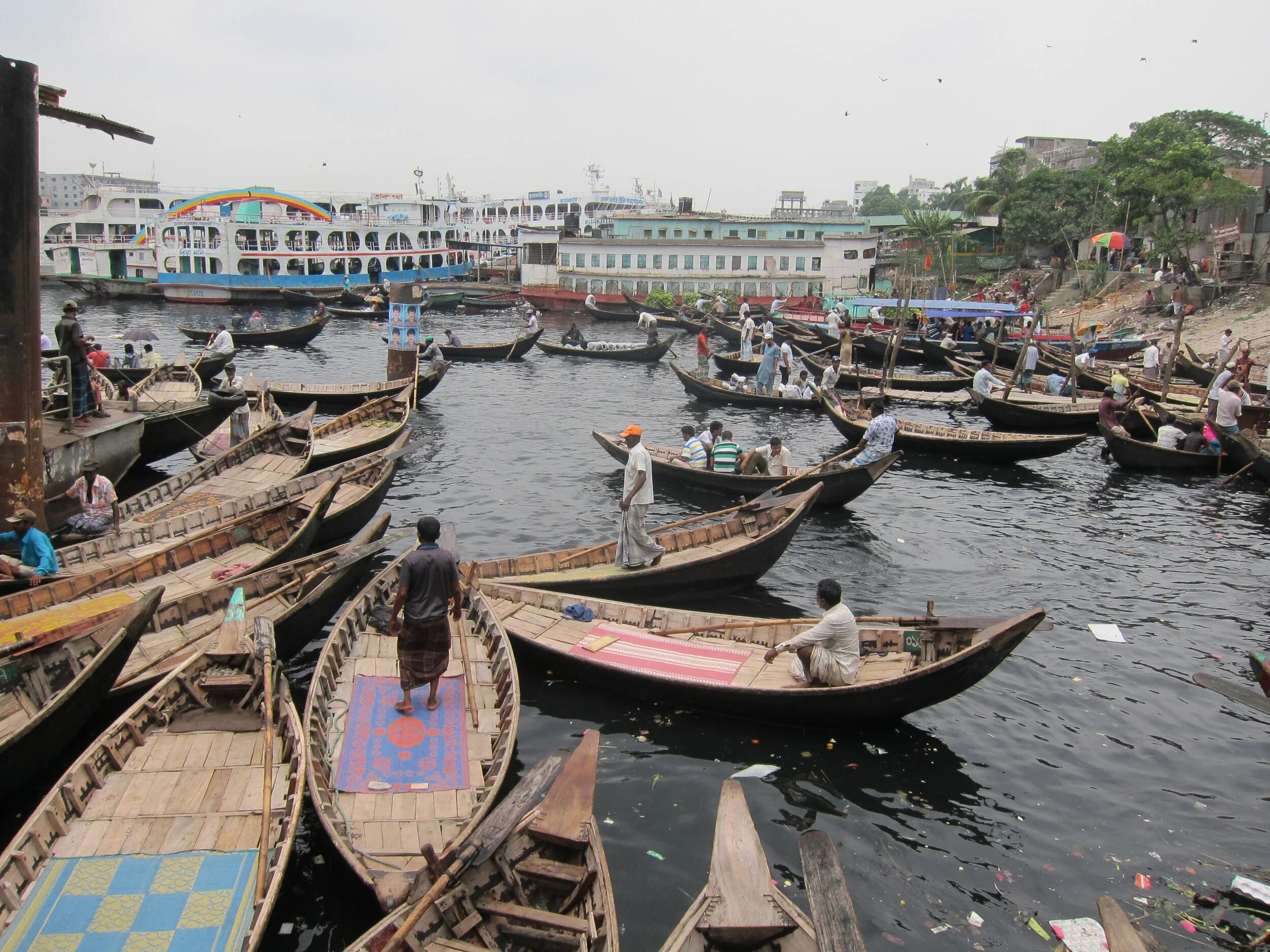
Boats in Bangladesh. Kuruman. CC BY 2.0
Travelers are likely to spend some time in Dhaka, as it is Bangladesh’s capital, largest city and travel hub. The city is a densely populated metropolis with some of the worst traffic in the world. Beyond the hectic rickshaw-filled streets, there are many exciting activities in the Bangladeshi capital, including watching boats dock at the Sadarghat river port, paying a visit to the Ahsan Manzil palace and museum, and touring the Baitul Mukarram Mosque, one of the largest in the world. Dhaka is also a wonderful place to explore traditional markets and sample Bangladeshi cuisine.
3. Cox’s Bazar Beach
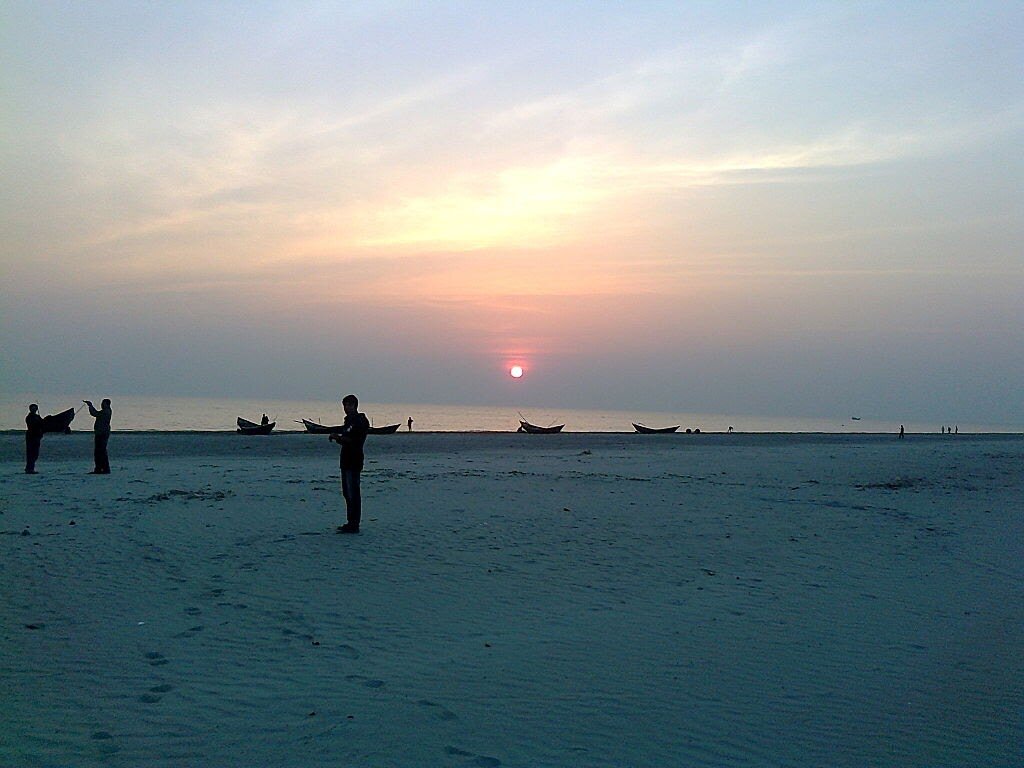
A beach sunset in Bangladesh. Lonely explorer. CC BY 3.0
This is one of Bangladesh’s most beautiful beaches. Stretching over 75 miles, Cox’s Bazar is the longest uninterrupted sea beach in the world. The beach becomes less crowded the farther south one travels down its banks. Off the coast of Cox’s Bazar Beach is Maheshkhali Island, a pilgrimage point for Muslims, Hindus and Buddhists alike. Another nearby location is St. Martin’s Island, the only coral island in Bangladesh. Located at the southernmost tip of the country, St. Martin’s Island provides wonderful swimming and snorkeling opportunities.
4. Panam Nagar

The ghost town of Panam Nagar. Nurul Amin Russel. CC BY-NC-ND 2.0
Located 18 miles southeast of Dhaka, this town was well known for its textile production and Hindu merchant community. Panam Nagar was destroyed in a fire and the town remains deserted to this day. Although the exact dates and cause of the fire are still unknown, the large number of textiles stored in the town’s buildings could likely have caused it.
5. Paharpur

The Somapura Mahavihara monastery in Paharpur, Bangladesh. Stefan Krasowski. CC BY 2.0
Paharpur is one of three UNESCO World Heritage Sites in Bangladesh and was added to the list in 1985. Located in the northern part of the country, Paharpur contains the most important archaeological site in Bangladesh, an ancient Buddhist monastery called Somapura Mahavihara. The monastery is the second-largest structure of its kind south of the Himalayas and contains 177 monastic cells with a large shrine located in the middle. The monastery was a center of learning where the practice of Mahayana Buddhism flourished from the seventh to 12th centuries. It was further known for influencing Buddhist architecture in other parts of Asia, including Cambodia’s Angkor Wat temple. Paharpur is also one of the best examples of pre-Islamic architecture in Bangladesh.
6. Srimangal

A woman picking tea in Bangladesh. Mariusz Kluzniak. CC BY-NC-ND 2.0
Srimangal is a small town located in the northeast of Bangladesh. Well known throughout the country for its tea production, a visit to Srimangal makes an excellent opportunity to learn about one of Bangladesh’s largest industries. Travelers can explore some of the 163 tea plantations that dot Srimangal’s hilly landscape and enjoy local brews straight from the source.
7. Bagerhat

The Shait Gumbad Mosque with 77 domes in Bagerhat. Joe Coyle. CC BY-NC 2.0
The Bagerhat district in the southwestern part of Bangladesh is home to the ancient city of Khalifatabad, which was founded by Turkic general Ulugh Khan Jahan in the 15th century. A UNESCO World Heritage Site, the city contains excellent examples of an early Islamic architectural style known as Khan-e-Jahan. The site includes 360 buildings such as mosques, public buildings, mausoleums, bridges and more. Unfortunately, the city’s location at sea level makes it vulnerable to rising seas, making cultural preservation a huge priority.
From its beautiful beaches to a fascinating history, Bangladesh makes a wonderful destination for travelers ready to visit a less-discovered piece of South Asia.

Megan Gürer
Megan is a Turkish-American student at Wellesley College in Massachusetts studying Biological Sciences. Passionate about environmental issues and learning about other cultures, she dreams of exploring the globe. In her free time, she enjoys cooking, singing, and composing music.
Amid COVID-19, Garment Workers Are Asking Employers to #PayUp
While the COVID-19 pandemic has slowed down many sectors of the economy, online sales have spiked—as well as the vulnerability of many laborers working with little to no safety net.
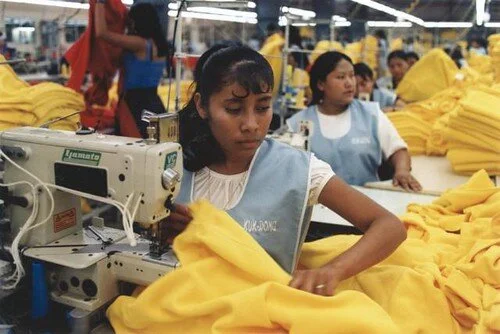
Sweatshop workers mass producing fabrics for below average wages. Marissa Orton. CC BY-SA 2.0.
Since the beginning of COVID-19 lockdowns, e-commerce has reaped significant monetary benefits. In the United States alone, online sales rose 43% in September, totaling $60.4 billion. Though online shops gained countless new customers, not all in the industry were celebrating.
Since March, many frontline workers have been laid off. For example, the American startup company Everlane, a clothing line that promises “radical transparency,” came under fire for terminating workers who attempted to start a labor union amid the pandemic. Despite founder Michael Preysman’s statement that the layoffs were “the hardest decision we’ve ever had to make,” non-management employees called them out. Those who held leadership positions in the company retained most of their salaries.
Across the globe, COVID-19 has weakened both the bargaining power and socioeconomic mobility of garment workers. Its consequences have been especially devastating for those in developing nations. In India, the closure of schools has led around 80,000 children to begin working as laborers. If unaddressed, the pandemic could set the country back decades on child exploitation. With limited options, families are often strong-armed by traffickers into believing their children will lead better lives in the big city. Many never see their families again.
As a European Trade Union Institute article reported, COVID-19 did not break labor rights; it only revealed how broken the system already was. In Leicester, England, predominantly female and migrant sweatshop workers from Eastern Europe, Bangladesh and Pakistan faced wages as low as $4.50 an hour, received threats and humiliation, and were even denied bathroom breaks.. A June report from Labour Behind the Label found that online fashion retailer Boohoo’s Leicester factory was operating at 100% capacity despite lockdown orders. In the same month, the company projected that its shares had increased by 22%.Some feel that fast-fashion workers are stuck in a lose-lose situation. A Bloomberg report found that the closure of roughly 1,090 garment factories in Bangladesh amounted to an economic loss of $1.5 billion. Workers were not entitled to unemployment benefits, rendering them even more vulnerable in the face of pandemic uncertainties. A Solidarity Center article found that because of social distancing measures, workers’ ability to unionize and collectively bargain for their rights was severely limited.
Not all hope is lost, however. COVID-19 has created opportunities for critical change. As online sales have gone up, so has social media usage. In March, after notable labels such as Nike, Gap and Levi’s had canceled billions of orders, the nonprofit organization Remake revealed the plight of garment workers through the #PayUp movement. Stores like H&M and Zara were pressured into compensating their suppliers for orders that had already been produced, passing that money on to workers. While the fight is far from over, garment workers’ future may become brighter as consumers take a longer glance at the fast-fashion industry
How To Get Involved:
The Awaj Foundation is a woman-led organization based on addressing gender-based violence in the garment industry. It supports workers from Bangladesh. For more information on ways to support it, click here.
Based in Los Angeles, the Garment Worker Center aims to restore agency and dignity back to workers currently strong-armed by sweatshop conditions. To learn more, visit its website here.
Rhiannon Koh
Rhiannon earned her B.A. in Urban Studies & Planning from UC San Diego. Her honors thesis was a speculative fiction piece exploring the aspects of surveillance technology, climate change, and the future of urbanized humanity. She is committed to expanding the stories we tell.
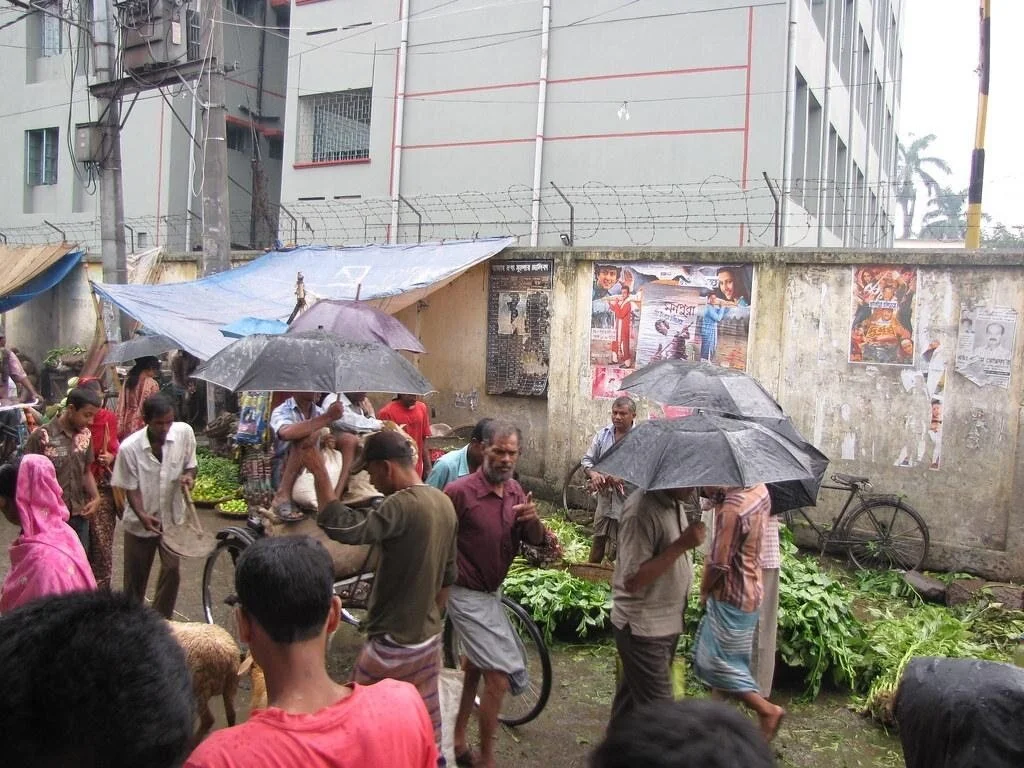
An urban street in Bangladesh. Manbarlett. CC 2.0
The Detrimental Impact of Covid-19 on Developing Nations
The world has dealt with COVID-19 since the beginning of the year with varying countries successfully staving it off. However, the question of how developing countries are doing has crossed the media only a few times. The problem is our inability to know the true extent of their situation since they do not have the same means as more developed countries like ourselves and other impacted countries. Their economic situations are close to being called a crisis while medical care is scarce to come by. In countries like Bangladesh, Nigeria and South Africa, their vulnerability to the virus has increased with the global economic shut-down and sparse supplies.
The Economic Crisis
The biggest issue with developing countries is their reliance on “foreign income and tourism”. This ultimately means that regardless of confirmed COVID-19 cases, they will feel the impact of the virus as the world economy faces major setbacks and in some cases come close to halting as some countries' exports are affected. For example, in Bangladesh “only 15% of Bangladeshi workers make over $6 a day”, meaning very few families are able to support themselves in the event of an economic shut down. The World Bank has sent aid across the globe and plans to send out close to $160 billion dollars of relief money to Africa and countries such as Pakistan, India, Ethiopia and more, hoping to help relieve them of economic stress and strengthen “their national health systems.” An issue that has risen with giving aid to these countries is that their situation is not like the United States of America where we can enforce “social distancing guidelines and then pair them with stimulus packages”. Poorer countries, such as Bangladesh, are more spread out with the majority of their population self-employed or working in informal sectors meaning they are not under the tax and benefits system. They tend to live “hand-to-mouth” instead of pay-check to paycheck. This means they are completely reliant on what they make that day to feed their families and survive. Further complicating the matter, with so few resources spread out across the country, we are unable to find the COVID-19 epicenters of these countries. They lack the proper test kits and quantity, resulting in an inaccurate number of positive COVID-19 cases and too few resources for help and trained professionals.
The Impact on Medical Care
It has been predicted that with the rest of the world’s cases slowly dropping, the new world epicenter for COVID-19 will shift to Africa. Currently, they have “10,000 reported confirmed cases and over 500 fatalities”. While they were not the first to be impacted, their curve of cases has yet to flatten, worrying health officials worldwide. Just this last week, Capetown, South Africa jumped 43% with confirmed cases, alerting the WHO of the rising crisis but no way to determine the true epicenter of the continent. Without proper safety equipment in hospitals, many doctors or nurses try to avoid seeing patients who predict they have the virus, seeing as they won’t be protected themselves. Additionally, there is a severe lack of testing kits available, so they’ve tried to spread them out as much as possible nationwide. A stark example is Nigeria, Africa’s most populous country with over 200 million inhabitants, which has reported almost 900 COVID-19 cases with only 28 confirmed deaths. They have only conducted just over 7,000 tests with only 5,000 of these coming in this past week and being used. This lack of equipment again adds to the ignorance of the true numbers of cases these countries have and how we can help.
Lastly, countries such as South Africa and Bangladesh have an inability to obtain an adequate amount of medical supplies, and the ones they do have are spread so thin that they are hardly useful. Populations are scrambling to seek help, but social-distancing guidelines like we’ve seen in our own country are impossible to implement in countries where most of their population do not live in an urban setting. For example, in Bangladesh, the entire country only has “432 ICU beds with only 110 outside the capital city of Dhaka”. This ultimately means unless the Bangladeshi population lives inside the city, it’s unlikely they will receive the help they need. Already Bangladesh has over 5,000 confirmed cases and over 150 deaths. Their inability to give out adequate healthcare has required donations from all around the world to enable people to get the help they need. Bangladesh, Nigeria and South Africa are only a few examples of the countries who rely on each other to take home food and money to their families, and most do not live in a country that has an organized, official census. This makes it hard for health officials to know how much supplies they need to send to these countries and give them aid.
Implemented Strategies
Initially, their ability to sustain their countries through this pandemic has looked grim, but the world has flooded in to help by donating supplies and tests. For example, in Bangladesh, officials have implemented a survey to try to get a good grasp on the exact number of population while increasing their efforts to educate the general population on what COVID-19 is and how to keep themselves safe. Additionally, they are working on an already established census to call citizens to check in on them, making sure they have the help and resources they need. In other countries like South America and Nigeria, they are currently working on educating their populations and trying to implement as little contact as possible with people not related to each other. At the end of the day, the most that can be done is a step by step process that starts with getting the full scope of what these countries are dealing with. This starts with getting more test kits sent out and more government officials working on getting the exact numbers on a population.
Ultimately, the world has been floored by this pandemic, and each day brings a new challenge. But globally, people are gathering to find ways to help countries who are not as equipped to function as normal, while ensuring the safety of everyone is kept at the forefront of their minds.
Elizabeth Misnick
is a Professional Writing and Rhetoric major at Baylor University. She grew up in a military family and lived in Europe for almost half her life, traveling and living in different countries. She hopes to continue writing professionally throughout her career and publish her writing in the future.
During Floods, Floating Schools Bring the Classroom to Students
Each year, over one-fifth of Bangladesh suffers from flooding. And when water overtakes already struggling roads, much of life is put on hold—including kids’ education. But if children can’t travel to the classroom, architect and entrepreneur Mohammed Rezwan thought, why not have it travel to them? Welcome aboard the Shidhulai Swanirvar Sangstha floating school—a network of boats that’s both school bus and schoolhouse for students ages six to ten in Northern Bangladesh.
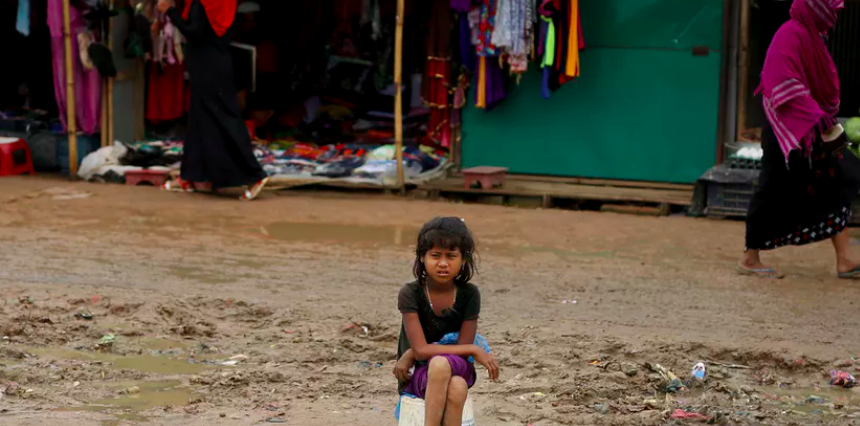
A Rohingya refugee girl sells vegetables in Kutupalong refugee camp, Bangladesh. Access to education is extremely limited in the camps, and most children — particularly girls — receive little to no formal education, Aug. 28, 2018. AP Photo/Altaf Qadri
Without School, A ‘Lost Generation’ of Rohingya Refugee Children Face Uncertain Future
The boy’s eyes lit up when he talked about his dream of becoming a doctor.
Seven-year-old “Mohammad” – not his real name – is a Rohingya Muslim from Myanmar. I met him at a learning center at a refugee camp in Cox’s Bazar, Bangladesh, in early July 2019.
After sharing his aspirations, Mohammed quickly remembered reality.
“I know my dreams will never come true,” he said with a faint smile.
Refugee crisis of global proportions
Mohammed is among the more than 700,000 Rohingya who have taken refuge in Bangladesh after an ethnic cleansing campaign of rape, killing and torture by the Myanmar military in mid-2017. They joined the more than 200,000 Rohingyas who had previously fled Myanmar’s brutal efforts to rid the Buddhist-majority country of this marginalized Muslim minority.
Of the newly arrived Rohingya, three-quarters are women and children, according to the United Nations.
In a noteworthy humanitarian gesture, the Bangladeshi government has given refuge to these persecuted people. Aided by Bangladeshi community organizations, various UN agencies and other international donors, the Rohingya have been receiving shelter, food, clothes and basic health care since the massive exodus in 2017.
This essential care, which cost an estimated US$920.5 million in 2019 represents a gargantuan global effort. Still, the resources are woefully inadequate.
Most Bangladeshi refugee camps are overcrowded and, as a result, unhygienic. Residents survive on the absolute bare minimum of nutrition and other necessities. Monsoon rain, cold and landslides are everyday threats for these Rohingya, as I’ve witnessed firsthand during my visits to Bangladeshi camps in 2017 and 2019.
It is a dismal existence for all. But it is the plight of the roughly 500,000 Rohingya children living in limbo that strikes me as bleakest.
Concerns of a lost generation
Research shows that future of refugee children grows more imperiled the longer they remain out of school.
In many countries that host substantial refugee populations, including Turkey, Lebanon and Uganda, the United Nation’s refugee agency and the United Nations Children’s Fund ensure children receive a quality, full-time education, either at the camps or in nearby public schools.
Even so, just 23% refugee children worldwide are enrolled in secondary school, according to the UN’s High Commission on Human Rights. Just 1% attend university.
Because Bangladeshi authorities have not granted the Rohingya official refugee status and consider them instead “forcibly displaced Myanmar nationals,” the roughly 500,000 Rohingya children in the country have no access to a formal education. Rohingya children are not permitted to attend Bangladeshi public schools.
The United Nations Children’s Fund and its partners offer Rohingya refugees aged 4 to 14 two-hour daily lessons on Burmese, English, math and life skills at about 1,600 learning centers located at the camps. These classes keep about 145,000 Rohingya children – or about 30% of the Rohingya youngsters in Bangladesh – occupied for part of the day but do not provide the kind of formal education that will allow the children to work toward a high school degree and enter the job market.
The camps offer no schooling at all for Rohingya refugee adolescents aged 15 to 18.
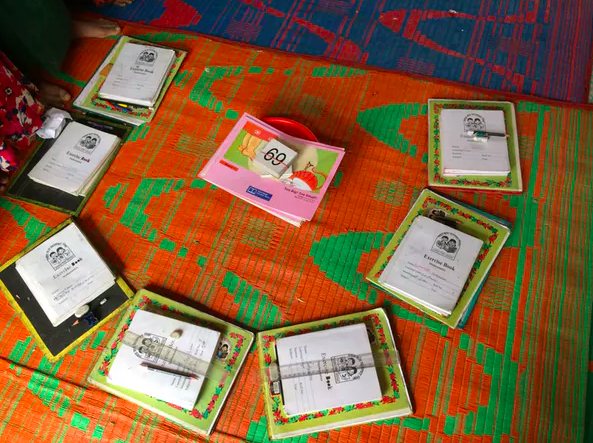
English-language exercise books at a UNICEF-supported ‘learning center’ at one of the Kutupalong refugee camps in Bangladesh. Rubayat Jesmin, Author provided
Some teenagers, mostly boys, have turned to madrassas, or Islamic learning centers, where they can receive a religious education.
The remaining Rohingya children who attend neither UNICEF classes nor madrassas are simply left to fill their own day. At the Rohingya camps, I saw boys working in shops, playing cards or sitting idle at all hours of the day.
When I asked Mohammad what he does when he is not in school, he told me that he “takes care of his family.”
“I play with the other kids, too,” he added with a grin.
Adolescent girls, I learned, are often kept at home by their parents because of the Rohingya’s conservative social and religious norms.
The camps can also be dangerous for girls. Human traffickers have been known to target young Rohingya women, promising them jobs outside the camps. Girls face other forms of violence and human rights abuse at Bangladesh’s camps, too, including child marriage.

Bangladeshi camps for the Rogingyas are typically overcrowded, unhygienic, muddy and prone to landslides. Rubayat Jesmin, Author provided
Rohingya repatriation
Growing up in unstable conditions, with no possibility of study, Rohingya children like Mohammed are at risk of becoming a lost generation.
Their limbo may not last forever. In response to heightened international pressure, Myanmar in November 2017 agreed to take the Rohingyas back starting November 2018.
However, their return was postponed due to protests by the refugees, who feared conditions in Myanmar was not yet safe. The United Nations and other international refugee services have also voiced concern about sending the Rohingya back, saying there was no indication that the Myanmar government had punished the people responsible for the crimes in Rahkine state, nor agreed to give the Rohingya citizenship.
Considered foreigners in both Myanmar, their native country, and Bangladesh, where they’ve sought refuge, the Rohingya Muslims are the world’s largest stateless people.
While the negotiations for their repatriation continue, a generation of traumatized Rohingya children wait for their futures to begin.
RUBAYAT JESMIN is a Doctoral Student at the College of Community and Public Affairs, Binghamton University, State University of New York.
THIS ARTICLE WAS ORIGINALLY PUBLISHED ON THE CONVERSATION
BANGLADESH: Lost in Dhaka
Dhaka is a city in southern Asia and the capital of Bangladesh. It is located next to the Buriganga River. Many palaces and mosques remain from the 17th-century when the city was the Mughal capital of Bengal. The population is around 9 million people.
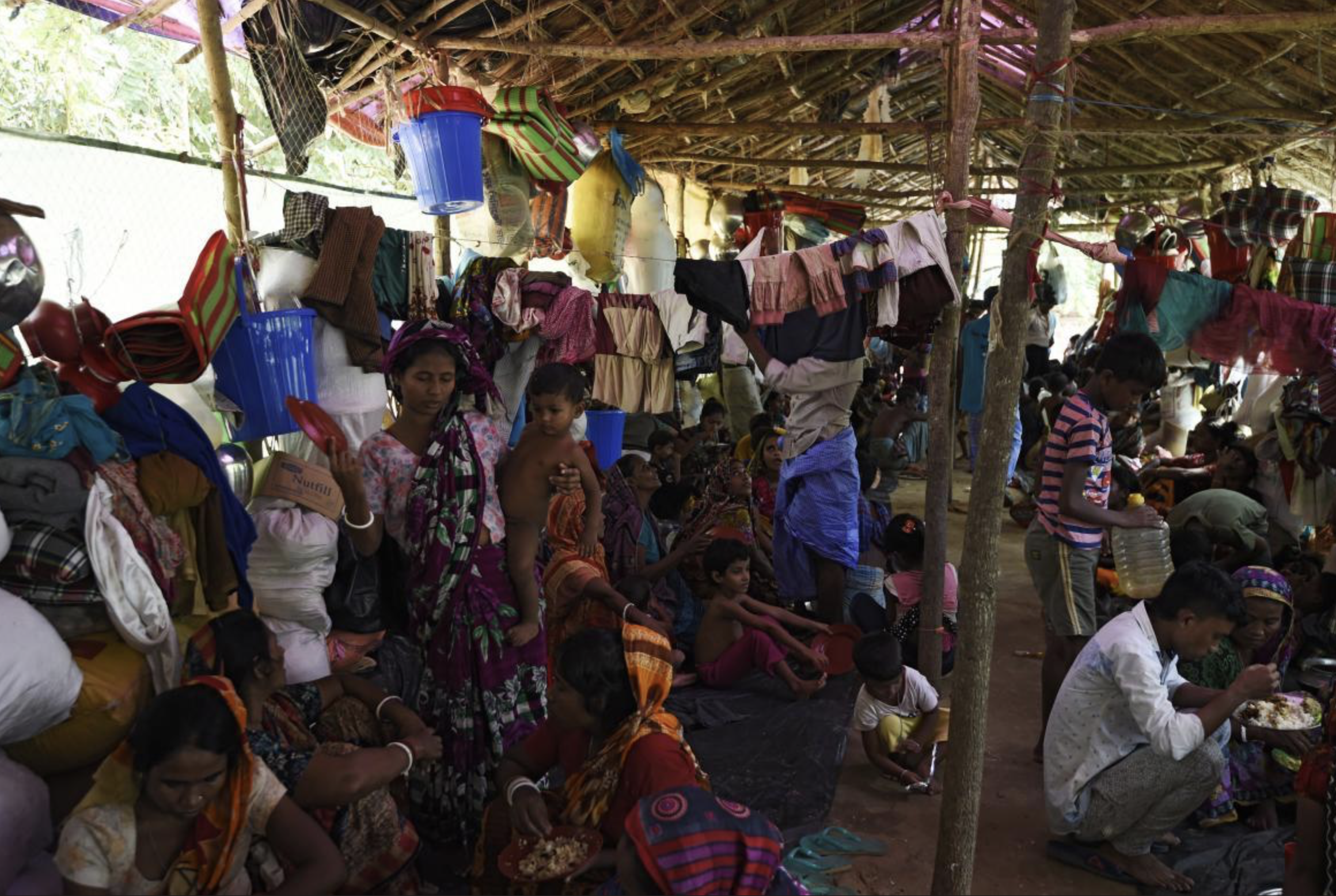
Refugees taking shelter in Southern Bangladesh
Contextualizing Refugees
On 22 May the Rohingya Muslims made the news not for their refugee situation, but for massacring Hindus. The militants responsible are members of the group Arakan Rohingya Salvation Army, also known as Arsa. The news was part of an Amnesty International report on an investigation into the 25 August 2017 attack on the Hindu village, Ah Nauk Kha Maung Seik in Maungdaw (Rakhine state), Myanmar. About 53 villagers were killed. Their proximity to another village, Ye Bauk Kyar, where about 46 were killed around the same time suggests Arsa may have also been responsible. Arsa has denied responsibility for both attacks. Still, it is the survivors of the attack who matter most. Around 500 of the Hindu villagers fled to Bangladesh from Maungdaw where they found assistance from local Hindus. These refugees are just a small part of a global refugee crisis.
The UN defines refugees as people fleeing persecution, war, or violence; often because of religion, ethnicity, or race. Refugees cross international borders, requiring international status as their home country can no longer protect them. As of June 2017, there are 22.5 million refugees around the world. This number includes those in a refugee-like state as well as Palestinian refugees registered by UNRWA. Still the number should be viewed as the best estimate of the world’s refugees as it is difficult to determine refugees living outside of camps; varied opinions exist on who is a refugee; and the variation in granting of refugee status across countries, among other potential discrepancies.
A refugee will spend 26 years on average away from home according to Ai Weiwei’s Human Flow, a 2017 documentary about the global refugee crisis. During those years away, some may seek resettlement in another country. On average, of officially registered refugees, roughly about 1% are resettled or 189,300 (UNHCR 2016). Currently the UN works with 130 countries, many of which work directly with the UNHCR to resettle refugees. The goal for resettlement is integration through self-sufficiency in their new communities. Organizations in host countries work directly with the refugees, such as the International Rescue Committee (IRC) in the United States. The IRC provides various support services—including legal aid, medical aid, English lessons, and family services—that are reflective of general integration assistance found in all host countries.
As a refugee stated in Human Flow, “no one leaves their country lightly.” Going back to the Hindu survivors, we can see the force that often drives a refugee from their home. A few have even returned to Myanmar as part of the controversial repatriation plan between Bangladesh and Myanmar. Those few Hindus represent one journey a refugee might make. And as of the 2016 UNHCR Statistical Yearbook, 552,230 refugees have been able to return home safely. Indeed, the hope of returning home is why most refugees stay close to their home countries. And it is why most refugees do not go to the West for resettlement: the top three host countries according to a 2016 UNHCR report were Turkey, Pakistan, and Lebanon.
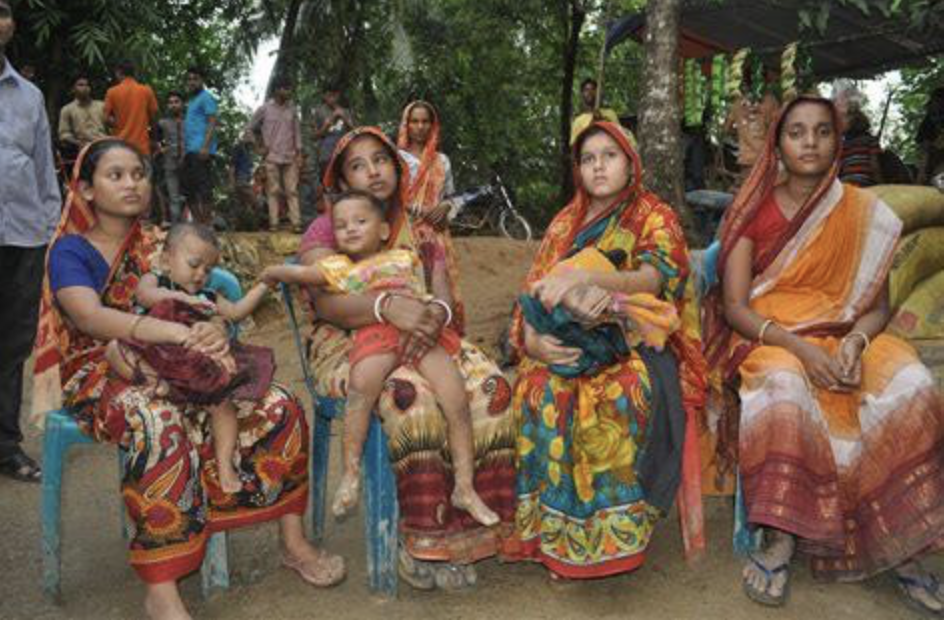
Refugees living in Kutupalong Refugee Camp in Cox's Bazar, Bangladesh
However, the attacks interconnected with wider events as the August massacres were part of deliberate attacks on police posts, which some Rohingya supported and others did not. These spurred reprisal attacks by the Myanmar military and local Buddhist mobs. The attacks displaced many Rohingya; 700,000 have crossed into Bangladesh since August 2017. As various refugee experiences suggest the Rohingya may be in Bangladesh for a few years, decades, or the rest of their life. Only time will tell—and it is that story of waiting that captures the most common theme of a refugee’s experience. The Hindus and Rohingya illustrate how the global refugee crisis has weaved together many individual refugee experiences, connecting one another at different points, together into a “singular” experience. But looking at the individual seams, it is much more complex.
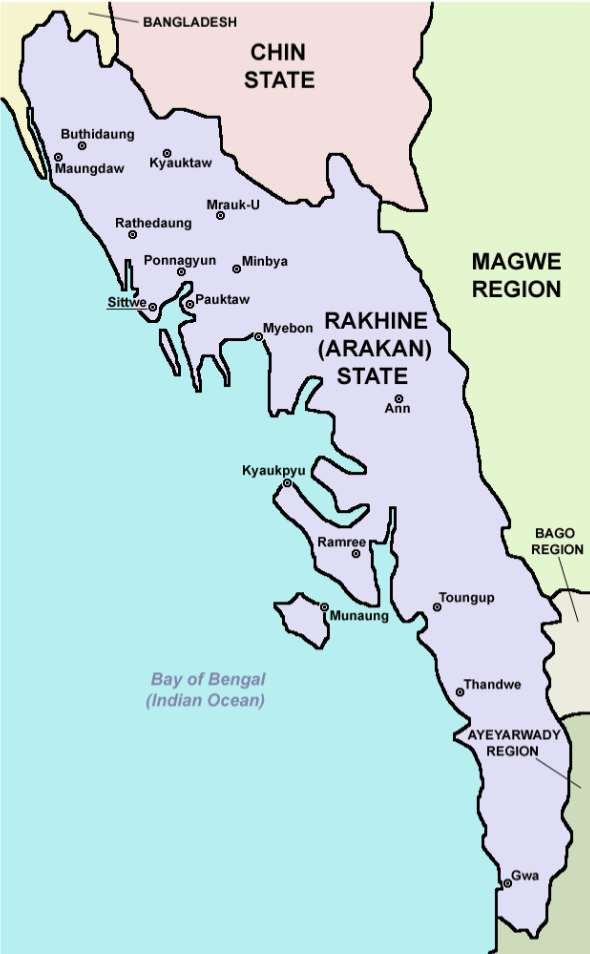
Rakhine (Arakan) State in Myanmar
Teresa Nowalk
Teresa is a student at the University of Virginia studying anthropology and history. In her free time she loves traveling, volunteering in the Charlottesville community, and listening to other people’s stories. She does not know where her studies will take her, but is certain writing will be a part of whatever the future has in store.
Rohingya Testimony
The Rohingya are Muslim Indo-Aryan peoples from the Rakhine State, Myanmar. Human rights organizations have often described Rohingyas as one of the most persecuted minorities in the world. Rohingya Testimony is a film about young Rohingya women, some as young as 14, who shared with the filmmaker their stories of murder and rape. Shot in Teknaf region near the Myanmar/Bangladesh border. December 2016 & January 2017.
Filmmaker: Shafiur Rahman
BANGLADESH/INDIA: From No-Man's Land to the Unknown
For decades, more than 50,000 people have been stranded, without access to basic rights, on tiny islands of no-man’s land locked within India and Bangladesh. 2015 finally saw an end to these enclaves, or ‘chitmahals,’ bringing hope and change to communities living on the world’s most complex border.
The party lasted long into the night across remote patches of northern Bangladesh. As the clock struck midnight people played music, danced and sang using candles for light, and for the first time in their villages they raised a national flag. Similar events were also taking place on the other side of the border in India just a stone’s throw away.
For 68 years, ever since the formation of East Pakistan in 1947 (which later became known as Bangladesh), the residents of one of the world’s greatest geographical border oddities have been waiting for this moment; for their chance to finally become part of the country that has surrounded yet eluded them for so many years.
At 12.01am on July 31st, 2015, India and Bangladesh finally exchanged 162 tracts of land — 111 inside Bangladesh and 51 inside India.
Known in geographical terms as enclaves, or locally as chitmahals, these areas can most easily be described as sovereign pieces of land completely surrounded by another, entirely different, sovereign nation.
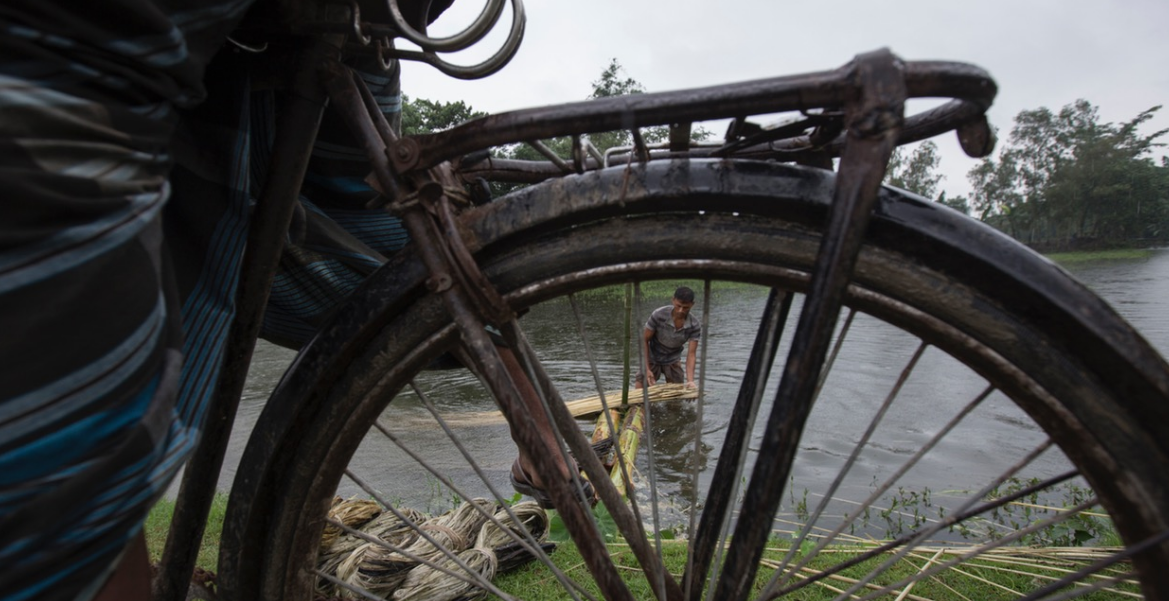
Inside an enclave, a man prepares jute by removing the long, soft vegetable fibres that can be spun into coarse, strong threads, and keeping the sticks. For many enclave dwellers, jute is where most of their income comes from and also what they use to build their houses.
Enclaves aren’t as rare as you may think, and until now this part of South Asia has contained the vast majority. Existing around the world, mostly in Europe and the former Soviet Union, they were once much more prevalent — until modern day cartography and accurately defined borders eliminated many. Some still remain, such as the Belgium town of Baarle-Hertog, which is full of Dutch territory. The locals have turned the unusual border into a tourist attraction. However, for this region of southern Asia, where political and religious tensions run high, the existence of enclaves is not so jovial. Life for those who are from these areas is far harder than in neighbouring villages, only minutes away.
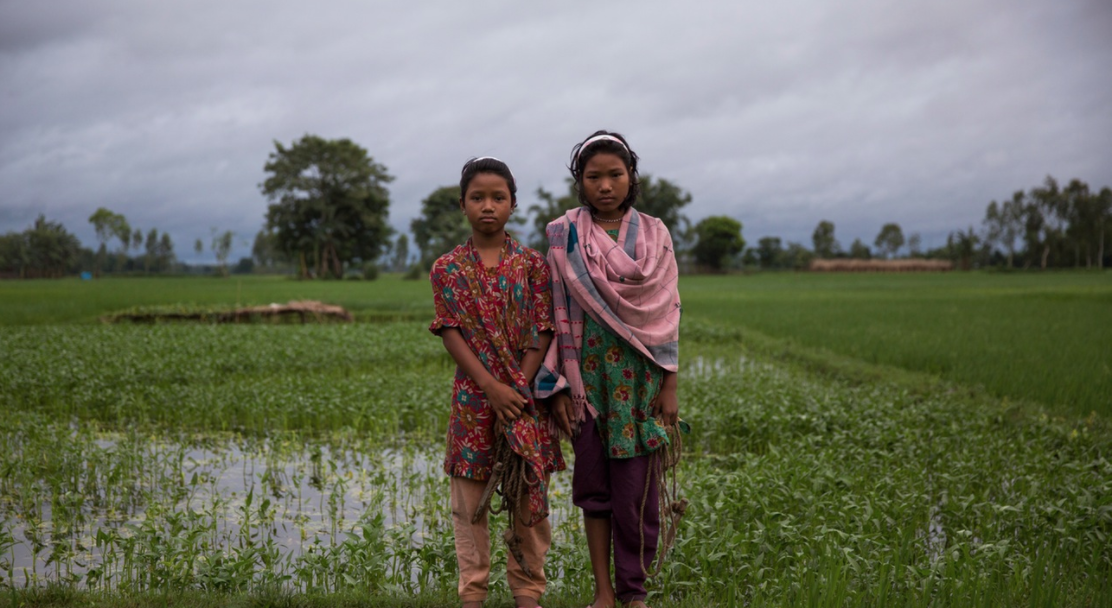
Sisters Lobar Rani Bormoni, 11, and Shapla Rani Bormoni, 12, stand in a paddy field in the enclave in Bangladesh where they born.
“These enclaves are officially recognised by each state, but remain un-administered because of their discontinuous geography. Enclave residents are often described as “stateless” in that they live in zones outside of official administration — since officials of one country cannot cross a sovereign frontier into administered territory,” explains Jason Cons, a Research Assistant Professor at the LBJ School of Public Affairs at the University of Texas, Austin and author of the forthcoming book, ‘Sensitive Space: Fragmented Territory at the India-Bangladesh Border.’
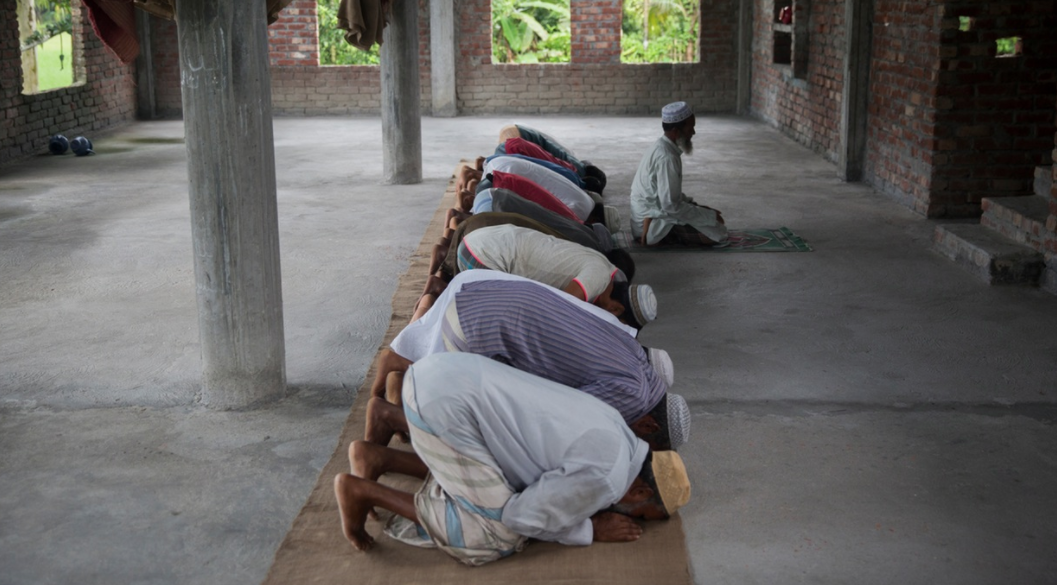
Muslim men from Dhoholakhagrabari enclave pray in their mosque. Mosques are usually the only solid structures that exist inside the enclaves.
Several folktales tell of the origin of these enclaves being the stakes in a game of chess between two feuding maharajas in the 18th century, or even the result of a drunken British officer who spilt spots of ink on the map he drew during partition in 1947. Captivating as these stories are, the most likely explanation dates back to 1711 when a peace treaty was signed between the feuding Maharajah of Coch Behar and the Mughal Emperor in Delhi. After the treaty their respective armies retained and controlled areas of land, where the local people had to pay tax to the respective ruler, thus creating pockets of land controlled by different people.
Prior to 1947, when this region was entirely Indian territory, living in these locally-controlled enclaves made little difference. However, during the drawing of the boundary between India and Bangladesh, the Maharajah of Coch Behar asked to join India — on the condition that he retain all his land, including that inside the newly formed East Pakistan, which his ancestors had rightly won control of over 200 years ago.
So, through no fault of their own, the lives of 50,000 people turned upside down — for decades they have been stranded on islands of no-man’s land.
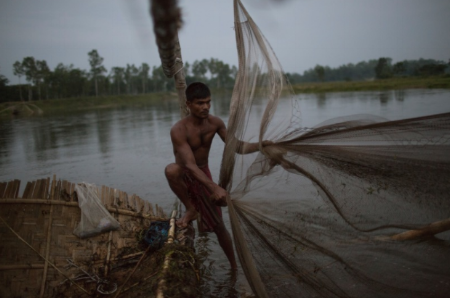
A man fishes at dusk using his large bamboo fish trap. This river exists just outside the enclave but as it’s in Bangladesh territory, enclave dwellers are forbidden to fish here otherwise angering the local fishermen.
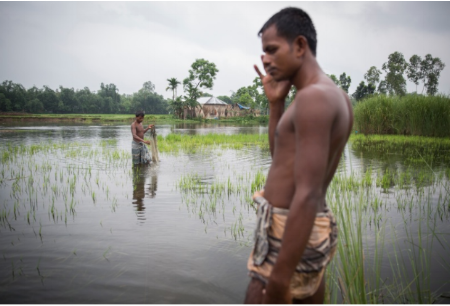
Enclave dwellers fish in a flooded paddy.
During the early 1970s a framework to find a solution to this problem was put in place — called the 1974 Land Boundary Agreement. For forty years, as governments came and went, neither the Indian nor the Bangladeshi politicians were able to agree with their counterparts at the time. And whilst the politicians squabbled, the residents suffered.
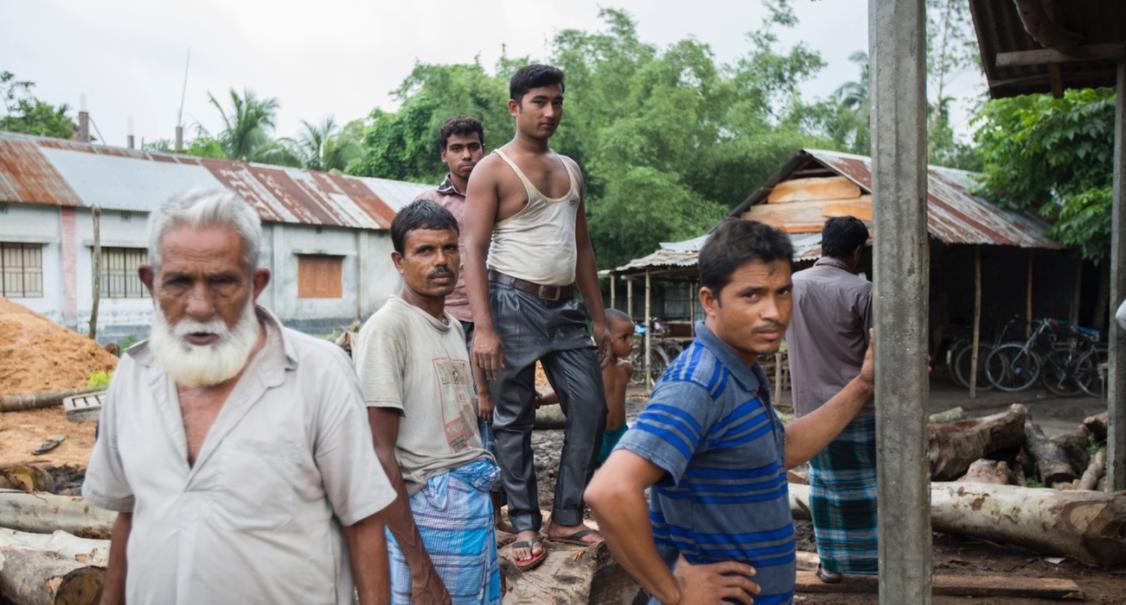
Only informal work, like at this sawmill, is available for enclave dwellers in Bangladesh.
On the ground there are no border fences or security checkpoints, and without realising it, you can walk in and out of India countless times, crossing an international boundary completely obliviously. However, there is a serious lack of infrastructure and this has been one of the most serious problems facing the residents. Paved roads quite literally stop at the boundaries to the chitmahals, as do electricity poles. The enclave inhabitants in Debiganj District of Bangladesh, as non-Bangladeshi citizens, were even barred from sending their children to school, also receiving no state assistance or even the most basic of hospital treatment.
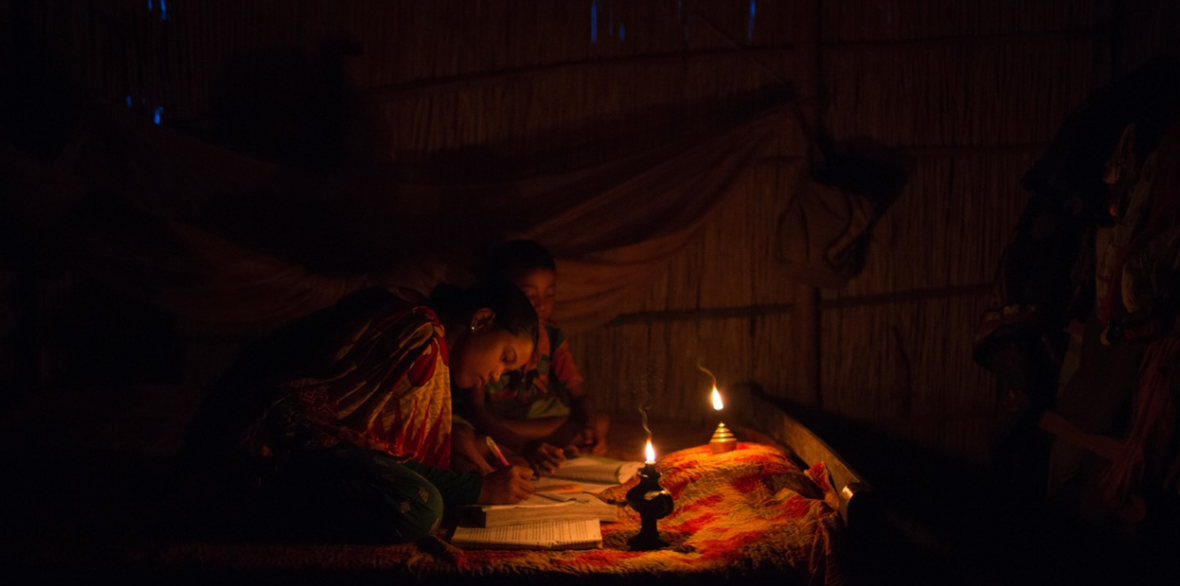
Sheltered within their small bamboo house, located inside the enclave of Dhoholakhagrabari, Eity Rani, 14, and Shobo Rai, 8, carefully do their homework by the light of an oil lamp. Life is much harder for children who are born in enclaves.
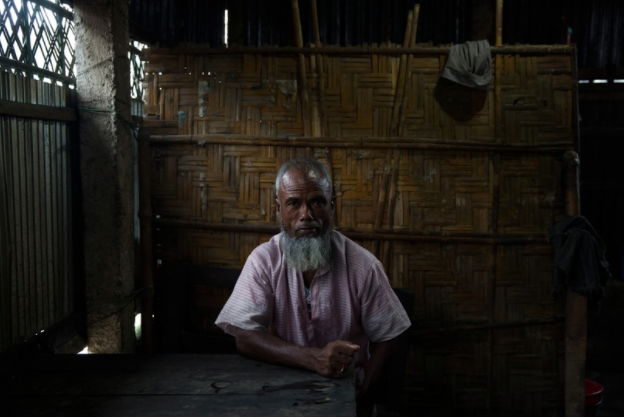
A Bangladeshi man sits in a shop in the market of a small town that sits between enclaves.
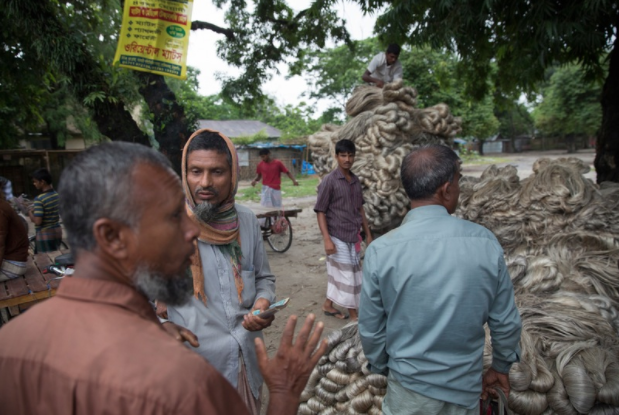
Every Saturday a jute market is held in Debiganj. For the many inhabitants of the enclaves that surround the town, jute is where most of their income comes from.
Wearing just a lungi — a traditional sarong worn around the waist — Sri Ajit Memo is sitting in the middle of a small muddy courtyard, surrounded by houses made of bamboo and jute sticks. At 55 years old, his family have lived in a Dhoholakhagrabari chitmahal for generations. Chewing on the twig of a certain tree that locals here use as an alternative to toothpaste, he explains, “All kinds of problems exist here. The government doesn’t care about us, or our children, and so it’s very difficult for them to even go to school. Honestly, we are Indian, but how can we feel this way when we get no help from them?”
For enclave dwellers on both sides of the Indian-Bangladeshi border, the entitlement to receive even the most basic of rights has eluded them.
Reece Jones, an Associate Professor in Political Geography at the University of Hawai’i Manoa, who has visited many chitmahals on both sides of the border, explains further, “After decades in this situation many people have found ways around it through bribes to officials or through friends who helped them to obtain the documents they needed, such as school enrolment forms for their children. However, the situation was not stable or secure. They were extremely vulnerable to theft and violence because the police had no jurisdiction in the enclaves.”
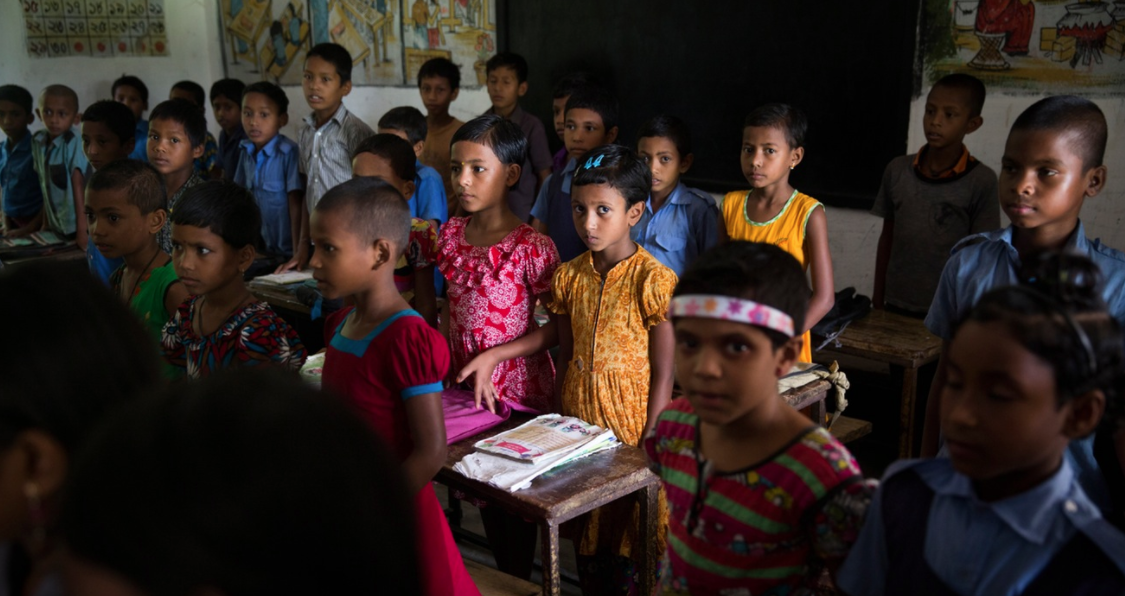
Rupsana Begum, 7, (pink dress) and Monalisa Akter, 7, (orange dress) are from an enclave but were able to come and study at Sher-e-Bangla Government School because their parents managed to acquire fake documents and were able to pay the school.
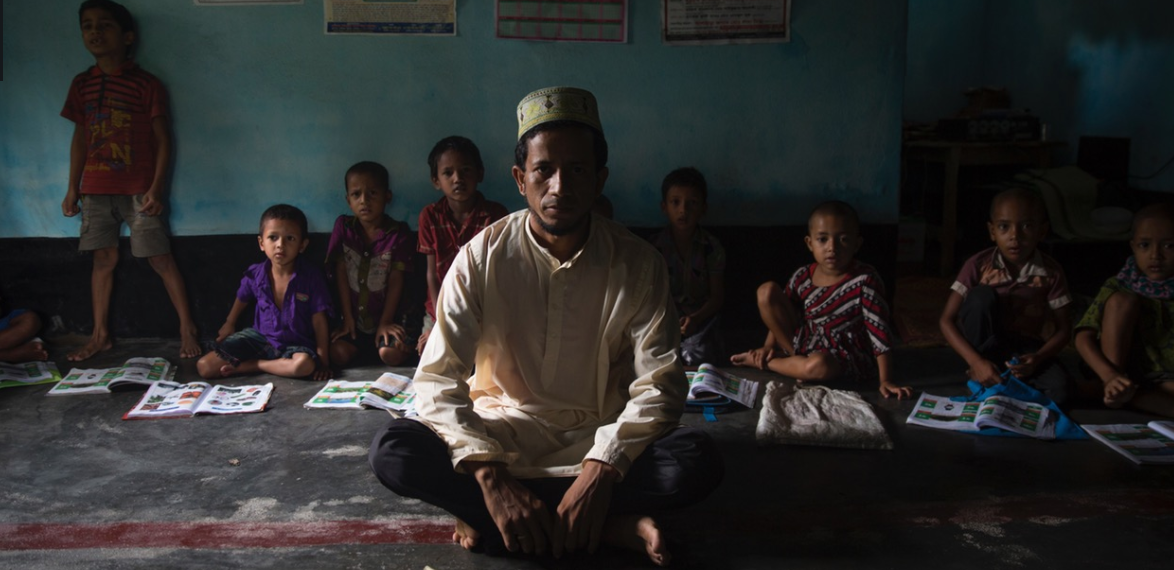
In Dhoholakhagrabari enclave students and their teacher sit in a madrassa class. Because enclave children have a difficult time accessing the education system in Bangladesh the locals of this enclave formed an Islamic Foundation funded on donations.
Today, after decades left living in limbo in these randomly placed no-man’s lands, around 47,000 people on the Bangladeshi side and some 14,000 on the Indian side have finally been given the right make a choice: stay where they have lived for generations with official citizenship of the country that will absorb them, or return to their country of origin.
None of the residents living in Bangladeshi enclaves within India asked to return to Bangladesh and as a result they will now all become Indian citizens. However, on the other side of the border in Bangladesh, whilst the vast majority of the Indian enclave dwellers decided to stay and become Bangladeshi citizens, 979 people requested to return to India. For these families, the enclave saga has yet to end.
Of those 979 individuals, a total of 406 come from Debiganj district. In 2011, a team of Indian officials visited every home in every enclave in Bangladesh and produced the first ever detailed census of all those living within the Indian enclaves. This report formed the basis of all subsequent decisions on the status of each person living in the enclaves.
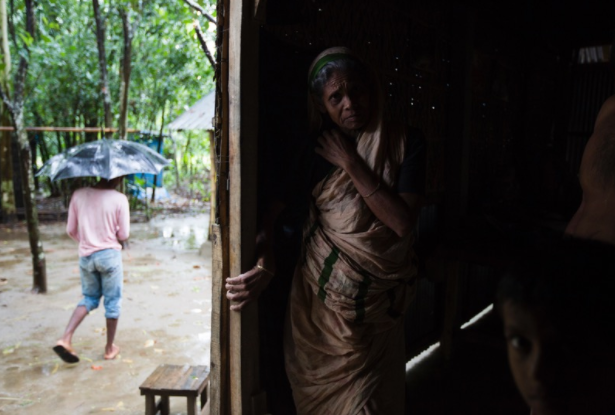
An old lady inside her home, which has no running water or electricity, in Dayuti enclave.
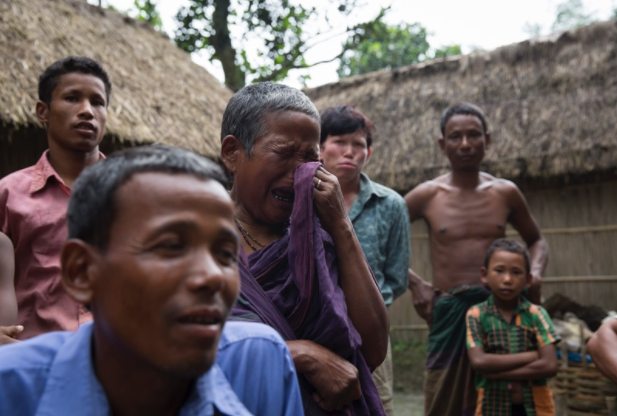
Dhonobala Rani, 70, gets emotional knowing that she has to leave her son (in the blue shirt) behind in Bangladesh, as she takes Indian citizenship.
Several months after my visit to document the enclaves during the final days of their existence, those who had chosen to leave for India finally crossed the border, leaving their homes in Bangladesh forever. In India they were given land and began the process of integrating into Indian society. Those who chose to stay behind in Bangladesh also started to receive such basic rights as eligibility to vote and access to health care.
Let us hope that after decades of struggle on these isolated political islands, the lives of these ex-enclaves dwellers can begin to reach some level of normalcy. In the end, after so many years of uncertainty, the world’s strangest border region has now become a thing of the past.
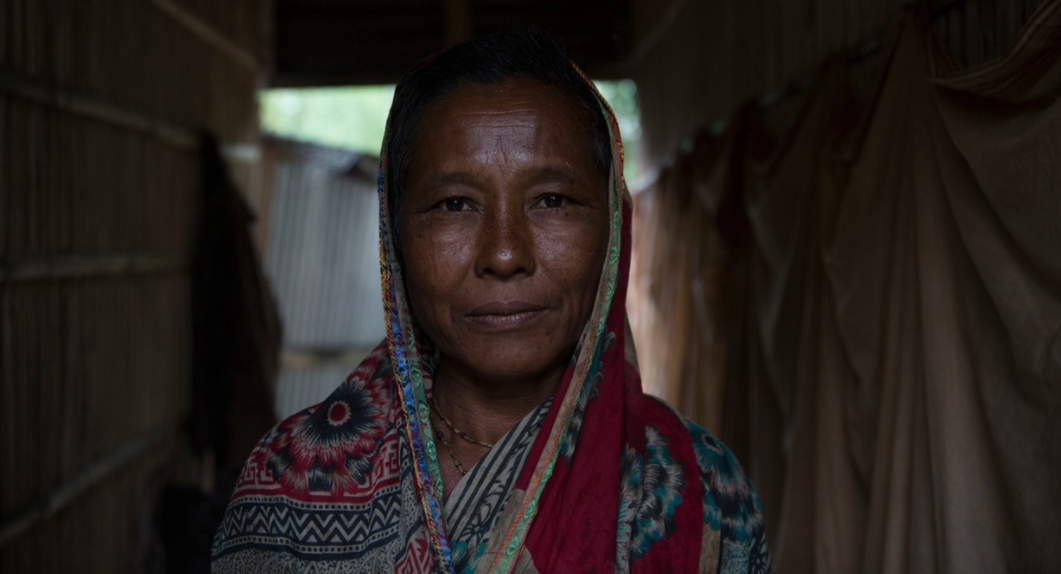
A lady from Ponchoki Bhajini village, in the enclave of Dhoholakhagrabari. She has chosen to leave for India, to start a new life as an Indian citizen.
THIS ARTICLE WAS ORIGINALLY PUBLISHED ON MAPTIA.
LUKE DUGGLEBY
Luke Duggleby is a British freelance documentary and travel photographer living in Bangkok.