
The Tohono O’odham Nation in southern Arizona is under threat as the United States federal government enters their land to construct a border wall, bulldozing sacred sites.
Read MoreA Guide to Backpacking the Grand Canyon’s Havasupai Reservation
A 4-day backpacking itinerary for experiencing the Havasupai Reservation’s natural wonders within the limited time on your permit.
8 Surprisingly Vibrant Desert Destinations
Deserts are much more than the beating sun and rolling sand dunes we often picture. These eight destinations showcase the incredible natural beauty of the desert, from salt flats and chalk formations to mountains and glaciers.
Though deserts are often thought of as just hot, dry expanses of sand, they come in a variety of climates and landscapes and hold some of the world’s most fascinating natural formations. Deserts “are areas that receive very little precipitation,” making them arid but not necessarily hot and sandy. Many deserts are mountainous, and others are large expanses of rock or salt flats. Though their arid environment makes water in deserts scarce, they are far from lifeless. Plants and animals, including humans, have adapted to desert life. One-sixth of the Earth’s population lives in deserts, which are found on every continent.
These eight desert destinations range from freezing to boiling in temperature and are all unique, with their own attractions and plant and animal life. Each of these stunning deserts is worth a visit, and they may change your opinion of the desert as a stark, lonely place to one of beautiful landscapes blooming with culture, history and life.
White and Black Deserts, Egypt
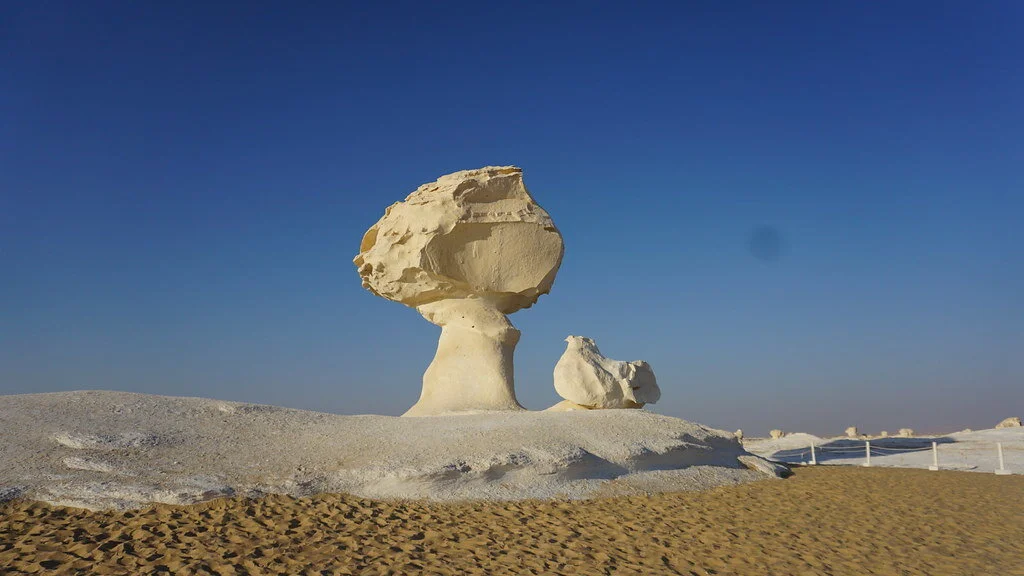
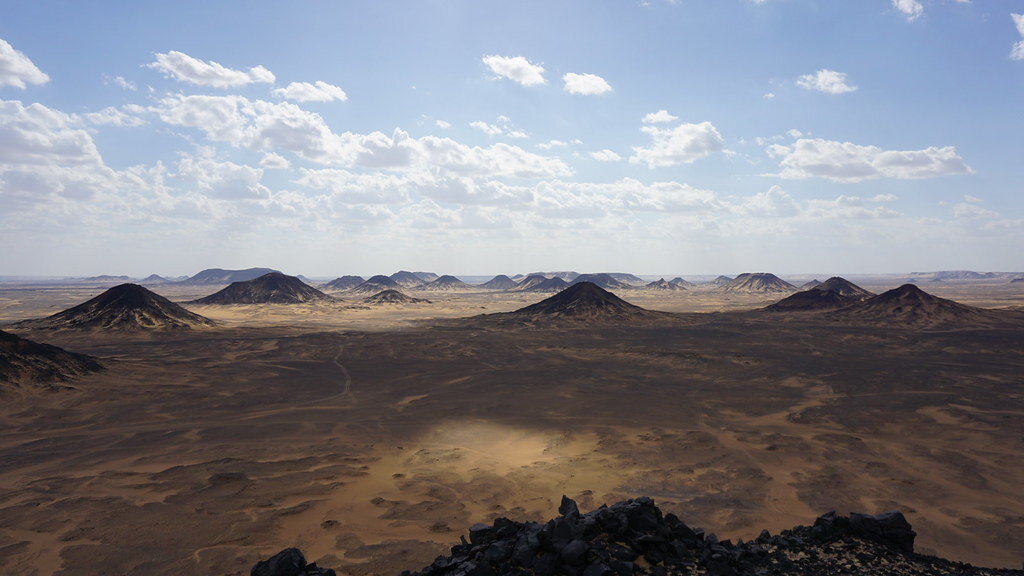
Located just a few hours from Cairo, Egypt’s White and Black deserts are two stunning and underappreciated visitor attractions. The White Desert is located in the Farafra Depression, a section of Egypt’s Western Desert, and boasts some of the most unique geological landscapes in the country. Incredible wind-carved white chalk formations rise from the sand in the shapes of towering mushrooms and pebbles, giving the White Desert its name. The White Desert stretches over 30 miles, and the most visited area is the southern portion closest to Farafra. To the north of the White Desert is the Black Desert, where volcanic mountains have eroded to coat the sand dunes with a layer of black powder and rocks. In the Black Desert, visitors can climb up English Mountain and look out over the landscape. The Egyptian Tourism Authority recommends booking a tour to explore the deserts in depth, and travelers can even stay in the White Desert overnight.
Joshua Tree National Park, California
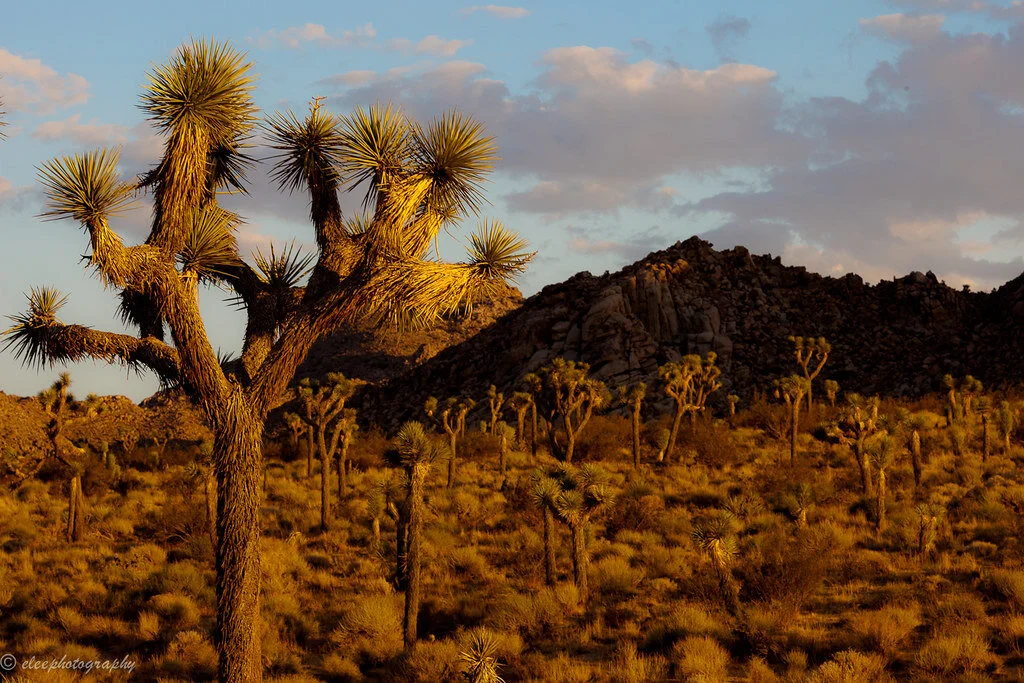
Joshua Tree National Park in Southern California is where two different desert ecosystems meet. Parts of the Mojave and the Colorado deserts are both found in Joshua Tree, along with a distinctive variety of plant and animal life. The Joshua tree, the park’s namesake, is the most identifiable of the plants, with its twisted, spindly branches and spiky clusters of greenery. Some of the park’s most popular attractions are Skull Rock; Keys View, a lookout with views of the Coachella Valley and the San Andreas Fault; and Cottonwood Spring Oasis, which was a water stop for prospectors and miners in the late 1800s. Joshua Tree National Park has roughly 300 miles of hiking trails for visitors to explore. The park is open 24 hours and can be visited at any time of the year, but visitation rises during the fall due to the cool weather and is at its height during the wildflower bloom in the spring.
Atacama Desert, Chile
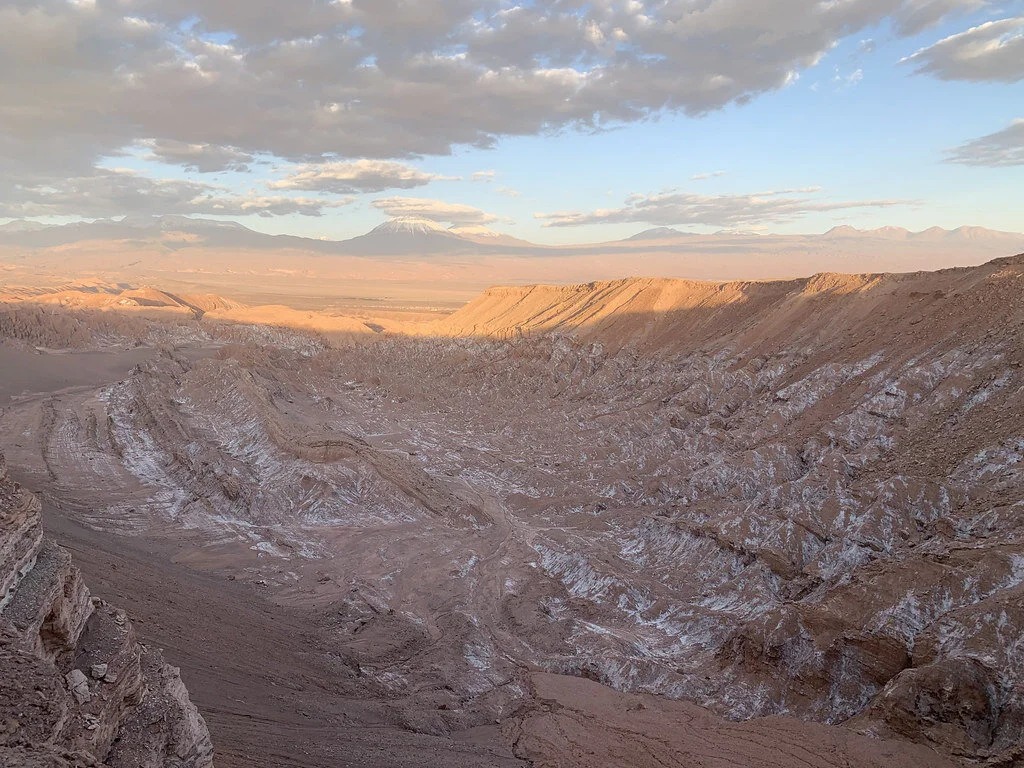
Trips to the Atacama Desert in northern Chile are likened to visiting Mars on Earth. The dry, rocky terrain is so similar to that of Mars that NASA tests its Mars-bound rovers here. The Atacama Desert, the driest desert on Earth, spans over 600 miles between the Andes and the Chilean Coastal Range. Some weather stations set up in the Atacama have never seen rain. Despite its dryness, the desert is home to thousands of people, as well as plants and animals. People have been living in the Atacama Desert for centuries; mummies were discovered in the Atacama dating back to 7020 B.C., even before the oldest known Egyptian mummies. Attractions in the Atacama Desert include El Tatio geyser field, the Chaxa Lagoon, the Atacama salt flats, and sand dunes over 300 feet tall. The Atacama Desert is also said to have some of the clearest night skies in the world, making it perfect for stargazing. It is best to avoid a trip to the Atacama during the summer months, as the high temperatures make for a sweltering visit.
Salar de Uyuni, Bolivia
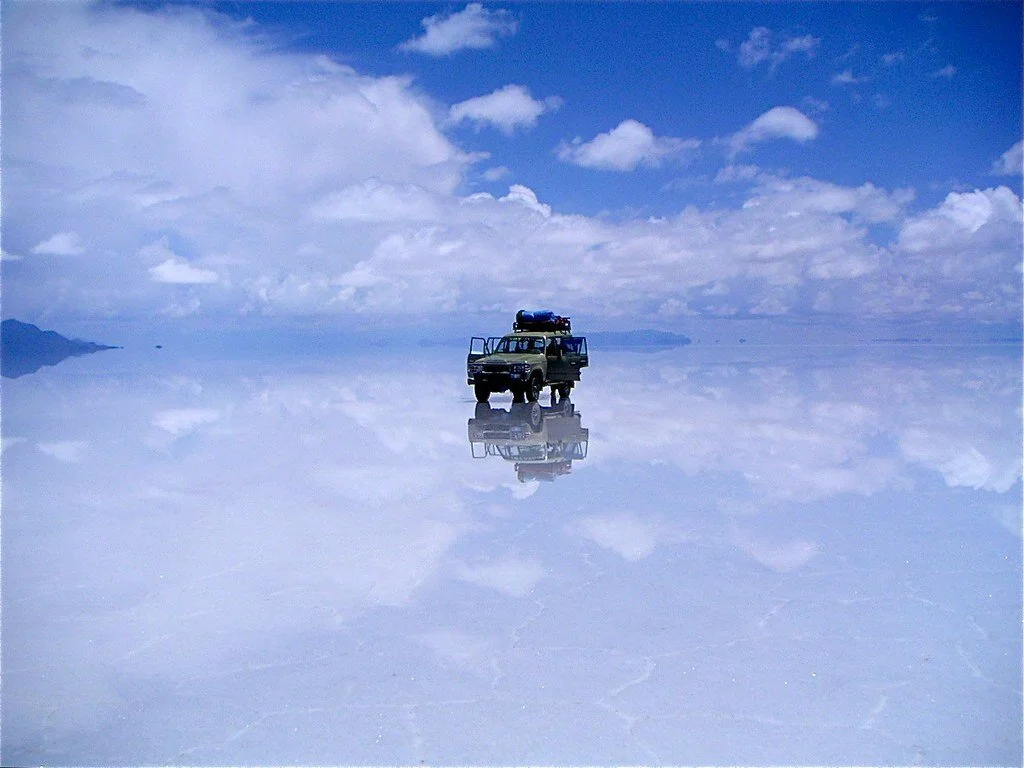
The world’s largest salt flat, Salar de Uyuni, covers 3,900 square miles in the southwestern corner of Bolivia. Salar de Uyuni is so large it can be seen from space and holds an estimated 10 billion tons of salt. Beneath the salt flat is approximately 70% of the world’s lithium reserves. This lithium is carefully extracted and used for powering laptops, electric cars and smartphones. Salar de Uyuni is surrounded by scenic lakes, geysers and rock formations, and is one of the world’s most beautiful and untouched natural landscapes. Tours of Salar de Uyuni take visitors to the Valley of Rocks; Morning Sun, which is home to geysers and mud pots; Colchani, a salt-processing village; and the Polques Hot Springs, where travelers can soak in warm thermal water. The landscape of Salar de Uyuni changes based on the seasons, so travelers should plan their visits around what they want to see. From July to October, access to all sites of Salar de Uyuni is unrestricted, but during the rainy season from December to April, visitors may be able to witness the salt flat’s famous mirror effect, where a thin layer of water over the salt transforms the land into the world’s largest mirror.
Tanque Verde Ranch, Arizona
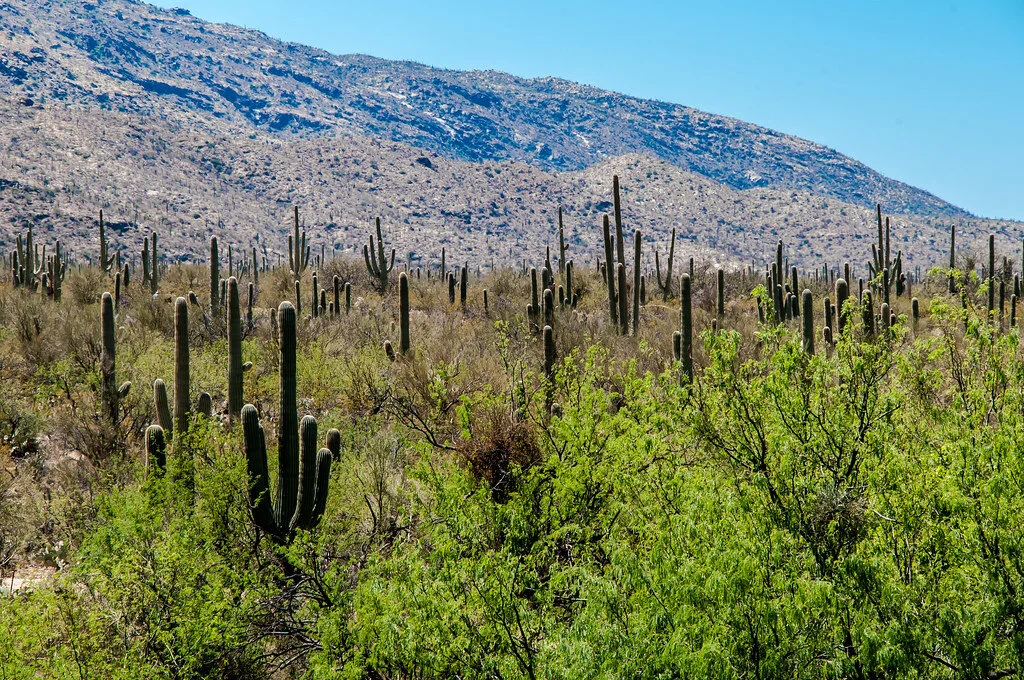
Located just outside of Tucson, Arizona, near Saguaro National Park and the Rincon Mountains, Tanque Verde Ranch gives visitors “the ultimate dude ranch experience.” The ranch sprawls over 640 acres and stocks over 150 horses. Visitors to the ranch can get a real-life cowboy experience, including horseback riding and team penning. Riders of all experience levels will find something to do at Tanque Verde, where visitors can take beginning, intermediate and advanced lessons and then go on a sunrise or sunset trail ride through the Arizona desert. Tanque Verde Ranch offers kids’ riding activities too, as well as activities for non-riders such as yoga, mountain biking, fishing, swimming and pickleball. Visitors should pack long pants and closed-toe shoes if they plan to ride, and casual wear is appropriate for all non-riding times. Trips to the ranch usually last around four days, and visitors stay on the property. Tanque Verde Ranch is open to visitors year-round.
Gobi Desert, Mongolia
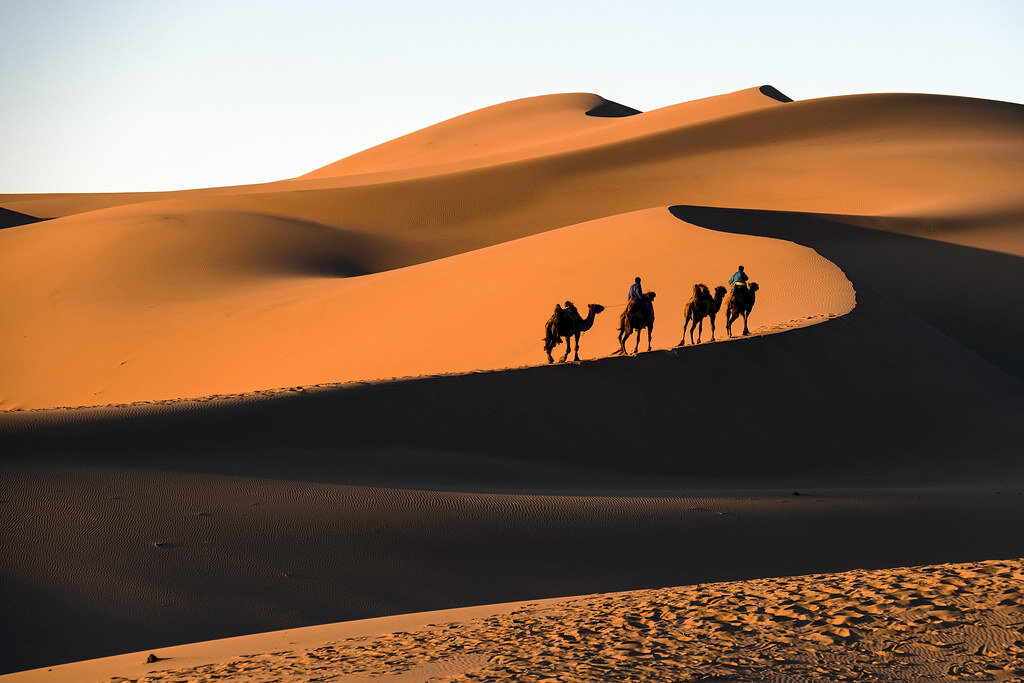
Spanning most of southern Mongolia and its border with China, the Gobi Desert contains stunning views and years of history. The region was once populated by dinosaurs, and some of the best-preserved fossils in the world were found near the Flaming Cliffs of Bayanzag. The Gobi Desert showcases a variety of natural beauty, from towering sand dunes to incredible white granite formations. Dry desert plants that come to life after rain make the Gobi unique, as well as ”saxaul forests” made up of sand-colored shrubbery. Visitors to the Gobi Desert should explore the Khongor Sand Dunes, an area that offers rocky and mountainous terrain in the south, dry and barren terrain in the center, and several oases in the north. Other major attractions are the Flaming Cliffs of Bayanzag, where red clay seems to glow in the sun, and the Gobi Waterfall, which looks like a city in ruins but is a completely natural formation. The best time to visit the Gobi Desert is either in late spring or in autumn, when the weather is neither too hot nor too cold.
Nk’Mip Desert, Canada
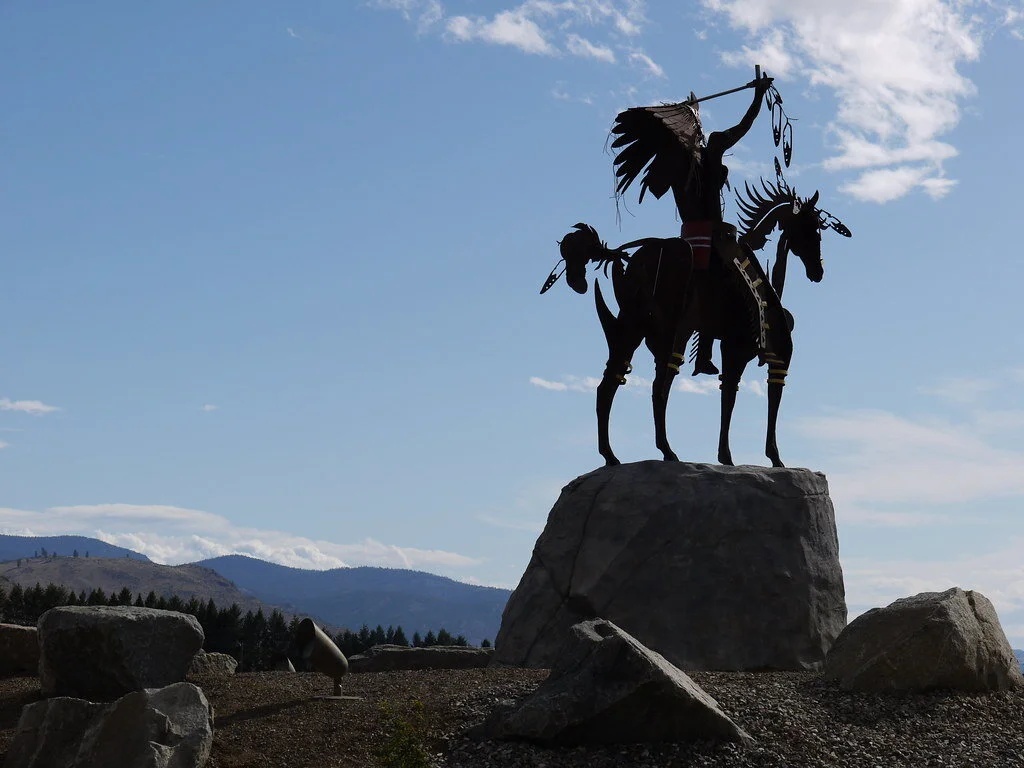
Also called the Okanagan Desert, Canada’s Nk’Mip Desert contains the most endangered landscape in Canada. Located in Osoyoos in British Columbia, the Nk’Mip Desert Cultural Center is a 1,600-acre area of the Okanagan Desert managed by the Osoyoos Indian Band, and is the only fully intact area of desert in Canada. The desert is situated in a semiarid microclimate. The cultural center was designed to be eco-friendly and resembles the traditional winter homes of the Osoyoos Indian Band. Visitors can explore the desert on walking trails, which are surrounded by sage, prickly pear cactuses and antelope brush, as well as sculptures of desert creatures and native peoples by Smoker Marchand. The trails take visitors through a traditional Osoyoos village, where they will find a traditional sweat lodge and pit house. Many visitors prefer to explore Nk’Mip Desert in the summer due to the region’s relatively cold winters.
Patagonian Desert, Argentina and Chile
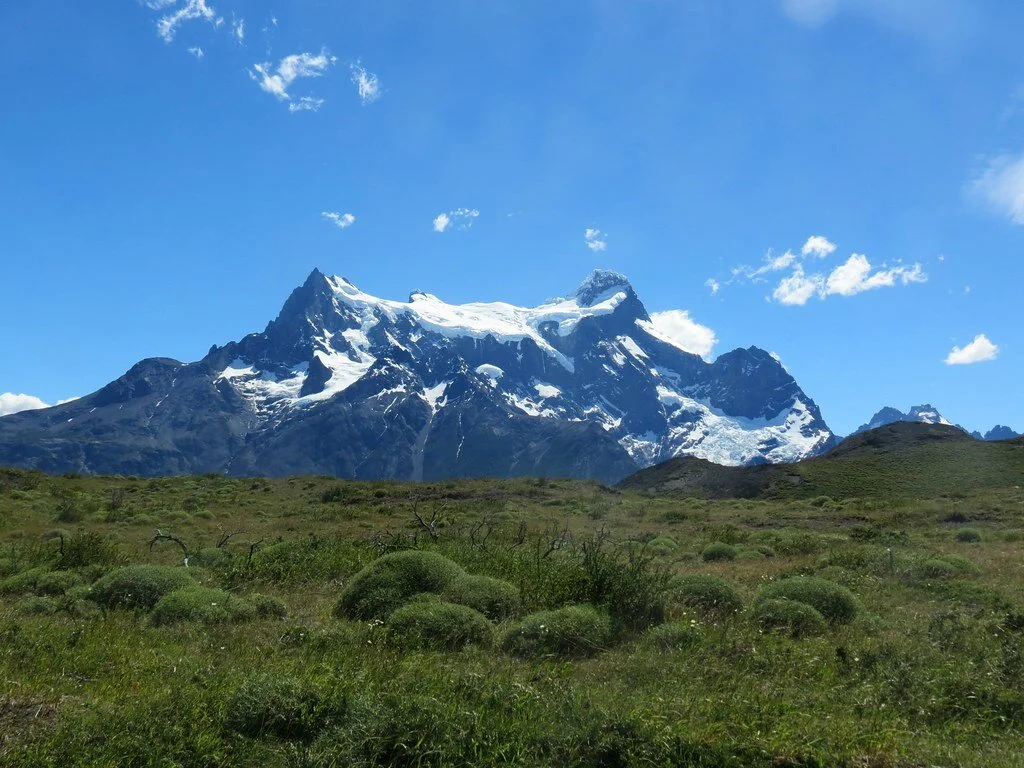
The Patagonian Desert is South America’s largest desert and the seventh-largest in the world. It covers parts of southern Argentina and Chile, and is a cold desert, sometimes reaching a high temperature of 68 degrees Fahrenheit. The Patagonian Desert is home to two national parks: Torres del Paine National Park in Chile and Los Glaciares National Park in Argentina. Torres del Paine and Los Glaciares aren’t typical desert environments, but since the Patagonian is a cold desert, its landscape is different from that of most deserts. Before the Andes were formed, the Patagonian Desert was likely covered by temperate forests, so the region containing the desert, Patagonia, is extremely ecologically and geographically diverse. Torres del Paine National Park is known for its towering granite structures, which were shaped by glaciers. Los Glaciares is home to large glaciers, as well as scenic mountains, lakes and woods. The Cueva de las Manos, or “Cave of Hands,” is a series of caves in Argentinian Patagonia which are filled with paintings of hands dating back to 700 A.D., likely made by ancestors of the Tehuelche people. Tehuelche people live in Patagonia today, some still following a nomadic lifestyle. The best time to visit Patagonia is generally said to be in the summer (December to February), when the days are warm and the fauna is in full bloom, but there are merits to exploring the area at all times of year.

Rachel Lynch
Rachel is a student at Sarah Lawrence College in Bronxville, NY currently taking a semester off. She plans to study Writing and Child Development. Rachel loves to travel and is inspired by the places she’s been and everywhere she wants to go. She hopes to educate people on social justice issues and the history and culture of travel destinations through her writing.
10 Isolated Travel Destinations in the US
Thinking about your next trip once the pandemic eases? This year, try one of these remote spots where isolation will be the theme. From Maine to Montana, explore nature free from crowds.
Read More
Hip-hop officially became the most popular music genre in 2018 and continued its reign in 2019, according to Nielsen Music. Lev Radin/Shutterstock.com
Why Hip-Hop Belongs in Today’s Classrooms
When Cassie Crim, a high school math teacher in Joliet, Illinois, introduced herself to her advanced algebra students in 2017, she did it through a rap video.
Using a rendition of Cardi B’s “Bodack Yellow,” renamed “Codack Yellow,” Crim referenced math terms and laid down classroom expecations:
“These exponents, these is ratios, these is power rules Algebra and a lil’ trig, I don’t wanna choose And I’m quick to take a couple (points) off so don’t get comfortable”
With rap music continuing to rule as America’s most popular music genre for a second straight year in 2019, according to Nielsen Music’s annual report, it makes sense for educators to use rap music to reach students who might otherwise not find a subject relevant. And Crim is by no means the only teacher who is doing just that.
In Pasadena, California, Manuel Rustin, a social studies teacher at John Muir High School, uses rap songs to get students to make meaning of current events and history through a course entitled “Urban Culture and Society.”
At Detroit’s Frederick Douglass Academy, Quan Neloms has students search the lyrics of their favorite rap songs for “college-level vocabulary and references to key events and concepts from American history.”
Collectively, the three teachers represent part of a new generation of educators who embrace a form of teaching known as Hip Hop Pedagogy. It’s a form of teaching that takes the most popular genre of music in the U.S. and uses it to foster success in the classroom.
But is it paying off?
As one who has taught Hip Hop Pedagogy courses to K-12 teachers and instructors in higher ed for the last 10 years, I believe hip-hop has the potential to connect students to important subjects they might otherwise dismiss. But it all depends how it is done.
In my Hip Hop Pedagogy courses, K-12 teachers and college instructors learn how to tap into the richness of hip-hop culture to engage students in topics that range from Shakespeare to neuroscience. But I also stress the need to be authentic – in other words, don’t lie about where you are from – and steer clear of gimmicky hip-hop instructional strategies, such as parroting hip-hop lingo out of context, or showing a random rap video that has nothing to do with the course subject.
Hip-hop through the years

Hip-hop scholar Marc Lamont Hill. Wikimedia Commons
Hip-hop in America’s classrooms is not new. For the past decade or two, scholars such as Marc Lamont Hill, Chris Emdin and Jeff Duncan-Andrade have explored the impact and effectiveness of hip-hop in educational settings.
Collectively, their research has found that hip-hop can be used to teach critical thinking skills, critical literacy, media literacy skills, STEM skills, critical consciousness and more.
Hip-hop has made significant inroads into higher education as well.
Hip-hop in higher ed
Hip-hop academic scholarship goes back at least as far as Tricia Rose’s groundbreaking 1994 book, “Black Noise: Rap Music and Black Culture in Contemporary America.” Since then, numerous hip-hop education books have been written. More than 300 colleges and universities have offered courses on hip-hop. The University of Arizona offers a minor in Hip Hop Studies, and McNally Smith College in Saint Paul, Minnesota, offers a hip-hop diploma, which includes 45 credits and three semesters of hip-hop music production, language and history courses.
These developments are no light feat. In order for hip-hop to reach the level of prevalence that it enjoys on today’s educational landscape – at least 150 educators at the K-12 level were using hip-hop in their class in 2011, the last time a hip-hop education “census” took place – it had to overcome the skepticism of critics who questioned its validity in educational spaces. How would hip-hop explain its controversial history of glorifying violence, consumption and misogyny? Is hip-hop music appropriate for classrooms?
But hip-hop, despite what some may view as its flaws, is a mirror of the complexity of society. Hip-hop did not invent violence, excessive consumerism and mistreatment of women. What it does is provide a platform to talk about these issues.
Breaking it down
That’s what Rustin, the social studies teacher in Pasadena, did when he used rapper Childish Gambino’s provocative video “This is America” to get students to critically analyze the state of affairs in American society. As one student stated in an article about watching the video in class, “It relies on the shock value of violence and capitalizes on our society’s growing numbness to seeing black bodies being brutalized – it’s exploitative.”
Drawing conclusions from hip-hop lyrics requires a certain level of critical analysis, one of the course expectations. Thus, in line with state education standards, Rustin’s course requires college-level writing, reading and critical thinking. Alums of Rustin’s class have indicated that discussions in the class not only increased their critical thinking skills but prepared them for college courses.
Other teachers who use hip-hop in the classroom have achieved similar results. For instance, Crim, the Joliet math teacher, said she noticed improved student engagement after her video, as well as “an increase in performance from one unit test to the next.”
Neloms, the Detroit educator who had his student search rap songs for college level vocabulary, did so after only 33 percent of his students passed a vocabulary exam. After he introduced his class to Rhymes with Reason, an “interactive online series that teaches college-level vocabulary and U.S. history concepts using hip-hop lyrics” rooted in African American speech, Neloms documented a “dramatic increase” in his students’ test scores.
I think similar results could be achieved by more teachers if they tap into the richness of hip-hop culture to reach today’s students. Many students are already forming their views of society and the world based on the lyrics of their favorite rap artists. It only makes sense to infuse what they’re already listening to into the class so that – at the very least – there’s a common point of reference.
Nolan Jones is a associate Adjunct Professor, Mills College.
THIS ARTICLE WAS ORIGINALLY PUBLISHED ON THE CONVERSATION