
By Ellie Chase
A 4-day backpacking itinerary for experiencing the Havasupai Reservation’s natural wonders within the limited time on your permit.
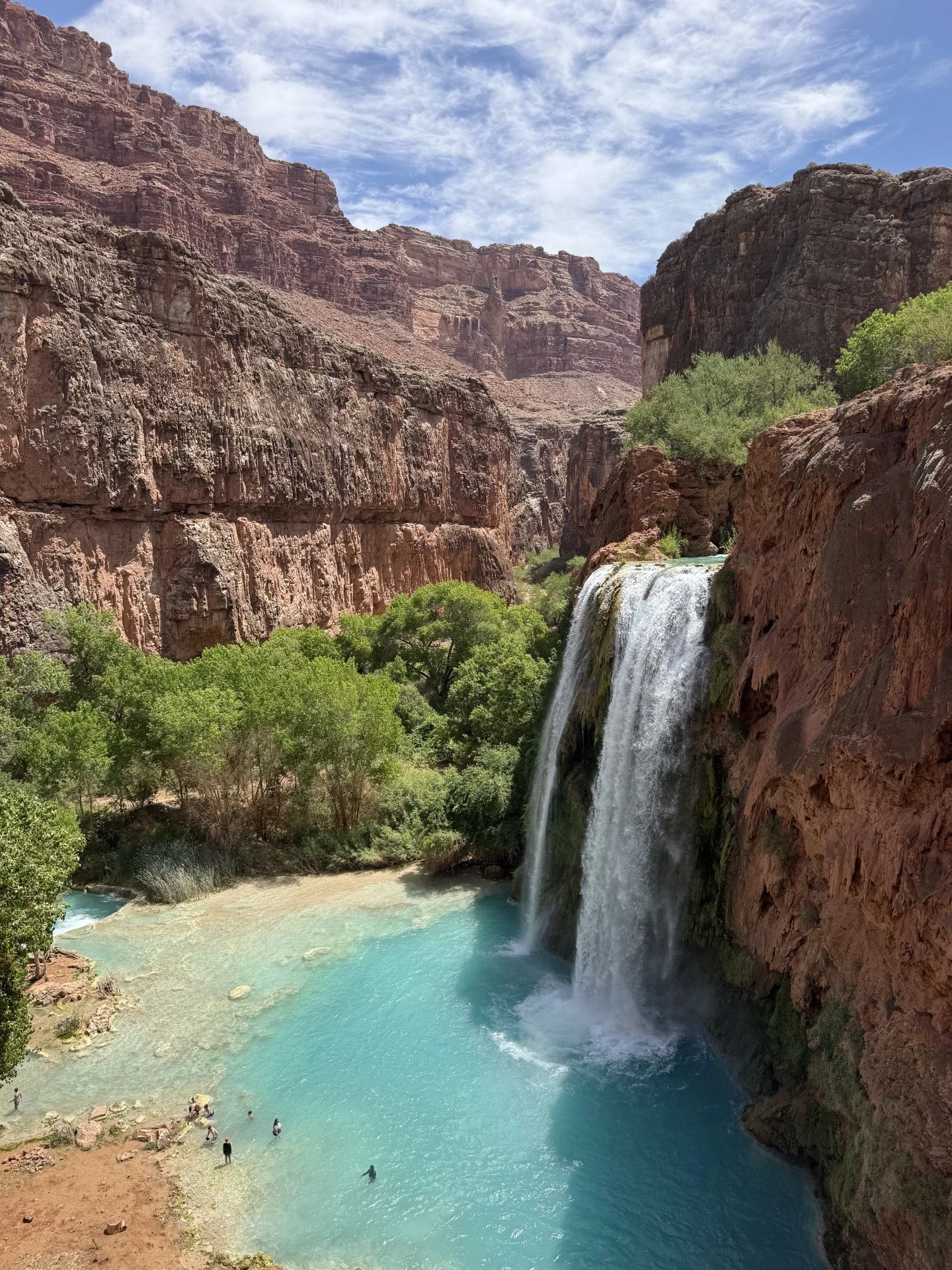
Havasu Falls. Ellie Chase.
As the fourth busiest national park in America, the Grand Canyon is no secret to travelers. Attracting around 4.4 million visitors in 2025, the vast desert landscape is packed with sightseers aiming to take in the views, raft the Colorado River and explore the many trail systems it has to offer. Although I enjoyed the more popular sites of the area, I came to the Grand Canyon hoping to explore a more hidden secret.
Because what most visitors don’t know is that the heart of the Grand Canyon lies far beyond the rim.
Widely considered the most remote village in the United States, Supai, home to the Havasupai Tribe, is nestled below towering red rocks. Accessible only by foot, helicopter or horseback, their sacred lands are home to breathtaking turquoise waterfalls and offer an unforgettable backpacking experience.
Centuries before European exploration reached the Grand Canyon, the Havasupai lived and farmed along Havasu Creek, developing a deep connection to the blue-green waters that gave them their name. Following John Powell's expeditions through the region, increased settlement and federal policies forced the Havasupai into a reservation smaller than a square mile in 1882, cutting them off from their traditional land. After decades of petitioning, the Havasupai tribe was granted 276 square miles of land to the south of Grand Canyon National Park, restoring their traditional lands. Since then, the Havasupai have developed an economy around sustainable tourism, allowing a limited number of visitors to experience the beauty of their homeland.
As an avid hiker, landing these permits was a dream come true. For travelers with an adventurous spirit and a desire to make the most out of their limited time, here are some tips on how to spend your 4 days on the Havasupai reservation.
Day 1: Backpacking into the Canyon
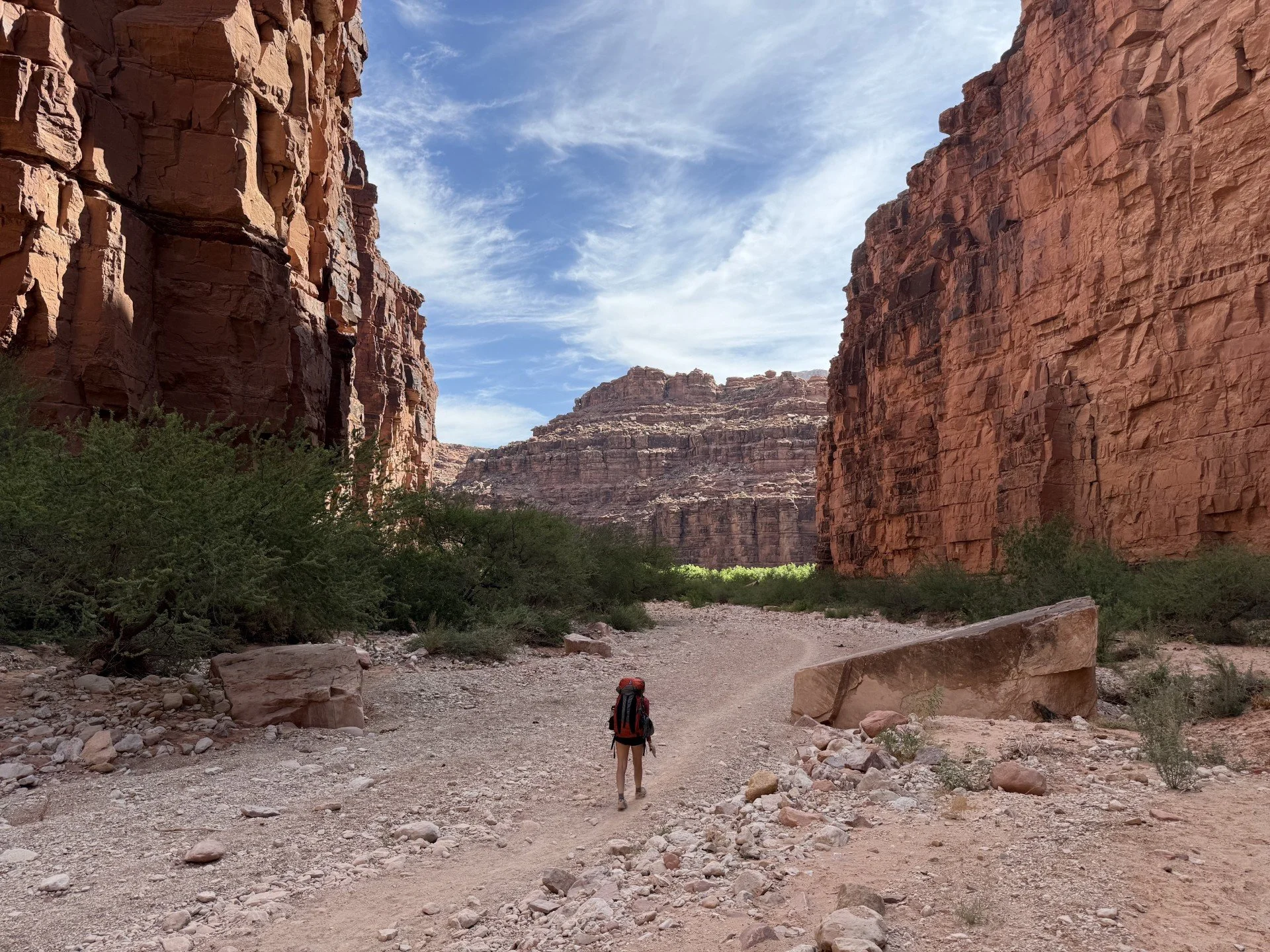
Backpacker entering Havasu Canyon on the Havasupai Trail. Ellie Chase.
Embarking on the trail to Supai requires pricey and challenging-to-obtain permits. With reservations opening in the first week of February, permits sell out quickly, so you have to act fast. On the day of your reservation, you must check in at the local motel before driving an hour to the trailhead.
The trail is a challenging eight miles to the village and 10 miles to the campground. As an experienced hiker, I decided to carry all of my camping gear myself, hoping to explore the area under my own power. However, other options exist to make the area accessible to other guests. Visitors have the option to send their packs to camp on the back of mules, ride saddleback into the canyon or reserve a spot on a helicopter that flies to the village four times a week.
The trail is well-marked; however, the heavy packs and summer heat make the trip much more challenging. Starting before sunrise helps hikers avoid the intense midday temperatures. Once in Supai, stop to refill water and replenish food in the local stores. Photography is prohibited within the village, a reminder that visitors are guests on sacred land.
After two more miles downhill, you will come to a clearing and get your first glimpse at Havasu Falls. The cascading creek creates a surreal pool of turquoise water against the red backdrop of the canyon, a reward for the long day of hiking. Just past the falls is the camp, where I spent the rest of the day resting before taking an evening dip in Havasu Falls.
Day 2: Visiting the Lower Falls
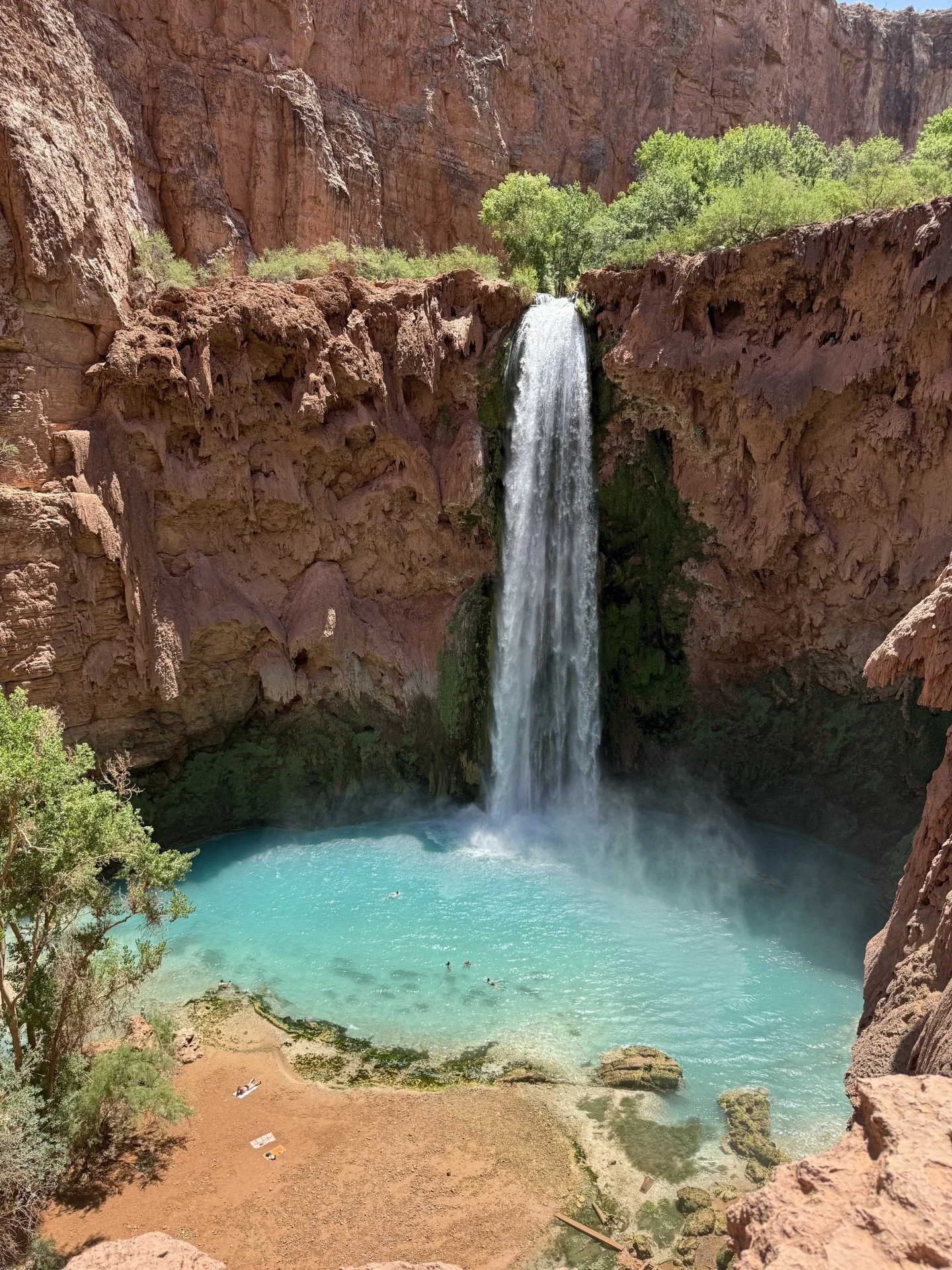
Mooney Falls from the trail above. Ellie Chase.
From camp, there are two lower falls and two upper falls available for hikers to explore. Mooney and Beaver Falls are the two lower falls, requiring about a six-mile hike round-trip from camp to see both.
The color of the creek is truly breathtaking. The blue of the water is a natural optical effect caused by the mineral-rich water. Fed by underground springs from the Redwall-Muav aquifer, the water is rich in magnesium and calcium from the limestone bedrock. Those particles scatter sunlight in a way that filters out reds and oranges, allowing for a dominant turquoise color, a cultural cornerstone for the Havasupai.
“The water is our spirit. Without it, we would not exist,” words from a Havasupai Elder featured in Northern Arizona Living.
To the Havasupai, the waters symbolize renewal, purity and connection, and it's clear why; Mooney Falls appears to transcend reality. About a mile from camp, to reach the base of the falls, visitors must descend a cliffside through caves, chains and ladders. The descent is well marked, but bring gloves to protect your hands and provide better traction on the slick rock.
After spending some time soaking up Mooney Falls, I continued on to Beaver Falls. Only about another two miles down the canyon, the trail includes various river crossings and minimal scrambling. While less dramatic, Beaver Falls is a must-see for its terraced pools of blue. Keep an eye out for the lone palm tree.
Day 3: Upper Falls and Fry Bread
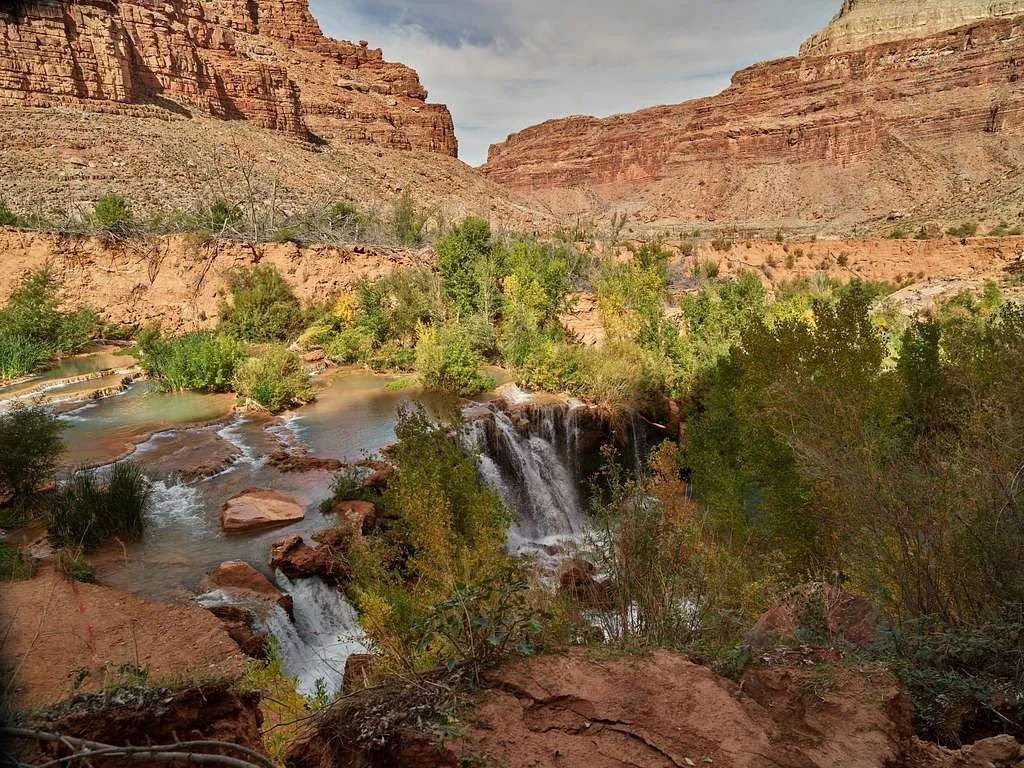
Fifty Foot Falls. Barbara Barrett. Library of Congress. CC0
On my last full day, I explored the upper falls. Lower Navajo Falls and Fifty Foot Falls mark the halfway point between camp and the Supai Village, and although these falls are less impressive than the lower falls, they are a shorter hike and absolutely worth a visit. Because much of the route follows the creek itself, water shoes are essential.
After the brief hike, stop at the frybread stand. The fry bread is incredible, and a perfect location to talk to fellow backpackers while enjoying the indigenous cuisine.
I spent the rest of the evening taking a last look at Havasu Falls and packing up camp for the early start.
Day 4: Packing Out
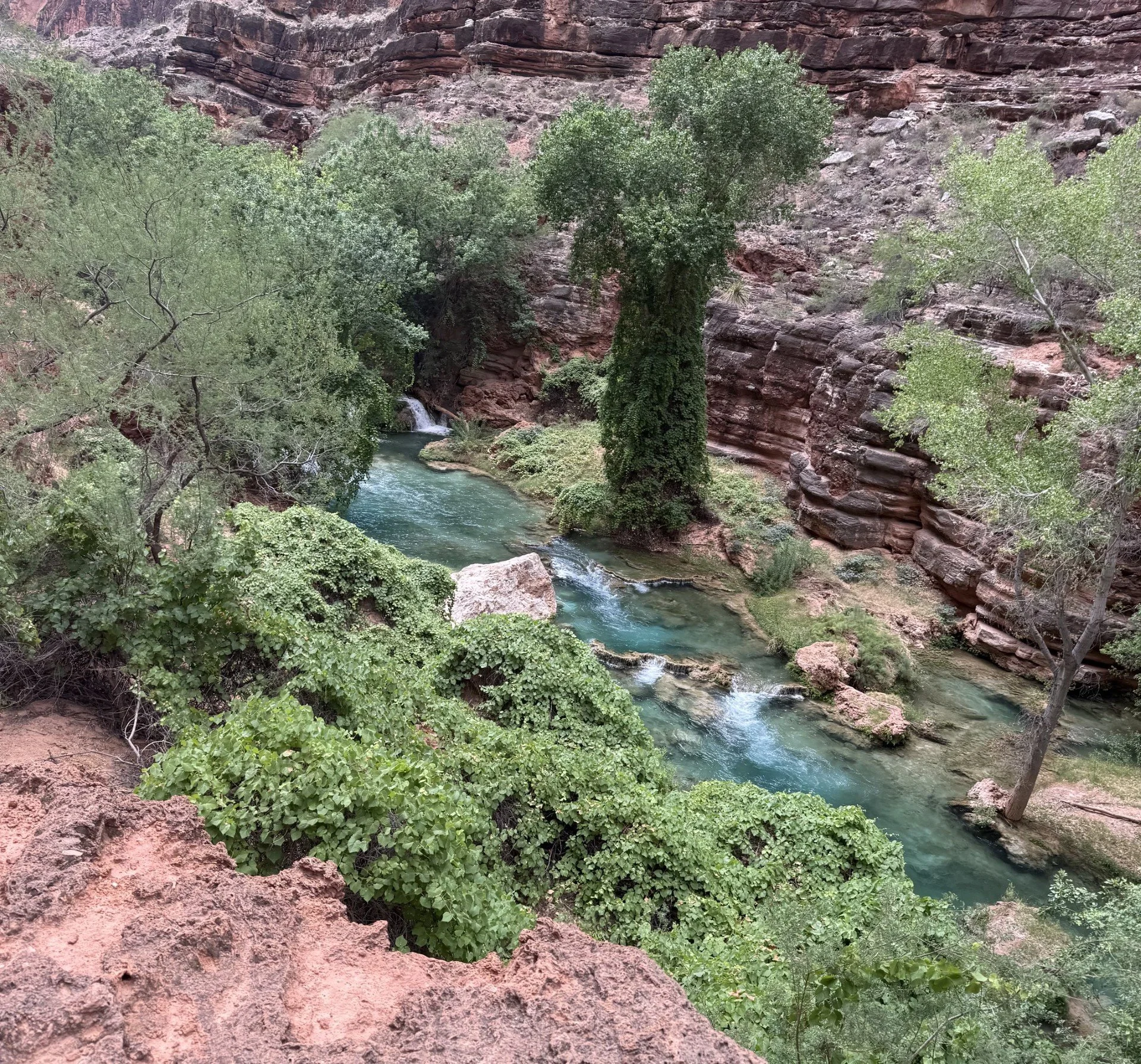
Havasu Creek near Beaver Falls. Ellie Chase.
Start early to make it back out of the canyon before the heat of the day. Spending time on the reservation is a privilege, and it is a necessity to pack out all your trash and leave no trace on the trails.
Protect the sacred land and ensure that others can experience the unforgettable trip to the Havasupai reservation.
Ellie Chase
Ellie is a second-year journalism student at the University of Colorado Boulder. She loves to travel and has visited 29 countries. When she's not in class or booking her next trip, Ellie likes going rock climbing or bagging another Colorado 14ner. She hopes to be able to combine her love of travel and her love of storytelling to report on stories across the world.