
By Joseph Morales
The Tohono O’odham Nation in southern Arizona is under threat as the United States federal government enters their land to construct a border wall, bulldozing sacred sites.
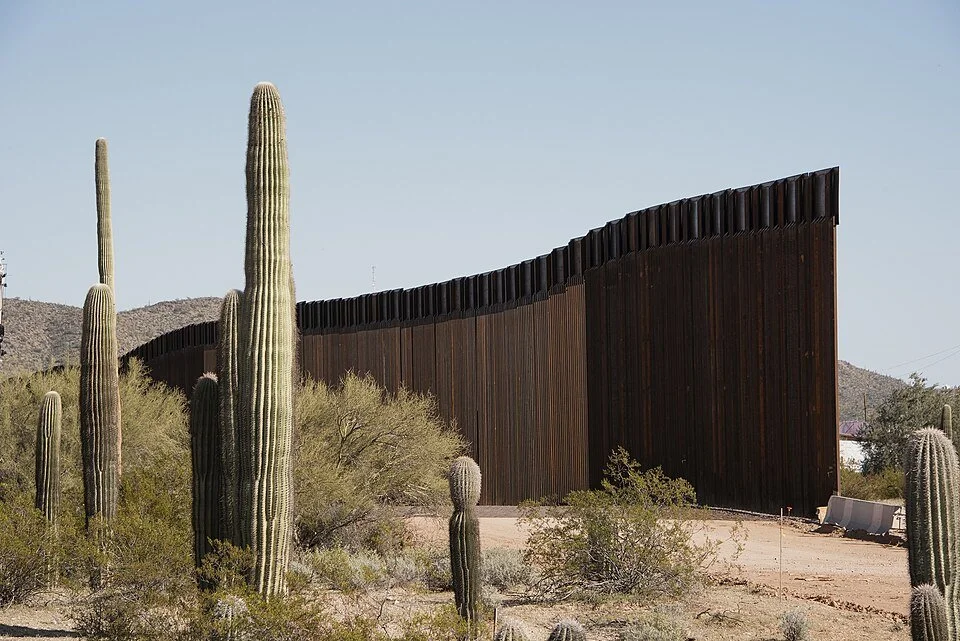
Border wall construction stands along the U.S.-Mexico border south of Ajo, Arizona. Gillfoto. CC BY-SA 4.0.
The Tohono O’odham Nation is a federally recognized tribe whose lands are located in Southern Arizona. Today, it is under threat from the United States federal government.
The tribal nation, which has 37,000 enrolled members, is divided by the 62-mile international border between the U.S. and Mexico. The O’odham people have been dealing with border issues since the Gadsden Purchase of 1854, which established the boundary through their traditional lands without tribal consent.
The pattern of neglect and action without consultation continues today. This year alone, the Department of Homeland Security bulldozed sacred sites in multiple attempts to construct a border wall.
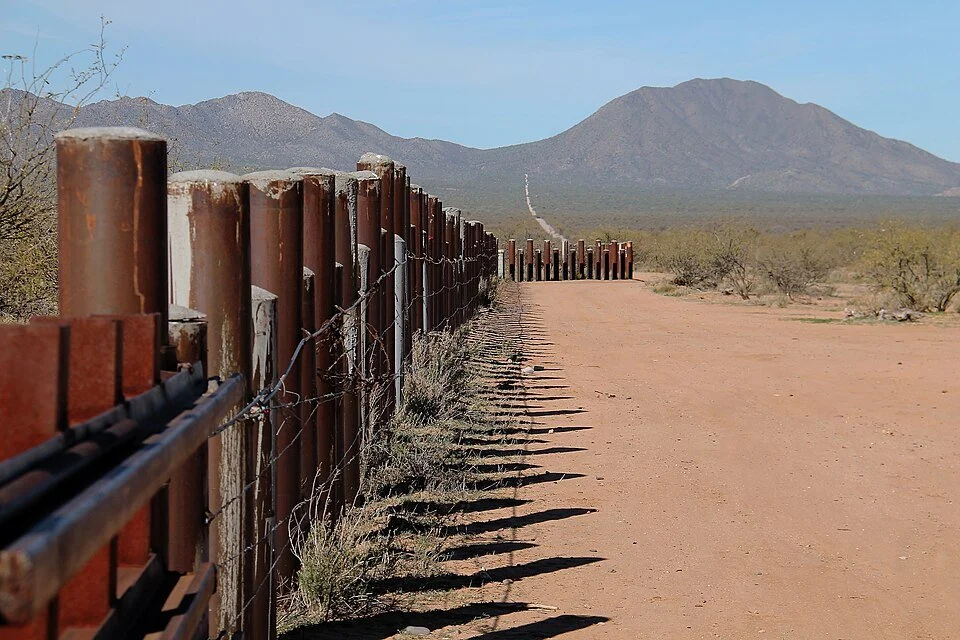
Border barrier infrastructure runs along the desert landscape on Tohono O’odham Nation land. Evan616. CC BY-SA 4.0.
The Tohono O'odham Nation issued a press release stating it has filed a lawsuit against the U.S. Department of Homeland Security to prevent the department from taking reservation land and water to construct a border wall.
However, the Nation did not obtain the preliminary injunction it sought to halt construction while the case proceeds, and DHS continued to threaten its lands.
On Aug. 14, AP News and other media outlets confirmed a judge refused to block the Trump administration from building a border wall along the tribe's reservation.
Federal agents disregarded the tribe's assertion of jurisdiction, relying instead on a century-old executive order, a 1907 proclamation by President Theodore Roosevelt that designated a 60-foot strip of public land along the international boundary.
The court ruled that national security interests superseded tribal sovereignty, leaving the tribe with limited legal action while the case continues. Yet since 1974, the Tohono O’odham Nation has publicly maintained a formal relationship with Customs and Border Protection to ensure national security.
That cooperation has included allowing CBP agents to operate on tribal lands and implemented surveillance towers and checkpoints for anyone entering or leaving the tribal community.
With the judge's cleared approval, armed federal agents escorted contractors through tribal lands to start their work.
Federal agents set up a blockade of vehicles near the San Miguel gate, which tribal citizens use to travel through their ancestral lands in Mexico. This blockade was placed near an active prayer site, where O’odham community members have been actively praying to defend their land.
The armed escort ignored Tohono O'odham Nation “No Trespassing" signs that the tribe posted weeks prior, and ignored tribal sovereignty entirely.
Addressing the physical and spiritual destruction of sacred sites, Tohono O’odham Nation Chairman Verlon Jose framed the federal government's overreach plainly: “I would never go into your church and destroy it. I would never go into your home and destroy it. I would never go into your cemeteries and blow them up.”
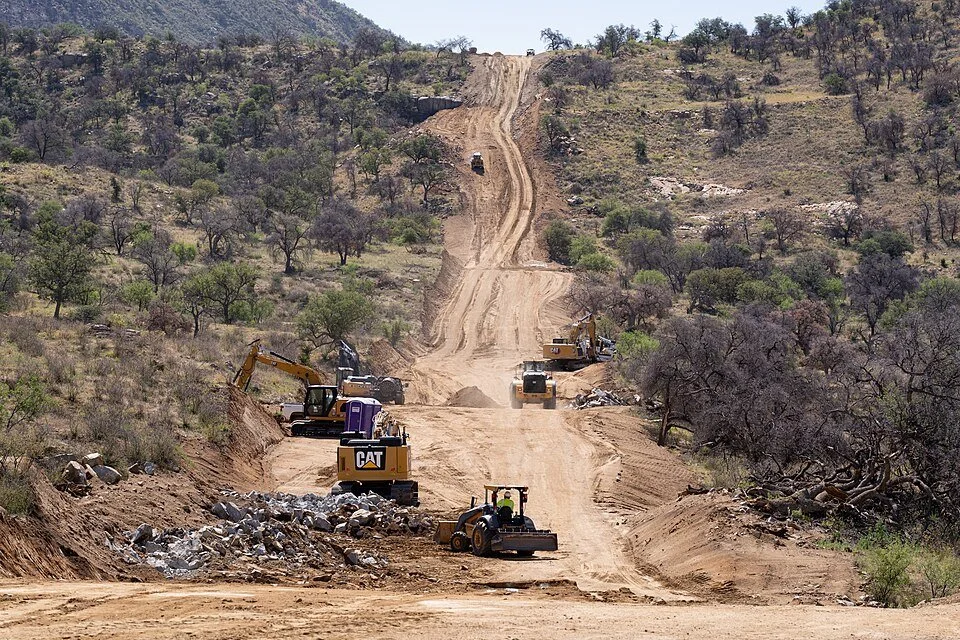
Border wall construction stands along the U.S.-Mexico border south of Ajo, Arizona. Gillfoto. CC BY-SA 4.0.
The physical wall represents more than a political barrier; it inflicts irreversible trauma on ancestral burial grounds, sacred mountain ranges and delicate Sonoran Desert ecosystems.
For the Tohono O’odham Nation, this could completely change their himdag, or way of life.
GET INVOLVED:
Tohono O'odham Nation Official #NoWall Page: Read the tribe's official legal filings, statements, press releases and resources regarding their defense against border wall construction.
Indivisible Tohono: A community-led grassroots group that works on civic engagement, voter education and direct advocacy addressing border militarization and environmental impacts affecting the Tohono O'odham Nation. The group can be followed on social media platforms like Facebook and Instagram for real-time updates and community calls to action.
Arizona Luminaria: A nonprofit, community-centered local news outlet in Southern Arizona that provides dedicated, on-the-ground reporting on Indigenous sovereignty, sacred site defense and ongoing border wall developments impacting the Tohono O'odham Nation.
Joseph Morales
Joseph Morales is an enrolled member of the Tohono O’odham Nation and an English major at Arizona State University. Through his education he has built years of experience in digital media and tribal journalism, focusing on representation and community storytelling.