
By Claire Park
It’s true that girls run the world, and these legendary warrior women from around the globe show us why.
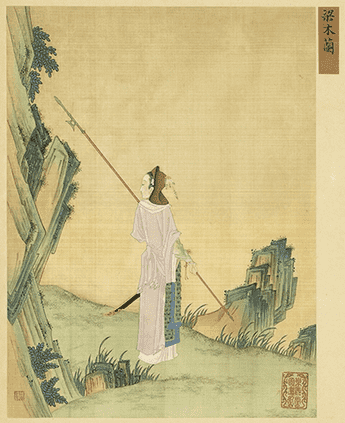
Painting depicting Hua Mulan. He Dazi. CC0.
One thing that all cultures have in common is deep-rooted legends, stories, myths and folklore that shape their people by preserving collective identity, passing down moral values across generations and reinforcing community bonds through shared traditions. Another thing they all have in common? Tales featuring strong women who take center stage, teaching society that women are essential, strong and capable.
Hua Mulan, China
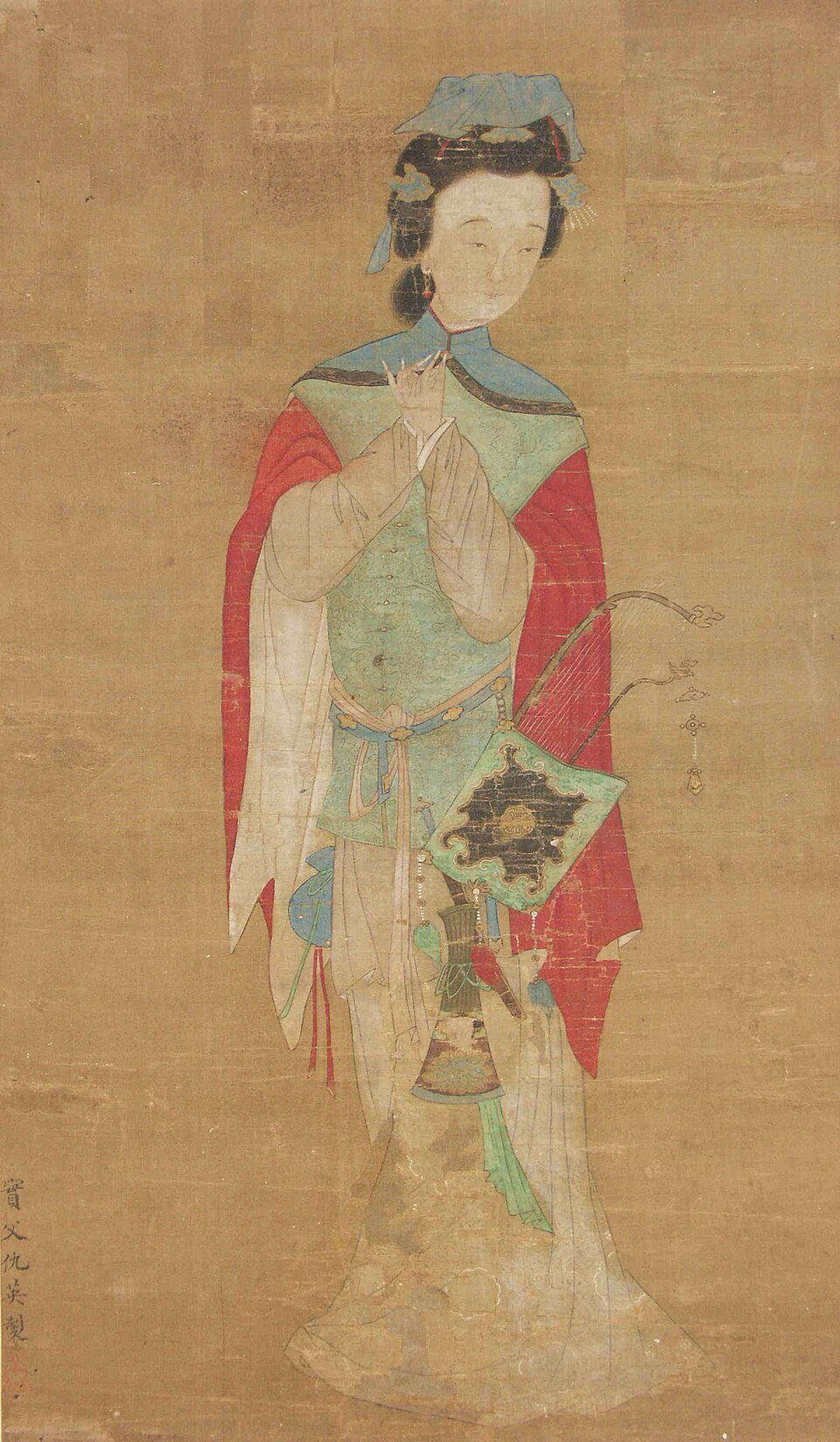
18th-century silk painting depicting Mulan. School of Qiu Ying. CC BY-NC-SA 4.0.
This legendary Chinese heroine, adapted by Disney to create the animated major motion picture “Mulan,” originates from a folk poem associated with Northern Wei dynasty during the fifth or sixth century. “The Ballad of Mulan” is told in the form of a folk song that was likely used by soldiers of the Wei dynasty while at war with the northern Rouran invaders. Similar to the movie’s plot, the legend follows a young girl who replaces her sick father in the military by disguising herself as a man. For more than a decade, Mulan dedicated herself to the army and defending the empire from the northern nomads. After she declines a promotion from the emperor, she asks for a camel so she can ride back to her family. Only after she returns home do her fellow soldiers discover that she is a woman.
Despite many later adaptations altering the story to reflect contemporary moral anxieties, the main story and its core principles remain the same. “The Ballad of Mulan” deeply shaped Chinese culture by redefining traditional values of filial piety, family duty and loyalty, proving that devotion and bravery are not limited to gender. This is highlighted in the way Mulan’s original cultural resonance is driven by self-sacrifice, as she goes to war with the sole intention of saving her aging father. This act embodies the Confucian virtue of honoring one’s parents. In addition, Mulan’s ability to successfully command respect as a soldier also subtly challenges patriarchal boundaries, offering a rare historical archetype of female capability.
Nafanua, Samoa
Historians record Nafanua as a paramount chief and warrior of the Sa Tonumaipea clan. She fought in the civil wars of Savaii and successfully held Samoa’s four major district titles, making her a powerful and historic leader. Over time, oral traditions have woven grand legends around Nafanua’s life, such as her becoming the goddess of war after defending her people from the eastern High Chief Lilomaiava, who sought to expand his territory. By wielding her supernatural strength and designing weapons from a coconut tree, Nafanua and her people were able to defeat the oppressive chief and fight against their foes.
The story of Nafanua has had a profound effect on shaping Samoan culture by establishing political legitimacy through traditional titles, elevating the status of women in leadership and smoothing the cultural transition to Christianity. Not only was Nafanua the first historical figure to hold all four paramount district titles of Samoa, but her distribution and management of them anchored the framework for political authority. To this day, high-ranking chiefly lineages trace the historical and spiritual legitimacy of their authority back to her strategic decisions. Nafanua’s narrative remains a cultural touchstone for female empowerment in Samoa, as she’s often invoked during major social changes to remind society of women’s equal capability in governance and crisis. Nafanua is also associated with a prophesy that a new religion would arrive to replace traditional polytheistic beliefs, which was interpreted as foretelling the arrival of Christianity..
Princess Yennenga, Gambaga (modern-day Ghana)
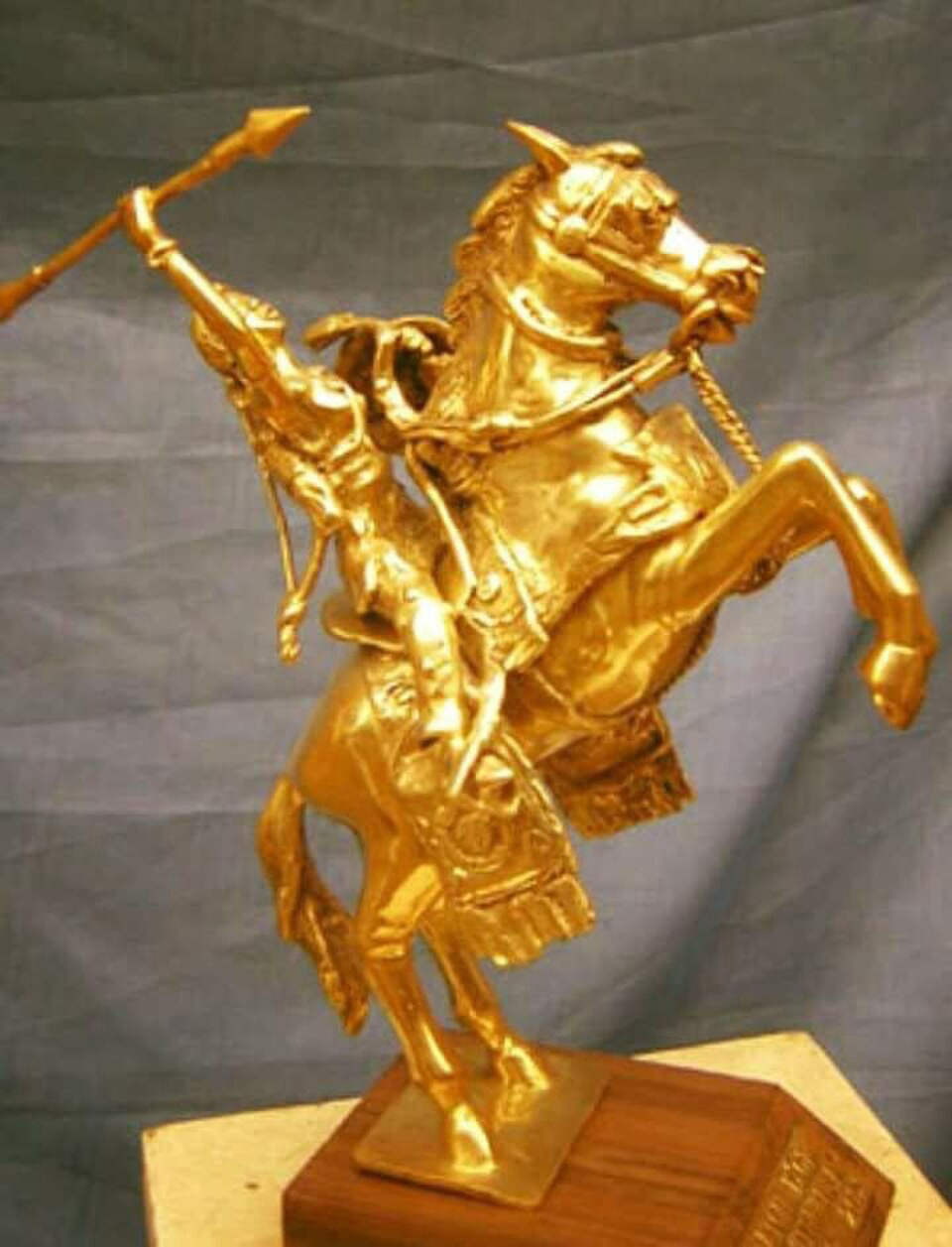
Golden Stallion of Yennenga FESPACO film festival trophy. Archives du FESPACO. CC0.
Princess Yennenga is a legendary historical figure whose life story blends oral tradition, folklore and a core of historical truth from 12th-century West Africa. She had an unconventional upbringing, hunting with her chief father, training to wield a spear and bow and later joining his army. She wanted a family and children, but her father refused to let her marry. He confined her, but Yennenga escaped on a royal white stallion while disguised as a man. After a perilous journey, she met Riale, an elephant hunter, and they had a son. Their child, Ouedraogo, became the first chief of the Mossi people in modern-day Burkina Faso.
Yennenga’s narrative of a warrior princess who forged her own destiny has defined national identity, artistic expression and institutional symbols across West Africa. As the ancestral mother of the Mossi people, Yennenga is a foundational cultural icon of Burkina Faso. Her white stallion, which represents her personal drive, also serves as the country’s primary national symbol. Public monuments of Princess Yennenga on her horse stand in Ouagadougou, the capital city of Burkina Faso, as touchstones of national heritage. Moreover, her son’s name, Ouedraogo, remains one of the most common and respected family names in the country today. The nature of her strength has also been infused into cultural teachings as griots, traditional West African oral historians, share her exploits to instill courage, independence and the rejection of rigid societal limitations. Through this, she remains a historical archetype for African women, symbolizing leadership, self-determination and military brilliance.
Penthesilea, The Black Sea (modern-day Turkey)
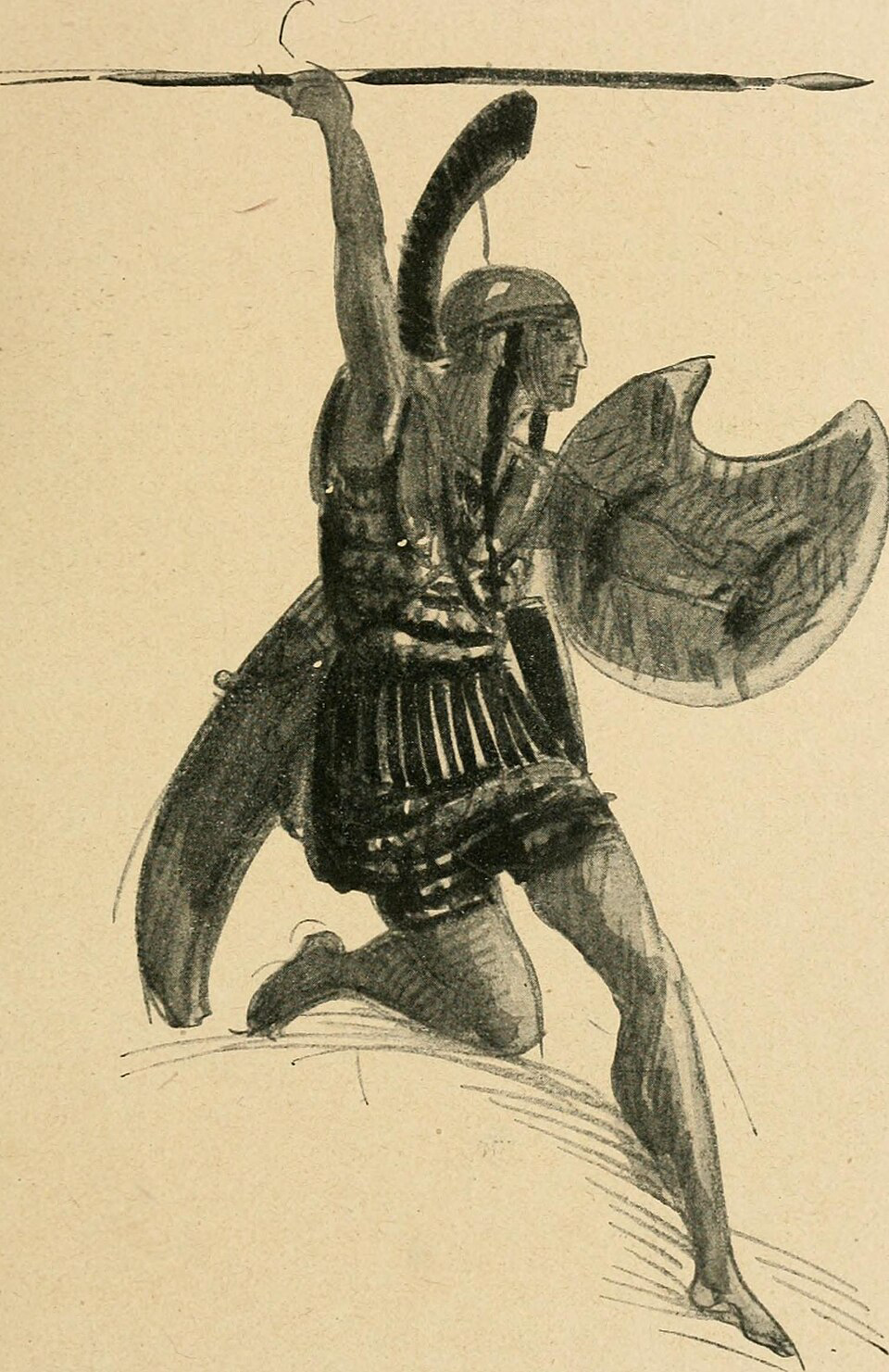
Penthesilea wielding her spear. Ernest Julian Stern. CC0.
The story of Penthesilea originated in the lost ancient Greek epic poem “Aethiopis” from the seventh century B.C. She was the daughter of Ares, the god of war, and Otrera, the Amazon queen, as well as the sister of Hippolyta. By some accounts, Penthesilea accidentally killed her sister with a spear during a hunt and, tormented by grief and guilt, sought an honorable death in battle to cleanse her name. This time came during the years of the Trojan War when Penthesilea ruled as queen of the Amazons. After Achilles killed Hector, Penthesilea decided it was time for her Amazons to intervene and fight alongside the Trojans. Tragically, Penthesilea met her end when facing Achilles in single combat. After Achilles drove his spear through her armor, he removed her helmet and instantly fell in love with her beauty and courage. He was filled with deep remorse and returned her body to the Trojans so they could give her a proper burial.
The fallen queen’s myth heavily influenced Greek culture by providing a powerful artistic motif, exploring the emotional limits of heroism and defining Greek identity through dramatic defeat of formidable foreign adversaries. The final moments between Penthesilea and Achilles were often depicted on black-figure pottery by ancient Greek painters, whose iconic works are still studied by researchers today. Additionally, the tragic climax’s emotional effect on Achilles added psychological nuances to how Greek epic heroes were viewed, as Achilles displayed grief and remorse alongside martial prowess. Furthermore, by framing Penthesilea as a noble, fierce and respectable opponent divinely aided by Ares, the Greeks could externalize and admire martial virtues in an outsider while asserting civic values.
The Valkyries, Scandinavia
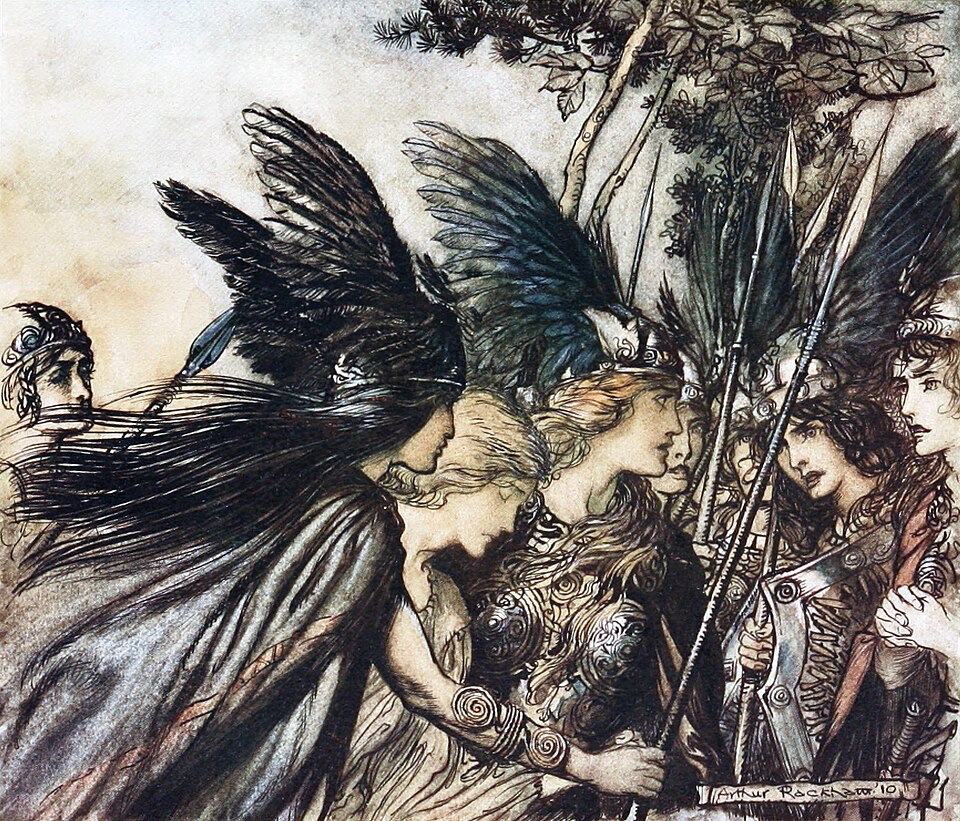
The Valkyries deliberating among themselves. Arthur Rackham. CC0.
The myth of the Valkyries, originating in the oral traditions of early Germanic and Norse societies, first depicted these women as terrifying war spirits who feasted on corpses and decided the fates of men in combat. However, once the tales were written down in works such as the “Poetic Edda” and “Prose Edda” during the 13th century, the Valkyries’ image evolved into noble, spear-wielding maidens who served the god Odin by guiding fallen heroes to Valhalla. This duality is highlighted in some of the most popular Valkyrie tales. In one famous poem, twelve Valkyries sit at a loom weaving the fate of a bloody battle using human intestines as thread and severed heads as weights. In several other tales, Valkyries take the form of swans that fly down to bathe in lakes and avoid mortals who could be trap them by stealing their swan cloaks.
In Scandinavian culture, the legendary Valkyries have become an enduring symbol of female strength, independence and national heritage, influencing everything from romantic nationalism to modern arts, literature and progressive ideals. Valkyries have also inspired patriotic art and literature, personifying nations as fierce protectors during the 19th-century Nordic romantic movement. Since then, they’ve remained staples in Scandinavian-inspired fantasy, classical music and modern media, keeping Norse lore alive in the public consciousness.
Across tales, these women define what it means to be “epic.” This might is evident not only in the way they fight and protect, but also in how they’ve shaped their cultures and left legacies that continue to resonate today.

Claire Park
Claire Park is a sophomore at the University of California, Berkeley studying English and Media Studies with a minor in Music. Her experience writing lifestyle content for UC Berkeley's The Daily Californian newspaper has inspired her to expand her scope to the realm of travel, pursuing her aspirations of becoming a travel journalist. When not writing, Claire can be found singing, reading romance books, journaling at the beach, or acquiring a sweet, caffeinated beverage.