
Kelcie Lee
Rising sea levels have swallowed up and flooded land in Kiribati, jeopardizing the South Pacific island nation’s future.
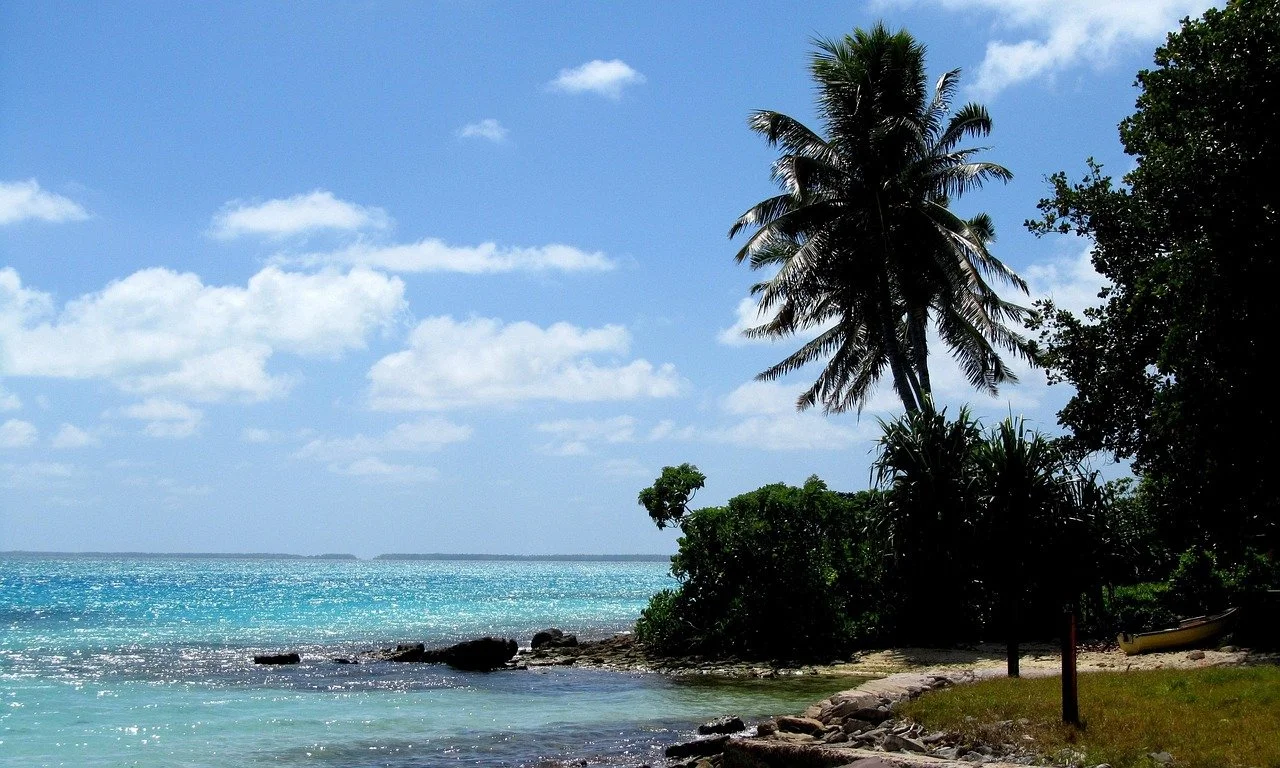
Beach in Fanning Island, Kiribati. RamonaMona. CC0.
Among the 14 countries that comprise Oceania is the island nation of Kiribati.. Officially named the Republic of Kiribati, it is home to 33 islands that are scattered throughout 1,800 miles of vast ocean. Known for its fringing reefs and atolls, which are ring-shaped coral reefs that form around underwater volcanoes, Kiribati has one of the largest water-to-land ratios of any nation in the world. However, due to climate change, the islands of Kiribati face the imminent threat of disappearance.
With rising sea levels, scientists have become increasingly worried about the implications of underwater submersion for various countries, including Kiribati. The Kiribati islands typically sit 6 feet above sea level, but due to the rising waters, scientists believe that they could become uninhabitable within this century. Homes in Kiribati, as well as much of the infrastructure, including schools and hospitals, are often built near the waterfront. Exceptionally high tides that arrive when the moon is new or full lead to frequent flooding, which is severely exacerbated by global warming and the rising sea levels.
Climate change is causing the people of Kiribati to lose not only their ancestral homeland but also their language and culture. The nation’s islands hold extensive importance to its people and represent their vast history, making the current loss of land and the threat of future loss even more heartbreaking.
“I want to truly emphasize that climate change is not a political issue,” said Anote Tong, the former Kiribati President. “It’s not an entirely economic issue. It’s an issue of survival. Maybe today for countries like mine, but in the future, for the planet as a whole.”
Throughout his time in office, Tong initiated efforts to mitigate climate change and rising sea levels. In June 2008, he asked both Australia and New Zealand to accept Kiribati citizens as climate refugees due to the threat of losing habitable territories. Only the New Zealand government has responded to the refugee crisis, and it allows up to 75 Kiribati migrants per year.
In 1989, a United Nations report listed Kiribati among the countries at risk from global warming and rising sea levels. A decade later, two uninhabited islands, Abanuea and Tebua Tarawa, the latter often used by fishermen, disappeared underwater. And for the land still above water, frequent storms can cause waves to invade the land, leading to the contamination of freshwater reserves and the destruction of crops.
As for the future of Kiribati, its people have begun emigrating from what many see as an inevitable disaster. Others have tried to cling to their land by creating temporary solutions, such as building walls out of coral rock, which get destroyed during high tide and prevent excessive water from pouring onto the island. Some towns have also shifted further inland to protect their homes and crops, while people have built mangroves to protect from soil erosion and storm surges. There have also been talks of building a massive floating platform or other temporary sea defences, but both options’ financial costs surpass what would be tangible for the country.
In 2014, the Kiribati government bought approximately 8 square miles of land on Vanua Levu, a Fijian island. While they have since used it for food and crop production, it also serves as an evacuation center if flooding starts to take out the main lands. Ultimately, this problem does not just affect the people of Kiribati but could also impact other islands and coasts in the coming years.
GET INVOLVED:
Read more about countering Kiribati’s climate crisis on the World Health Organization website. To aid those living in Kiribati, donate to The Kiribati Climate Action Network. To support initiatives in Kiribati for better education, health care and clean water, donate to CARE Australia. To fund projects focused on increasing climate resilience through access to fresh water and improved food production, donate to Action on Poverty.

Kelcie Lee
Kelcie is a second-year student at UC Berkeley majoring in history and sociology, with a minor in journalism. She developed her passion for writing and journalism in high school, and has since written for a variety of news and magazine publications over the last few years. When she isn't writing, Kelcie can be found drinking coffee, listening to music or watching the sunset.